
Yongmunsa Temple, a Millennium-Old Temple at the Foot of Yongmunsan Mountain
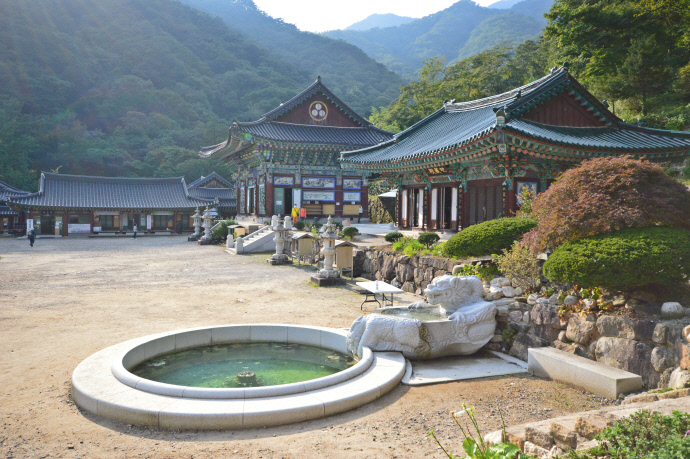
Yongmunsa Temple, located at the foot of Yongmunsan Mountain in Yangpyeong County, Gyeonggi-do, is said to have been founded in 913. The ginkgo tree in the temple courtyard is Natural Monument No. 30 and is regarded as the ginkgo tree with the greatest age and height in Korea. Since admission fees for cultural heritage sites were fully abolished in May 2023, visitors now only need to pay the parking fee at Yongmunsan Tourist Site. It is about a 20-minute bus ride from Yongmun Station on the Gyeongui–Jungang Line.
A Temple Founded by Daegyeong in 913, Rebuilt Twice and Destroyed by Fire Once
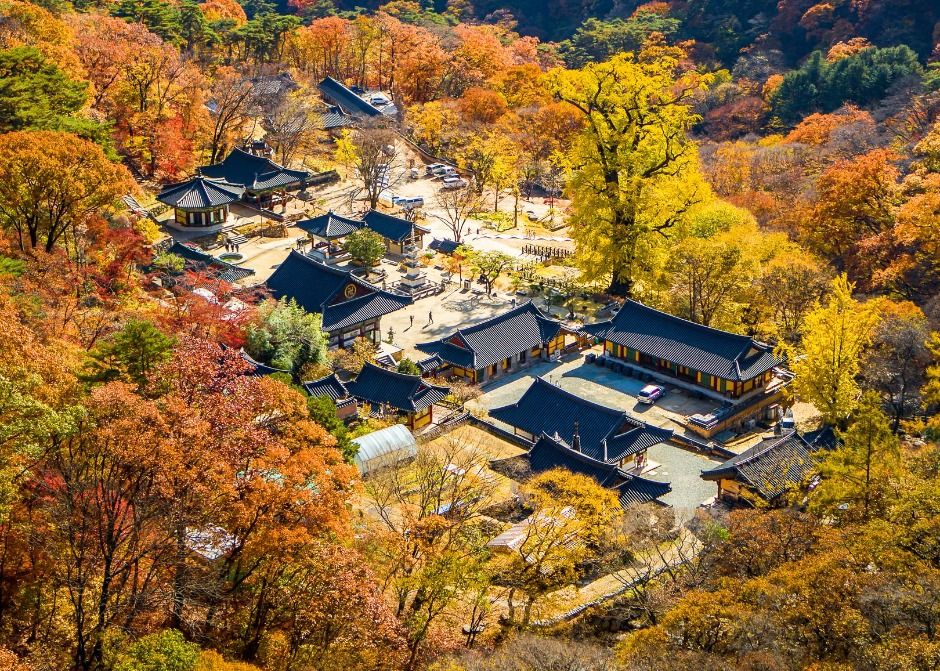
Yongmunsa Temple is said to have been founded in 913, the second year of the reign of King Sindeok of Silla, by the monk Daegyeong (大境). Another theory also holds that King Gyeongsun, the last king of Silla (r. 927–935), personally visited the site and established the temple. The temple is located on the slopes of Yongmunsan Mountain and is a branch temple of Bongseonsa Temple in Namyangju, the head temple of the 25th diocese of the Jogye Order of Korean Buddhism.
In 1378, the fourth year of King U of Goryeo, the Tripitaka Koreana housed at Gyeongcheonsa Temple in Gaepung was moved here and enshrined. The temple was rebuilt in 1395, the fourth year of the reign of Joseon’s King Taejo, and again in 1893, the 30th year of King Gojong’s reign. However, when the temple was used as a base for righteous militia forces in 1907, the first year of King Sunjong’s reign, the Japanese army set it on fire, destroying most of the buildings. Records also remain that righteous militia commander Gwon Deuksu stored weapons and food at Yongmunsa Temple and conducted resistance activities against Japan during this period.
Afterward, the monk Chwiun rebuilt the main residence in 1909, and the monk Taeuk reconstructed Daeungjeon Hall and Chilseonggak Pavilion in 1938. The buildings visible today, including Daeungjeon Hall, Gwaneumjeon Hall, Jijangjeon Hall, Samseonggak Pavilion, and Iljumun Gate, were newly built after the monk Seongeol took office in 1982.
Natural Monument No. 30: How a 1,100-Year-Old Ginkgo Tree Survived the Flames
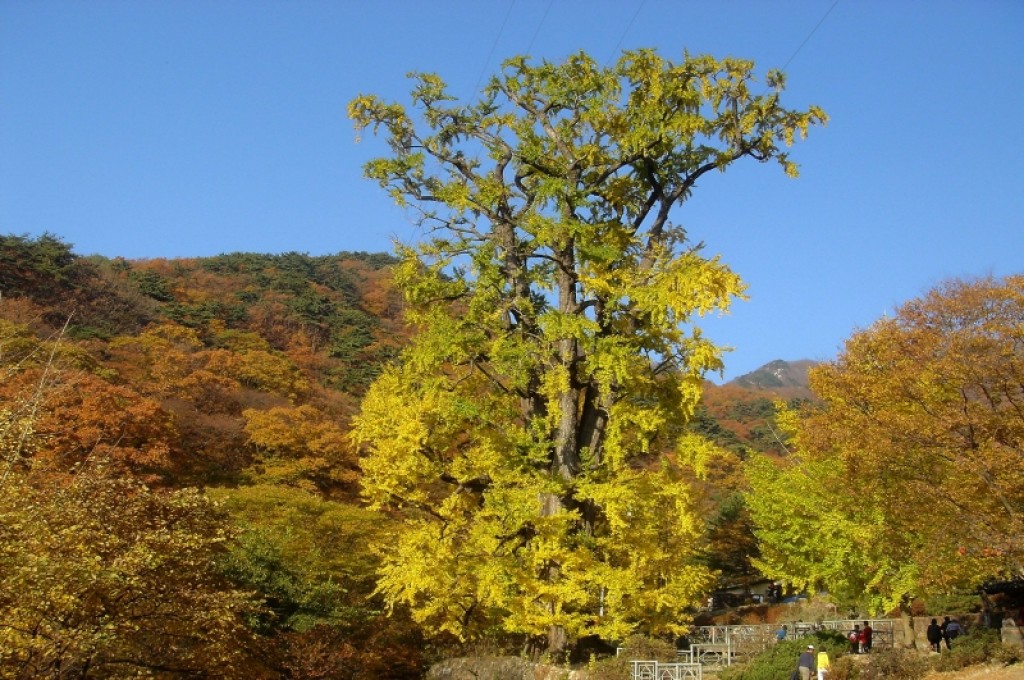
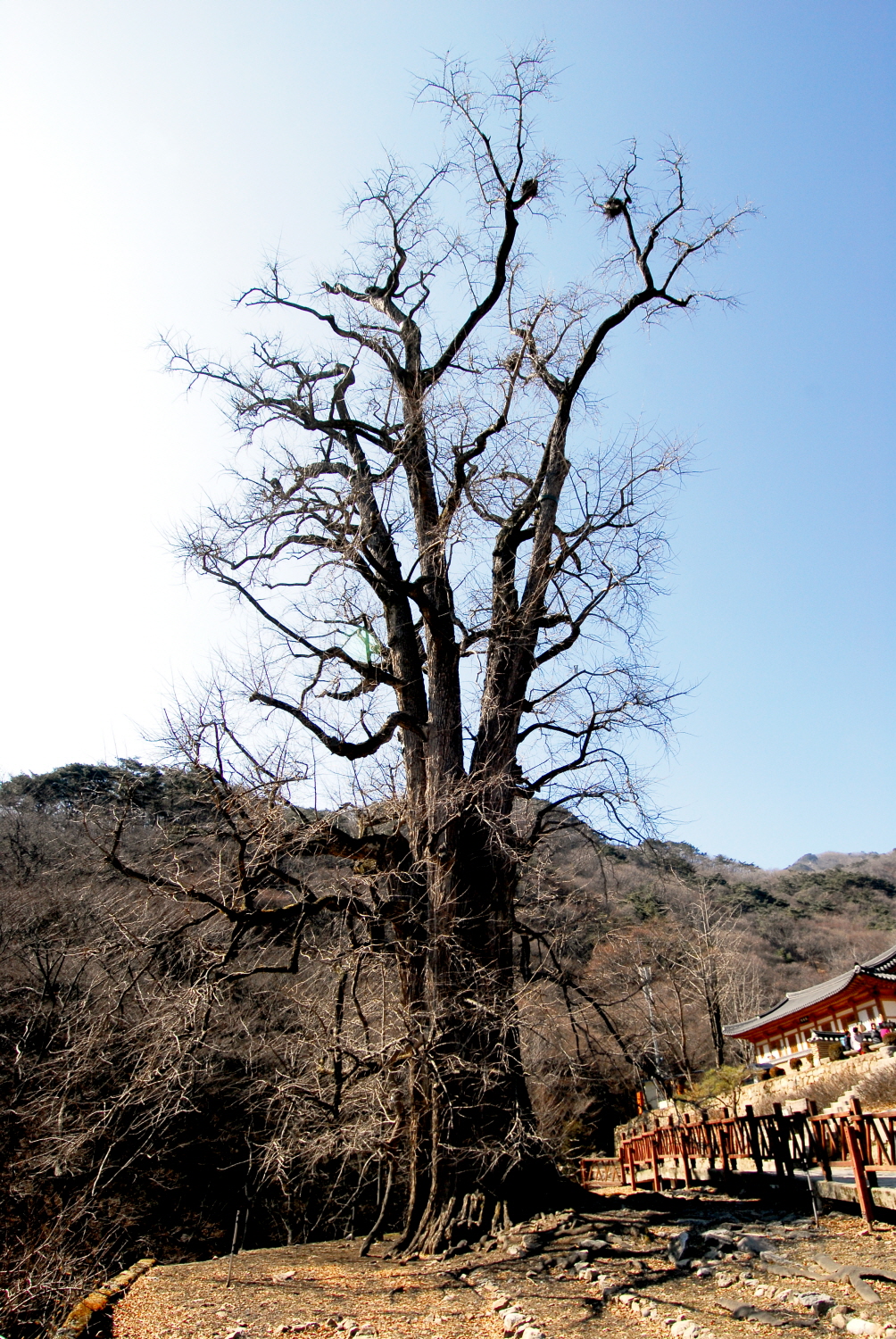
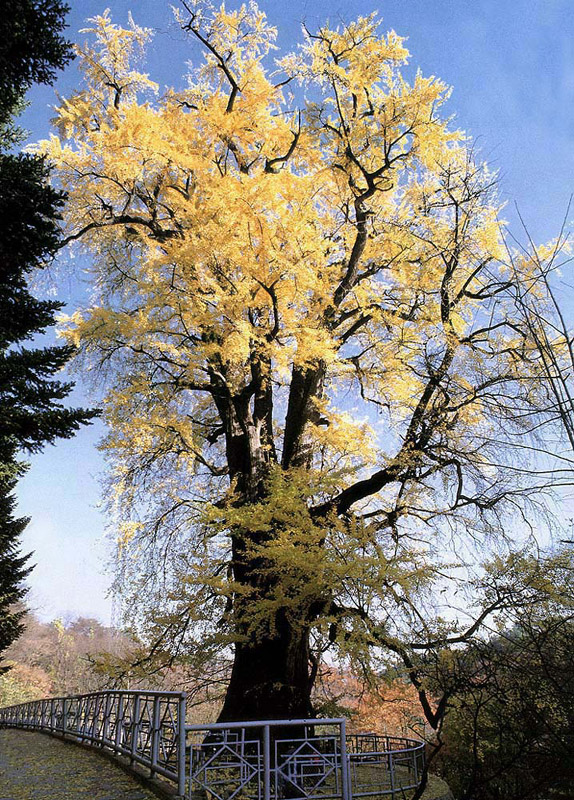
The ginkgo tree standing in front of the temple courtyard was designated Natural Monument No. 30, “The Ginkgo Tree of Yongmunsa Temple,” on December 7, 1962, and its name was changed to its current title, “Yangpyeong Yongmunsa Temple Ginkgo Tree,” in 2008. According to Cultural Heritage Administration data, it is approximately 1,100 years old, 42 m tall, and has a root circumference of 15.2 m. Among the ginkgo trees remaining in Korea, it holds the highest records for both age and height.
It is said that when the Japanese army set fire to the temple during the Jeongmi Righteous Army uprising in 1907, only this tree escaped the disaster. A story also says that it has since served as the “Cheonwangmok,” or heavenly king tree, taking the place of the destroyed Sacheonwangjeon Hall. Oral tradition further relates that during the reign of King Sejong of Joseon (r. 1418–1450), the tree was granted an official rank equivalent to that of a senior third-rank court official.
Two legends explain who planted the tree: one says that Prince Maeui-taeja, the last prince of Silla, planted it while traveling to Geumgangsan Mountain, while the other says that it grew from a staff wielded by the great monk Uisang. Neither story has been confirmed in historical documents.
Cultural Heritage Admission Became Free on May 4, 2023; Only Parking Fees Remain
The controversy surrounding Yongmunsa Temple’s cultural heritage admission fee lasted for quite some time. Yangpyeong County abolished the admission fee for Yongmunsan Tourist Site itself in August 2007, but Yongmunsa Temple continued to collect a separate cultural heritage admission fee at the ticket booth—1,600–1,800 won in the late 2000s. Several complaints were raised by visitors who wanted to hike or stroll without visiting the temple.
When the government’s policy to reduce admission fees for nationally designated cultural heritage sites took effect on May 4, 2023, Yongmunsa Temple’s cultural heritage admission fee became completely free. The only cost visitors effectively pay now is the Yongmunsan Tourist Site parking fee: 3,000 won for small passenger cars, 1,000 won for compact cars, and 5,000 won for large vehicles. Inquiries about temple visits can be made at 031-773-3797. Visiting hours are Informationed as sunrise to sunset, with no separate closing time.
Some travel-information websites still list former prices, such as 2,500 won for adults, so it is safest to check the latest notice once more before visiting.
A 20-Minute Bus Ride from Yongmun Station on the Gyeongui–Jungang Line, with One Bus per Hour
Public transportation is centered on Yongmun Station on the Gyeongui–Jungang Line. From the station, transfer to a rural bus such as routes 7, 7-4, or 77-8, and you will reach the “Yongmunsan” stop in about 20 minutes. Buses run approximately once an hour. If you have a lot of luggage or are traveling in a group, you can also take a taxi from in front of the station; the fare is reportedly around 10,000 won.
One point to note is the Yongmun Five-Day Market, held on the 5th, 10th, 15th, 20th, and 25th of each month. On market days, buses use a detour instead of the road in front of Yongmun Station, so departure intervals and stop locations may differ from usual. By car, it takes approximately one to one and a half hours from Seoul via National Route 6 or the Jungbu Expressway toward the Yongmun Interchange.
1.2 km from the Parking Lot to Iljumun Gate, a Gentle 20–30-Minute Uphill Walk
The temple does not appear immediately after you park. The distance from the tourist-site parking lot to the entrance of Yongmunsa Temple is about 1.2 km, and travel reviews repeatedly mention that the gentle slope takes around 20–30 minutes on foot.
Many reviews say that about an hour is enough to look around the temple grounds at a leisurely pace. However, if you plan to continue along the Madangbawi Course, which climbs the mountain trail beyond the ginkgo tree, you should allow three to four hours for a round trip.
Because some sections consist of unpaved dirt paths, reaching the entire route by stroller or wheelchair is difficult, and no foreign-language information signs have been confirmed.
More Than the Ginkgo Tree: Treasure Jeongjiguksa’s Stupa and Stele and the Gilt-Bronze Seated Avalokitesvara
Although less well known because of the ginkgo tree, a stupa and stele dedicated to Jeongjiguksa, designated as a Treasure, stand about 300 m east of Yongmunsa Temple. Jeongjiguksa (1324–1395), who was from Jaeryeong in Hwanghae Province, was a late-Goryeo monk who studied in Yanjing, China. It is said that when he died in the fourth year of King Taejo of Joseon, the king bestowed on him the posthumous title “Jeongjiguksa.” The stupa and stele are about 80 m apart. The stupa has a distinctive structure in which the foundation and lower base are square, while the upper base and body are octagonal.
Inside Daeungjeon Hall is a gilt-bronze seated Avalokitesvara, designated Treasure No. 1790. These are cultural relics that are easy to miss if you visit only the ginkgo tree and then turn back.
Yongmunsan Mountain Hiking Trail Leading from Yongmunsa Temple to the Madangbawi Course
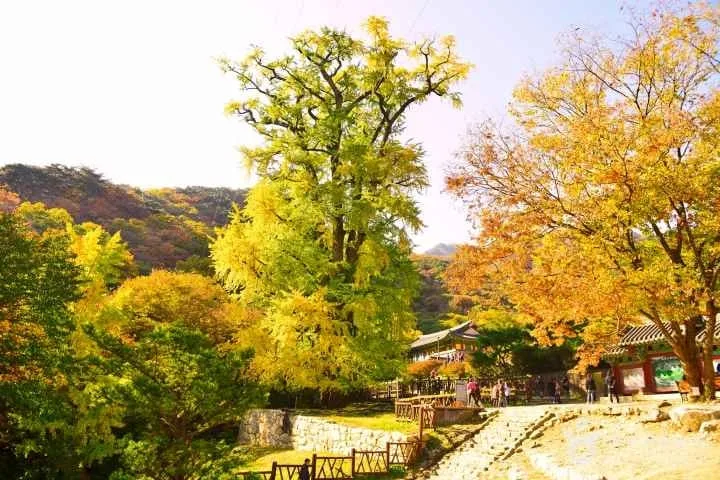
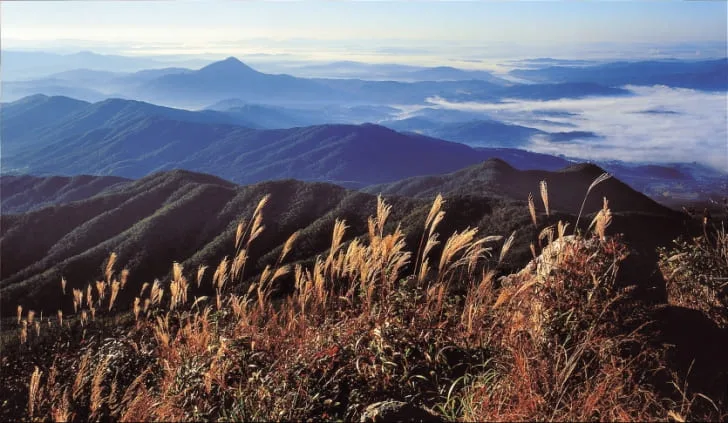
The hiking trail beside Yongmunsa Temple continues to the summit of Yongmunsan Mountain, 1,157.1 m above sea level. Because of former military facilities at the summit, civilian access was prohibited for more than 40 years before the area finally opened in November 2007.
The most frequently used route is the “Yongmunsa Temple Madangbawi Course,” which climbs from the parking lot through Yongmunsa Temple and onward via Madangbawi and the ridge trail to the summit. After climbing about 1 km along the valley from the trailhead beside Yongmunsa Temple, you reach Madangbawi. This section consists of rocky steps with a slope of up to 54 degrees, requiring hikers to hold onto a rope. Walking only the gentler early section is manageable for families.
Temple Stay Programs: “Rest Myself” and “Take Care of Myself”
Yongmunsa Temple is a temple operated under the Jogye Order of Korean Buddhism’s Temple Stay program. The weekday-friendly relaxation program “Rest Myself” and the weekend experiential program “Take Care of Myself” are available. The experiential program includes meditation, yoga, making Buddhist prayer beads, and writing wishes on wish cards. Reservations and program details are available on the official website (yongmunsa.templestay.com).
One participant review written in 2015 records that the writer walked about 15 minutes from the parking area to reach the training center and that the experiential program cost 50,000 won. Since this information is quite old, check the current price and schedule again on the website before applying.
Autumn Foliage and Summer Valleys: It Is Best to Avoid Five-Day Market Dates
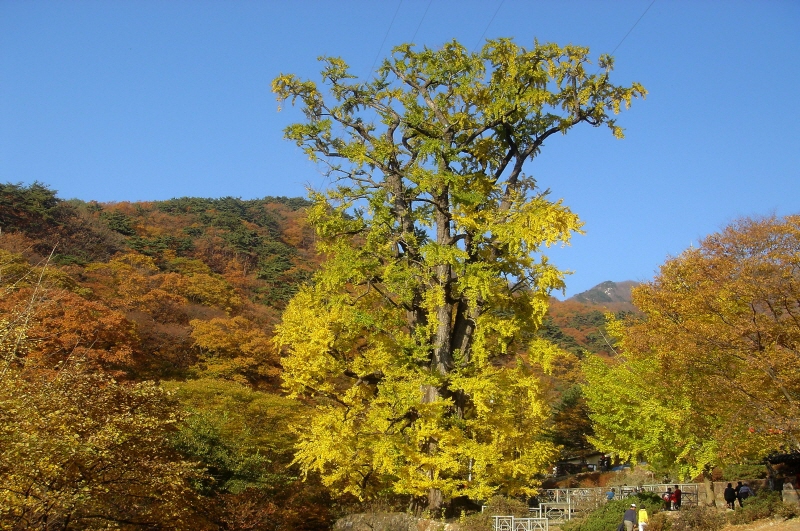
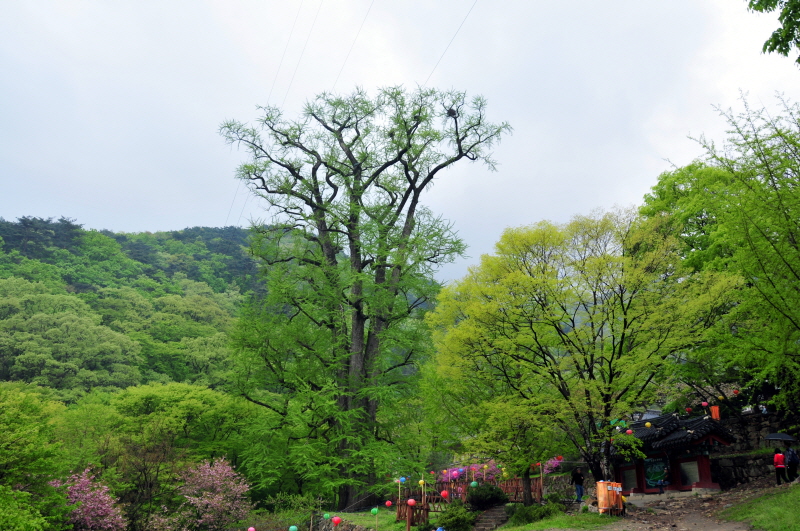
Because the ginkgo is a deciduous tree, its appearance changes completely with the seasons. Numerous reviews repeatedly mention that visitors flock to the temple when the ginkgo leaves reach their autumn peak. In spring and summer, the dense greenery along the temple approach and the valley stream are highlights, while in winter, the snow-covered scenery and lack of crowds are especially appealing.
If you have flexibility in choosing a date, avoiding the 5th, 10th, 15th, 20th, and 25th, when the Yongmun Five-Day Market is held, makes traveling by bus easier. Some reviews mention visitors walking with dogs, but it may be difficult to enter the worship halls with pets.
Yongmun Millennium Market and Mountain Vegetable Set Meals — Combine Them in One Visit
Yongmun Millennium Market near Yongmun Station is a traditional market held every five days on the 5th, 10th, 15th, 20th, and 25th. The merchants’ association can be reached at 031-771-6172. Visitors can use Yongmun Millennium Market Parking Lot and Yongmun Tower Public Parking Lot. A restaurant district serving mountain vegetable set meals and whole chicken soup has also formed inside Yongmunsan Tourist Site, making it a convenient place to visit after hiking or touring the temple.
Allow roughly half a day to visit the temple and complete the Madangbawi Course together. Because some facilities may close depending on the construction schedule, it is safest to call ahead and check before descending.
Before You Go
- Address
- 782, Yongmunsan-ro, Yongmun-myeon, Yangpyeong-gun, Gyeonggi-do
- Hours
- Sunrise to sunset (varies by season)
- Admission
- Free cultural heritage admission (abolished entirely on May 4, 2023) · Yongmunsan Tourist Site parking fee charged separately
- Phone
- 031-773-3797
- Official site
- https://yongmunsa.templestay.com
- Transport
- Get off at Yongmun Station on the Gyeongui–Jungang Line → take a rural bus such as routes 7, 7-4, or 77-8 for about 20 minutes (approximately 1-hour intervals) → get off at the “Yongmunsan” stop and walk. Bus routes change on the 5th, 10th, 15th, 20th, and 25th of each month during the five-day market
- Parking
- Yongmunsan Tourist Site public parking lot (paid): small vehicles 3,000 won · compact cars 1,000 won · large vehicles 5,000 won
- Time needed
- About 1 hour for the temple; 3–4 hours including the Madangbawi hike
- Accessibility
- The approximately 1.2 km route from the parking lot to the temple includes unpaved and uphill sections, and many reports say it is difficult to travel by wheelchair or stroller. No foreign-language information has been confirmed.
The information above is current as of the time of writing. Check the official notices again before visiting.

Places
Nearby Attractions 5
-
 1
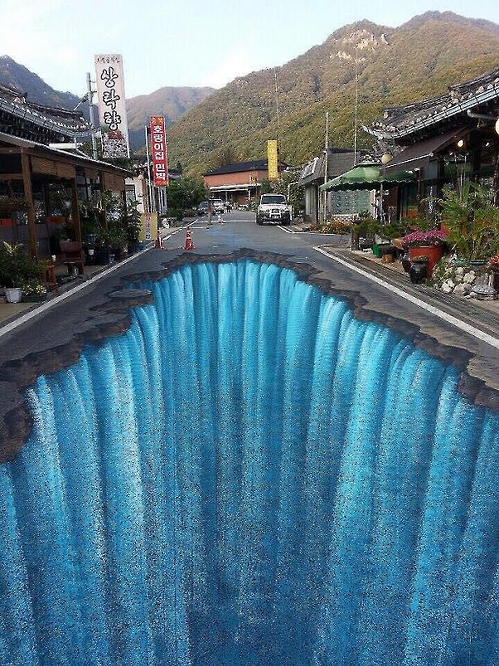
Yongmunsan Tourist SiteA tourist complex where you can enjoy the scenery and walking trails of Yongmunsan Mountain.
1
Yongmunsan Tourist SiteA tourist complex where you can enjoy the scenery and walking trails of Yongmunsan Mountain. -
 2
Yangpyeong Eco-Friendly Agriculture MuseumA museum exploring Yangpyeong’s agricultural history and eco-friendly culture
2
Yangpyeong Eco-Friendly Agriculture MuseumA museum exploring Yangpyeong’s agricultural history and eco-friendly culture -
 3
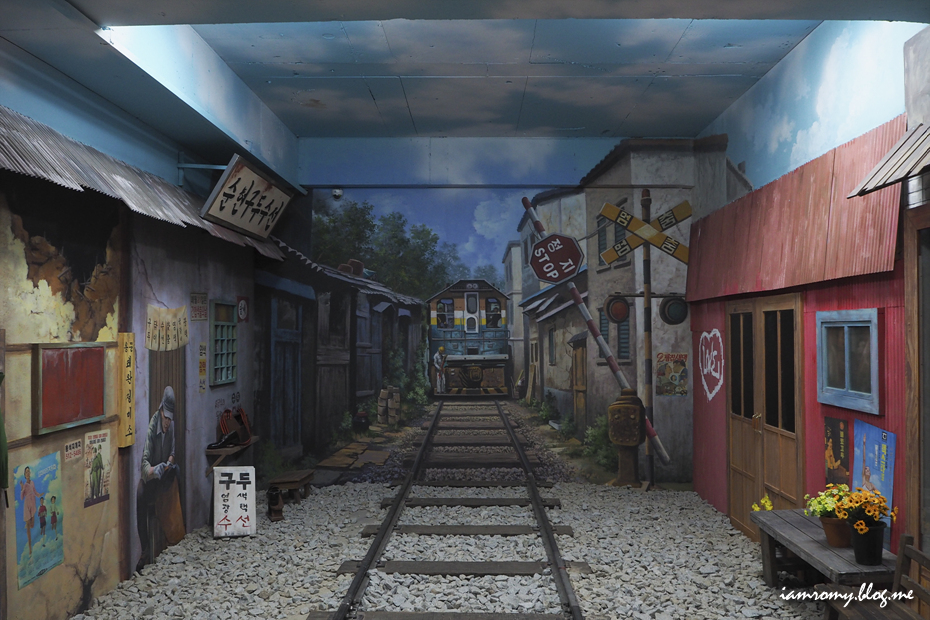
Nostalgic Youth MuseumA retro exhibition hall where you can experience the streets and daily life of the 1970s
3
Nostalgic Youth MuseumA retro exhibition hall where you can experience the streets and daily life of the 1970s -
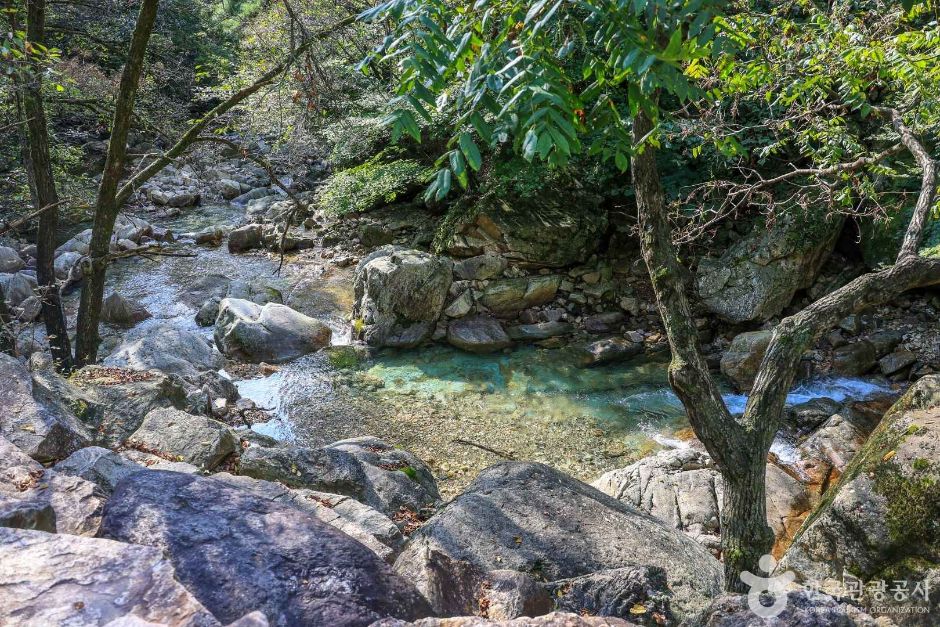 4
Jungwon ValleyA natural attraction where you can walk alongside waterfalls and clear valley streams
4
Jungwon ValleyA natural attraction where you can walk alongside waterfalls and clear valley streams -
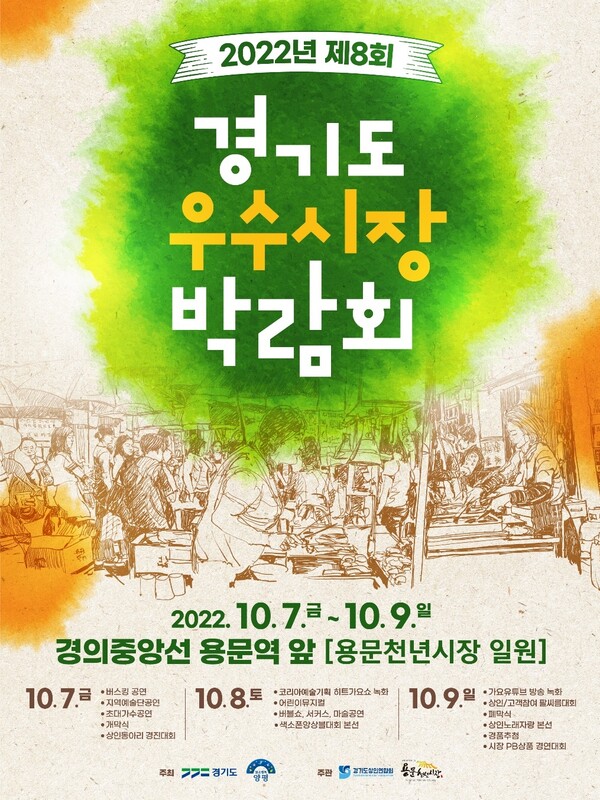 5
Yongmun Millennium MarketA traditional market where you can browse local agricultural products and foods
5
Yongmun Millennium MarketA traditional market where you can browse local agricultural products and foods
Events in This Area

Festivals in This Area


More Travel Guides in This Area
 Travel Guide
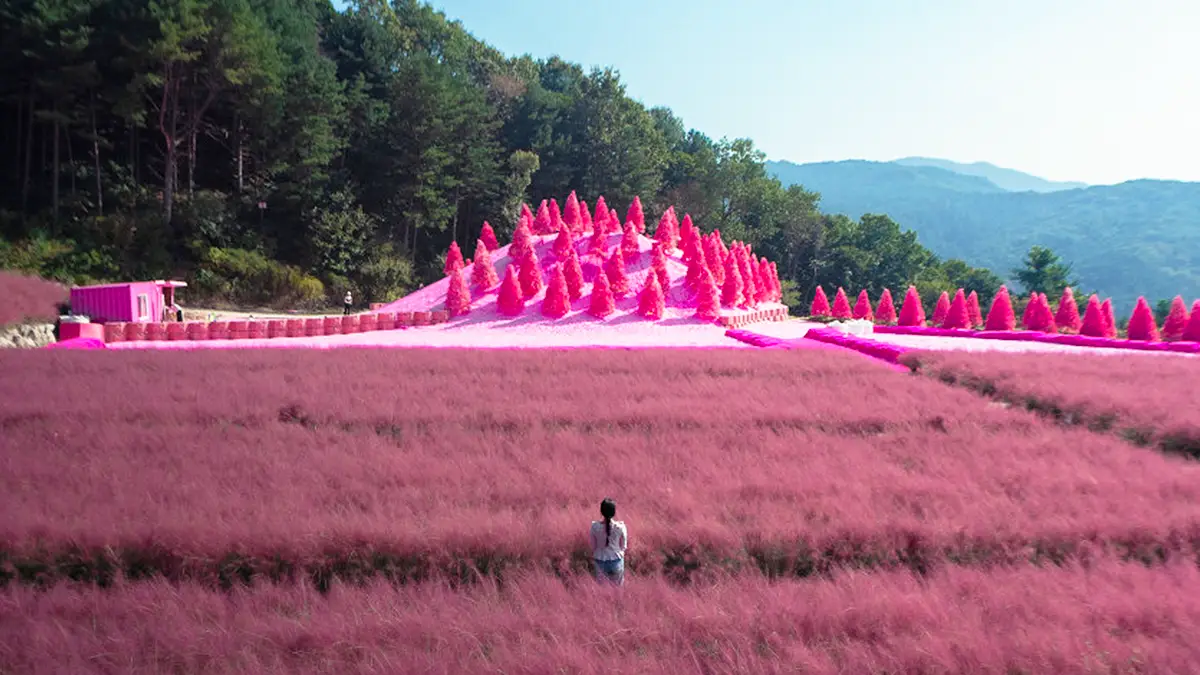
Pocheon Herb Island Spread Across 130,000 Pyeong Since October 1998
 Travel Guide
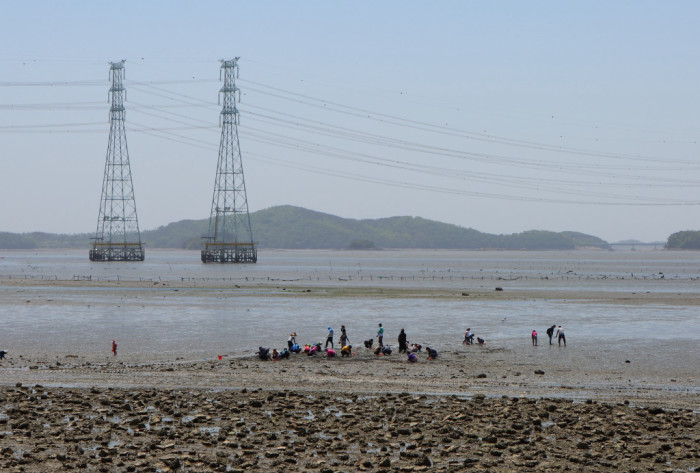
Daebudo — The Island of “Big Hills” Created by the Sihwa Seawall
 Travel Guide
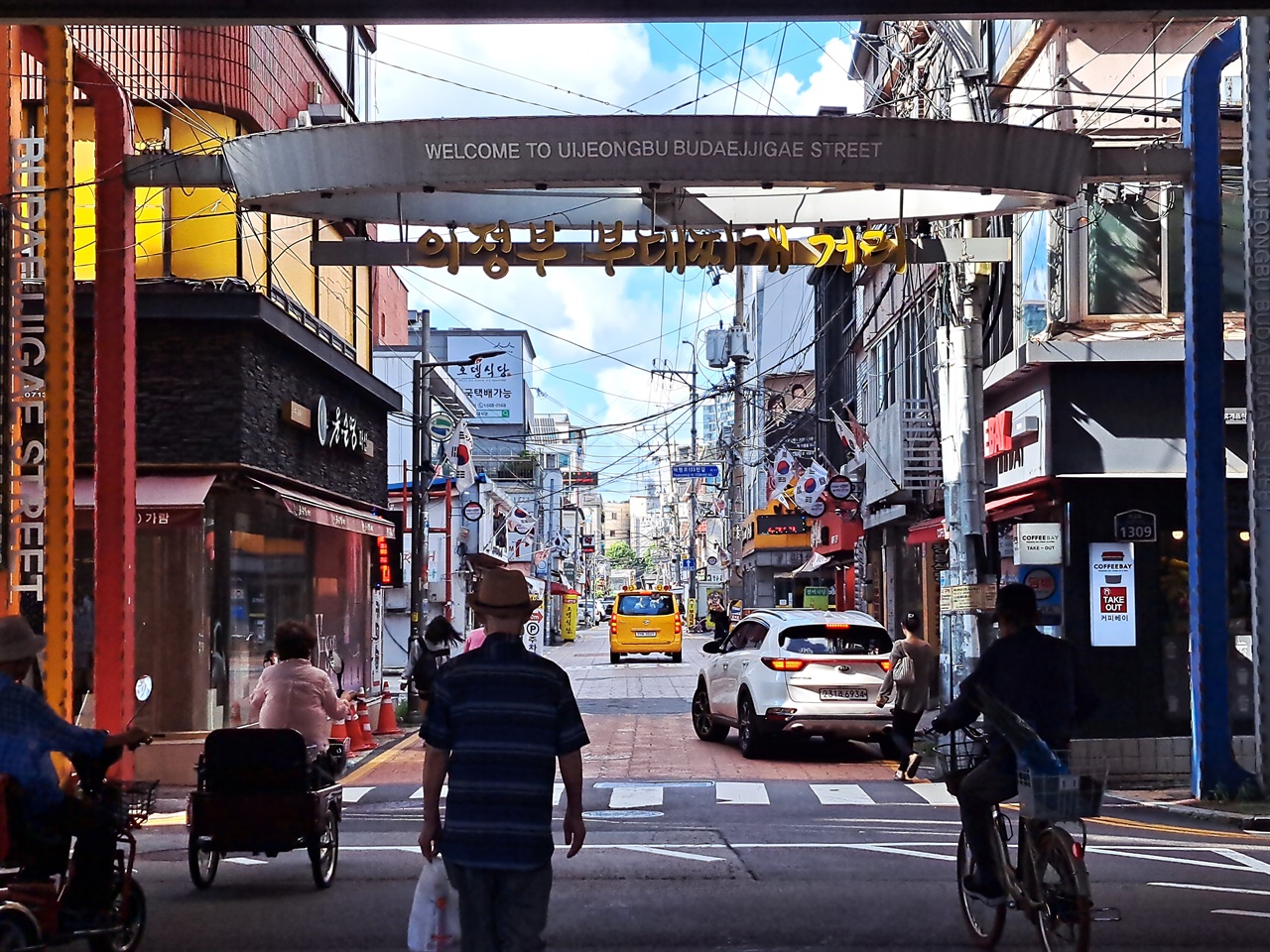
Uijeongbu Budae-jjigae Street
 Travel Guide
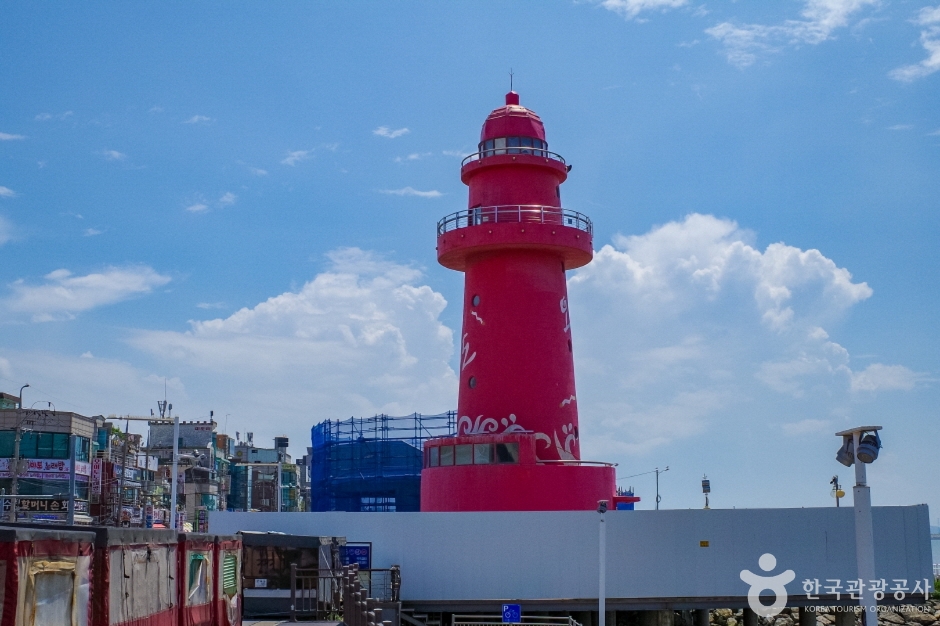
Oido Red Lighthouse — A 21 m red landmark linking the Sihwa Industrial Complex and Songdo
Korea News
![ZEROBASEONE ‘ZEROBASEONE Shining Even at Night!’ [★Video]](https://kotourlive-images.s3.ap-northeast-1.amazonaws.com/news/1786629298196_13d8a4bb_news_075face7-fb4e-402c-b833-25ccaf88cf8f.jpg) News
News
ZEROBASEONE ‘ZEROBASEONE Shining Even at Night!’ [★Video]
 News
News
Kwon Eun-bi, First Comeback Since Moving from Woollim to RBW: “Aiming for a September Release”
 News
News
“Did Jungkook’s connection continue?” Pop star Usher spotted warmly hugging BTS’s RM and J-Hope
 News
News