Daebudo — The Island of “Big Hills” Created by the Sihwa Seawall
Daebudo is an island in Danwon-gu, Ansan, connected to the mainland when the Sihwa Seawall was completed in 1994. Its name comes from the Chinese characters 大阜, meaning “big hill.” Top attractions include the 91-kilometer Daebudo Haesol-gil Trail, the Tando Sea Road that opens only twice a day, Bangameori Beach, and vineyards. Be sure to check the tide times before exploring the mudflats or the Tando Sea Road.
I’ve been here?
Your check-in helps the next traveler.
14 people viewed this week Be the first
One tap — no writing needed
Daebu (大阜), the “Great Hill” — The Meaning Behind the Name Daebudo
Daebudo, located in Danwon-gu, Ansan-si, Gyeonggi-do, is the largest island on Korea’s west coast aside from Ganghwado, and its name comes from the Chinese characters 大阜 (Daebu), meaning “great hill.” Daebudo is the central island of an archipelago consisting of five inhabited islands—Seongamdo, Buldo, Tando, Pungdo, and Yudo—and 12 uninhabited islands, including Jungyudo, Jangdo, Keungariseom, Jageungariseom, and Halmiseom.
Based on shell-mound ruins scattered throughout the island, it is believed that people have lived here since the Neolithic period, surviving by gathering oysters and shellfish from the tidal flats. The population nearly reached 10,000 as recently as the 1970s, but the number has fallen to fewer than 4,000 as young people moved away following industrialization.
January 24, 1994: The Sihwa Seawall Turned the Island into Part of the Mainland
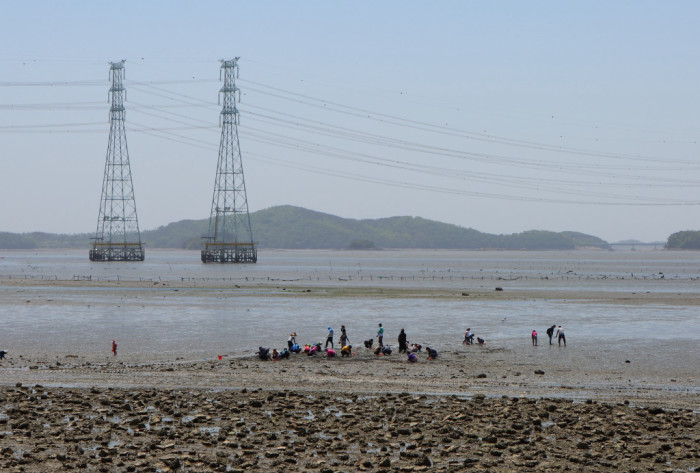
It was not long ago that Daebudo became accessible by car as it is today. After the Economic Planning Board announced the Sihwa District Reclamation Project in 1985, construction began on the Sihwa Seawall in April 1987, and the final closure was completed on January 24, 1994. Linking Jeongwang-dong in Siheung-si with Daebu-dong in Danwon-gu, Ansan-si, the seawall is 12.7 km long. At the time of its construction, it was considered the largest of its kind in East Asia, and Local Road 301 was opened alongside it as a two-lane road.
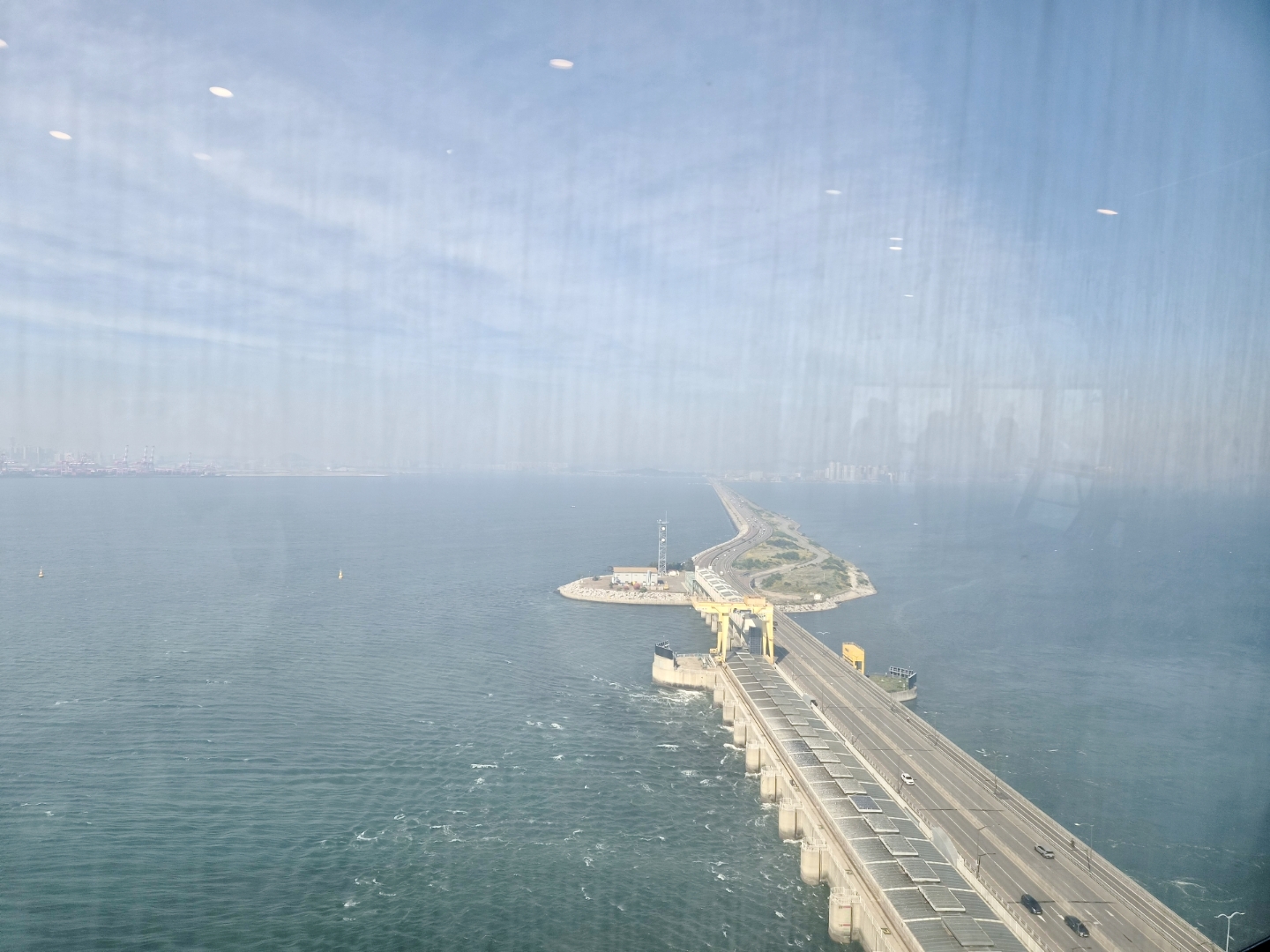
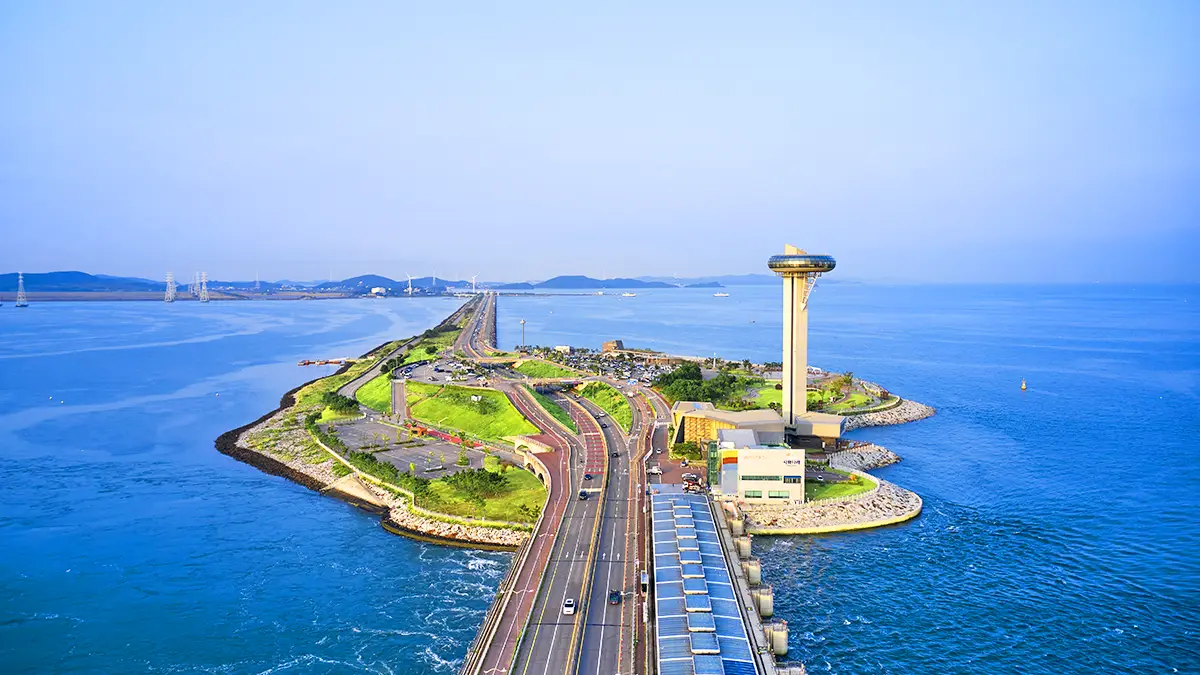
However, completion immediately created problems. As pollution became severe despite the plan to create a freshwater lake, the government opened the drainage sluice gates in March 1997 to bring seawater back in, and completely abandoned the freshwater conversion plan in November 1998. With seawater flowing in, the Sihwa Lake Tidal Power Station was built in the middle of the seawall in 2011. Today, the Sihwanara Rest Area and Sihwanara Moon Observatory are also located there, making the route to Daebudo a destination in its own right.
Daebahaesol-gil’s 10 Routes Covering 91 km — From Bangameori to Tando Port
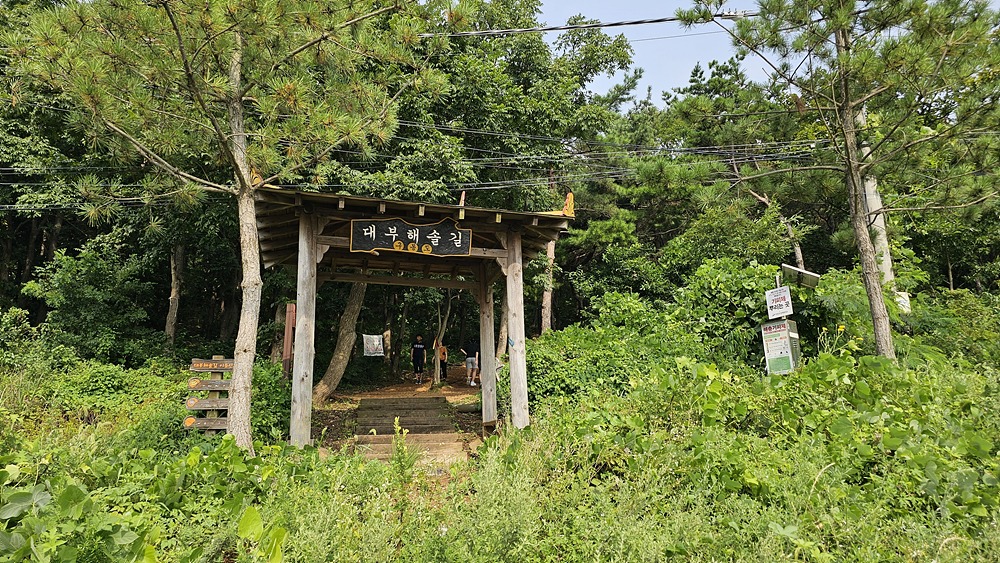
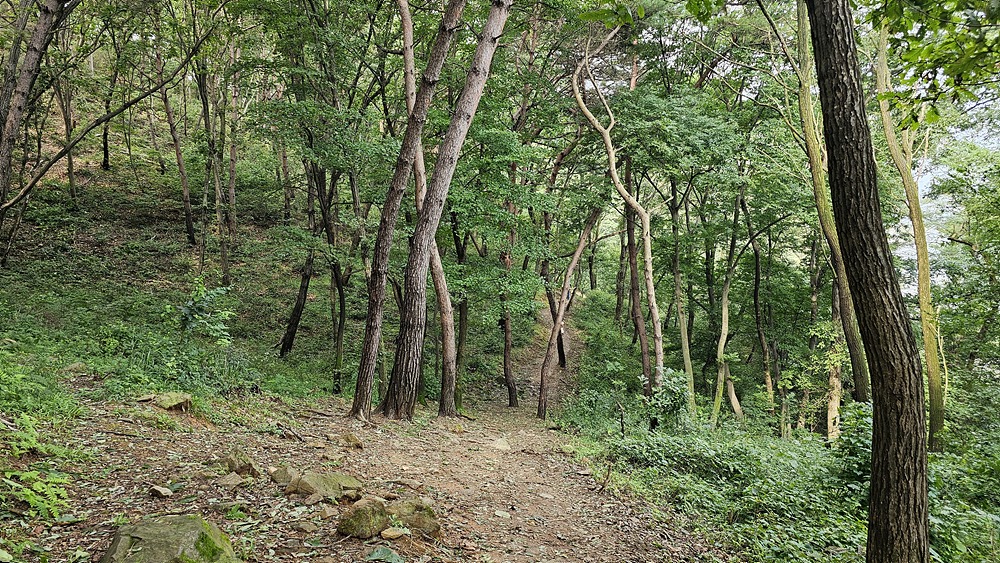
Following Daebudo’s coastline in a full circuit around the island, Daebahaesol-gil consists of 10 routes totaling 91 km. It begins at Bangameori Ferry Terminal and continues through Gubongdo, Daebunam-dong, Seongamdo, and Tando Port to Daesong Industrial Complex. Each section offers different scenery, including pine-forest paths, salt-field paths, sunset paths, coastal paths, tidal-flat paths, vineyard paths, and rural paths.
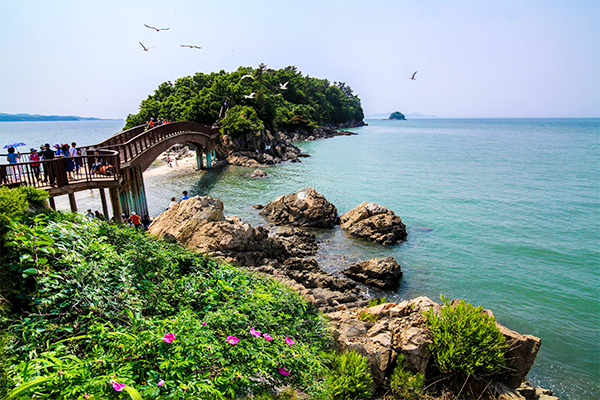
Route 1, which runs from Bangameori to Donjiseoman-gil, is considered the most popular section of Daebahaesol-gil among visitors. According to visitor reviews, it takes approximately 11.5 km and about four hours on foot to reach the end of Route 1. The Gaemiheori Arch Bridge in the middle of the route connects Gubongdo with the small island of Kkakkalseom. At high tide, seawater rises beneath the bridge, while at low tide the entire bridge is revealed above the tidal flats, creating completely different views depending on the tide.
Tando Coastal Road and Nuoeseom — A 1.2 km Tidal-Flat Path That Opens Twice a Day
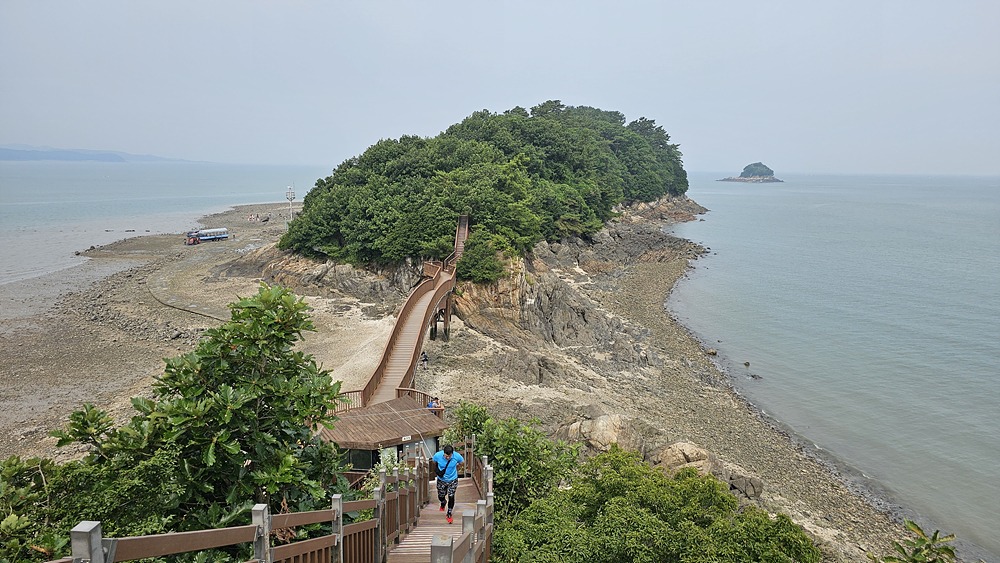
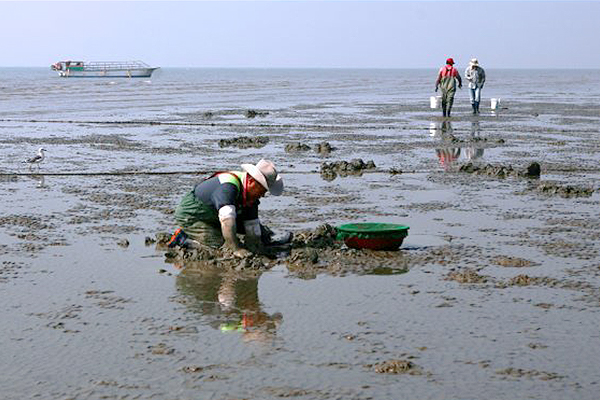
Between Tando Port at the western tip of Daebudo and the uninhabited island of Nuoeseom lies the Tando Coastal Road, which opens only twice a day because of the tidal range. When the water recedes, a tidal-flat path approximately 1.2 km long is revealed, allowing visitors to walk to the uninhabited island in the middle of the sea. Because the scene resembles a biblical story, it is commonly called the “Moses Miracle of Tando Coastal Road.”
The Nuoeseom Lighthouse Observatory at the end of the path is open from 10:00 to 18:00 in summer. Admission is free, and the nearby public parking lot can also be used free of charge. However, the path is submerged quickly when the tide comes in, so visitors must check the tide timetable before going. The managing organization recommends entering between 30 minutes and one hour after the tide begins to recede. For inquiries, contact the Daebudo Tourist Information Center at 1899-1720.

Bangameori Beach — The Only Beach at the Northern End of Daebudo
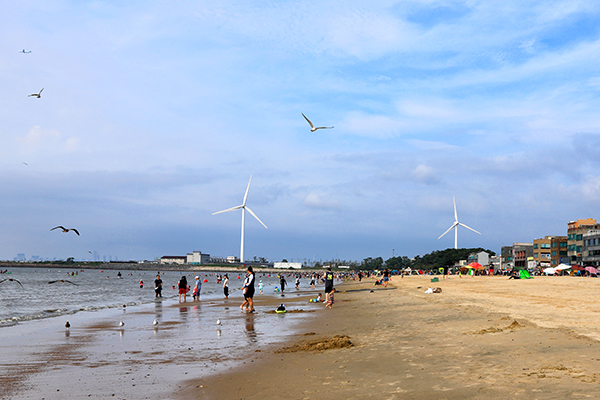
After crossing the Sihwa Seawall and entering Daebudo, the first place visitors encounter is Bangameori Beach. When the island was still separated from the mainland, the terrain here extended far toward the sea and resembled the head of a traditional foot-operated mill, giving the area the name Bangameori. A pine forest and an easy-to-walk deck trail have been created behind the beach, which also serves as the starting point for Route 1 of Daebahaesol-gil.
Visitors wishing to experience the tidal flats should plan their visit for low tide. Visitor reviews frequently mention that tents are prohibited, but parasols, sunshades, picnic mats, and camping chairs are permitted. By bus, take Route 123 and get off at the Bangameori Ferry Terminal stop; the beach is a one-minute walk away. The Bangameori Food Culture Street, lined with seafood restaurants, has been established near the beach.
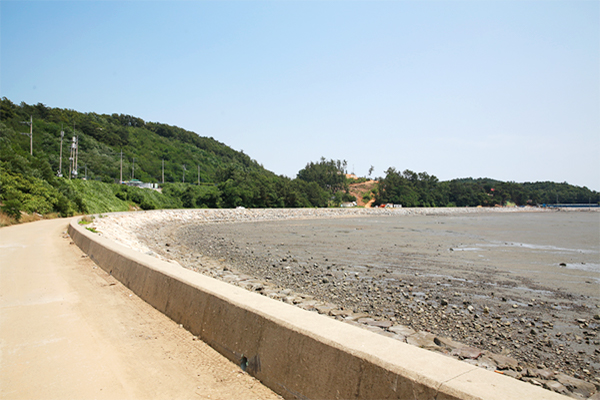
Daebu Grapes and Clam Kalguksu — The Story Behind the Island’s Cuisine
Grapes, Daebudo’s signature specialty, were first cultivated in 1954, when Jeong Gyeong-seon, who lived in Buk 4-ri, planted around 50 Campbell Early vines shortly after the Korean War. Thanks to the cool sea breeze, large daily temperature range, and mineral-rich soil, the grapes are characterized by thick skins and high sugar content. Ansan City has held the Daebu Grape Festival every September during the harvest season since 1995.
Clam kalguksu became established as a Daebudo dish much later than grapes, only after the 1960s. Before then, little wheat was grown on the island, and the dish began as a quick lunch served to salt workers laboring in the island’s many salt fields. As seawall construction linking the islands progressed in the late 1980s, the number of outside workers and tourists increased, and specialized restaurants gradually appeared. After Daebudo was fully connected to the mainland by the Sihwa Seawall in 1997, kalguksu restaurants multiplied along both sides of the road from Bangameori Ferry Terminal, as they do today.
Glass Island Museum — A Glass Craft Complex on a 43,000 m² Site
At the far end of Daebudo, Glass Island Museum is a cultural complex on a 43,000 m² site. It includes the Glass Island Art Museum, Mac Art Museum, a themed exhibition hall recreating natural objects in glass, a glass sculpture park, and hands-on educational spaces.
It is open Tuesday through Sunday from 09:30 to 18:30, with ticket sales available only until 17:30. It is closed every Monday, December 31, and the day before Lunar New Year and Chuseok. The telephone number is 032-885-6262. Admission is 10,000 won for adults, 9,000 won for teenagers aged 13–18, and 8,000 won for children aged 3–12; children under three enter free. Glass craft demonstrations are held three times a day, with an additional evening performance during extended nighttime hours.
Bus 123 from Ansan Station — How to Reach Daebudo from Seoul
By public transportation, the most common option is to transfer to Bus 123 at Ansan Station on Subway Line 4. Route 123 departs from Jungang Station, Choji Station, and Ansan Station, then passes Sihwa E-Mart, the Sihwa Seawall, Bangameori, and the Daebudong Community Service Center before reaching Tando. Buses run every 20–40 minutes. From the Incheon area, Route 790 passes Sungui Station, Jemulpo Station, and Incheon City Hall Station, then travels via the Sihwa Seawall and Bangameori to Yeongheungdo, with intervals of 50–60 minutes.
From Seoul, take a metropolitan bus such as Routes 3400, 6502, or P9541 from Sadang Station, then transfer to Route 123 at the Easy the 1 stop. By car, enter Daebudo via Local Road 301 across the Sihwa Seawall. Intermediate rest facilities and restrooms are available along the seawall section.
Summer Vacation Traffic and Tides — When Is the Best Time to Visit?
Buses to Daebudo normally have relatively infrequent service, with intervals of more than 30 minutes. During the summer vacation season, traffic congestion becomes severe starting on the Sihwa Seawall, causing bus travel times to increase as well. Many people recommend taking a detour via the Bibong–Maesong Expressway instead of the Sihwa Seawall during this period.
If you are planning activities determined by the tides, such as a tidal-flat experience or a walk along the Tando Coastal Road, checking the tide timetable for your specific visit date is far more important than the season. Visitor reviews repeatedly mention that around 10:00 in the morning, low tide is a good time to enter and enjoy the tidal flats. Reviews also note that the fields and reed landscapes along Daebahaesol-gil are particularly attractive in autumn.
Useful Things to Know at the Daebudo Tourist Information Center
The Daebudo Tourist Information Center near Bangameori Beach, located at 1531 Daebuhwanggeum-ro, Danwon-gu, Ansan-si, Gyeonggi-do, is open from 10:00 to 18:00, or from 10:00 to 17:00 during winter (November–February). The inquiry telephone number is 1899-1720.
Visitors can leave an identification card and rent a stroller, wheelchair, umbrella, or picnic mat for the day with a 2,000-won deposit, making the center worth visiting in advance when traveling with children or older adults. The Ansan City Culture and Tourism website offers audio guides about Daebudo’s attractions and stories in various languages, allowing international visitors to hear explanations of key sections by scanning QR codes.
Before You Go
- Address
- 1531 Daebuhwanggeum-ro, Danwon-gu, Ansan-si, Gyeonggi-do (based on the Daebudo Tourist Information Center)
- Hours
- The island is open year-round · Daebudo Tourist Information Center 10:00–18:00 (winter, November–February, 10:00–17:00) · Glass Island Museum 09:30–18:30 (ticket sales close at 17:30) · Nuoeseom Lighthouse Observatory 10:00–18:00 (summer schedule; subject to change according to the tides)
- Closed
- No regular closing days for the island · Glass Island Museum is closed every Monday, December 31, and the day before Lunar New Year and Chuseok
- Admission
- Entry to Daebudo itself is free · Glass Island Museum: adults 10,000 won / teenagers aged 13–18 9,000 won / children aged 3–12 8,000 won / children under 3 free · Nuoeseom Lighthouse Observatory and Tando Coastal Road are free
- Phone
- Daebudo Tourist Information Center 1899-1720 / Glass Island Museum 032-885-6262
- Official site
- https://www.ansan.go.kr/tourinfo
- Transport
- Transfer to Bus 123 at Ansan Station on Subway Line 4 and get off at the Bangameori Ferry Terminal stop (departures from Jungang Station, Choji Station, and Ansan Station; intervals of 20–40 minutes) · Route 790 from the Incheon area (via Sungui Station, Jemulpo Station, and Incheon City Hall Station; intervals of 50–60 minutes) · From Sadang Station in Seoul, take metropolitan Bus 3400, 6502, or P9541 to the Easy the 1 stop, then transfer to Route 123
- Parking
- Dedicated parking lot at Bangameori Beach, free public parking at Nuoeseom Lighthouse Observatory, and an on-site parking lot at Glass Island Museum · Individual fees vary by facility
- Time needed
- 6–8 hours for a day trip; at least one night and two days to complete all Daebahaesol-gil routes (91 km)
- Accessibility
- Free stroller and wheelchair rentals at the Daebudo Tourist Information Center (bring identification; 2,000-won deposit) · Audio guides in various languages are available via QR codes on the Ansan City Culture and Tourism website
The information above is current as of the time of writing. Check the official information again before visiting.

Places
Nearby Attractions 5
-
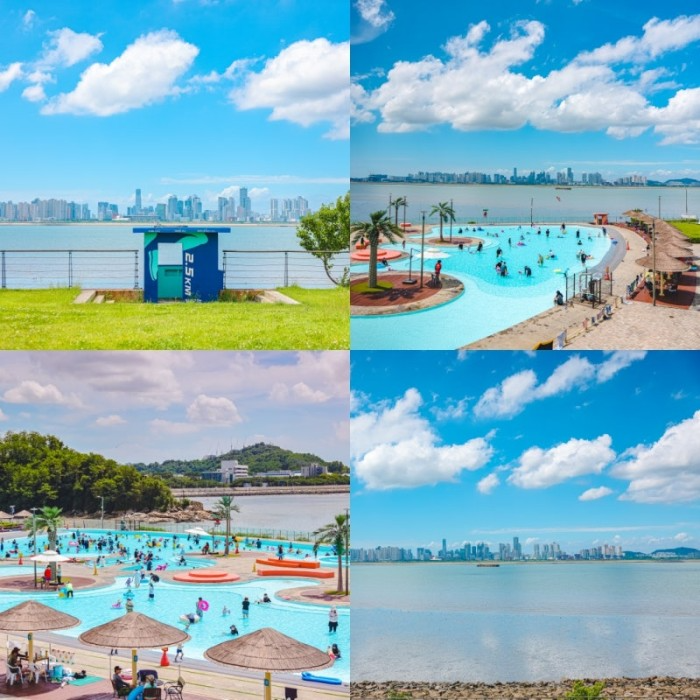 1
Baegot Hanul ParkA coastal park where you can enjoy walking and water activities while looking out over the West Sea.
1
Baegot Hanul ParkA coastal park where you can enjoy walking and water activities while looking out over the West Sea. -
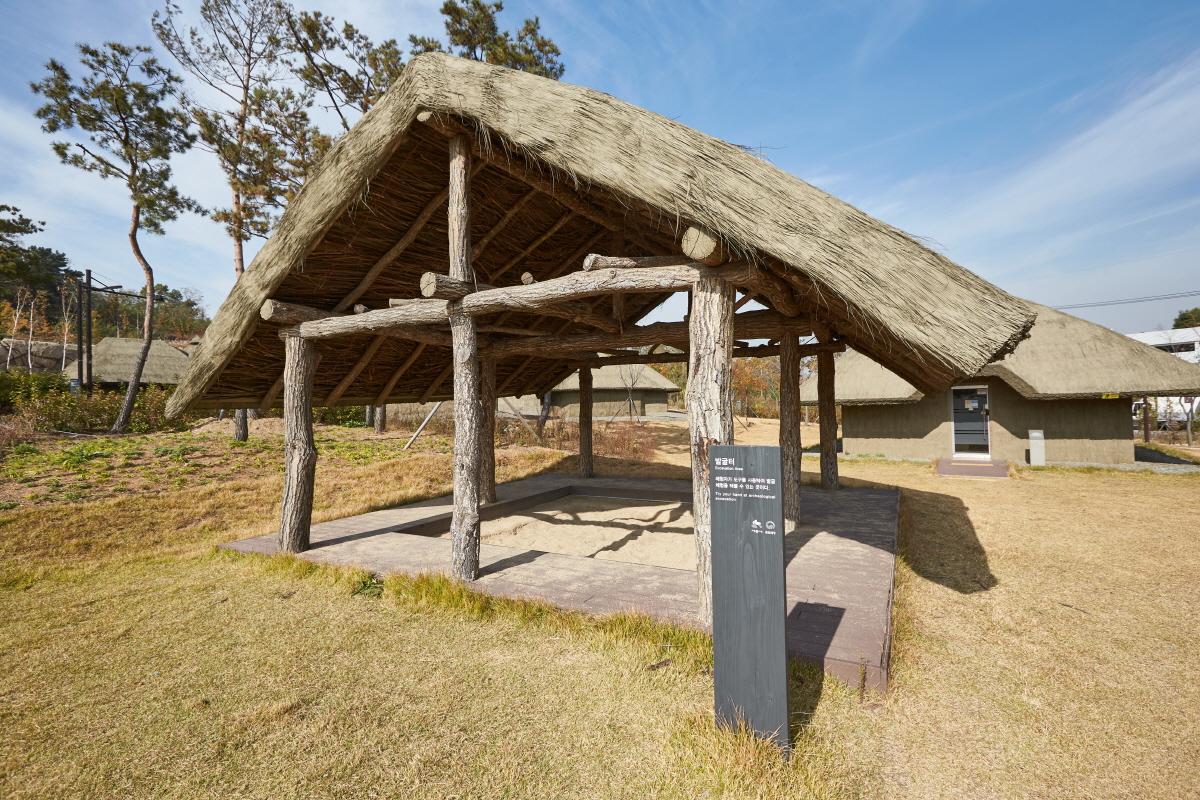 2
Oido Prehistoric Site ParkA historic park where you can walk among shell middens and prehistoric remains.
2
Oido Prehistoric Site ParkA historic park where you can walk among shell middens and prehistoric remains. -
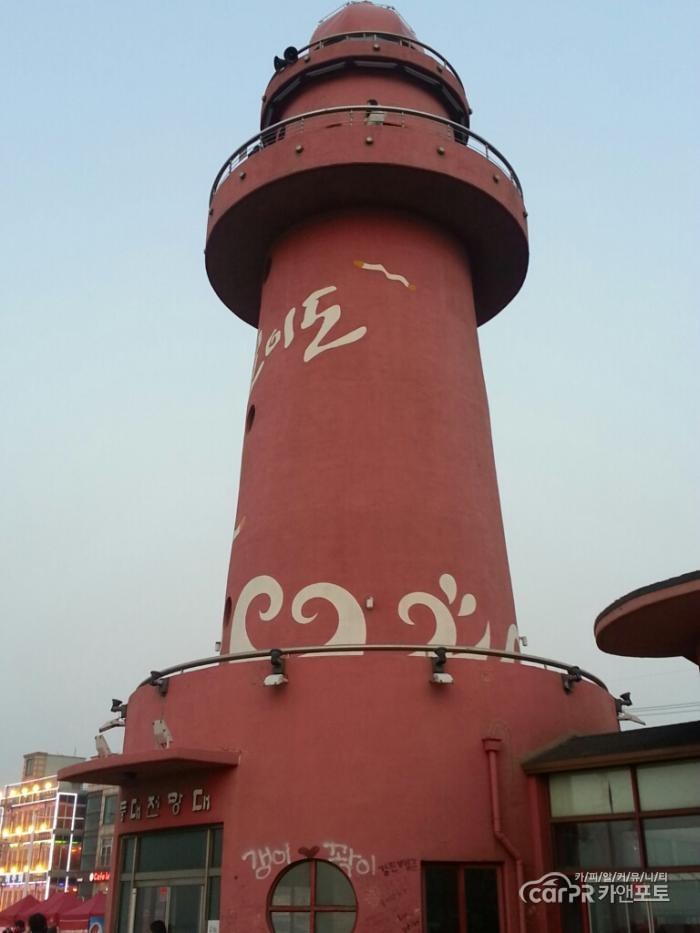 3
3
-
 4
Sihwa Narae Rest AreaA rest area on the Sihwa Seawall where you can take a break and enjoy the sea views.
4
Sihwa Narae Rest AreaA rest area on the Sihwa Seawall where you can take a break and enjoy the sea views. -
 5
Sihwa Narae Dal ObservatoryAn observatory offering elevated views of Lake Sihwa and the tidal power plant.
5
Sihwa Narae Dal ObservatoryAn observatory offering elevated views of Lake Sihwa and the tidal power plant.
Food & Dining 1
-
 6
6
Events in This Area



Festivals in This Area


More Travel Guides in This Area
 Travel Guide
How to Plan a One-Day Itinerary at Siheung Premium Outlets, 699 Seohaean-ro, Opened in 2017
 Travel Guide
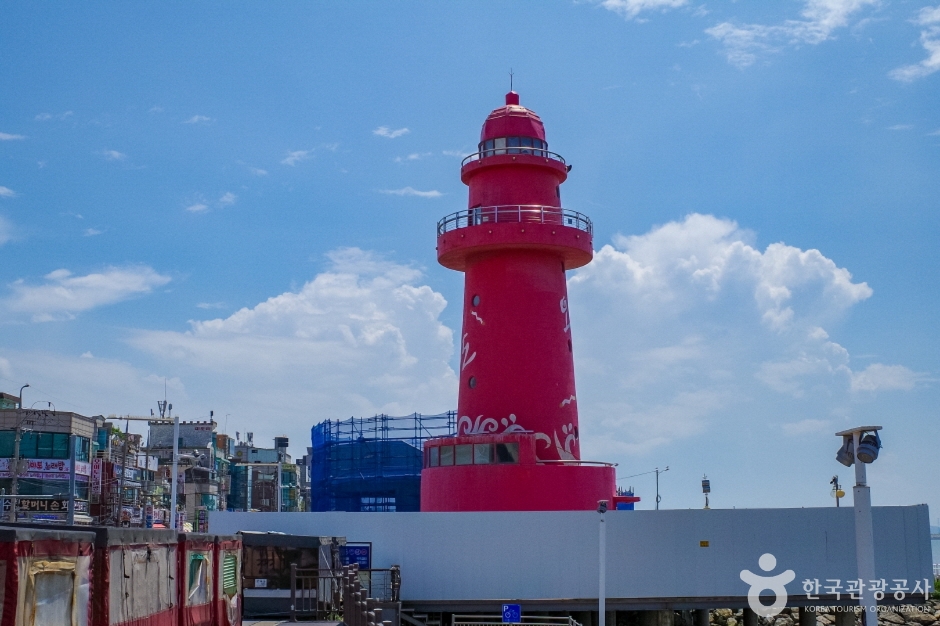
Oido Red Lighthouse — A 21 m red landmark linking the Sihwa Industrial Complex and Songdo
 Travel Guide
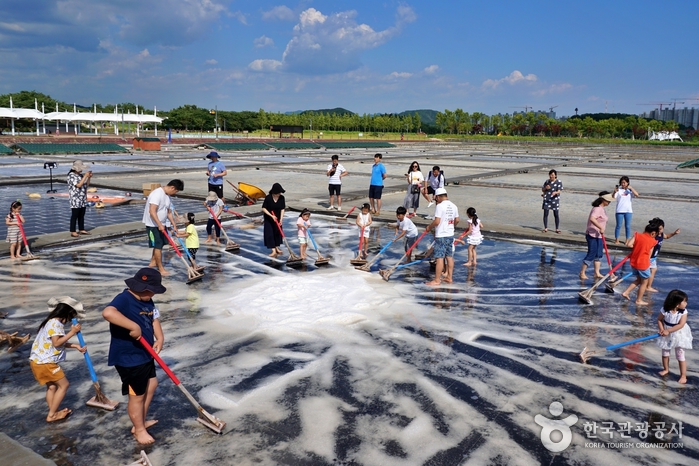
Siheung Gaetgol Ecological Park, Where the Sea Flows: Traces of Sorae Salt Fields and How to Get There
 Travel Guide
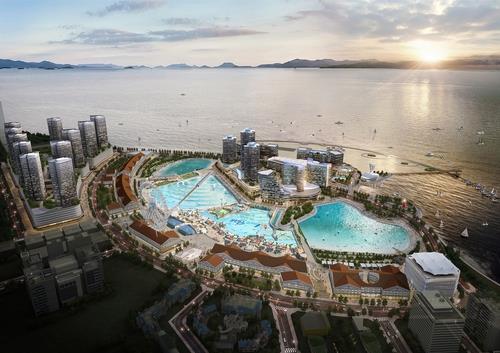
How to Make Waves on Geobukseom: Practical Guide to Using Siheung Wave Park
Korea News
![BLACKPINK’s Lisa Dominates the VMA Red Carpet in a Sheer Corset Dress and Red Fur [Star Issue]](https://kotourlive-images.s3.ap-northeast-1.amazonaws.com/news/1790557894714_010e956a_news_94409db1-fab6-40bf-bc7b-4b985b1fbac7.jpg) News
News
BLACKPINK’s Lisa Dominates the VMA Red Carpet in a Sheer Corset Dress and Red Fur [Star Issue]
![BLACKPINK’s Jisoo Spotted by Surprise with BIGBANG in London… Their Special Loyalty as Labelmates [IS High Cut]](https://kotourlive-images.s3.ap-northeast-1.amazonaws.com/news/1790557854683_6ea979f5_news_caab62e5-8462-43c8-8622-da794f3df9de.png) News
News
BLACKPINK’s Jisoo Spotted by Surprise with BIGBANG in London… Their Special Loyalty as Labelmates [IS High Cut]
 News
News
Tattoos All Over Her Body… AOA’s Jimin Draws Shocked Attention After Kwon Mina’s ‘Bullying’ Allegations
![You’ll Have to Look Twice… Choi Min-a-soo Perfectly Pulls Off Everything from a Daring Illusion Dress at the Awards Ceremony to Long Braided Hair [RE:STAR]](https://kotourlive-images.s3.ap-northeast-1.amazonaws.com/news/1790492384850_1f293dad_news_d834c50e-0685-43ef-9aa5-6995cd6d8848.jpg) News
News