Walking Along the Traces of Daewongak in Seongbuk-dong’s Gilsangsa
Gilsangsa is a temple in Seongbuk-dong, Seongbuk-gu, Seoul, transformed in 1997 from the former entertainment venue Daewongak. The stories of Monk Beopjeong, Kim Young-han (Gilsanghwa), and poet Baek Seok continue through the Memorial Stele, Portrait Hall, Paradise Hall, and Seven-Story Pagoda, making the historical context vivid even on a short walk.

I’ve been here?
Your check-in helps the next traveler.
No one has checked in yet Be the first
One tap — no writing needed
Background to Daewongak Becoming Gilsangsa on December 14, 1997
Gilsangsa is a branch temple of Songgwangsa Temple of the Jogye Order of Korean Buddhism, located at 68 Seonjam-ro 5-gil, Seongbuk-gu, Seoul. This site was originally home to Daewongak, an upscale entertainment establishment in Seongbuk-dong, and the temple began when its owner, Kim Yeong-han (Dharma name: Gilsanghwa), donated the land and more than 40 buildings to the Buddhist monk Beopjeong.
After declining Kim Yeong-han’s request for several years, Beopjeong registered the site as “Daebeopsa” in 1995 and opened it on December 14, 1997, as “Gilsangsa, the Root Temple of Clear and Fragrant Living.” Cardinal Kim Su-hwan gave a congratulatory address at the opening ceremony. Because of this background, Gilsangsa remains a downtown Seoul temple where the exchange among Buddhism, Catholicism, and Christianity can be explored.
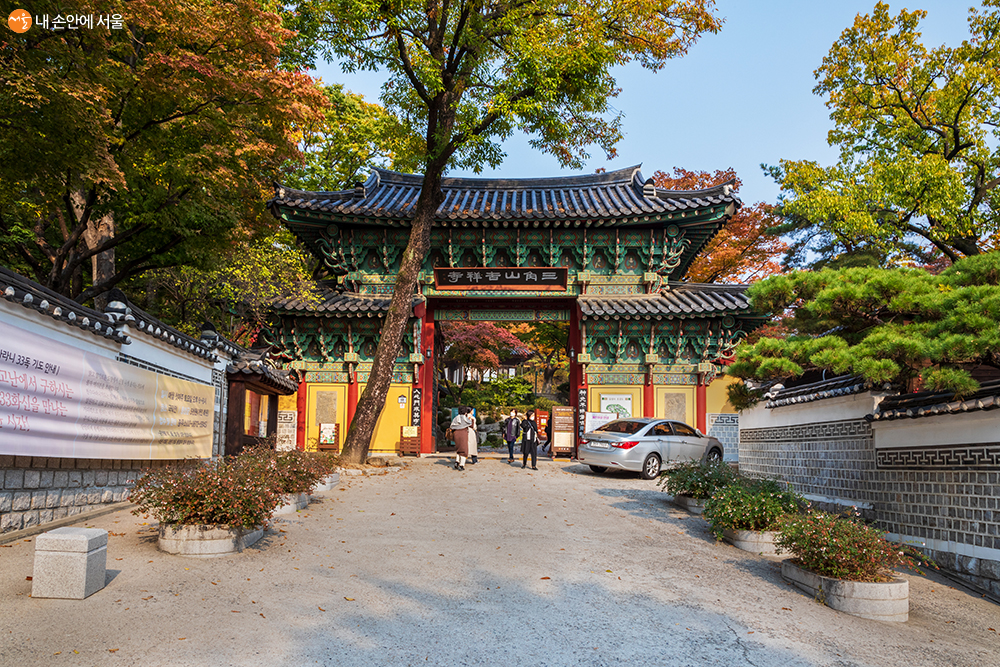
A Small Valley Where the Gilsanghwa Merit Stele Meets Baek Seok’s Poetry
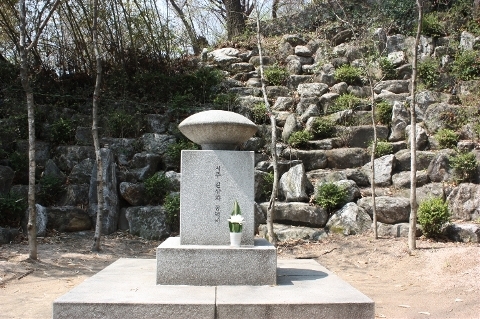
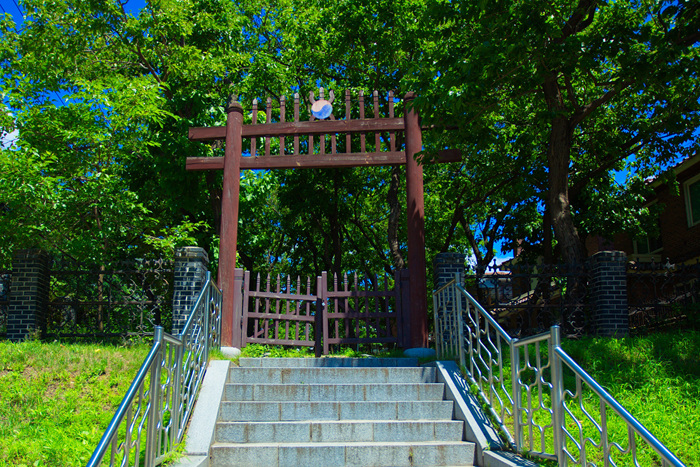
After passing through the iljumun gate, visitors will find a small valley and the “Gilsanghwa Donor Merit Stele.” The information panel introduces the origins of Gilsangsa, the relationship between Kim Yeong-han and the poet Baek Seok, and Baek Seok’s poem “Me, Natasha, and the White Donkey,” offering a glimpse into the connection between Daewongak, the temple’s predecessor, and literary history.
Kim Yeong-han was born in 1916 and died in 1999, and received the Dharma name “Gilsanghwa” from Beopjeong at Gilsangsa’s opening ceremony. The shrine and poetry stele behind the merit stele are easy for visitors focused only on the religious facilities to miss, so it is advisable to set aside an additional 5–10 minutes before walking directly uphill from the entrance to Geungnakjeon Hall.
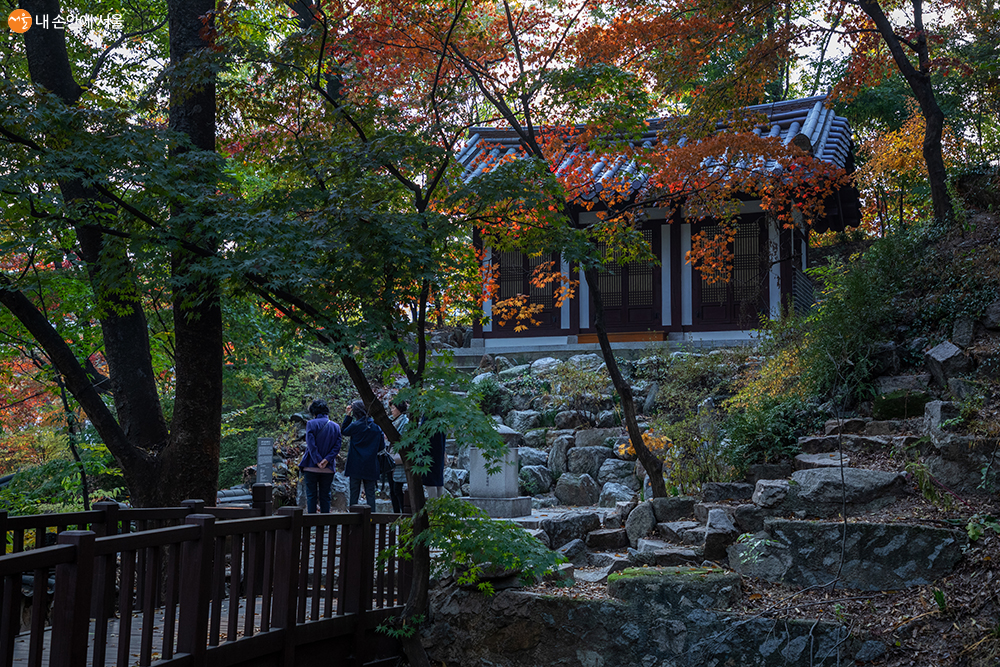
Geungnakjeon Hall Without Dancheong and a Gwanseum Bosal Statue Symbolizing Religious Harmony
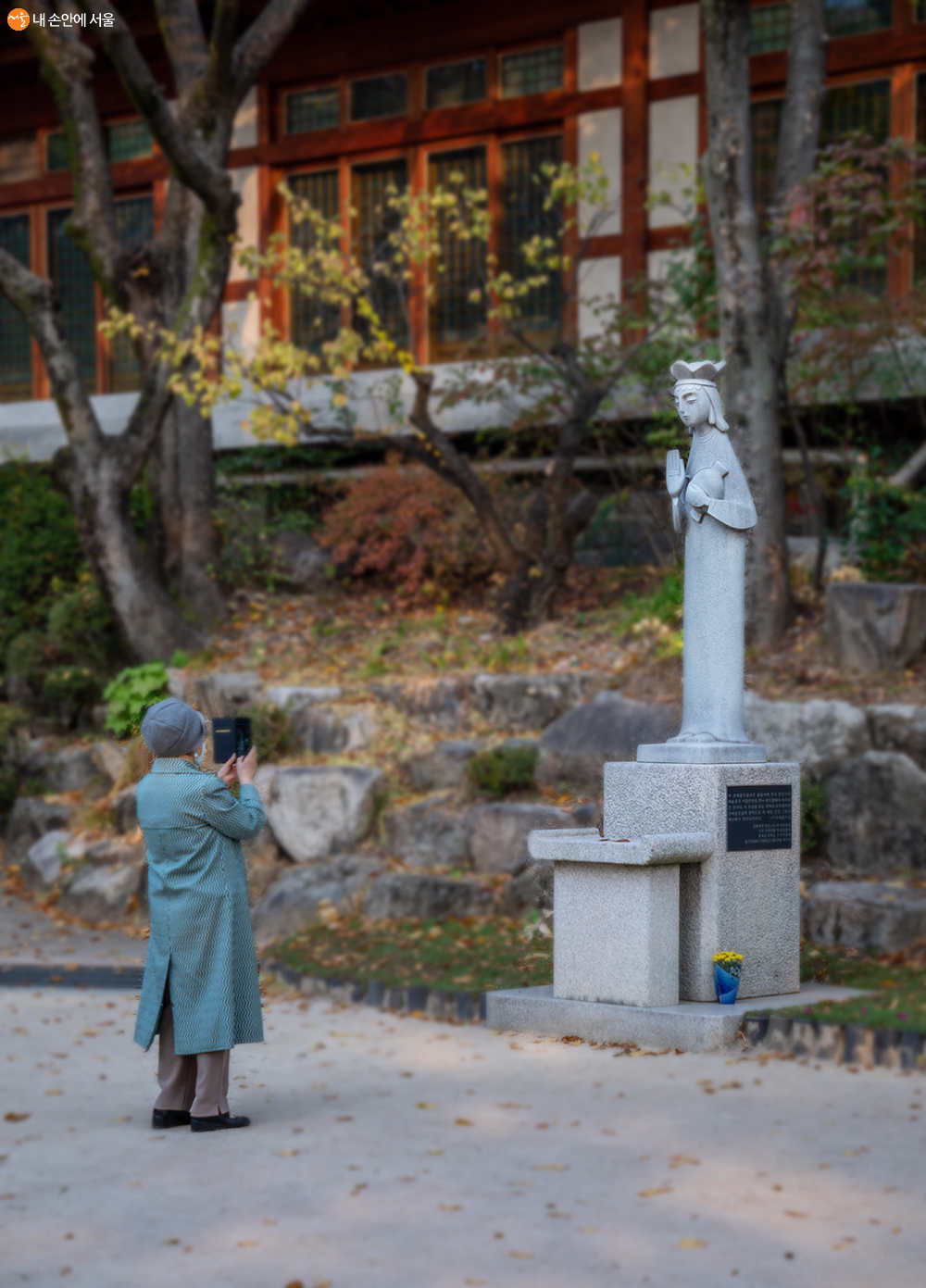
Gilsangsa’s main worship hall, Geungnakjeon, is a hall converted from a restaurant building for use as a temple space. Seoul city materials describe the building’s lack of dancheong, the colorful traditional decorative painting commonly seen at Korean temples, as one of its notable features, showing that traces of Daewongak-era architecture remain in the temple’s present appearance.
The Gwanseum Bosal statue on the grounds was created by the Catholic sculptor Choi Jong-tae, while the Gilsangsa Seven-Story Pagoda was donated by Baek Seong-hak, a Christian. Therefore, viewing Geungnakjeon, the Gwanseum Bosal statue, and the seven-story pagoda along one route makes it possible to read in the physical space the message of religious harmony emphasized from the temple’s opening in 1997.
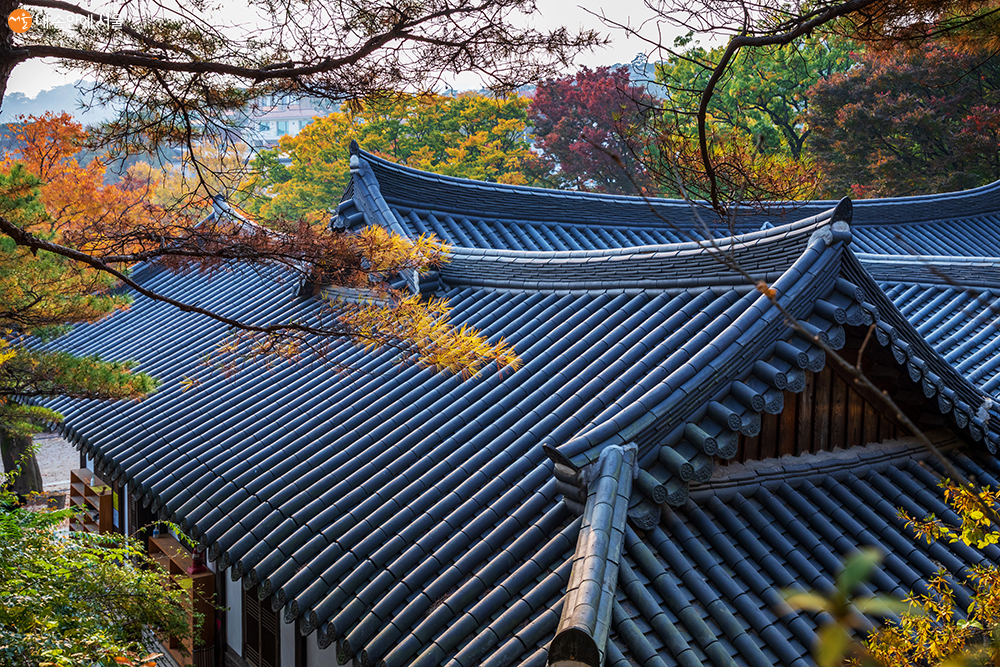
Photography and Visiting Etiquette to Follow at Jinyeonggak
Jinyeonggak houses Beopjeong’s portrait, will, handwritten manuscripts, and personal belongings. According to Seoul’s visitor information, indoor photography is not permitted, so visitors should photograph only the entrance and exterior scenery and put away their cameras and mobile phones inside the hall.
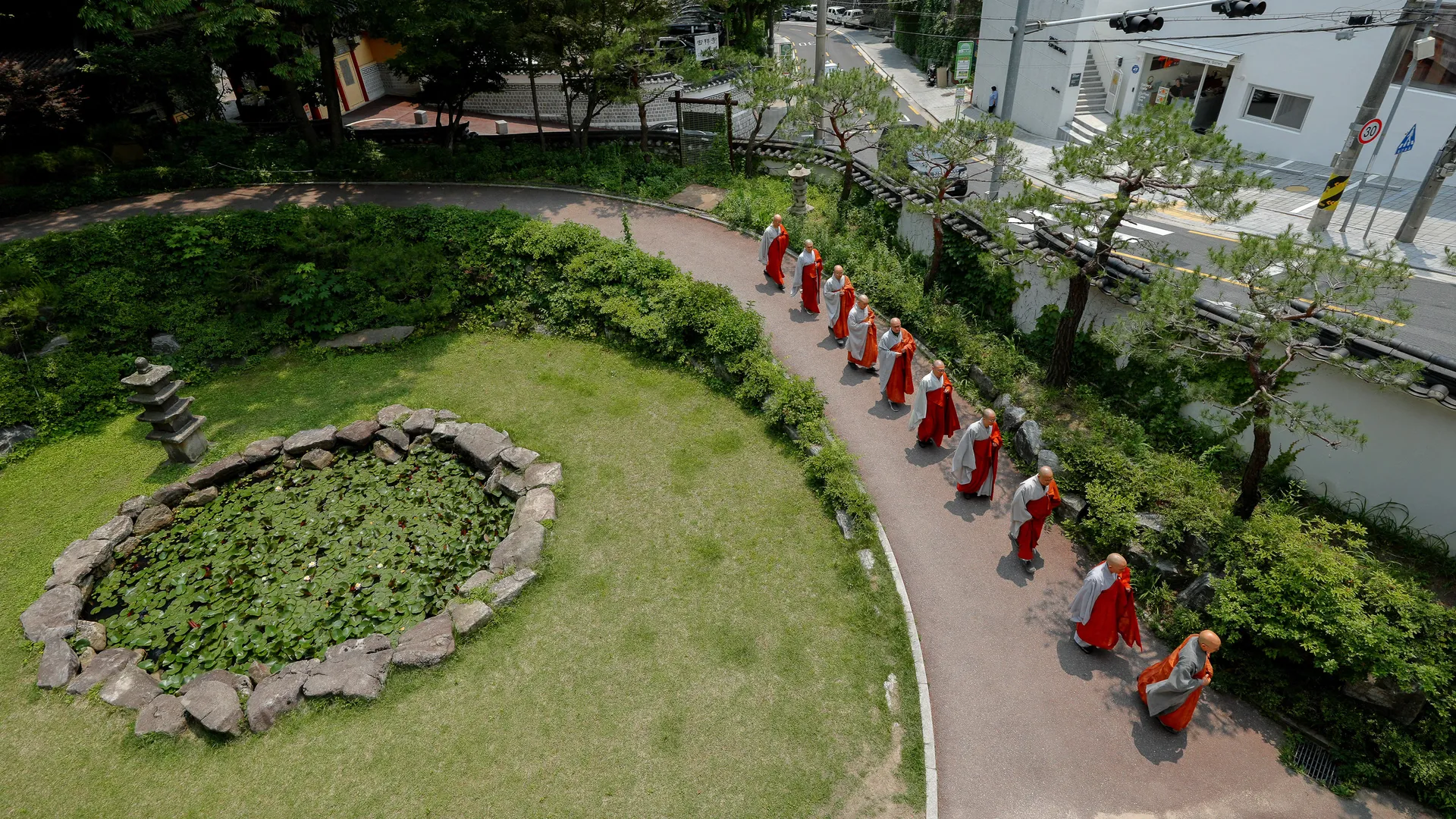
Beopjeong served as the resident head monk of Gilsangsa from 1997 to 2003 and passed away at Gilsangsa’s Haengjisil in 2010. Small stone pagodas placed by visitors can be seen around the wall of Jinyeonggak, but it is best to avoid damaging existing stone pagodas or piling new stones along the passageway.
One Minute from the Gilsangsa Stop on Seongbuk 02; Transfer at Hansung University Station
If using only the subway, the walk from Hansung University Station on Line 4 to Gilsangsa is indicated as taking about 30 minutes. To reduce the uphill walk and the streets through Seongbuk-dong’s residential area, a practical option is to take the Seongbuk 02 village bus near Hansung University Station, get off at the Gilsangsa stop, and walk for about one minute.
Buses 1111, 1112, and 2112 stop at the Seongbuk District Art Museum–Ssangdariap stop, from which it is about a 15-minute walk. Seoul’s Hanyangdoseong information materials also present an alternative: take the Seongbuk 03 bus from Exit 6 of Hansung University Station, get off in front of Yang’s Store, and walk for five minutes.
- Address: 68 Seonjam-ro 5-gil, Seongbuk-gu, Seoul
- Bus: Get off at the Seongbuk 02 “Gilsangsa” stop, then walk about 1 minute
- Alternative buses: Get off 1111, 1112, or 2112 at the “Seongbuk District Art Museum–Ssangdariap” stop, then walk about 15 minutes
- Parking within the grounds may be crowded on weekends, so public transportation is recommended.
The Grounds Are Open Free of Charge for 60–90 Minutes; Programs Require Separate Reservations
The grounds of Gilsangsa are listed as open year-round, and admission is free. The contact telephone number is 02-3672-5945, and the official website is https://kilsangsa.info/home/default_in.asp. Since access to some areas may vary depending on services, ceremonies, and temple circumstances, it is safest to check the notices on the day of your visit.
Allow 60–90 minutes to see the merit stele, Jinyeonggak, Geungnakjeon, the Gwanseum Bosal statue, Beomjonggak, and the Gilsangsa Seven-Story Pagoda. A Sunday Dharma assembly is held once a month at 11 a.m., with the date announced on the website. The temple stay generally consists of a one-night, two-day program held on the third or fourth weekend of each month, while the 2–4-hour temple-life and meditation programs require separate applications and participation fees.
How to Combine Autumn Foliage with a Literary Walk through Seongbuk-dong
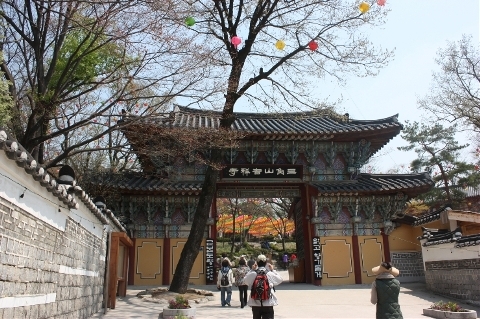
Accounts of visits to Seongbuk repeatedly mention visiting Gilsangsa during the foliage season, and Seoul city materials also introduce the combination of the Geungnakjeon roof and autumn trees as a feature of Gilsangsa. If autumn foliage is your main purpose, choosing early morning or the period before sunset and walking in the order of the area around the merit stele, the front of Geungnakjeon, and the seven-story pagoda makes it easier to separate the photography and sightseeing routes.
After visiting the temple, you can descend toward the Seongbuk District Art Museum–Ssangdariap stop and continue to Seongbuk-dong’s literary and modern cultural spaces. Since Gilsangsa is a place connected with the stories of Kim Yeong-han and Baek Seok, you can understand the cultural history of the Seongbuk-dong neighborhood more concretely by including the explanations on the merit stele and the poetry stele rather than simply viewing the temple architecture and leaving.
Before You Go
- Address
- 68 Seonjam-ro 5-gil, Seongbuk-gu, Seoul
- Hours
- Open year-round
- Admission
- Free
- Phone
- 02-3672-5945
- Official site
- https://kilsangsa.info/home/default_in.asp
- Transport
- About a 30-minute walk from Hansung University Station on Line 4. Get off at the Seongbuk 02 “Gilsangsa” stop, then walk about 1 minute. Get off 1111, 1112, or 2112 at the “Seongbuk District Art Museum–Ssangdariap” stop, then walk about 15 minutes.
- Parking
- Free parking is available, but public transportation is recommended on weekends
- Time needed
- 60–90 minutes
- Accessibility
- Indoor photography is not permitted at Jinyeonggak. Applications for temple stays and meditation programs for foreign visitors are available after prior consultation.
The information above is current as of the time of writing. Check the official information again before visiting.

Places
Nearby Attractions 5
-
 1
Seonjamdan Altar SiteThis is a historic site where the queens of the Joseon Dynasty held rituals for the silkworm deity.
1
Seonjamdan Altar SiteThis is a historic site where the queens of the Joseon Dynasty held rituals for the silkworm deity. -
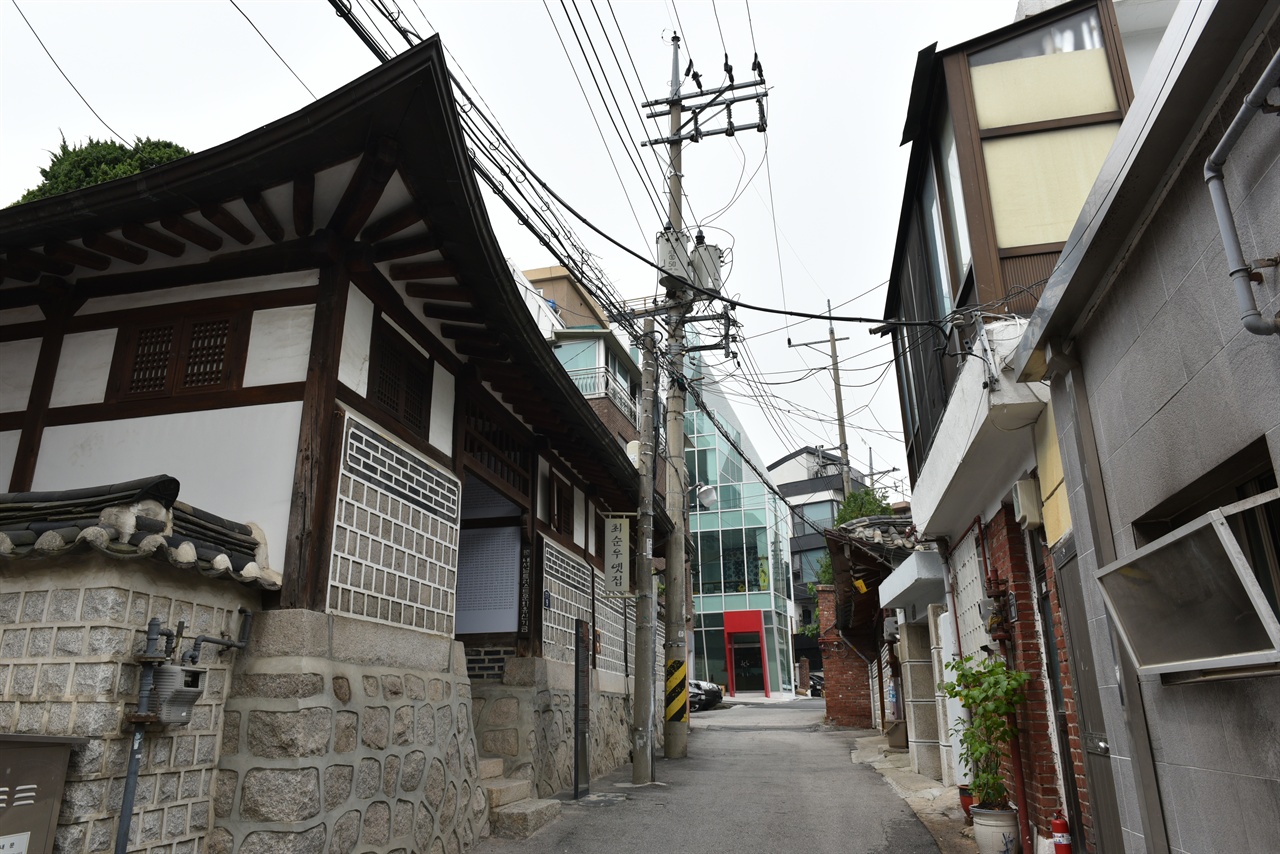 2
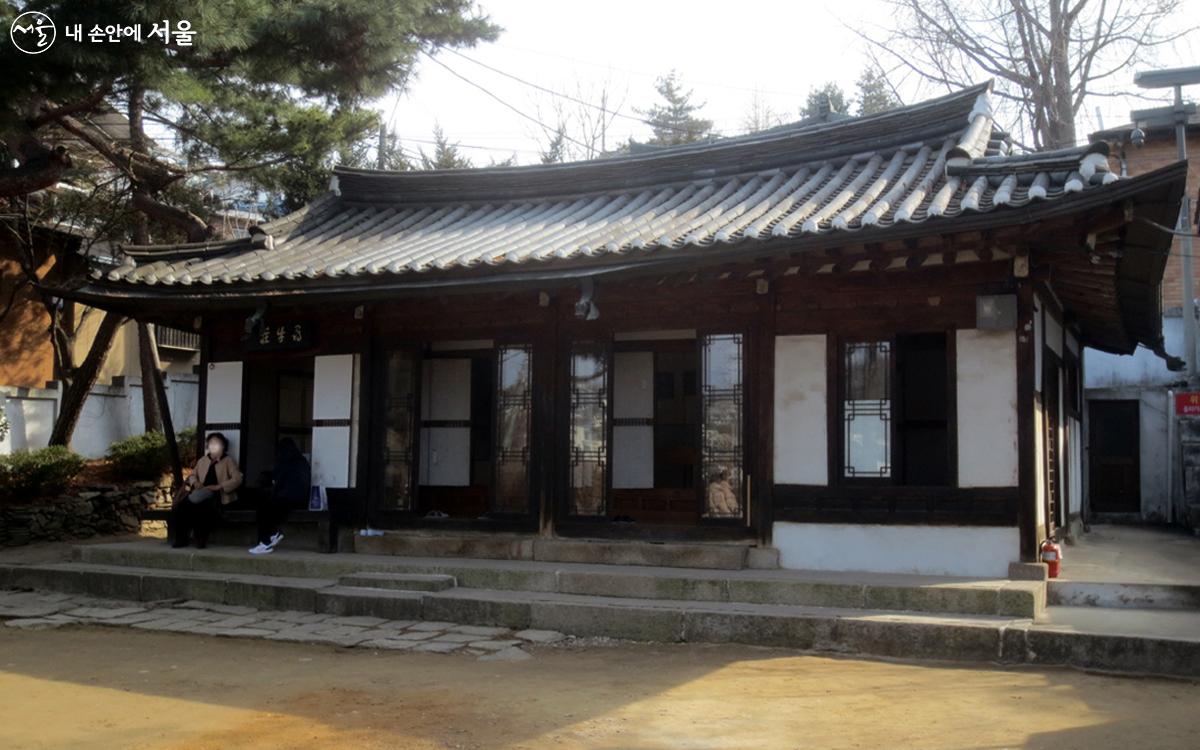
Choi Sun-woo HouseExplore the traditional hanok and garden where art historian Choi Sun-woo once lived.
2
Choi Sun-woo HouseExplore the traditional hanok and garden where art historian Choi Sun-woo once lived. -
 3
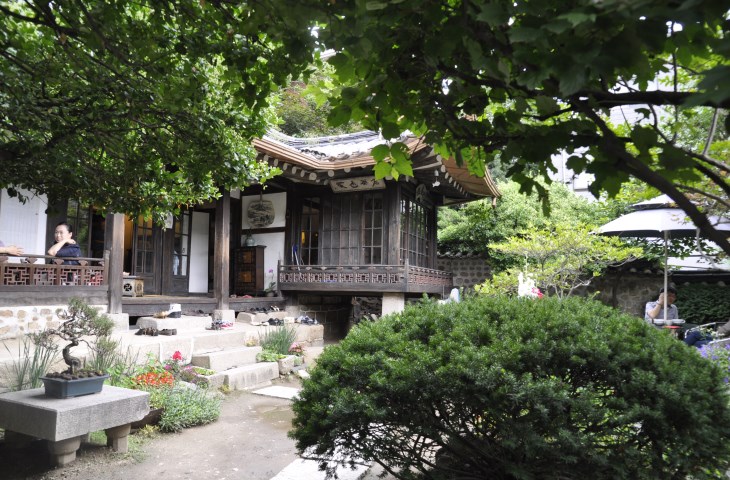
SimujangExplore the hanok where Manhae Han Yong-un spent his later years, along with his literary legacy.
3
SimujangExplore the hanok where Manhae Han Yong-un spent his later years, along with his literary legacy. -
 4
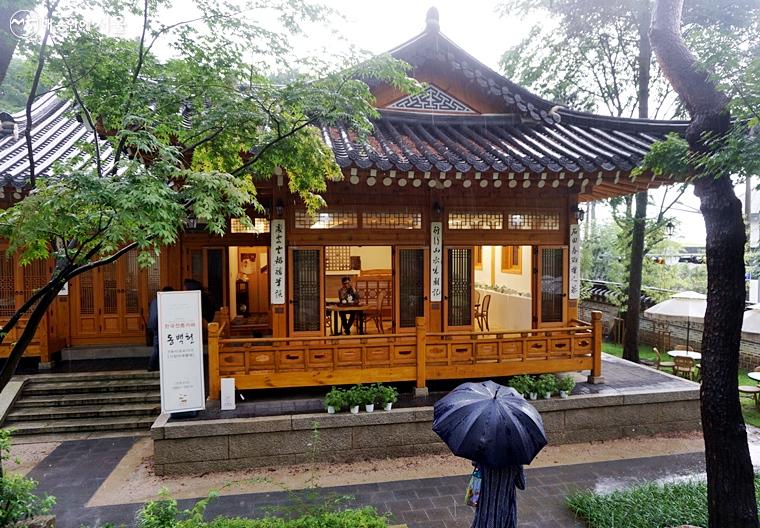
SuyeonsanbangEnjoy traditional tea and the hanok scenery at Sangheo Lee Tae-jun’s former home.
4
SuyeonsanbangEnjoy traditional tea and the hanok scenery at Sangheo Lee Tae-jun’s former home. -
 5
SamcheonggakEnjoy performances, cultural experiences, and the traditional Korean ambiance in a traditional hanok.
5
SamcheonggakEnjoy performances, cultural experiences, and the traditional Korean ambiance in a traditional hanok.
Events in This Area


Festivals in This Area
More Travel Guides in This Area
 Travel Guide
From the Camel-Back Ridge to Heunginjimun Gate: Reading Seoul's City Wall at Naksan Park
 Travel Guide
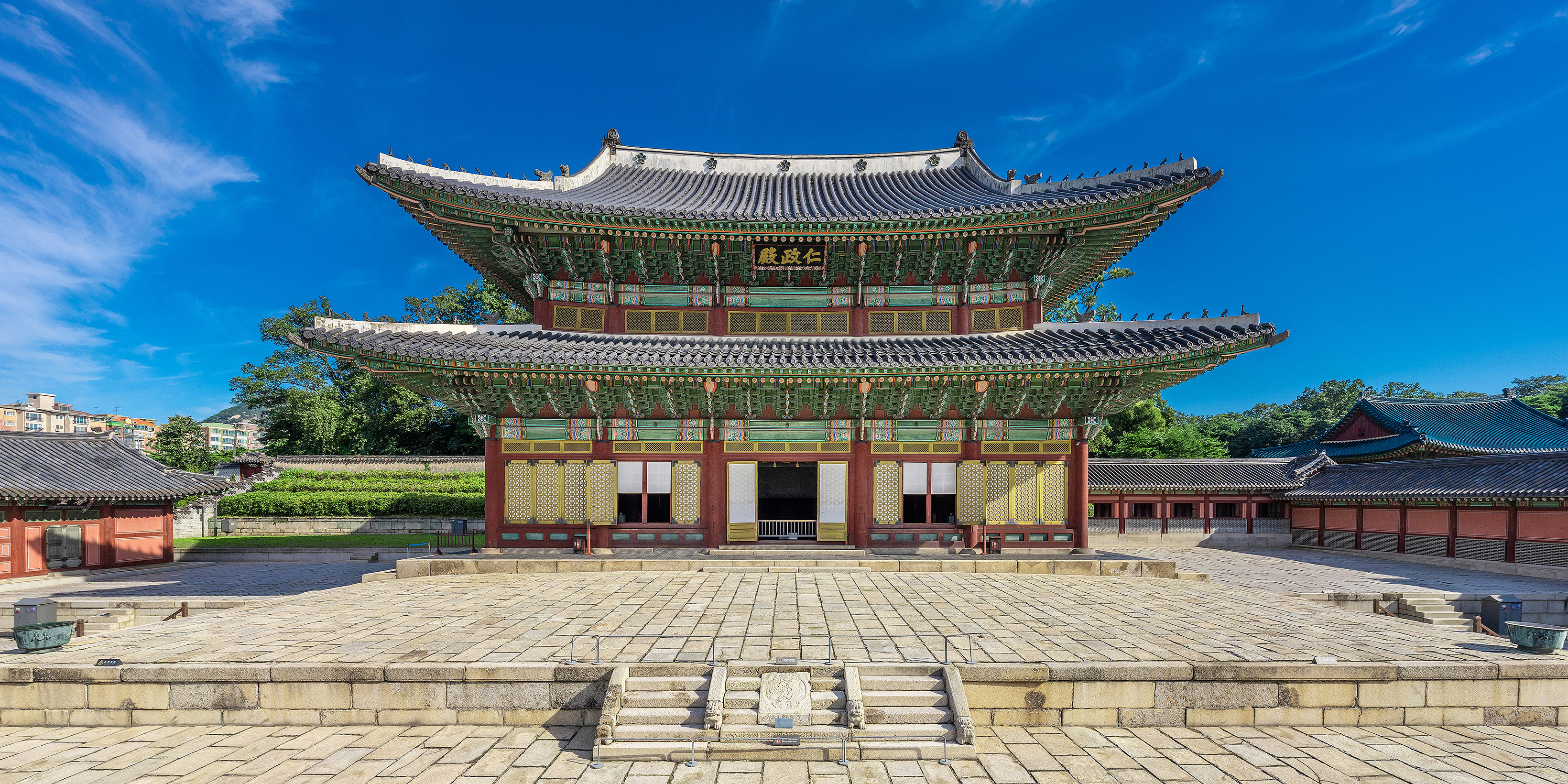
From a Secondary Palace in 1405 to a De Facto Royal Palace for 270 Years — A Route Through Changdeokgung’s Donhwamun, Injeongjeon, and Secret Garden
 Travel Guide
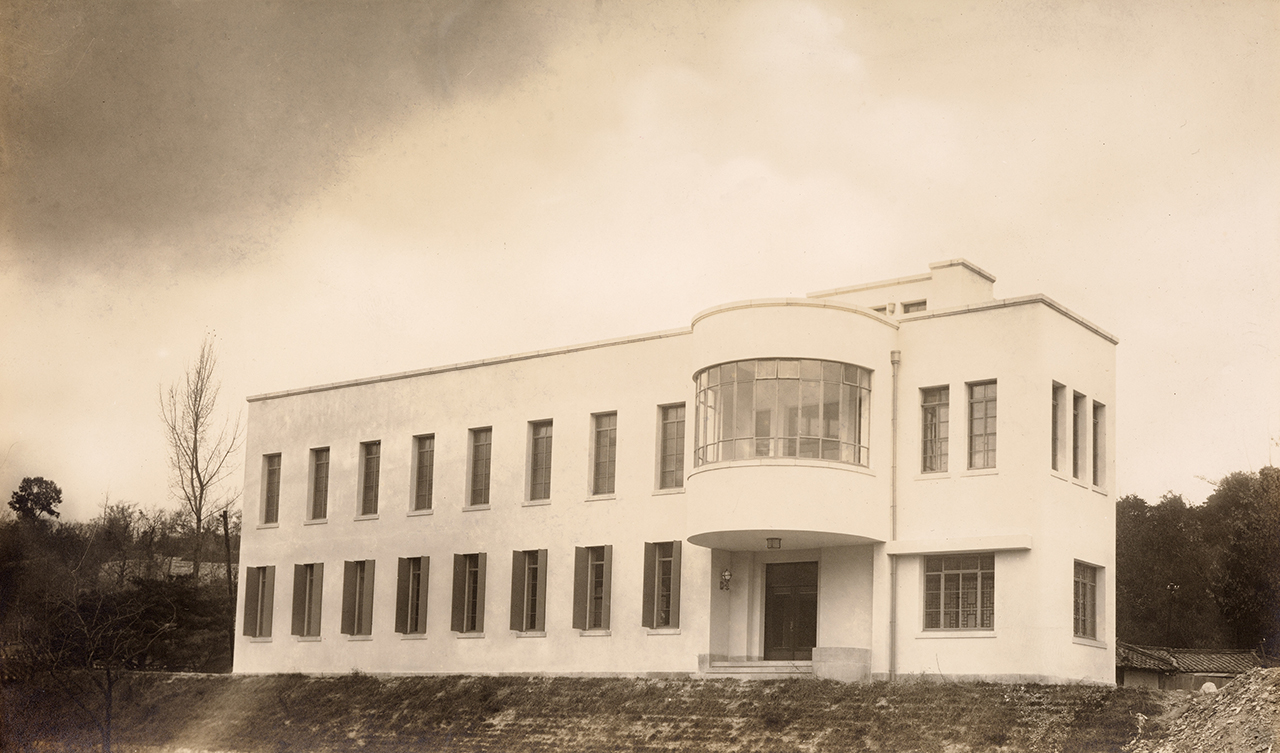
Discovering the Gansong Museum of Art through the doors of Bohwagak, built in 1938
 Travel Guide
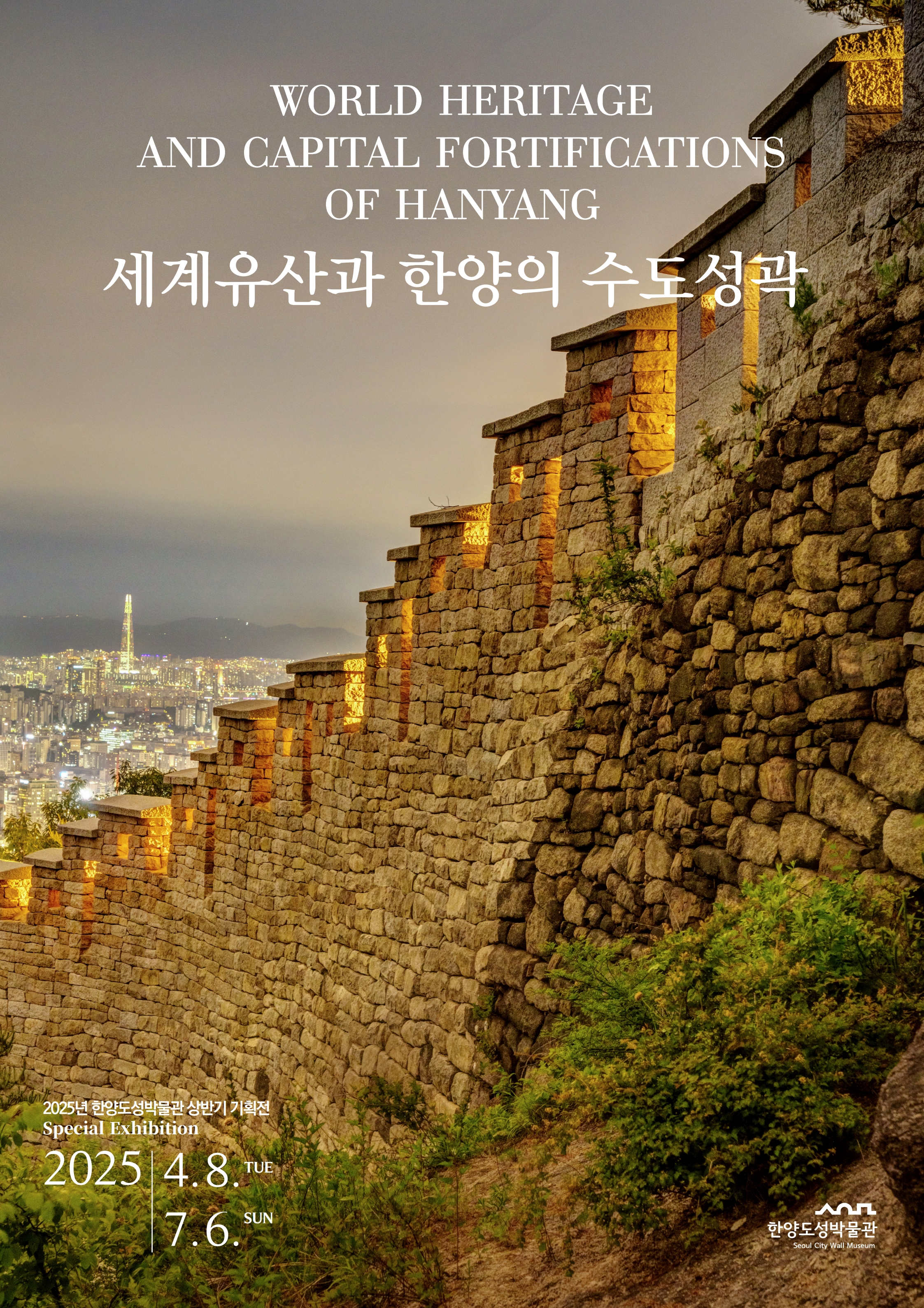
Reading the History of Hanyangdoseong from 1396 beside Heunginjimun Gate: Seoul City Wall Museum
Korea News
 News
News
aespa’s Winter—Can a Person Really Be This Cute? A Daily Life Full of Pure Charm
 News
News
Tom Cruise Spotted Taking a Late-Night Walk at Hangang Park… Strolled for an Hour in a Black Suit
 News
News
'Jimin, We'll always be with you' Peru Embraced 'Jimtober' Birthday Celebrations... "I'm Happy"
 News
News