I’ve been here?
Your check-in helps the next traveler.
No one has checked in yet Be the first
One tap — no writing needed
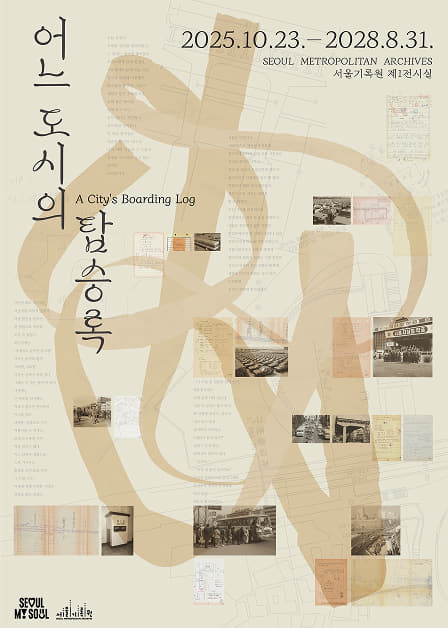
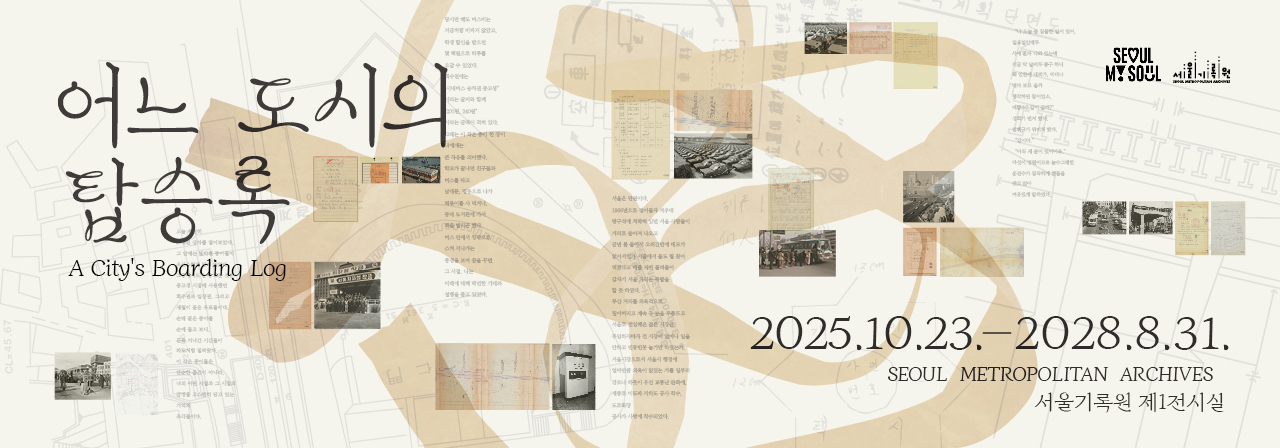
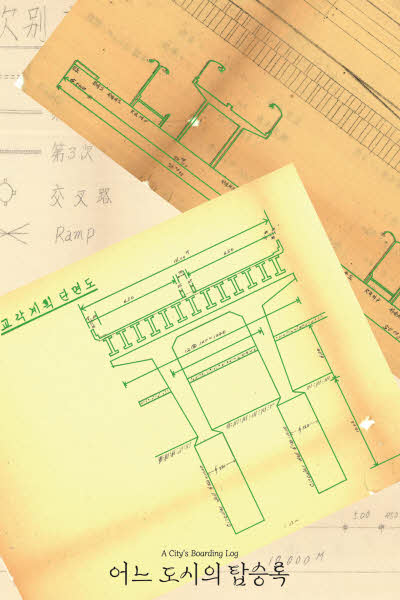
The exhibition "A City’s Boarding Record," which brings the development history of Seoul's public transportation to life as vivid documentation, is held in Exhibition Room 1 on the 2nd floor of the Seoul Archives from October 23, 2025 to August 31, 2028 for a period of three years. This exhibition offers a special experience of retracing how Seoul established the foundations of its transportation system and grew from the aftermath of the Korean War through the 1980s using archival materials. Around 120 records from the Seoul Archives and valuable materials donated by designers who participated in subway construction form the core of the exhibition, allowing visitors to explore in depth Seoul's evolving public transportation system over time, including city buses, taxis, trams, and subways. The exhibition title "Boarding Record" does not merely mean a record of riding a vehicle; it refers to the everyday lives of citizens contained within, the city's changes, and the spirit of the era. Like collecting stamps in a passport, visitors can experience Seoul's growth journey by "boarding" the transportation of each era.
The exhibition is organized into several sections, each introducing different aspects of Seoul's transportation. In the "City Drawn on a Plane" section, visitors can see how Seoul systematically built its transportation system through foundational city planning maps and transportation-related ordinances and policy documents. The "Citizens' Expanding Steps" section features original materials that show the expansion of the bus industry in the 1950s and 1960s, such as municipal bus notices, bus vehicle inspection records, and employee recruitment announcements. The "Taxis Filling the Gaps Above Ground" section exhibits interesting historical records documenting the transition from shared taxis to a call-taxi system, the introduction of the taxi meter system, and uniform regulations for exemplary taxis. The "Paths Laid Through Elevated Spaces" section covers the construction of elevated roads that drove Seoul's three-dimensional urbanization, such as the Cheonggye overpass and Euljiro overpass, and finally, the "The Vanishing Tram" section records the history of trams that disappeared as Seoul modernized. The exhibits in each section go beyond simple historical materials to three-dimensionally show how Seoul citizens moved at the time, what inconveniences they experienced, and how they adapted to changing eras.
The most special aspect of this exhibition is that it shows the "process through which records are reborn." Visitors can directly see the tools used to restore and preserve paper records and how aged documents gain new life. This provides an experience that goes beyond a mere public transportation history exhibition, awakening an appreciation for the importance of records and the meaning of historical preservation. In addition, a permanent space has been newly prepared by relocating and reconfiguring exhibition content from the Seoul Archive Culture Hall on the 3rd floor of the Seoul Library, enabling visitors to explore Seoul's history and culture in multiple layers.
From the perspective of international tourists, visiting this exhibition offers several advantages. The biggest appeal is that it provides a highly intuitive understanding of Korea's modern urban development. The astonishing transformation of Seoul—from the ruins after the war to a city with a modern public transportation system in just 30 years—lets visitors vividly feel the speed of national development and Koreans' urban construction capabilities. Items on display such as bus tokens, bus tickets, taxi meter drawings, and subway blueprints are visually engaging materials that communicate their historical significance and era value intuitively, regardless of language proficiency. Visitors from other Asian countries like Japan or China may find it particularly interesting to compare their own country's urban development with Seoul's.
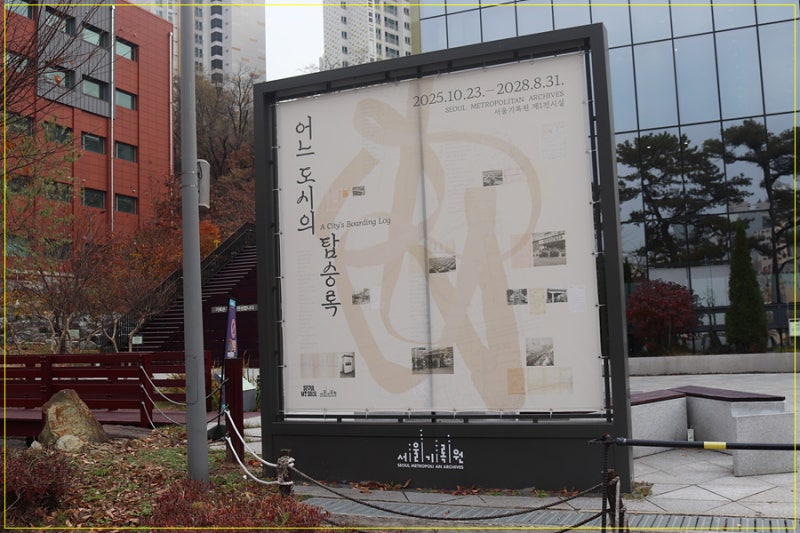
In terms of accessibility, this exhibition is very visitor-friendly for foreigners. The Seoul Archives is a 5–9 minute walk from Bulgwang Station (subway lines 3 and 6), Exit 2, and is also easily accessible via circular buses (7720, 7734, 8701) and feeder buses (701, 703, 704, 705, 708, 720, 741, 773). The area near Bulgwang Station is adjacent to excellent tourist sites such as Seoul Innovation Park and the entrance to Bukhansan National Park, making it a convenient location to enjoy surrounding walks and other tourist activities before or after viewing the exhibition. The exhibition is open Tuesday through Sunday from 10:00 AM to 5:00 PM and is closed on Mondays and major Korean holidays (Seollal, Chuseok). Most importantly, admission is completely free. This is a major advantage that allows international visitors to explore Korea's cultural heritage and history without financial burden.
As a tip for viewing the exhibition, it is strongly recommended to pick up a pamphlet at the entrance. The pamphlet summarizes the overall structure of the exhibition and the main contents of each section, greatly enhancing understanding during the visit. Also, it is recommended to purchase a drink at the 2nd-floor cafe and enjoy the exhibition at a relaxed pace. The cafe maintains affordable prices, and beverages purchased at the cafe may be consumed inside the exhibition space. However, outside food brought from outside the cafe is not permitted, so please be aware of that in advance. The exhibition space functions as an archive lounge, creating a comfortable atmosphere for leisurely viewing. Since the exhibition runs for three years, there is no need to rush to see everything at once. If time permits, it is recommended to sit on the benches provided in each section and examine the records closely.
There are also some drawbacks that foreign visitors may want to consider. The main issue is that most of the exhibition materials are written in Korean. Many bus notices, taxi-related ordinances, and urban planning documents are original Korean records, so visitors who do not understand Korean at all may find it difficult to fully comprehend their contents. Fortunately, the pamphlet, section titles, and the overall flow of the exhibition help provide contextual understanding of the eras, but acquiring detailed information may be limited. The lack of sufficient English signage or multimedia guides (such as multilingual explanations via QR codes) is an area for improvement. Therefore, it is recommended to do a brief study of Seoul's public transportation history before visiting or to visit with a guide.
Second, the exhibition is very document-centered. Especially in the bus and taxi sections, administrative records and policy documents predominate, so the exhibition emphasizes historical depth more than visual spontaneity. Visitors expecting elaborate graphics or interactive displays may find it rather static. However, this is the essence of an archive exhibition and can be seen as a strength that allows visitors to feel the authenticity of history. Third, the tram and elevated road sections may be relatively limited in exhibition space, and subway construction-related materials are primarily drawings and documents, so it is helpful to be aware of this in advance. Lastly, since the exhibition is closed on Mondays, be sure to check the day of the week before visiting.
This exhibition is highly recommended for international visitors interested in Seoul's history and Korea's urban development. It allows visitors to vividly feel the miraculous transformation of Seoul—from postwar ruins to a city with one of the world's top public transportation systems—through documents and records. It is especially suitable for those interested in history, urban planning, and Korean culture, and for visitors who want a deep understanding of Seoul beyond its outward appearance. The historical value of the exhibition materials and the stories they contain are powerful enough to overcome language barriers to a considerable extent. Additionally, the long three-year exhibition period makes it easy to plan a visit according to travel schedules. If you can accept the trade-off of free admission, good accessibility, a relaxed atmosphere, and deep historical content with somewhat incomplete multilingual support, this is an exhibition you should experience when visiting Seoul.
| Item | Rating (1~5) |
|---|---|
| Language accessibility | 3.0 |
| Transport accessibility | 4.5 |
| Traveler amenities | 4.0 |
| Local atmosphere / culture | 4.5 |
| Value for money | 5.0 |
| Cleanliness and safety | 4.5 |
| Nearby amenities and food options | 4.0 |
This article was compiled by our editorial team from official announcements and coverage of previous editions; it is not a first-hand visit report. Please confirm the final schedule and fees on the official website.
Festival Details
-
Festival Period10/23/2025 ~ 8/31/2028
-
Festival VenueSeoul Archives, 2F, Exhibition Room 1
-
Operating HoursTue–Sun, 10:00–17:00
-
Admission FeeFree admission
-
TagsPassenger Log Seoul Archives subway construction archives urban transportation
More Festivals


Popular Concerts
![EXO PLANET #6 - EXhOrizon [dot] -](https://kotourlive-images.s3.ap-northeast-1.amazonaws.com/concerts/1787215796640_ee65f451_thumbnail.jpg)
More Travel Guides in This Area
 Travel Guide
A House of Korean Art Records Built from 40 Years of Collecting, Kimdaljin Museum of Art Archives
 Travel Guide
Seodaemun Museum of Natural History, Korea's first local-government-run natural history museum, at the foot of Ansan
 Travel Guide
Seoul’s Jingwan-sa: Encounter the Taegeukgi at Chilseonggak and the Waterways of Bukhansan
 Travel Guide