From the Camel-Back Ridge to Heunginjimun Gate: Reading Seoul's City Wall at Naksan Park
Naksan Park is a 197,304㎡ urban park where the Naksan ridge, about 125 m above sea level, meets Seoul's City Wall. The 2.1 km route from Hyehwa Station up to Central Plaza, then past the Exhibition Hall, Observatory Plaza, and fortress wall trail before descending to Heunginjimun Gate, is an excellent way to understand Seoul's terrain alongside the Joseon capital's defensive facilities.

I’ve been here?
Your check-in helps the next traveler.
No one has checked in yet Be the first
One tap — no writing needed
Why the 125-meter Camel's Back Became the Eastern Mountain of Joseon's Capital
Naksan Park was created along the ridge of Naksan, which stretches across Jongno-gu, Dongdaemun-gu, and Seongbuk-gu. Naksan stands approximately 125 meters above sea level, and its name, meaning Camel Mountain or Naksan, comes from the mountain's resemblance to a camel's back. During the Joseon period, it was the eastern mountain among the four inner mountains of Hanyang, forming, together with Bugaksan, Inwangsan, and Namsan, the topographical axis surrounding the capital.
Today's park was not originally a green space. Its original appearance changed significantly after the 1960s due to the construction of citizen apartments and dense housing. Following Seoul's Naksan Restoration Plan, a park development project was carried out, and the park opened in July 2002. The park covers 197,304 square meters, with 7,000 meters of walking paths and five plazas.
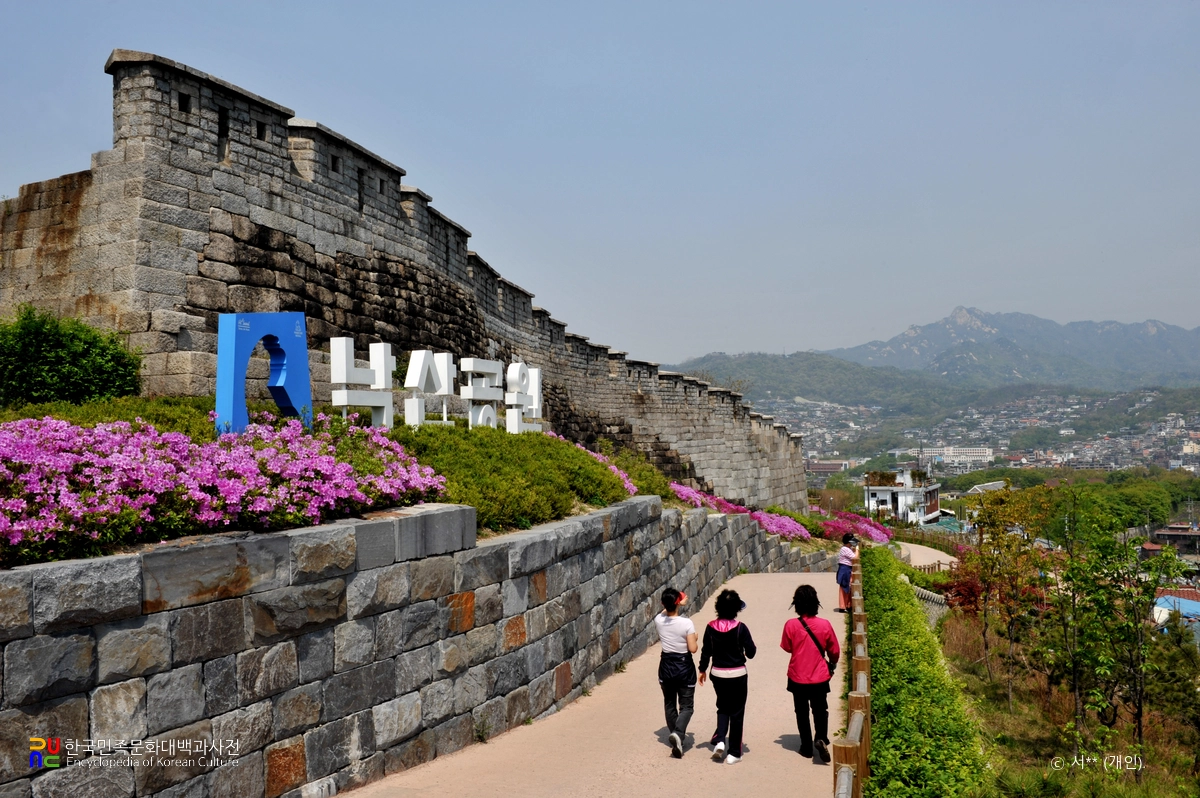
2.1 km from Hyehwamun Gate to Heunginjimun Gate: An Hour of Reading the Fortress Stones
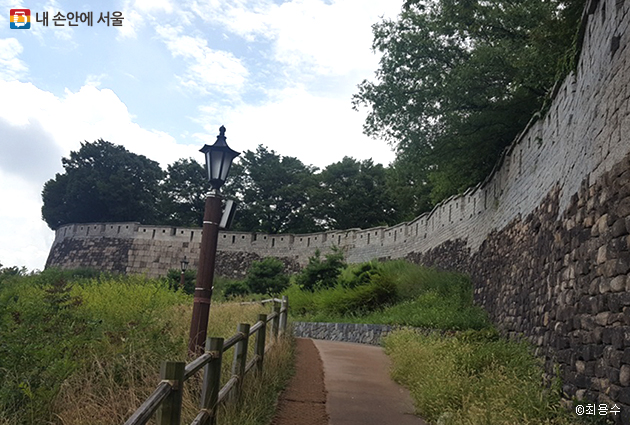
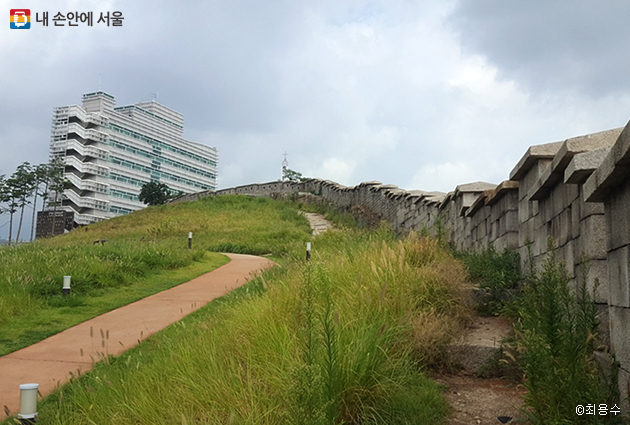
The main route running through the park is the Naksan section of the Seoul Hanyangdoseong, or Seoul City Wall. The distance from Hyehwamun Gate, past Naksan, to Heunginjimun Gate is 2.1 km, and the official guide estimates a travel time of approximately one hour. The entire Seoul City Wall is an approximately 18.2-km fortress wall connecting the four inner mountains. Along the Naksan section, urban views inside and outside the wall open up alternately.
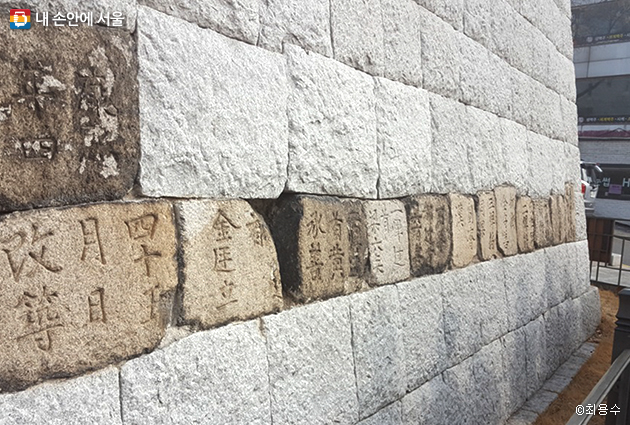
When walking close to the wall, it is worth looking for places where the size and workmanship of the stones change. Behind the Catholic University of Korea, visitors can observe different stone forms from various construction periods. Along the road near Heunginjimun Gate, 13 inscribed foundation stones bearing traces of fortress repairs from 1706 are gathered together. Climbing onto the wall or damaging it by touching the stones is prohibited.
600 m and a 10-Minute Walk from Exit 2 of Hyehwa Station to the Central Plaza
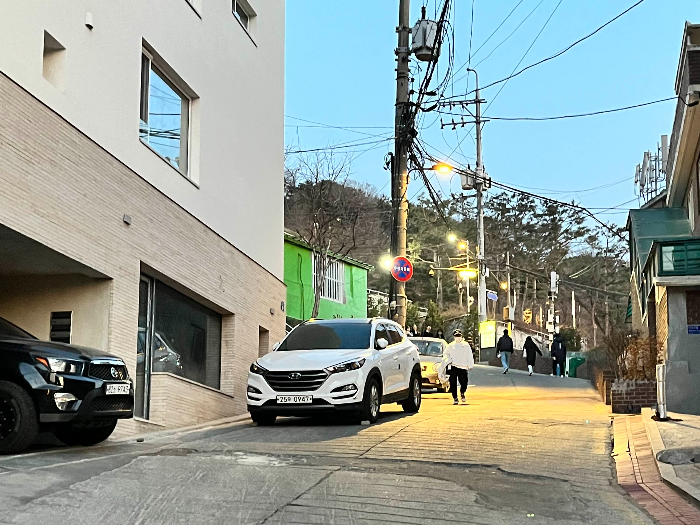
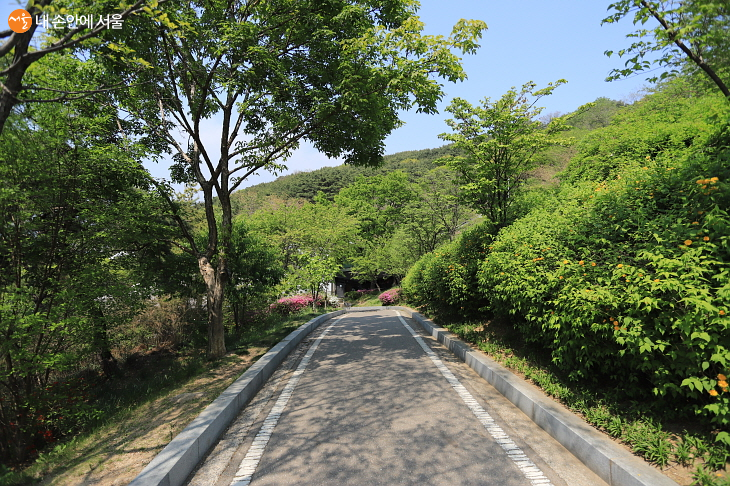
For first-time visitors, the easiest route to understand is to start at Exit 2 of Hyehwa Station on Subway Line 4 and walk up to Naksan Park's Central Plaza. The distance is approximately 600 m, taking about 10 minutes on foot, but the route is continuously uphill, so shoes with nonslip soles are preferable. From the Marronnier Park bus stop at Hyehwa Station, buses 102, 104, 106, 107, 140, 143, 150, 160, 2112, 100, and 301 are available.
Access from the summit side is approximately 1.1 km, or a 20-minute walk, from Exit 1 of Dongdaemun Station on Lines 1 and 4. From Exit 2 or 4 of Dongdaemun Station and Exit 3 or 4 of Changsin Station on Line 6, visitors can take the Jongno 03 village bus and get off at the Naksan Park terminus. If your itinerary involves walking downhill along the fortress route, starting at Hyehwa Station and finishing at Heunginjimun Gate or Dongdaemun Station reduces the burden of the slope.
09:00–17:00: Orient Yourself to the Terrain and Fortress Before Setting Out from the Naksan Exhibition Hall
The Naksan Exhibition Hall in the Central Plaza covers the origins of Naksan, historical figures associated with it, and photographic materials and models of the Hanyangdoseong. The exhibition hall is open from 09:00 to 17:00, and admission is free. The park itself is open at all times and is also free to enter, so visiting the exhibition hall first during the day and then walking the fortress route makes it easier to understand the relationship between the terrain and the historic sites.
On weekends, the exhibition hall also operates park programs on Naksan, the Seoul Hanyangdoseong, and nearby modern and contemporary cultural heritage. Program reservations are accepted through the reservation menu on the Seoul Parks website. For related inquiries, call 02-3783-5995~6. The Central Plaza contains the exhibition hall, a central stage, and a snack shop, with a parking lot directly below.
Observation Plazas 1, 2, and 3 and Naksanjeong Pavilion: A Route to Save for Sunset
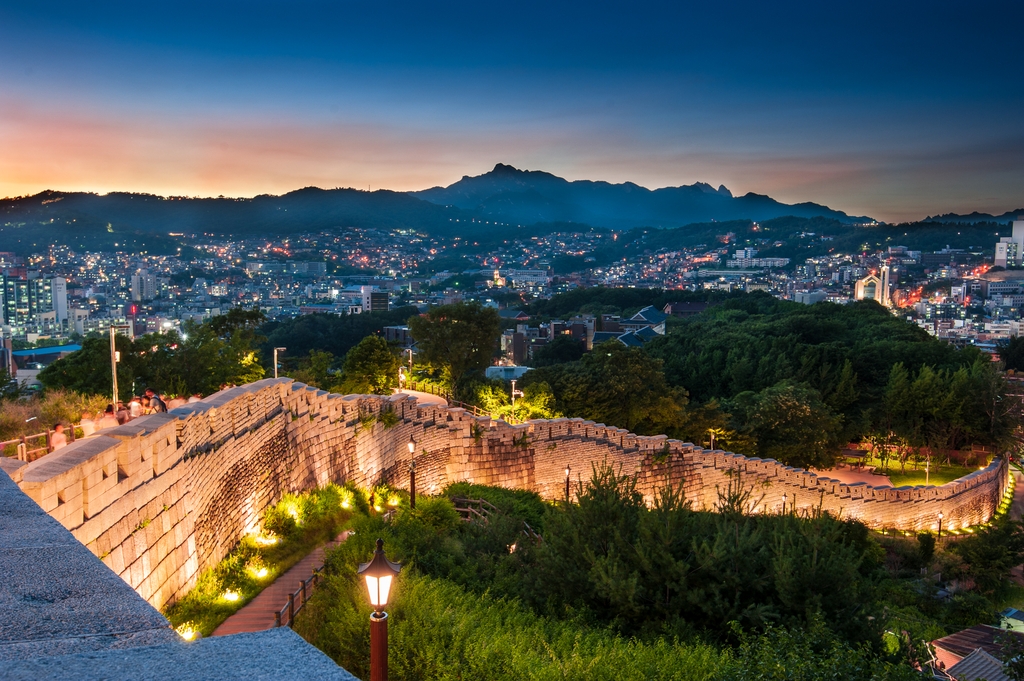
On the way down from the Recreation Plaza toward Hyehwa Station, Observation Plazas 1, 2, and 3 are arranged in sequence. Each observation plaza has exercise facilities, making it a good place to pause during a walk along the fortress route. From Observation Plaza 2, visitors can look toward Namsan and the city center. Naksanjeong Pavilion was built during the restoration process and serves as a viewpoint along the ridge.
To see the night view, finish visiting the exhibition hall and resting at the Central Plaza before sunset, then move to the observation plazas and decide on your descent route before it gets dark. The park has 253 park lights and 293 lamps installed, but the fortress route includes a mixture of slopes and stairs. Camping, cooking, using fire, drinking alcohol, singing, dancing, and making excessive noise are prohibited, and all rubbish must be taken away.
Memories of the Era of King Hyojong Reaching Hongdeogi Field and Jajudong Spring
Hongdeogi Field on the middle slopes of Naksan is associated with a story from the period when Hyojong, then Prince Bongnim, was held hostage in Qing China after the Second Manchu Invasion of Joseon. Seoul's park guide explains that the place name originated from the story of Hongdeogi, a court lady who made kimchi and presented it to Hyojong, after which Hyojong granted her a field on Naksan when he returned to Korea. The field is listed as covering 50 square meters.
Jajudong Spring behind Biwoodang is associated with the story that Queen Jeongsun, the wife of King Danjong, dyed silk purple to support herself when Danjong was exiled to Yeongwol. Biwoodang covers 27 square meters and is included in the park's historical walking trail. Rather than simply taking photographs and passing by, viewing these two sites as examples of how the personal histories of the Joseon royal family remain in the everyday spaces along Naksan's ridge makes the meaning of the route clearer.
Choose Public Transportation over the 29-Space Parking Lot, and Plan Wheelchair and Stroller Access Only as Far as the Central Plaza
Naksan Park has a parking lot with 29 spaces, and according to the park guide, parking costs 150 won per five minutes. However, because it is a small parking lot below the Central Plaza, public transportation is more practical during peak season or around sunset. The park's general inquiry number is 02-743-7985, and official information is provided on the Naksan Park page of the Seoul Parks website.
The park has two restroom buildings, five drinking fountains, 121 benches, and 14 pergolas. The Central Plaza and exhibition hall are relatively easy to access, but the observation plazas and fortress route include uphill and downhill sections and stairs, making the entire 2.1-km route unsuitable for continuous travel by wheelchair or stroller. Visitors using foreign languages may find it helpful to use the Korean, English, and Chinese information leaflets together with the park map.
Before You Go
- Address
- 113 Dongsung-gil, Jongno-gu, Seoul
- Hours
- Open at all times (Naksan Exhibition Hall: 09:00–17:00)
- Closed
- The Naksan Exhibition Hall's closing days must be checked separately on the official page
- Admission
- Free (Naksan Exhibition Hall also free)
- Phone
- 02-743-7985
- Official site
- https://parks.seoul.go.kr/template/sub/naksan.do
- Transport
- Approximately 600 m and a 10-minute walk from Exit 2 of Hyehwa Station on Line 4 to the Central Plaza. Approximately 1.1 km and a 20-minute walk from Exit 1 of Dongdaemun Station on Lines 1 and 4 to the Naksan summit. From Exit 2 or 4 of Dongdaemun Station or Exit 3 or 4 of Changsin Station, take the Jongno 03 bus and get off at the Naksan Park terminus.
- Parking
- Park parking lot with 29 spaces, 150 won per five minutes
- Time needed
- Approximately 1 hour for the 2.1-km Naksan Park and Hanyangdoseong Naksan section; 1.5–2 hours recommended including the exhibition hall and observation plazas
- Accessibility
- The Central Plaza and Naksan Exhibition Hall are accessible, but the fortress route combines slopes and stairs and is unsuitable for wheelchair or stroller access along the entire route. Korean, English, and Chinese information leaflets are available.
The information above is current as of the time of writing. Check the official information again before visiting.

Events in This Area



Festivals in This Area

More Travel Guides in This Area
 Travel Guide
Walking Along the Traces of Daewongak in Seongbuk-dong’s Gilsangsa
 Travel Guide
From a Secondary Palace in 1405 to a De Facto Royal Palace for 270 Years — A Route Through Changdeokgung’s Donhwamun, Injeongjeon, and Secret Garden
 Travel Guide
Reading the History of Hanyangdoseong from 1396 beside Heunginjimun Gate: Seoul City Wall Museum
 Travel Guide
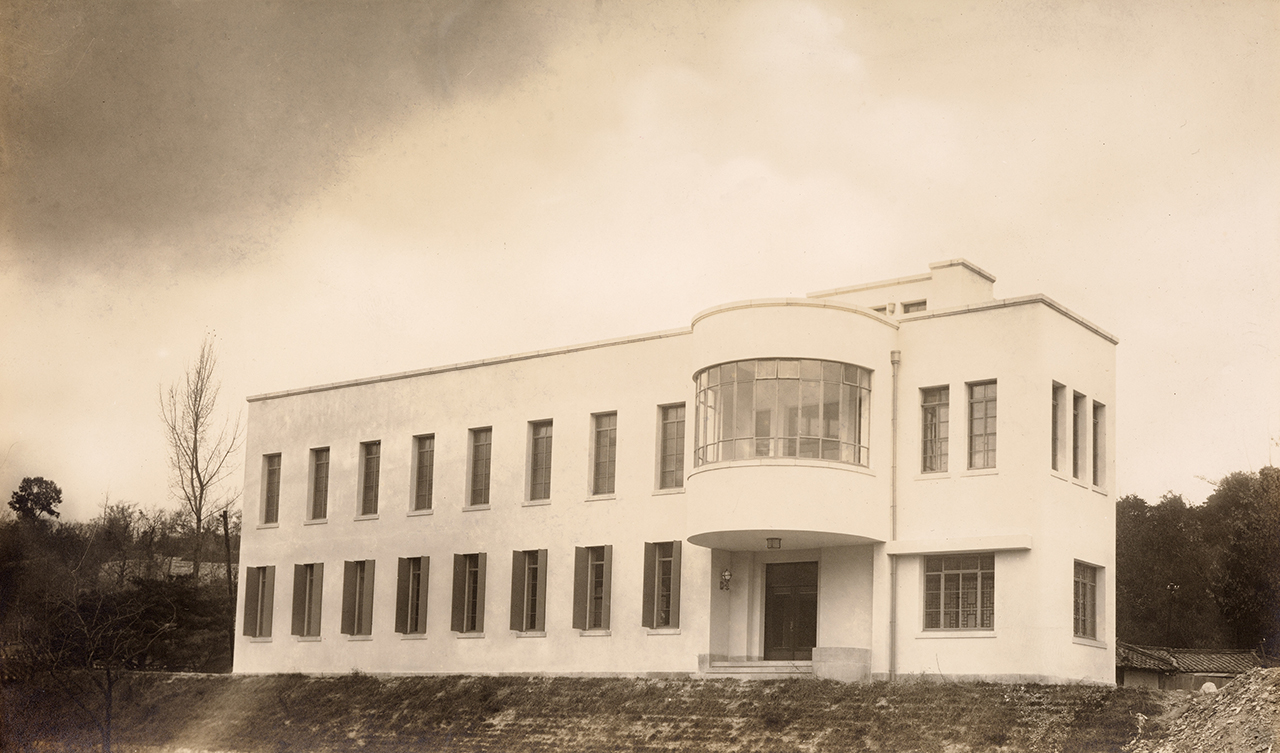
Discovering the Gansong Museum of Art through the doors of Bohwagak, built in 1938
Korea News
 News
News
aespa’s Winter—Can a Person Really Be This Cute? A Daily Life Full of Pure Charm
 News
News
Tom Cruise Spotted Taking a Late-Night Walk at Hangang Park… Strolled for an Hour in a Black Suit
 News
News
'Jimin, We'll always be with you' Peru Embraced 'Jimtober' Birthday Celebrations... "I'm Happy"
 News
News