Eastward Walk Along Cheonggyecheon Starting at Hwanghakgyo — 1.27 km Waterway in Front of E-mart Cheonggyecheon Branch
The spot in front of E-mart Cheonggyecheon Branch at 400 Cheonggyecheon-ro, Jung-gu, Seoul is where the stream descends to the waterway near Hwanghakgyo, the 18th of the 22 bridges over Cheonggyecheon. It is about a 10-minute walk from Dongmyo Station and Sindang Station, and walking about 1.27 km from Hwanghakgyo to Ogansugyo lets you take in both the Dongdaemun market district and the structure of the restored stream.
I’ve been here?
Your check-in helps the next traveler.
No one has checked in yet Be the first
One tap — no writing needed
Coordinates 37.571349, 127.022707 — Descend to the waterway at the 18th bridge, Hwanghakgyo
The coordinates in front of Emart Cheonggyecheon Branch at 400 Cheonggyecheon-ro, Jung-gu, Seoul point to the Hwanghakgyo area on the east side of Cheonggyecheon. Hwanghakgyo is the 18th of the 22 bridges in the restored section, and it lies between Yeongdogyo to the west and Biudanggyo to the east. Unlike the starting point with a large plaza such as Cheonggye Plaza, this is where the river descent begins from a neighborhood where the large mart, the Hwanghak-dong residential area, and the Dongdaemun market district meet.
The total length of Cheonggyecheon is 8.12 km, and the restored section completed in 2005 is 5.84 km from Cheonggye Plaza to Sindap Railway Bridge. If you head west from Hwanghakgyo, it is 413 m to Yeongdogyo, then 311 m more to Dasangyo, 301 m to Maeulnaedari, and 245 m to Ogan Su Bridge. Therefore, for the first target toward Dongdaemun History & Culture Park, it is easier to aim for Ogan Su Bridge.
![2024year 8This is a view of the Cheonggyecheon waterway and the stone embankment promenade, photographed in [month]..](https://commons.wikimedia.org/wiki/Special:FilePath/Cheonggyecheon_stream_2.jpg)
From the 1412 stone bridge to the 2005 restored stream — the process by which the "open stream" reappeared
Cheonggyecheon was the river that carried the capital's water eastward after Joseon made Hanyang its capital. The predecessor of Mojeongyo was a stone bridge built in 1412, the 12th year of King Taejong, and in the late Joseon period, as King Yeongjo devoted himself to stream management, the name "Gaecheon" came into widespread use. Today, the bridge names continuing westward from Hwanghakgyo, the stone embankments, and traces such as the site of Supyo Bridge are not merely walking facilities but an extension of the infrastructure that handled the capital's drainage and transportation.
After the Korean War, the Cheonggyecheon area was covered over, and the Cheonggye Elevated Road ran between Chungmuro in Jung-gu and Yongdu-dong in Dongdaemun-gu from August 15, 1971 to June 30, 2003. Seoul began demolition and restoration work on July 1, 2003 and completed it on September 30, 2005, declaring the restoration the next day, October 1. The construction period was 2 years and 3 months, the workforce was about 694,000 people, and the project cost was 386.739 billion won as of 2005.
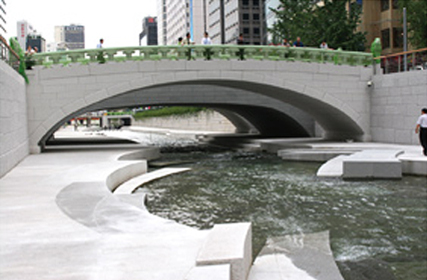
It is not water that comes only from the sky — an urban stream supplied with 40,000 tons of filtered Han River water per day
The flowing water in Cheonggyecheon is not maintained by natural rainfall alone. Seoul Facilities Corporation says it supplies 40,000 tons of filtered Han River water per day as the base supply and flexibly supplies up to 120,000 tons when needed, and that 20,000 tons of groundwater per day from subway and Korea Electric Power facilities also flows in. So the waterway continues even on days without rain, but the water quality does not meet drinking-water standards, so you must not drink it.
The restored section includes a total of 20 km of walking paths, 252,000 square meters of green space, and 10,419 lights. The water is managed so that dace, minnow, and carp can be observed, while willow trees and reeds are visible along the banks. The area near Hwanghakgyo feels closer to buildings and roads than Cheonggye Plaza, but once you descend below the stone embankment, the water surface, riverside vegetation, and the heights of the bridges overlap in a single view.
- Maintenance water supply: 40,000 tons of filtered Han River water per day, 20,000 tons of inflowing groundwater per day
- Restored section: 5.84 km, total walking path length: 20 km
- Green space area: 252,000 square meters, lighting: 10,419 units
Hwanghakgyo to Ogan Su Bridge, 1.27 km — a 30-minute waterway to Dongmyo and Dongdaemun
The distance from Hwanghakgyo in front of Emart Cheonggyecheon Branch to Ogan Su Bridge by walking west is about 1.27 km in total bridge-to-bridge map distance. The order is Hwanghakgyo to Yeongdogyo, 413 m; Yeongdogyo to Dasangyo, 311 m; Dasangyo to Maeulnaedari, 301 m; and Maeulnaedari to Ogan Su Bridge, 245 m. If you include time for taking photos or going up and down the stairs, allow 25 to 35 minutes one way, and 50 to 70 minutes round trip back to Hwanghakgyo.
After passing Ogan Su Bridge, you can head toward Dongdaemun Design Plaza and the Dongdaemun fashion district. In the opposite direction, going east, you will encounter Biudanggyo at 305 m, Muhakyo at 344 m, Dumuldari at 315 m, and Gosanjagyo at 437 m in order. At Dumuldari, Seongbukcheon and Jeongneungcheon join Cheonggyecheon, and the wedding wall lighting and fountains operate from April to November every day from 12:00 to 21:00, running for 50 minutes and resting for 10 minutes.
Dongmyoap Station Exit 3 or 5, and Sindang Station Exit 2 — to the stop in front of Emart
If you are coming by rail, the most specific directions say it is within a 10-minute walk from Exit 3 of Dongmyoap Station on Line 1 or Exit 5 of Dongmyoap Station on Line 6 to Emart Cheonggyecheon Branch. It is also within a 10-minute walk from Exit 2 of Sindang Station on Line 2 and Exit 10 of Sinseoldong Station on Lines 1 and 2. If you only want to see Cheonggyecheon, Dongmyoap Station is convenient; if you plan to also go to the Sindang-dong restaurant district or Jungang Market, the route from Sindang Station is more convenient.
By bus, routes 173, 421, and 2013 stop at the Hwanghak-dong Lotte Castle (in front of Emart) stop, and routes 173, 421, and 302 stop at the Cheonggye 8-ga / Hwanghakgyo stop. For Hwanghak-dong Community Center, use routes 421 and 241, and for in front of Wangsimni Church, use routes 302, 421, 241, 1017, and 6211. After getting off the bus, instead of looking only for the Emart building, move toward the river railing on the south side of Cheonggyecheon-ro and toward Hwanghakgyo to find the promenade entrance more easily.
- Dongmyoap Station: Line 1 Exit 3 / Line 6 Exit 5, within a 10-minute walk
- Sindang Station: Line 2 Exit 2, within a 10-minute walk
- Bus in front of Emart: routes 173, 421, 2013
- Cheonggye 8-ga / Hwanghakgyo bus: routes 173, 421, 302
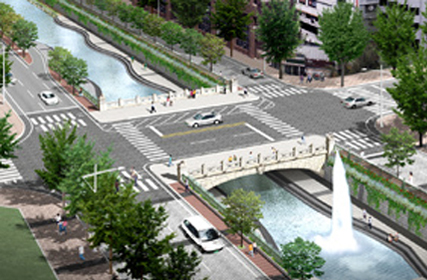
Open 24 hours and free, but closed when it rains — 39 emergency ladders and 02-2290-7111~3
The Cheonggyecheon promenade is open 24 hours a day, admission is free, and there is no regular closing day. The managing body is the Cheonggyecheon Management Office of Seoul Facilities Corporation, the official information website is https://www.sisul.or.kr/open_content/cheonggye/intro/summary.jsp, and the Cheonggyecheon Integrated Situation Room phone number is 02-2290-7111~3. Seasonal facilities follow separate schedules. Cheonggye Falls operates 24 hours year-round, and Gwanggyo Digital Canvas runs from March 1 to November 30 from 19:00 to 21:00, for 8 minutes starting at every half hour, and from 20:00 to 21:30 from May to September.
This is a river where the water level rises rapidly during heavy rain and access to the promenade is restricted. Across the entire section, 39 emergency ladders are installed for escape in case of isolation, and if it rains or an alert broadcast is issued, you should not shelter under a bridge but go up to the nearest entrance or exit. Bicycles and inline skates, fishing, swimming, camping and cooking, drinking and smoking, and bringing pets are restricted, with the exception of assistance dogs for persons with disabilities.
Emart B3 and B4 parking lots and 21 ramps — separating vehicle and wheelchair routes
Since Cheonggyecheon does not have its own dedicated parking lot, if you start from Hwanghakgyo you can use the B3 and B4 underground parking lots of Emart Cheonggyecheon Branch as a paid option. The basic fee is 2,000 won for 30 minutes, then 500 won per 10 minutes, and exiting again within the same visit is free for 15 minutes. If you spend 10,000 won or more at Emart, parking is free for 2 hours; if you spend 50,000 won or more, it is free for 3 hours; the maximum free parking time is 4 hours. Store business hours are 10:00 to 23:00, and the second and fourth Wednesdays of every month are mandatory closing days.
For wheelchairs and strollers, the key is to avoid entrances that have only stairs. In Cheonggyecheon, there are 21 ramps and 2 elevators among 65 access points, while 42 are stair-type access points. When continuing along the waterway, do not detour to the upper road; instead, choose the ramp locations on the official mobility-impaired route guide and descend there. Because the slope of Cheonggyecheon and the stone flooring can be slippery after rain, shoes with non-slip soles are appropriate.
- Emart parking: basic 30 minutes 2,000 won, then 500 won per 10 minutes
- Purchase-linked parking: free for 2 hours with 10,000 won or more, 3 hours with 50,000 won or more, maximum 4 hours
- Cheonggyecheon access points: 21 ramps and 2 elevators out of 65 total
Before You Go
- Address
- Area around Hwanghakgyo in front of Emart Cheonggyecheon Branch, 400 Cheonggyecheon-ro, Jung-gu, Seoul (Hwanghak-dong 2545)
- Hours
- Open 24 hours (access to the promenade restricted during heavy rain or flooding; some fountains and digital facilities operate on separate seasonal schedules)
- Closed
- Open year-round (access restricted during severe weather or flooding)
- Admission
- Free
- Phone
- 02-2290-7111~3 (Cheonggyecheon Integrated Situation Room)
- Official site
- https://www.sisul.or.kr/open_content/cheonggye/intro/summary.jsp
- Transport
- Within a 10-minute walk from Dongmyoap Station on Lines 1 and 6, Exit 3 or 5, or Sindang Station on Line 2, Exit 2. Buses 173, 421, 2013 at Hwanghak-dong Lotte Castle (in front of Emart), and buses 173, 421, 302 at Cheonggye 8-ga / Hwanghakgyo.
- Parking
- No dedicated Cheonggyecheon parking lot. Paid parking available at Emart Cheonggyecheon Branch B3/B4: basic 30 minutes 2,000 won, then 500 won per 10 minutes; up to 4 hours free depending on purchase amount.
- Time needed
- Hwanghakgyo to Ogan Su Bridge one way: 25 to 35 minutes (about 1.27 km), round trip: 50 to 70 minutes. Completing the full 5.84 km restored section takes about 2 to 2 hours 30 minutes.
- Accessibility
- There are 21 ramps and 2 elevators among 65 access points. Assistance dogs for persons with disabilities are exempt from access restrictions, and the official website provides route guidance by section for mobility-impaired users.
The information above is current as of the time of writing. Please check the official information again before visiting.

Places
Nearby Attractions 2
-
 1
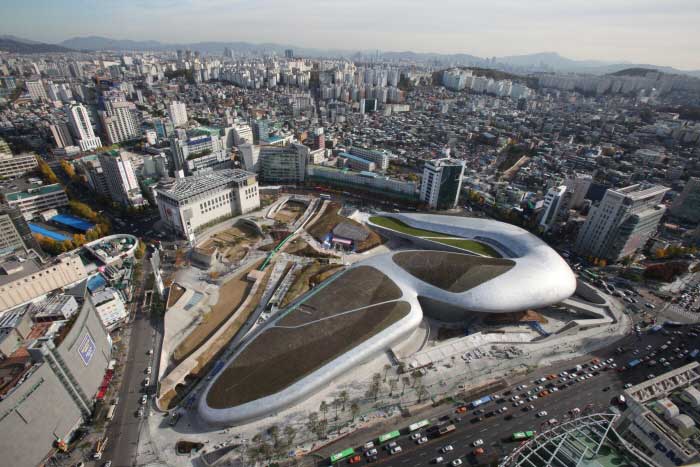
Dongdaemun Design PlazaA multifunctional cultural space where you can enjoy exhibitions, events, and the building’s nighttime exterior
1
Dongdaemun Design PlazaA multifunctional cultural space where you can enjoy exhibitions, events, and the building’s nighttime exterior -
 2
2
Events in This Area



Festivals in This Area

More Travel Guides in This Area
 Travel Guide
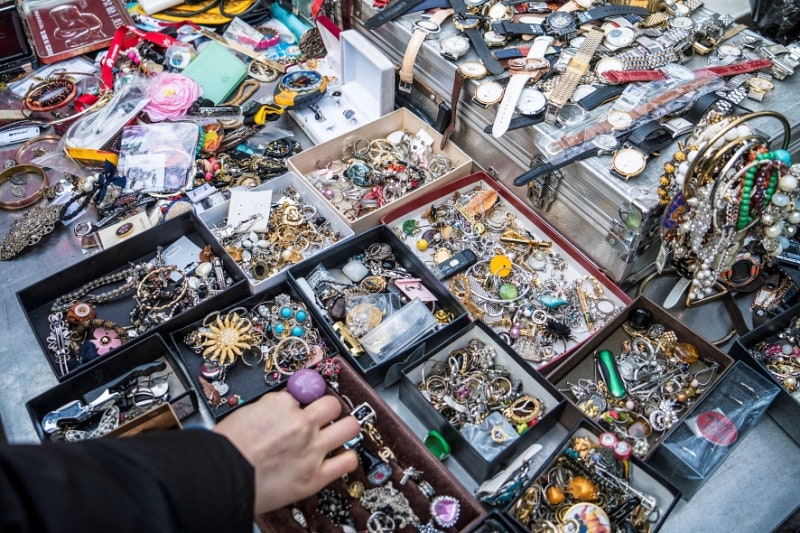
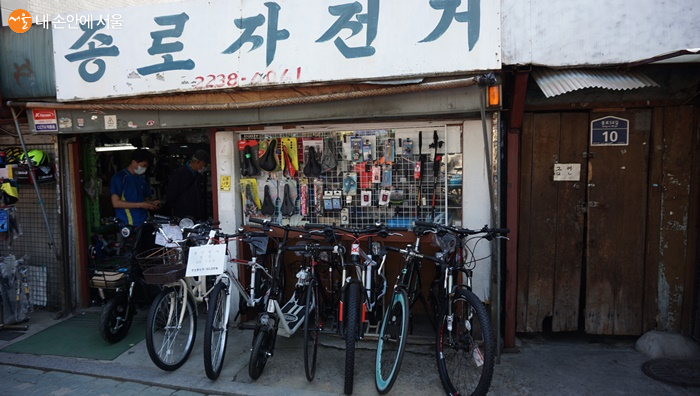
Dongmyo Flea Market
 Travel Guide
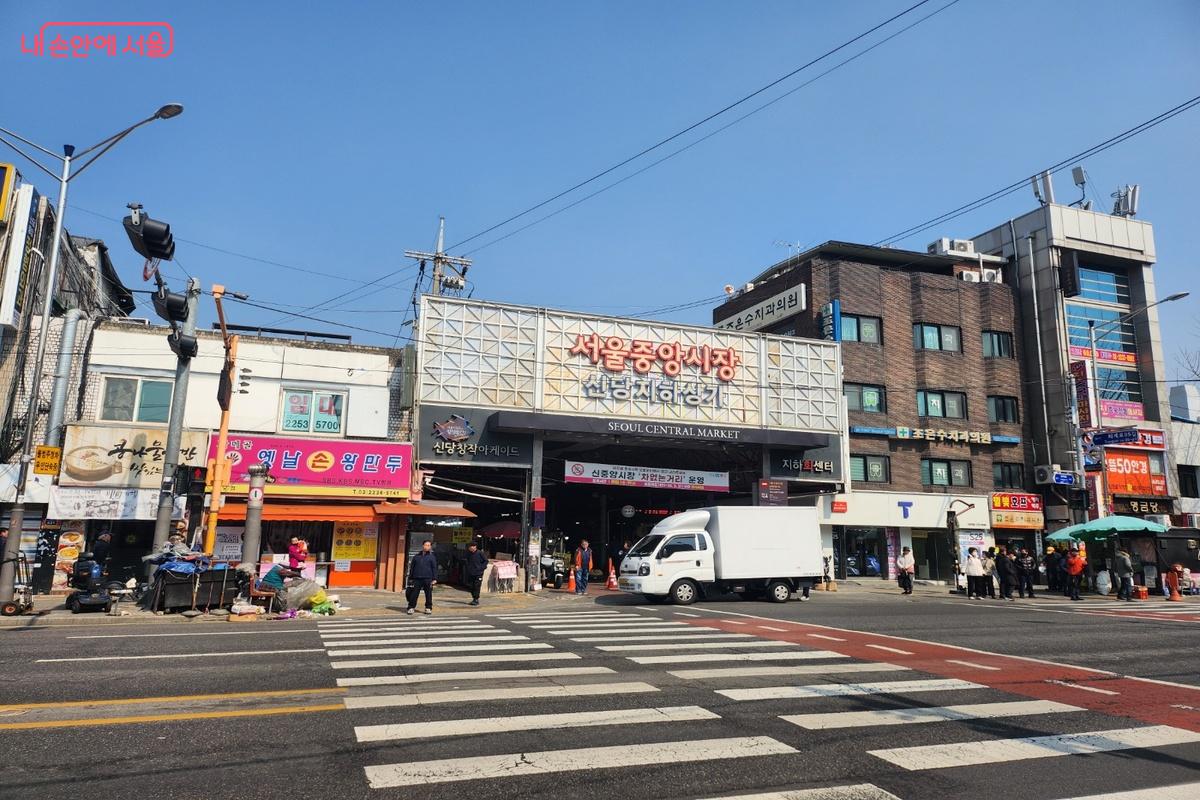
Seoul Jungang Market, 5 minutes from Sindang Station Exit 2, where dawn ingredients meet Sindang Creative Arcade
 Travel Guide
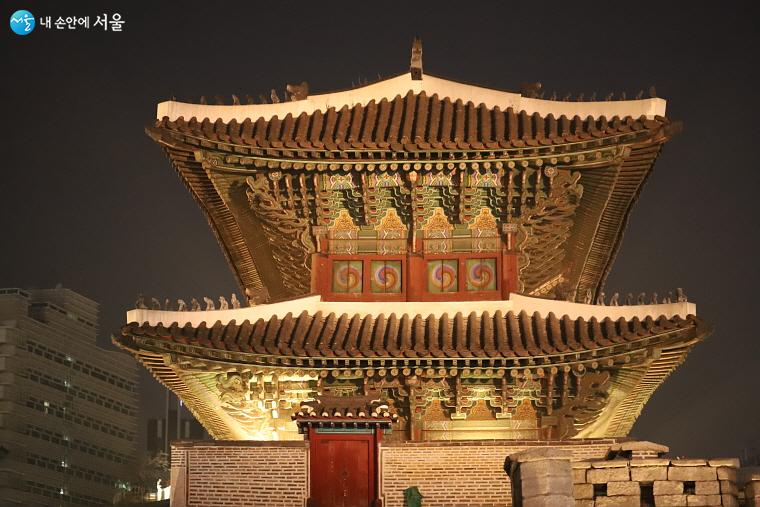
A Seoul Dongdaemun Route Where Day and Night Differ, from Heunginjimun to DDP
 Travel Guide
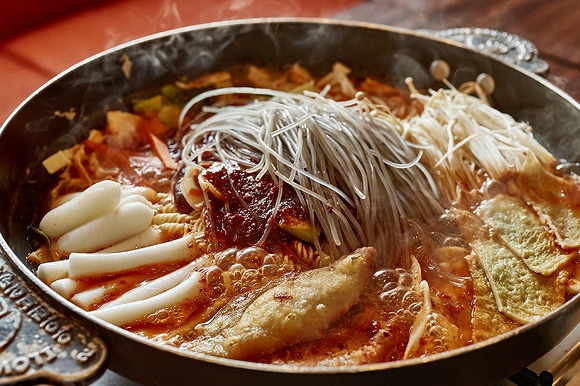
Sindang-dong Tteokbokki Town, Started at Ma Bok-rim's Stall in 1953
Korea News
 News
News
"Overcoming the Getty curse" Jang Wonyoung, with unreal proportions and beauty straight out of a Barbie doll
 News
News
A2O LITE Tops Melon TOP100 Just 29 Hours After Debut, Setting the Fastest Record for a Debut Song
![Billlie's Tsuki 'Makes an Entrance Showing Off Her Beautiful Figure' [MK Photo]](https://kotourlive-images.s3.ap-northeast-1.amazonaws.com/news/1792027947835_957f0cb8_news_5c0023c5-e9a0-4640-9154-cb0b69d810c4.jpg) News
News
Billlie's Tsuki 'Makes an Entrance Showing Off Her Beautiful Figure' [MK Photo]
![ENHYPEN ‘Fighting for the Macau performance too!’ [★Video]](https://kotourlive-images.s3.ap-northeast-1.amazonaws.com/news/1792027887815_5057637d_news_8041e5cd-8b22-4193-bb46-880c65d944f7.jpg) News
News