Hyoja-ro 12, National Palace Museum of Korea — Royal Collections at the Site of the Old Royal Residence Offices of Gyeongbokgung Palace
The National Palace Museum of Korea began in 1908 as the Jaseil Museum of Changdeokgung Palace and opened in its current form in 2005 at the former site of the Chosun Government-General Building on Gyeongbokgung Palace. Admission is free, and across three floors and twelve exhibition rooms, visitors can see royal artifacts from the Joseon and Korean Empire periods, including National Treasure Ja gyeokru (timekeeping apparatus) and King Sunjong’s ceremonial carriage (eoch’a).
I’ve been here?
Your check-in helps the next traveler.
11 people viewed this week Be the first
One tap — no writing needed
The story behind the museum at Hyoja-ro 12, on the former site of Gyeongbokgung's Naesaboksi office
The site where the National Palace Museum of Korea now stands was once home to Naesaboksi, the government office that managed palace horses during the Joseon Dynasty. Following the Japan-Korea Annexation of 1910, Naesaboksi was demolished in 1916 to make way for the Japanese Government-General of Korea building, and the site remained vacant for a considerable period afterward.
After liberation, the Welfare Hall, a welfare facility for civil servants working at the Central Government Complex, was built here in 1978 and opened the following year. When central government ministries moved to Gwacheon, Gyeonggi-do, in 1982, the vacant former Japanese Government-General of Korea building was converted into the National Museum of Korea in 1986.
To address the lack of space at the Palace Relics Exhibition Hall in Seokjojeon, Deoksugung, the Cultural Heritage Administration decided in 1993 to demolish this former Japanese Government-General of Korea building and build a royal museum on the site. When the National Museum of Korea relocated to Yongsan in 2005, the National Palace Museum of Korea opened there.
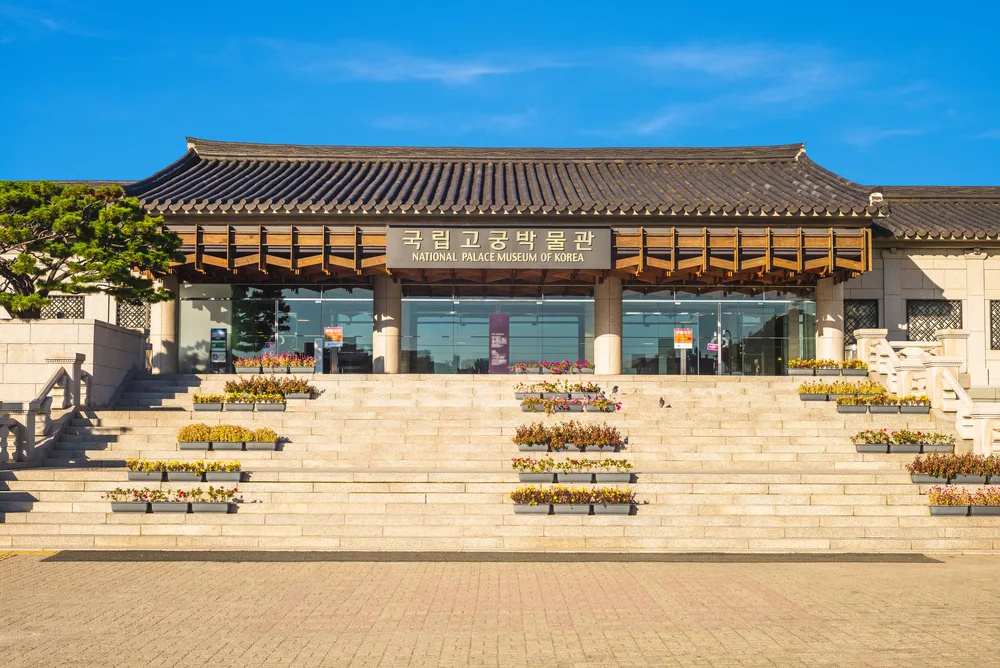
![2024[year] 4Exterior of the National Palace Museum of Korea building photographed in a month](https://kotourlive-images.s3.ap-northeast-1.amazonaws.com/travel-guide/detail/1785668840056_9ada7922_job1037_8006ead8.jpg)
From the Changgyeonggung Imperial Museum in 1908 to Gyeongbokgung in 2005: a century of relocations
The National Palace Museum of Korea traces its roots to the Imperial Museum (Jesil Museum), established inside Changgyeonggung during the reign of Emperor Sunjong in September 1908. It first opened to the public in November 1909 and was downgraded and renamed the Yi Royal Family Museum in 1938.
After liberation, it became the Deoksugung Art Museum in 1946 and the Deoksugung Office in 1961, before being reorganized and integrated into the National Museum in 1969. In October 1992, the Palace Relics Exhibition Hall at Seokjojeon, Deoksugung, was expanded and reorganized, bringing together for the first time palace artifacts that had been dispersed among the four major palaces, Jongmyo, royal tombs, and other sites.
The Joseon Royal History Museum Promotion Team was launched in November 2004, and its current name was finalized in March 2005. On August 15, 2005, the 60th anniversary of liberation, it first opened on the southwestern side of Gyeongbokgung with one floor and five exhibition halls. The full museum, comprising three floors and 12 exhibition halls, was completed on November 28, 2007. Its official establishment date under the organizational structure is August 16, 2005.
Three floors, 12 exhibition halls, and approximately 40,000 royal artifacts
The permanent exhibition galleries consist of 12 halls across three floors: on the second floor, the Royal Records Gallery, State Rites Gallery, Palace Architecture Gallery, Science and Culture Gallery, and Royal Life Gallery; on the first floor, the Royal Birth and Education Gallery, Royal Arts and Culture Gallery, and Korean Empire Gallery; and on the basement floor, the Royal Paintings Gallery, Royal Court Music Gallery, Royal Processions Gallery, and Jagyeokru Gallery.
The museum has a total floor area of 29,986㎡ (approximately 9,080 pyeong) and an exhibition area of 6,975㎡ (approximately 2,112 pyeong). Its collection includes approximately 40,000 artifacts from the Joseon royal court and the imperial household of the Korean Empire, including royal seals and investiture books, royal protocols, documents, ritual vessels, musical instruments, scientific instruments, weapons, metal crafts, ceramics, clothing, accessories, furniture, and signboards.
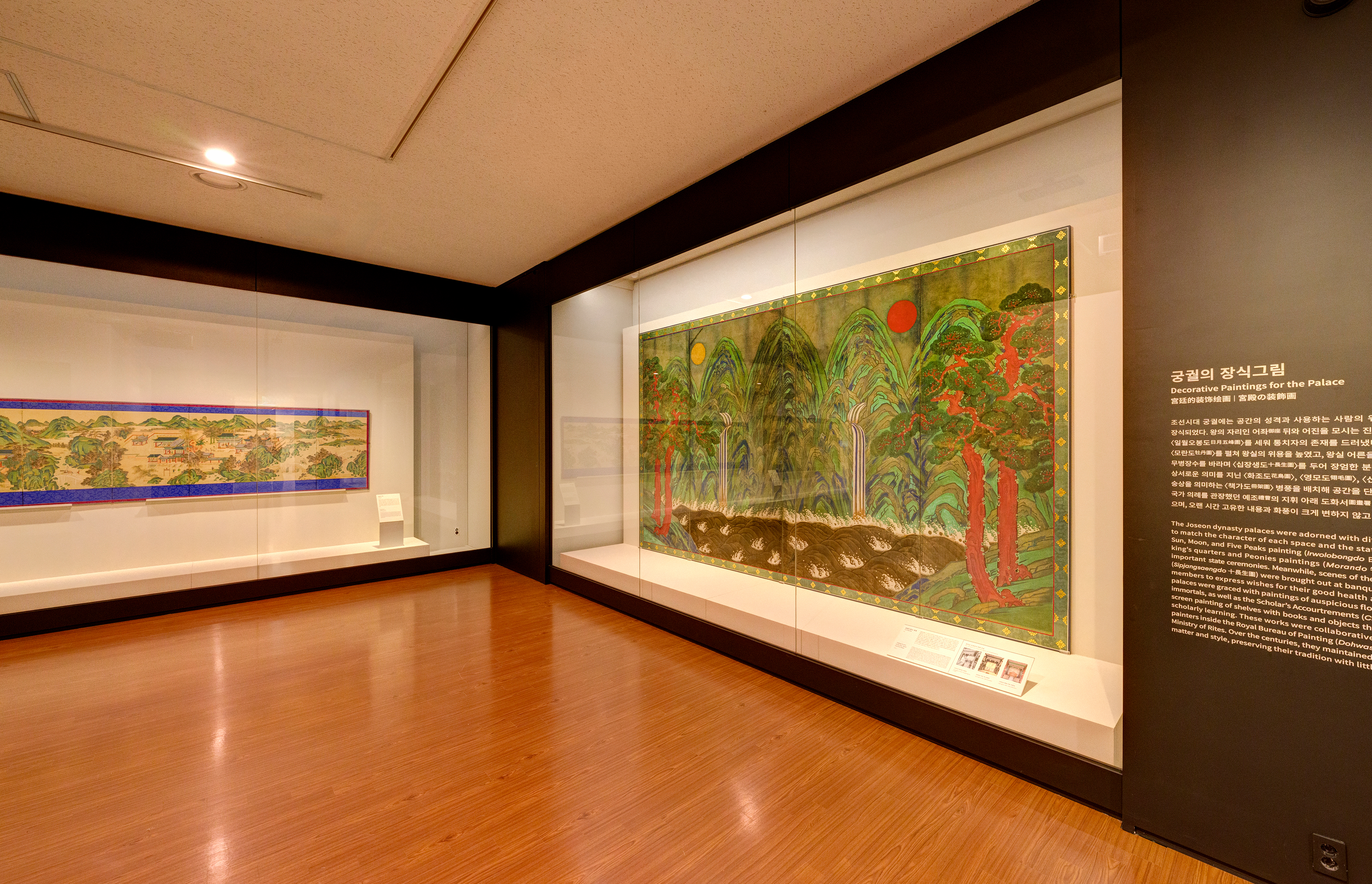
National Treasure No. 229, Jagyeokru: a working water clock on Basement Level 1
Jagyeokru was first made by Jang Yeong-sil in the 16th year of King Sejong's reign (1434), but the water clock was not used for long. Part of a Jagyeokru remade in the 31st year of King Jungjong's reign (1536) survives today and is designated National Treasure No. 229. It is called either Borugak Jagyeokru or Changgyeonggung Jagyeokru.
When Changgyeonggung was damaged and turned into Changgyeongwon during the Japanese colonial period, it was moved to Gwangmyeongmun at Deoksugung and displayed alongside Singijeon and the Bronze Bell of Heungcheonsa. It was transferred to the National Research Institute of Cultural Heritage for conservation in 2018 and, after conservation work was completed in 2020, moved back to the National Palace Museum of Korea for display.
A restored model of Jagyeokru is separately displayed on Basement Level 1, where visitors can see it operate with its gong, bell, and drum actually sounding.
Emperor Sunjong's 1918 Cadillac royal car, the most popular exhibit
The royal car used by Emperor Sunjong and Empress Sunjeonghyo (Registered Cultural Heritage No. 319) is a Cadillac limousine produced by General Motors in the United States in 1918. This globally rare vehicle has been restored to its original condition from more than a century ago.
During its time at Changdeokgung, it was left outdoors with only a roof over it, resulting in extensive damage and requiring considerable time and expense to restore. It is now considered the museum's most popular exhibit.
20th anniversary: 2025 special exhibition of Changdeokgung murals
In 2025, the 20th anniversary of the National Palace Museum of Korea's opening, the special exhibition “Meticulously Copied Murals of Changdeokgung” was held in the Special Exhibition Hall on the second floor from August 14 to October 12. It brought together for the first time six large-scale court paintings and one preliminary sketch that had decorated Huijeongdang, Daejojeon, and Gyeonghungak in the inner quarters of Changdeokgung.
The displayed murals are monumental in scale, measuring 180–214 cm high and 525–882 cm wide. They were created when the inner quarters of Changdeokgung, which had been destroyed in a fire in 1917, were rebuilt in 1920. The Korea Heritage Service completed conservation treatment of the Daejojeon murals in 2014, the Huijeongdang murals in 2016, and the Gyeonghungak murals in 2023; the originals are held by the National Palace Museum of Korea.
During the special exhibition, docent tours were offered twice daily, along with expert lectures titled “In-Depth Exploration of Royal Culture” on August 27, September 3, and September 17. These lectures are the museum's flagship public education program and have continued annually with new themes since 2008. An earlier special exhibition, “Royal Cuisine: A Table of Respect and Sharing,” was held in Special Exhibition Halls I and II on the second floor from November 20, 2024, to February 2, 2025.
![2025Opening of the National Palace Museum of Korea in [year] 20Week[year] Press photo related to the special exhibition](https://kotourlive-images.s3.ap-northeast-1.amazonaws.com/travel-guide/detail/1785668843246_bc4652ce_job1037_d23c843d.jpg)
Free admission, with extended hours until 9 p.m. on Saturdays and the last Wednesday of each month
The National Palace Museum of Korea offers free admission to ease household financial burdens and address polarization in cultural consumption. Hours are 09:30–17:30 (last admission 17:00) on weekdays (Monday–Friday) and Sundays. On Saturdays and the last Wednesday of every month, hours are extended to 09:30–21:00 (last admission 20:30).
Guided exhibition tours are offered in Korean once at 10 a.m. on weekdays and twice daily at 10 a.m. and 3 p.m. on weekends. Preschool children and elementary school students may participate in the guided program when accompanied by a guardian.
The only regular closing days are New Year's Day, the day of Seollal, and the day of Chuseok. Since 2021, the museum has implemented a “museum with no closing days” policy, closing temporarily on other dates only when necessary for special exhibition preparations or similar reasons.
A 2-minute walk from Exit 5 of Gyeongbokgung Station; 10 minutes from Gwanghwamun Station
Gyeongbokgung Station on Subway Line 3 is the closest station: it is a 2-minute walk from Exit 5 and a 4-minute walk from Exit 4. From Gwanghwamun Station on Line 5, both Exits 1 and 2 are about a 10-minute walk away. The National Palace Museum of Korea and the National Folk Museum of Korea are located side by side north of Gyeongbokgung Station.
For buses, get off at the Gyeongbokgung Station stop and take trunk buses 171, 272, 606, 708, or 710, or branch bus 7025 (weekdays) or 8002 (weekends).
Drivers may use the Gyeongbokgung parking lot. It is operated under contract by Amano Korea Co., Ltd.; inquiries may be directed to the parking management office at 02-736-9536. Vehicles with strollers must unload the stroller on the first floor before proceeding to the underground parking lot. Visitor inquiries can also be made to the museum's main number, 02-3701-7500.
Student groups of 30 or more must reserve 30 days in advance: things first-time visitors often miss
Group visits by 30 or more preschool, elementary, middle, or high school students must be reserved in advance through the information desk (02-3701-7500), from 30 days to 1 day before the desired date. Reservations are limited to 200 people per time slot.
Gyeongbokgung requires an admission ticket, but first-time visitors often overlook that the National Palace Museum of Korea is a free facility accessible directly through a separate entrance at 12 Hyoja-ro. For families with children, the Palace Learning Center experience area, located alongside the Royal Birth and Education Gallery on the first floor, is useful.
However, documents providing visitor information note that it can be difficult to understand the internal visitor route and that there are no floor markers such as arrows, causing visitors' routes to frequently overlap. It is therefore advisable to pick up a map from the information desk first.
Before You Go
- Address
- 12 Hyoja-ro, Jongno-gu, Seoul (Postal Code 03045)
- Hours
- Mon–Fri, Sun 09:30–17:30 (last admission 17:00) / Saturdays and the last Wednesday of every month 09:30–21:00 (last admission 20:30)
- Closed
- New Year's Day, the day of Seollal, and the day of Chuseok (since 2021, a “museum with no closing days” policy; temporary closures may occur for special exhibition preparations and other reasons)
- Admission
- Free
- Phone
- 02-3701-7500
- Official site
- https://www.gogung.go.kr
- Transport
- Subway: 2-minute walk from Exit 5 of Gyeongbokgung Station, Line 3 (4 minutes from Exit 4); 10-minute walk from Exits 1 or 2 of Gwanghwamun Station, Line 5. Bus: Gyeongbokgung Station stop (trunk 171, 272, 606, 708, 710; branch 7025 and 8002 on weekends)
- Parking
- Gyeongbokgung parking lot available (paid, contract-operated by Amano Korea; inquiries: 02-736-9536); operates in conjunction with museum hours. Vehicles with strollers must unload on the first floor before using underground parking.
- Time needed
- 1.5–2 hours
- Accessibility
- Featured on Seoul Danurim, Seoul's official barrier-free tourism website, where information on assistive-device rentals, including wheelchairs, and accessibility is available
This information is current as of the time of writing. Please check official guidance again before visiting.

Places
Nearby Attractions 5
-
 1
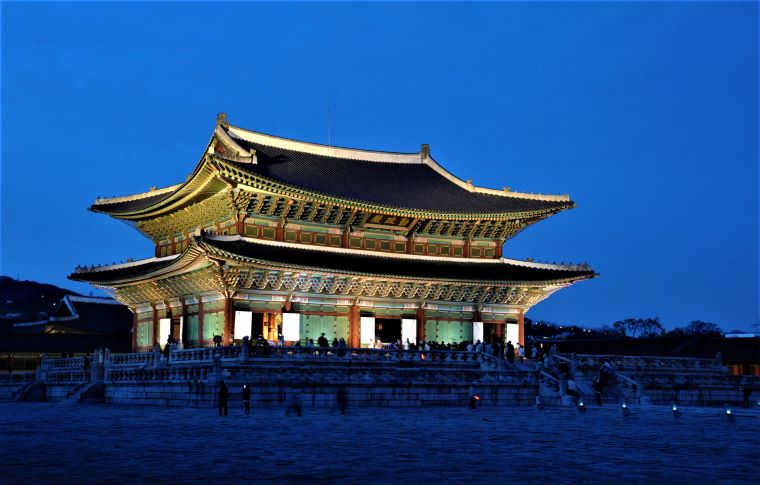
Gyeongbokgung PalaceAs the main royal palace of the Joseon dynasty, explore the pavilions and the palace gardens.
1
Gyeongbokgung PalaceAs the main royal palace of the Joseon dynasty, explore the pavilions and the palace gardens. -
 2
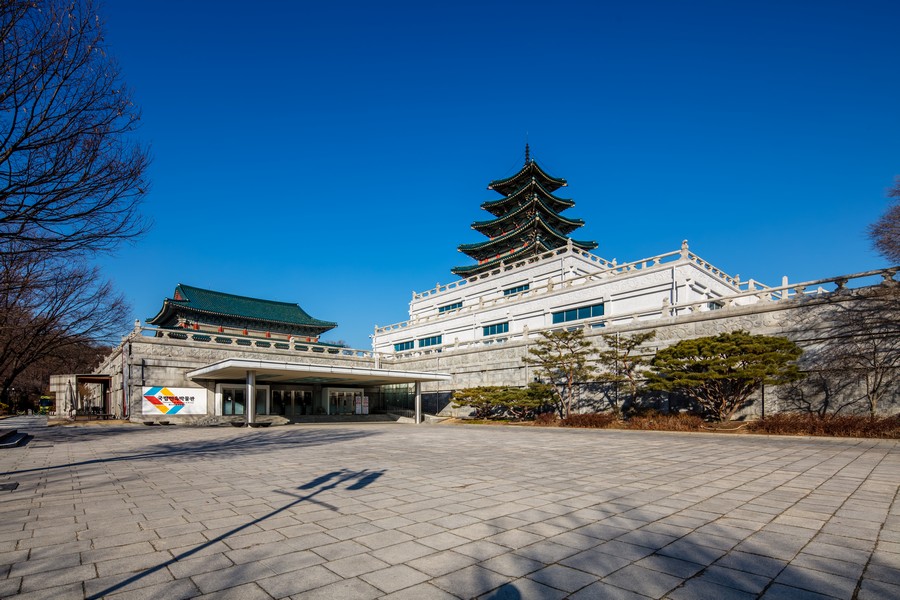
National Folk Museum of KoreaA museum showcasing Korean everyday living culture and folk materials.
2
National Folk Museum of KoreaA museum showcasing Korean everyday living culture and folk materials. -
 3
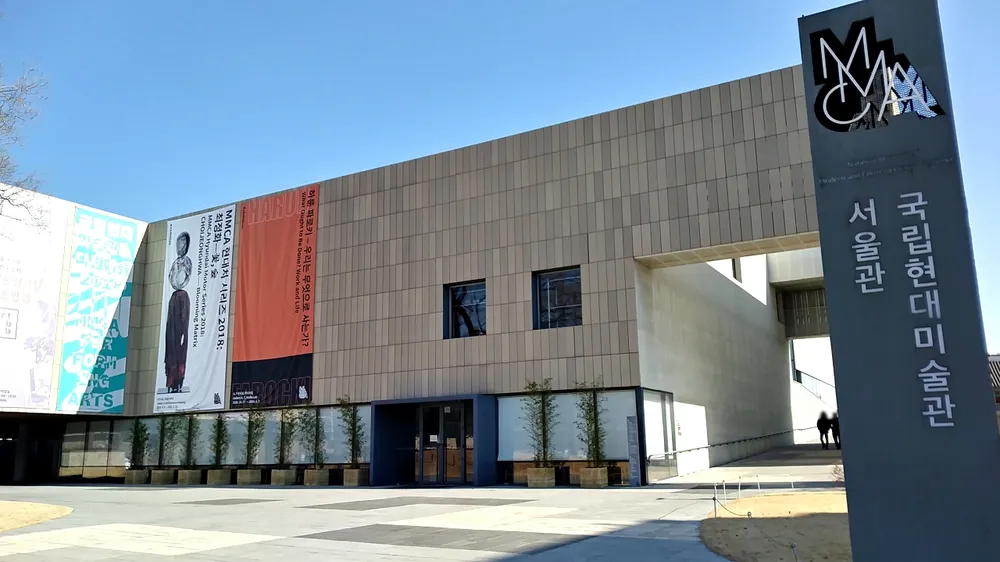
National Museum of Modern and Contemporary Art, SeoulA museum where you can enjoy contemporary art exhibitions and outdoor sculptures.
3
National Museum of Modern and Contemporary Art, SeoulA museum where you can enjoy contemporary art exhibitions and outdoor sculptures. -
 4
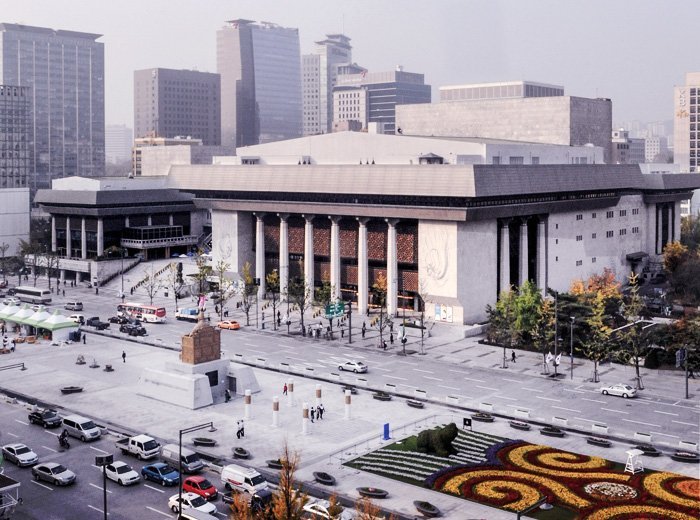
Sejong Center for the Performing ArtsA multi-purpose cultural complex where you can enjoy performances and exhibitions.
4
Sejong Center for the Performing ArtsA multi-purpose cultural complex where you can enjoy performances and exhibitions. -
 5
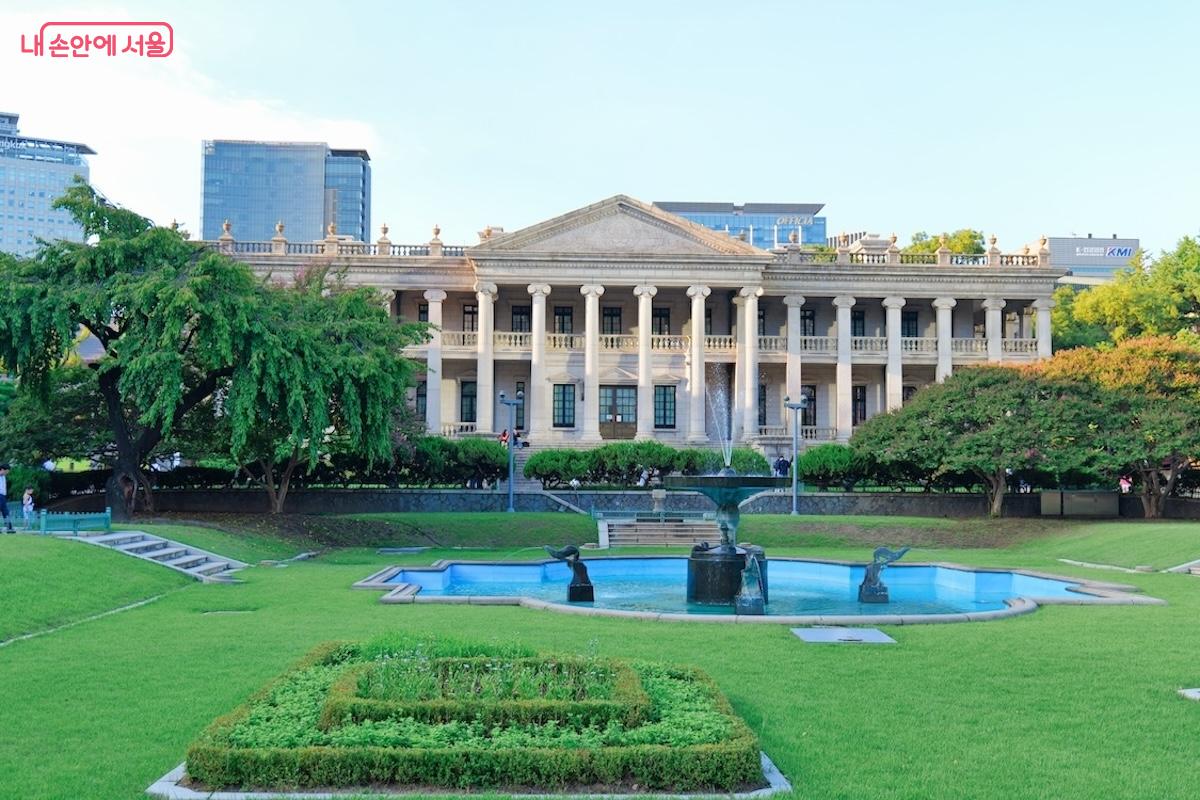
Deoksugung PalaceA stroll through a palace in the heart of the city, admiring traditional architecture.
5
Deoksugung PalaceA stroll through a palace in the heart of the city, admiring traditional architecture.
Food & Dining 1
-
 6
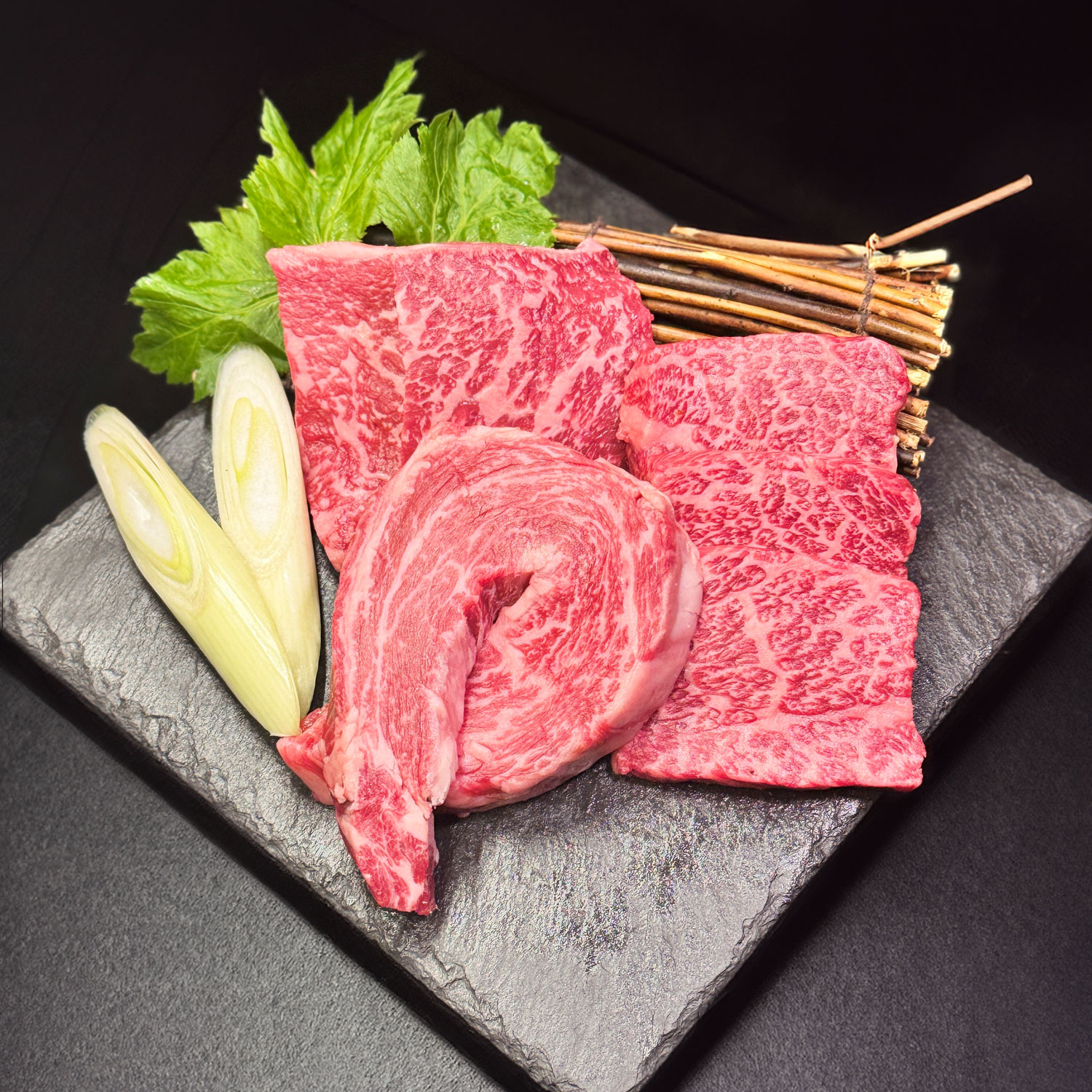
Ujik Gyeongbokgung BranchA meat-specialty restaurant where you can enjoy hanwoo set courses and grilled meats.
6
Ujik Gyeongbokgung BranchA meat-specialty restaurant where you can enjoy hanwoo set courses and grilled meats.
Events in This Area
Festivals in This Area
More Travel Guides in This Area
 Travel Guide
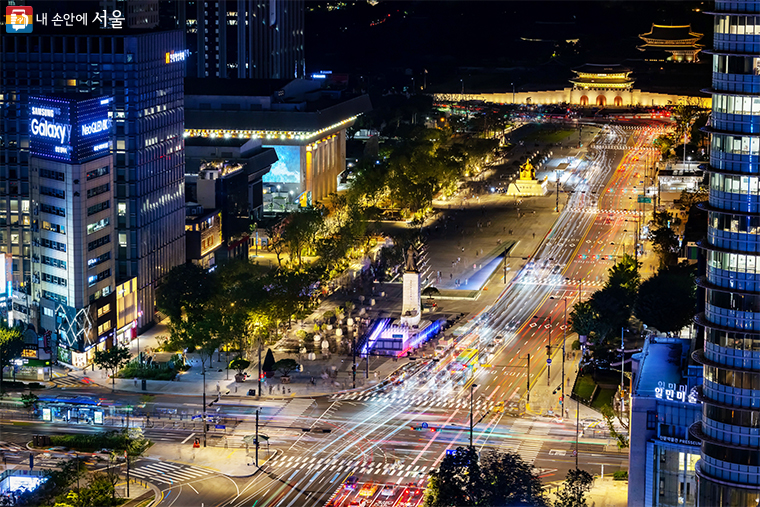
90 Minutes Reading Gwanghwamun Square, from the Yukjo Street of 1395 to the Woldae of 2023
 Travel Guide
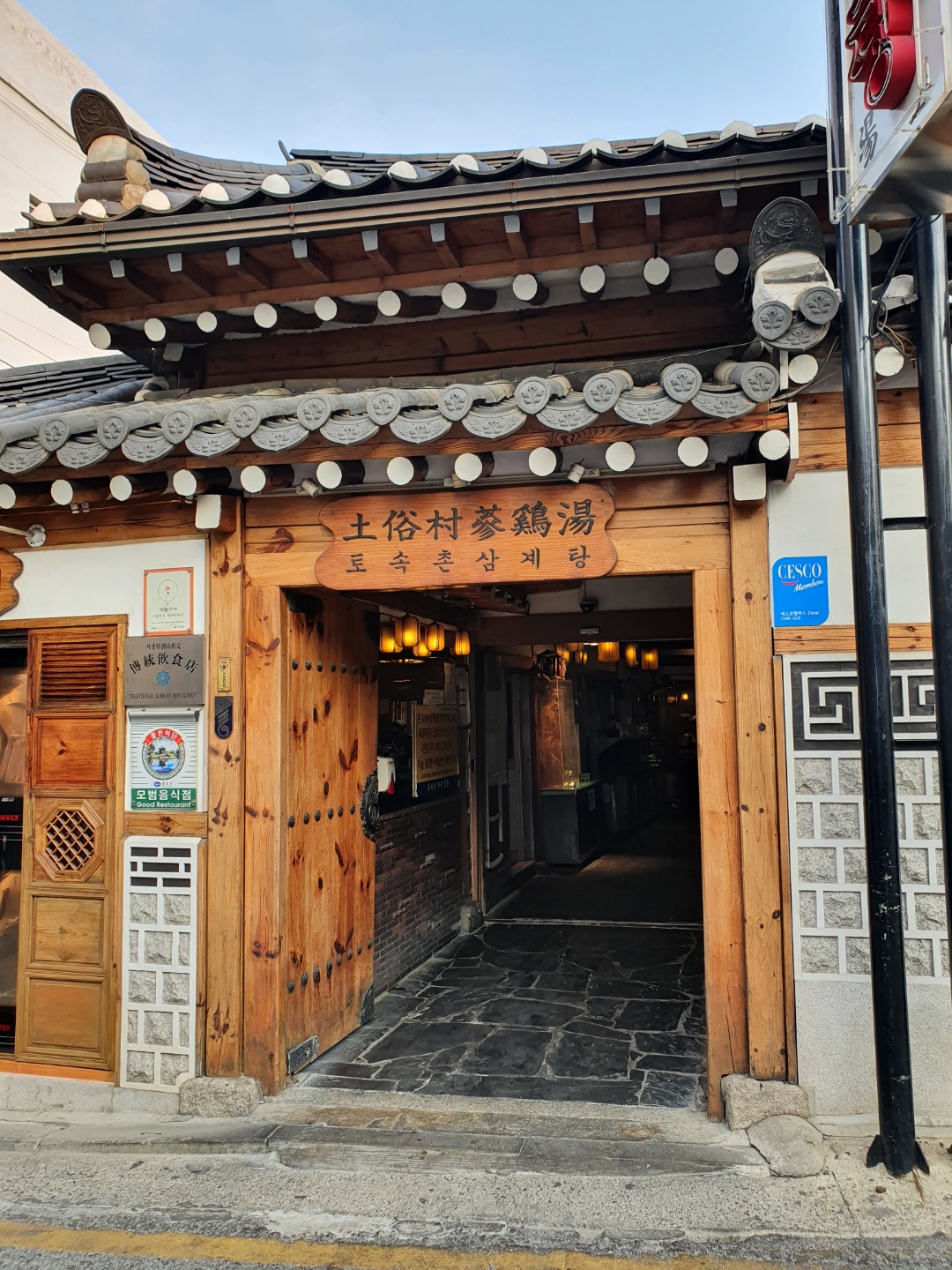
170 m from Exit 2 of Gyeongbokgung Station: a Hanok dining experience at Tosokchon Samgyetang, serving since 1983
 Travel Guide
The 6.2-Meter Statue of King Sejong Facing North Toward Gwanghwamun: A 40-Minute Exploration of Hangul and Science
 Travel Guide
Exploring the Courtyards of the Former Defense Security Command Site at the National Museum of Modern and Contemporary Art, Seoul
Korea News
 News
News
aespa’s Winter—Can a Person Really Be This Cute? A Daily Life Full of Pure Charm
 News
News
Tom Cruise Spotted Taking a Late-Night Walk at Hangang Park… Strolled for an Hour in a Black Suit
 News
News
'Jimin, We'll always be with you' Peru Embraced 'Jimtober' Birthday Celebrations... "I'm Happy"
 News
News