The Refugee Route and 450 m Alleyways Preserved at Busan’s 40 Steps
The 40 Steps Cultural Tourism Theme Street in Jung-gu, Busan, is an open-access street where visitors can explore the lives of Korean War refugees alongside the urban history of Busan Port. It is just a five-minute walk from Jungang Station and can be explored in a one- to two-hour course, including the 40 Steps Cultural Center.

I’ve been here?
Your check-in helps the next traveler.
17 people viewed this week Be the first
One tap — no writing needed
What Counts as Distance: 5 Minutes from Jungang Station Exits 13 and 15
The address of the 40-Step Culture and Tourism Theme Street is 73 Jungang-daero, Jung-gu, Busan (Jungang-dong 4-ga). After getting off at Jungang Station on Busan Metro Line 1, exit through Exit 13 or 15. Since the street is about a five-minute walk away, even travelers unfamiliar with Korean geography can easily use the station as their starting point.
The route continues for about 450 m from the Jungang-dong branch of KB Kookmin Bank, past the 40 Steps, to the 40-Step Cultural Center and Palseong Tourist. The street itself is open at all times, year-round, and can be visited on foot without a separate admission fee. However, the 40-Step Cultural Center has different operating rules, so if you plan to visit the museum, calculate its hours separately below.
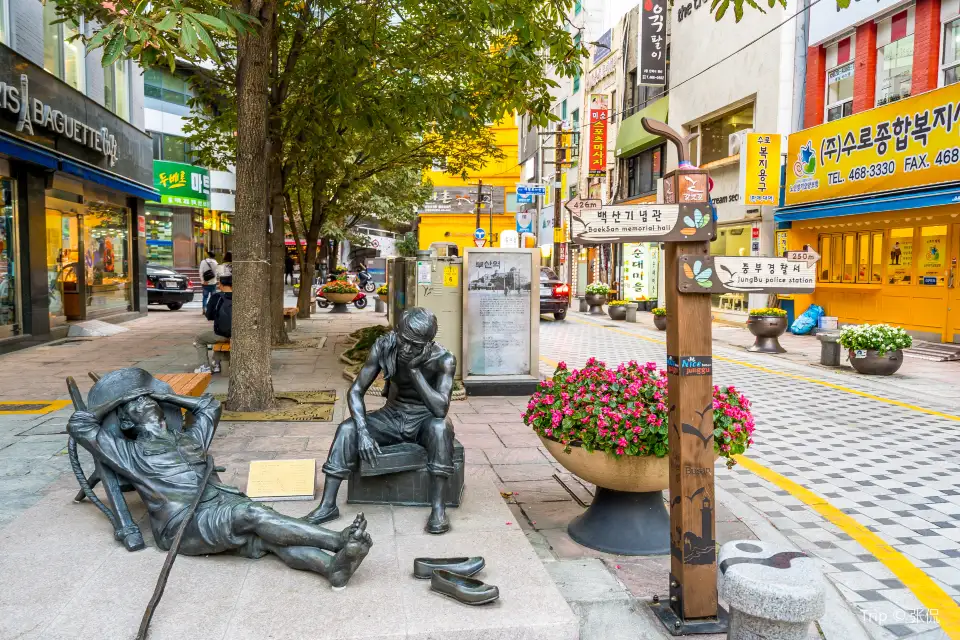
The Simplest Route from Busan Station: Take Line 1 toward Sinpyeong
If departing from Busan Station, take the urban railway toward Sinpyeong and get off at Jungang Station. Since it is about five minutes from Jungang Station Exits 13 and 15 to the street, using the urban railway station name directly is clearer than trying to explain the destination to a taxi driver from Busan Station.
When taking a bus, get off at the Jungang-dong or Yeongju-dong (Jungbu Police Station) stops. The routes stopping at these stops include 17, 26, 27, 40, 41, 42, 43, 61, 81, 82, 86, 87, 88, 88-1, 101, 103, 134, 135, 139, 190, 508, 1000, and 1003. Bus routes may change, so it is safest to check the current direction of service on the official Jung-gu, Busan Culture and Tourism website.

Why Refugee Life Began in Front of Busan Port in the 1950s
The 40 Steps was located in Jung-gu, Busan, which was a center of transportation and administration during the June 25 Refugee Period in 1950. Refugees built and lived densely in shanties in the surrounding area, and this was a nearby living space for more than 100,000 refugees scattered across the rear hills of Yeongju-dong, Donggwang-dong, and Bosu-dong at the time.
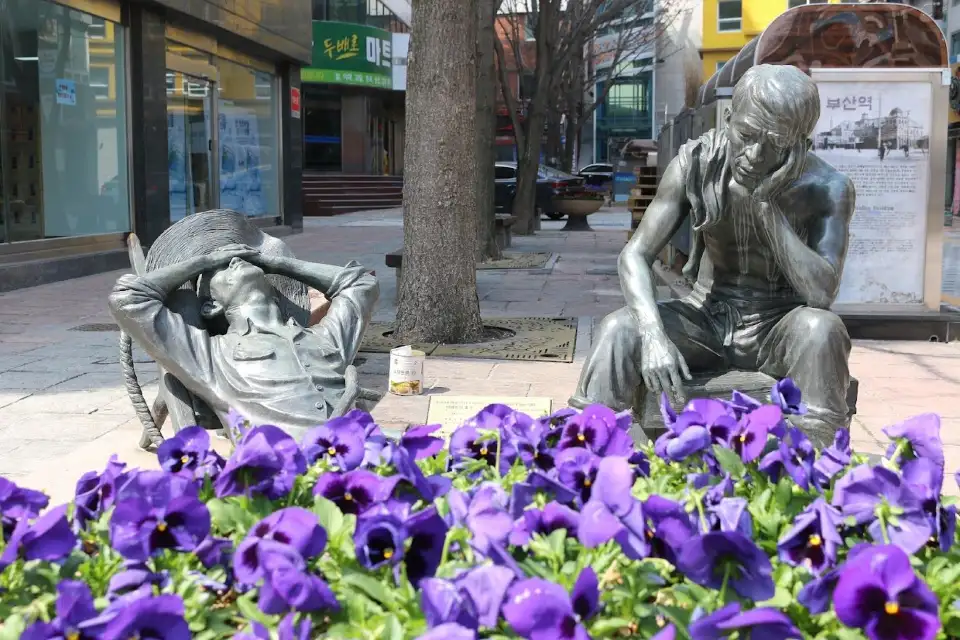
A market formed directly in front of the 40 Steps where relief supplies brought into the pier were bought and sold, and the area also became known as a meeting place for families separated during the evacuation. Therefore, the sculptures and depictions of everyday life arranged around the steps today are not merely decorative; they were designed to show the urban structure of the period, when Busan Port, refugee housing areas, and markets overlapped in one place.
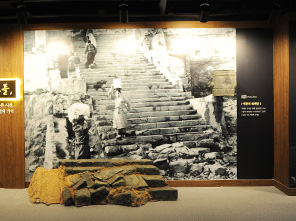
The 40 Steps Remembered in “Gyeongsang-do Lady” in 1951
The 40 Steps was a place symbolizing the joys and sorrows of refugee life and was used as the subject of “Gyeongsang-do Lady,” sung by Park Jae-hong in 1951. The fact that a popular song immediately after the war used a particular staircase as its subject shows that this place was widely known in the memories of Busan citizens at the time.
In June 2004, the 40-Step Culture and Tourism Theme Street was selected as Busan’s top-rated street in a comprehensive city evaluation and received a project budget of 300 million won. The subsequent theme-street plan included a total of 56 themed alleys, with names such as Printing Street, Press Street, Culture and Arts Street, Independence Movement Street, Waegwan Street, and Japanese Culture Street.

What to See at 49 Donggwang-gil, the 40-Step Cultural Center
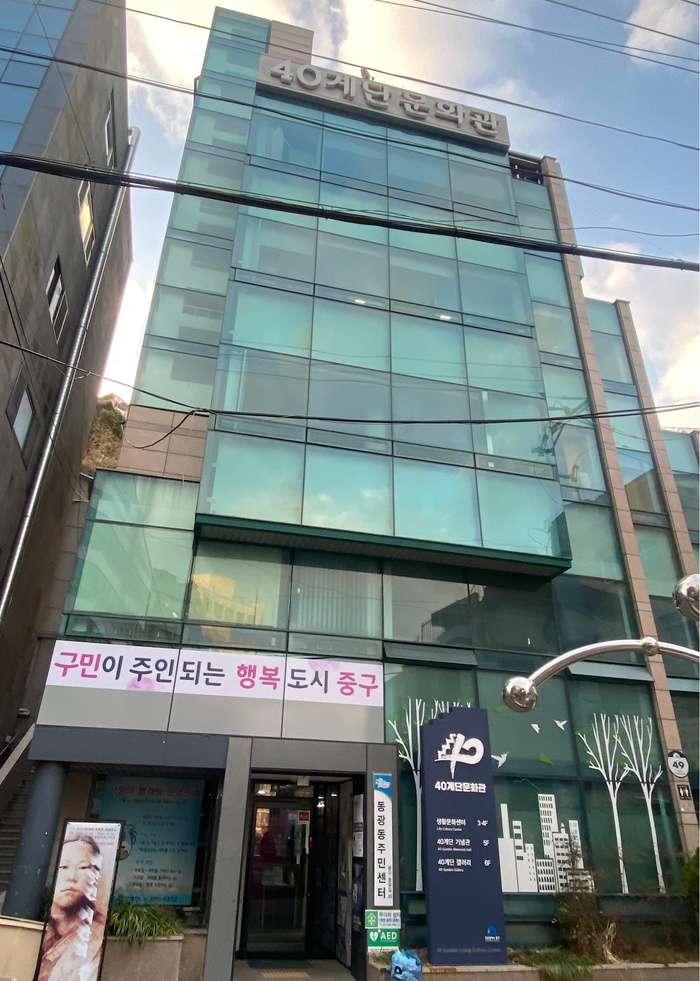
After viewing the steps, enter 49 Donggwang-gil, Jung-gu, Busan, as the destination to reach the 40-Step Cultural Center. The permanent exhibition hall is on the fifth floor and presents the journey of the Korean War through photographs, videos, and statistics, along with the background of the 40 Steps and a photo zone.
The exhibitions cover the lives of women and children during the war, refugees’ housing, daily life, and cultural and artistic activities, as well as students’ studies and hopes amid the turmoil. The video room screens a collection of Daehan News footage from the Busan region dating from the 1950s to the 1970s, so rather than simply viewing the sculptures and passing by, it is worthwhile to supplement your understanding of life at the time at the cultural center.
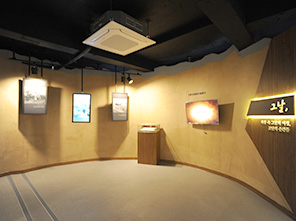

The Street and Museum Have Different Hours, Tuesday through Sunday
The street itself is open at all times, year-round. By contrast, the 40-Step Cultural Center is open from 10:00 to 18:00 Tuesday through Friday and from 10:00 to 17:00 on Saturdays and Sundays. The cultural center is closed every Monday, on national holidays, and during traditional holidays, so you should plan the outdoor street walk and the indoor exhibition separately.
Admission to the street is free, and the recommended sightseeing time is one to two hours. For inquiries about the 40-Step Cultural Center, call 051-600-4046; the main number is 051-600-4041~6, and the fax number is 051-600-4069. The official information website is Jung-gu, Busan Culture and Tourism (https://www.bsjunggu.go.kr/tour).
A Route That Does Not Miss the Accordion Sculpture or the View of Busan Port
Visitor reviews repeatedly mention the statue of an accordion player, sculptures depicting refugee scenes, and photo zones throughout the area. From above the 40 Steps, you can see Busan Port and the cityscape, so viewing both the everyday-life sculptures below and the overlook above is a way to understand the spatial composition of this place.
Some reviews say that on clear mornings, it is relatively quiet and easy to take photographs. You can also refer to the on-site information boards and QR-code commentary. Although the area is close to a main road, each alley retains a quiet atmosphere, and you can explore nearby shopping streets and teahouses as well. Related materials also introduce the area as a filming location for movies and television dramas.
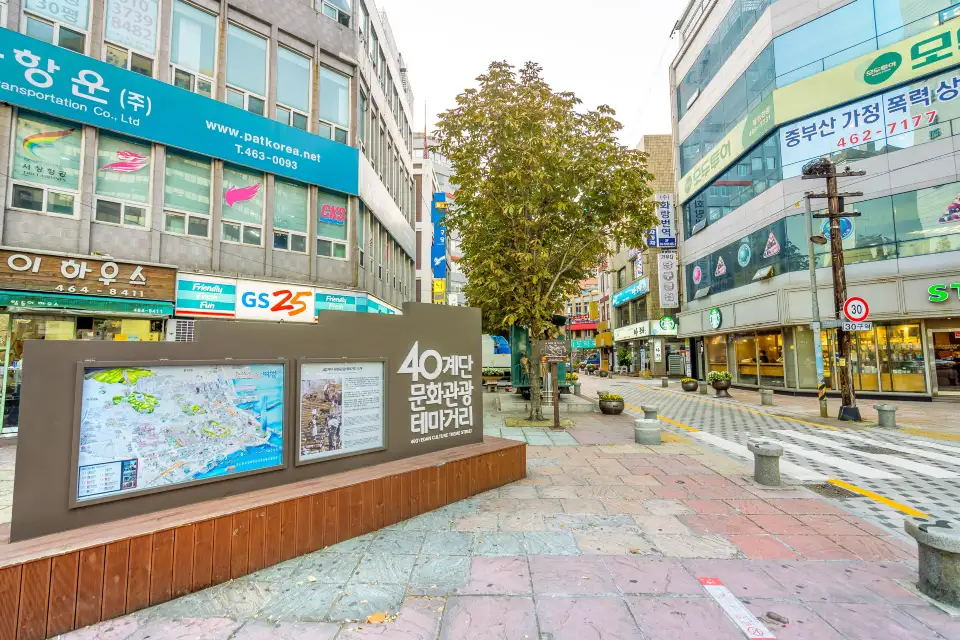
Travelers with Strollers Should Shorten Their Route Because of the Steps and Hills
As its name suggests, this site includes steps, and there are also many hills nearby. Visitor reviews point out that it may be somewhat inconvenient for older adults and stroller users. It is not suitable for a plan involving continuous travel through the entire street by wheelchair or stroller, and the 40-Step Cultural Center has an accessible restroom.
There is no confirmed information on whether photography is prohibited on the street itself, whether only cash is accepted, whether English information or an audio guide is available, or whether official parking is available and what the parking fees are. Therefore, rather than assuming the rules for photography or payment methods, distinguish between the free outdoor street and the cultural center, whose admission policy is not separately stated, to reduce confusion on site.
Learn the Layout Before You Leave with a One-Minute Video from Jung-gu Office
The Jung-gu Office channel posted a one-minute video titled “[One-Minute Timeline] The Truth About Busan’s 40 Steps....One...Two..Three...#shorts” on November 11, 2020. Before visiting, learn the shape of the steps and the street name from the video, then follow the 450 m route on site toward the cultural center.
Photographs and video materials are useful for understanding the economic and social changes and the significance of reconstruction in Busan during the Korean War, rather than merely seeing the 40 Steps as they appear today. Foreign travelers can allocate one to two hours for the street and cultural center combined, starting from Jungang Station, and divide their itinerary so that on Mondays, national holidays, and traditional holidays they use only the outdoor route and exclude the indoor exhibition.
],On-Site Information at a Glance
The 40-Step Culture and Tourism Theme Street is located at 73 Jungang-daero, Jung-gu, Busan, and the 40-Step Cultural Center is at 49 Donggwang-gil, Jung-gu, Busan. The street is open at all times, has no closing days year-round, and is free to enter.
The cultural center is open Tuesday through Friday from 10:00 to 18:00 and Saturday and Sunday from 10:00 to 17:00; it is closed every Monday, on national holidays, and during traditional holidays. The inquiry number is 051-600-4046, the main number is 051-600-4041~6, and the official website is https://www.bsjunggu.go.kr/tour.
],Accessibility, Parking, and On-Site Restrictions
It is about five minutes from Jungang Station Exits 13 and 15. From Busan Station, take the urban railway toward Sinpyeong and get off at Jungang Station. For buses, use the Jungang-dong or Yeongju-dong (Jungbu Police Station) stops; routes 17, 26, 40, as well as 27, 41, 42, 43, 61, 81, 82, 86, 87, 88, 88-1, 101, 103, 134, 135, 139, 190, 508, 1000, and 1003 are listed.
There is an accessible restroom at the 40-Step Cultural Center, but the many steps and hills may be inconvenient for older adults and stroller users. No information is provided about official parking availability or fees, English information or an audio guide, photography restrictions, or cash-only payment.
]}],Before You Go
- Address
- 73 Jungang-daero, Jung-gu, Busan (Jungang-dong 4-ga); 40-Step Cultural Center, 49 Donggwang-gil, Jung-gu, Busan
- Hours
- Street: open at all times / 40-Step Cultural Center: Tue–Fri 10:00–18:00, Sat–Sun 10:00–17:00
- Closed
- Street: open year-round / 40-Step Cultural Center: closed every Monday, on national holidays, and during traditional holidays
- Admission
- Free admission to the 40-Step Culture and Tourism Theme Street
- Phone
- 051-600-4046; 40-Step Cultural Center main number: 051-600-4041~6
- Official site
- https://www.bsjunggu.go.kr/tour
- Transport
- Five minutes from Exits 13 and 15 of Jungang Station on Busan Metro Line 1. Jungang-dong or Yeongju-dong (Jungbu Police Station) stops: 17, 26, 27, 40, 41, 42, 43, 61, 81, 82, 86, 87, 88, 88-1, 101, 103, 134, 135, 139, 190, 508, 1000, and 1003. From Busan Station, take the urban railway toward Sinpyeong and get off at Jungang Station.
- Time needed
- Recommended sightseeing time: 1–2 hours
- Accessibility
- Accessible restroom available at the 40-Step Cultural Center. The many steps and hills may be somewhat inconvenient for older adults and stroller users.
The information above is current as of the time of writing. Check the official information again before visiting.

Places
Nearby Attractions 2
-
 1
40-step Cultural CenterA space exploring the Korean War and the lives of refugees through photo and video exhibitions.
1
40-step Cultural CenterA space exploring the Korean War and the lives of refugees through photo and video exhibitions. -
 2
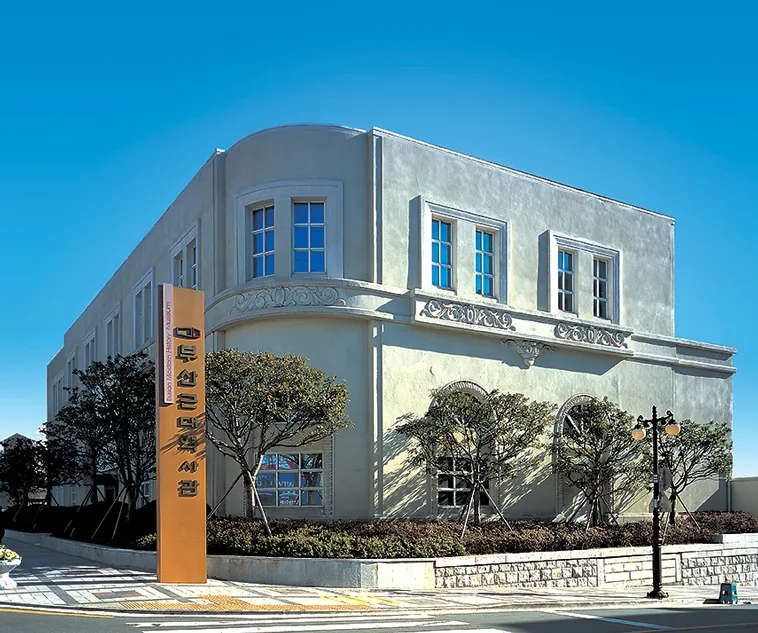
Busan Modern and Contemporary History MuseumA museum housed in the former Bank of Korea building, showcasing Busan’s modern and contemporary history through exhibitions.
2
Busan Modern and Contemporary History MuseumA museum housed in the former Bank of Korea building, showcasing Busan’s modern and contemporary history through exhibitions.
Food & Dining 3
-
 3
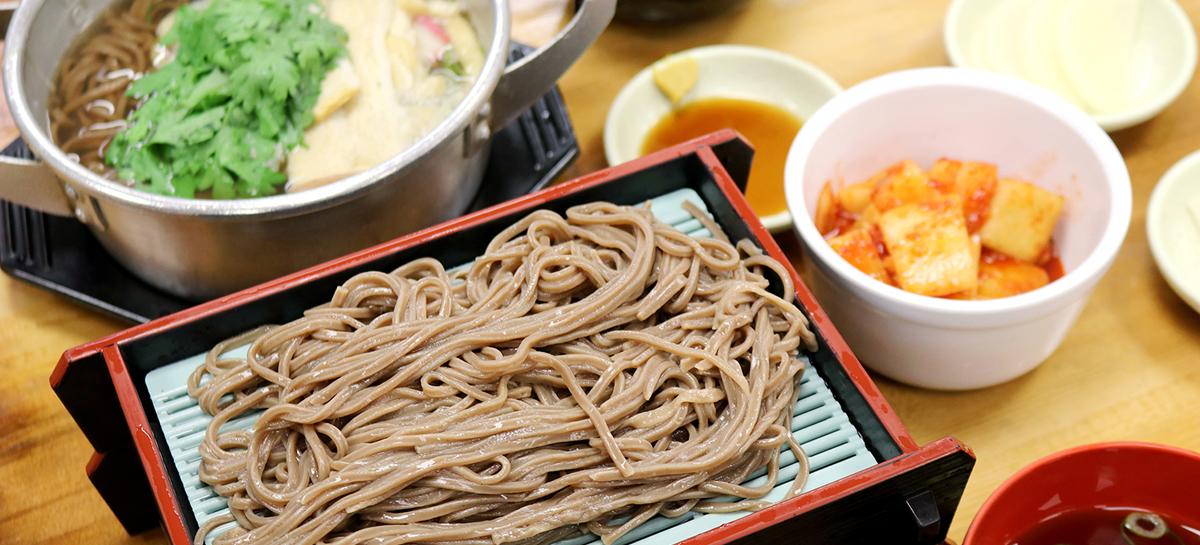
Jungang MomilA traditional noodle restaurant serving buckwheat noodles, udon, and inari sushi.
3
Jungang MomilA traditional noodle restaurant serving buckwheat noodles, udon, and inari sushi. -
 4
Ijaemo PizzaA specialty restaurant serving pizza and pasta made with domestically produced Imsil cheese.
4
Ijaemo PizzaA specialty restaurant serving pizza and pasta made with domestically produced Imsil cheese. -
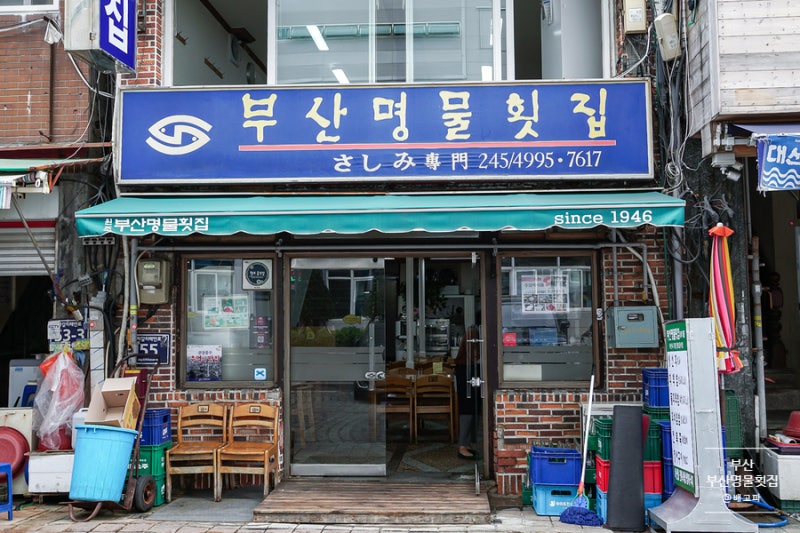 5
Busan Myeongmul HoetjipA sashimi restaurant near Jagalchi Market serving raw fish over rice, fresh sashimi, and clear fish-bone soup.
5
Busan Myeongmul HoetjipA sashimi restaurant near Jagalchi Market serving raw fish over rice, fresh sashimi, and clear fish-bone soup.
Events in This Area


Festivals in This Area

More Travel Guides in This Area
 Travel Guide
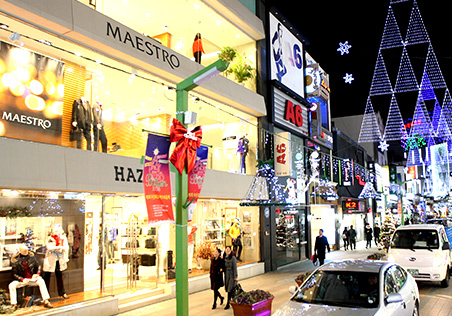
From Gwangbok-ro Fashion Street to Nampo Station Exit 3: Busan Shopping Route and On-Site Information
 Travel Guide
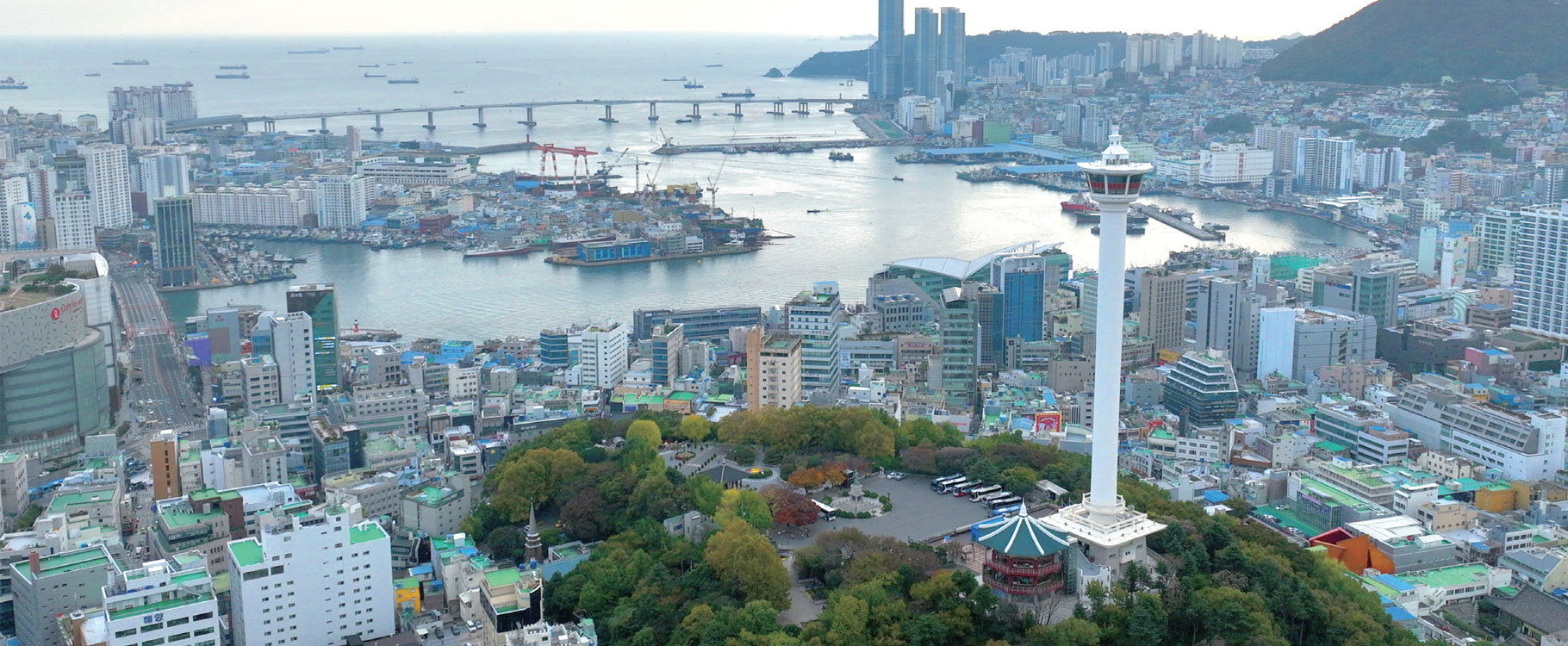
Busan’s Dawn Begins Beneath the Seagull Roof: Jagalchi Market
 Travel Guide
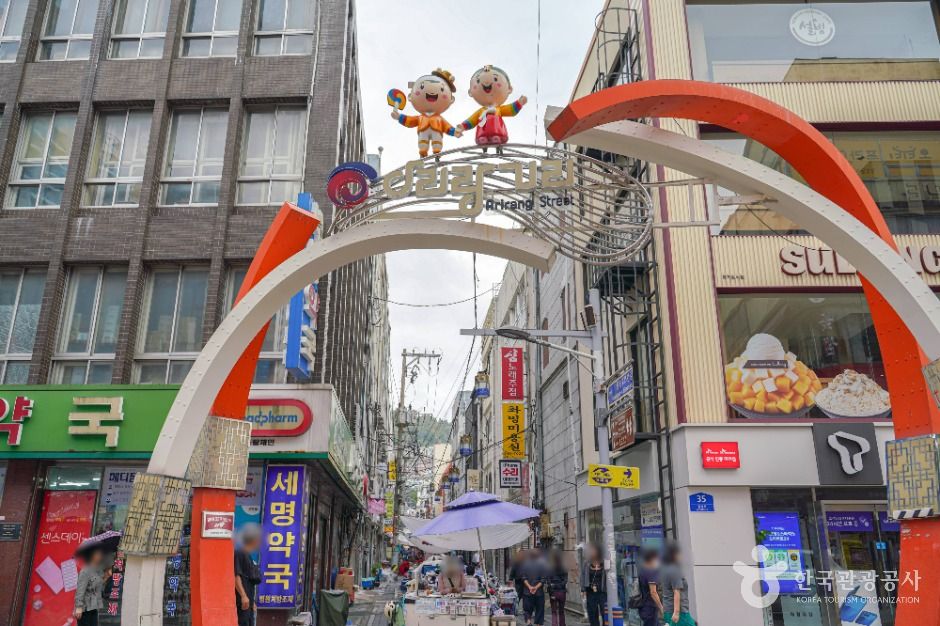
Busan Arirang Street, Starting at 11 Gwangbok-ro 35beon-gil: An International Market Alley Between Handicraft Shops and Opticians
 Travel Guide
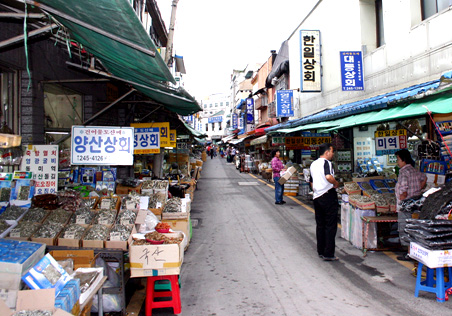
The Dry Seafood Wholesale Alley of Busan at the Eastern End of Jagalchi
Korea News
 News
News
‘NewJeans Expulsion’ Danielle Releases Her First YouTube Video… “We Don’t Know What Will Happen Next”
![aespa’s North American Tour Has Remaining Seats Despite ‘$49’ Bargain Prices… A Stark Popularity Gap with KATSEYE [TEN Starfield]](https://kotourlive-images.s3.ap-northeast-1.amazonaws.com/news/1788485037424_a59b1932_naver_rank_thumb_0000774618_1788485037424.jpg) News
News
aespa’s North American Tour Has Remaining Seats Despite ‘$49’ Bargain Prices… A Stark Popularity Gap with KATSEYE [TEN Starfield]
![[Photo] TWICE’s Dahyun attends a film festival red carpet as an actress](https://kotourlive-images.s3.ap-northeast-1.amazonaws.com/news/1788485316508_edd43ecd_news_870a60a6-6f11-4d73-aa7c-48d91318a0f7.jpg) News
News
[Photo] TWICE’s Dahyun attends a film festival red carpet as an actress
![[On-Site Video] “We’re Departing Separately Together”… BIGBANG Begins ‘COSMOS’ World Tour](https://kotourlive-images.s3.ap-northeast-1.amazonaws.com/news/1788485226518_c5719641_news_fdd4764a-0f4e-4968-8e4e-e98a02872f88.jpg) News
News