From the Former Bank of Korea Vault to Busan as a Refuge Capital: Main Building of the Busan Modern and Contemporary History Museum
The main building of the Busan Modern and Contemporary History Museum occupies the former Busan branch building of the Bank of Korea and presents the history of Busan’s port opening, Japanese colonial rule, its role as a wartime refuge capital, industrialization, and democratization. It is a 7-minute walk from Jungang Station on Busan Metro Line 1. Admission is free, and visitors can also enjoy the Vault Art Museum.

I’ve been here?
Your check-in helps the next traveler.
No one has checked in yet Be the first
One tap — no writing needed
From Jungang Station Exit 5 to 112 Daecheong-ro
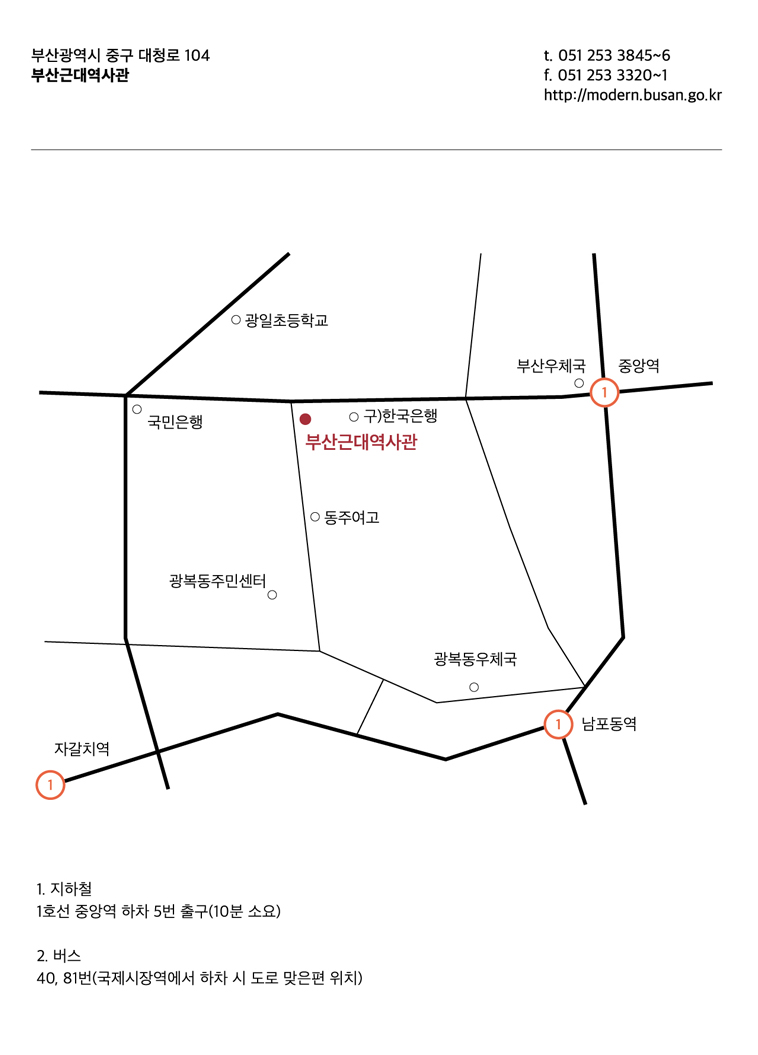
For travelers visiting Busan for the first time, the simplest starting point is Busan Metro Line 1 Jungang Station Exit 5. According to the official information, it is a 7-minute walk to the Main Building, while Nampo Station Exit 1 is a 12-minute walk away. The destination is 112 Daecheong-ro, Jung-gu, Busan (44 Daecheong-dong 1-ga), postal code 48949.
If you use the bus, regular buses 40 and 81 stop at the ‘Gukje Market·Busan Modern and Contemporary History Museum’ stop (01096), 54 m from the Main Building. The nearby ‘Gukje Market’ stops are also divided into several locations: 01097 is 91 m away and serves routes 40 and 81; 01095 is 122 m away and serves routes 126 and 15; 01100 is 143 m away and serves routes 186 and 86; and 01092 is 207 m away and serves routes 186, 40, and 86.
Open from 09:00 to 18:00; admission ends at 17:00
The Main Building is open from 09:00 to 18:00, Tuesday through Sunday, with last admission at 17:00. Admission is free, so there is no need to purchase a ticket at a ticket office. The main telephone number is 051-607-8000, and the Main Building information desk can be reached at 051-607-8002.
Closed days are every Monday and January 1. If Monday is a public holiday, the museum is closed the following day. If a public-holiday Monday falls within a holiday period, it is closed on the day after the final public holiday of the period. Before setting out, check the visitor information on the official Busan Modern and Contemporary History Museum website (https://www.busan.go.kr/mmch/index).
Why did a bank building become a history museum?
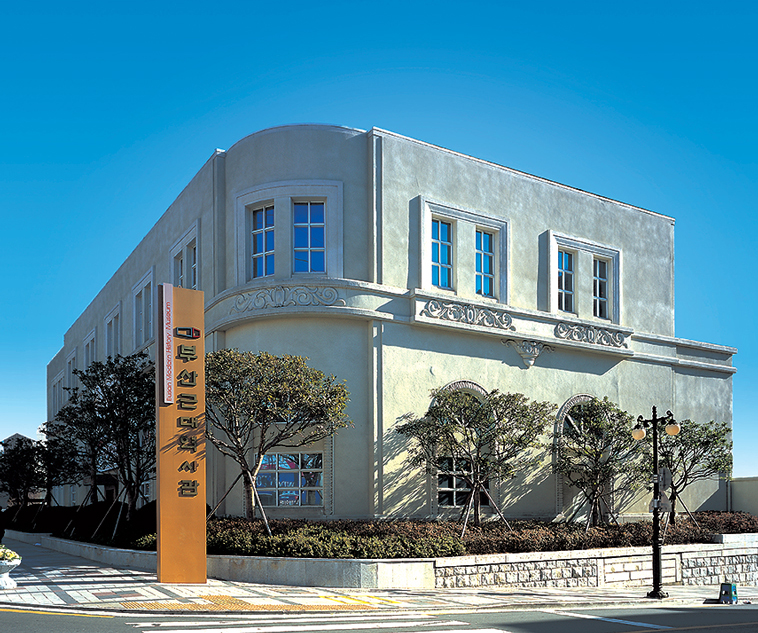
The present Main Building is a facility that the Busan Metropolitan Government purchased and renovated as a museum with historical, cultural, and tourism functions, using the former Busan Head Office building of the Bank of Korea. The former building was designated Busan Metropolitan City Cultural Heritage Material No. 70 in 2002. The starting point was the relocation of the Bank of Korea Busan Head Office to a new building in Munhyeon-dong on May 16, 2001, which left the existing building in search of a new use.
On July 22, 2013, Busan Metropolitan City transferred ownership of the former Bank of Korea Busan Head Office from the Ministry of Economy and Finance to the city, and on December 16, 2022, it completed Phase 1 of the Busan Modern and Contemporary History Museum project. The Busan Modern and Contemporary History Museum Main Building subsequently opened on January 5, 2024. This explains how the present museum was created: the bank’s exterior and vaults were preserved while the space was filled with Busan’s modern and contemporary history.
Special exhibitions on the second floor and Busan during the opening-port period on the third floor
The Main Building consists of the Vault Art Museum on Basement Level 1, an Open Cultural Space on the first floor, and exhibition galleries from the second through fourth floors. The first-floor Open Cultural Space contains a café, souvenir shop, and convenience facilities, making it a place to pause before or after viewing the exhibitions. Public Wi-Fi is also available in the Main Building.
The First Permanent Exhibition Gallery on the third floor covers Busan’s transformation into a modern city from the opening-port period of Korea through the Japanese colonial period. The overall theme of the Main Building is Busan’s transformation through the opening-port period, Japanese colonial period, Korean War, industrialization, and democratization. Since the second floor is a special exhibition gallery, its content varies depending on when you visit.
How to understand Busan as a wartime refuge capital and industrial city on the fourth floor
The Second Permanent Exhibition Gallery on the fourth floor presents Busan during the refugee period of the Korean War and the era when it served as the temporary capital of the Republic of Korea. It then connects this history with Busan as a forward base for the export industry in the 1960s and 1970s, the birthplace of the shipbuilding industry, and the democratization movement represented by the April 19 Revolution and the Bu-Ma Democratic Protests.
Thus, the Main Building is more than a place to view an old building. It is a place to follow the sequence in which Busan changed into a port city, refugee city, industrial city, and city of democratization. If you apply for a permanent exhibition tour, you can receive an approximately 50-minute explanation each session at the entrance to the First Permanent Exhibition Gallery on the third floor. Online advance registration is required, and each session is intended for approximately 15 people at most.
The Vault Art Museum on Basement Level 1 preserves traces of the bank
Basement Level 1 is the Vault Art Museum, which uses the former vaults of the Bank of Korea Busan Head Office. Four vaults have been preserved in the vault room, directly showing the building’s original function as a bank, unlike an ordinary exhibition gallery. Visitors who want to see the vault area should plan a route down to Basement Level 1 rather than viewing only the permanent galleries on floors 2 through 4.
Admission is free, but bringing food or beverages inside is prohibited. All areas of the museum are smoke-free, and bicycles, kick scooters, and inline skates are not allowed. Flash photography, tripods, selfie sticks, and commercial photography are also prohibited, and pets other than guide dogs may not enter.
Things easy to miss when using the tours and children’s experience room
Permanent exhibition tours are held in the morning from Tuesday through Saturday and at 2:00 p.m. on Sundays. The exhibition team’s inquiry number is 051-607-8042. Advance online registration is required, and tours begin at the entrance to the First Permanent Exhibition Gallery on the third floor. Since they take approximately 50 minutes, it is efficient either to view the exhibitions immediately after opening at 09:00 or to plan your visit around the tour time.
The children’s experience room, ‘Deullaknallak,’ operates by advance reservation for each session. Sessions are held from 09:30–10:20, 10:30–11:20, 11:30–12:20, 14:00–14:50, 15:00–15:50, 16:00–16:50, and 17:00–17:50. If 20 minutes have passed after the session’s admission time, you cannot enter the experience area. Visitors with children should calculate the free permanent exhibition and experience-room reservation times separately.
The subway is a more practical choice than driving
The Main Building has no parking lot of its own. If you drive, you must use the nearby Yongdusan Park public parking lot, but the official information does not specify the number of available spaces or fees. Unlike admission, which is free, parking is a separate issue. If you are visiting other attractions in central Busan as well, walking 7 minutes from Jungang Station Exit 5 is convenient.
Two wheelchairs and two strollers are available, and public Wi-Fi can be used. However, the specific locations of the interior elevator, ramps, and accessible restrooms, as well as whether English information or an audio guide is available, have not been confirmed. Travelers who require accessibility support should contact the Main Building information desk at 051-607-8002 before visiting.
Before You Go
- Address
- 112 Daecheong-ro, Jung-gu, Busan (44 Daecheong-dong 1-ga, Busan Modern and Contemporary History Museum Main Building), postal code 48949
- Hours
- Tuesday–Sunday, 09:00–18:00 (last admission 17:00)
- Closed
- Every Monday and January 1. If Monday is a public holiday, closed the following day
- Admission
- Free
- Phone
- 051-607-8000; Main Building information desk: 051-607-8002
- Official site
- https://www.busan.go.kr/mmch/index
- Transport
- A 7-minute walk from Busan Metro Line 1 Jungang Station Exit 5, or a 12-minute walk from Nampo Station Exit 1. Gukje Market·Busan Modern and Contemporary History Museum stop, 54 m away; regular buses 40 and 81, among others
- Parking
- No parking lot at the Main Building. Use the nearby Yongdusan Park public parking lot
- Time needed
- Approximately 1 hour with a permanent exhibition tour
- Accessibility
- Two wheelchairs and two strollers available
The information above is current as of the time of writing. Check the official information again before visiting.

Places
Nearby Attractions 2
-
 1
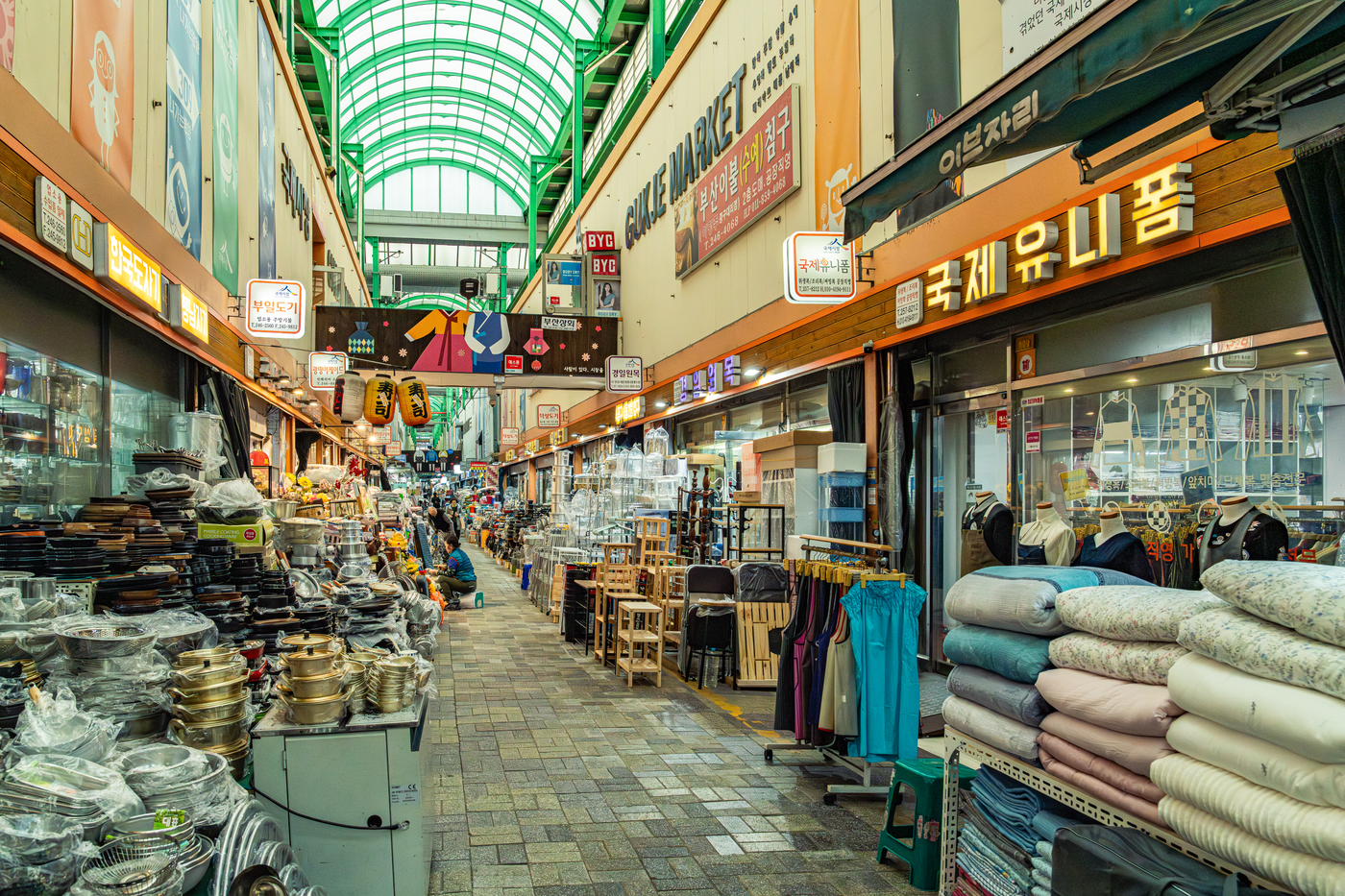
Gukje MarketExplore the traditional markets and shopping streets of Busan’s old downtown area.
1
Gukje MarketExplore the traditional markets and shopping streets of Busan’s old downtown area. -
 2
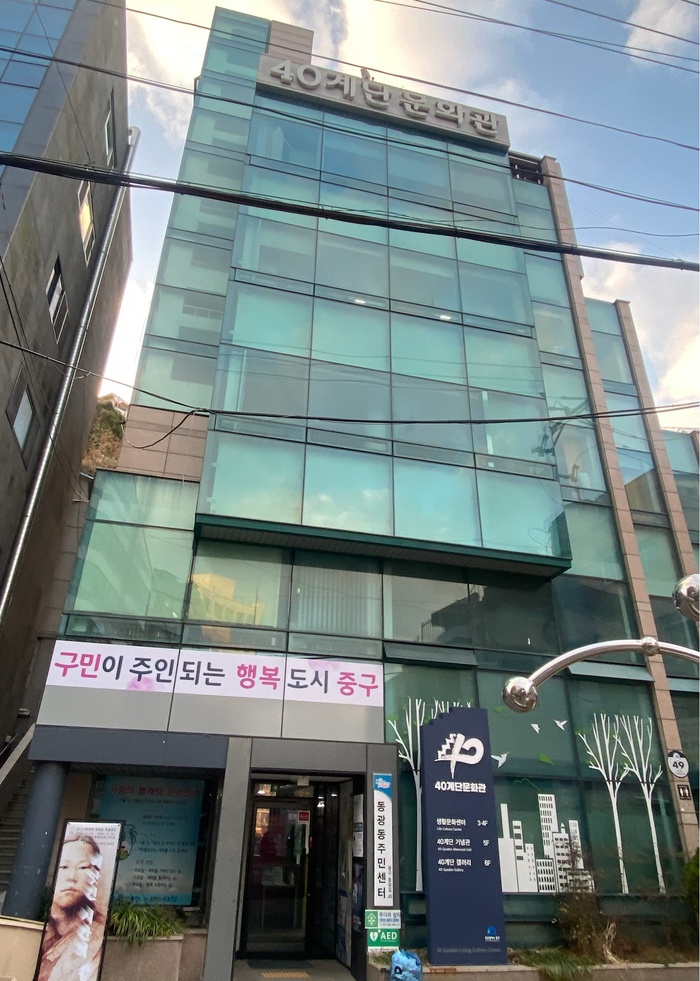
40-Step Cultural CenterExhibits depict daily life during the wartime capital period and the history of the 40 Steps.
2
40-Step Cultural CenterExhibits depict daily life during the wartime capital period and the history of the 40 Steps.
Food & Dining 3
-
 3
3
-
 4
4
-
 5
5
Events in This Area
Festivals in This Area
More Travel Guides in This Area
 Travel Guide
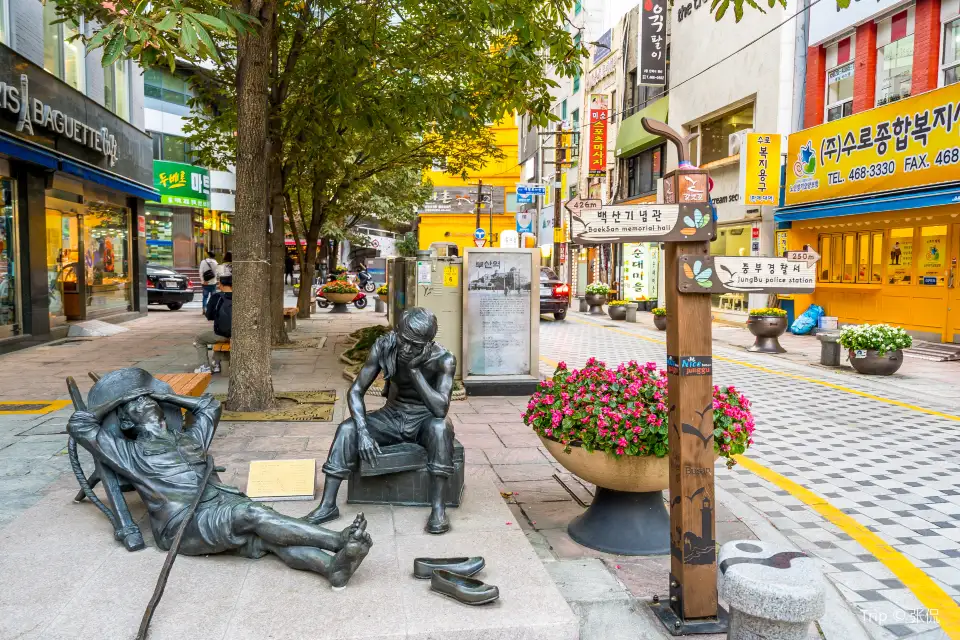
The Refugee Route and 450 m Alleyways Preserved at Busan’s 40 Steps
 Travel Guide
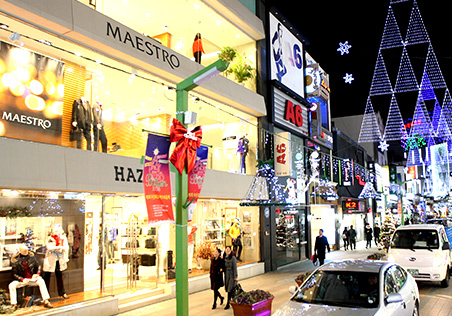
From Gwangbok-ro Fashion Street to Nampo Station Exit 3: Busan Shopping Route and On-Site Information
 Travel Guide
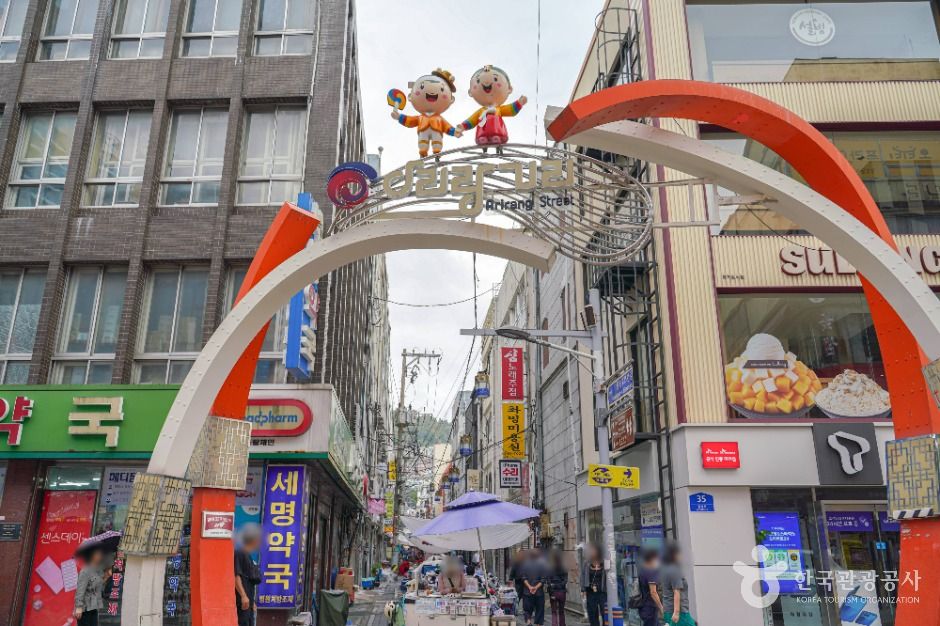
Busan Arirang Street, Starting at 11 Gwangbok-ro 35beon-gil: An International Market Alley Between Handicraft Shops and Opticians
 Travel Guide
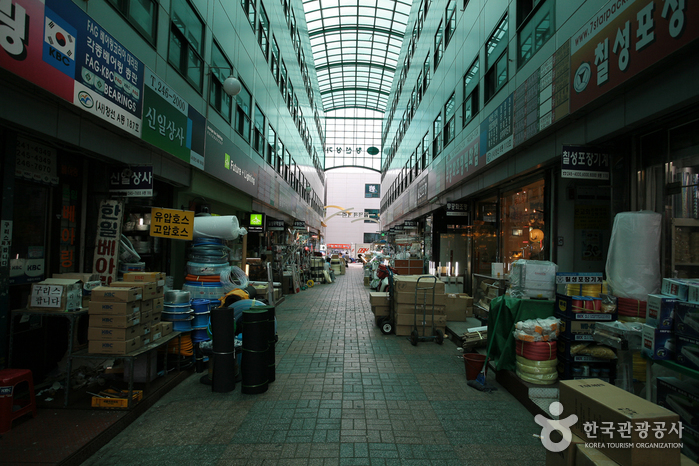
One Hour Choosing Bags, Hats, and Household Goods on Manmului Street Next to Gukje Market
Korea News
![BLACKPINK’s Lisa Dominates the VMA Red Carpet in a Sheer Corset Dress and Red Fur [Star Issue]](https://kotourlive-images.s3.ap-northeast-1.amazonaws.com/news/1790557894714_010e956a_news_94409db1-fab6-40bf-bc7b-4b985b1fbac7.jpg) News
News
BLACKPINK’s Lisa Dominates the VMA Red Carpet in a Sheer Corset Dress and Red Fur [Star Issue]
![BLACKPINK’s Jisoo Spotted by Surprise with BIGBANG in London… Their Special Loyalty as Labelmates [IS High Cut]](https://kotourlive-images.s3.ap-northeast-1.amazonaws.com/news/1790557854683_6ea979f5_news_caab62e5-8462-43c8-8622-da794f3df9de.png) News
News
BLACKPINK’s Jisoo Spotted by Surprise with BIGBANG in London… Their Special Loyalty as Labelmates [IS High Cut]
 News
News
Tattoos All Over Her Body… AOA’s Jimin Draws Shocked Attention After Kwon Mina’s ‘Bullying’ Allegations
![You’ll Have to Look Twice… Choi Min-a-soo Perfectly Pulls Off Everything from a Daring Illusion Dress at the Awards Ceremony to Long Braided Hair [RE:STAR]](https://kotourlive-images.s3.ap-northeast-1.amazonaws.com/news/1790492384850_1f293dad_news_d834c50e-0685-43ef-9aa5-6995cd6d8848.jpg) News
News