Gukcheongsa Temple, a Buddhist sanctuary of national protection embraced by Geumjeongsanseong Fortress
Gukcheongsa Temple is located in the Fortress Village inside the North Gate of Geumjeongsanseong Fortress. It is a Buddhist sanctuary dedicated to protecting the nation, associated with the tradition that it was founded by the Silla monk Uisang and with records of the fortress’s reconstruction in 1703, the 29th year of King Sukjong’s reign. The temple preserves to this day traces of Joseon-era warrior monks, including the Bronze Drum, Treasure No. 1733, and the seal of the monk commander of Geumjeongsanseong.
I’ve been here?
Your check-in helps the next traveler.
18 people viewed this week Be the first
One tap — no writing needed
From the Founding Legend of Master Uisang to Receiving the Name “Gukcheongsa” in 1703
Gukcheongsa Temple is a subsidiary hermitage of Beomeosa Temple of the Jogye Order, located in Geumjeongsan Mountain Fortress Village at 397 Geumseong-dong, Geumjeong-gu, Busan Metropolitan City, inside the North Gate of Geumjeongsanseong Fortress. It is said to have been founded by Master Uisang during the Silla period. However, it should be noted that the founding date is based on tradition and may differ from the historically verified date. The temple acquired its current name much later, after the inner fortress of Geumjeongsanseong Fortress was built in the 29th year of King Sukjong’s reign (1703). It was then called Gukcheongsa, meaning a place that repels enemies and protects the nation. In fact, the temple plaque records: “After the inner fortress of Geumjeongsanseong Fortress was built in the 29th year of King Sukjong’s reign (1703), enemies were repelled and the nation was protected; therefore, it was named Gukcheongsa.” The name carries the meanings of “taking the lead in overcoming national crises through a pure mind, as in Buddhist practice” and “protecting the pure land by preventing the nation from being trampled by the filthy footsteps of foreign enemies.”
The temple has survived to the present after being rebuilt in the 26th year of King Sunjo’s reign. According to materials introduced by Busan City, Gukcheongsa is regarded as a temple with a deep history, having long served as a guardian temple that took the lead in overcoming national crises.
Spirit Tablets from the Imjin War at the Site of Gukcheongsa, and the Geumjeongsanseong Military Monk Seal
The Gukcheongsaji records that ancestral rites were held at Gukcheongsa for the spirit tablets of Dongnae Magistrate Song Sang-hyeon, Busanjin Commander Jeong Bal, Dadaepo Commander Yun Heung-sin, and several hundred others, including military monks Manhong, Jeongan, Seonggwan, and Gwanchal. In light of this record, it is considered highly likely that the temple was already being used as an overnight camp for monk soldiers during the Imjin War. The Annals of King Sukjong also record that 100 monks from Haewolsa and Gukcheongsa inside the fortress, along with 300 monks from Beomeosa, were assigned for military service, while several thousand monks from three nearby districts were organized into units to defend the mountain fortress.
An iron seal used by the commander of the monk soldiers during this period has also been preserved. Gukcheongsa still houses the iron seal known as the Geumjeongsanseong Military Monk Commander’s Seal, which was used by the commander of the monk soldiers at the time. It was designated a Busan Metropolitan City Cultural Heritage Material in 2008, now classified as a Cultural Heritage Material. The owner of this artifact is Gukcheongsa, while its managing institution is the Seongbo Museum of Beomeosa Temple of the Jogye Order.
Bronze Drum, Treasure No. 1733: A Rare Artifact of Seventeenth-Century Buddhist Craftsmanship
The Busan Gukcheongsa bronze drum is a Buddhist ritual implement from the Joseon period and was designated Treasure No. 1733 of the Republic of Korea on December 23, 2011. The drum has an overall diameter of 40.5 cm, making it medium-sized. It follows the most common form, with sides folded backward to create a short rim and a broad sound hole in the back. On the back of this drum, held at the Seongbo Museum of Beomeosa Temple, is an inscription in raised ink writing stating that it was made in 1666 as a ritual drum for Jangcheonsa Temple on Yeonhwasan Mountain by the military monks Taeeung, Sinyeol, and Yeongdeuk.
Only a very small number of drums made in the seventeenth century remain. The drum held by Eunhaesa Temple, made in 1646, was first designated a treasure in recognition of its value. The drum held by Gukcheongsa is likewise a work made in 1666, only 20 years after the Eunhaesa example, and is highly valued because so few artifacts made in the seventeenth century survive. While a relatively large number of Goryeo-period drums have been identified, surprisingly few works from the early Joseon period remain. Among the works from the early Joseon period, specifically those dating before the Imjin War, the bronze drum at Bogwangsa Temple on Tsushima, Japan, is the only one identified so far, making the rarity of the Gukcheongsa bronze drum especially notable.
Reconstruction Projects Continuing Since 1978 — From Samseonggak to the One-Pillar Gate
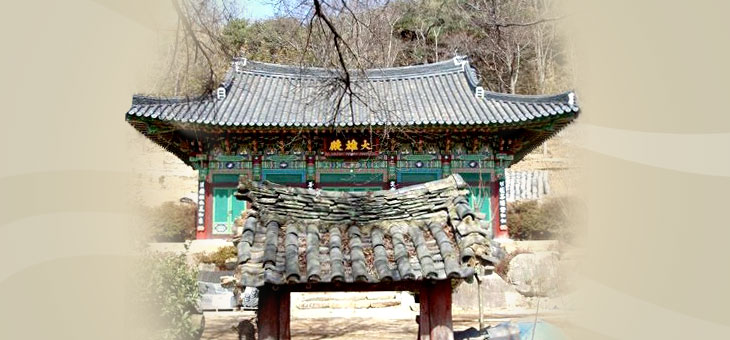
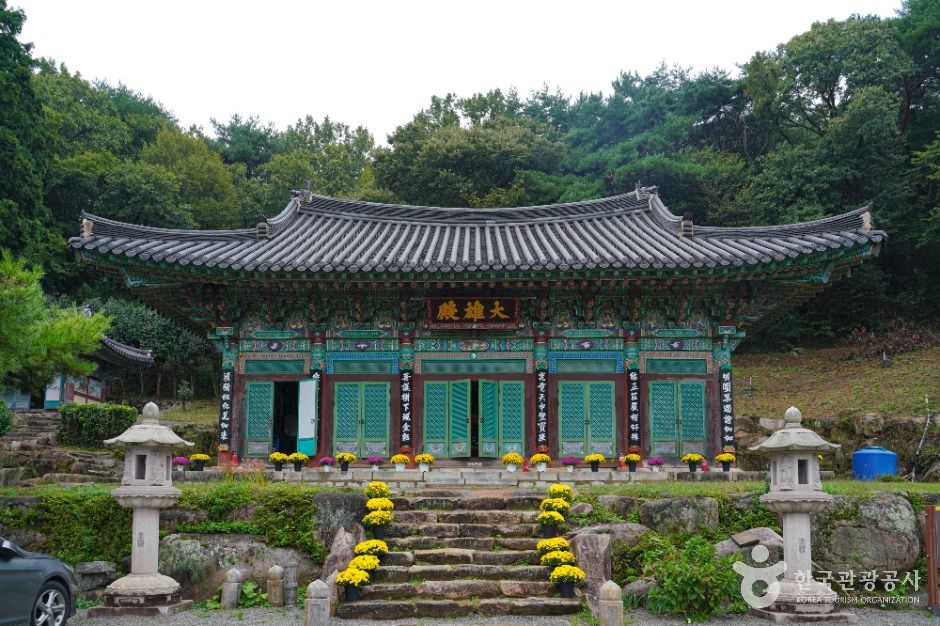
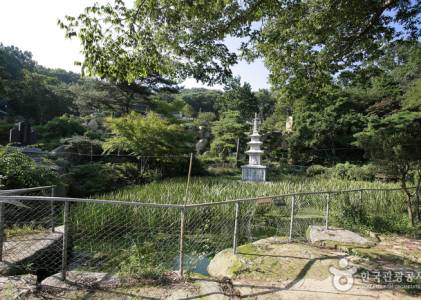
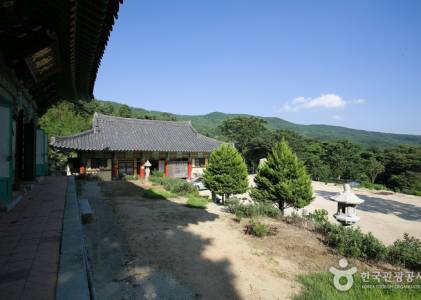
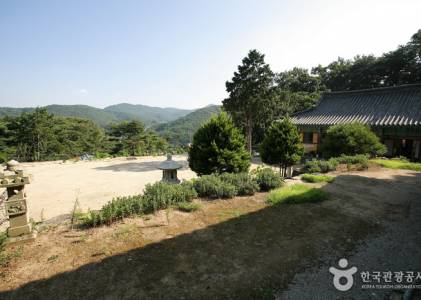
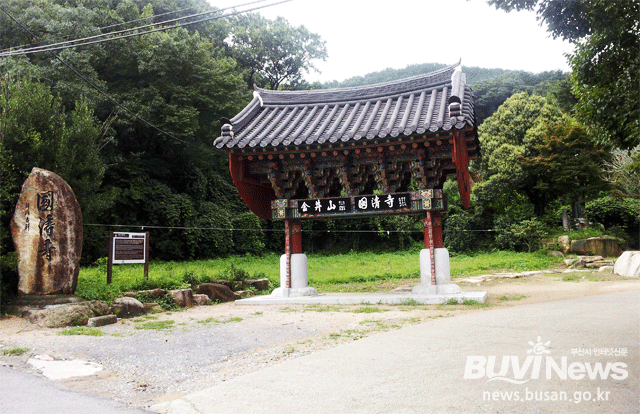
Gukcheongsa and Haewolsa were built when Geumjeongsanseong Fortress was reconstructed in 1703, and Gukcheongsa has undergone repeated reconstruction in recent decades. Specifically, Samseonggak was built in 1978, and in 1982 the monks Changbong and Hyesong built a three-story stone pagoda in the center of the pond on the temple grounds. Daeungjeon Hall was then built in 1992, the monks’ quarters in 1998, and the one-pillar gate in 2010.
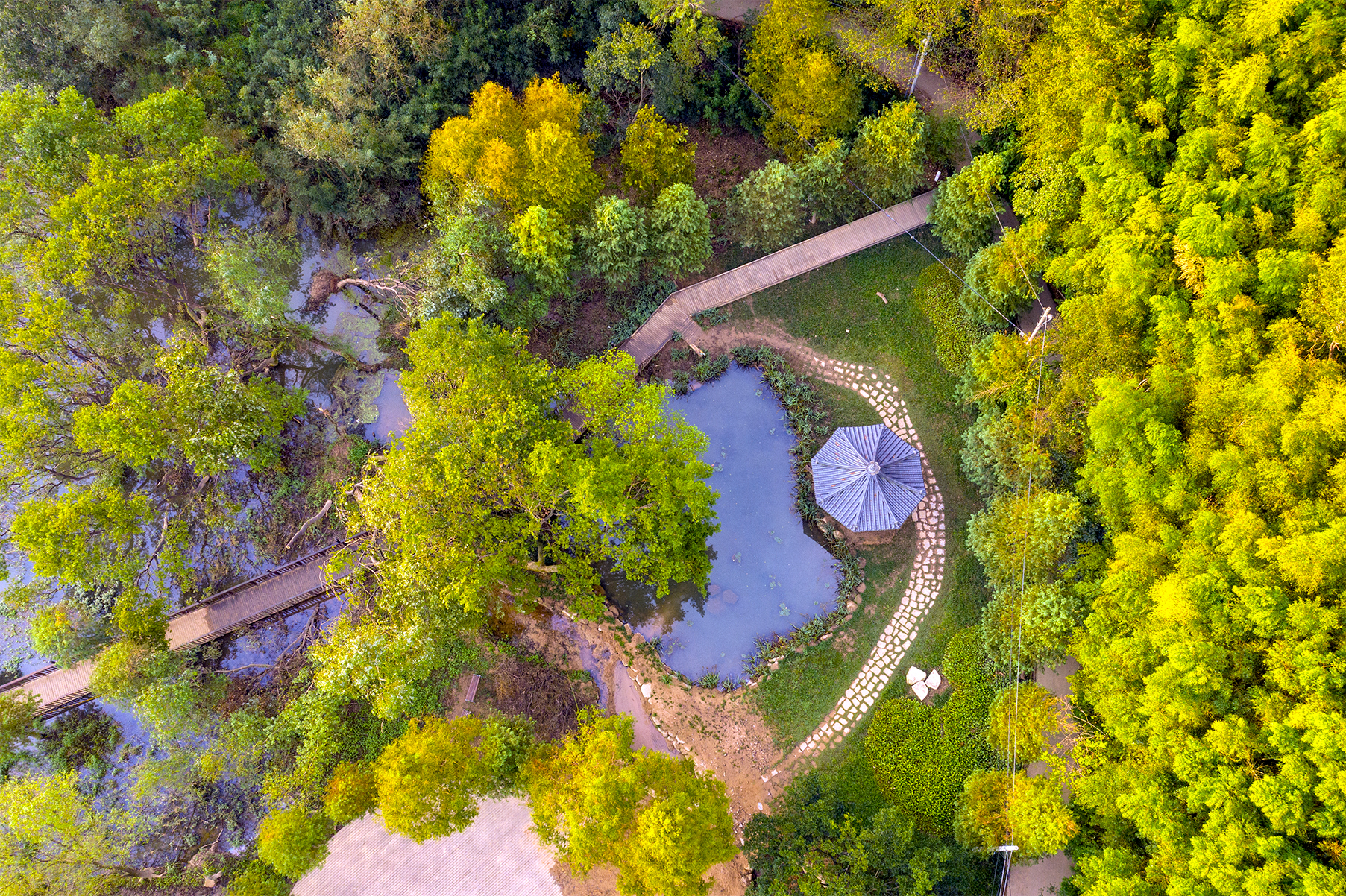
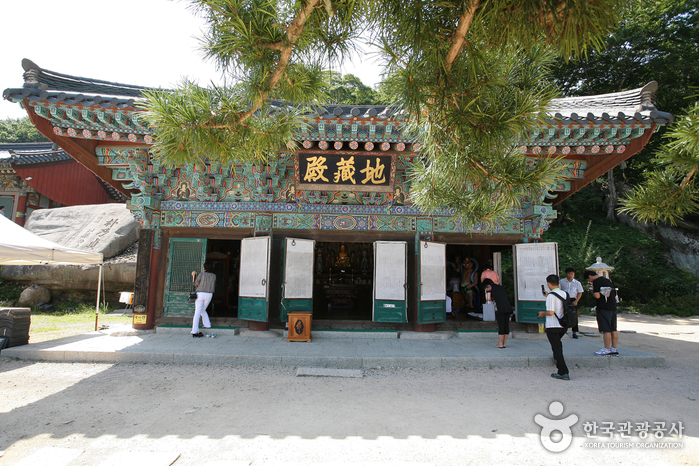
Inside the current Daeungjeon Hall are enshrined Shakyamuni Buddha, the principal Buddha, along with Manjushri Bodhisattva on the left and Samantabhadra Bodhisattva on the right. The route into the temple grounds is also distinctive: before entering the temple courtyard where Daeungjeon Hall stands, visitors first encounter the pond below the hill. A recently built three-story stone pagoda stands in the middle of the pond, which covers approximately 200 pyeong. According to an old tale, a well once stood on the southern side of the round pond, where hot medicinal water and cold spring water rose together; this legend is still passed down today.
Three Ancient Silla Temples in Geumjeongsanseong Village — Gukcheongsa, Mireuksa, and Jeongsuam
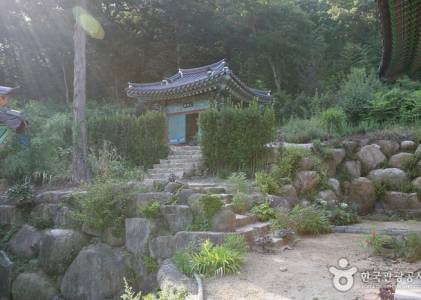
Inside Geumjeongsanseong Fortress are three ancient Silla temples—Gukcheongsa, Mireuksa, and Jeongsuam—all designated and protected as traditional temples. About 3 km downhill beyond the North Gate are Beomeosa Temple, Wonhyoam Hermitage, and several other subsidiary hermitages. Jeongsuam was known as Haewolsa at the time of its reconstruction and is said to have later received the name Jeongsuam. It served to defend the North and West Gates of Geumjeongsanseong Fortress.
Geumjeongsan Mountain, where Gukcheongsa is located, stretches from its main peak, Godangbong Peak (801.5 m), northward to Janggunbong Peak and southward through Sanggyebong Peak to Baegyangsan Mountain. Encircling the summit area, Geumjeongsanseong Fortress is Korea’s largest mountain fortress and Historic Site No. 215. A record from 1667, the eighth year of King Hyeonjong’s reign, states that Commander Yi Ji-hyeong proposed repairs to the fortress, indicating that it had already been built before then.
Take Bus 203 in Front of Oncheonjang Homeplus to the Mountain Fortress Village
To reach Gukcheongsa by public transportation, take Bus 203 in front of Oncheonjang Homeplus and get off at the final stop in Sanseong Village. Bus 203 operates from the fortress as its starting point to Oncheonjang Station as its terminal, with the first bus at 06:00 and the last bus at 22:00. Buses run every 15 minutes on weekdays and every 10 minutes on holidays.
For telephone inquiries, contact Gukcheongsa at 42 Bukmun-ro, Geumjeong-gu, Busan; the main number is 051-517-5003. The temple is open at all times, and visitors are advised to call for detailed information. It is open year-round, and parking is available. The same tourism information listing has no separate fee category, so, like the other traditional temples in the mountain fortress village, it appears not to charge visitors an admission fee.
Things to Know Before Visiting — Seasons, Hiking Connections, and Nearby Attractions
Information on hiking routes around Geumjeongsan Mountain identifies spring and autumn as the best seasons to visit. The route toward the North Gate, where Gukcheongsa is located, connects with a course that begins at the public parking lot at Beomeosa Temple and reaches the North Gate after about 40 minutes of walking along a gentle uphill path. The North Gate has a mountain lodge where visitors can use restrooms and a spring.
Places worth visiting together with Gukcheongsa include Geumjeongsan Mountain, Oh My Land, the Kims Art Field Museum, Sanseong Ceramics, and the Sanseong Cultural Experience Village. Since it is a quiet mountain temple rather than a large tourist temple crowded with worshippers, it suits visitors who want to slowly take in the atmosphere of the fortress village and the history of this guardian temple rather than enjoy flashy attractions. It may be less suitable for an itinerary that hurriedly covers numerous attractions in a short time.
2025: Passing of Gukcheongsa Abbot Monk Gyejeon
A memorial incense hall for Monk Gyejeon was established at Gukcheongsa, 42 Bukmun-ro, Geumjeong-gu, Busan. His funeral and cremation ceremonies were solemnly conducted at Gukcheongsa at 10:00 a.m. on May 15 under the direction of the funeral committee for Great Master Gyejeon of Geumjeong Chongnim Beomeosa. For many years, the monk served as abbot of Gukcheongsa, a guardian temple within Geumjeongsanseong Fortress, and guided Buddhist followers. He also served as the founding chairman of the Geumjeong-gu Buddhist Association and took the lead in local propagation of Buddhism and Buddhist unity for more than 30 years.
These recent developments show that Gukcheongsa is not a historic site frozen in time like a museum, but an active temple where monks still reside and maintain ties with the local Buddhist community. When visiting, visitors should remember that it is a living space where worshippers and monks continue their daily lives, and should maintain a respectful silence.
Before You Go
- Address
- 42 Bukmun-ro, Geumjeong-gu, Busan Metropolitan City (Geumseong-dong)
- Hours
- Open at all times (for visits to the temple grounds; calling ahead for detailed schedules is recommended)
- Closed
- Open year-round
- Admission
- Free (the temple grounds can be visited without a separate admission fee—no fee category appears in the official tourism information)
- Phone
- 051-517-5003
- Official site
- https://www.geumjeong.go.kr/tour/index.geumj?menuCd=DOM_000000412003001002
- Transport
- Bus 203: board in front of Oncheonjang Homeplus → get off at the final stop in Sanseong Village (first bus 06:00 · last bus 22:00; approximately every 15 minutes on weekdays and every 10 minutes on holidays)
- Parking
- Available (parking spaces are available on the grounds; the exact number has not been confirmed)
The information above is current as of the time of writing. Check the official information again before visiting.

Events in This Area


Festivals in This Area

More Travel Guides in This Area
 Travel Guide
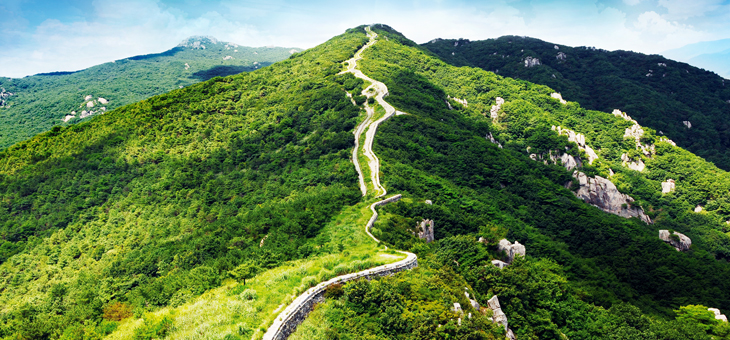
A Busan hike along Geumjeongsanseong Fortress’s four gates and 18,845 m of walls
 Travel Guide
Geumjeongsan’s 678-Year Buddhist Gateway: Tracing Busan’s Buddhist History at Beomeosa Temple
 Travel Guide
Namsan Market in Busan, Open at Dawn Near Beomeosa Station
 Travel Guide
Geumgang Park Cable Car, Ascending to the 540 m Ridge of Geumjeongsan on a Route Dating to 1966
Korea News
 News
News
‘NewJeans Expulsion’ Danielle Releases Her First YouTube Video… “We Don’t Know What Will Happen Next”
![aespa’s North American Tour Has Remaining Seats Despite ‘$49’ Bargain Prices… A Stark Popularity Gap with KATSEYE [TEN Starfield]](https://kotourlive-images.s3.ap-northeast-1.amazonaws.com/news/1788485037424_a59b1932_naver_rank_thumb_0000774618_1788485037424.jpg) News
News
aespa’s North American Tour Has Remaining Seats Despite ‘$49’ Bargain Prices… A Stark Popularity Gap with KATSEYE [TEN Starfield]
![[Photo] TWICE’s Dahyun attends a film festival red carpet as an actress](https://kotourlive-images.s3.ap-northeast-1.amazonaws.com/news/1788485316508_edd43ecd_news_870a60a6-6f11-4d73-aa7c-48d91318a0f7.jpg) News
News
[Photo] TWICE’s Dahyun attends a film festival red carpet as an actress
![[On-Site Video] “We’re Departing Separately Together”… BIGBANG Begins ‘COSMOS’ World Tour](https://kotourlive-images.s3.ap-northeast-1.amazonaws.com/news/1788485226518_c5719641_news_fdd4764a-0f4e-4968-8e4e-e98a02872f88.jpg) News
News