Geumjeongsan’s Godangbong Peak and Geumjeongsanseong Fortress: A Practical Route for First-Time Visitors
Geumjeongsan stretches across Busan and Yangsan. Its highlights are Godangbong Peak, at 801.5 m, and Geumjeongsanseong Fortress, which extends for 18,845 m. This guide brings together the starting points for the Beomeosa Temple and East Gate routes, bus transfers, distances, travel times, and precautions around Geumsaem Spring.
I’ve been here?
Your check-in helps the next traveler.
No one has checked in yet Be the first
One tap — no writing needed
Where Geumjeongsan Mountain Is in Busan and What You Will See
Geumjeongsan Mountain stretches across Geumjeong-gu and Buk-gu in Busan Metropolitan City and Dong-myeon in Yangsan City, Gyeongsangnam-do. Its main peak, Godangbong, stands at 801.5 m, and from the summit you can look out over the Nakdonggang River estuary and the Dongnae area. According to the official guide map, the entire mountain is connected by 27 designated hiking trails; including the shortcuts used by local residents, there are approximately 100 access routes.
For first-time international visitors, the key options are the route from Beomeosa Temple to the North Gate, Geumsaem, and Godangbong, or the route from Oncheonjang Station, taking bus 203 to enter through the East Gate of Geumjeongsanseong Fortress. According to 2026 guidance, the mountain itself is open year-round, all year without closing days, and free of charge. The address at 443 Sanseong-ro is presented as the address of a restaurant in Geumjeongsanseong Village rather than the representative entrance to all of Geumjeongsan Mountain.
A Mountain Formed by Granite from 70 Million Years Ago and Geumsaem
According to the Busan Geopark guide, Geumjeongsan Mountain was formed when granite created as underground magma cooled approximately 70 million years ago rose upward. Long-term erosion has left granite landforms such as strange rock cliffs, tors, gnammas, inselbergs, and block streams, giving the terrain a different character from a mountain consisting only of forest paths.
The name Geumjeongsan originated from the legend of Geumsaem near the summit. According to the story, a golden fish descended on five-colored clouds to play in a well on the mountain ridge, giving rise to the name “Geumjeong.” Geumsaem is a hollow on a rock with a circumference of 3 m; it is not a spring where water wells up but a depression filled with rainwater, and it is more than 50 cm deep.
The Present-Day Appearance of Geumjeongsanseong Fortress, Built in 18,845 m During King Sukjong's Reign
Geumjeongsanseong Fortress was constructed from 1701 to 1703 during the reign of King Sukjong. It is described as measuring 18,845 m in length, 1.5–2 m in height, and approximately 8.2 ㎢ in total area. It is Historic Site No. 215 and is introduced as the largest mountain fortress in Korea. Since its four main gates—East, West, South, and North—and watchtowers follow the mountain contours, you can walk with the fortress scenery as your focus without making the summit your only goal.
The East Gate stands at an elevation of 415 m on a mountain pass on the eastern side of Geumjeongsan Mountain. After being demolished during the Japanese colonial period and surviving only in part, it was restored to its present appearance in 1972. It takes approximately 30–40 minutes from the East Gate to the Third Watchtower. The Third Watchtower is on a rocky cliff at an elevation of 550 m, while the Fourth Watchtower is on the main ridge at 620 m. The distance from the Fourth Watchtower to the North Gate is 1.5 km, and from the North Gate to Godangbong is 900 m.
From Exits 5 and 7 of Beomeosa Station to the North Gate and Godangbong
The Beomeosa route begins at Exit 5 or Exit 7 of Beomeosa Station on Busan Metro Line 1. From Exit 7, walk approximately 200 m, or about 3 minutes, along Cheongnyongyejeon-ro, then transfer to bus 90 and get off at the Beomeosa ticket office. Beomeosa Temple is located at 250 Beomeosa-ro, Geumjeong-gu, Busan Metropolitan City, and its telephone number is 051-508-3122.
The route from Beomeosa through the North Gate and Geumsaem to Godangbong is introduced as one of the representative hiking routes on Geumjeongsan Mountain. Among the official routes, Beomeosa Route 2 is 7.4 km and takes approximately 3 hours 30 minutes. Although it combines gentle dirt paths, wooden decks, and stairs, it also includes rocky uphill sections, so you should not choose footwear as if you were taking an ordinary urban walk.
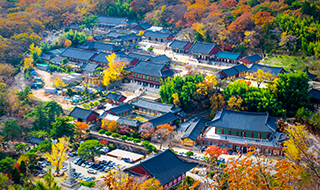
From Exit 5 of Oncheonjang Station to the East Gate by Bus 203
If the East Gate of Geumjeongsanseong Fortress is your destination, leave through Exit 5 of Oncheonjang Station on Busan Metro Line 1 and transfer to bus 203. After getting off at the Geumjeongsanseong East Gate stop, it is a 5–10-minute walk to the East Gate. The Busan Geopark guide presents Exit 5 of Oncheonjang Station as the starting point for accessing Geumjeongsanseong Fortress, and the information telephone number for Geumjeongsanseong-related inquiries is 051-519-4069.
The course from the East Gate to the Third and Fourth Watchtowers takes approximately 1 hour 30 minutes at a comfortable pace. If you want to walk the entire Geumjeongsanseong Fortress route, Geumjeongsanseong Route 1 is listed as 18,845 m and approximately 7 hours 30 minutes. When approaching from the north, another option is to take a bus from Exit 4 of Hwamyeong Station on Busan Metro Line 2, but the guide materials do not provide a specific bus number.
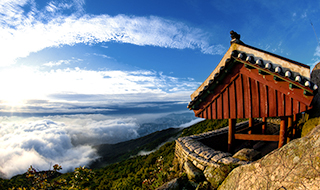
Actual Challenging Points Around Geumsaem and the Watchtowers
There are no safety devices around Geumsaem. If you move toward the edge to photograph the rocky pool, which has a circumference of 3 m and is more than 50 cm deep, there is a risk of falling. It is therefore safer not to stand at the edge of the rock even when taking photographs. The guide materials do not confirm whether photography is prohibited throughout Geumjeongsan Mountain, but the lack of safety devices around Geumsaem is clearly a condition that must be considered.
Because the watchtower and fortress sections include mountain paths and rocky surfaces, it is difficult to state that the entire route can be traveled by wheelchair or stroller. The Beomeosa route includes dirt paths, wooden decks, stairs, and rocky uphill sections. No separate guidance has been confirmed regarding wheelchair or stroller accessibility across Geumjeongsan Mountain as a whole, or the availability of English information and audio guides. On-site information at the time of your visit is also required for entry controls and trail restrictions based on season and weather.
How to Combine the Geumgang Park Cable Car with Geumjeongsanseong Village
If you want to reduce the amount of walking and approach the ridge of Geumjeongsan Mountain, consider the Geumgang Park Cable Car, which opened in 1966. The operating section is 1,260 m, running round trips to the Geumjeongsan Mountain ridge at an elevation of 540 m, and it takes just over 15 minutes to reach the upper station. The distance from the upper station to the South Gate of Geumjeongsanseong Fortress is 1.5 km.
Geumjeongsanseong Village is a village formed in a basin at an elevation of 400 m at the foot of Geumjeongsan Mountain. The Geumjeongsanseong makgeolli produced here is introduced as Korea's No. 1 traditional liquor and is described as makgeolli made using methods from 500 years ago, with a tradition continued for 15 generations. An itinerary that visits Geumjeongsanseong Village after hiking suits travelers who want to experience Busan's mountainous terrain and local food culture together, but you should not drive yourself after tasting makgeolli.
Operating Information and Hiking Options to Note Before Your Visit
According to Busan tourism guidance for 2026, Geumjeongsan Mountain is open year-round, all year without closing days, and free of charge. It is therefore not a place where you purchase an admission ticket at a designated ticket office and enter during fixed visiting hours like a typical museum. Instead, it is a mountain tourism destination where you travel along your chosen hiking trail and fortress gates. The official Geumjeongsan information page is https://www.geumjeong.go.kr/index.geumj?menuCd=DOM_000000413007000000, and the related information telephone number is 051-519-4069.
For a short itinerary, it is suitable to take bus 203 from Exit 5 of Oncheonjang Station to the East Gate and walk to the Third and Fourth Watchtowers for approximately 1 hour 30 minutes. If you want to plan a full hike, you can take bus 90 from Exits 5 or 7 of Beomeosa Station to Beomeosa Temple, then choose the 7.4 km Beomeosa route, which takes approximately 3 hours 30 minutes. Since confirmed guidance does not include parking availability, parking-lot locations and fees, contact details by hiking trail, or foreign-language information, it is safer to prepare around public transportation, sufficient water, and slip-resistant shoes.
Before You Go
- Address
- 1st Floor, Geumseong Geumjeongsanseong Main Branch, 443 Sanseong-ro, Geumjeong-gu, Busan Metropolitan City
- Hours
- Open year-round
- Closed
- Open every day
- Admission
- Free
- Phone
- 051-519-4069
- Official site
- https://www.geumjeong.go.kr/index.geumj?menuCd=DOM_000000413007000000
- Transport
- Transfer to bus 90 at Exits 5 or 7 of Beomeosa Station and get off at the Beomeosa ticket office; transfer to bus 203 at Exit 5 of Oncheonjang Station and get off at the Geumjeongsanseong East Gate stop; from Exit 7 of Beomeosa Station, walk approximately 200 m, or about 3 minutes, then transfer to bus 90
- Time needed
- Geumjeongsanseong East Gate to the Third and Fourth Watchtowers: approximately 1 hour 30 minutes; Geumjeongsanseong Route: approximately 7 hours 30 minutes; Beomeosa Route: approximately 3 hours 30 minutes
- Accessibility
- The Beomeosa route includes gentle dirt paths, wooden decks, stairs, and rocky uphill sections; there are no safety devices around Geumsaem
The information above is current as of the time of writing. Check the official guidance again before visiting.

Places
Nearby Attractions 2
-
 1
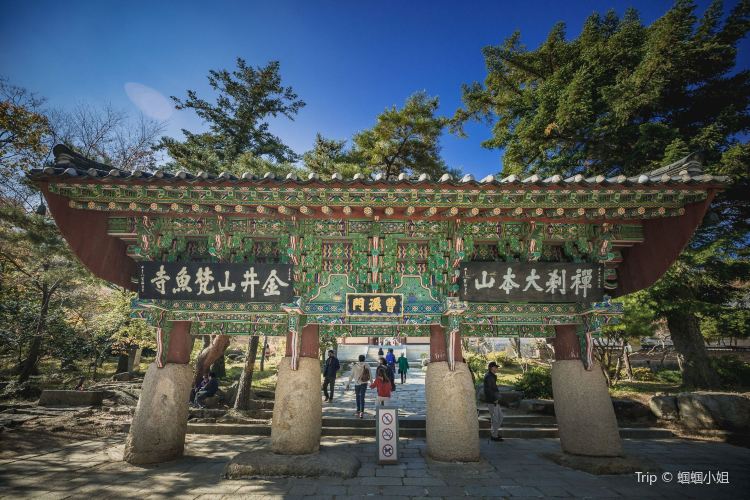
Beomeosa TempleA temple where you can explore the halls and cultural heritage of a thousand-year-old Buddhist temple.
1
Beomeosa TempleA temple where you can explore the halls and cultural heritage of a thousand-year-old Buddhist temple. -
 2
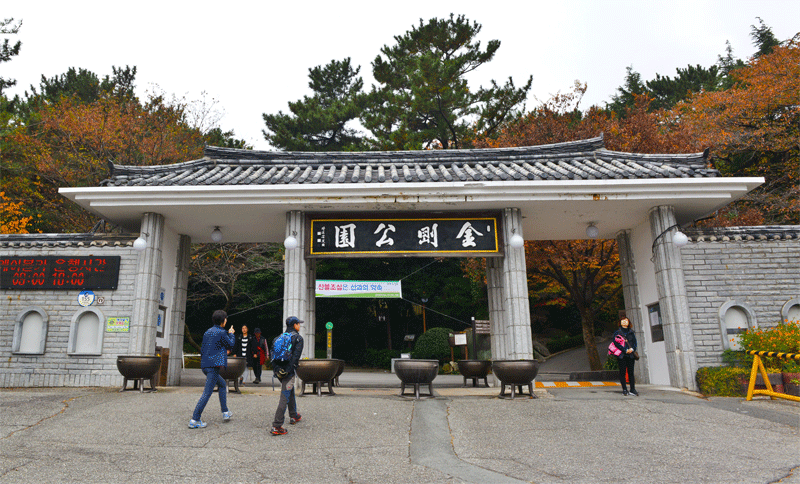
Geumgang ParkA park where you can enjoy forest trails, the Busan Folk Arts Center, and a cable car.
2
Geumgang ParkA park where you can enjoy forest trails, the Busan Folk Arts Center, and a cable car.
Food & Dining 2
-
 3
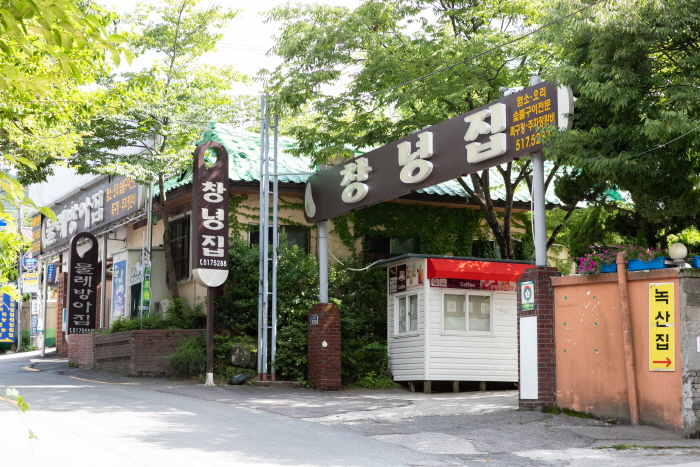
Geumjeongsanseong ChangnyeongjipA restaurant serving duck dishes and local cuisine from the fortress village.
3
Geumjeongsanseong ChangnyeongjipA restaurant serving duck dishes and local cuisine from the fortress village. -
 4
4
Events in This Area


Festivals in This Area
More Travel Guides in This Area
 Travel Guide
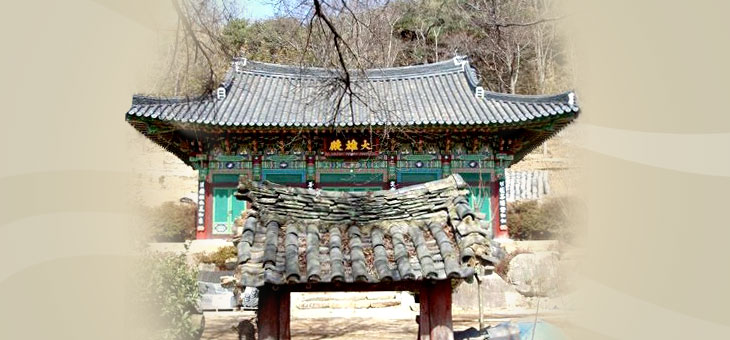
Gukcheongsa Temple, a Buddhist sanctuary of national protection embraced by Geumjeongsanseong Fortress
 Travel Guide
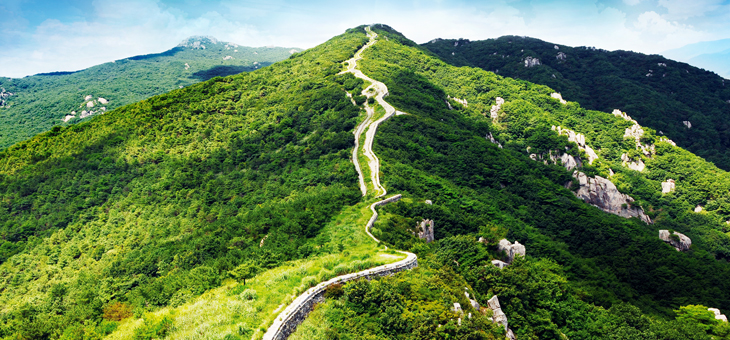
A Busan hike along Geumjeongsanseong Fortress’s four gates and 18,845 m of walls
 Travel Guide
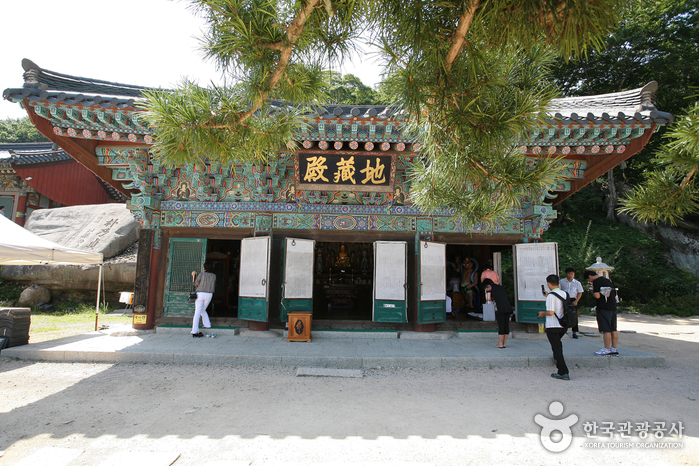
Geumjeongsan’s 678-Year Buddhist Gateway: Tracing Busan’s Buddhist History at Beomeosa Temple
 Travel Guide
Geumgang Park Cable Car, Ascending to the 540 m Ridge of Geumjeongsan on a Route Dating to 1966
Korea News
![BLACKPINK’s Lisa Dominates the VMA Red Carpet in a Sheer Corset Dress and Red Fur [Star Issue]](https://kotourlive-images.s3.ap-northeast-1.amazonaws.com/news/1790557894714_010e956a_news_94409db1-fab6-40bf-bc7b-4b985b1fbac7.jpg) News
News
BLACKPINK’s Lisa Dominates the VMA Red Carpet in a Sheer Corset Dress and Red Fur [Star Issue]
![BLACKPINK’s Jisoo Spotted by Surprise with BIGBANG in London… Their Special Loyalty as Labelmates [IS High Cut]](https://kotourlive-images.s3.ap-northeast-1.amazonaws.com/news/1790557854683_6ea979f5_news_caab62e5-8462-43c8-8622-da794f3df9de.png) News
News
BLACKPINK’s Jisoo Spotted by Surprise with BIGBANG in London… Their Special Loyalty as Labelmates [IS High Cut]
 News
News
Tattoos All Over Her Body… AOA’s Jimin Draws Shocked Attention After Kwon Mina’s ‘Bullying’ Allegations
![You’ll Have to Look Twice… Choi Min-a-soo Perfectly Pulls Off Everything from a Daring Illusion Dress at the Awards Ceremony to Long Braided Hair [RE:STAR]](https://kotourlive-images.s3.ap-northeast-1.amazonaws.com/news/1790492384850_1f293dad_news_d834c50e-0685-43ef-9aa5-6995cd6d8848.jpg) News
News