Seodaemun Museum of Natural History, Korea's first local-government-run natural history museum, at the foot of Ansan
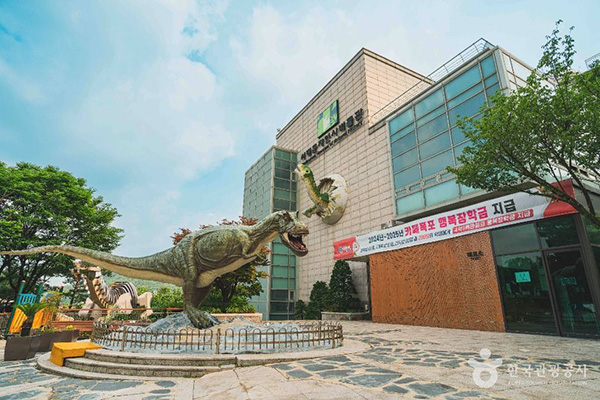
Located at 51, Yeonhui-ro 32-gil, at the foot of Ansan in Seodaemun-gu, Seoul, the Seodaemun Museum of Natural History is a comprehensive natural history museum that Seodaemun-gu established independently in 2003 as the first of its kind in Korea by a local government. It features permanent exhibitions such as an Acrocanthosaurus skeletal fossil and stromatolites across three floors, and its seasonal visiting hours, admission fees, and transportation options are specified in detail, so it is best to check before visiting.
I’ve been here?
Your check-in helps the next traveler.
No one has checked in yet Be the first
One tap — no writing needed
Planned in 1997, construction began in 2000, opened on July 10, 2003 — the nation’s first local-government-run natural history museum
The Seodaemun Museum of Natural History is a museum planned and built directly by the Seodaemun District Office, and it is the first comprehensive natural history museum in the country created by a local government rather than a school or an individual. Construction on the building began in January 2000, and after three years and six months of work it was completed. Built on a site of about 10,000㎡ (3,078 pyeong), with 1 basement floor and 3 above-ground floors and a total floor area of 2,102 pyeong, it opened on July 10, 2003.
The purpose of its founding is well expressed in the greeting of former director Lee Jeong-mo. It was established to help children and citizens develop the right values about nature and life, and to raise awareness of the importance of nature conservation. For that reason, all exhibits and explanatory panels were produced to match children’s eye level. The exhibits are arranged in a three-dimensional diorama style following temporal and spatial order, designed so visitors can understand the flow of natural history without getting bored.
Why on the slopes of Ansan? — The reason it stands beside Muak Bongsu-dae
Ansan (Ansan), where the museum stands, is a mountain extending westward from Inwangsan and forming Muakjae. In geomancy, one theory says it was called Moak (Mother Mountain), meaning "mother mountain," to block the shape of Bukhansan Insubong as if it were carrying a child away; another says the name comes from Monk Muhak, who played a major role in moving the capital to Hanyang in the early Joseon period. At the summit of Ansan is Muak Bongsu-dae. Originally it was divided into two peaks, Dongbongso and Seobongso: Dongbong-dae relayed land signals for Pyeongan and Hwanghae Provinces, while Seobong-dae relayed sea-route signals to Namsan Bongsu-dae. One hundred years after the beacon station disappeared, only Dongbong-dae was restored in 1994 and designated Seoul Metropolitan Monument No. 13.
The museum was planned together with the Photo History Museum along the approach road on the Yeonhui-ro side within Ansan Urban Nature Park, and was built through a design competition. Because the available land within the park was limited, the exhibition halls were compressed into three floors, incorporating the flow of time from the birth of the Earth to today’s Ansan Nature Park into the visitor route. However, because the building sits on a hillside and is surrounded by Yeonhui-dong Daelim Apartments and Seongwon Apartments, as well as Yeonbuk Middle School and Woncheon Church, many people say that walking up is especially difficult in summer because of the slope.
From the Earth Environment Hall on the 3rd floor to the central hall on the 1st floor — the permanent exhibition route
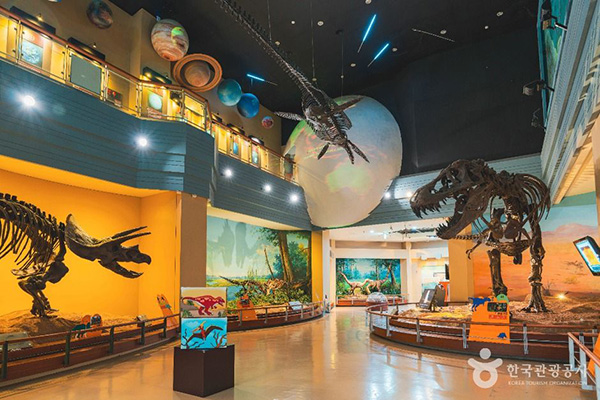
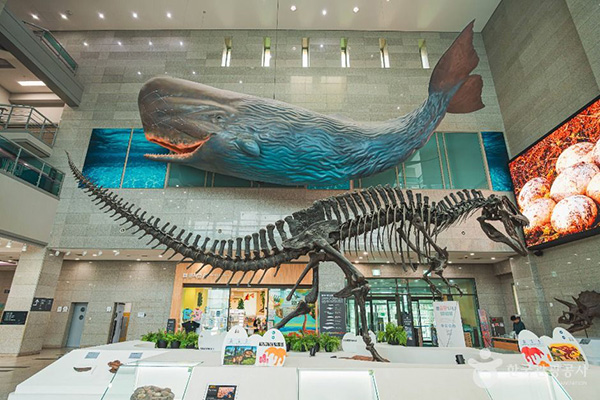
The permanent exhibition consists of the 3rd-floor Earth Environment Hall, the 2nd-floor Life Evolution Hall, the 1st-floor Humans and Nature Hall, and the central hall. When you enter the 1st-floor central hall, you are greeted by a large skeletal fossil of the Cretaceous carnivorous dinosaur Acrocanthosaurus and the skeleton of the pterosaur Pteranodon. In the 2nd-floor Life Evolution Hall, the museum covers the process by which the earliest life evolved into humankind. Along with stromatolites found on the west coast, you can also see stromatolites donated by visiting researcher Moon Gyeong-su, who brought them directly from Western Australia. Stromatolites are layered, banded rocks created by cyanobacteria through photosynthesis.
The 1st-floor Humans and Nature Hall introduces the concept of ecosystems, climate change, and endangered plants, and also has an aquarium displaying fish that live in the Han River. Because the exhibits on each floor follow the chronological order of Earth’s history and the history of life, it is most natural to start from the 3rd floor and work your way down. However, online reviews repeatedly mention that even if you change the order, it is not a problem, and that a careful visit takes about 2 to 3 hours.
51 Yeonhui-ro 32-gil, and the closing time changes with the season
Visiting hours vary by season and day of the week. From March to October, it is open on weekdays from 9:00 a.m. to 6:00 p.m., and on weekends and public holidays from 9:00 a.m. to 7:00 p.m. From November to February, hours are shorter: weekdays from 9:00 a.m. to 5:00 p.m., and weekends and public holidays from 9:00 a.m. to 6:00 p.m. Ticket sales and admission close one hour before closing time, so it is best not to arrive too late in the afternoon. The official website states that the museum is closed every Monday, on January 1, and on Lunar New Year’s Day and Chuseok Day.
As for admission fees, based on materials released around 2020–2021, adults (individual) pay 6,000 won (Seodaemun District residents 1,500 won), youths and soldiers pay 3,000 won, children (ages 5–12) pay 2,000 won, and children under 4, seniors 65 and older, and persons with disabilities are admitted free. Groups of 20 or more receive a discount, and on the last Wednesday of each month, "Culture Day," admission is discounted by 20%; annual members receive a 100% exemption from admission fees. The main phone number is 02-330-8899, the fax number is 02-330-1736, and it is safest to check the latest fees again on the official website namu.sdm.go.kr.
Sinchon Station? Hongje Station? — How to transfer from the subway to a village bus
The most commonly recommended route is to exit through Exits 3 or 4 of Sinchon Station on Subway Line 2 and take Seodaemun Village Bus No. 03 to get off at the "Museum" stop. If approaching from the other side, you can also take Seodaemun Village Bus No. 05 from Exit 4 of Hongje Station on Line 3; it takes about 5 to 7 minutes to arrive at the "In front of Seodaemun Museum of Natural History" stop.
If you go only by bus, several routes pass nearby, including main bus No. 110A, 153, and 163, branch bus No. 7017 and 7738, and village buses Seodaemun 05 and 06. However, when using feeder bus 7738, the museum separately advises that you should board at the branch-bus stop, not the median bus stop, so do not get confused.
A small parking lot on a hillside — why everyone recommends public transportation
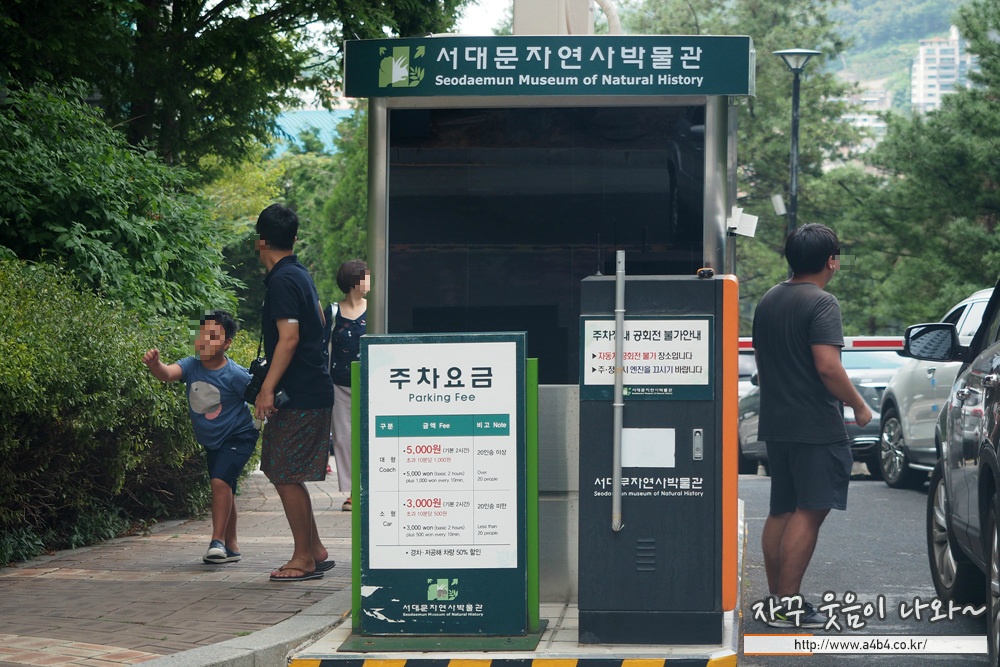
The museum has an outdoor parking lot, but because space is limited, many notices recommend using public transportation on weekends. Low-emission vehicles and compact cars under the Motor Vehicle Management Act can receive a 50% parking fee reduction, but after the legal revision on April 3, 2020, diesel vehicles were excluded from the low-emission discount.
If the parking lot is full, visitors must use the temporary parking lot on the playground of nearby Yeonbuk Middle School, following the guidance of parking attendants; by prepaying 2,000 won according to the school playground use fee standard, you can use it without additional charges (applied from April 1, 2015). On the museum’s closed days, the parking lot is opened free of charge. During certain periods such as the Lunar New Year holiday, it may instead operate as a paid lot and be open for free only on the holiday itself, so separate notices are posted by period. It is safest to check the announcements before visiting.
Cafe Ansan, the museum shop, and children eating lunch boxes
Between the ground floor and the basement level of the building is a lounge, and Cafe Ansan Branch No. 2 is located there. There used to be a Hollys Coffee, and now it is the only cafe inside the museum. Prices are around 4,000 won for an Americano, 4,500 won for a Caffe Latte, 5,000 won each for Vanilla Latte, Caramel Latte, and Cold Brew, and 5,500 won for ade drinks; scoop ice cream is also sold. This rest area was designed so families can eat lunch boxes or hold birthday parties for children, and during the "Natural History Learning Class," a monitor is installed so parents can watch their children.
The museum shop is located near the building entrance, making it a convenient stop on the way out after the visit. It is positioned so that it naturally connects with the final route of the exhibition.
Walking together with Ansanjarak-gil Course 5
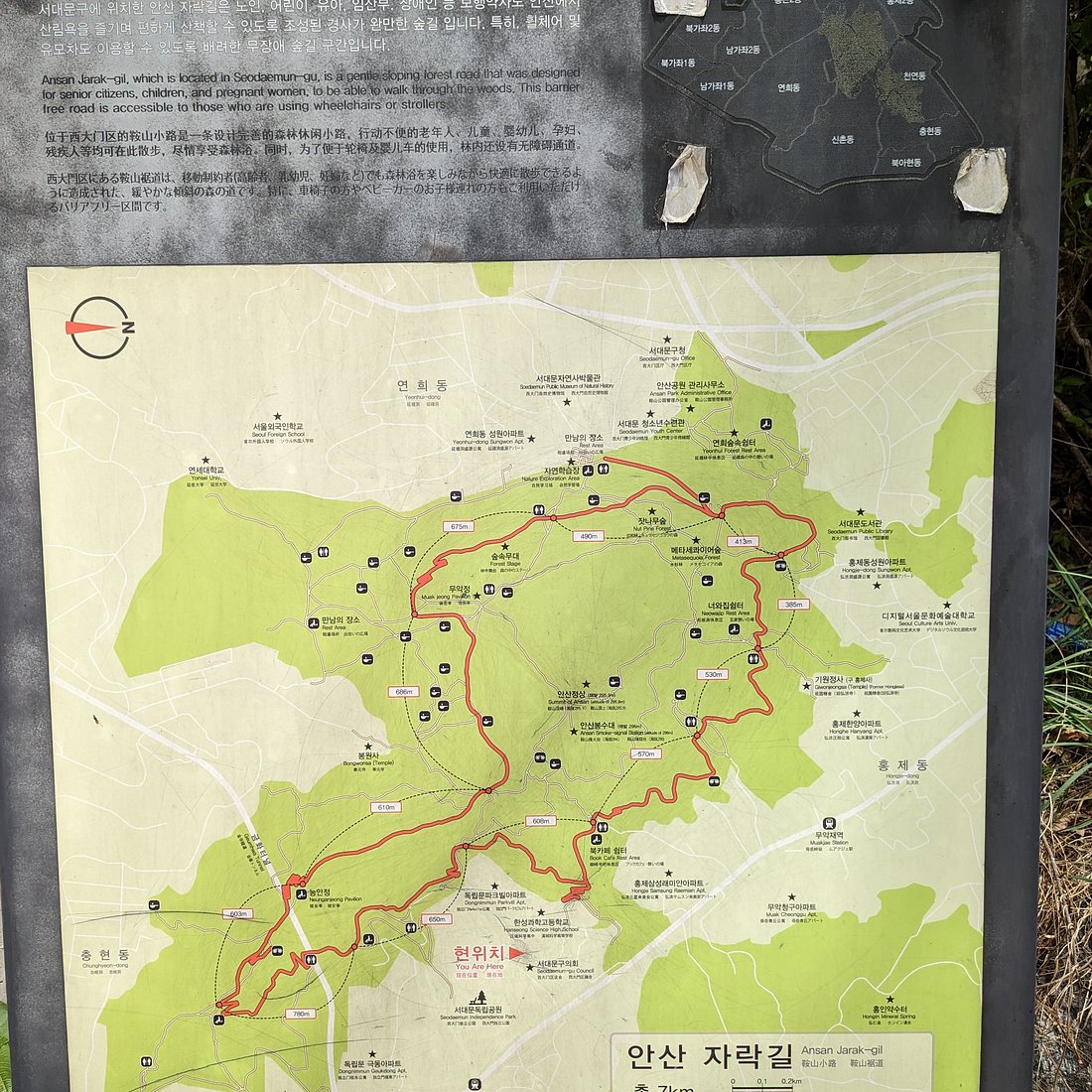
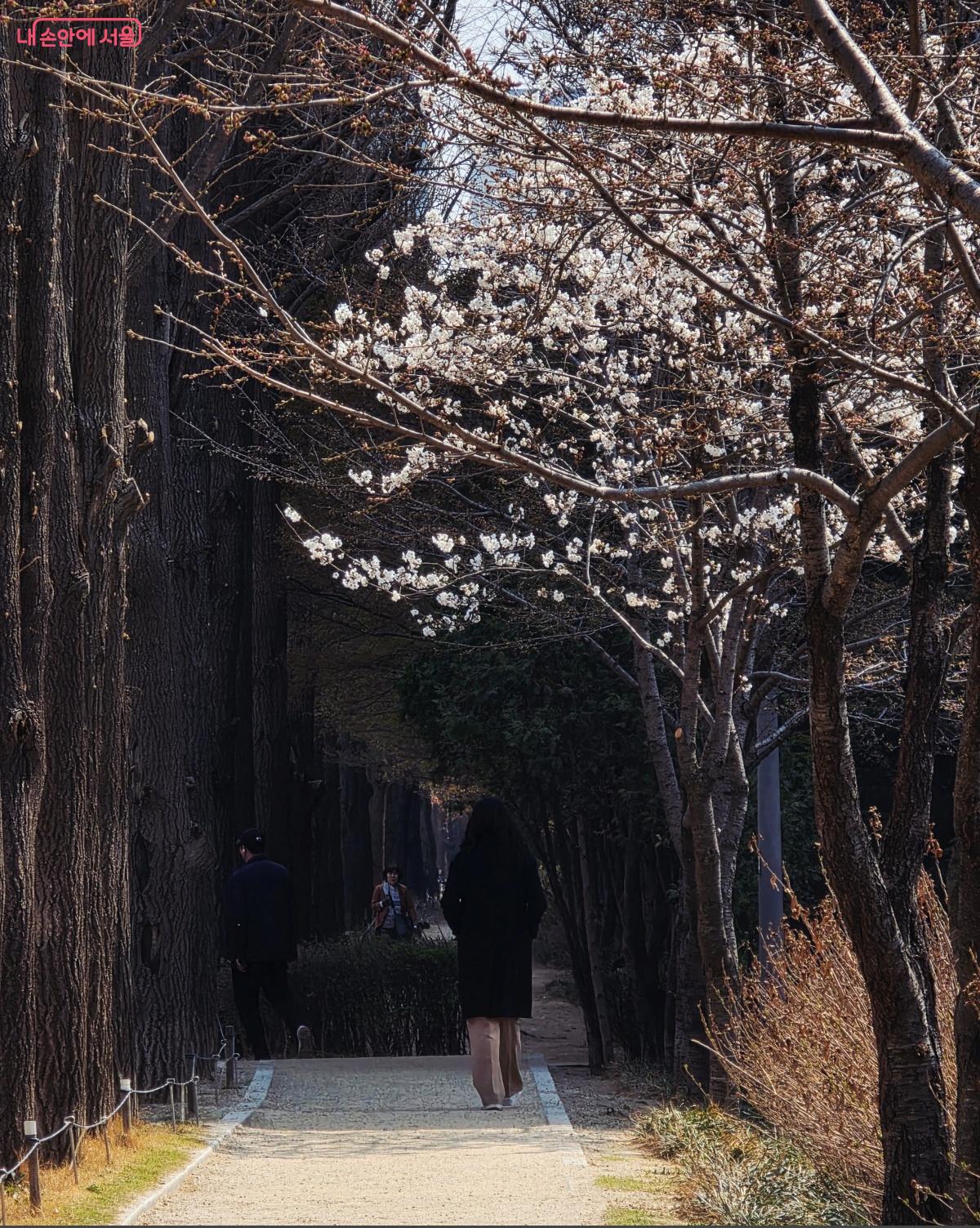
Among the walking courses in Ansan recommended by Seodaemun District, "Course 5" is the route from Hongje Station to the Seodaemun Museum of Natural History. It is designed as a walk passing by Hongjecheon Stream, the artificial waterfall, Yeonhui Forest Rest Area, and the metasequoia forest. Ansanjarak-gil itself is a loop trail of about 7 km around Ansan, and because it is a gentle, barrier-free forest path, it can also be used by wheelchairs and strollers.
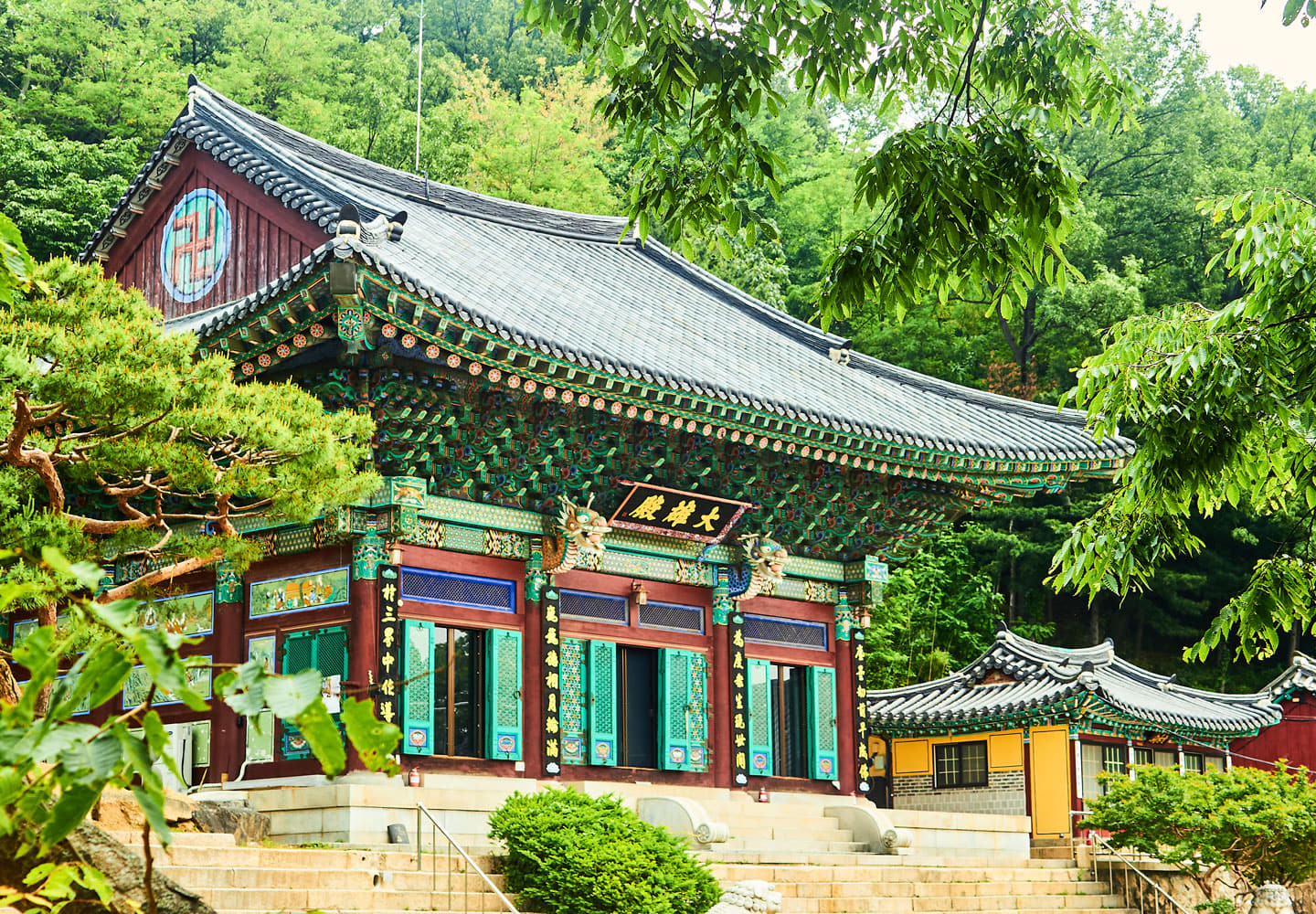
If you climb to the beacon station at the summit of Ansan, you can look south over the Han River and the Yongsan, Yeouido, and Mok-dong areas, and in the opposite direction you can see Yonsei University, the Independence Gate, the Seodaemun Museum of Natural History, Seodaemun-gu Office, and the Seodaemun Prison all at close range. Around Ansanjarak-gil, in addition to the beacon station built during King Sejong of Joseon, there are also historic sites such as Bongwonsa Temple, founded during the reign of Queen Jinseong of Silla, so it is not difficult to combine a museum visit with a walk as a one-day course.
Who it suits, and who may find it boring
Because all the explanatory panels are tailored to children’s eye level and the exhibition is arranged in diorama form, it is best suited to families with preschool or elementary-school children who are interested in dinosaurs, fossils, and insects. It is also often mentioned as an indoor outing option for spending 2 to 3 hours inside on rainy days or when fine dust is severe.
However, apart from evaluations that it is fairly large by Seoul standards, some visitor reviews say that the collection size itself is not large compared with overseas major natural history museums. A recurring theme in many reviews is that satisfaction is higher when visiting with children, or when combining the trip with a walk on Ansanjarak-gil, rather than going alone with academic expectations. For foreign visitors, an English menu is available on the official website.

Places
Nearby Attractions 3
-
 1
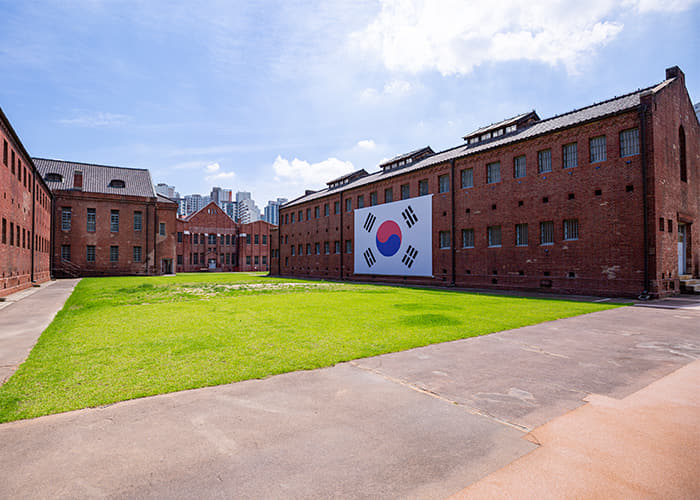
Seodaemun Prison History HallA place to learn about the history of imprisonment and the independence movement during the Japanese colonial period.
1
Seodaemun Prison History HallA place to learn about the history of imprisonment and the independence movement during the Japanese colonial period. -
 2
2
-
 3
3
Events in This Area


Festivals in This Area


More Travel Guides in This Area
 Travel Guide
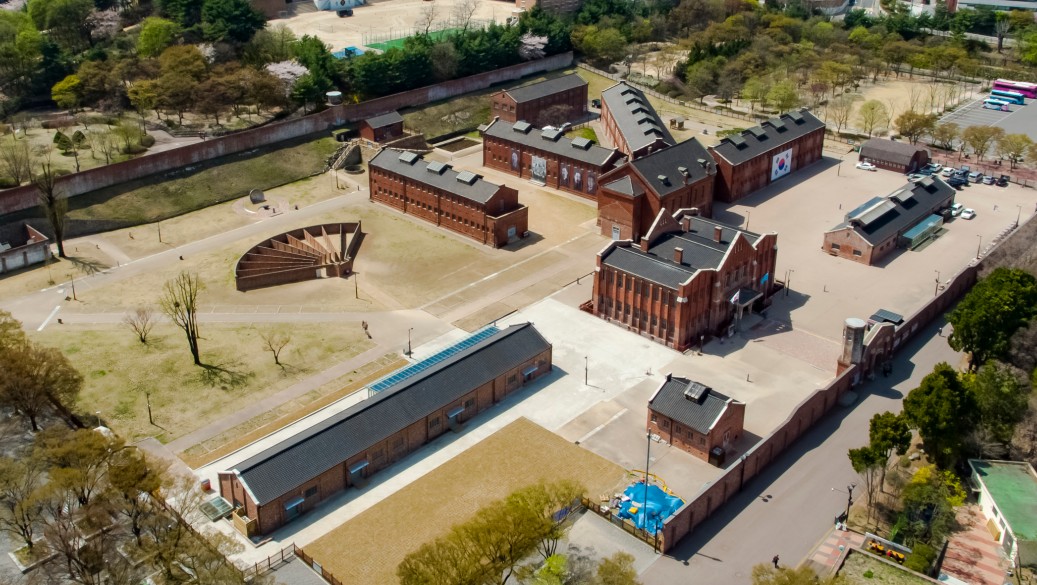
From Gyeongseong Prison in 1908 to the History Hall in 1998: A Walking Route Through Seodaemun Prison History Hall
 Travel Guide
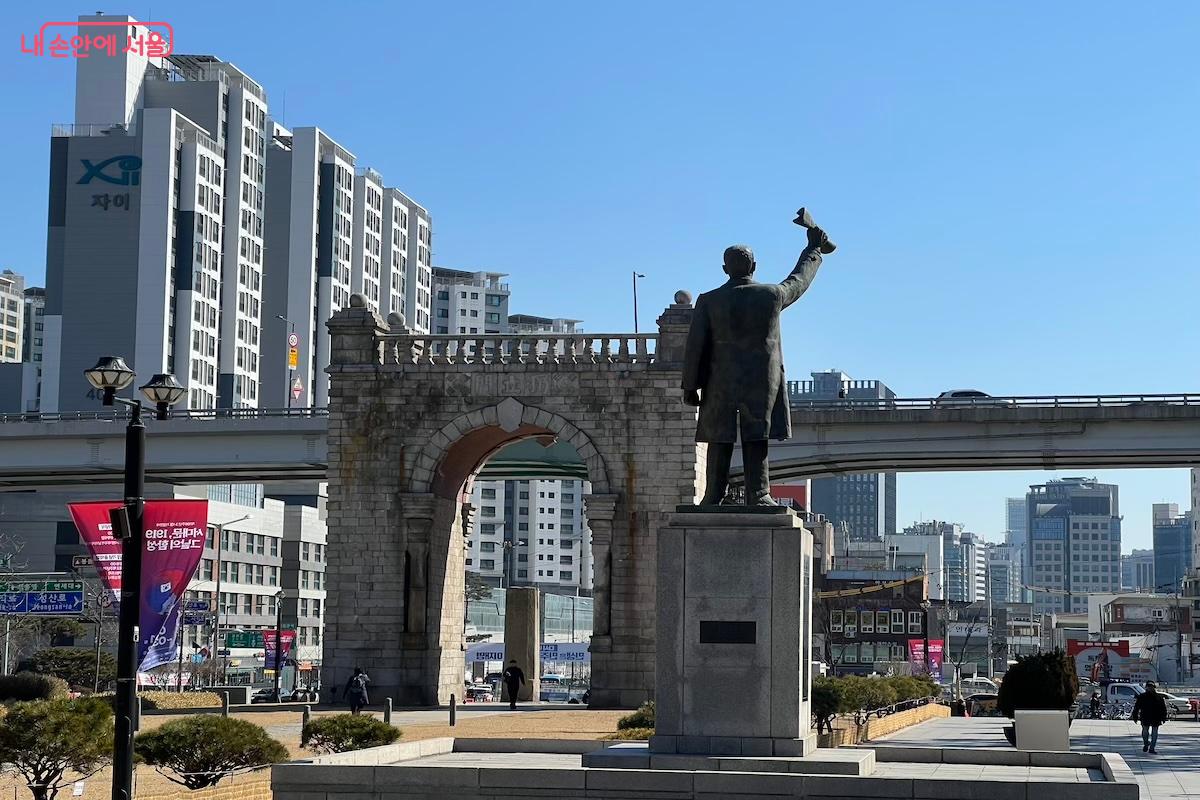
From Independence Gate to Sigumun Gate: The Two-Layered History of Seodaemun Independence Park
 Travel Guide
Yeonnam-dong, where a 1.2 km abandoned railway line transformed the neighborhood commercial district: a route starting from Hongik University Station
 Travel Guide
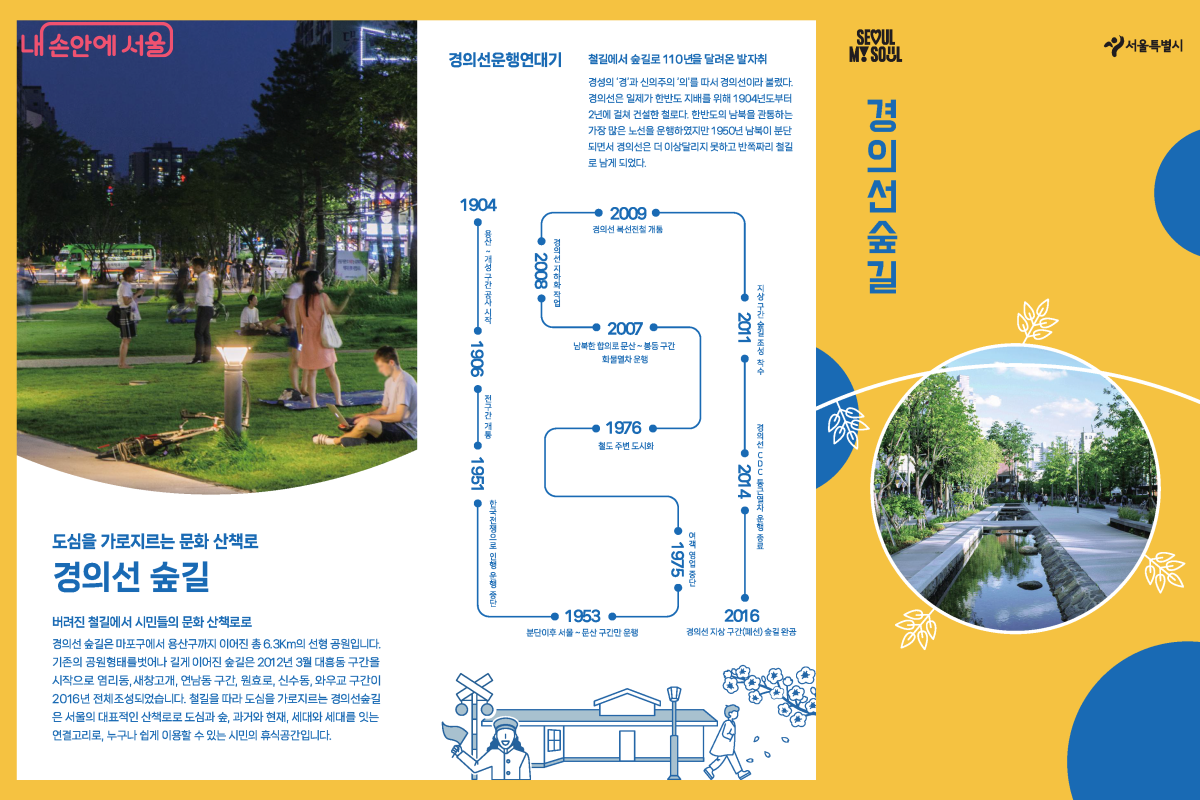
Seoul’s Gyeongui Line Forest Park: 6.3 km of forest laid over railway tracks dating from 1906
Korea News
 News
News
"Overcoming the Getty curse" Jang Wonyoung, with unreal proportions and beauty straight out of a Barbie doll
 News
News
A2O LITE Tops Melon TOP100 Just 29 Hours After Debut, Setting the Fastest Record for a Debut Song
![Billlie's Tsuki 'Makes an Entrance Showing Off Her Beautiful Figure' [MK Photo]](https://kotourlive-images.s3.ap-northeast-1.amazonaws.com/news/1792027947835_957f0cb8_news_5c0023c5-e9a0-4640-9154-cb0b69d810c4.jpg) News
News
Billlie's Tsuki 'Makes an Entrance Showing Off Her Beautiful Figure' [MK Photo]
![ENHYPEN ‘Fighting for the Macau performance too!’ [★Video]](https://kotourlive-images.s3.ap-northeast-1.amazonaws.com/news/1792027887815_5057637d_news_8041e5cd-8b22-4193-bb46-880c65d944f7.jpg) News
News