Yeonnam-dong, where a 1.2 km abandoned railway line transformed the neighborhood commercial district: a route starting from Hongik University Station
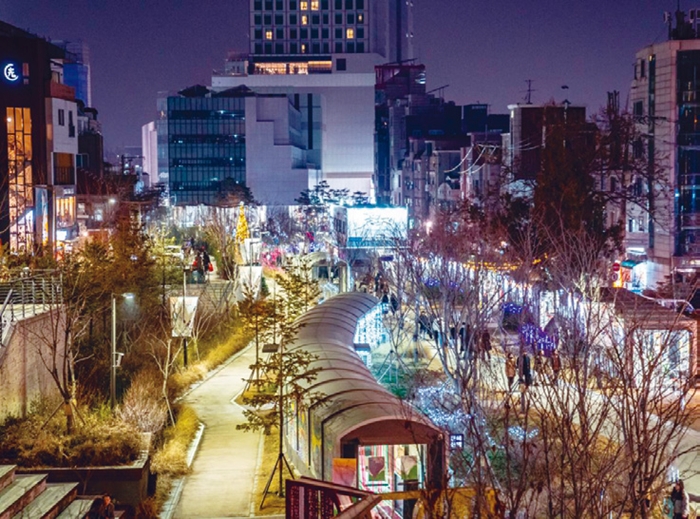
Yeonnam-dong is a pedestrian-oriented neighborhood formed by the combination of the residential area north of Hongik University Station and the Yeonnam-dong section of the Gyeongui Line Forest Park. After the above-ground section of the Gyeongui Line, which opened in 1906, was moved underground, it was completed as a forest path in 2016, and cafes, restaurants, and independent shops expanded into the alleyways.

I’ve been here?
Your check-in helps the next traveler.
11 people viewed this week Be the first
One tap — no writing needed
From the Gyeongui Line in 1906 to Yeontral Park in 2016: the starting point of Yeonnam-dong's scenery
The current appearance of Yeonnam-dong is hard to view separately from the space that was originally a railway. The Gyeongui Line opened throughout its full route in 1906, and the above-ground section in downtown Seoul was left as vacant land after the Yongsan~Gajwa Station undergrounding project in 2009. The Seoul Metropolitan Government developed this site into a park and completed the full route on May 21, 2016; today's Gyeongui Line Forest Park is a 6.3 km linear park connecting Mapo-gu to Yongsan-gu.
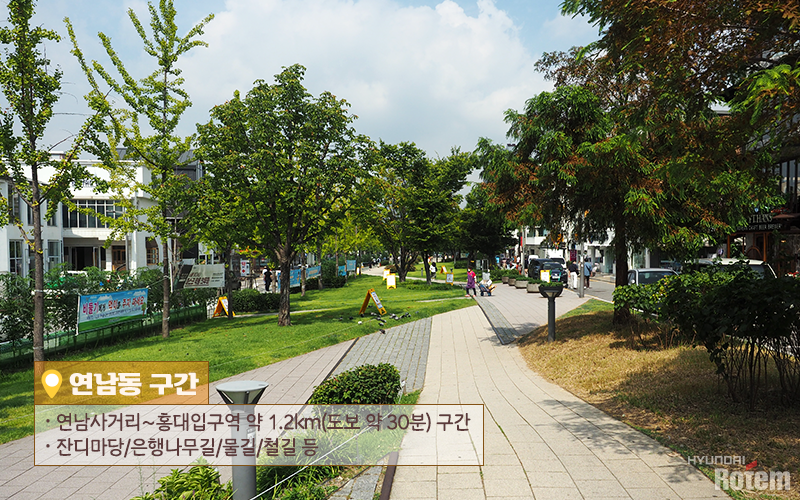
The Yeonnam-dong section is described as about 1.2 km and is widely known as Yeontral Park, a nickname combining 'Yeonnam-dong + Central Park.' As the narrow lanes of the residential area that once bordered the tracks intertwine with the park's long pedestrian axis, the key to understanding this neighborhood is how shops have spread not only along the main road but also into the alleys around Donggyo-ro and Seongmisan-ro.
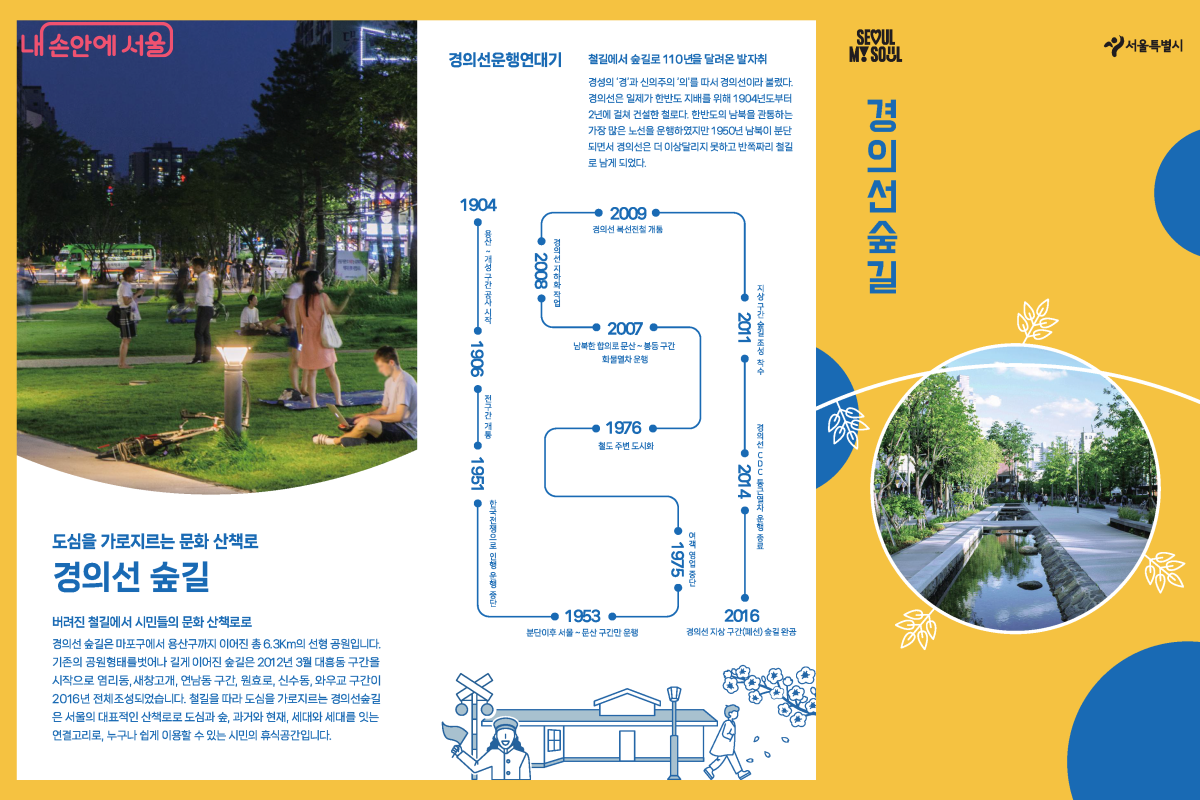
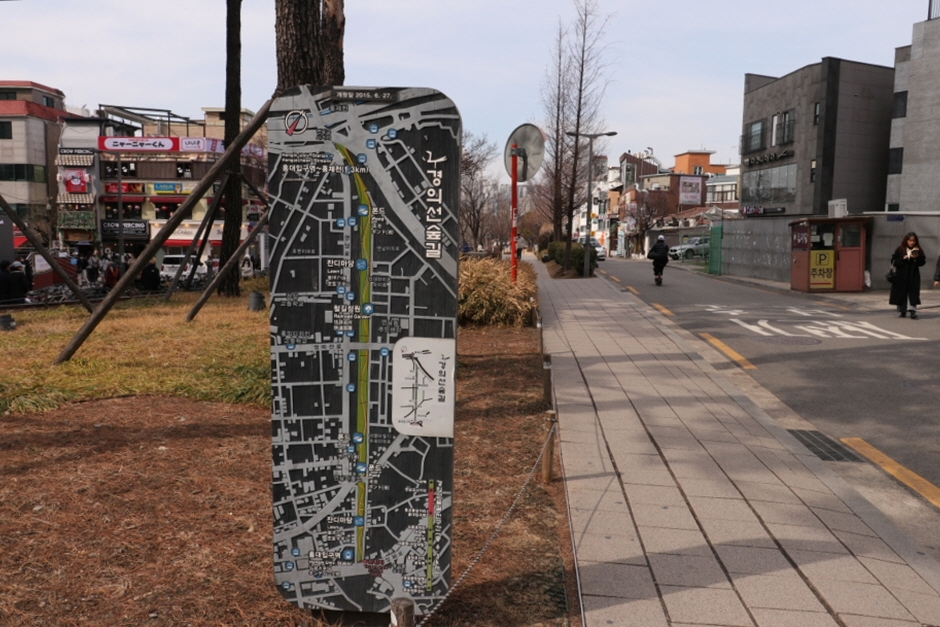
The easiest way to read the 1.2 km of Yeonnam-dong from Exit 3 of Hongik Univ. Station
If this is your first visit, it is simplest to use Exit 3 of Hongik Univ. Station, where Line 2, Airport Railroad, and the Gyeongui-Jungang Line meet, as your reference point. Seoul's guide explains that the Yeonnam-dong Forest Path begins from the spot with a large pine tree after crossing the busy area from Exit 3. It is also practical for overseas travelers that you can arrive at Hongik Univ. Station on the Airport Railroad directly from Incheon International Airport without transferring.
The location you provided, 2nd floor, 33-21, Donggyo-ro 38-gil, Mapo-gu, Seoul, is a good area for entering the alleys from the park and exploring. If you first orient yourself along the park and then move block by block toward Donggyo-ro 38-gil and Donggyo-ro 39-gil, it is easy to retrace your route. Gajwa Station is also listed as an access station for the Yeonnam-dong section of Gyeongui Line Forest Park, but if you are looking for the cluster of shops for the first time, starting from Hongik Univ. Station is more helpful for understanding the route.
- Starting station: Hongik Univ. Station Exit 3
- Transfer lines: Line 2, Airport Railroad, Gyeongui-Jungang Line
- Pedestrian axis: about 1.2 km in the Yeonnam-dong section of Gyeongui Line Forest Park
- Alternative station: Gajwa Station (Gyeongui Line)
Yeonnam-dong is open 24 hours and free, but each shop has its own schedule
According to the Korea Tourism Organization's tourism information, Yeonnam-dong is marked as open 24 hours, and closing days differ by shop and facility. Since there is no admission fee to walk through the neighborhood itself or Gyeongui Line Forest Park, it is correct to view admission as free. If you choose a specific cafe, restaurant, or exhibition space as your destination, you should check the operating hours, closing days, and reservation rules separately on that venue's official channels.
The main inquiry line is the tourism information hotline 1330, which provides Korean, English, Japanese, and Chinese service. The Korea Tourism Organization page also lists +82-2-334-7878 as the contact number for Yeonnam-dong. The park can be passed through at night as well, but the individual shops in the alleys each close at different times, so if you want to handle dining and shopping in one trip, it is safer to combine a park walk and alley visit from daytime until around sunset.
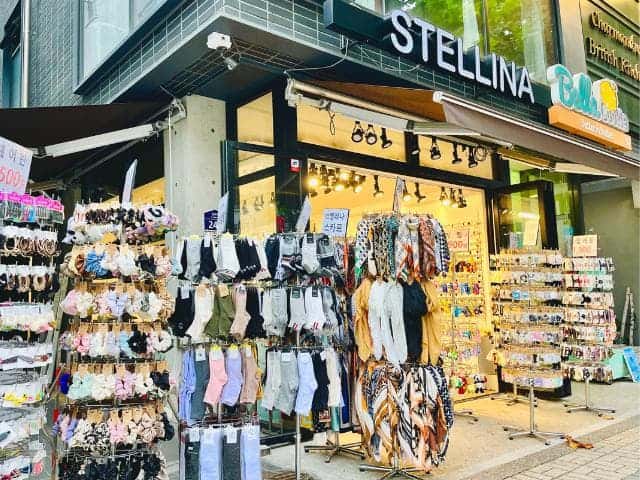
In Yeonnam-dong, if you only look for 'cafe street,' you miss the texture of the residential area
Yeonnam-dong is an area where commercial zones near Hongik Univ. Station and detached and multi-family residential neighborhoods are mixed together. Tourism guidance says that around Gyeongui Line Forest Park there are not only cafes and restaurants, but also guesthouses, select shops, fashion stores, and art spaces. Therefore, instead of choosing only one type of place and moving in a straight line, it fits the neighborhood's structure better to enter one alley from the park, then return to the forest path, repeating short round trips.
In fact, there are points where the commercial area name 'Yeonnam-dong' and the administrative-dong boundary do not fully match. A roughly 250 m stretch of Gyeongui Line Forest Park between Hongik Univ. Station Exit 3 and Yeonnam Police Box is analyzed as Donggyo-dong in administrative terms, yet in travel routes it is recognized as part of the Yeonnam-dong commercial district. Do not exclude a destination based only on the dong name in map search results; it is better to consider the spatial relationship between the forest path and Donggyo-ro and Seongmisan-ro together.
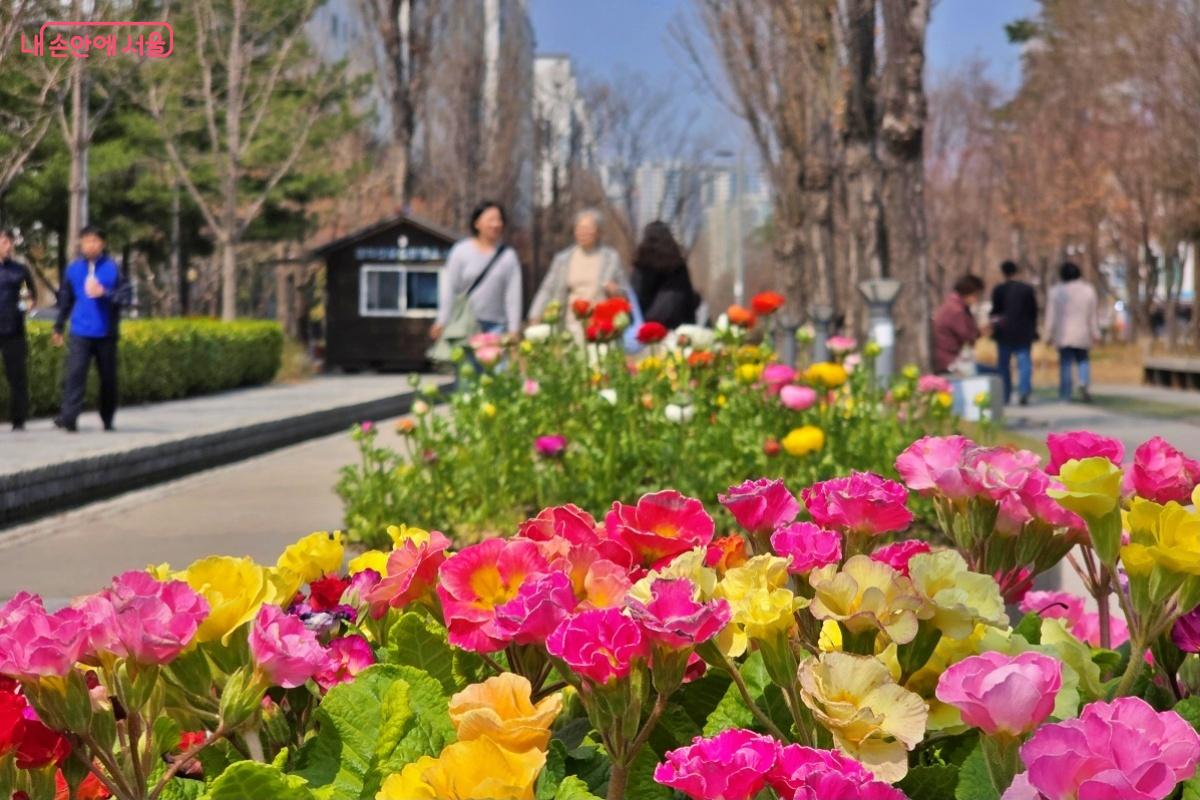
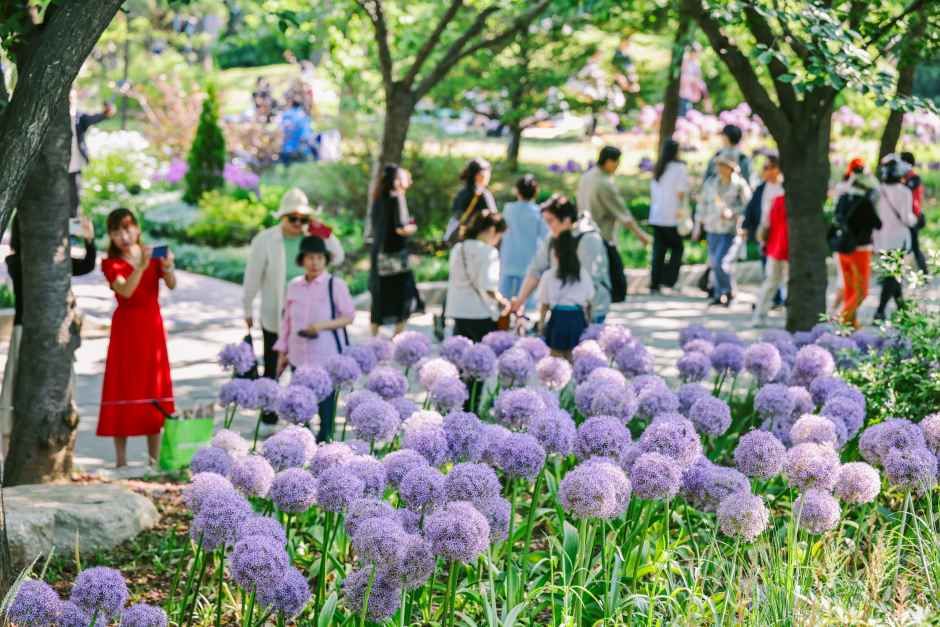
Spring flowers, ginkgo tree paths, and the season to meet the plum blossom forest created in 2020
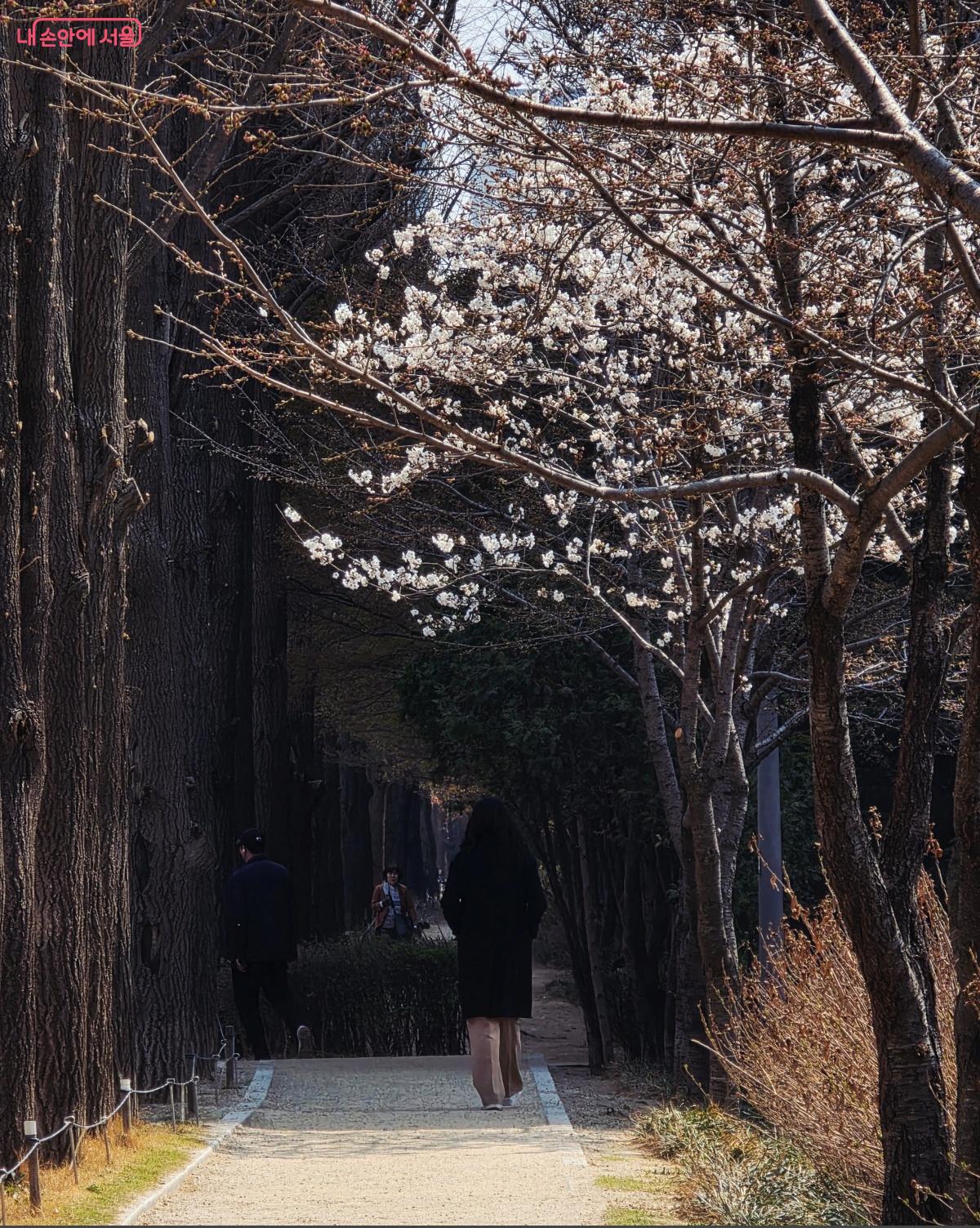
The Yeonnam-dong section of Gyeongui Line Forest Park offers a different walking experience depending on the season. Seoul city materials introduce the ginkgo tree path and spring flower scenery in the Yeonnam-dong section, and record that the 'Plum Blossom Forest' was created in September 2020. If flowers and trees are your main goal, it is better to secure walking time in the park first and place alley visits before or after, rather than centering your schedule on waiting for shops and dining reservations.
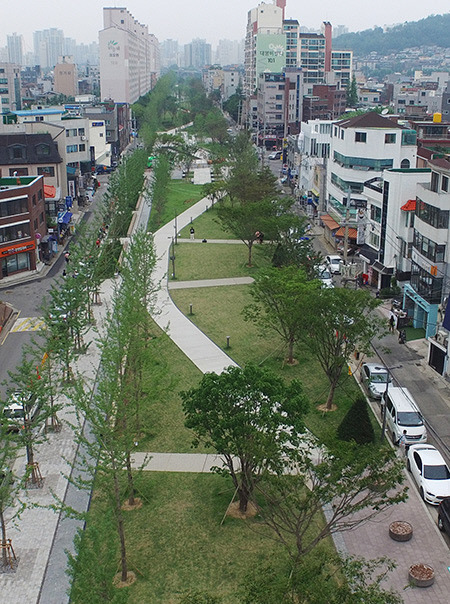
The width of the park varies by section, ranging from 10 to 60 m. That means the route is designed for walking rather than bicycles or electric mobility devices, and Seoul's citizen guide includes signs prohibiting riding motorized devices on this street. Strollers and wheelchair users can make use of the relatively flat sections of the linear park, but the accessibility of stairs, thresholds, and restrooms at individual shops in the alleys varies by venue, so advance inquiry is necessary.
Why the subway is more practical than a car: parking and alley width in Yeonnam-dong
The Korea Tourism Organization guide shows information that parking is available in Yeonnam-dong, but that does not mean there is a single integrated parking lot for the whole neighborhood. It is difficult to expect dedicated parking for Gyeongui Line Forest Park itself, and parking lots differ depending on nearby public/private facilities and individual businesses. In particular, alleys with a residential-road character, such as Donggyo-ro 38-gil, are shared by pedestrians, delivery traffic, and residents' vehicles, so on weekends subway access is far more predictable than entering by car.
If parking is absolutely necessary, you should check in advance whether the destination business has a partnership, its operating hours, and the possibility of the lot being full on site. Yeonnam-dong is not a single paid tourist facility but a living commercial district made up of many businesses, so parking fees, available spaces, and free conditions cannot be generalized in one sentence. A recommended stay length is 40-60 minutes if you are only walking in the park, or about 2-4 hours if you include dining, cafes, and shopping in the alleys.
- Park admission fee: Free
- Park hours: 24 hours
- Dedicated integrated parking: Unable to confirm
- Recommended transport: Use Hongik Univ. Station and walk
When extending your day by connecting to the Gyeongui Line Book Street, the reference point is 366 m
If you want to extend your Yeonnam-dong walk, you can connect it to the Gyeongui Line Book Street near Hongik Univ. Station. Seoul city materials introduce the Wow Bridge section, including Hongik Univ. Station and the Gyeongui Line Book Street, as a total of 366 m. It is a good addition on the way back from walking the 1.2 km Yeonnam-dong section toward the area around the station, but the shops and events in the Yeonnam-dong park section and the Book Street are separate, so if you are expecting a specific program, you should check the notice for that day.
The Book Street has publishing and cultural elements such as book sculptures and themed walking bookstores, so it has a different feel from the dining-centered Yeonnam-dong route. Conversely, if you want the fixed viewing order or integrated ticket booth of a large tourist facility, Yeonnam-dong may not be the right fit. This is a place where you combine a free park and alley shops with different operating hours on your own, so choosing only 2-3 candidate spots and leaving the rest of the time for walking is the most practical way to move around.
Before You Go
- Address
- 11, Donggyo-ro 39-gil, Mapo-gu, Seoul
- Hours
- 24 hours (based on Yeonnam-dong and Gyeongui Line Forest Park; varies by individual shops and facilities)
- Closed
- Varies by individual shops and facilities
- Admission
- Free
- Phone
- +82-2-334-7878 / Tourism Information Hotline 1330
- Official site
- https://english.visitkorea.or.kr/svc/contents/contentsView.do?menuSn=351&vcontsId=66500
- Transport
- Access the starting point of Gyeongui Line Forest Park from Hongik Univ. Station Exit 3. Hongik Univ. Station is a transfer station for Line 2, Airport Railroad, and Gyeongui-Jungang Line, and Gajwa Station is also an access station for the Yeonnam-dong section.
- Parking
- There is guidance that parking is available nearby, but integrated parking information dedicated to Gyeongui Line Forest Park cannot be confirmed. It is recommended to check public/private parking lots and individual business conditions in advance.
- Time needed
- 40-60 minutes for park walking, 2-4 hours including dining, cafes, and shops
- Accessibility
- The Gyeongui Line Forest Park linear park is walking-oriented, but wheelchair and stroller accessibility at alleys and individual shops must be checked by venue. English, Japanese, and Chinese guidance is available at 1330.
The information above is current as of the time of writing. Please recheck the official guidance before visiting.

Places
Nearby Attractions 5
-
 1
1
-
 2
2
-
 3
3
-
 4
4
-
 5
5
Food & Dining 5
-
 6
6
-
 7
7
-
 8
8
-
9
-
 10
Umi-jip
10
Umi-jip
Events in This Area


Festivals in This Area


More Travel Guides in This Area
 Travel Guide
Seoul’s Gyeongui Line Forest Park: 6.3 km of forest laid over railway tracks dating from 1906
 Travel Guide
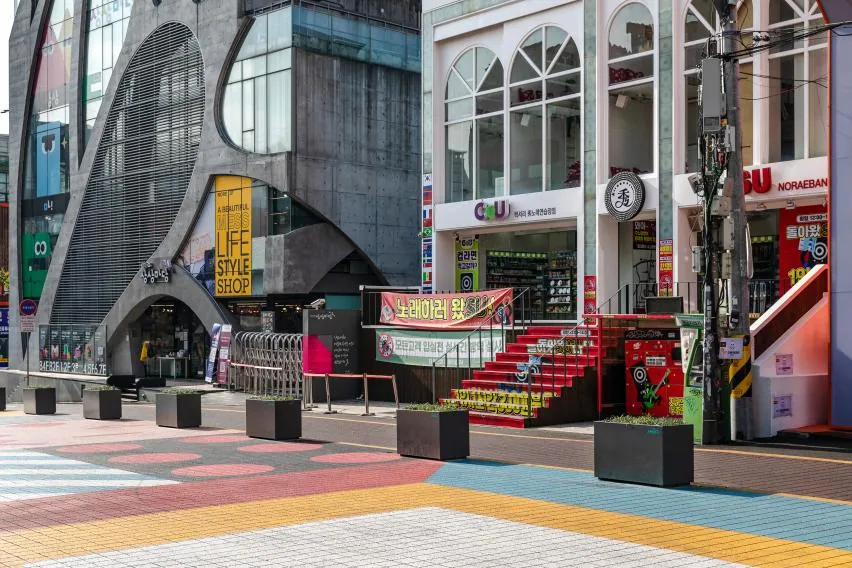
How to Use KT&G Sangsang Madang Hongdae: From the B4 Cinema to the 7th-Floor Academy
 Travel Guide
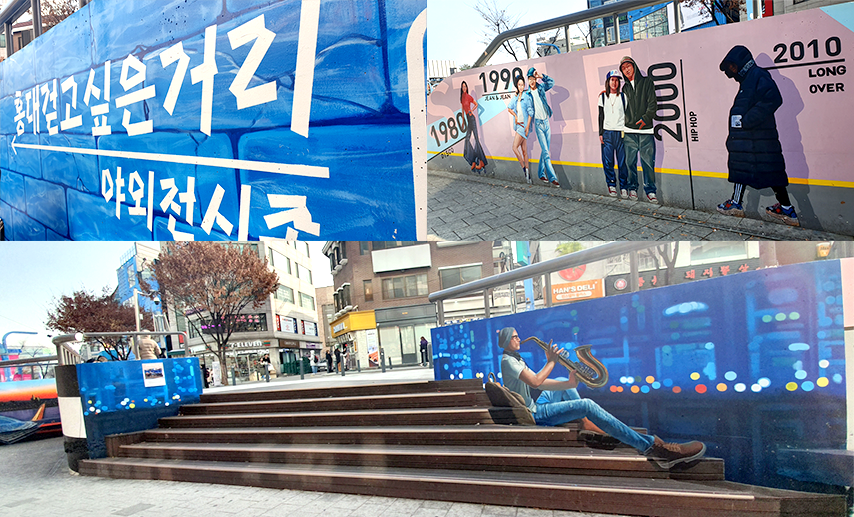
From Hongik-ro 20 to the Gyeongui Line Forest Park: How to Separate Day and Night in Hongdae
 Travel Guide
A Café and Performance Alley 2 Minutes from Exit 3 of Sangsu Station, Stretching Alongside the Danginri Power Plant
Korea News
 News
News
Tom Cruise Spotted Taking a Late-Night Walk at Hangang Park… Strolled for an Hour in a Black Suit
 News
News
'Jimin, We'll always be with you' Peru Embraced 'Jimtober' Birthday Celebrations... "I'm Happy"
 News
News
BTS’s Jungkook stands alongside Messi and Ronaldo… No. 5 worldwide in TikTok views
 News
News