National Museum of Korea
Located in Yongsan, Seoul, the National Museum of Korea is the country’s largest national museum. It began in 1909 as the Imperial Museum at Changgyeonggung Palace and moved to Yongsan in 2005. This guide includes the Room of Quiet Contemplation, home to two National Treasure gilt-bronze pensive bodhisattvas, six permanent exhibition galleries, and the latest information, including visiting hours updated in 2026.
I’ve been here?
Your check-in helps the next traveler.
No one has checked in yet Be the first
One tap — no writing needed
From the Imperial Museum at Changgyeonggung Palace in 1909 to Yongsan in 2005
The history of the National Museum of Korea began with the Imperial Museum at Changgyeonggung Palace, which opened in 1909 during the Korean Empire. After passing through the period of the Museum of the Government-General of Korea during Japanese colonial rule, the National Museum, established immediately after Korea's liberation in 1945, continued by taking over the collections of the Museum of the Government-General of Korea. On July 19, 1972, it was newly established under its current name, the National Museum of Korea. At the time, the main building stood on a site northeast of Gyeongbokgung Palace, and the building is now used by the National Folk Museum of Korea.
In 1986, the museum moved to the former Government-General of Korea building, then known as Jungangcheong, but after the decision to demolish the building in 1995, it temporarily relocated to the present building of the National Palace Museum of Korea southwest of Gyeongbokgung Palace. Following the decision to close temporarily for the move to Yongsan on October 17, 2004, it opened at its newly constructed site on October 28, 2005, ushering in the Yongsan era. The new museum was built on a site of approximately 16,000 pyeong within Yongsan Family Park, with the aim of preparing for a unified Korea in the 21st century and the era of globalization. More than 100,000 visitors came within just three days of its opening, and on December 16, 2005, only 44 days after opening, the number of visitors surpassed one million.
International Design Competition Attracting 340 Entries from 46 Countries, Junglim Architecture's Building and the “Path of History”
The present building was newly constructed on the site of Yongsan Family Park, created after a golf course at the Yongsan Garrison was returned by the United States Forces Korea. In 1995, Korea's first internationally accredited design competition under the UIA (International Union of Architects) was held. A total of 340 works from 46 countries were submitted, and after two rounds of judging, the proposal by Junglim Architecture was selected as the winning design. Construction cost approximately 410 billion won, and five construction companies—Hyundai Engineering & Construction, Daewoo E&C, Dongbu Corporation, SK Ecoplant, and GS E&C—were responsible for the work.
Upon entering through the entrance, exhibition galleries line both sides of a spacious, elongated area called the “Path of History.” Walking along this path naturally leads visitors through each floor of the Permanent Exhibition Hall.
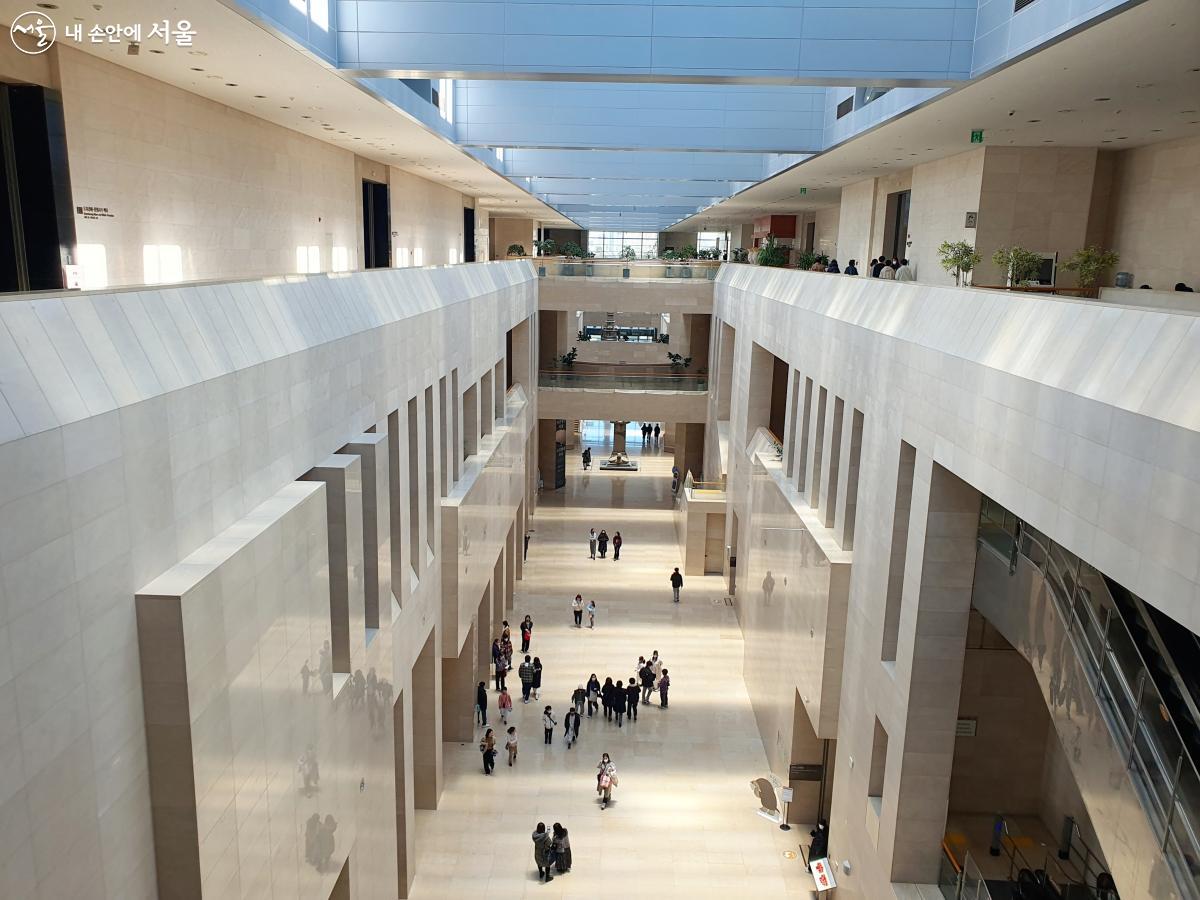
Six Permanent Exhibition Halls and More Than 50 Galleries — Baekje Gallery on the First Floor
The National Museum of Korea is so extensive that even a full day is not enough to see it in detail, and moving busily through six halls and more than 50 galleries can turn a visit into an endurance march rather than a leisurely tour. The Permanent Exhibition Hall is divided into small “rooms” so visitors can choose only the areas they want to see. Since the entire museum is so vast that even a quick glance at the artifacts can take more than 11 hours, focusing on only the galleries that interest you is another good approach.
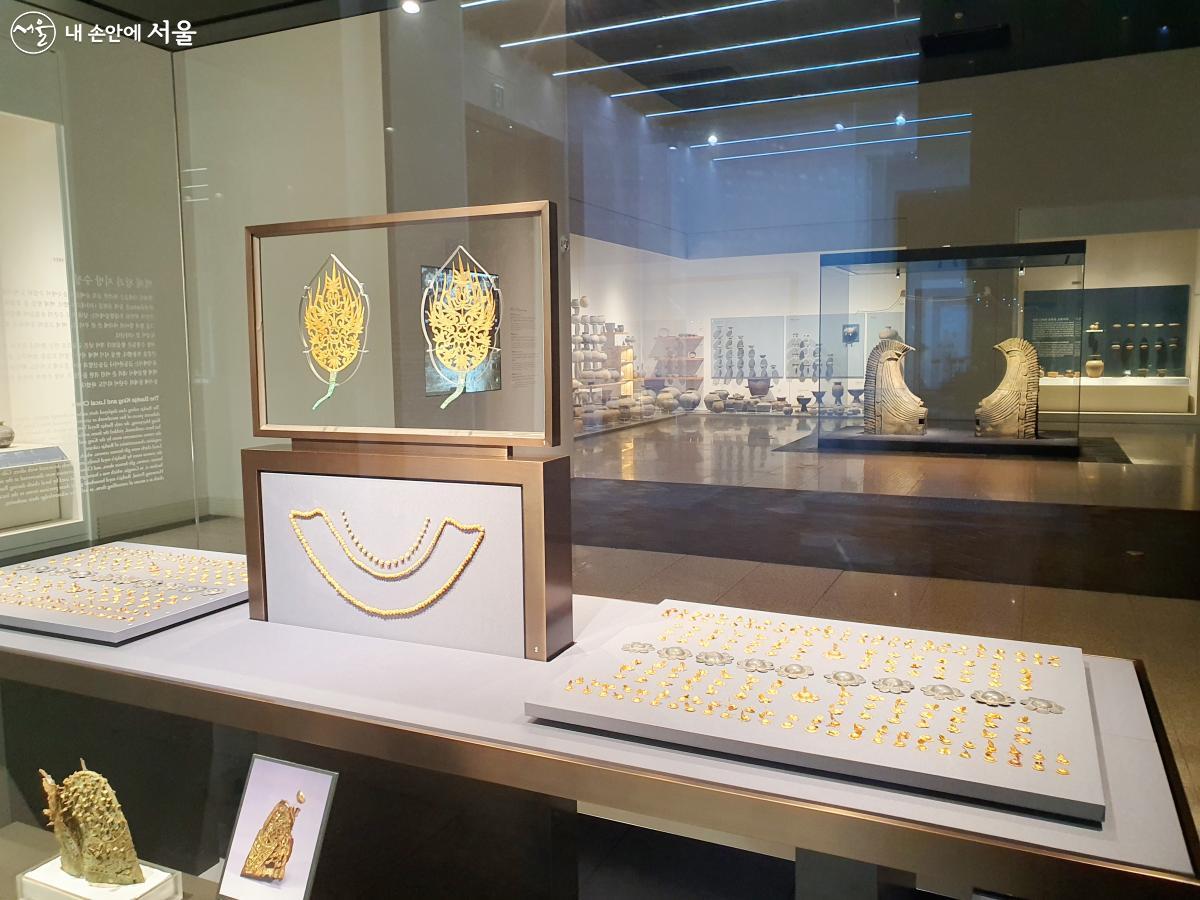
The first floor houses the Prehistory and Ancient History Hall, featuring representative artifacts such as Neolithic comb-pattern pottery excavated in Amsa-dong, Seoul; a Silla gold crown from the fifth century (National Treasure No. 191); and the Ten-Story Pagoda from Gyeongcheonsa Temple (National Treasure No. 86). Visitors can encounter national-treasure-level artifacts while moving between galleries organized by period, such as the Baekje Gallery shown in the photograph.
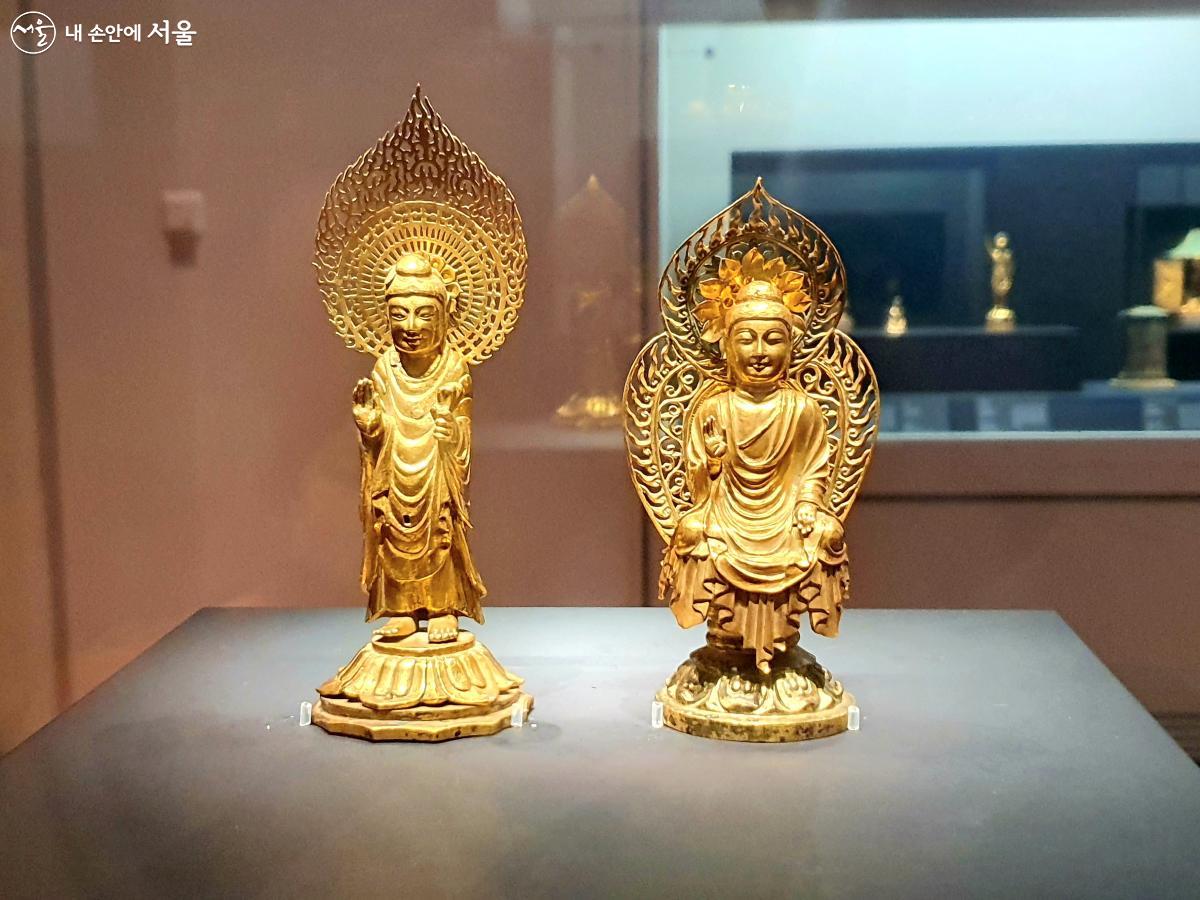
The Room of Quiet Contemplation — Two National Treasure Pensive Bodhisattvas Together Since November 2021
The National Museum of Korea created a new 439-square-meter gallery on the second floor of the Permanent Exhibition Hall, where two National Treasure pensive bodhisattvas are displayed side by side. They were made in the late sixth century (81.5 cm high) and the early seventh century (90.8 cm high), respectively, during the Three Kingdoms period. This gallery opened on the second floor of the Permanent Exhibition Hall on November 12, 2021.
The two pensive bodhisattvas had been displayed together in an independent space only three times—in 1986, 2004, and 2015—but the Room of Quiet Contemplation presents them permanently and free of charge year-round. Architect Choi Wook designed a theater-sized exhibition space with an approach passing through darkness, subtly slanted floors and walls, and a softly glowing ceiling. The Room of Quiet Contemplation is designed to encourage visitors to empathize with the statues' quiet contemplation, so group tours with commentary should be avoided to maintain a peaceful viewing environment. The Buddhist Sculpture Gallery on the third floor also features a succession of national-treasure-level Buddhist statues and is worth visiting at the same time.
Digital Immersive Video Gallery on the First Floor, a 60-Meter-Wide Panorama
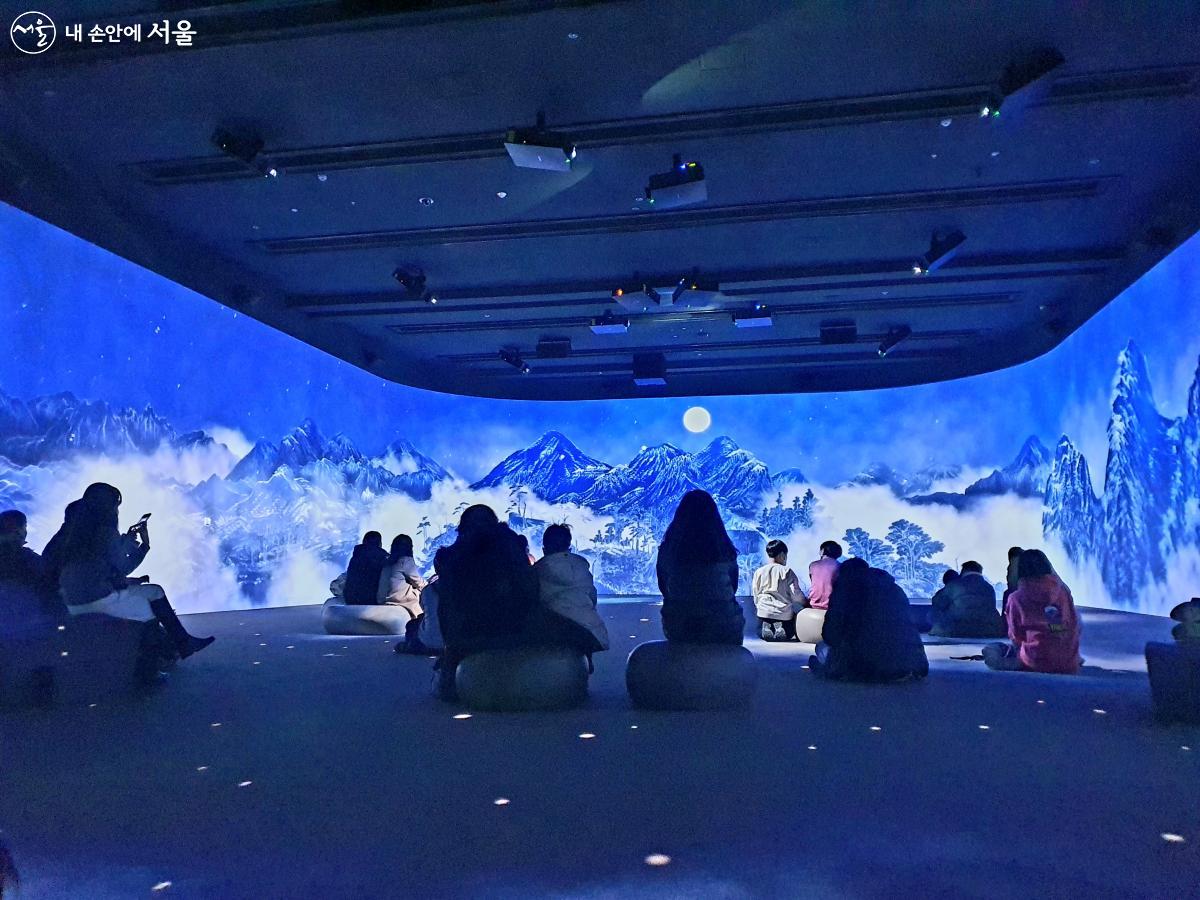
In Digital Immersive Video Gallery 1 inside the Medieval and Early Modern History Hall on the first floor, images such as the spectacular scenery of Mount Geumgang and a king's procession unfold across a gigantic panoramic screen 60 meters wide and 5 meters high. In the area in front of the gallery, there is also a “Chaekgado” interactive corner based on Joseon-period bookshelves.
The immersive content received such a positive response that more than one million visitors came to see it by September of the year after the museum opened. Visitors can also use a tablet PC to select ceramics or stationery items and place them on the bookshelf, filling the bookshelf displayed on the giant screen before their eyes.
Children's Museum Operated by Reservation
The National Museum of Korea is broadly divided into four exhibition spaces: the Permanent Exhibition Hall, the main exhibition area; the Special Exhibition Gallery; the Children's Museum, which focuses on hands-on and participatory learning; and the outdoor exhibition area. The Children's Museum operates five sessions a day from 10:00 a.m., with 80 minutes allotted per session. Reservations can be made on the website starting at midnight 14 days before the visit.
Because it operates by reservation, it is safest to book in advance. If a reserved visitor does not appear, visitors may be able to enter vacant places by waiting on-site, so if you missed a reservation, it is worth asking at the venue.
Second-Floor VR Experience Gallery and Things to Prepare Before Your Visit
The second floor of the Permanent Exhibition Hall houses a VR Experience Gallery where visitors can experience cultural heritage in an immersive way. Because of the museum's enormous scale, planning what to see in advance and checking the informational materials provided by the museum will make your visit much easier.
Since photography and flash-use policies vary from gallery to gallery, it is best to check in advance at the entrance. For areas with long queues, such as the VR Experience Gallery, visiting just after opening or during the quieter period before closing can reduce waiting time.
Newly Opened Cultural Heritage Science Center and Islamic Gallery in 2025–2026
The Cultural Heritage Science Center opened on October 28, 2025. On the first floor of this building, which extends from the third floor to the first basement level, visitors can observe artifact restoration work in person. On November 22, 2025, the permanent “Islamic Gallery” exhibition opened with loans from the Museum of Islamic Art in Doha, Qatar.
The expansion of the exhibitions is set to continue. Plans are underway to double the size of the Goguryeo Gallery to reflect the latest research, and a new Oegyujanggak Uigwe Gallery will also be added. An expansion of the Children's Museum is being pursued through 2028. An exhibition of works donated by the late Lee Kun-hee, former chairman of Samsung, is scheduled to travel internationally, opening in Chicago and London after Washington, D.C.
Visiting Hours Moved 30 Minutes Earlier from March 16, 2026
From March 16, 2026, visiting hours changed to 9:30 a.m.–5:30 p.m. on Mondays, Tuesdays, Thursdays, Fridays, and Sundays, with last admission at 5:00 p.m.; and 9:30 a.m.–9:00 p.m. on Wednesdays and Saturdays, with last admission at 8:30 p.m. Previously, the museum operated from 10:00 a.m. to 6:00 p.m., staying open until 9:00 p.m. on Wednesdays and Saturdays, but both opening and closing times were moved 30 minutes earlier. Admission tickets are sold until 30 minutes before closing.
Closing days have also been revised. Previously, the museum closed only on January 1 and on Lunar New Year's Day and Chuseok Day, but it now conducts additional quarterly maintenance closures on the first Monday of March, June, September, and December for the Permanent Exhibition Hall and Special Exhibition Galleries 1 and 2 only. In 2026, the scheduled closure dates are June 1, September 7, and December 7; March is excluded from the closure schedule. After admission, which cost 2,000 won for adults in May 2008, was made completely free, permanent exhibitions have been free for 17 years. However, paid admission may be introduced as early as 2027. The museum has stated that it plans to first introduce a reservation system and collect visitor statistics before deciding admission prices and the criteria for free or paid entry. Special exhibitions are held separately in the Special Exhibition Gallery and Special Exhibition Galleries, with fees varying by exhibition.
Ichon Station Exit 2 and the 250-Meter Museum Passage
Get off at Ichon Station on Subway Line 4 or the Gyeongui–Jungang Line, leave through the ticket gates toward Exit 2, and use the underground passage called the “Museum Passage” on the left. Opened on December 27, 2012, this underground walkway connects Ichon Station with the National Museum of Korea and the National Hangeul Museum. It was built in response to the fact that more than 60% of visitors to the National Museum of Korea use the subway.
The Museum Passage is open from 7:00 a.m. to 11:00 p.m., while the moving walkway operates from 9:40 a.m. to 11:00 p.m. The entire passage is approximately 250 meters long. Bus routes 400, 502, and 6030, among others, stop nearby.
September 30, 2025: Parking Fees Raised for the First Time in 20 Years
Parking fees were raised for the first time since the move from Gyeongbokgung Palace to Yongsan in 2005. For passenger vehicles with up to 15 seats, the basic fee changed from 2,000 won for two hours to 900 won for 30 minutes, followed by an additional 300 won for every 10 minutes. The maximum daily fee also rose by 80%, from 10,000 won to 18,000 won for passenger vehicles and from 20,000 won to 36,000 won for buses.
Parking is free if you exit within 20 minutes of entering. The museum explained that the change was intended to align its rates with those of nearby public parking lots, including Yongsan Family Park.
In the Era of 6.5 Million Visitors: How to Avoid the Queues
In 2025, the National Museum of Korea reached an annual attendance of 6.5 million visitors for the first time since opening in 1945. Attendance rose from 3.41 million in 2022, 4.18 million in 2023, and 3.79 million in 2024 to 6,507,483, fueled by the effect of the film “KPop Demon Hunters.” Based on 2024 figures, this was the third-highest attendance among museums and art museums worldwide, after the Louvre Museum (8.73 million) and the Vatican Museums (6.82 million). From January 1 through October 20, 2025 alone, 5,103,709 people visited, including approximately 185,000 foreign visitors, or 3.7% of the total.
Summer 2025 visitor reviews repeatedly mentioned that the museum was extremely crowded even on weekday mornings. A September 2025 review shared the tip that visitors could enter without waiting in line in the afternoon. A recurring recommendation is to take advantage of the evening opening hours on Wednesdays and Saturdays, until 9:00 p.m., and visit in the late afternoon for a relatively more relaxed experience.
Yongsan Family Park and the National Hangeul Museum: A Half-Day Walking Route
The museum's exterior courtyard contains national-treasure-level cultural properties gathered from across the country, and a well-maintained walking path runs along the Mirror Pond. When the weather is fine, Yongsan Family Park next to the museum makes a pleasant destination for a full-day outing.
Right next door, the National Hangeul Museum was opened in October 2014 in a newly constructed building on part of the forecourt of the National Museum of Korea. The Museum Passage from Ichon Station connects the two museums, making it easy to combine them in one sightseeing route.
Before You Go
- Address
- 137 Seobinggo-ro, Yongsan-gu, Seoul
- Hours
- Monday, Tuesday, Thursday, Friday, and Sunday 09:30–17:30 (last admission 17:00); Wednesday and Saturday 09:30–21:00 (last admission 20:30) — effective from March 16, 2026; admission tickets sold until 30 minutes before closing
- Closed
- January 1, Lunar New Year's Day, Chuseok Day, and the first Monday of March, June, September, and December each year (applies to the Permanent Exhibition Hall and Special Exhibition Galleries 1 and 2; the outdoor exhibition area remains open) — in 2026: June 1, September 7, and December 7 (no closure in March)
- Admission
- Permanent Exhibition Hall, Children's Museum, and Room of Quiet Contemplation: free (free admission since May 2008). Special exhibitions charge separate fees. The government is considering introducing paid admission as early as 2027
- Phone
- 02-2077-9000
- Official site
- https://www.museum.go.kr
- Transport
- At Ichon Station on Subway Line 4 or the Gyeongui–Jungang Line, use the “Museum Passage” to the left of the Exit 2 ticket gates (approximately 250-meter underground walkway; moving walkway 09:40–23:00). Bus routes 400, 502, and 6030, among others, stop nearby
- Parking
- Passenger vehicles (up to 15 seats): 900 won for the first 30 minutes, then 300 won per 10 minutes, maximum 18,000 won per day (raised on September 30, 2025, the first increase since the Yongsan opening in 2005). Free when exiting within 20 minutes of entry
- Time needed
- Allow 2–3 hours even for the Permanent Exhibition Hall alone; visitors say a full day is barely enough to thoroughly see all six halls and more than 50 galleries
- Accessibility
- The Museum Passage connecting Ichon Station and the museum has ramps and a moving walkway, allowing access for strollers and wheelchairs
The information above is accurate as of the time of writing. Check the official information again before visiting.

Places
Nearby Attractions 5
-
 1
1
-
 2
2
-
 3
3
-
 4
4
-
 5
5
Events in This Area

Festivals in This Area

More Travel Guides in This Area
 Travel Guide
APMA, CHAPTER FIVE at the Amorepacific Headquarters’ First-Floor Gallery
 Travel Guide
Reading Korean War History at the Former Army Headquarters in Yongsan: The War Memorial of Korea
 Travel Guide
The Most International Alley in Seoul, Found Along 1.4 km of Itaewon-ro
 Travel Guide
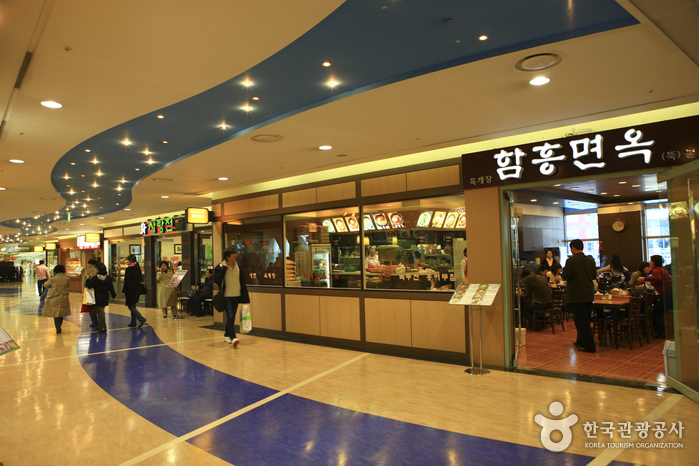
Actual Routes and How to Navigate I’Park Mall’s 11 Floors Connected to Yongsan Station
Korea News
 News
News
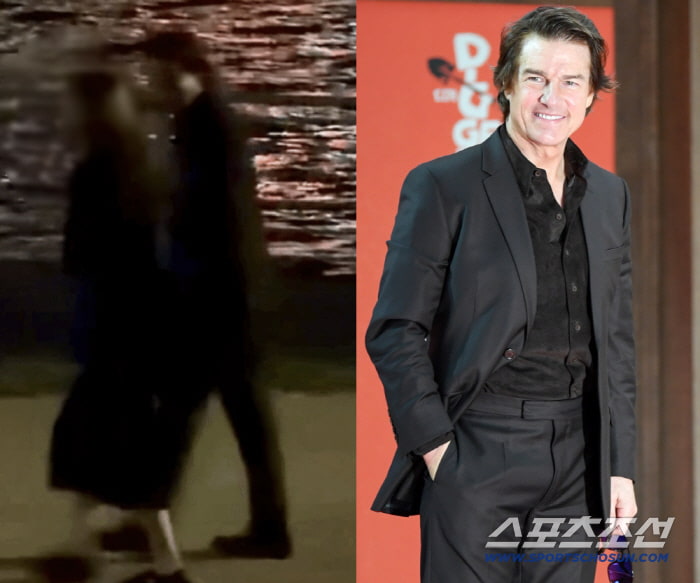
Tom Cruise Spotted Taking a Late-Night Walk at Hangang Park… Strolled for an Hour in a Black Suit
 News
News
'Jimin, We'll always be with you' Peru Embraced 'Jimtober' Birthday Celebrations... "I'm Happy"
 News
News
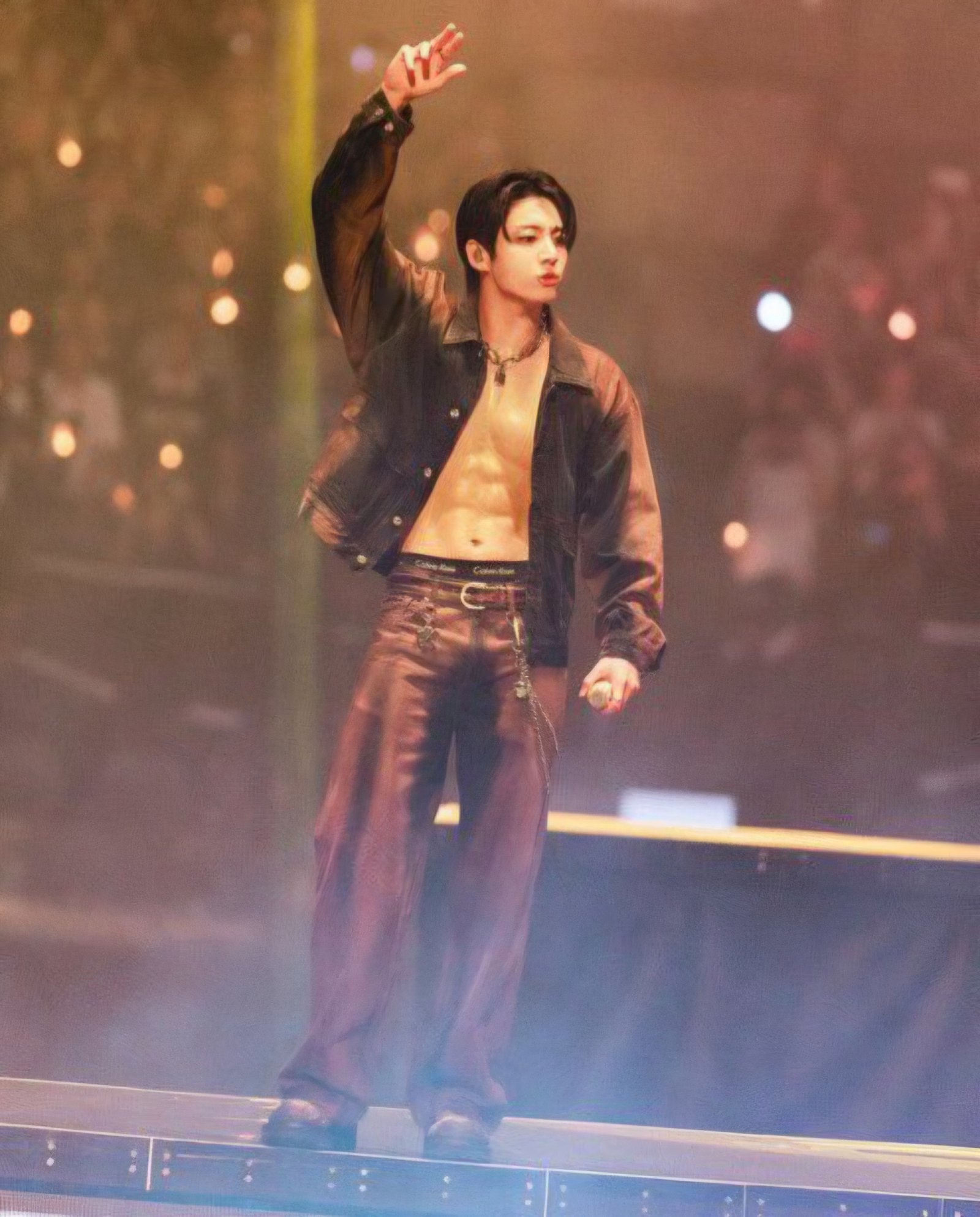
BTS’s Jungkook stands alongside Messi and Ronaldo… No. 5 worldwide in TikTok views
 News
News