Reading Korean War History at the Former Army Headquarters in Yongsan: The War Memorial of Korea
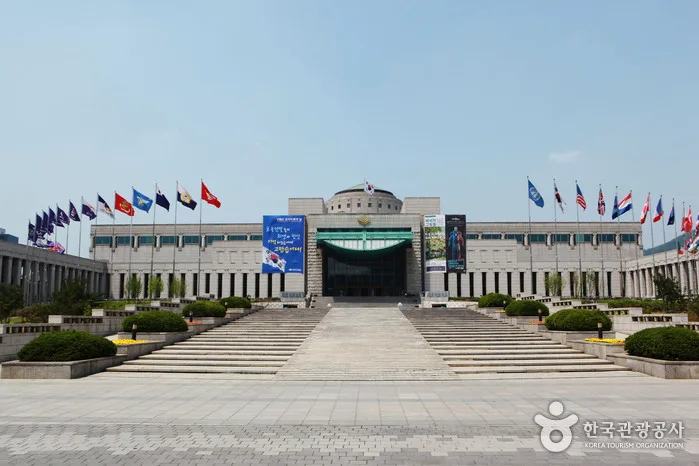
The War Memorial of Korea is a national-scale war history museum that opened on June 10, 1994, on the former site of the Army Headquarters. Allow at least 2.5 hours to see both the indoor exhibits and the large outdoor equipment, and three hours or more to explore the Korean War exhibition in detail.
I’ve been here?
Your check-in helps the next traveler.
No one has checked in yet Be the first
One tap — no writing needed
Why it opened on June 10, 1994, on the site of the former Army Headquarters
The War Memorial of Korea was established to collect, preserve, and exhibit materials related to war and to contribute to peaceful reunification by conveying the lessons of war. The project was directly prompted by President Roh Tae-woo's directive to pursue it on June 22, 1988, and by the Yongsan site secured when Army Headquarters moved to Daejeon in 1988. The War Memorial Association was founded on January 31, 1989.
After construction began on September 28, 1990, the museum opened on June 10, 1994, following approximately four years of construction and exhibit collection. It opened on the former Army Headquarters site in Yongsan-dong 1-ga, Yongsan-gu, Seoul, which at the time covered a site of 35,000 pyeong and had a total floor area of 23,000 pyeong. Current official tourism information introduces approximately 33,000 items in the collection and about 10,000 exhibited items.
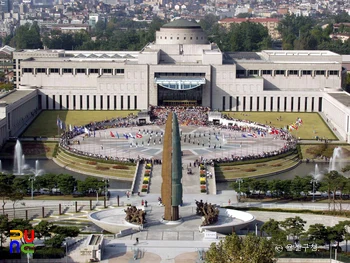
From admission at 09:30 to closing at 17:00: the viewing order for the six indoor galleries
The indoor viewing hours at the War Memorial of Korea are 09:30–18:00, and admission closes at 17:00. The museum is closed every Monday; when Monday is a public holiday, it closes on the first weekday afterward. The regular permanent exhibitions are free, but special exhibitions may require a separate fee, so it is safest to check the day's programs on the official website.
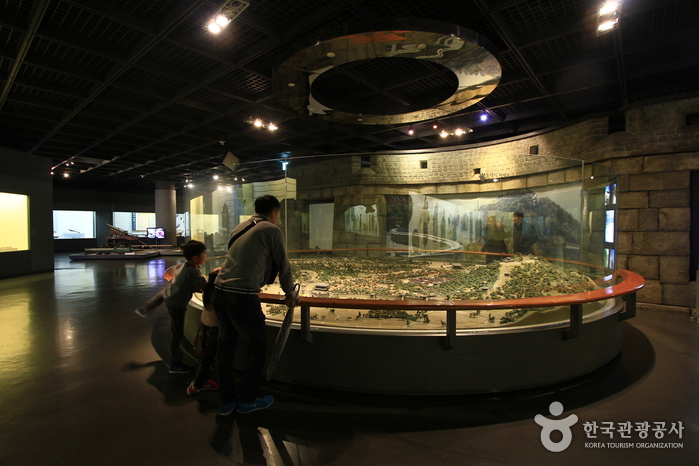
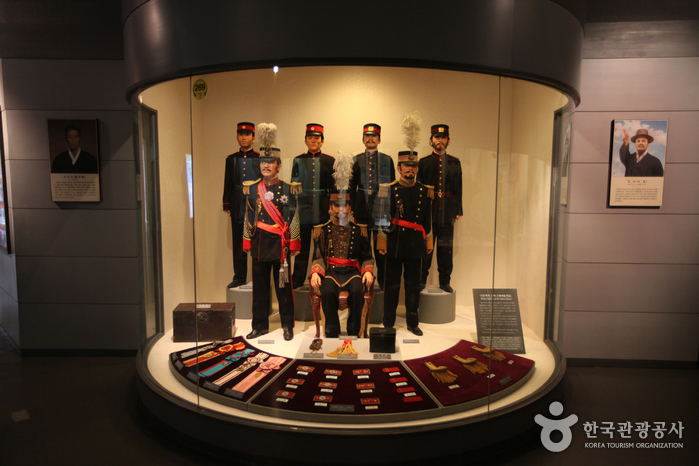
According to the official tourism guide, the indoor exhibition areas consist of six galleries: the Overseas Dispatches Room, Patriotic Remembrance Room, War History Room, Korean War Room, Armed Forces Development Room, and Large Equipment Room. On a first visit, begin by surveying the history of warfare from the Three Kingdoms period onward in the War History Room, then follow the story from the outbreak of the Korean War through the armistice in the Korean War Room before moving to the Patriotic Remembrance Room. This sequence makes it less likely that you will miss the overall flow of the exhibitions.
- Short visit: 2 hours 30 minutes, including the indoor highlights and outdoor equipment
- Recommended visit: 3–4 hours to see the Korean War Room and remembrance spaces thoroughly
- Last admission: 17:00, one hour before closing
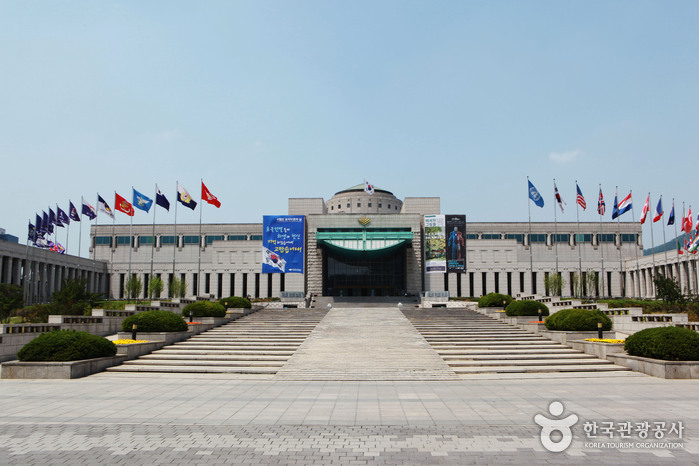
The outdoor exhibition area with the Statue of Brothers and large equipment: what to see before the indoor galleries
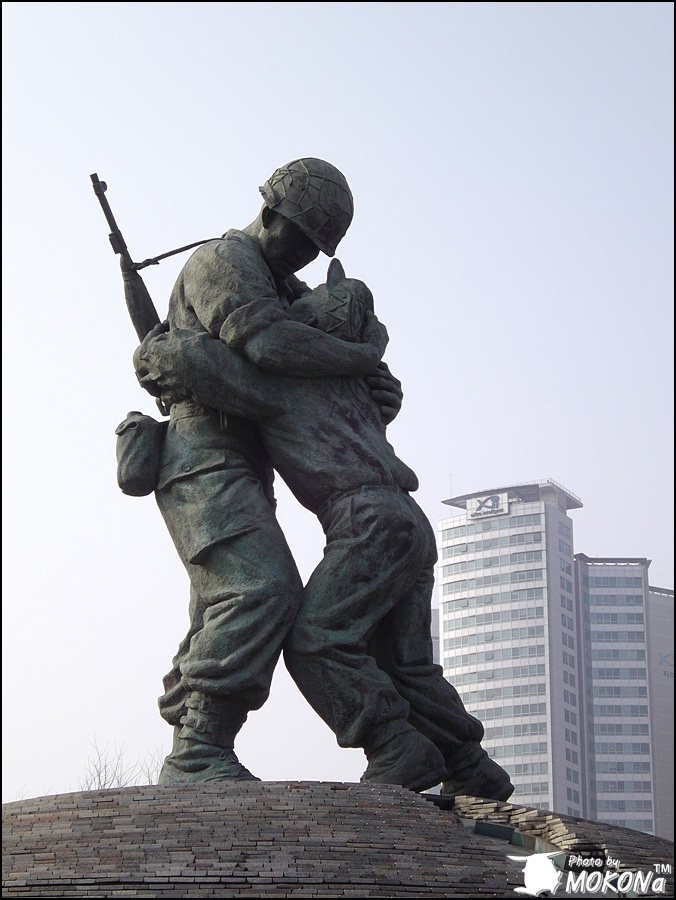
The outdoor exhibition area features equipment from the Korean War, large weapons from various countries, a sculpture symbolizing the Korean War, the Stele of King Gwanggaeto the Great, the Statue of Brothers, and the Peace Clock Tower. The two corridors on either side of the memorial also contain name steles for soldiers and police officers killed in action during the Korean War and the Vietnam War, as well as a name stele for United Nations service members killed during the Korean War.
Because the indoor exhibitions end at 18:00, visitors who want to see and photograph large equipment such as aircraft and tanks should plan the outdoor route for 09:30–10:30 or around 16:00 after touring the indoor galleries. On rainy days or in the height of summer or winter, it is better to prioritize the indoor exhibitions over the expansive outdoor sections. When the weather is agreeable, viewing the outdoor sculptures and equipment in sequence helps reduce the burden of getting around.
About 250 m from Exit 12 of Samgakji Station on Line 6: the simplest route for first-time visitors
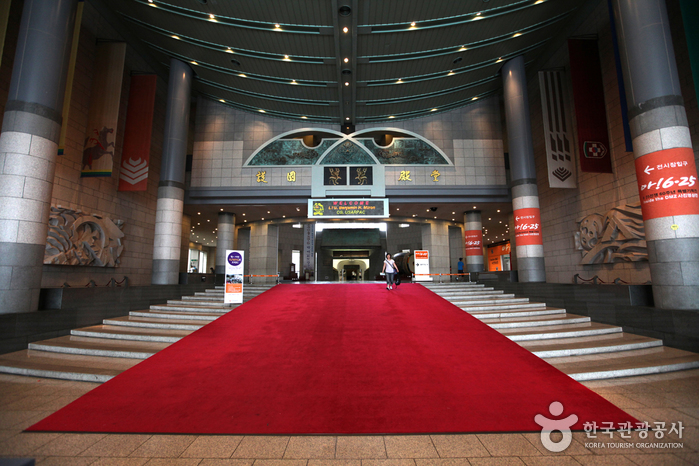
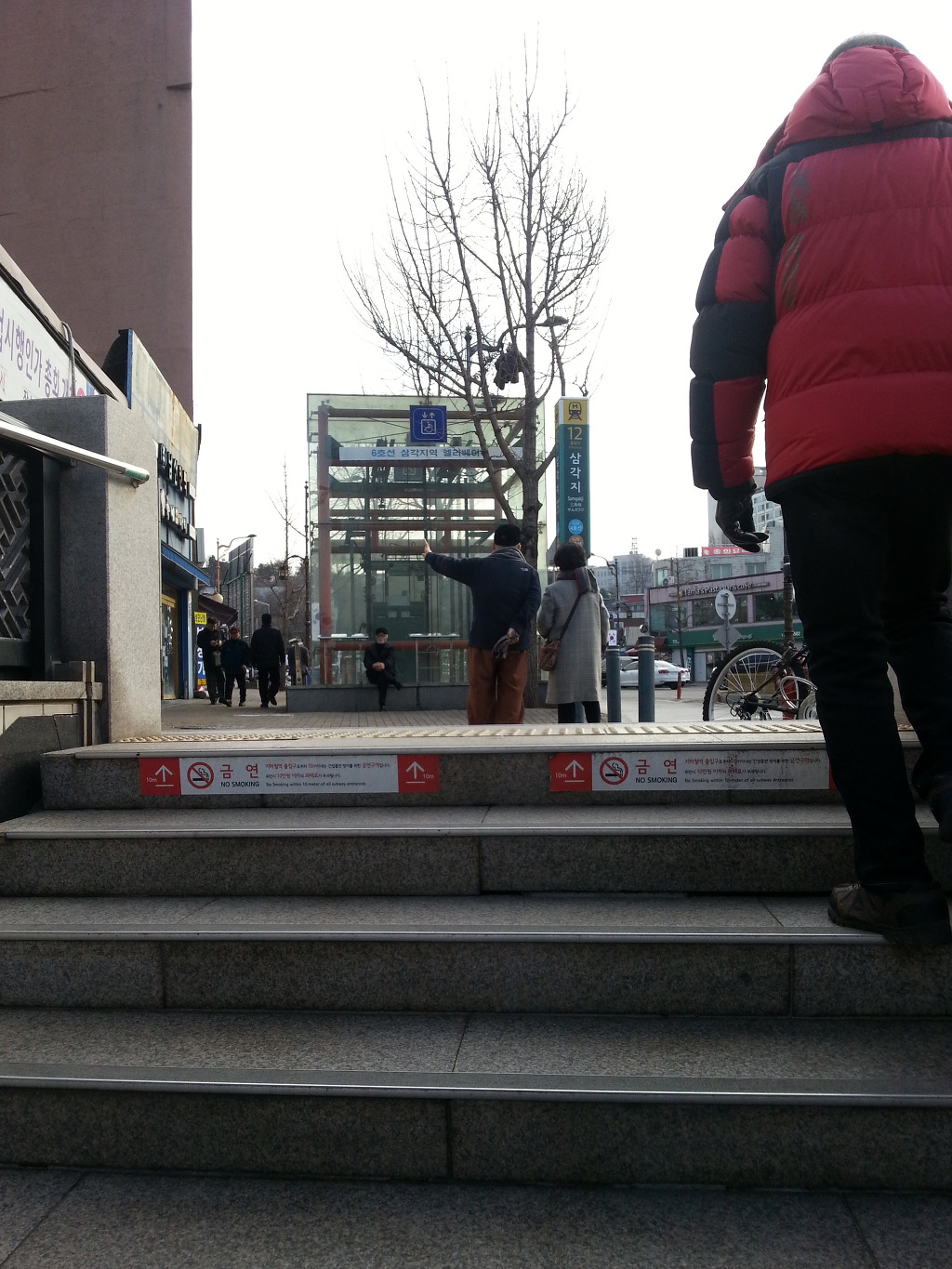
The address is 29 Itaewon-ro, Yongsan-gu, Seoul (Yongsan-dong 1-ga 8-beonji), and the main telephone number is 02-709-3144. By subway, use Samgakji Station on Lines 4 and 6. Local guidance indicates that the main entrance to the War Memorial of Korea is about 250 m from Exit 12 of Samgakji Station on Line 6, making access relatively straightforward even for travelers with luggage.
There are many bus routes along the Hangang-daero and Itaewon-ro corridors, but first-time visitors are less likely to make a mistake if they set “Samgakji Station (War Memorial of Korea)” as their destination rather than relying on the stop name. The museum is also accessible on foot from Namyeong Station on Line 1, but the route closer to the exhibition entrance is from the Samgakji side. The 1330 tourism helpline is available in Korean, English, Japanese, and Chinese.
- Subway: Samgakji Station on Lines 4 and 6; about 250 m from Exit 12 on Line 6
- Tourism information: 1330, available in Korean, English, Japanese, and Chinese
- Main contact: 02-709-3144
Parking calculation: 3,000 won for two hours by car and a 20,000-won 24-hour maximum
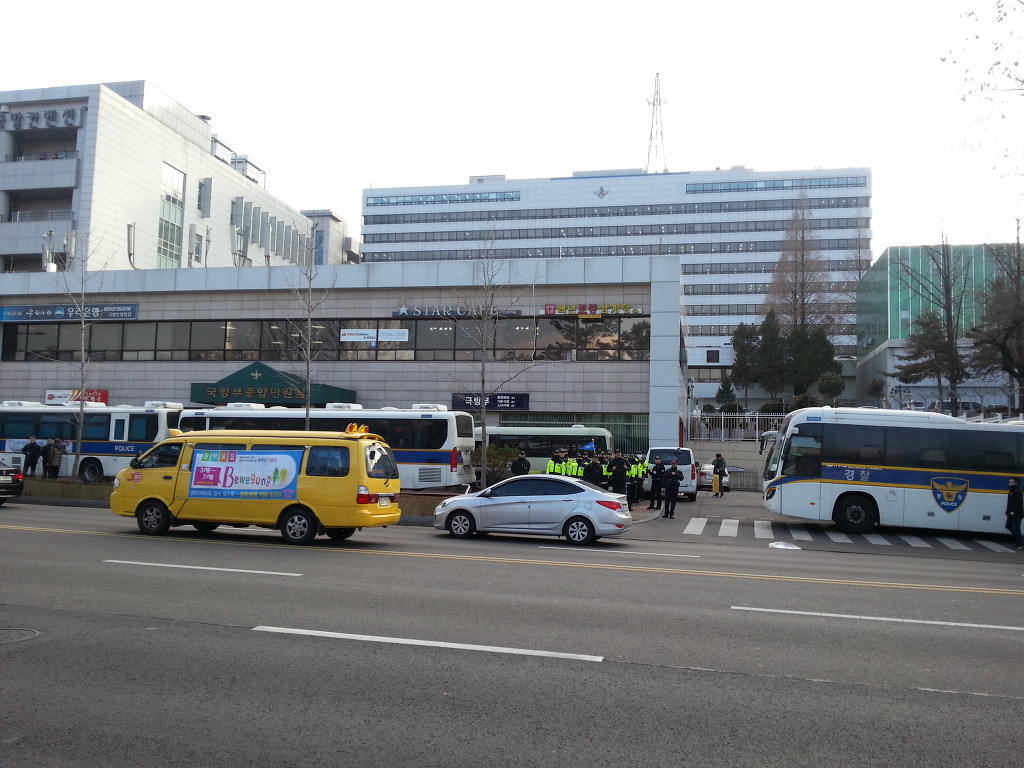
The War Memorial of Korea has a parking lot. Passenger cars and vans with 15 or fewer seats cost 3,000 won for the first two hours, then 1,000 won for each additional 30 minutes, with a 24-hour maximum of 20,000 won. Buses with 16 or more seats cost 10,000 won for the first two hours, then 3,000 won for each additional 30 minutes, with a 24-hour maximum of 50,000 won.
For a passenger car visit planned to last three hours, the posted rates indicate an expected cost of 5,000 won; four hours would be 7,000 won. Since the permanent exhibitions are free, parking time rather than admission fees determines the actual expense for visitors arriving by car. Additional charges for large group buses rise quickly after two hours, so groups should decide their expected end time in advance.
Do not leave after seeing only the Korean War Room: a three-hour route extending to the Remembrance Corridors
The Encyclopedia of Korean Culture explains that the War Memorial of Korea's indoor exhibitions consist of the Patriotic Remembrance Room, War History Room, Korean War Room, Overseas Dispatches Room, Armed Forces Development Room, Defense Equipment Room, and Large Equipment Room. Exhibition-room names and classifications may be updated by the institution, so on the day of your visit it is advisable to check both the on-site guide map and the official website's notices about viewing restrictions.
If the Korean War is your main focus, allot about 40 minutes to the War History Room, 70–90 minutes to the Korean War Room, 30 minutes to the Patriotic Remembrance Room and name-stele corridors, and 40 minutes to the outdoor exhibition area, for a total of roughly three hours. Conversely, visitors with little interest in weapons and military equipment or those traveling with young children may find it more suitable to select the outdoor equipment and key galleries and shorten the visit to about two hours rather than rushing through everything.
- History-focused: War History Room → Korean War Room → Patriotic Remembrance Room → name-stele corridors
- Equipment-focused: outdoor exhibition area → Large Equipment Room → Armed Forces Development-related exhibitions
- Note: Special exhibitions and some galleries may operate separately or have viewing restrictions depending on the schedule
Yongsan's role, reflected in 33,000 collection items and 10 million cumulative visitors
The War Memorial of Korea is not simply a facility devoted to the Korean War. It is an institution that connects the history of warfare from ancient times to the modern era, overseas military deployments, the development of the armed forces, and remembrance in one place. The Encyclopedia of Korean Culture records that cumulative attendance exceeded 10 million on May 15, 2009, and that more than 1.5 million people were visiting annually at the time.
Yongsan was long an area where military facilities and national administration were concentrated. Because the War Memorial of Korea was built on the site made available when Army Headquarters moved to Daejeon in 1988, it serves not only as a place to explore military history but also as a starting point for understanding how Seoul's military and urban spaces have changed. The official website is https://www.warmemo.or.kr/, and operating notices and special-exhibition information can be checked again before departure.
Before You Go
- Address
- 29 Itaewon-ro, Yongsan-gu, Seoul (Yongsan-dong 1-ga 8-beonji)
- Hours
- 09:30–18:00 (last admission 17:00)
- Closed
- Every Monday; if Monday is a public holiday, closed on the first weekday afterward
- Admission
- Permanent exhibitions are free (special exhibitions may have separate fees)
- Phone
- 02-709-3144
- Official site
- https://www.warmemo.or.kr/
- Transport
- Use Samgakji Station on Lines 4 and 6. About 250 m from Exit 12 on Line 6 to the main entrance.
- Parking
- Available. Passenger cars and vans with 15 or fewer seats: 3,000 won for the first two hours, then 1,000 won per additional 30 minutes, with a 24-hour maximum of 20,000 won. Buses with 16 or more seats: 10,000 won for the first two hours.
- Time needed
- 2 hours 30 minutes for the highlights; 3–4 hours to see the exhibitions and outdoor equipment in detail
- Accessibility
- The 1330 tourism helpline provides information in Korean, English, Japanese, and Chinese. Visitors are advised to contact the main number before visiting for detailed information about wheelchair and stroller rentals.
The information above is accurate as of the time of writing. Check the official information again before visiting.

Places
Nearby Attractions 5
-
 1
1
-
 2
2
-
 3
3
-
 4
4
-
 5
5
Food & Dining 4
-
 6
Daewon Restaurant
6
Daewon Restaurant -
 7
7
-
 8
8
-
 9
9
Events in This Area


Festivals in This Area

More Travel Guides in This Area
 Travel Guide
APMA, CHAPTER FIVE at the Amorepacific Headquarters’ First-Floor Gallery
 Travel Guide
The Most International Alley in Seoul, Found Along 1.4 km of Itaewon-ro
 Travel Guide
Actual Routes and How to Navigate I’Park Mall’s 11 Floors Connected to Yongsan Station
 Travel Guide
From a 1945 Refugee Village to the 2021 Cloud Roof Market — A Walk Through Haebangchon Alleys in Seoul
Korea News
 News
News
Tom Cruise Spotted Taking a Late-Night Walk at Hangang Park… Strolled for an Hour in a Black Suit
 News
News
'Jimin, We'll always be with you' Peru Embraced 'Jimtober' Birthday Celebrations... "I'm Happy"
 News
News
BTS’s Jungkook stands alongside Messi and Ronaldo… No. 5 worldwide in TikTok views
 News
News