Seoul walk connecting the brush sculpture, the site of Taehwagwan, and Ssamzigil along the 700m Insadong-gil
Insadong is Seoul’s first cultural district, centered on about 700 m of Insadong-gil in Jongno-gu, where galleries, picture framing shops, brush shops, antique stores, and craft shops line the street. Since it is an open, free street at all times, it is a good walk of 90 to 150 minutes, heading south from Exit 6 of Anguk Station and grouping the Insadong Information Center, Ssamzigil, and the area around the former site of Taehwagwan.

I’ve been here?
Your check-in helps the next traveler.
No one has checked in yet Be the first
One tap — no writing needed
From the emergence of the name “Insadong” in 1914 to becoming the No. 1 cultural district in 2002
The legal-dong name Insadong was first used during the administrative district reorganization in 1914. It was formed by taking one character each from the “in” (仁) of Gwanhunbang in the Joseon era and the “sa” (寺) of Daesadong, and the name Daesadong preserves the memory of the “big temple valley” where Heungboksa of the Goryeo era and Wongaksa of the Joseon era once stood.
This area is a flat plain between Bukhaksan and Cheonggyecheon. Along the line of the old stream that flowed from Samcheong-dong through Gwanhun-dong and Insadong to Gwangtonggyo, today’s Insadong-gil was formed, and the road is about 700 m long. In the Joseon era, it was a government-office district and residential area where Chunghunbu, Imun, and Dohwaseo were located, and the legacy of Dohwaseo in particular serves as a starting point for understanding the current landscape filled with galleries and shops selling calligraphy, paintings, and crafts.
Antique shops began to appear from the Japanese colonial period, and after liberation, galleries and picture-framing shops became concentrated in the 1970s. Seoul designated Insadong as the “Street of Traditional Culture” in 1988, and on April 24, 2002, it was designated Korea’s first cultural district, covering an area of 175,743 ㎡. Recommended business types in the cultural district include picture-framing shops, antique shops, brush and paper stores, craft shops, and galleries.
From Insadong-gil 62 to Namsadangmadang — the route that does not rush through the 700 m at once
The tourist guide address is 62 Insadong-gil, Jongno-gu, Seoul (Gwanhun-dong), and the actual visiting area expands to Insadong-gil and the alleys on both sides. If you start at the northern end near Anguk Station and head south toward Jongno 2-ga, you will not lose the flow of the street. If you pass through quickly, it takes about 30 to 40 minutes; if you choose shops, exhibitions, and teahouses one by one, it is better to allow 90 to 150 minutes.
For the first section, you can use the Insadong Promotion Center at 19 Insadong 11-gil as a reference point. The representative phone number for this promotion center, operated by the Insadong Traditional Culture Preservation Association, is 02-737-7890~1, and it posts notices for Insadong cultural district events and exhibitions on its official website.
- Northern end: enter Insadong-gil from Exit 6 of Anguk Station on Line 3
- Middle section: street sculpture shaped like a brush and the shops around Ssamzigil
- Southern end: toward Jongno 2-ga and Namsadangmadang, where the route splits toward Jonggak Station and Jongno 3-ga Station
229 m from Exit 6 of Anguk Station, Exit 3 of Jonggak Station — which side should you enter from?
For first-time visitors to Seoul, Exit 6 of Anguk Station on Line 3 is the simplest choice. The official Seoul tourism guide states that it is 229 m from Exit 6 of Anguk Station to Annyeong Insadong, and from there it connects directly to the northern section of Insadong-gil. If your goal is to walk Insadong Street itself, starting at Anguk Station and heading south is the most convenient route.
From Line 1 Jonggak Station, you can enter from the Jongno 2-ga side using Exit 3, and from Jongno 3-ga Station on Lines 1, 3, and 5, Exit 5 is used for southern access. The trunk buses listed in the Seoul tourism guide are routes 100, 101, 103, 270, and 370, and you get off at a stop along Jongno Boulevard before entering the alleys.
On weekends, Insadong-gil is operated as a car-free street on Saturdays and Sundays. Rather than trying to drive into the inner part of the street, it is better to access it by subway, and if you have large luggage, choosing the station closest to your accommodation, either Anguk Station or Jonggak Station, will reduce wasted travel time.
Open all year, admission fee zero — separating the street’s hours from those of individual shops
Insadong Cultural Street is open all the time, year-round, and there is no admission fee to enter the street. The official information line is 02-737-7890~1, and the official website is https://www.hiinsa.com/ . Since it is a public pedestrian street rather than a place you enter through a ticket booth like a museum, these three items apply to the street itself.
By contrast, individual facilities such as galleries, traditional teahouses, craft shops, restaurants, and Annyeong Insadong each operate their own business hours and closing days. For example, Annyeong Insadong is located at 49 Insadong-gil and is listed on the official Seoul tourism page as open daily from 10:00 to 22:00, with phone number 02-6954-2910. Therefore, while you can still stroll the street in the morning or at night, the range of indoor shop use becomes limited.
The heart of Insadong is not only antiques and old artworks. It lies in comparing handmade objects and exhibitions in one street, such as picture framing, brushes, hanji, traditional crafts, galleries, and traditional tea. If your goal is to buy something, it is better to read and choose by shop, considering the maker, materials, country of origin, and whether packing is available.
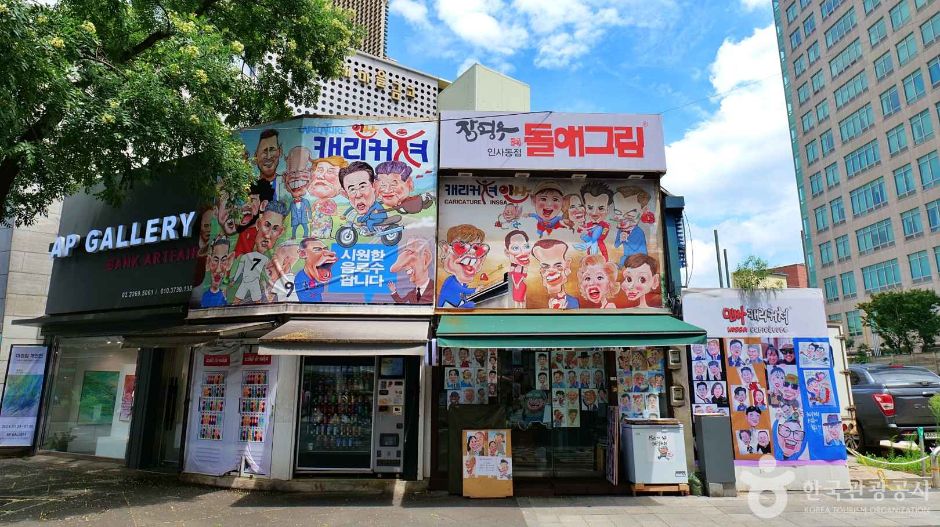
The March 1, 1919 legacy at the site of Taehwagwan and the painters of Dohwaseo — time that remains in front of the tourist district
Insadong still carries the memory of the site of Taehwagwan, where 33 national representatives gathered on March 1, 1919. The Encyclopedia of Korean Culture explains that the current Taehwa Building stands on the former site of Taehwagwan. This is why Insadong should be read not only as a street of traditional souvenirs, but also as one section of Jongno, the urban stage for the modern independence movement.
Earlier, in the Joseon era, Dohwaseo, the office responsible for royal painting work, was located in this area. The fact that today’s galleries dealing with Korean painting, printmaking, sculpture, and contemporary art are gathered close to the workspace of painters who recorded the affairs of the royal court and the state is not merely decorative, but a result connected to the occupational history of the place.
When you turn one block off Insadong-gil, it is better not to follow signs alone, but to look for picture-framing shops, brush stores, antique art shops, and small exhibition spaces. These are exactly the four categories of businesses that the cultural district designation sought to protect, and if you only look at the souvenir shops on the main road and leave, you will see only half of Insadong’s background.
Ssamzigil, Annyeong Insadong, and traditional shops — a choice that does not end inside one building
Ssamzigil is a convenient midway stop for visitors who want to tour Insadong’s craft and design shops inside one building. However, the scope of Insadong’s cultural district is much broader than a single complex. After seeing Ssamzigil, you should go out into the alleys on both sides of Insadong-gil and continue looking at brush stores, picture-framing shops, galleries, and teahouses to reveal the texture of the entire street.
Annyeong Insadong is a cultural and commercial complex at 49 Insadong-gil and operates daily from 10:00 to 22:00. It is useful if you want to handle indoor dining, cafes, and shopping in one place, but the density of traditional cultural businesses can be checked more directly along Insadong-gil and in the alley commerce. The two places can be divided into an indoor rest stop and an alley exploration point rather than treated as competing destinations.
The Korea Tourism Organization introduces Insadong as a place where traditional craft shops, antique art shops, traditional teahouses, and traditional restaurants are intertwined in the alleys. If you are planning to buy brushes, hanji, ceramics, or artworks in person, it is safest to look at the same item in two or three places and, for old artworks without price tags, make your decision only after fully hearing the explanation of the work’s condition and provenance.
Car-free street on Sat–Sun and public parking lots — what to prepare with pedestrian priority
Insadong-gil is operated as a car-free street on Saturdays and Sundays, so pedestrian density increases on weekends and the chance of encountering street events and exhibitions is greater. Conversely, if you want to quietly look at galleries and alleys, Tuesday through Friday mornings or early afternoons are better. The street itself is open all the time, but use of indoor shops is usually concentrated during the daytime.
Parking is said to be available, but if you think of Insadong-gil itself as a destination parking lot, your route will become complicated. The Insadong Cultural Park public parking lot is at 61 Insadong-gil, and in the Jongno area public parking lots are scattered, such as next to Hanaro Building, Seoinsamadang, and Nagwon Arcade. On weekends when the street is car-free, subway access is far more predictable than searching for parking.
Wheelchairs and strollers are best moved along the wide main pedestrian path of Insadong-gil, and the old alleys and individual shops vary in threshold and step width. To reduce movement burden, you can build a 60- to 90-minute route centered on the main road from Exit 6 of Anguk Station to Annyeong Insadong, Ssamzigil, and the area around the Insadong Promotion Center.
- Street use: open all the time, year-round, free
- Recommended stay: 60 to 90 minutes if you stay on the main road only, 90 to 150 minutes if you include alleys and exhibitions
- Main contact: Insadong Promotion Center 02-737-7890~1
Before You Go
- Address
- Around 62 Insadong-gil, Jongno-gu, Seoul (Gwanhun-dong)
- Hours
- Open all the time (street itself)
- Closed
- Open year-round (street itself)
- Admission
- Free (no street admission fee)
- Phone
- 02-737-7890~1 (Insadong Promotion Center / Insadong Traditional Culture Preservation Association)
- Official site
- https://www.hiinsa.com/
- Transport
- 229 m from Exit 6 of Anguk Station on Line 3 to Annyeong Insadong, with access also available from Exit 3 of Jonggak Station on Line 1 and Exit 5 of Jongno 3-ga Station on Lines 1, 3, and 5; trunk buses 100, 101, 103, 270, and 370
- Parking
- Parking is available. Use nearby public parking lots such as the Insadong Cultural Park Public Parking Lot (61 Insadong-gil, Jongno-gu)
- Time needed
- 60 to 90 minutes focusing on the main road; 90 to 150 minutes including alleys, galleries, and teahouses
- Accessibility
- It is an outdoor pedestrian street, and movement along the main walkway is easy. Alleys and individual shops differ in accessibility conditions such as thresholds and steps
The information above is current as of the time of writing. Please check the official guidance again before your visit.

Events in This Area


Festivals in This Area

More Travel Guides in This Area
 Travel Guide
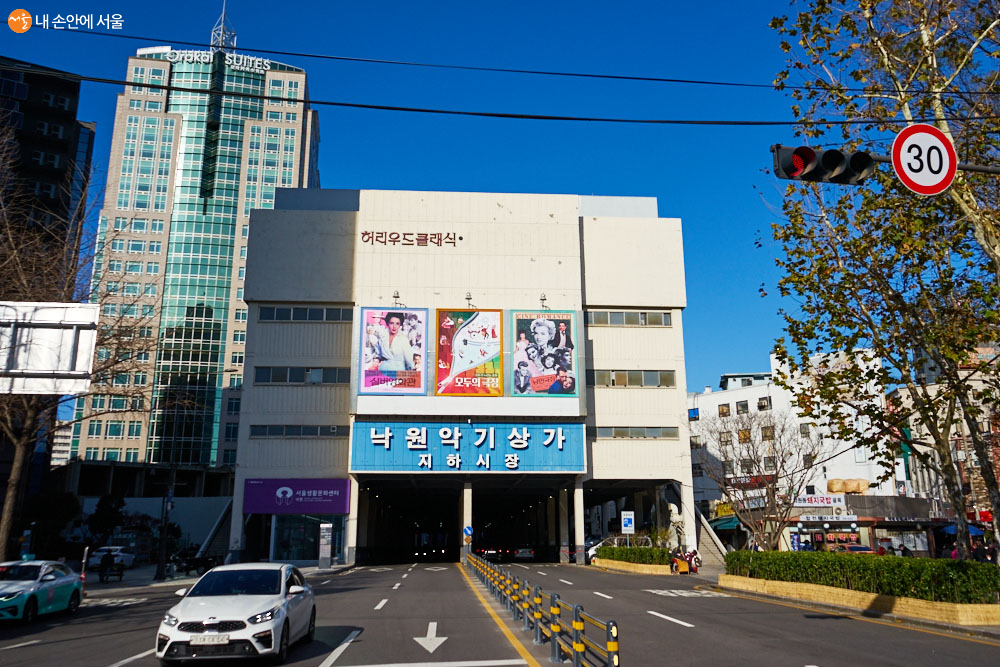
From a 1969 Mixed-Use Complex to a Street of More Than 300 Music Shops: How to Explore Nakwon Arcade
 Travel Guide
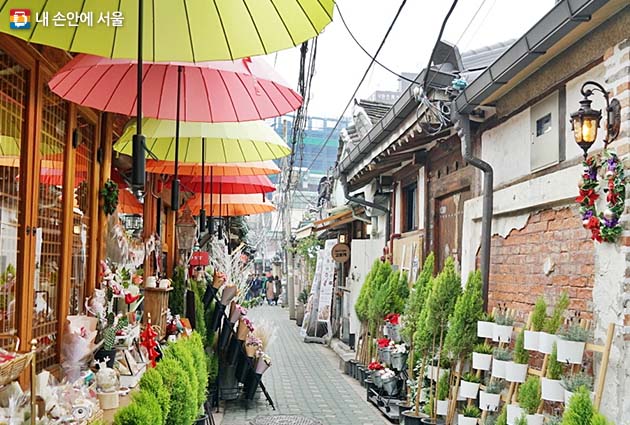
How to Walk Through Ikseon-dong, the 1920s Urban Hanok Alley of Jeong Se-gwon
 Travel Guide
The Calligraphic Legacy of Iljung Kim Chung-hyun on Insadong 9-gil: Baegak Museum
 Travel Guide
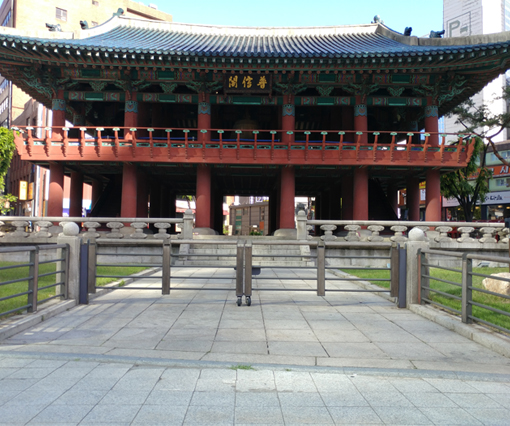
In front of Exit 4 of Jonggak Station, Bosingak, the gate of Hanyang in 1396
Korea News
 News
News
aespa’s Winter—Can a Person Really Be This Cute? A Daily Life Full of Pure Charm
 News
News
Tom Cruise Spotted Taking a Late-Night Walk at Hangang Park… Strolled for an Hour in a Black Suit
 News
News
'Jimin, We'll always be with you' Peru Embraced 'Jimtober' Birthday Celebrations... "I'm Happy"
 News
News