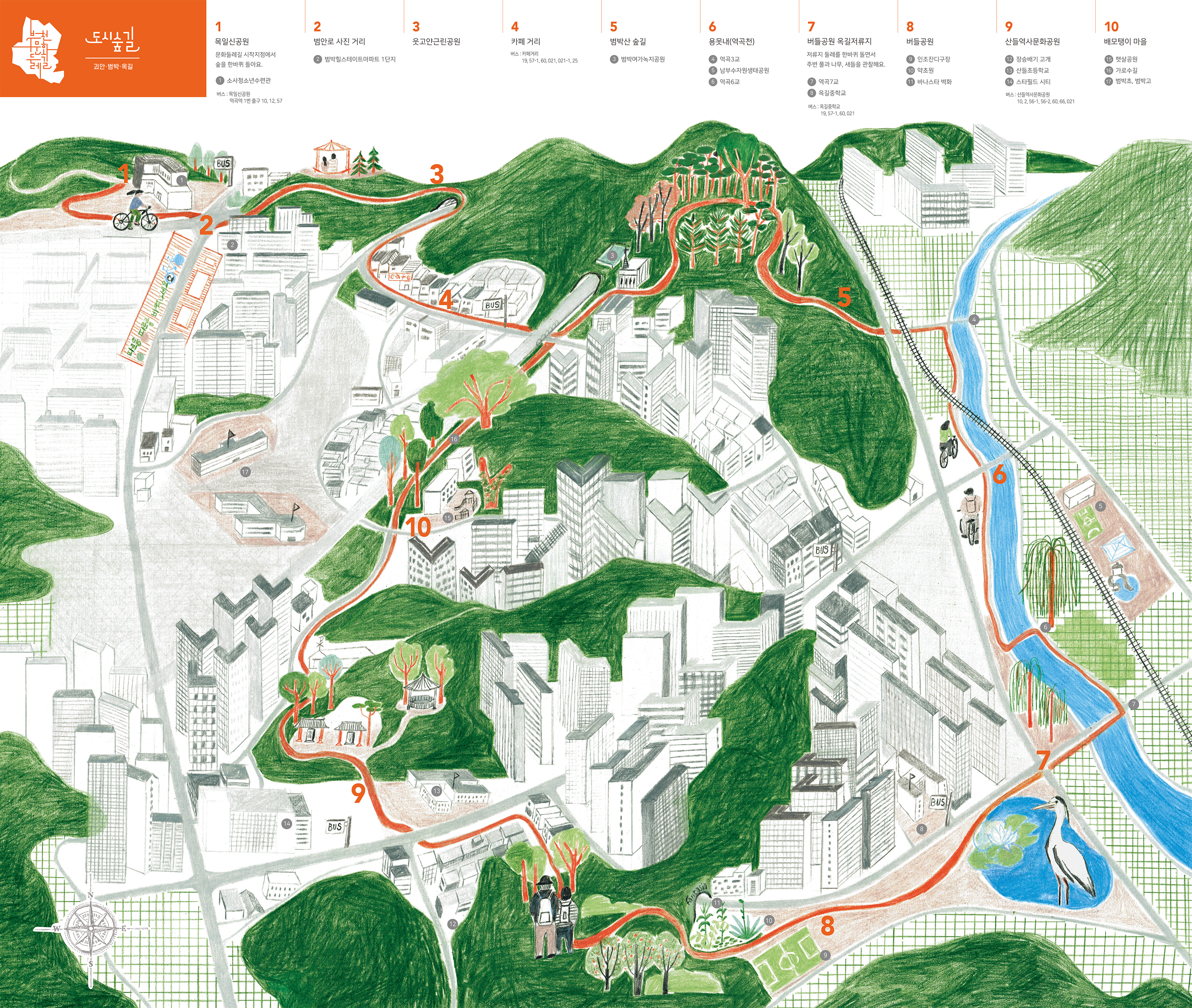
Suwon Hwaseong Wall Walk from Janganmun to Paldalmun
Suwon Hwaseong is a fortress wall system built during the Joseon Dynasty, featuring an excellent defensive layout. It is a historical heritage site equipped with four main gates—Janganmun, Paldalmun, Changryongmun, and Hwaseomun—and a variety of military and architectural facilities. Recognized for its architectural and historical significance, it was designated as a UNESCO World Cultural Heritage site in 1997. It stretches along the areas around Paldalsan Mountain, Jangan Park, Yeonmudae, and Paldalmun in the city of Suwon, Gyeonggi Province, offering a glimpse of Korea’s traditions in the heart of the city.
Overview
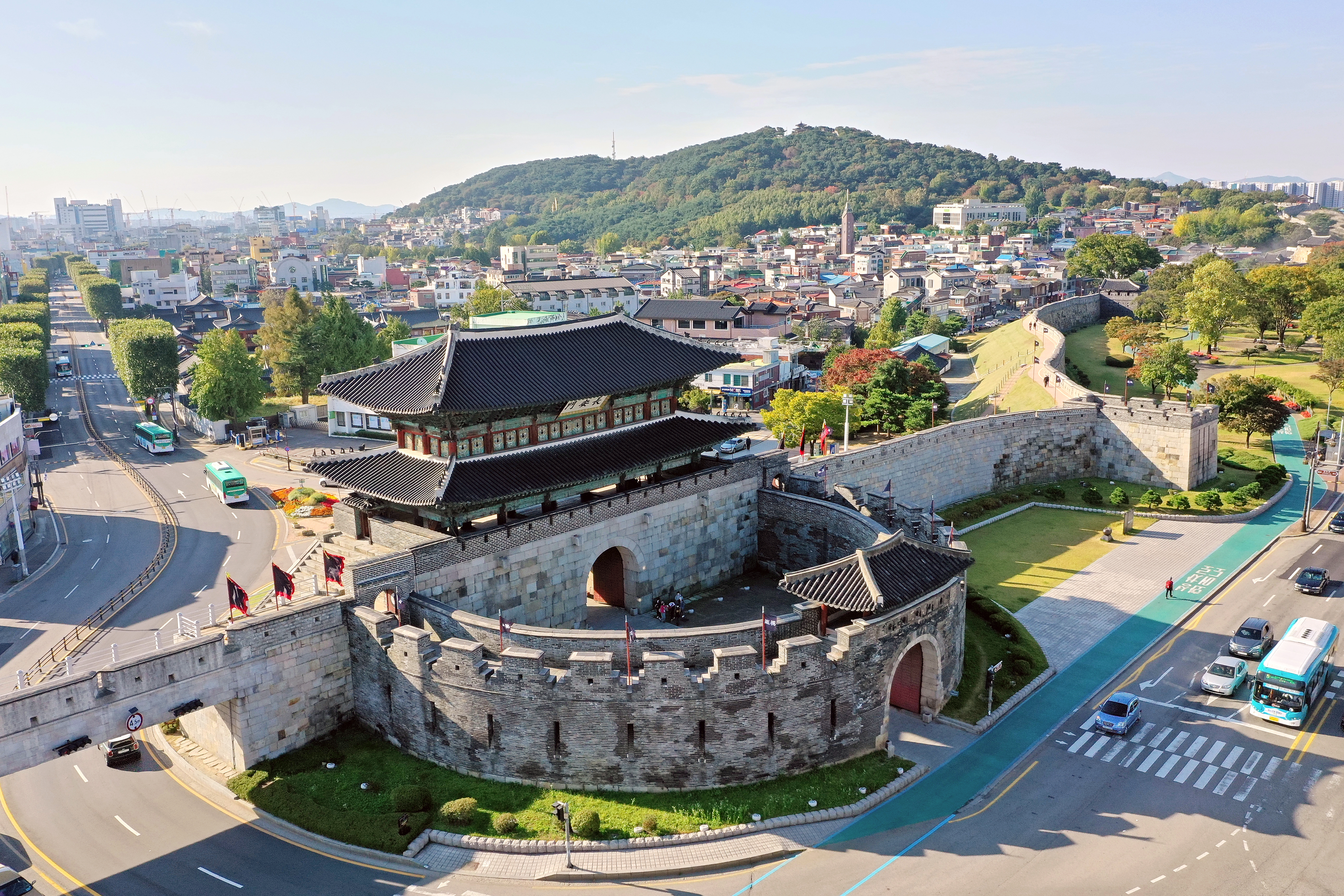
Suwon Hwaseong Fortress is a fortification built during the Joseon Dynasty, a historic heritage site with an outstanding defense system, four main gates including Janganmun Gate, Paldalmun Gate, Changnyongmun Gate, and Hwaseomun Gate, as well as various military and architectural facilities. In recognition of its architectural and historical value, it was designated a UNESCO World Heritage Site in 1997. Stretching along Paldalsan Mountain, Jangan Park, Yeonmudae, and the Paldalmun area in Suwon, Gyeonggi-do, it offers a broad look at Korea's traditional fortress culture in the middle of the city. It is especially recommended for international travelers who want to experience Korea's royal history, traditional architecture, and the structure of a fortress city all in one place.
Highlights
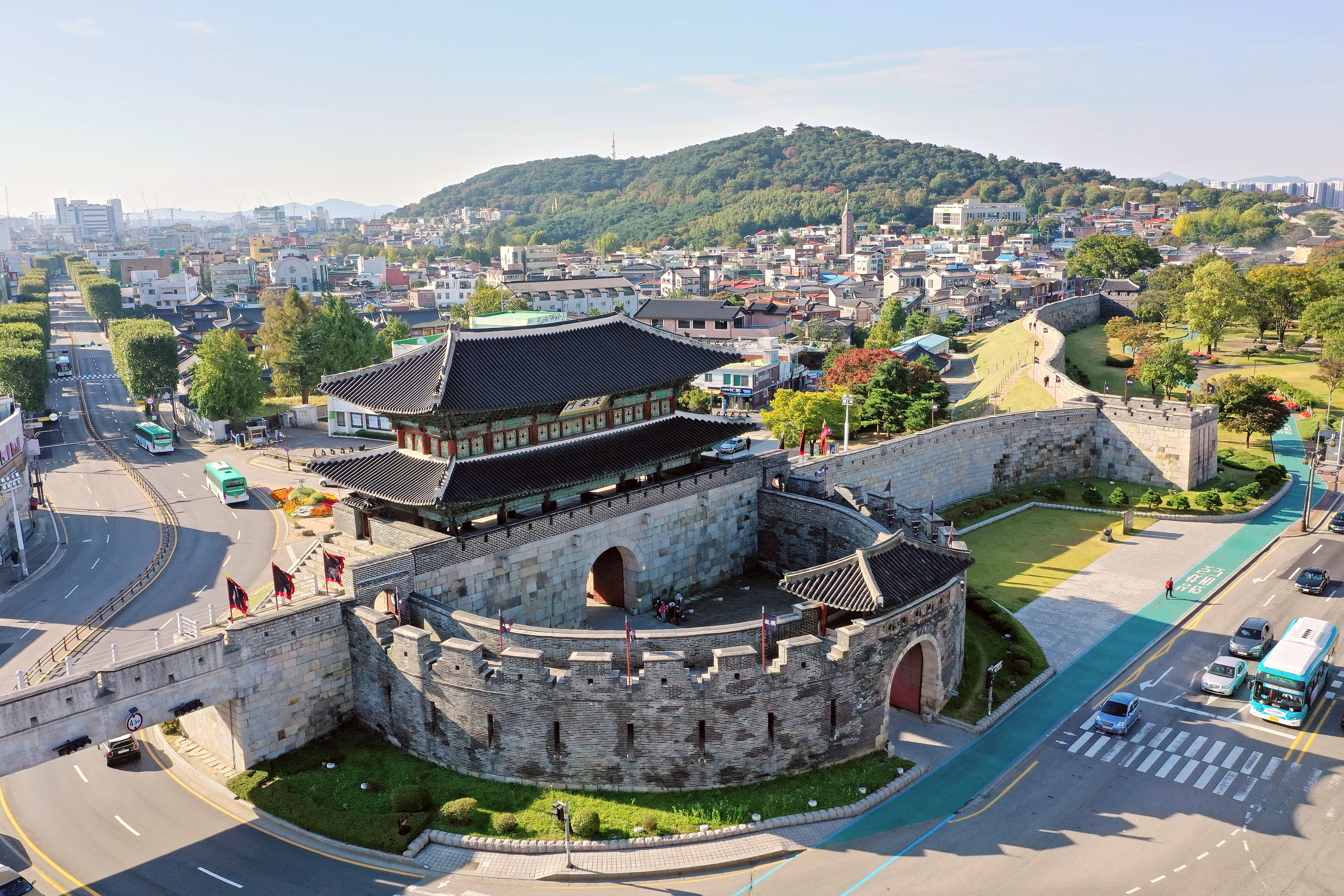
- UNESCO World Heritage fortress
- Janganmun Gate, Paldalmun Gate, Changnyongmun Gate, Hwaseomun Gate
- Banghwasuryujeong Pavilion and Dongbuk Gakru Pavilion
- Seobuk Gongsimdon
- Hwahongmun Gate and Buksumun Gate
Best Time to Visit
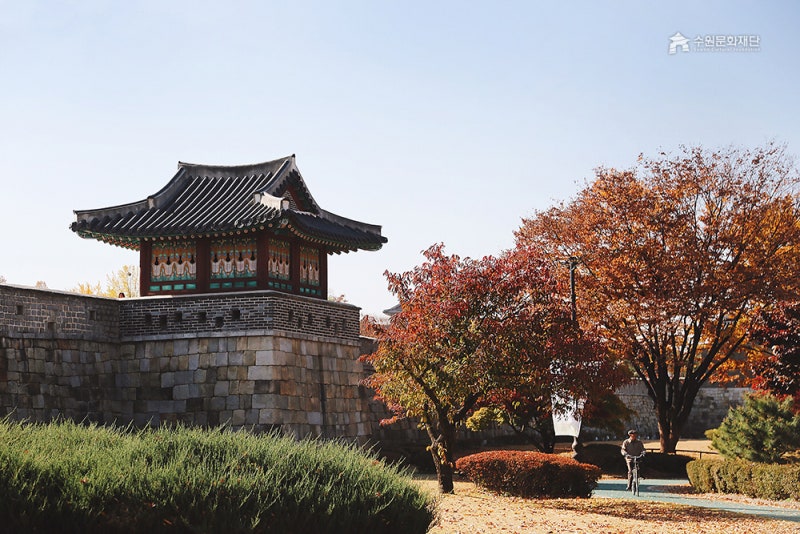
Suwon Hwaseong Fortress is best visited in spring and fall. The weather is mild, making it comfortable to walk the fortress path for about 1 to 2 hours, and you can avoid the summer heat and the strong cold of winter.
During the day, a visit from late afternoon to evening is recommended. It is pleasant to walk before sunset, and in the evening the fortress lights come on, creating a more comfortable atmosphere for exploring.
If you want the quietest time, a weekday visit is best. In particular, Tuesdays through Thursdays tend to be relatively less crowded. On the other hand, Friday evenings, weekends, and public holidays can be busy and crowded.
In short, late afternoon on weekdays in spring or fall is the most comfortable time to enjoy Suwon Hwaseong Fortress.
How Long to Stay
If you are only touring Suwon Hwaseong Fortress quickly, about 40 minutes to 1 hour is enough. If you include a leisurely walk along the fortress and Hwaseong Haenggung Palace, 2 to 3 hours is appropriate, and if you also visit nearby attractions such as the Suwon Hwaseong Museum and the Haenggung-dong Mural Village, it is best to set aside about half a day.
How to Get There
Suwon Hwaseong Fortress is easy to visit on a day trip from Seoul, and for international travelers the most convenient method is usually to take the subway to Suwon Station and then transfer to a bus.
By Subway
Get off at Suwon Station. Usually, you will use Seoul Metropolitan Subway Line 1 or the Suin-Bundang Line. Since the fortress is a bit far to walk directly from the station, transferring to a bus is the most practical option.
To take a bus, go to the area near Exit 7 of Suwon Station or Platform 7 at the Suwon Station Transfer Center.
By Bus
The main buses that go near Suwon Hwaseong Fortress are 4004, 54, 621, 64, and 660.
If you are traveling directly from Suwon Station, the following routes are convenient.
- Board bus 60 or bus 7-2 at the stop in front of Exit 7 of Suwon Station (across from Suwon Station) → get off at Changnyongmun Gate and Yeonmudae stop
- Board bus 700-2 at Platform 7 at the Suwon Station Transfer Center
- Use a city bus bound for Paldalmun Gate (Jongno) from stop D on the north side of Suwon Station
If you get off at the Changnyongmun Gate and Yeonmudae stop or the Paldalmun Gate stop, it is easy to access the fortress wall.
On Foot
After getting off the bus, simply walk a short distance toward Changnyongmun Gate, Yeonmudae, or Paldalmun Gate. Since the fortress section is long, first-time visitors should get off at the stop closest to their desired starting point.
For walking directions, it is easy to find by searching "Suwon Hwaseong Fortress", "Changnyongmun Gate", or "Paldalmun Gate" in a map app.
Photo Spots
- Yongyeon Pond: The pond area where Hwahongmun Gate and the water gate can be seen together is the most popular photo spot. From the edge of the pond, face toward Hwahongmun Gate, and try framing Banghwasuryujeong Pavilion in the upper right of the shot. From sunset to the night lighting hours is the best time.
- Waterfront walking path in front of Hwahongmun Gate: This is a great place to capture the water gate and its reflection up close to the water. Point the camera toward Hwahongmun Gate and include the reflection on the water for a more striking photo. Early morning has fewer people, and evening offers a nice lighting atmosphere.
- Hillside path below Banghwasuryujeong Pavilion: If you shoot while looking up from below the hill, you can capture the pavilion and the pond together. Standing slightly diagonally toward Yongyeon helps bring out the fortress scenery nicely. The green scenery of spring and the winter snow scene are especially beautiful.
- The Banghwasuryujeong Pavilion area: This is a representative photo spot visited by many people. If you shoot while looking down toward Yongyeon from around the pavilion, you can include both the water and the fortress. In the late afternoon, the soft light is great for landscape photos.
Night View
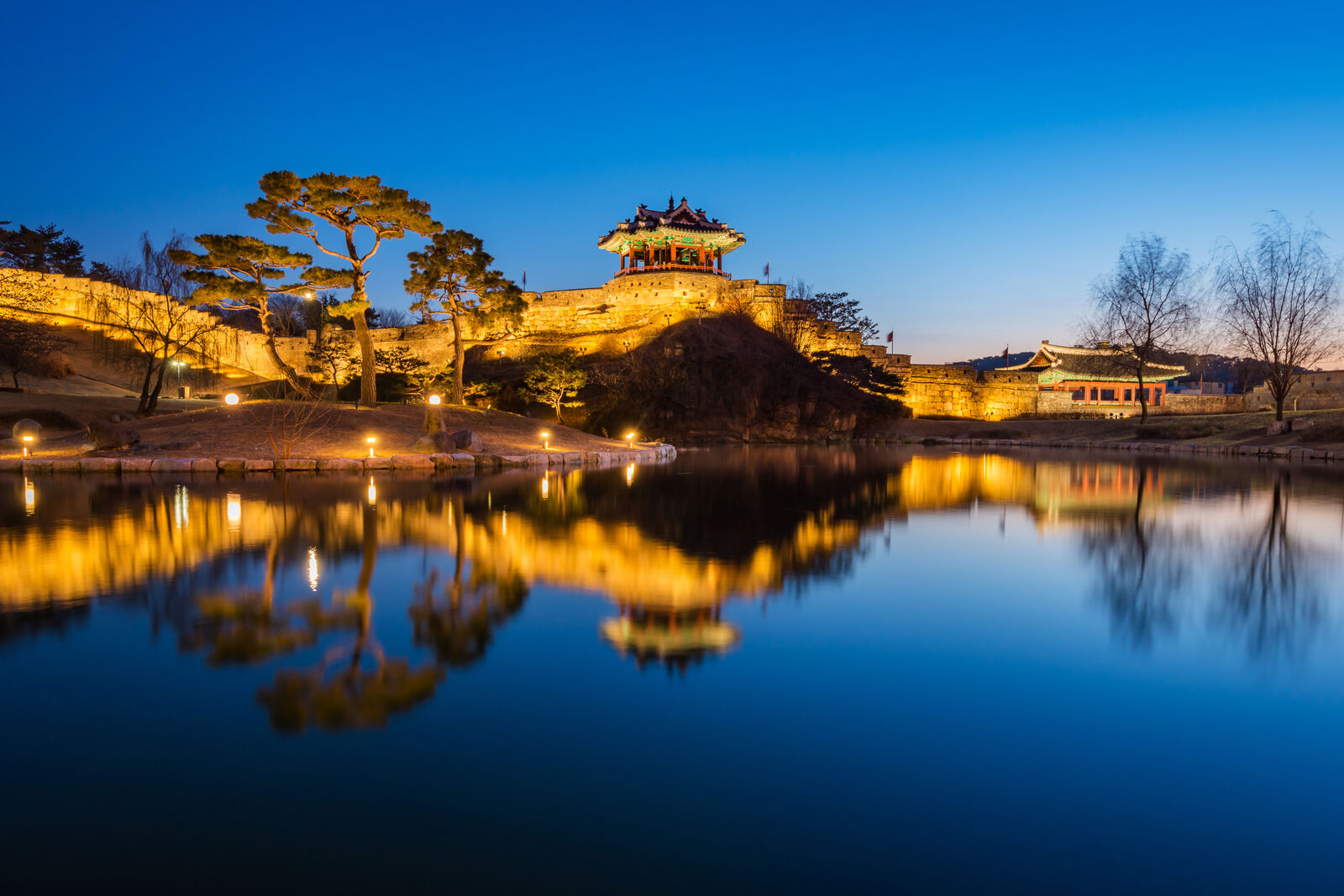
The night view of Suwon Hwaseong Fortress is best enjoyed after sunset. The fortress path lights usually turn on about 10 minutes after sunset, gently illuminating the walls and the path to create a pleasant atmosphere for walking.
The most recommended night spot is Banghwasuryujeong Pavilion. This pavilion on the northeast side of Hwaseong is known as one of the fortress's signature night-view locations. The pavilion and fortress lit by the lights are especially beautiful, making it great for photography as well.
The Hwaseong Haenggung Palace area also has things to see at night. Since lights and installations are sometimes set up throughout the viewing area, it is a good place to take a light walk and enjoy Suwon's nighttime atmosphere.
The recommended time is right after sunset until around 9 p.m.. If you visit before it gets too late, the lights are most visible, and walking and taking photos are convenient.
Depending on the season, night lighting displays or special nighttime events may be held, so it is a good idea to check official tourism information or operating notices before visiting.
Seasonal Guide
Spring (March to May)
This is the best season to enjoy Suwon Hwaseong Fortress at its most beautiful. Cherry blossoms bloom around Hwaseong Haenggung Palace, Paldal Park, and the trails around Paldalsan Mountain, blending well with the fortress scenery. The weather is mild, making it especially good for walking along the walls and taking photos.
Summer (June to August)
The deep green foliage around the fortress and Paldalsan Mountain trails is impressive. However, it can be very hot and humid during the day, so visiting early in the morning or around sunset is recommended. A light fortress walk, a park stroll, and sunrise or sunset viewing are all good options.
Fall (September to November)
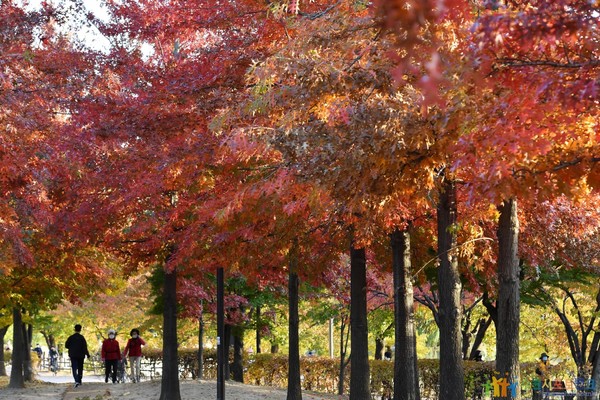
The cool weather makes this the most comfortable season for long walks. You can enjoy autumn foliage along the fortress path and around Paldalsan Mountain, letting you experience both historical remains and fall scenery. Since it is as popular as spring, be sure to plan your visit with some flexibility.
Winter (December to February)
This is a good season for enjoying a quiet historical walk in a calm atmosphere. When it snows, the fortress and Paldalsan Mountain offer beautiful snowy scenery. Since temperatures can be low and winds strong, warm clothing is necessary. If you want to enjoy winter lights or the night atmosphere, check the operating status before visiting.
Travel tips
Cherry blossoms are usually best from late March to early April, and autumn leaves from late October to early November. For international travelers, spring and fall are the most comfortable, while summer is practical in the morning and evening, and winter is best on clear daytime visits.
Local Tips
Suwon Hwaseong Fortress is large and many people say it is most impressive when walked along the fortress path, so it is a good idea to make sure fortress walking is included in your itinerary.
The Jeongjo Theme Performance Hall near Hwaseong Haenggung Palace is a permanent performance venue specializing in history, dealing with King Jeongjo's spirit of reform, filial piety, and the story of building Hwaseong, so visiting it after seeing Suwon Hwaseong Fortress can help you better understand the background of the place.
The indoor Jeongjo Theme Performance Hall is also worth noting as a hanok-style travel destination that is less affected by weather or season.
Places
- 1
- Nearby Attractions
- 2
- 3
- 4
- 5
- 6
- Food & Dining
- 7
- 8
- 9
- 10
- 11