How to Read the Northern Toilet Site and the National Treasure Five-Story Stone Pagoda at Wanggung-ri Palace Site Together
The Wanggung-ri Historic Site in Iksan is a palace site associated with the second Sabi capital of the Baekje period during the reign of King Mu. Remains of the palace walls, garden, workshops, and toilet facilities survive. This guide, written from the perspective of international visitors, covers free admission hours, the site’s Monday closure, bus access, and easily overlooked structural features of the ruins.

I’ve been here?
Your check-in helps the next traveler.
21 people viewed this week Be the first
One tap — no writing needed
Why is the Wanggung-ri Archaeological Site the second Sabi capital of Baekje in Iksan?
The Wanggung-ri Archaeological Site in Iksan is a royal palace site associated with the second Sabi capital built in Iksan during the late Baekje period. UNESCO explains that the second Sabi capital was established in Iksan between 600 and 641, during the reign of King Mu of Baekje, and regards the Wanggung-ri Palace and Mireuksa Temple as key archaeological sites in this urban plan.
The Baekje Historic Areas were inscribed as a World Heritage Site in 2015, and the Wanggung-ri Archaeological Site is one of the eight archaeological sites within the property. Here, visitors can trace evidence of cultural exchange through which Baekje adopted urban planning, architectural, and religious technologies from China, further developed them, and spread them to Japan and East Asia.
What to see first in the 245 m east–west and 490 m north–south palace enclosure
The palace enclosure identified at Wanggung-ri measures approximately 240–245 m from east to west and about 490 m from north to south. The World Heritage property covers 12.35 ha, while the buffer zone covers 12.5 ha, making a combined area of 24.85 ha. At the site, visitors do not see a completely reconstructed palace; instead, they read the arrangement of walls and building foundations remaining across the broad grounds.
In the front section of the palace enclosure, terrace walls were built at four locations along the slope, with building foundations arranged on successive levels. In the rear section, a garden was placed on the higher northeastern ground, while workshops and toilets were located on the lower northwestern ground. Accordingly, after first reading the exhibition hall explanations, it is easier to understand the outdoor archaeological features by connecting them as parts of a single palace layout rather than viewing each trace as an isolated attraction.
National Treasure No. 289: The five-story stone pagoda shows that the palace became a temple
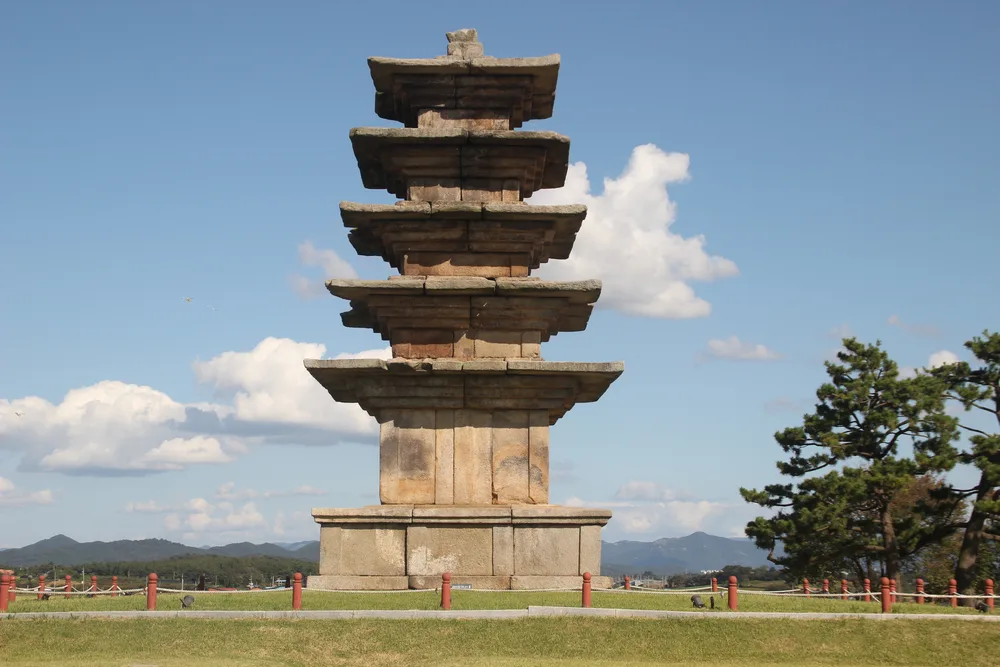
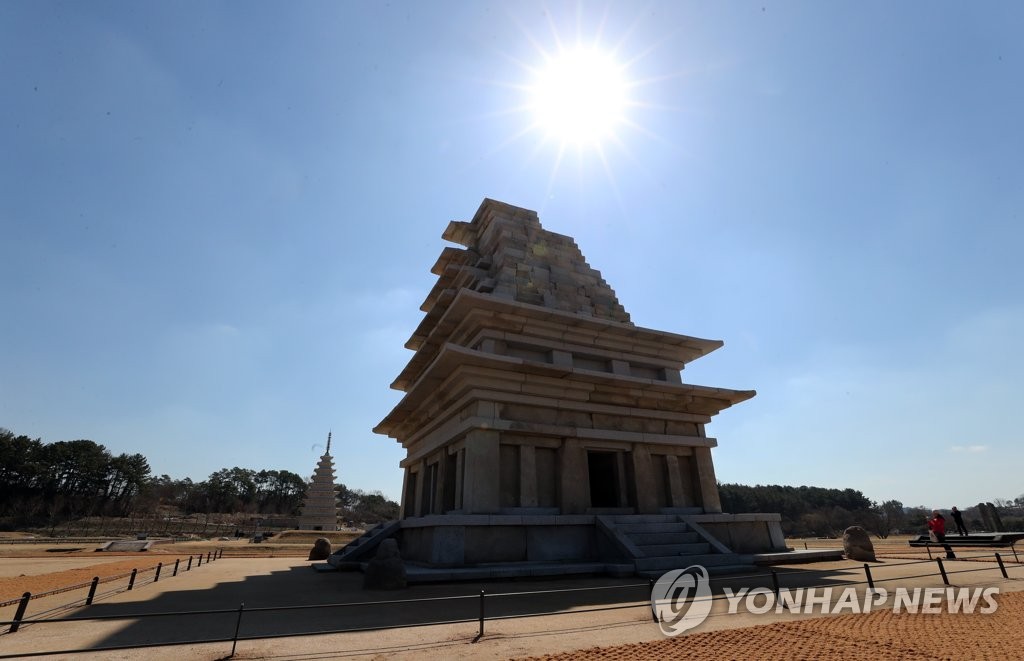
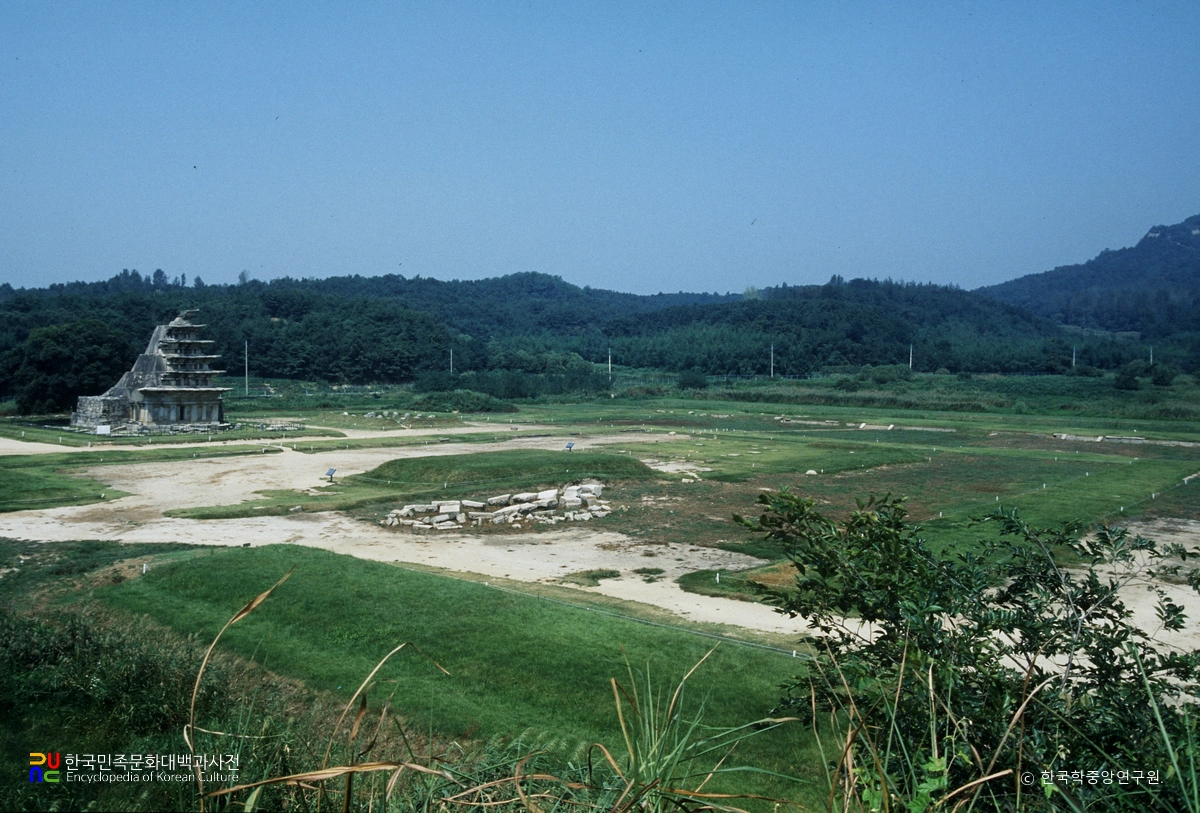
The most visually prominent architectural heritage at the Wanggung-ri Archaeological Site is the Five-story Stone Pagoda at Wanggung-ri, Iksan. This stone pagoda is National Treasure No. 289 and stands approximately 8.5 m high. Because a pagoda remains within the palace grounds, the Wanggung-ri Archaeological Site is described as a place where archaeological features associated with both a palace enclosure and a temple have been identified.
The five-story stone pagoda reveals layers of time connecting the Baekje royal palace, after its use, with a temple from the Goryeo period. In other words, visitors should not mistake the pagoda they see here for an original building of the Baekje royal palace. The key is to distinguish the palace walls and building foundations from the stone pagoda, a temple artifact from the Goryeo period, as traces from different eras.
The actual functions of the palace revealed by its workshops and garden
Gardens and water-management facilities have been identified at the Wanggung-ri Archaeological Site. The garden contained small landscape features and facilities for regulating water. Together with the excavation interpretation that a rear garden was placed on the higher northeastern ground, this indicates that the site was not merely a ceremonial space but one where palace life and landscape management were combined.
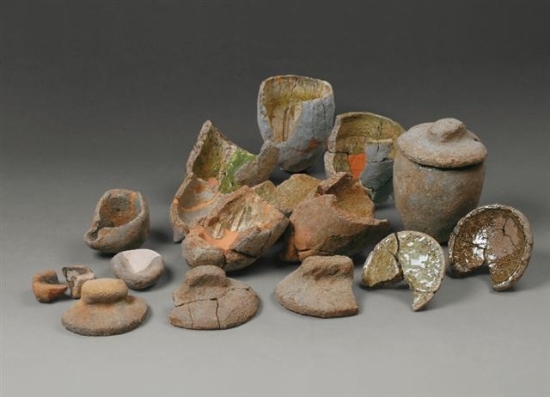
Evidence of metal and glass processing and production was identified in the northwestern workshops. Excavated crucibles, blowpipes, and gold and silver products show that work related to precious metals and glass was carried out inside the palace. Since the workshops no longer survive as buildings today, it is best to first understand the functions of the workshop artifacts in the exhibition hall and then consider them together with the lower ground and its layout outdoors.
What the 10.8 m-long Baekje toilet reveals about everyday life
Three large communal toilets with structures similar to modern septic tanks were identified at Wanggung-ri, and the toilet features were revealed in 2003. The largest western toilet is 10.8 m long, 1.7–1.8 m wide, and approximately 3.4 m deep. Visitors interested in the hygiene and drainage management of actual residents, rather than only the grandeur of the palace, should not miss this area.
Wooden rods called cheukju, used for cleaning after defecation, were discovered in the toilets. They measure approximately 25–30 cm, with rounded and smoothly finished ends. Eggs of roundworms and whipworms, straw sandals, chestnut shells, and melon seeds were also identified, offering clues about the diet and health of people at the time. Rather than expecting an immersive experience inside the toilets, visitors should view this as a place to understand their functions through explanations of the archaeological features and excavated artifacts.
The empty grounds today, shaped by excavations continuing since 1989
Full-scale excavation research at the Wanggung-ri Archaeological Site began in 1989 and has continued ever since. As a result, the site today is closer to an archaeological site where building foundations have been preserved as low traces and open spaces for research and conservation than to a fully reconstructed palace. It was designated a Historic Site on September 17, 1998.
The Wanggung-ri Archaeological Site is also identified as Historic Site No. 408. Excavations have revealed spaces with various functions, including palace enclosure walls, a main hall, gardens, a rear garden, workshops, and toilets. However, visitors should not assume that every archaeological feature can be approached and examined up close. The outdoor area follows a visitor route designed for conservation, while detailed structures are supplemented by exhibition materials and information panels.
Free admission from 09:00 to 18:00, and why to avoid visiting on Mondays
The Wanggung-ri Archaeological Site is open from 09:00 to 18:00, and admission is free. It is closed on January 1 and every Monday. If Monday is a public holiday, it opens that day and closes instead on the first weekday after the holiday. Operating hours and closing days follow guidance from Iksan City, so travelers should pay particular attention to the substitute closing rule when planning an itinerary that includes Monday.
The contact numbers are 063-859-4636 and 063-859-4631, and the official website is https://wg.iksan.go.kr/home/. Review-based sources do not specify a recommended visiting time, and although admission is free, this is not necessarily a place with a ticketing procedure. Stroller and wheelchair rentals are reportedly available, but no separate information has been confirmed regarding photography-restricted areas, English-language guidance, audio guides, cash payments, or weather-related viewing restrictions.
Limitations of the information about Bus 65 when departing from Iksan Station
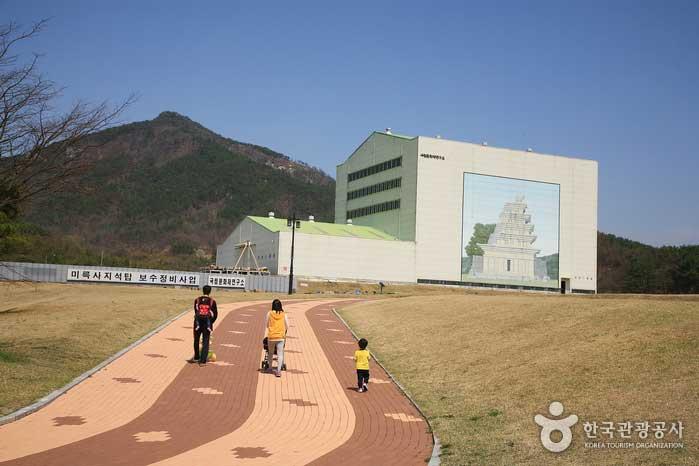
The address is 666 Gungseong-ro, Wanggung-myeon, Iksan-si, Jeonbuk State, Wanggung-ri Historic Site Exhibition Hall. Older guidance from the Korea Tourism Organization listed Bus 65 as a bus serving the Wanggung-ri Archaeological Site and explained that visitors could take Bus 65 from the same bus stop. However, this bus information is based on guidance from 2013, so international visitors should check the current stop and whether the service operates before departing from Iksan Station or downtown Iksan.
By car, the recommended route after exiting the Iksan Interchange on the Honam Expressway follows Muwang-ro, Geumma Sageori, and Gungseong-ro; the Gungseong-ro section is approximately 1.7 km. Since no confirmed information is available about parking or parking fees, this article cannot promise free parking. If using public transportation, it is safest to check both Bus 65's interval and the actual walking distance from the destination stop to the exhibition hall in a map app on the day of travel.
King Mu's plan for Iksan becomes clear when combined with Mireuksa Temple Site
The Wanggung-ri Archaeological Site is introduced alongside the nearby Mireuksa Temple Site as a historic site associated with King Mu of Baekje. At Wanggung-ri, visitors can see the palace's administrative and residential spaces and the arrangement of the palace enclosure; by then continuing to the Mireuksa Temple Site to view the large temple remains, the context becomes clear that Iksan was planned as a second Sabi capital equipped with both a palace and a temple.
When combining the two sites in one day, visitors may consider seeing the Wanggung-ri exhibition hall, outdoor archaeological features, and five-story stone pagoda first, then traveling to the Mireuksa Temple Site. However, the exact travel time between the two sites and current bus-transfer information have not been confirmed in this guide. International visitors relying solely on public transportation should first check Bus 65 service and return trips on the day of their Wanggung-ri visit; if the schedules do not align, the itinerary may take longer.
Before You Go
- Address
- 666 Gungseong-ro, Wanggung-myeon, Iksan-si, Jeonbuk State, Wanggung-ri Historic Site Exhibition Hall
- Hours
- 09:00–18:00
- Closed
- January 1 and every Monday. However, if Monday is a public holiday, the site opens that day and closes instead on the first weekday after the holiday.
- Admission
- Free
- Phone
- 063-859-4636, 063-859-4631
- Official site
- https://wg.iksan.go.kr/home/
- Transport
- According to older Korea Tourism Organization guidance, visitors to the Wanggung-ri Archaeological Site take Bus 65 from the same bus stop. By car, access is via Muwang-ro and Gungseong-ro after exiting the Iksan Interchange on the Honam Expressway; the Gungseong-ro section is approximately 1.7 km.
- Time needed
- No visiting time was confirmed in review-based sources.
- Accessibility
- Stroller and wheelchair rentals available
The information above is current as of the time of writing. Check the official guidance again before visiting.

Places
Nearby Attractions 3
-
 1
1
-
 2
2
-
 3
3
Food & Dining 2
-
 4
4
-
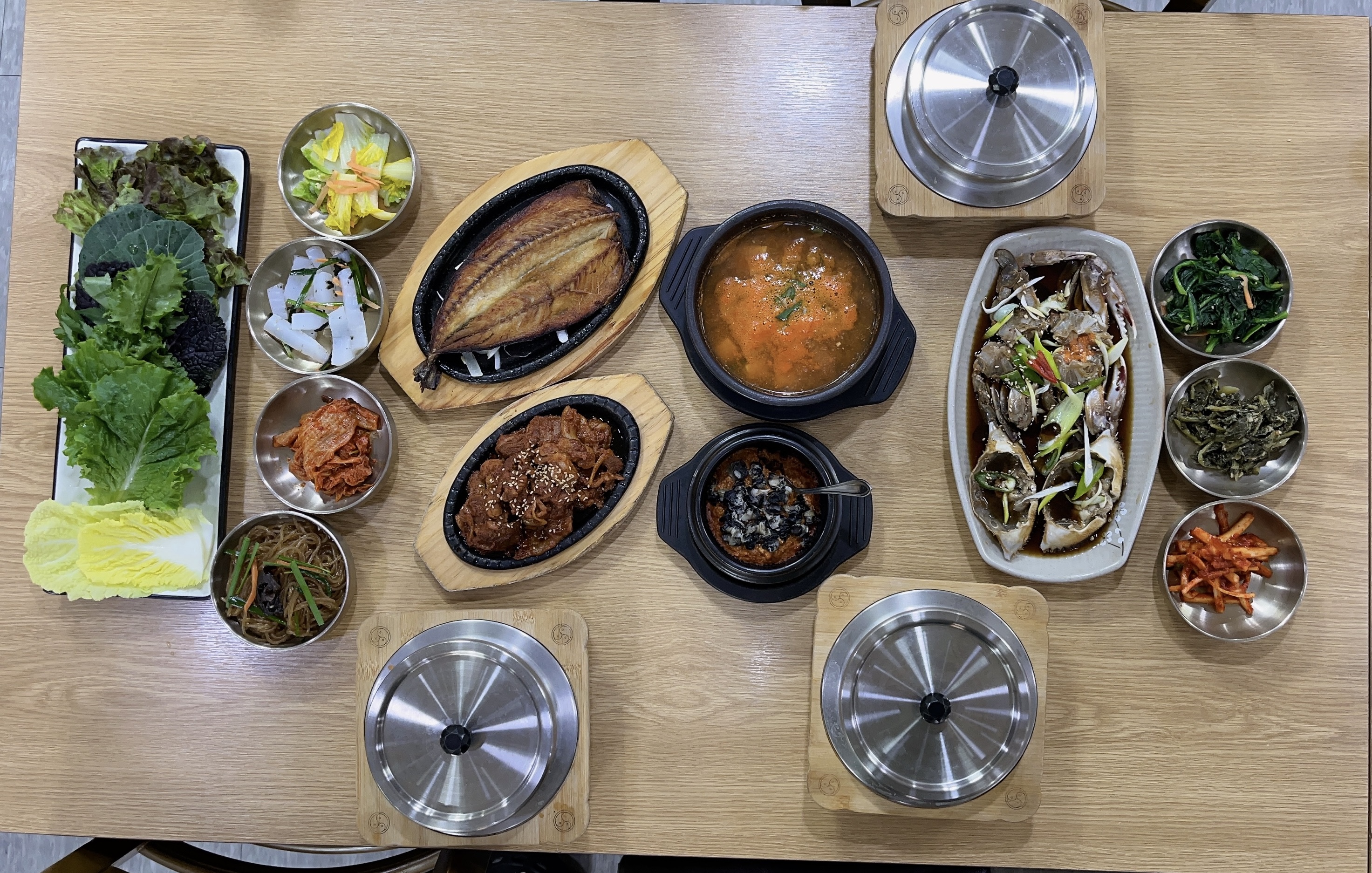 5
Sigol Ureong SsambapEnjoy rice wrapped in leafy greens with freshwater snails, along with a spicy marinated pork set meal.
5
Sigol Ureong SsambapEnjoy rice wrapped in leafy greens with freshwater snails, along with a spicy marinated pork set meal.
Events in This Area

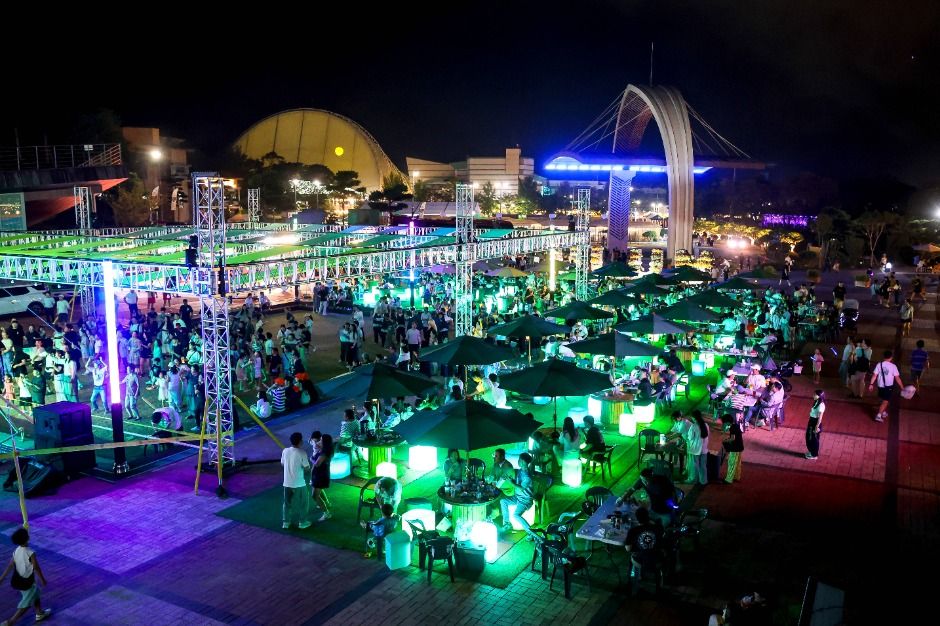
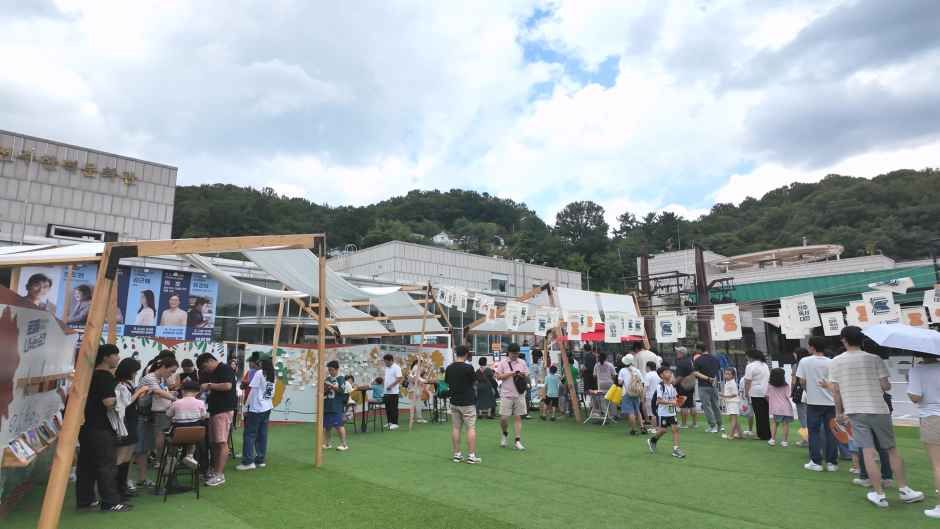
Festivals in This Area

More Travel Guides in This Area
 Travel Guide
Baekje King Mu’s Mireuksa Revealed by the 639 Sarira Enshrinement Record
 Travel Guide
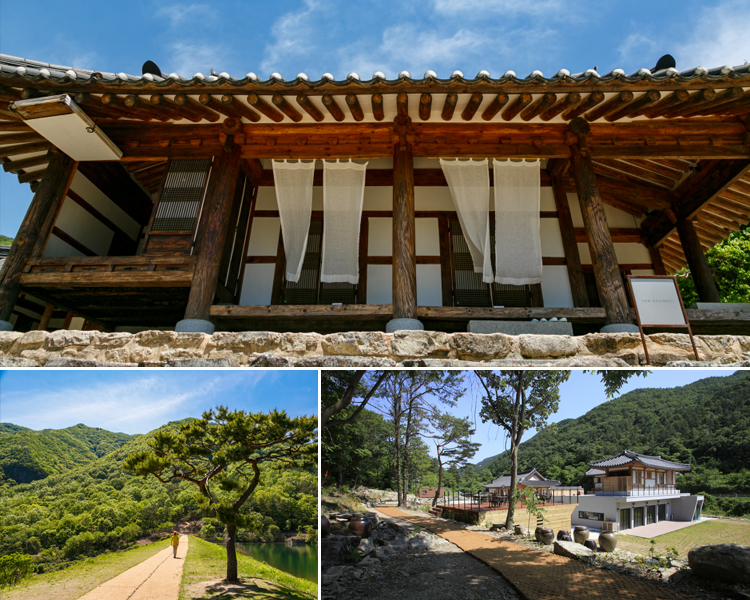
A Mountain Hanok Village Built by Residents in 2013, Osung Hanok Village
 Travel Guide
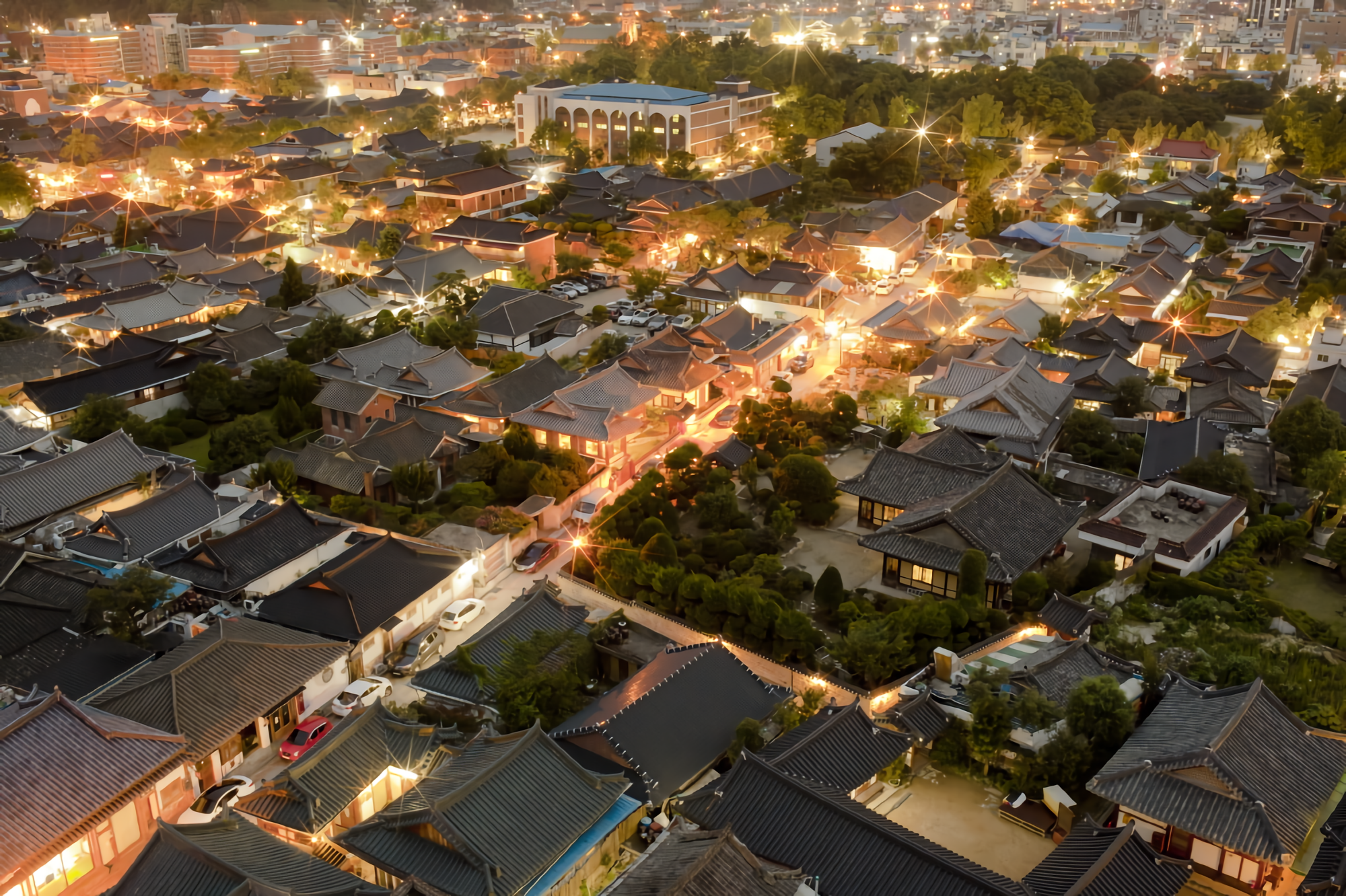
A Day’s Walking Route Through Jeonju Hanok Village, Beneath More Than 700 Roofs
 Travel Guide
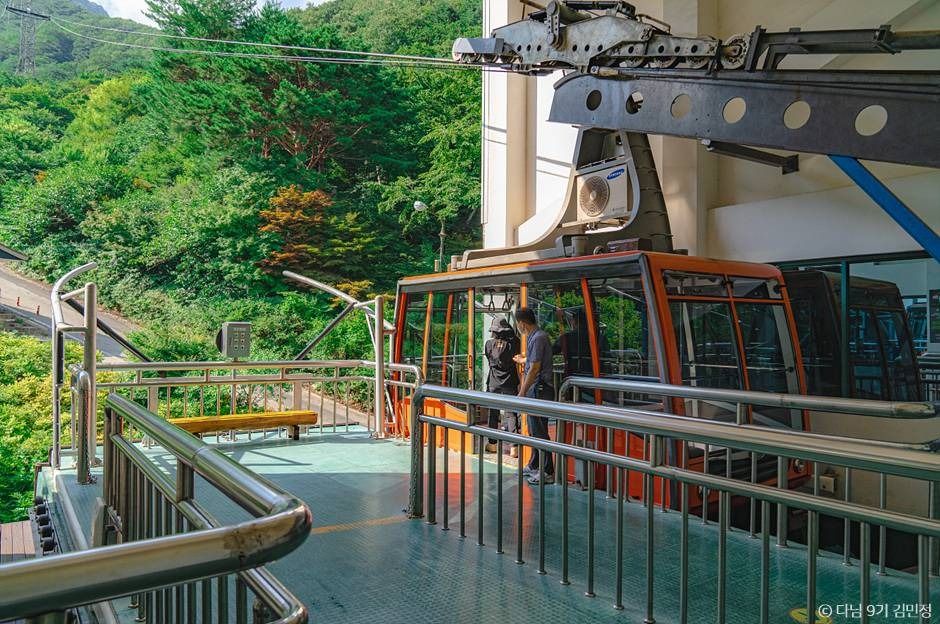
Daedunsan Cable Car, covering 927 m in 5 minutes: the actual route to the front of Geumgang Cloud Bridge
Korea News
 News
News
'Rami Controversy' NewJeans' Hyein Has Grown More Mature, Yet Is Still Adorable… A Cat Draped in Luxury Brands
 News
News
“If you get too close, I’ll bite”… BTS’s V issues a chilling warning to Jungkook
 News
News
“BTS No Longer Needs the Grammys”… Kim Tae-hoon Assesses the ‘Grammys Boycott’
![[Exclusive] Oh My Girl’s YooA, who switched to acting, parts ways with Saram Entertainment after just one year](https://kotourlive-images.s3.ap-northeast-1.amazonaws.com/news/1787658671060_036c47f7_news_8a403746-8bba-4e3c-8827-19d99be6d4fb.jpg) News
News