A Day’s Walking Route Through Jeonju Hanok Village, Beneath More Than 700 Roofs
Jeonju Hanok Village is an urban hanok district spanning 298,260 m² across Pungnam-dong and Gyo-dong, with 947 buildings, including 735 hanok homes. The village itself is open 24 hours a day year-round, and connecting Gyeonggijeon Shrine, Omokdae, and Jeonju Hyanggyo in one continuous route offers a way to read both Jeonju’s royal-capital culture and its process of modern urban regeneration.

I’ve been here?
Your check-in helps the next traveler.
No one has checked in yet Be the first
One tap — no writing needed
How Were the 735 Hanok Houses Preserved in the 298,260㎡ Urban Area?
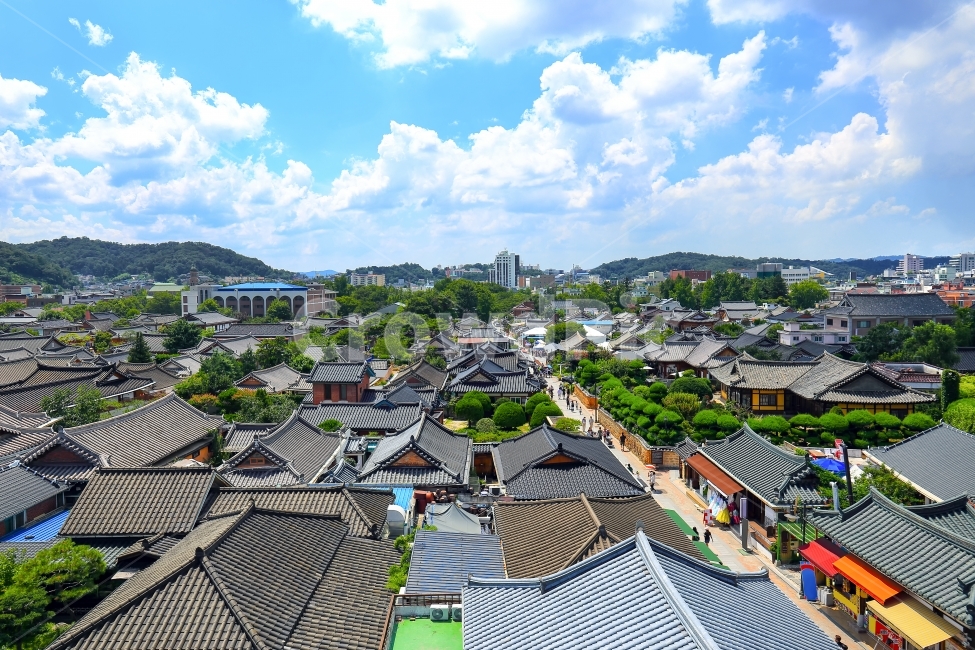
Jeonju Hanok Village occupies 298,260㎡ across the Pungnam-dong and Gyo-dong areas of Wansan-gu, with 735 hanok houses among 947 buildings in total. Its distinctive feature is the overlap of hanok, hanji, hanbok, Korean cuisine, and traditional Korean music facilities within one residential area. Around 20 cultural facilities, including Gyeonggijeon, Omokdae, and Jeonju Hyanggyo, are located in and around the village.
The current landscape was not preserved entirely through natural continuity. In 1977, Gyo-dong and Pungnam-dong were designated as a Hanok Preservation District, and in 2002, the Jeonju Hanok Preservation Support Ordinance was enacted, establishing an institutional basis for renovation subsidies. In the 1930s and 1940s, the neighborhood combined education, commerce, and home-based industries. After apartments and multi-family housing spread in the 1970s, it experienced decline, followed by regeneration efforts that addressed preservation and residential-environment improvements together.
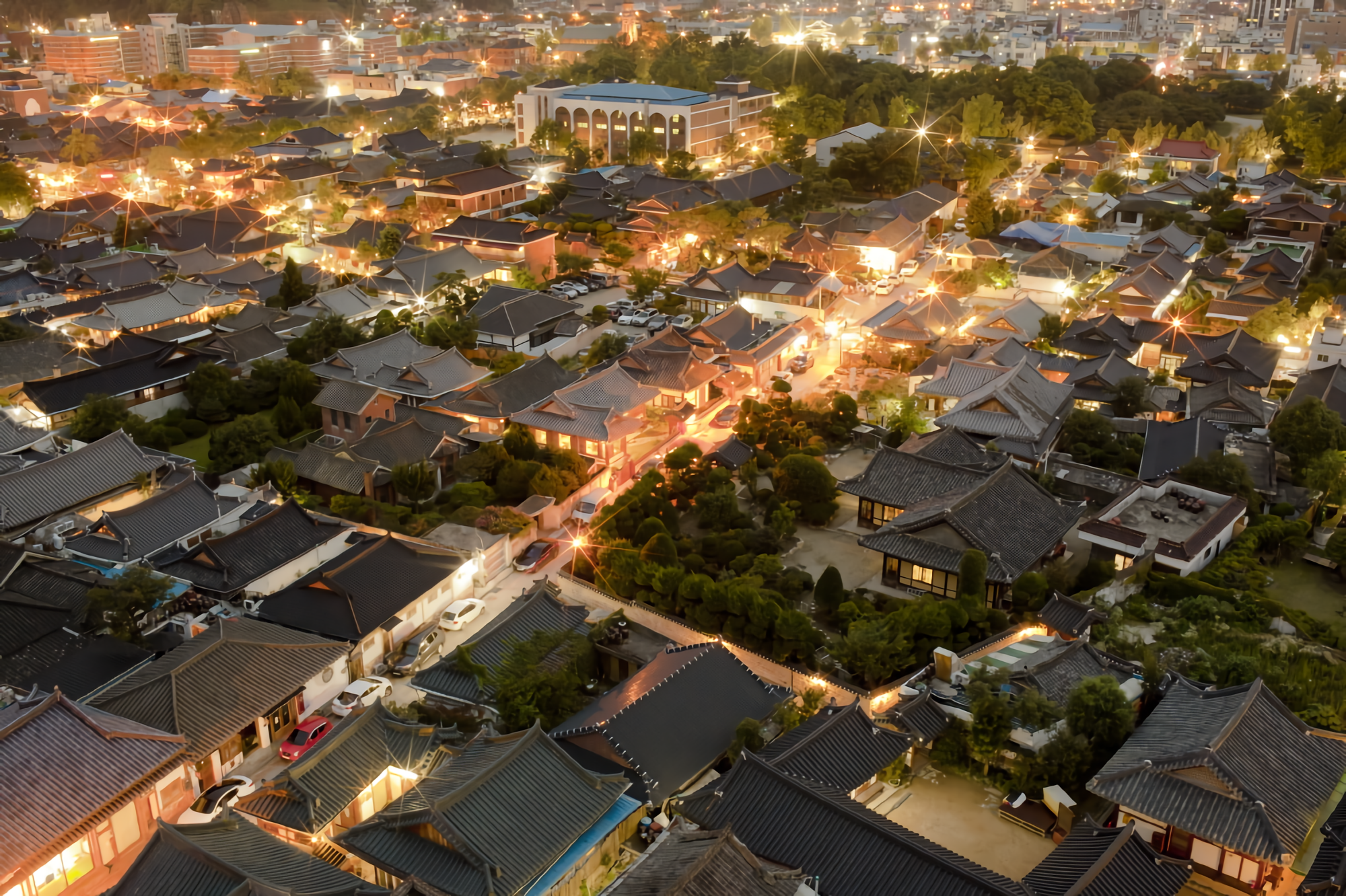
A 24-Hour Village Beginning at the Tourist Information Center at 99 Girin-daero
The address of the Jeonju Hanok Village Tourist Information Center is 99 Girin-daero, Wansan-gu, Jeonju, Jeonbuk Special Self-Governing Province, and its main telephone number is 063-282-1330. The village area is open 24 hours a day, year-round, so admission is free. However, individual facilities such as Gyeonggijeon, museums, workshops, restaurants, and hanok accommodations have their own operating hours and closing days, which should not be assumed to match the village's opening hours.
For first-time visitors, it is easiest to understand the village by getting a map at the tourist information center and walking in the order of Gyeonggijeon–Jeondong Cathedral–Taejo-ro–Omokdae–Hyanggyo-gil. Allow 2–3 hours for a quick look at the hanok rooftops, or 4–5 hours if you include Gyeonggijeon, Omokdae, and Hyanggyo-gil. At night, the village remains open, but most indoor cultural facilities have finished admitting visitors, so it is safer to visit paid and indoor facilities during the day.
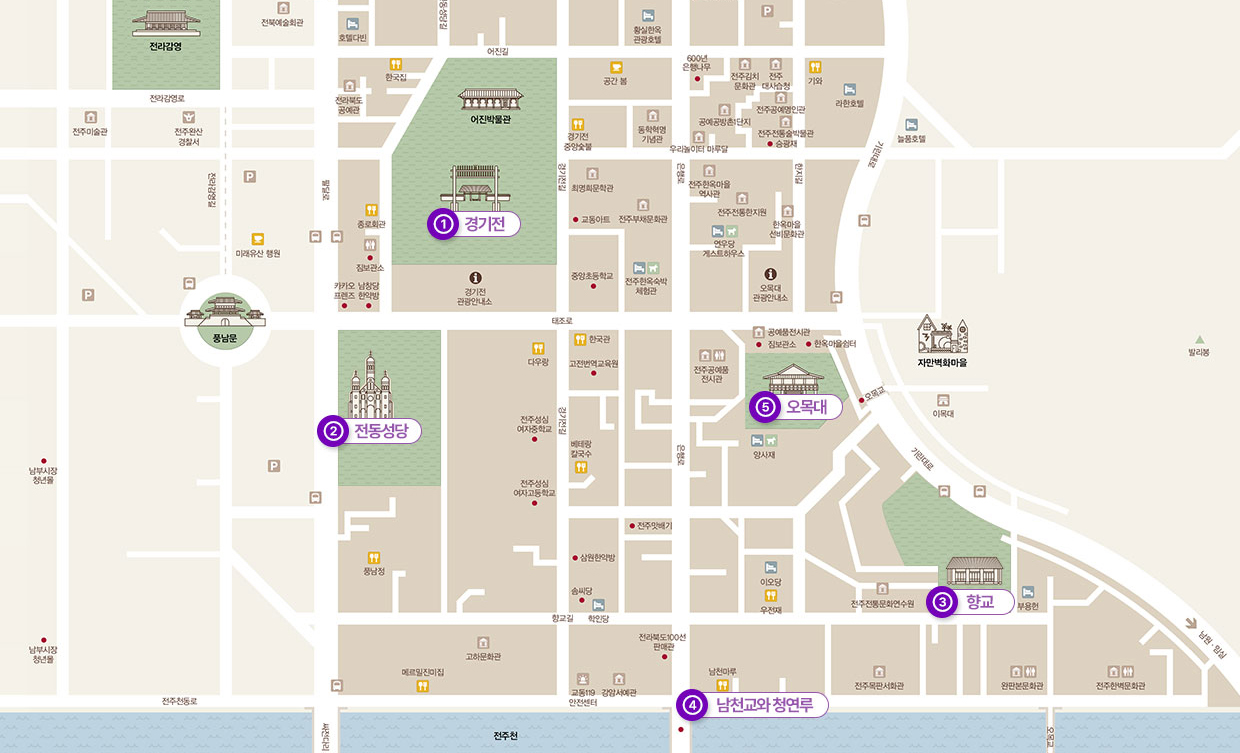
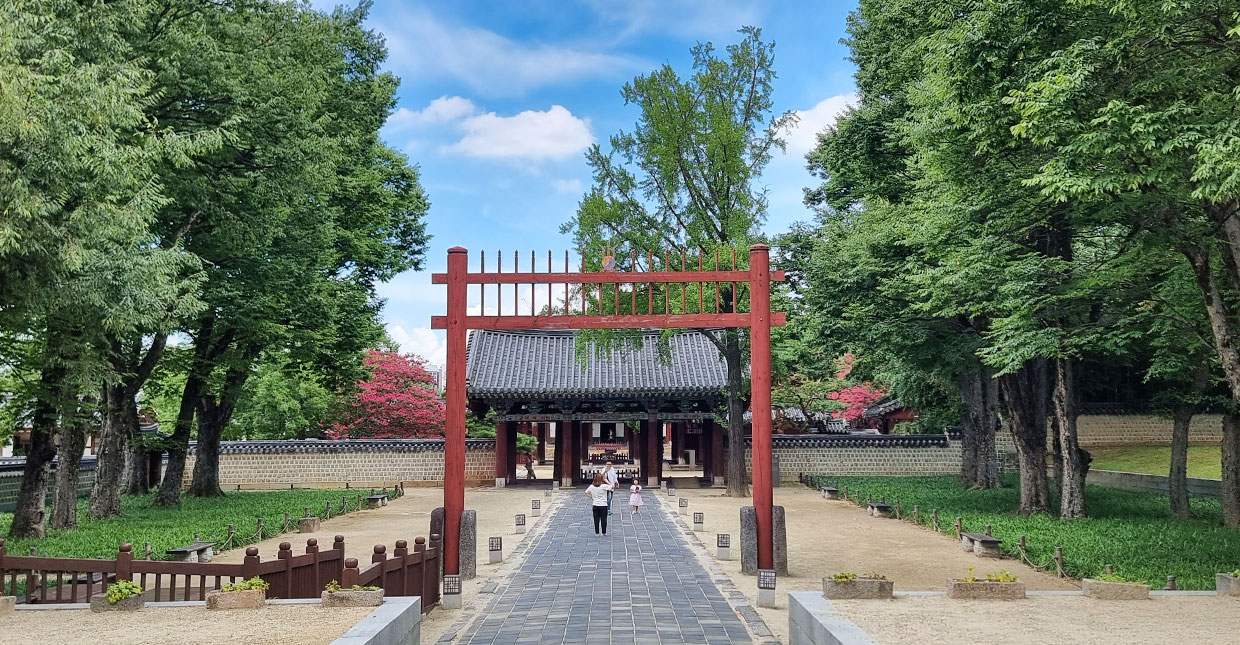
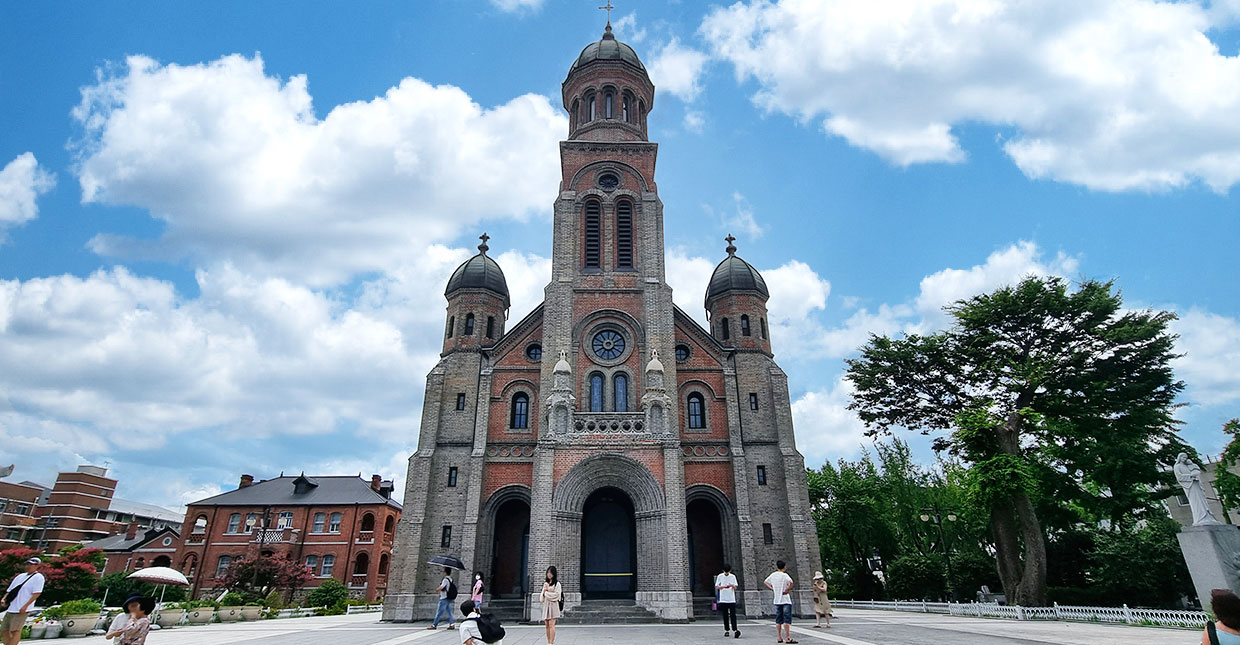
Joseon-Era Jeonju Explained in One Line by Gyeonggijeon, Jeondong Cathedral, and Omokdae
Gyeonggijeon houses the portrait of King Taejo Yi Seong-gye, the founder of Joseon, and is a key point that begins the historical route through the hanok village. According to the official tourism commentary map, Gyeonggijeon is open from 10:00 to 18:00. Admission is listed as 500–1,000 won for Jeonju residents and 1,000–3,000 won for visitors from outside the city. Guided commentary lasting about 50 minutes departs from the main gate of Gyeonggijeon daily at 10:00, 11:00, 14:00, 15:00, and 16:00.
Jeondong Cathedral, opposite Gyeonggijeon, is described as the first Romanesque-Byzantine-style cathedral in the Honam region, with map-listed operating hours of 09:00–17:00. From there, climb to Omokdae at 55 Girin-daero to view the dense hanok rooftops from above. Omokdae is said to be where Yi Seong-gye held a banquet after the Battle of Hwangsan, and it is open at all times. Because of the stairs and uphill sections, reaching the Omokdae viewpoint may be difficult for wheelchair users and visitors with strollers.
How to Choose a One-Hour Guided Tour: Omokdae at 10:00, Gyeonggijeon at 11:00 and 15:00
If it is difficult to understand the meaning of the alleys alone, you can plan your schedule around the official guided tours. The Hyanggyo-gil tour departs daily at 10:00 from the Omokdae Tourist Information Center and lasts one hour. The Hanok Village Alley Tour departs daily at 11:00 and 15:00 from in front of the Gyeonggijeon Tourist Information Center and also lasts one hour. The 15:00 alley tour is conducted partly in English.
The Omokdae–Mural Village Tour departs daily at 14:00 from the Omokdae Tourist Information Center, while the Hanok Village Cultural Facilities Tour departs from the same location daily at 13:00. The Jeonju Fortress Old Road Tour begins at 15:00 on Fridays, Saturdays, and Sundays in front of the Gyeonggijeon Tourist Information Center. Since each course may vary at the guide's discretion, it is better to arrive at the meeting point 10 minutes before departure and check the on-site information rather than booking or expecting two consecutive tours on the same day.
293-Space Parking Lot 1 and Free 636-Space Daeseong Parking Lot: Where Should You Park?
Drivers can first consider Hanok Village Public Parking Lot 1, with 293 spaces, at 99 Girin-daero. It operates 24 hours a day year-round and costs 1,200 won for the first 30 minutes, 600 won for every additional 15 minutes, and a maximum of 14,400 won per day. Public Parking Lot 2 at 30-10 Eojin-gil has 176 spaces, while Public Parking Lot 3 at 20 Gannap-ro has 72 spaces; both use the same basic fee structure.
If you want to reduce parking costs, the 636-space Hanok Village Daeseong Public Parking Lot at 5299 Chunhyang-ro is free. This parking lot and the Omokdae shuttle-bus stop are connected by a 2.5 km route, and the shuttle operates year-round. On weekdays, it follows a scheduled timetable from 10:20 to 18:30; on weekends and public holidays, it operates frequently from 10:00 to 18:30. Four vehicles operate on weekends and public holidays, and one operates on weekdays.
- Public Parking Lot 1: 99 Girin-daero, 293 spaces, 24 hours, maximum 14,400 won per day
- Daeseong Public Parking Lot: 5299 Chunhyang-ro, 636 spaces, free
- Nambu Market Riverside Parking Lot: 331 Jeondong, 260 spaces, maximum 5,000 won per day
From Jeonju Hyanggyo at 10:00 to Cheongyeonru at Namcheongyo: Do Not Miss the End of the Alleys
Going down the southern alley from Omokdae leads toward Jeonju Hyanggyo, Namcheongyo, and Cheongyeonru. The official tourism map lists Jeonju Hyanggyo's operating hours as 10:00–18:00. Hyanggyo is introduced as a local educational institution from the Goryeo period and, unlike the commercial alleys of the hanok village, retains the character of an educational and Confucian space.
Cheongyeonru Pavilion on Namcheongyo is open at all times and is located at 940-2 Dongseo-hak-dong, Wansan-gu, Jeonju. When Taejo-ro in the center of the hanok village is crowded, the route from Gyeonggijeon through Omokdae toward Hyanggyo-gil and Namcheongyo is relatively easier to walk. Conversely, if the slopes at Omokdae, stone and alley paths, or stairs are a concern, it is more practical to limit the route to the relatively level areas around Gyeonggijeon, Jeondong Cathedral, and Taejo-ro.
Seeing the Village Before It Became a Tourist Destination at the Hanok Village History Museum, 10:00–18:00
The Hanok Village History Museum is located at 17-10 Choi Myeong-hui-gil in Wansan-gu, and its telephone number is 063-286-5125. It is open from 10:00 to 18:00, with last admission at 17:45, closed every Monday, and free admission. The permanent exhibition covers the formation and transformation of the hanok village, while special exhibitions focus mainly on historical photographs. It is a useful stop for understanding the context of the preservation-district designation and regeneration rather than simply viewing the exteriors of the alleys.
On weekends, regular guided commentary lasting about 30 minutes is offered at 14:00 and 15:00, with a standard capacity of 20 people per session. From Tuesday to Friday, between 10:00 and 18:00, commentary is provided flexibly upon request, but groups of 20 or more with advance reservations receive priority. Individual visitors should therefore aim for a regular weekend tour or plan simply to view the exhibitions.
Choosing Meals and Experiences in the Hanok Village: Separate Village Admission from Individual Business Operations
The hanok village has 575 businesses: 203 lodging businesses, 183 food and beverage establishments, and 189 other businesses such as retail and rental services. Therefore, operating hours, prices, and reservation procedures for hanbok rental, craft experiences, meals, and cafés are determined by each business rather than by a unified hanok village standard. The fact that admission to the village is free does not mean that experiences, rentals, or exhibitions are free.
The official “Star of Hanok” certification program recognizes lodging and food businesses in the village based on evaluations by experts and consumers. For first-time international visitors, it is better to check each store's allergy information, vegetarian options, and hanbok return time before relying on menu photographs. The village's main contact number is 063-282-1330, and inquiries in Korean can also be made through the “Jeonju Hanok Village” channel on KakaoTalk.
Before You Go
- Address
- 99 Girin-daero, Wansan-gu, Jeonju, Jeonbuk Special Self-Governing Province
- Hours
- The Jeonju Hanok Village area is open 24 hours a day, year-round
- Closed
- None (individual cultural facilities and shops may have separate closing days)
- Admission
- Free (individual cultural facilities and experiences charged separately)
- Phone
- 063-282-1330
- Official site
- https://hanok.jeonju.go.kr/
- Transport
- Accessible by city bus or taxi from Jeonju Station, the express/intercity bus terminal, and other locations. There is no railway station inside the village. The Daeseong Public Parking Lot–Omokdae shuttle operates on weekdays on a fixed schedule from 10:20 to 18:30, and frequently from 10:00 to 18:30 on weekends and public holidays.
- Parking
- Public Parking Lot 1, 293 spaces: 1,200 won for 30 minutes, 600 won per additional 15 minutes, maximum 14,400 won per day. Daeseong Public Parking Lot, 636 spaces, is free. Additional public parking lots include Lot 2 with 176 spaces and Lot 3 with 72 spaces.
- Time needed
- 2–3 hours for the main alleys and Gyeonggijeon; 4–5 hours including Gyeonggijeon, Omokdae, Jeonju Hyanggyo, and the History Museum
- Accessibility
- The areas around Taejo-ro and Gyeonggijeon are relatively flat, but Omokdae and some alleys may be difficult to navigate with a wheelchair or stroller because of stairs, slopes, and paved surfaces. The 15:00 Hanok Village Alley Tour is conducted partly in English.
The information above is current as of the time of writing. Check the official information again before visiting.

Places
Nearby Attractions 5
-
 1
1
-
 2
2
-
 3
3
-
 4
4
-
 5
5
Food & Dining 5
-
 6
6
-
 7
7
-
 8
8
-
 9
9
-
 10
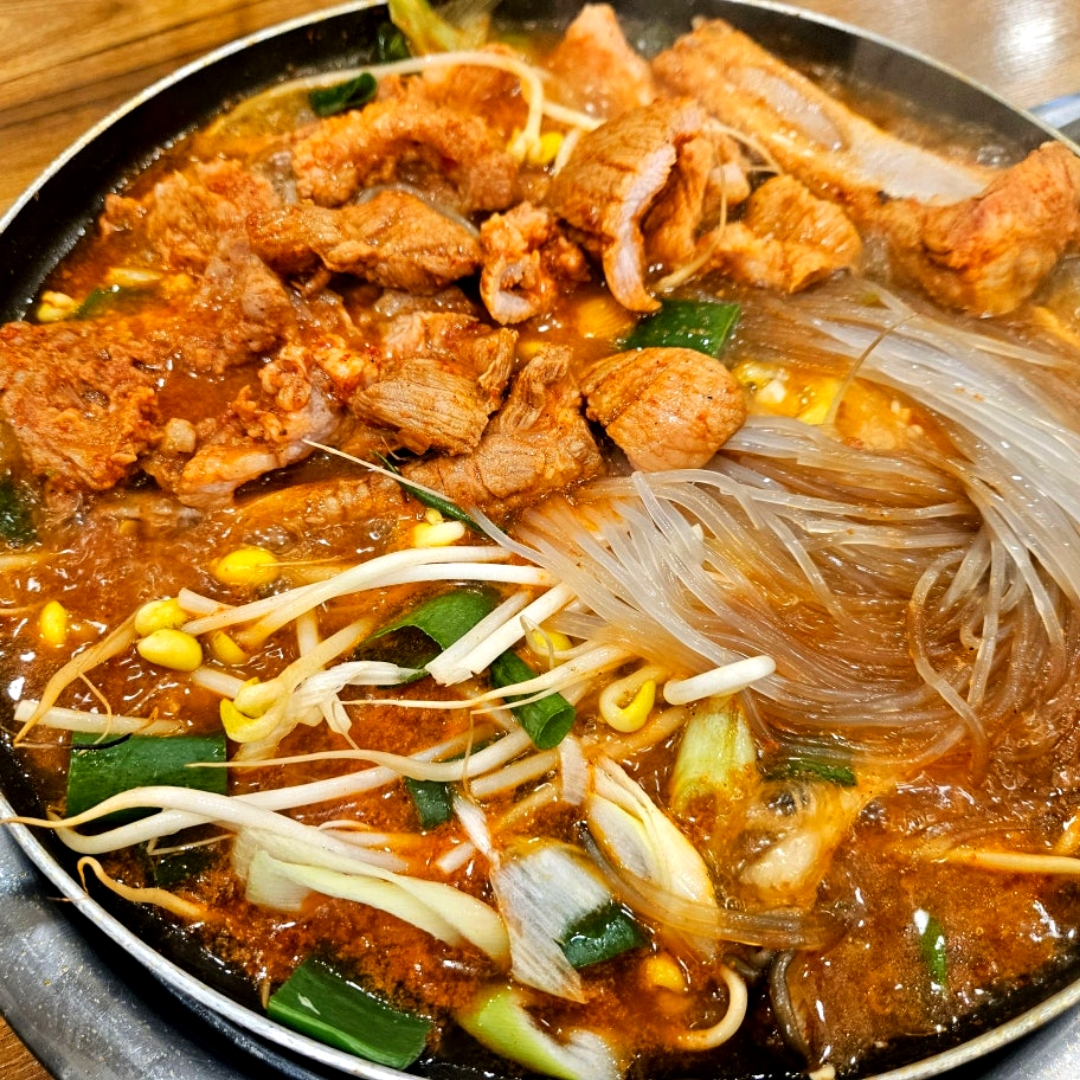
Hanok Village Mulgalbi
10
Hanok Village Mulgalbi
Events in This Area


Festivals in This Area


More Travel Guides in This Area
 Travel Guide
Reading the Past of the Cinema District and the Jeonju International Film Festival Route on Jeonju Movie Street
 Travel Guide
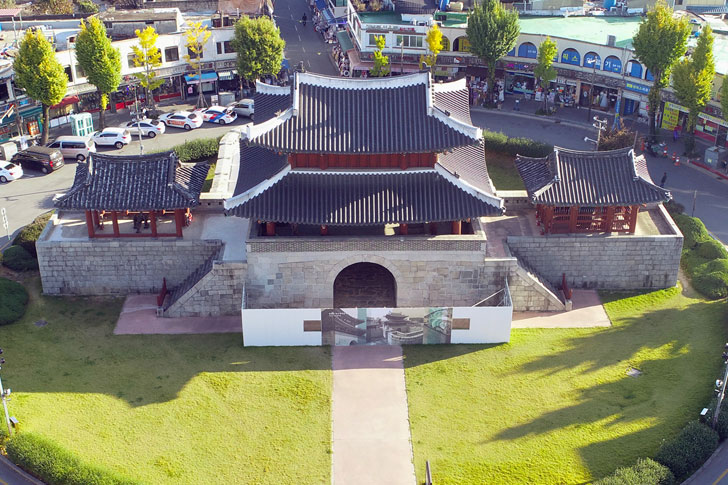
A Timetable for Exploring the 800 Shops of Jeonju Nambu Market by Pungnammun Gate
 Travel Guide
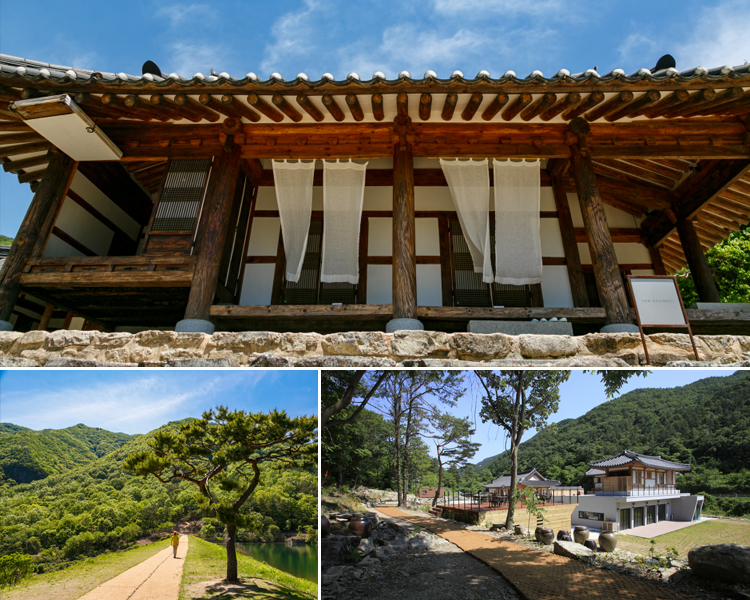
A Mountain Hanok Village Built by Residents in 2013, Osung Hanok Village
 Travel Guide
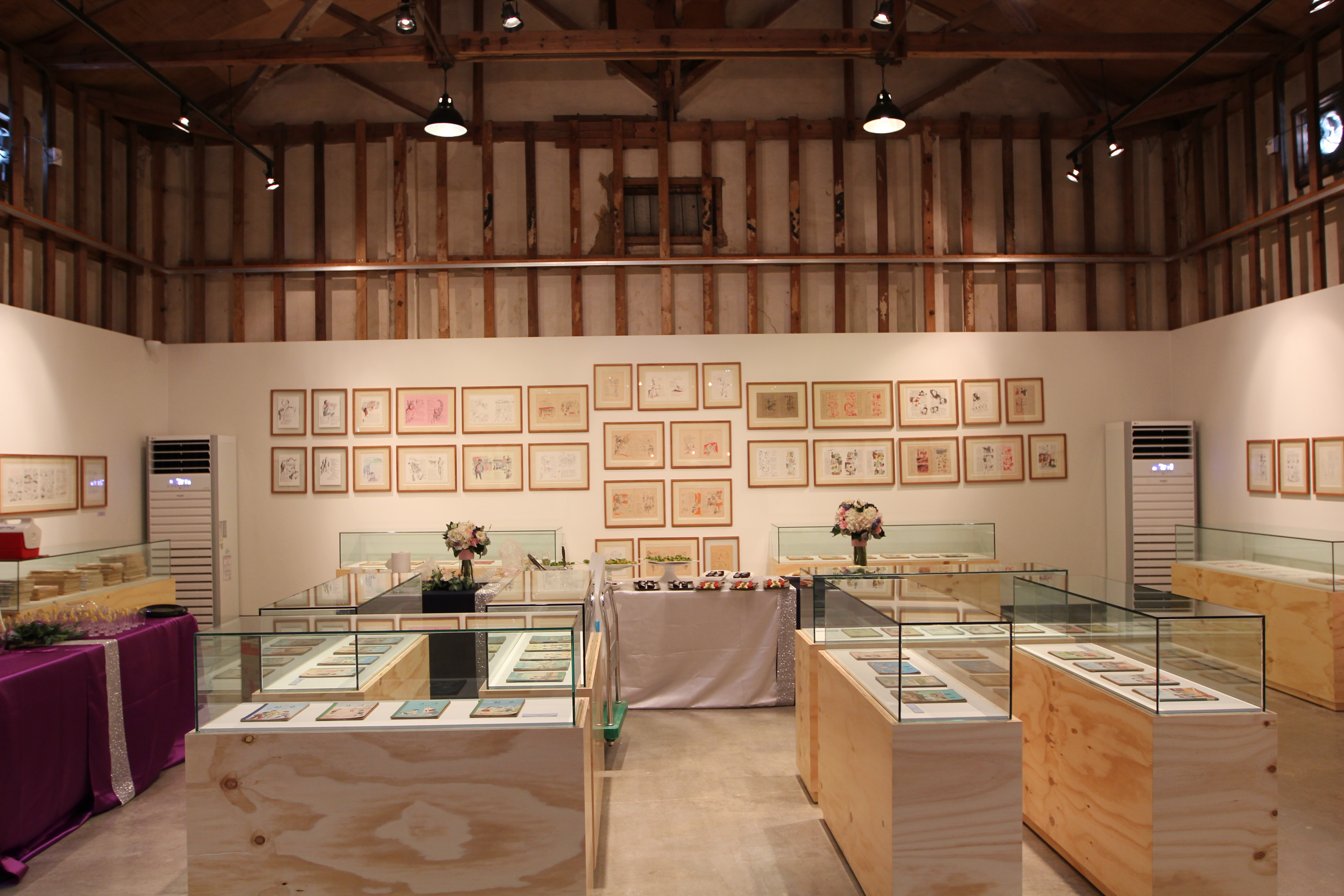
How to See Grain Warehouses, Books, and Media Art Together at Samrye Culture and Arts Village
Korea News
 News
News
BTS’s “Arirang” Surpasses 5 Billion Streams…Highest Among Albums Released This Year
!['Salon Drip' San: "ATEEZ's 'reverse export' feeling... We didn't expect the 'Bad' craze" [RE:TV]](https://kotourlive-images.s3.ap-northeast-1.amazonaws.com/news/1791944381066_82499d27_news_5532e781-915c-426a-aab0-e4580e1952e8.jpg) News
News
'Salon Drip' San: "ATEEZ's 'reverse export' feeling... We didn't expect the 'Bad' craze" [RE:TV]
 News
News
“He gathered nine BoAs to create Girls’ Generation” — Lee Soo-man’s uncanny girl-group visuals send fans into a frenzy
 News
News