Haedong Yonggungsa Descending Toward the Sea from the Cliff at Sirang-ri, Gijang
Haedong Yonggungsa is a Guanyin sanctuary set on the coastal cliffs of Sirang-ri, Gijang, Busan. In a country where many Buddhist temples are nestled in the mountains, its distinctive feature is a route that brings the sea and the main worship hall together. Learning about the tradition that it was founded in 1376 and the restoration and renaming carried out by Monk Jeongam in 1974 makes it easier to understand, as you descend the 108 steps, that the present landscape was shaped not simply as a viewpoint but as a place of prayer.
I’ve been here?
Your check-in helps the next traveler.
19 people viewed this week Be the first
One tap — no writing needed
The Tradition of Naong Daesa Founding the Temple in 1376 and the Name ‘Haedong Yonggungsa’ Adopted in 1974
Haedong Yonggungsa is a Buddhist temple dedicated to Gwaneum, located on the coast of Sirang-ri, Gijang-eup, Gijang-gun, Busan Metropolitan City. Tourism data from the Korea Tourism Organization introduces it as a temple founded in 1376, the second year of King U of Goryeo, by Naong Daesa, who served as royal preceptor to King Gongmin. The tradition that Naong Daesa (1320–1376) established a place of practice on this coast is connected to the temple’s identity, which emphasizes its setting with a mountain behind and the sea in front.
The current name is also linked to a relatively recent history of restoration. According to tourism data, the monk Jeongam prayed for one hundred days in 1974, praying for the restoration of the Gwaneum sanctuary, and changed the temple’s name to Haedong Yonggungsa after dreaming of the White-robed Gwaneum Bodhisattva ascending to heaven while riding a dragon. Together with the account that reconstruction and maintenance continued after the temple was destroyed during the Imjin War, this suggests that today’s stone sculptures and coastal Dharma halls form a landscape shaped by both the tradition of its late-Goryeo founding and the restoration process of the 20th century.
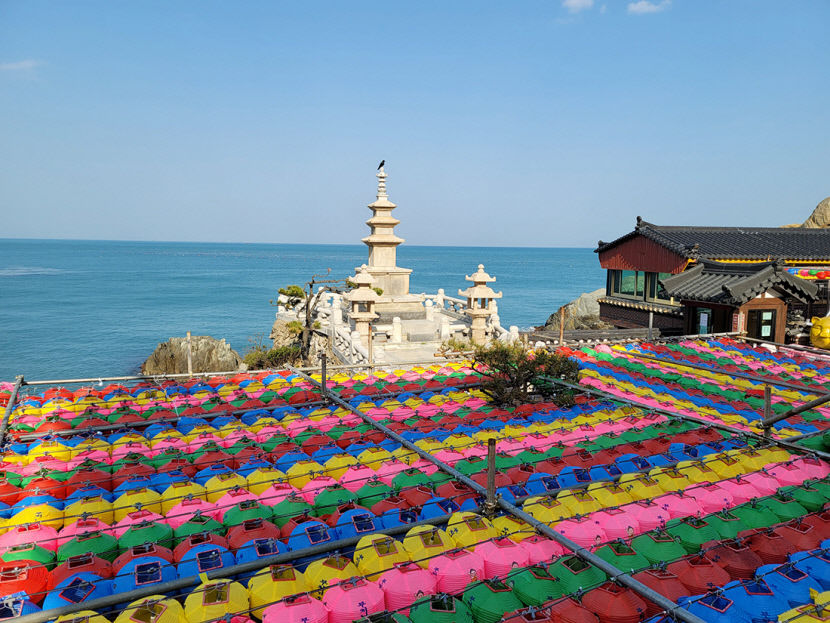
Starting at 86 Yonggung-gil and Descending the 108 Steps: Recommended Viewing Order
The official road-name address is 86 Yonggung-gil, Gijang-eup, Gijang-gun, Busan Metropolitan City. Since the provided address, 33-8 Yeonhwa-gil, may be confused with a nearby access point, it is safer to enter “Haedong Yonggungsa” or “86 Yonggung-gil” into your navigation system. Busan City Tour information explains that after walking for about two minutes from the parking area, visitors will encounter the Twelve Zodiac Deities and the Pagoda for Prayers for Traffic Safety.
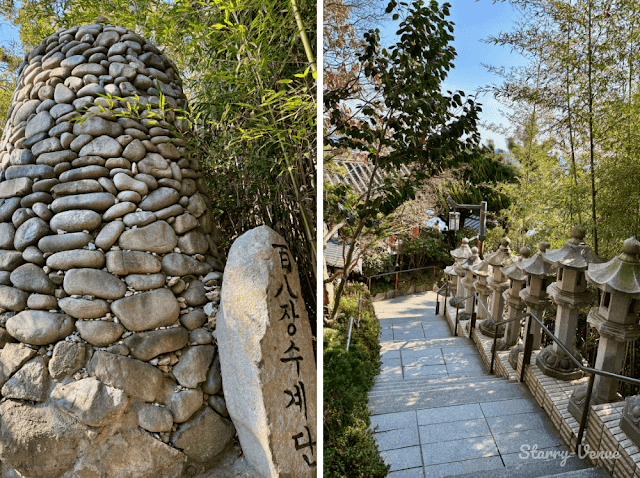
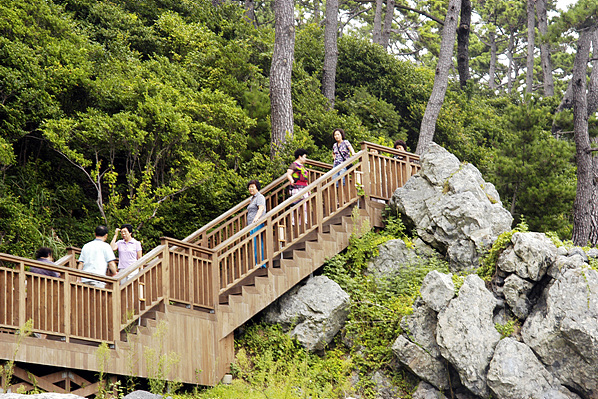
To travel from the entrance to the center of the temple, visitors descend the 108 Longevity Steps and must climb back to the same elevation after touring. Therefore, even a quick visit focused only on taking photos should allow 60–90 minutes; for a leisurely tour of the Haesu Gwaneum Buddha, Daeungjeon Hall, and coastal views, 90–120 minutes is more appropriate. Since stairs and sloped sections are the main route, the full course is not suitable for visitors using wheelchairs or strollers, or for those with significant knee strain.
Early-Morning Visits Made Possible by Opening at 04:30 and Last Entry at 18:50
According to tourism information, the operating hours are 04:30–19:20 daily, with last entry at 18:50. No regular closing day is separately listed, so the temple is generally known to operate year-round. However, it is advisable to reconfirm conditions related to Buddhist ceremonies, weather, and on-site operations before departure by calling 051-722-7744. Admission is free.
Because the temple is located on a coastal cliff, the direction of the light and the condition of the sea can greatly change the sightseeing experience early in the day. Those visiting for sunrise should arrive before the seasonal sunrise time, while late-afternoon visitors should avoid planning to arrive just before sunset, since entry is not permitted after 18:50. As the temple is a place of worship, move quietly inside the Dharma halls, and modest clothing covering the shoulders and knees is preferable to revealing attire.
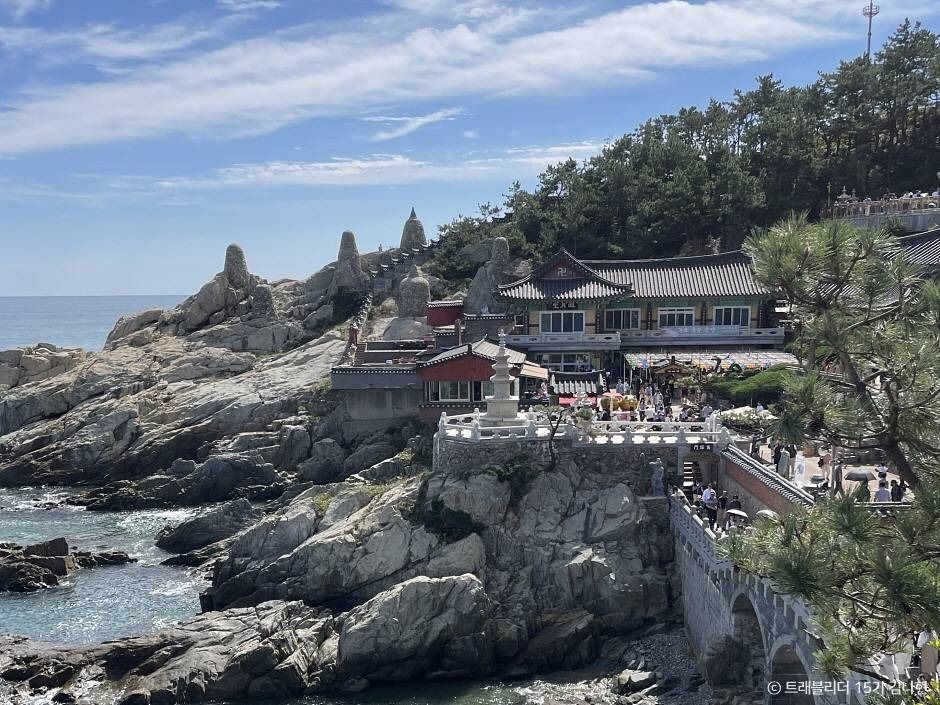
Viewing the “Sacred Coastal Site of Gwaneum” Between the Haesu Gwaneum Buddha and Daeungjeon Hall
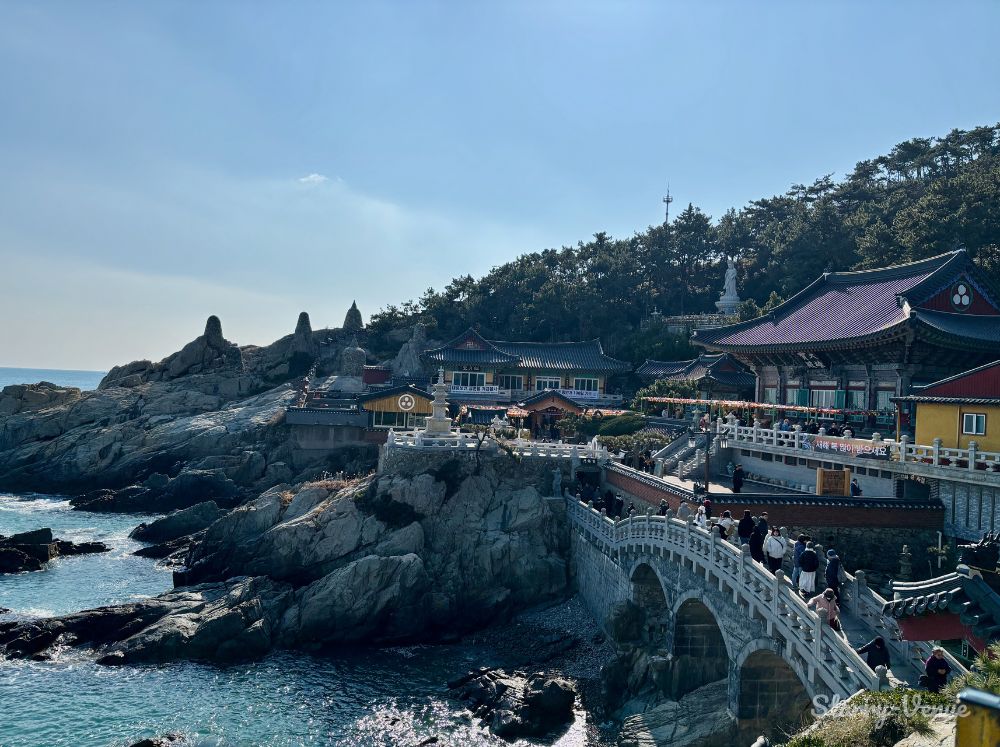
Haedong Yonggungsa is introduced, together with Naksansa and Boriam, as one of Korea’s three major sacred sites of Gwaneum. The Busan History and Culture Encyclopedia explains that many examples of Gwaneum faith are situated on coasts and islands; this offers a clue to understanding why the temple is remembered as a place of prayer facing the sea rather than as a mountain temple. The combined symbolism of the sea, the dragon, and the Gwaneum Buddha also reveals the character of this Gwaneum sanctuary.
When sightseeing, it is better to continue to the elevated area near the Haesu Gwaneum Buddha rather than turning back after seeing only Daeungjeon Hall. However, the rocky coast and areas around the steps can become slippery after rain or strong winds, so shoes with nonslip soles are necessary. Do not climb down onto rocks outside the railings or take photographs that obstruct passage, and as a basic courtesy, avoid photographing worshippers praying from close range and directly in front of them.
Bus Transfers after Osiria Station and the “Yonggungsa·National Institute of Fisheries Science” Stop
There is no subway station directly adjacent to Haedong Yonggungsa. Busan City Tour uses “National Fisheries Science Museum·Haedong Yonggungsa” as the stop name, while for regular city buses it is practical to use the stops near “Yonggungsa·National Institute of Fisheries Science” as a reference. From the Haeundae Station area, visitors can check routes such as bus 181 or express bus 1001; from the bus stop to the temple entrance, expect about a 10-minute walk including sloped sections.
Even when using Osiria Station on the Donghae Line, the final leg requires travel by bus or taxi. If you have a lot of luggage or find stair travel difficult, taking a taxi from the Osiria Tourist Complex or accommodation in Haeundae simplifies the route. The information phone number for the National Fisheries Science Museum·Haedong Yonggungsa stop on Busan City Tour is 051-722-7744, the same number listed for the temple.
Entrance-Area Private Parking Fees and How to Avoid Weekend Traffic
Visitors arriving by car use a privately operated parking lot near the temple entrance. A review summarizing on-site information from February 2026 lists the fees for passenger cars as 2,000 won for the first 20 minutes, 500 won for every additional 10 minutes, and a daily maximum of 30,000 won; payment is reportedly handled primarily by card. Since these fees were not directly announced by the temple, check the on-site fee table before entering.
The same review states that separate standards may apply to vehicles such as buses and trucks that are at least 2.4 m high or 5.5 m long, as well as minivans and campervans. On weekends and holidays, waiting times on the access road and at the parking lot can be long, so it is better to arrive early in the morning or use public transportation. It takes about five minutes to walk from the parking lot to the temple entrance, and about two minutes to reach the Twelve Zodiac Deities according to Busan City Tour information.
How to Combine the National Fisheries Science Museum, Songjeong Beach, and Osiria in One Route
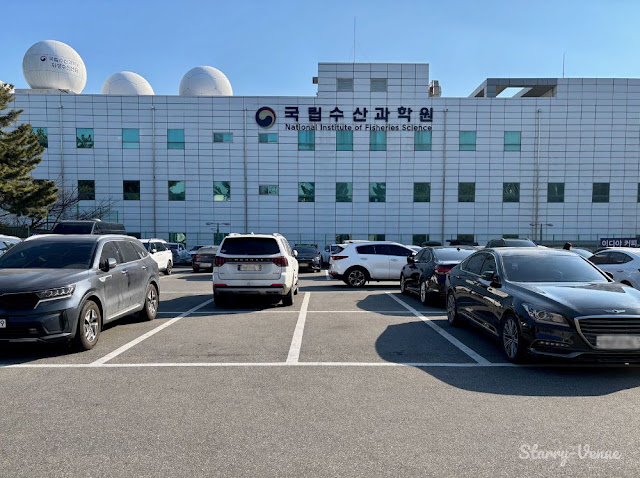
Haedong Yonggungsa is closer to the eastern Busan coast than to central Haeundae, making it easy to combine with nearby destinations rather than visit on its own. Busan City Tour designates the entrance to the science museum inside the National Institute of Fisheries Science as the boarding location for the National Fisheries Science Museum·Haedong Yonggungsa stop. After touring the temple, visitors can continue to the National Fisheries Science Museum or the Osiria Tourist Complex, keeping their itinerary within the same Gijang coastal area.
If you would like to see more seascapes, Songjeong Beach can be chosen as the next destination, although combining a coastal walk with the temple stairs increases the amount of walking. Conversely, visitors who want to focus on the temple’s prayer spaces and architecture will find it efficient to allocate about 90 minutes to Haedong Yonggungsa and then return toward Osiria Station or Haeundae. Since the availability of regular foreign-language guidance is difficult to confirm, it is advisable to save the temple name, “Haedong Yonggungsa Temple,” and its address.
Prayer Etiquette at the Twelve Zodiac Deities, Deungnam Buddha, and Academic Achievement Buddha
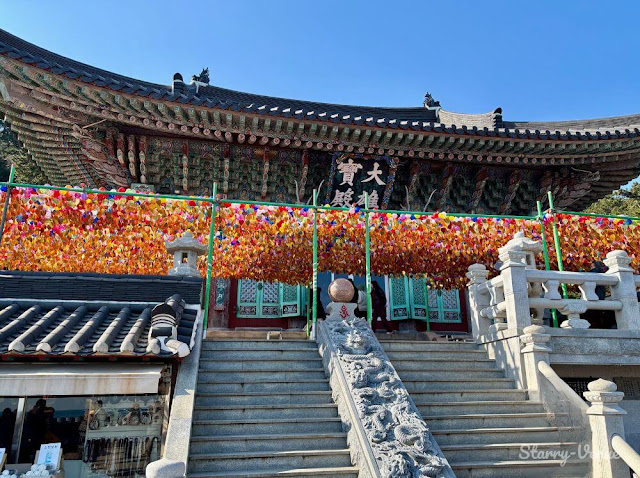
The Twelve Zodiac Deities near the entrance are prominent markers along the path into the temple, while the grounds contain sculptures symbolizing specific wishes, such as the Deungnam Buddha and the Academic Achievement Buddha. These are not merely exhibits but places where people actually continue to worship. If a line forms, wait your turn rather than cutting in front of people who are praying.
Haedong Yonggungsa is widely known as a place to pray for “one wish,” but admission is free and no general sightseeing reservation has been confirmed. However, the visitor route may change during religious events such as Lunar New Year, Buddha’s Birthday, and sunrise celebrations. Since the monk Jeongam’s hundred-day prayer and vow to restore the Gwaneum sanctuary are connected to the temple’s current name, visitors should reduce noise and keep passageways clear even when stopping briefly in front of the sculptures.
Before You Go
- Address
- 86 Yonggung-gil, Gijang-eup, Gijang-gun, Busan Metropolitan City
- Hours
- Daily 04:30–19:20; last entry at 18:50
- Closed
- No separate regular closing day announced
- Admission
- Free
- Phone
- 051-722-7744
- Official site
- http://www.yongkungsa.or.kr
- Transport
- Use a nearby stop for “Yonggungsa·National Institute of Fisheries Science,” followed by about a 10-minute walk. From the Haeundae Station area, check bus 181 or express bus 1001. The Busan City Tour “National Fisheries Science Museum·Haedong Yonggungsa” stop is also available.
- Parking
- Use a privately operated parking lot near the entrance. According to reviews, passenger cars are charged 2,000 won for 20 minutes, then 500 won per additional 10 minutes, with a daily maximum of 30,000 won; reconfirm the on-site fee table.
- Time needed
- 60–120 minutes
- Accessibility
- The 108 steps, slopes, and rocky coastal sections make the full sightseeing route difficult to access by wheelchair or stroller. The availability of regular foreign-language guidance has not been confirmed.
The information above is current as of the time of writing. Check official information again before visiting.

Places
Nearby Attractions 5
-
 1
1
-
2
-
 3
3
-
 4
4
-
 5
5
Food & Dining 5
-
 6
6
-
 7
7
-
 8
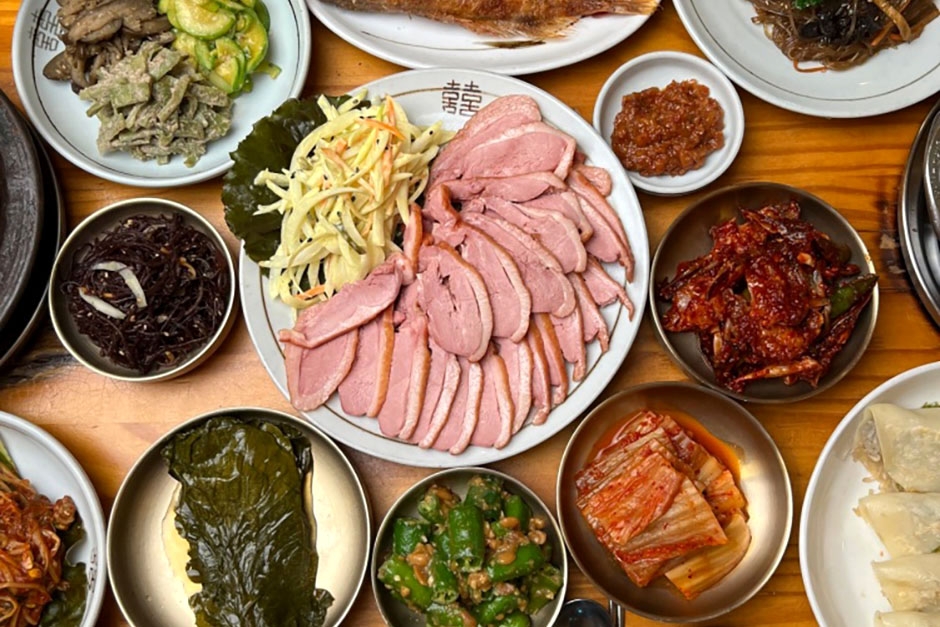
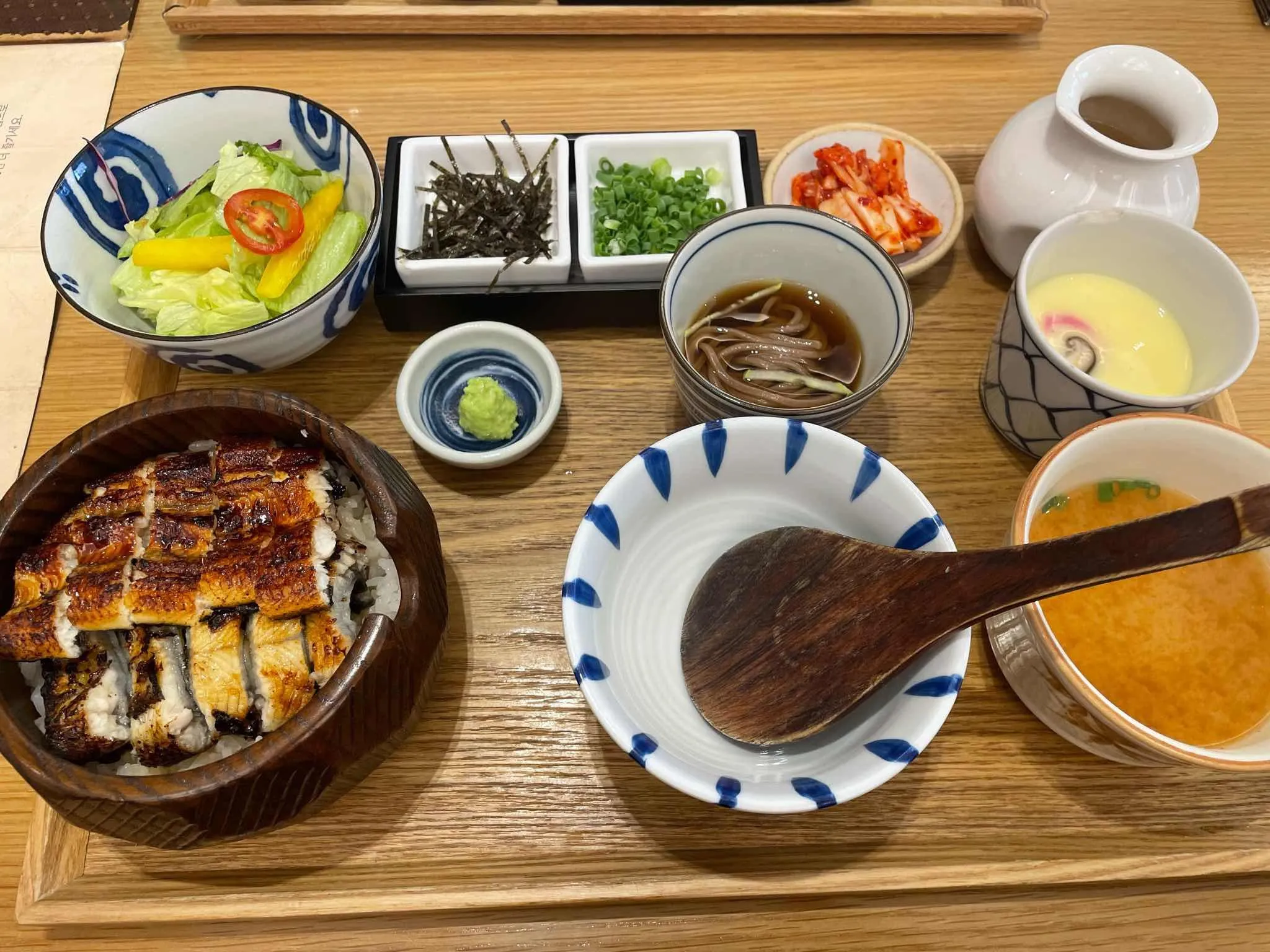
Pungwonjang Si골 밥상jip
8
Pungwonjang Si골 밥상jip -
 9
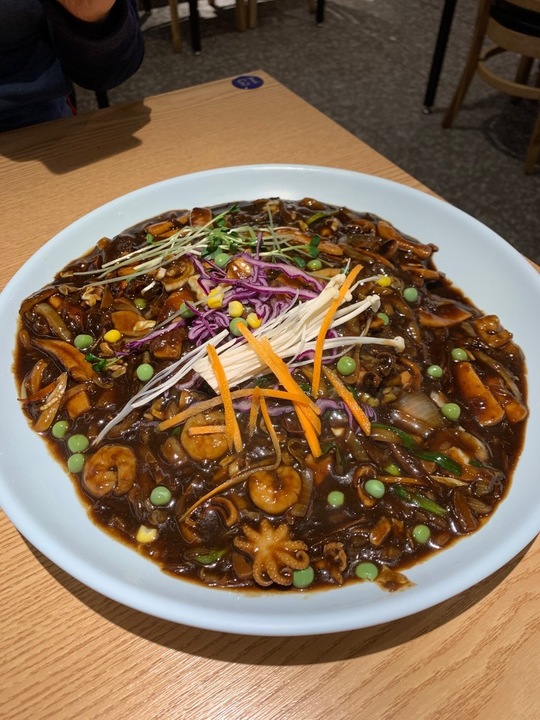
Yonggung Seafood Jjajang Platter
9
Yonggung Seafood Jjajang Platter -
 10
Yangsan-do
10
Yangsan-do
Events in This Area


Festivals in This Area

More Travel Guides in This Area
 Travel Guide
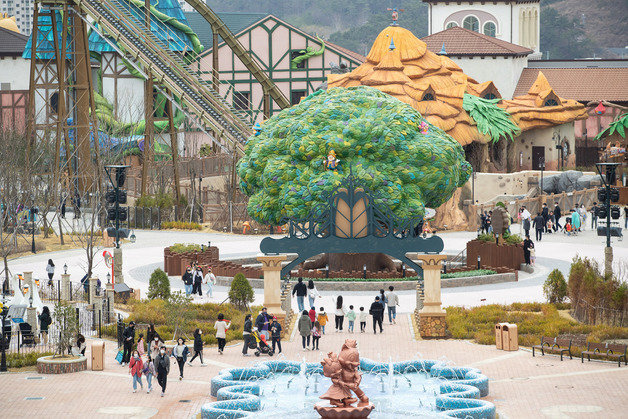
A 158,000-Square-Meter Fairy-Tale Kingdom in the Sea Breeze of Osiria: Lotte World Adventure Busan
 Travel Guide
Skyline Luge Busan Tickets and Riding Requirements at 205 Gijanghaean-ro
 Travel Guide
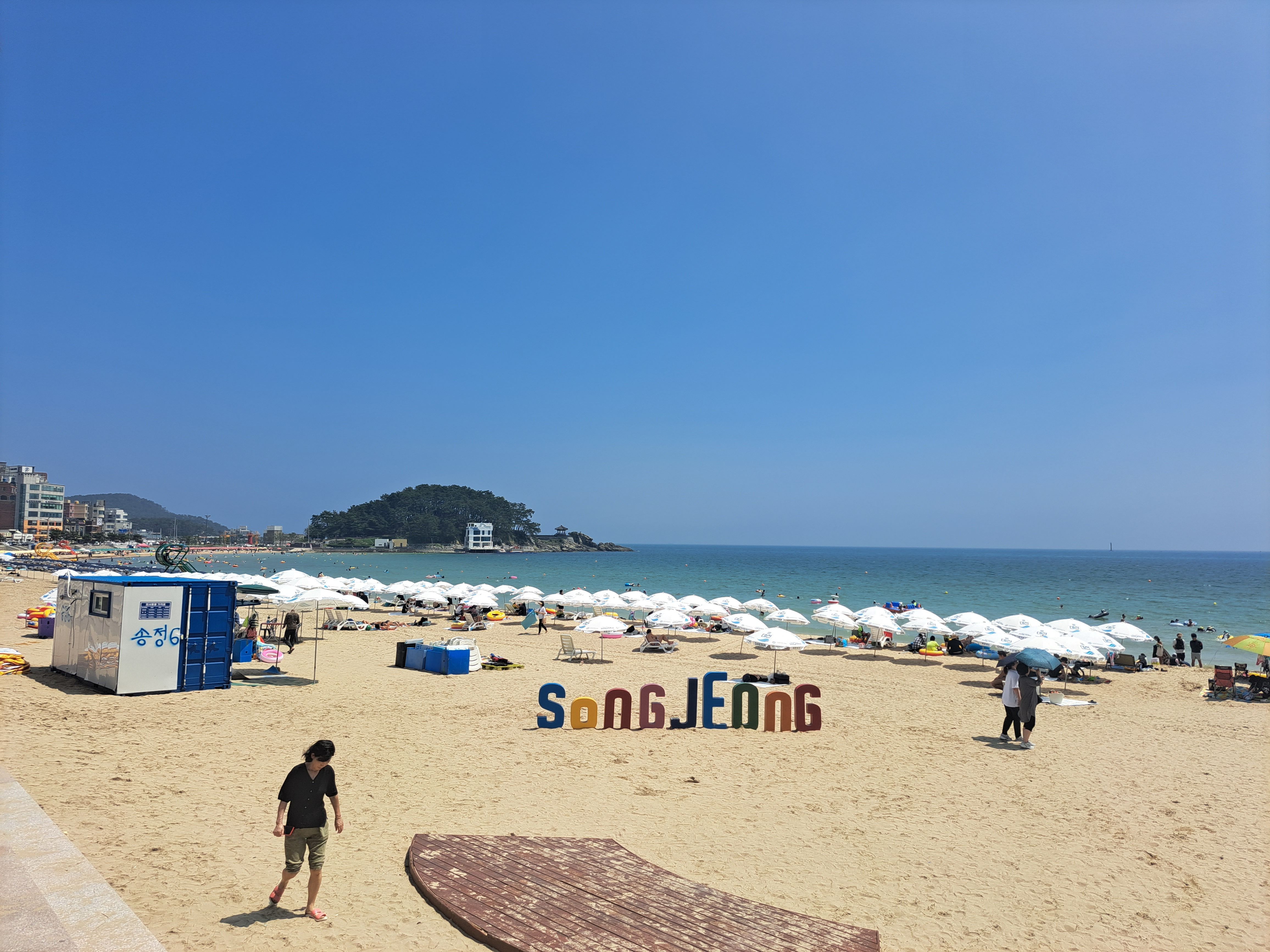
Songjeong Beach: Busan’s Eastern Sea Connecting 1.2 km of White Sand to Jukdo Park
 Travel Guide
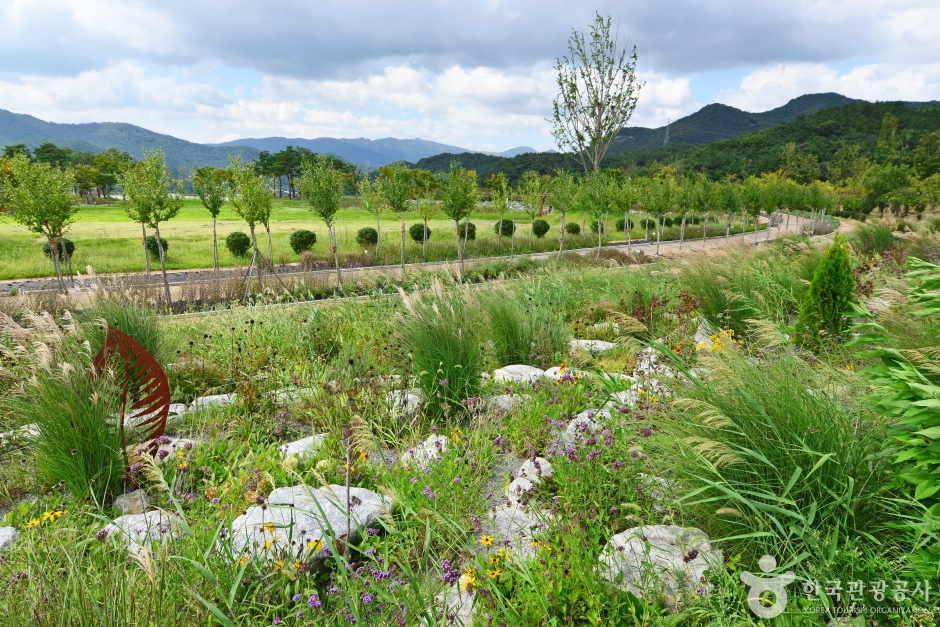
Haeundae Arboretum: From the Seokdae Landfill to a 62.8-ha Forest
Korea News
 News
News
‘NewJeans Expulsion’ Danielle Releases Her First YouTube Video… “We Don’t Know What Will Happen Next”
![aespa’s North American Tour Has Remaining Seats Despite ‘$49’ Bargain Prices… A Stark Popularity Gap with KATSEYE [TEN Starfield]](https://kotourlive-images.s3.ap-northeast-1.amazonaws.com/news/1788485037424_a59b1932_naver_rank_thumb_0000774618_1788485037424.jpg) News
News
aespa’s North American Tour Has Remaining Seats Despite ‘$49’ Bargain Prices… A Stark Popularity Gap with KATSEYE [TEN Starfield]
![[Photo] TWICE’s Dahyun attends a film festival red carpet as an actress](https://kotourlive-images.s3.ap-northeast-1.amazonaws.com/news/1788485316508_edd43ecd_news_870a60a6-6f11-4d73-aa7c-48d91318a0f7.jpg) News
News
[Photo] TWICE’s Dahyun attends a film festival red carpet as an actress
![[On-Site Video] “We’re Departing Separately Together”… BIGBANG Begins ‘COSMOS’ World Tour](https://kotourlive-images.s3.ap-northeast-1.amazonaws.com/news/1788485226518_c5719641_news_fdd4764a-0f4e-4968-8e4e-e98a02872f88.jpg) News
News