Hwagae Market, the Yeongnam–Honam Market Born of the Seomjin River Waterway and Revived by a Song
Hwagae Market in Hwagae-myeon, Hadong-gun, Gyeongsangnam-do, is a traditional market at the end of the waterway where Hwagaecheon Stream meets the Seomjin River. Established in the late Joseon period, it was considered one of Korea’s five major markets until the country’s liberation. Restored in its present form in 1999 and rebuilt after a fire in 2014, its market buildings now house a blacksmith, a freshwater marsh clam soup restaurant, and shops selling Jirisan specialties. Its reputation, shaped by Kim Dong-ri’s novel “The Post Horse” and Jo Yeong-nam’s song “Hwagae Market,” overlaps with memories of conflict between Yeongnam and Honam merchants in 2022.
I’ve been here?
Your check-in helps the next traveler.
No one has checked in yet Be the first
One tap — no writing needed
Hwagae Market grew where the Hwagaecheon and Seomjingang Rivers meet, at the river's navigable terminus
Hwagae Market stands where the Hwagaecheon joins the Seomjingang River. Because it was the "navigable terminus"—the highest point upstream that sailboats and merchant vessels could reach along the Seomjingang—a large market developed here. Thanks to this waterway, seafood such as sea mustard, green seaweed, and mackerel from the southern coastal areas of Yeosu, Gwangyang, Namhae, and Samcheonpo traveled upriver by boat and was exchanged for rice and barley from inland areas such as Hadong, Gurye, Namwon, and Hamyang, as well as bracken, deodeok, and potatoes brought down by slash-and-burn farmers from Jirisan.
The market is believed to have formed in the late Joseon period and flourished enough to be counted among Korea's five major traditional markets until just before liberation. According to the Gyeongnam Ilbo, Hwagae Market became famous nationwide as a five-day market beginning in 1770, during the reign of King Yeongjo of Joseon. Even today, market days continue to fall on the 1st and 6th of each month, as they did then.
Located on low-lying land, Hwagae Market was often submerged when the Seomjingang overflowed. Historical records note that it was not unusual to see felled logs, agricultural products such as watermelons and oriental melons, and even entire thatched roofs floating away intact.
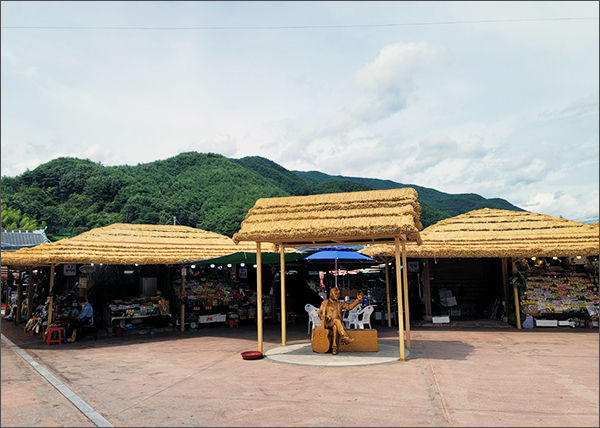
The 9,917㎡ market buildings restored in 1999 survived the 2014 fire
After the traces of the old Hwagae Market disappeared, Hadong County restored today's Hwagae Market on December 4, 1999, investing 1.7 billion won to build three traditional market buildings and other facilities on a 9,917㎡ site around 726-8 Tap-ri, Hwagae-myeon.
Some facilities were destroyed by a fire in November 2014 and were rebuilt. Since 2016, Hadong County has recruited new market-building tenants every three years. In the 2016 and 2019 recruitment rounds, more than 100 applicants competed for 74 shops each time, leaving about 30 applicants unsuccessful.
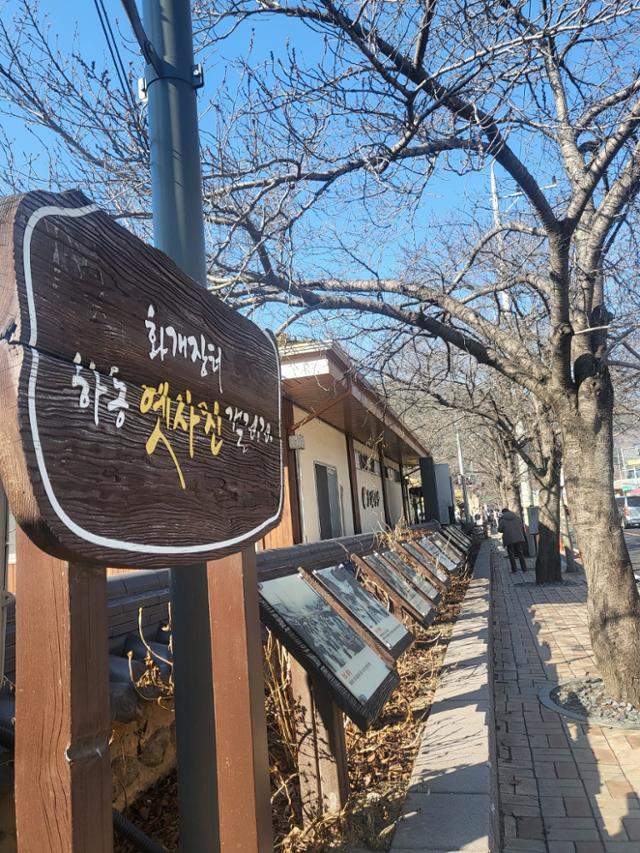
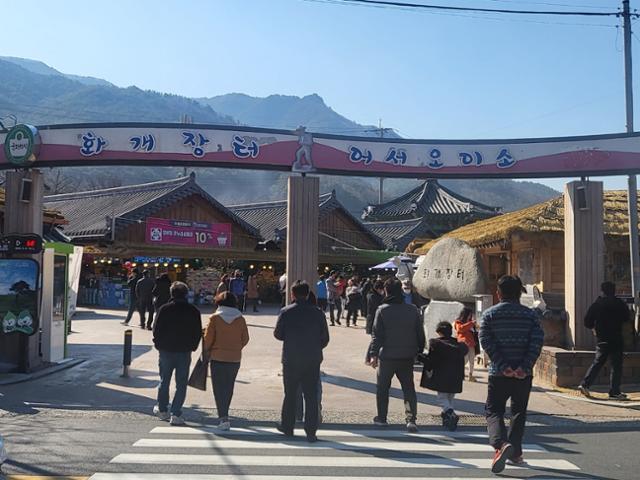
Inside the market stand a signstone bearing the words "Hwagae Market," stone monuments engraved with its history and song lyrics, statues of relay horses and old peddlers, and a monument commemorating the March 1st Movement that took place here.
A second wave of fame created by Kim Dong-ri's Relay Horse and Jo Young-nam's Hwagae Market
Hwagae Market is widely known as the setting of novelist Kim Dong-ri's acclaimed work Relay Horse.
The song Hwagae Market, released by singer Jo Young-nam in 1988, was inspired by a reportage article published in the October 27, 1987, edition of the Kyunghyang Shinmun. The article described Hwagae Market as an outlet for easing regional conflict. After the song became popular, the market was reborn as a new tourist destination alongside efforts to revive its former reputation.
A 2023 Korea Ilbo article featured a statue of Jo Young-nam standing at the market entrance to greet visitors.
November 2022: one week when the "symbol of Yeongnam–Honam harmony" was shaken
Hwagae Market had long been called a symbol of harmony between Yeongnam and Honam, but a recruitment notice for market-building tenants issued by Hadong County on November 17, 2022, put that symbolism to the test. The notice limited eligibility for the agricultural specialties and food category to "people who have lived in Hadong County for at least three years," while applicants for the experience, souvenirs, blacksmith, and taffy seller categories had to be "county residents for at least one year."
As a result, not a single place remained among the 74 shops for merchants from Honam. In the 2016 and 2019 recruitment rounds, two shops had been allocated to residents of Gwangyang and one to a resident of Gurye under the name "Honam Market Buildings." One merchant who had sold hotteok and agricultural products in Gurye for about 40 years said that, as the parent of a son with a disability, he faced having to vacate his shop.
As opposition grew, Hadong County reissued the notice one week after its initial publication, restoring the eligibility requirements to their previous form. However, it was also reported that informal street vendors in Hadong had grievances about the practice of excluding Hadong merchants from contract renewals while designating separate spaces only for Honam merchants.
Acorn jelly soup, blacksmiths, and Jirisan specialties in 74 market stalls
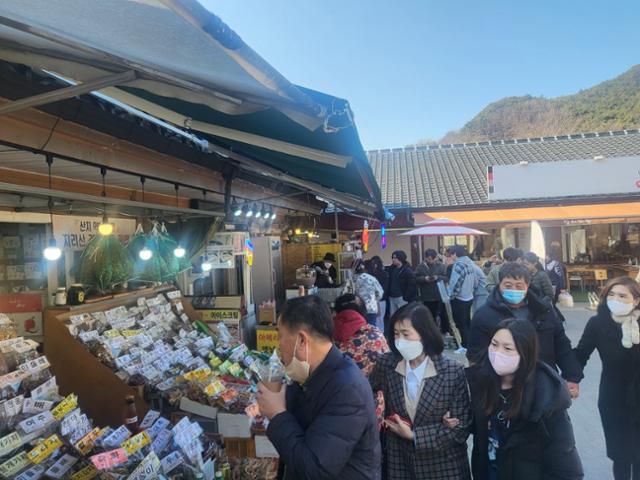
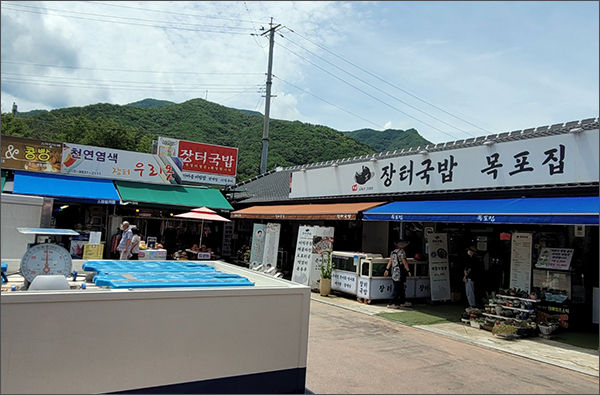
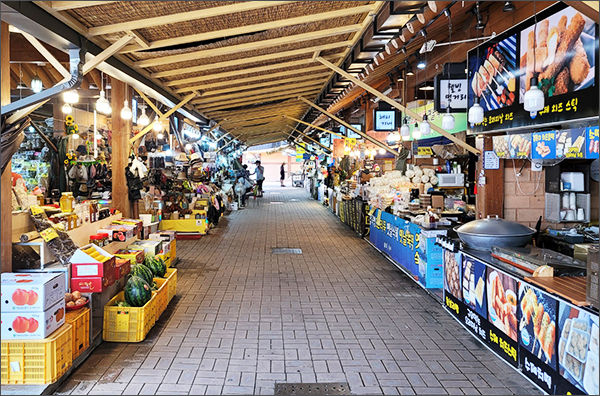
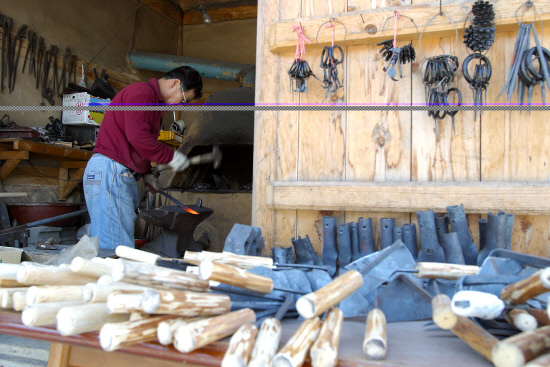
The market is lined with gukbap restaurants, acorn-jelly shops, freshwater clam soup restaurants, taverns, taffy sellers, and shops selling specialties such as mountain greens and green tea. At the blacksmith shop, which adheres to traditional methods, farming tools such as hoes and sickles and kitchen knives are made and sold on the spot. Upon entering the market, visitors first encounter the blacksmith shop, where the sound of pounding cast iron can be heard.
Today, the market includes restaurants serving wild green tea, Solomon's seal, and deodeok—specialties of Jirisan and the Seomjingang—as well as barley rice, mountain-vegetable bibimbap, gukbap, and freshwater clam dishes. Snack stalls also sell croquettes, ice cream, and handmade gangjeong sweets.
Okgwha Jumak (around 21 Ssanggyesa-ro), introduced by the food-information outlet Siksin, serves a set meal of freshwater clam soup and raw freshwater clam salad accompanied by grilled deodeok and seasoned crab for about 25,000 won per person. Hyangmi Garden (12 Ssanggyesa-ro) is said to receive favorable repeat-visit reviews for its Chinese mitten crab soup and freshwater clam sashimi rice bowl, priced at about 13,000 won. The restaurant-review platform DiningCode lists information on 108 restaurants near Hwagae Market, including Bamtol (desserts), Hyeseong Restaurant (freshwater clams), and Ssanggyemyeongcha (café).
A three-minute walk from Hwagae Intercity Bus Terminal; arrive early for parking
Hwagae Market is a three-minute walk from Hwagae Intercity Bus Terminal. Its main telephone number is 055-883-5722, and it is open from 09:00 to 18:00, although hours vary slightly by shop. The same information can also be found on Hadong County's official culture and tourism website (hadong.go.kr).
Around Hwagae Intercity Bus Public Terminal, there are separate bus stops named Hwagae Bus Terminal and Hwagae Market. Setting the destination as the "Hwagae Market" stop avoids confusion. When public transportation is inconvenient, another option is to get off at Gurye-gu Station on the Jeolla Line and continue by taxi.
The public parking lot in front of the market is free for up to one hour. After that, 500 won is added every 30 minutes, followed by an additional 100 won every 10 minutes, and payment is by card only. However, one account of a visit at midday in summer 2022 noted that the lot was so small it could not accommodate even 30 vehicles and was already full at 11 a.m.
Three days from March 27, followed by the Ten-ri Cherry Blossom Road
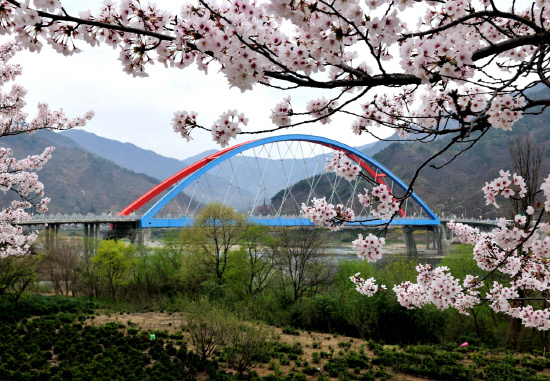
Every spring, usually in early April, cherry blossoms bloom profusely along the 10-ri route from Hwagae Market to Ssanggyesa Temple, and the Hwagae Market Cherry Blossom Festival is held. Hadong County's culture and tourism website lists the 2026 festival calendar as running for three days, from March 27 to 29.
The Gyeongsangnam-do festival information site also states that the Hwagae Market Cherry Blossom Festival takes place throughout Hwagae-myeon, Hadong County. According to the travel outlet Telltrip, on the second and third days—the festival weekend—car-free streets are operated, with vehicle restrictions and one-way traffic applied to the relevant sections.
The three festival days and the period when the cherry blossoms are at their most spectacular may differ slightly. Several visitor reviews identify peak bloom as early to mid-April, after the festival. The festival grounds are within walking distance of Hwagae Market.
Two recurring themes in reviews—an orderly entrance and disappointing prices
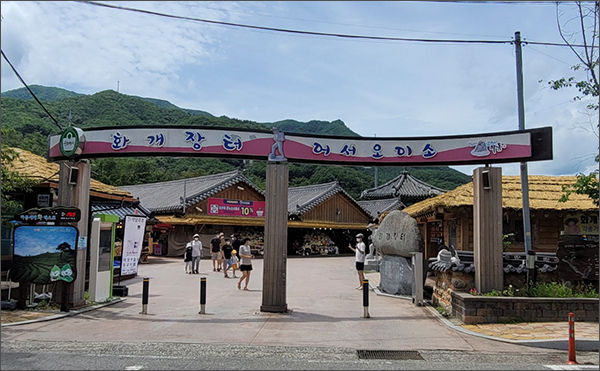
One account of a return visit to Hwagae Market in summer 2022 said that seeing the orderly arched entrance left the writer with the impression that the market had improved. The account also noted the noticeable sight of visitors taking commemorative photos in front of the "Hwagae Market" signstone at the entrance.
However, the same visitor wrote that the trip, made in hopes of experiencing the atmosphere of the old market, ended in disappointment at an unremarkable place that was a "market in name only." The account also described being served freshwater clam soup for 10,000 won in a melamine bowl rather than an earthenware pot at one restaurant. The market may be better suited to visitors seeking food, specialty-product shopping, and photo opportunities than to those expecting the atmosphere of an old-fashioned rural market.
The food outlet Siksin advises visiting before 11:30 a.m., just before lunchtime, or after 5 p.m. for relatively manageable waits. It also notes that freshwater clams are in season from spring to early summer, while Chinese mitten crabs are in season from autumn to early winter.
Before You Go
- Address
- 24 Ssanggyero, Hwagae-myeon, Hadong-gun, Gyeongsangnam-do, 1st floor
- Hours
- 09:00–18:00 (varies by shop)
- Admission
- Free (market admission; individual shops and restaurants charge separately)
- Phone
- 055-883-5722
- Official site
- https://www.hadong.go.kr/here/03065.web?amode=view&idx=1304
- Transport
- A three-minute walk from Hwagae Intercity Bus Terminal. Get off at the 'Hwagae Market' bus stop near Hwagae Intercity Bus Public Terminal. Taxis are available from Gurye-gu Station on the Jeolla Line.
- Parking
- The public parking lot in front of the market is free for one hour; after that, 500 won per additional 30 minutes plus 100 won per additional 10 minutes (card payment only). The lot is often full during peak-season daytime hours because of limited space.
The information above is current as of the time of writing. Check the official guidance again before visiting.

Places
Nearby Attractions 3
-
 1
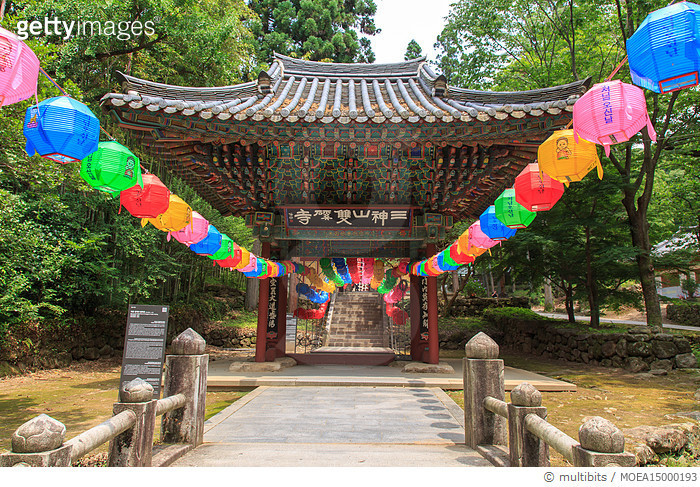
Ssanggyesa TempleA temple where you can explore a serene mountain monastery and Buddhist cultural heritage
1
Ssanggyesa TempleA temple where you can explore a serene mountain monastery and Buddhist cultural heritage -
 2
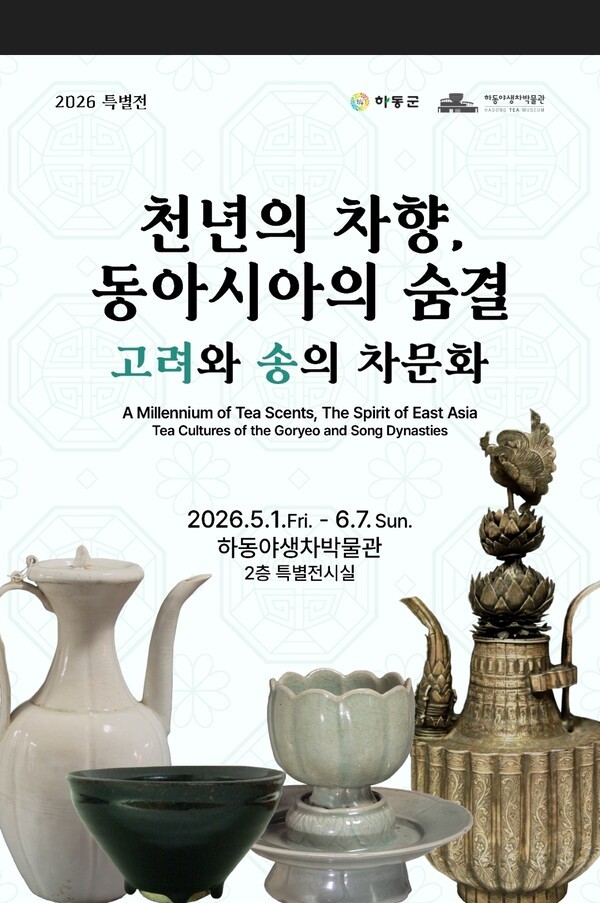
Hadong Wild Tea MuseumA museum where you can experience the history of Hadong tea and traditional tea ceremony
2
Hadong Wild Tea MuseumA museum where you can experience the history of Hadong tea and traditional tea ceremony -
 3
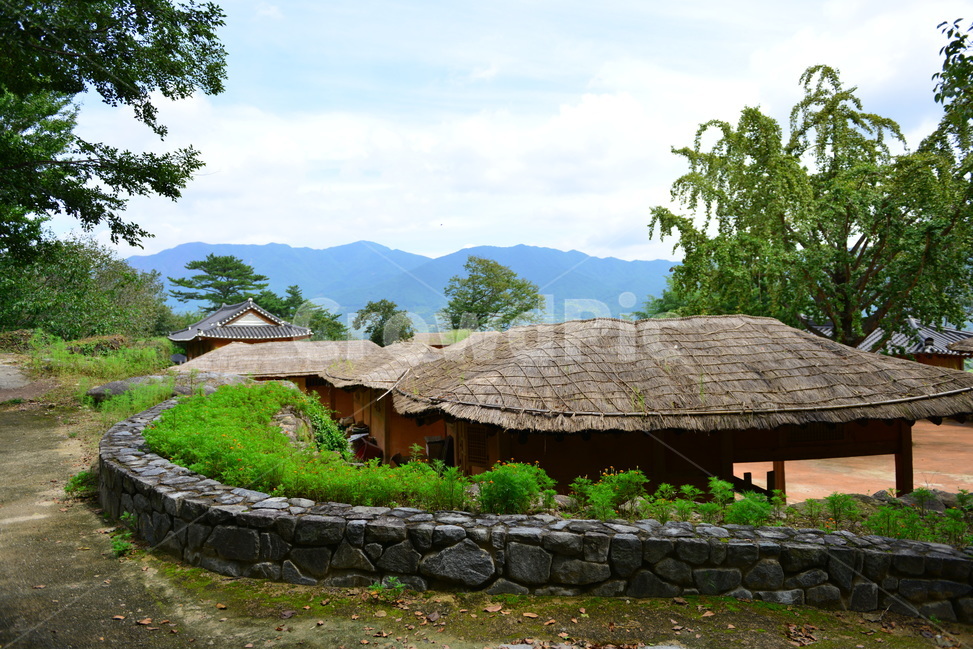
Choi Champan HouseA traditional hanok village set in the setting of the novel "Toji" (The Land), where visitors can explore the area.
3
Choi Champan HouseA traditional hanok village set in the setting of the novel "Toji" (The Land), where visitors can explore the area.
Food & Dining 5
-
 4
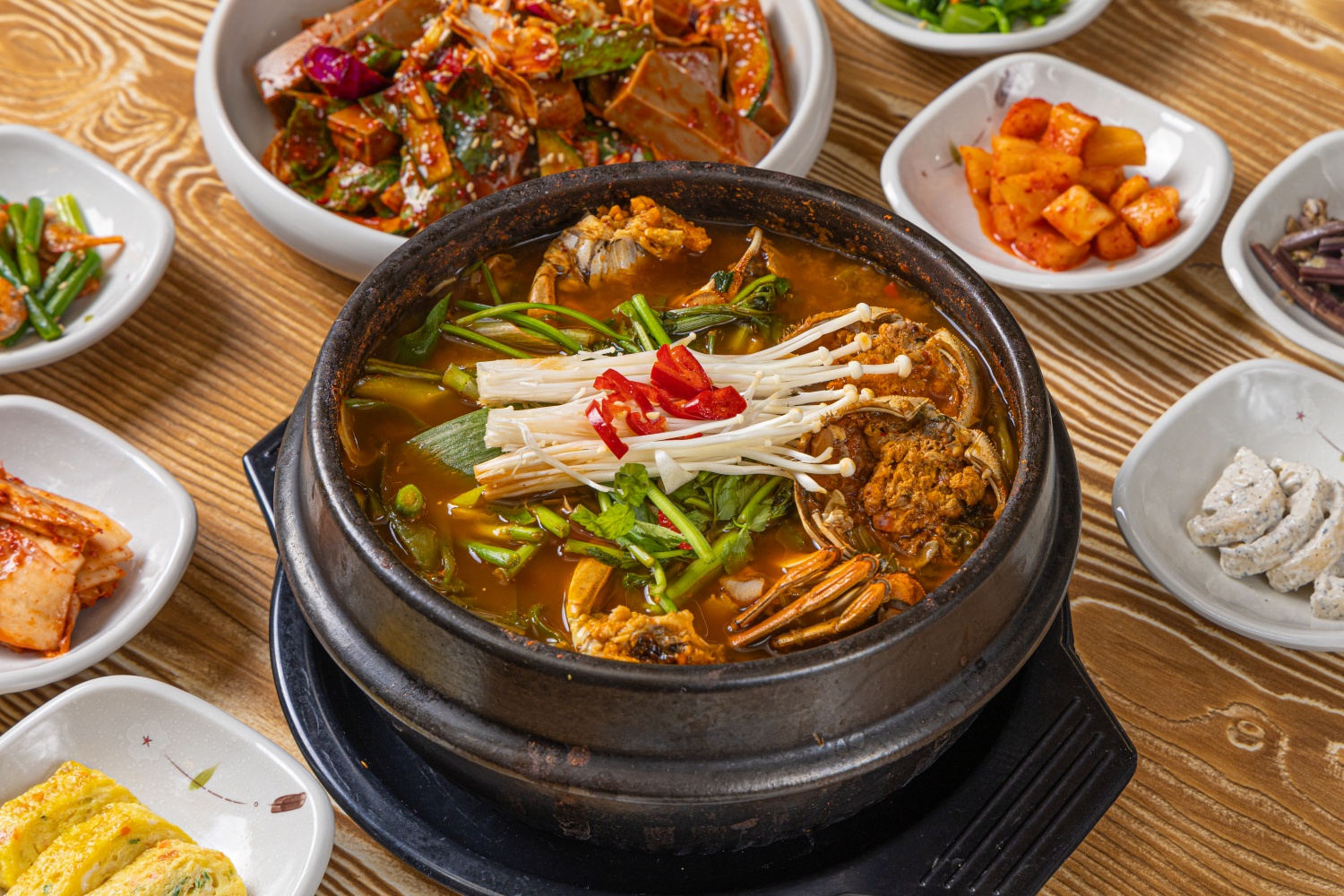
Okhwa JumakA restaurant serving set meals featuring marsh clam soup, marsh clam sashimi, and grilled deodeok.
4
Okhwa JumakA restaurant serving set meals featuring marsh clam soup, marsh clam sashimi, and grilled deodeok. -
 5
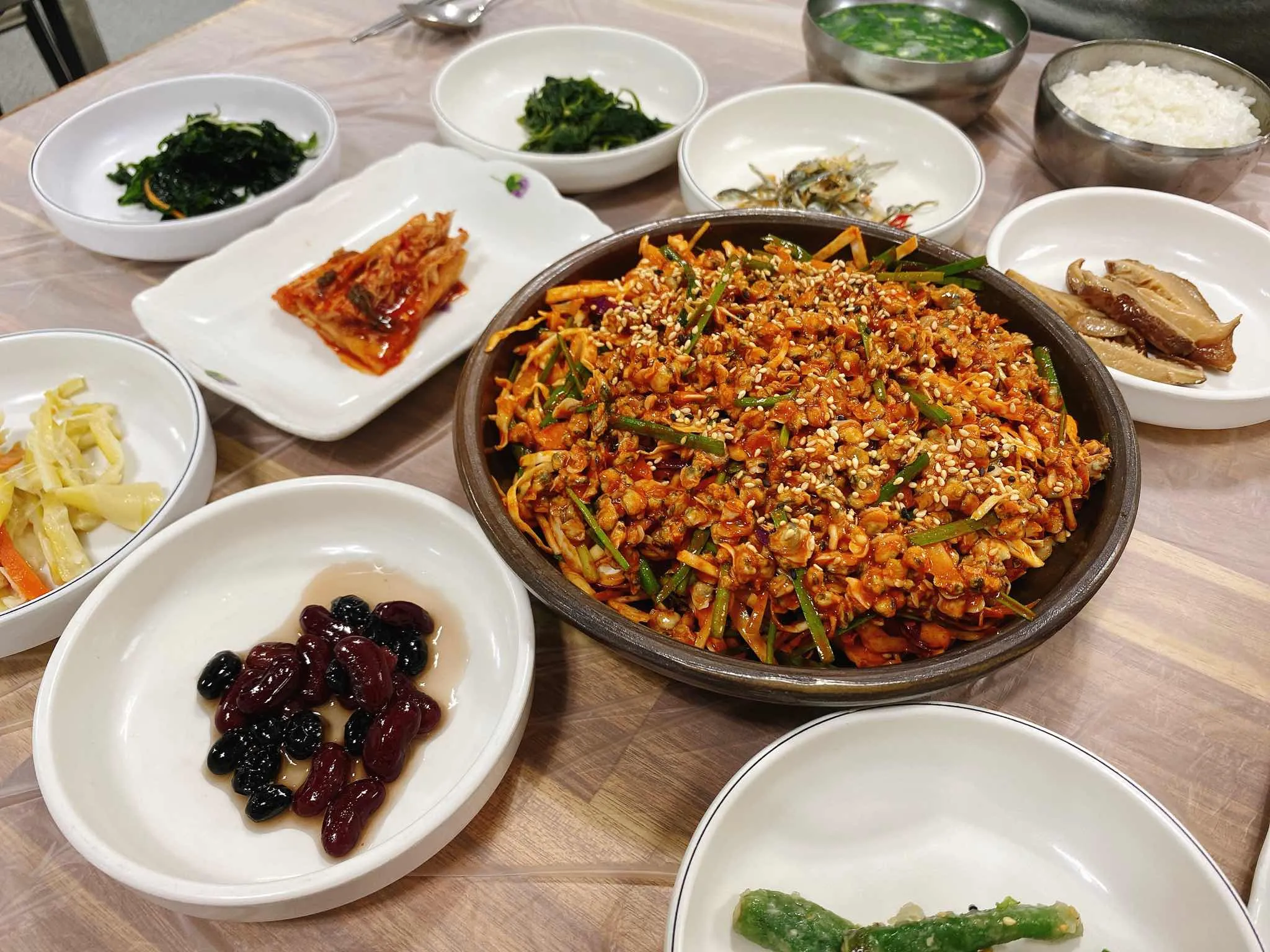
Hyangmi GardenA restaurant serving local specialties such as freshwater crab stew and rice topped with raw freshwater clams.
5
Hyangmi GardenA restaurant serving local specialties such as freshwater crab stew and rice topped with raw freshwater clams. -
 6
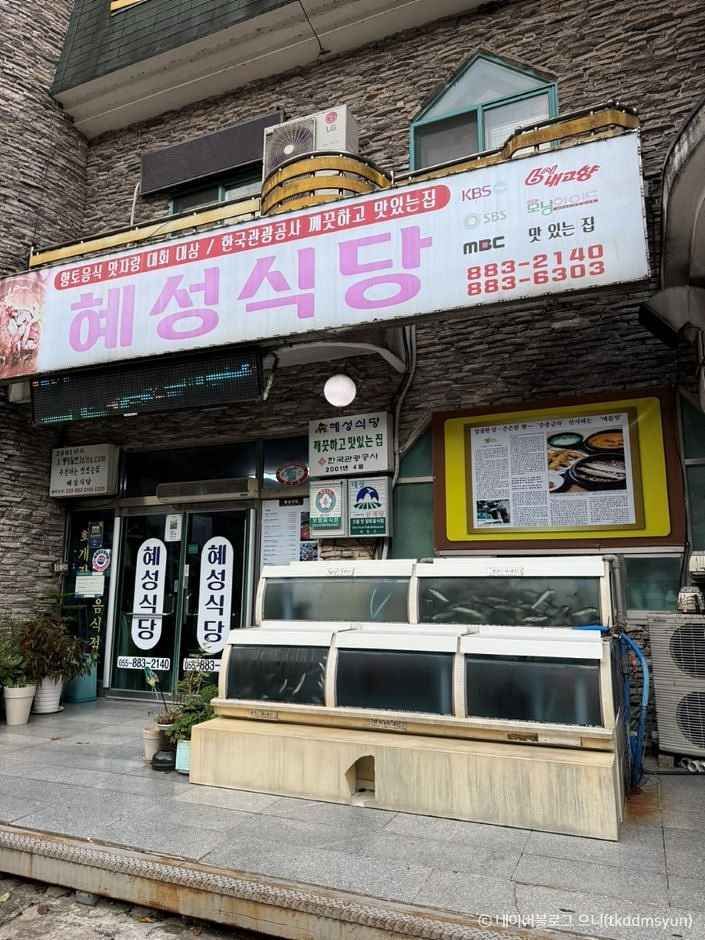
Hyeseong SikdangA restaurant serving Seomjin River specialties such as jaecheop clam set meals and chamge crab soup.
6
Hyeseong SikdangA restaurant serving Seomjin River specialties such as jaecheop clam set meals and chamge crab soup. -
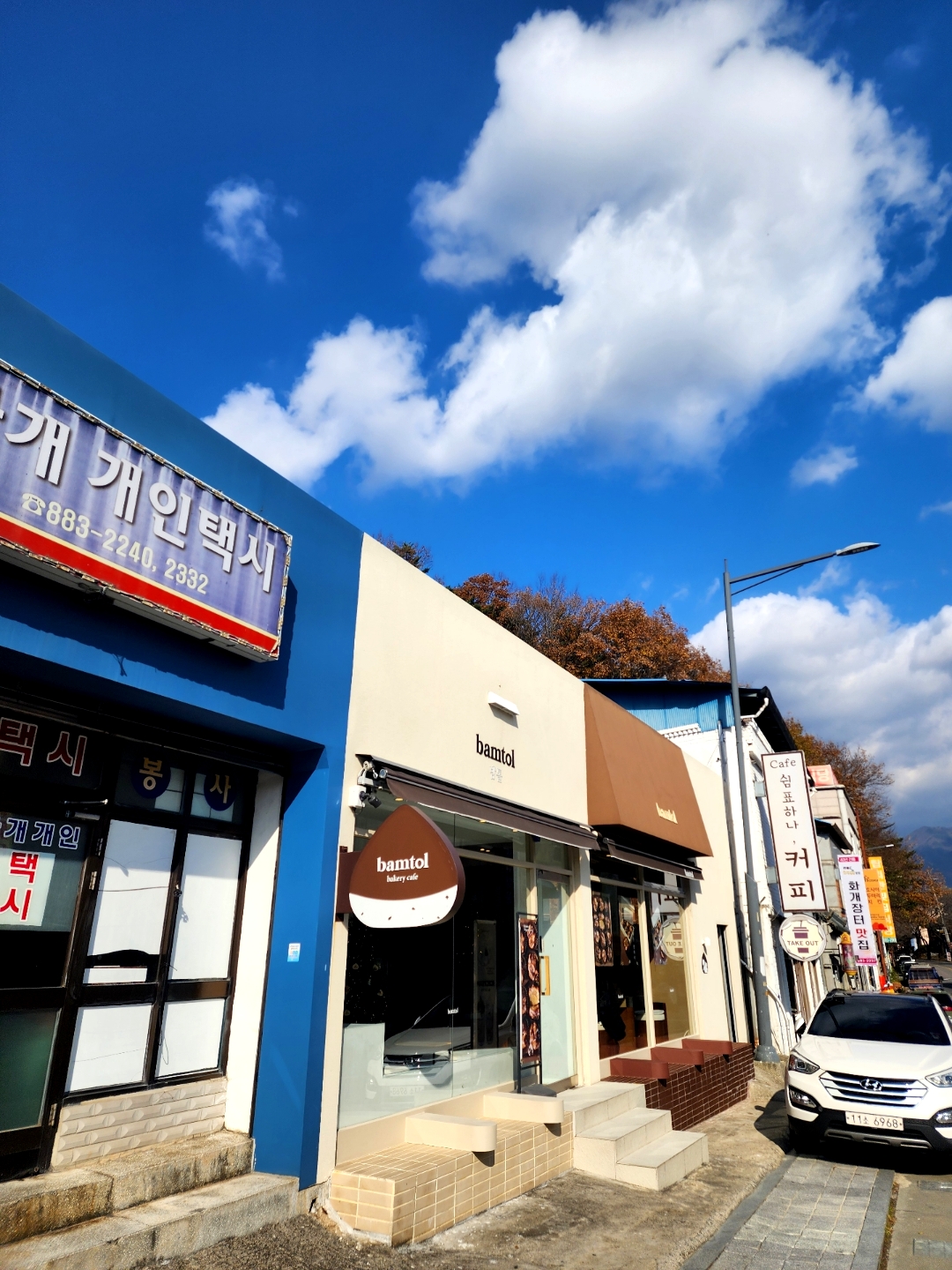 7
BamtolA café where you can enjoy pies and desserts made with Hadong chestnuts and green tea.
7
BamtolA café where you can enjoy pies and desserts made with Hadong chestnuts and green tea. -
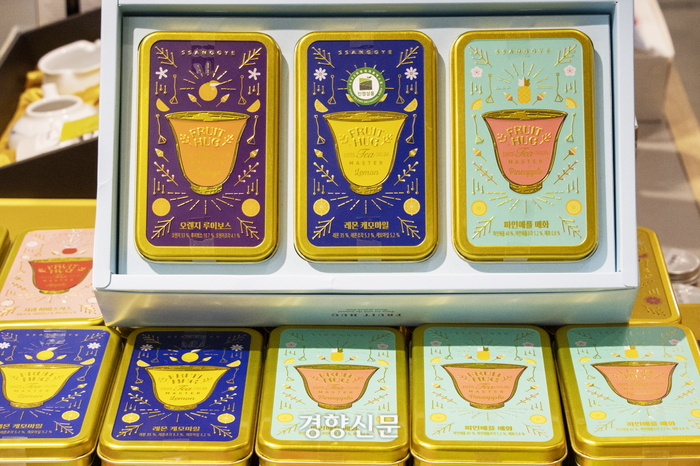 8
SsanggyemyeongchaA tea house where you can enjoy and purchase Hadong green tea and a variety of traditional teas.
8
SsanggyemyeongchaA tea house where you can enjoy and purchase Hadong green tea and a variety of traditional teas.
Events in This Area

Festivals in This Area

More Travel Guides in This Area
 Travel Guide
A Historic Temple South of Jirisan Named ‘Ssangye’ in 887
 Travel Guide
A 15-Minute Walk Up Hwagaecheon to Jeonggeumjeong, Hadong’s Terraced Tea Fields
 Travel Guide
Starway Hadong: Reading the Seomjin River and Pyeongsari Fields from a 390-Meter Star-Shaped Path
 Travel Guide
Stone Pagodas and Baedal Sanctuary in the Cheonghakdong Valley of Jirisan: Hadong Samseonggung
Korea News
 News
News
TWS heightens comeback excitement with kitschy charm… Anticipation for “plot twist” rises
 News
News
BTS, Six Months After Its Release… ‘Arirang’ Climbs the U.S. Billboard 200
 News
News
'The Nation's Girl Group' RESCENE, Five Girls Transformed into Guardians… Additional Concept Photos for Their 4th Mini Album Revealed
 News
News