A 15-Minute Walk Up Hwagaecheon to Jeonggeumjeong, Hadong’s Terraced Tea Fields
Jeonggeum Tea Field is a wild tea plantation on a slope about 4 km from Hwagae Market toward Ssanggyesa Temple and about 800 m uphill from Jeonggeum Samgeori. It is free and open year-round, but the access road and parking area are narrow, so it is best to allow about 15 minutes to walk to Jeonggeumjeong and consider connecting to the Thousand-Year Tea Field Trail.

I’ve been here?
Your check-in helps the next traveler.
No one has checked in yet Be the first
One tap — no writing needed
How 120,000㎡ of San 168-1, Jeonggeum-ri, Hwagae-myeon, Became a Tea Field
Jeonggeum Tea Field is a tea plantation established around San 168-1, Jeonggeum-ri, Hwagae-myeon, Hadong-gun, Gyeongsangnam-do. Its listed address is 43-22 Sinchon Dosim-gil, Hwagae-myeon, Hadong-gun, Gyeongsangnam-do. Tea plants continue in terraces along a sloped area of approximately 120,000㎡, while the mist, humidity, and daily temperature range on the southern slopes of Jirisan near Hwagaecheon and the Seomjingang River are closely connected to tea cultivation.
Hadong’s tea culture dates back to 828, the third year of the reign of King Heungdeok of Silla. Records say that the Tang envoy Kim Daeryeom brought tea seeds and planted them around Jirisan by royal command. The tea cultivation origin site in Unsu-ri, Hwagae-myeon, is Gyeongsangnam-do Monument No. 61. Jeonggeum Tea Field is a place where the traditional tea-farming landscape around this origin site can be experienced as an actual view.
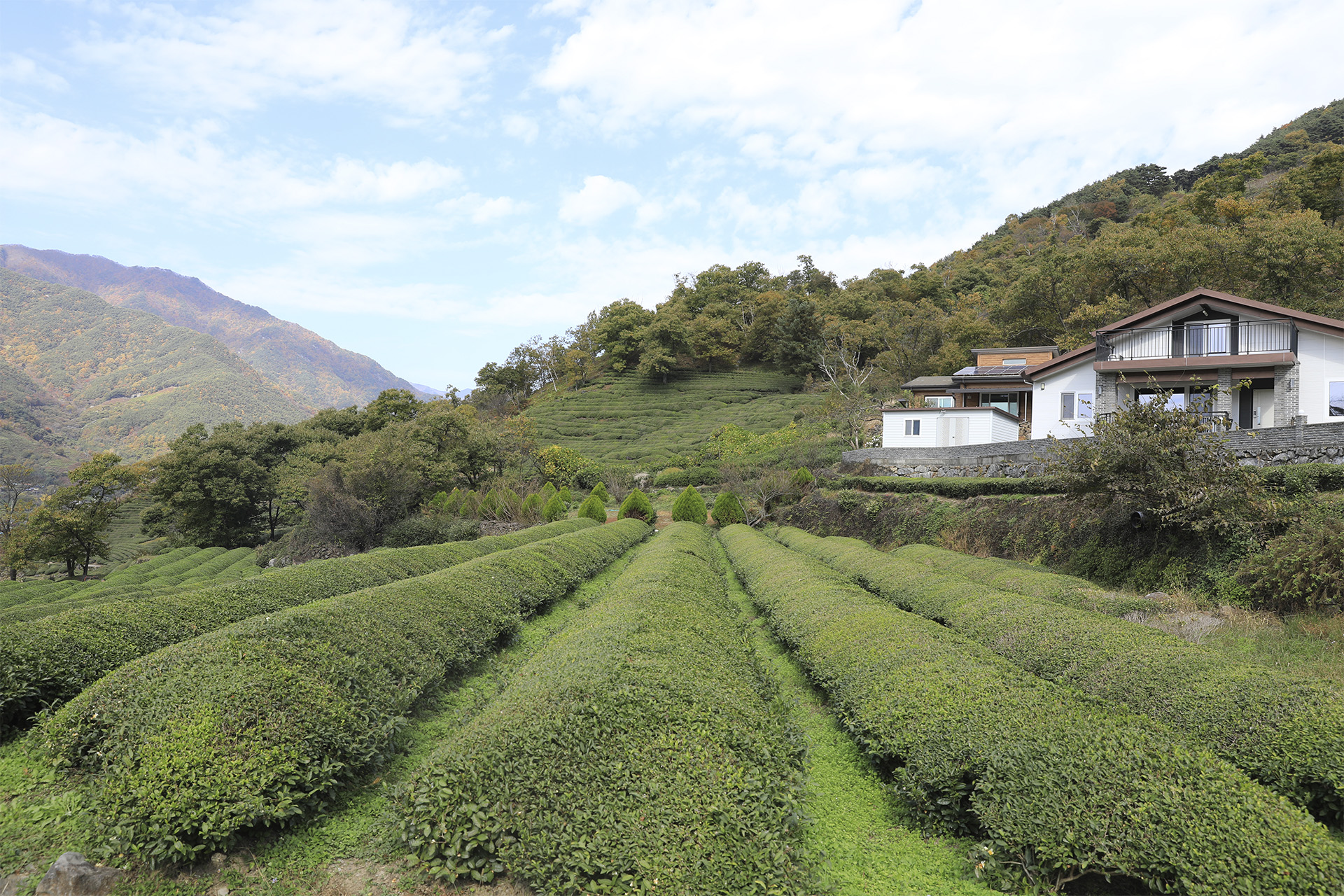
A 4 km Journey from Hwagae Market and an 800 m Climb from Jeonggeum Samgeori
Jeonggeum Tea Field is approximately 4 km from Hwagae Market toward Ssanggyesa Temple. Connecting to the Hwagae Market or Ssanggyesa Temple area by car or taxi, then walking approximately 800 m uphill from Jeonggeum Samgeori toward the tea field, makes the route straightforward.
The walk to Jeonggeumjeong on the upper side is generally described as taking about 15 minutes at an easy pace. Although the road is paved, it is narrow, making it difficult for two vehicles to pass, and parking space at the site is limited. Drivers should first check whether there is room near the entrance, while pedestrians are advised to prepare slip-resistant athletic shoes and water.
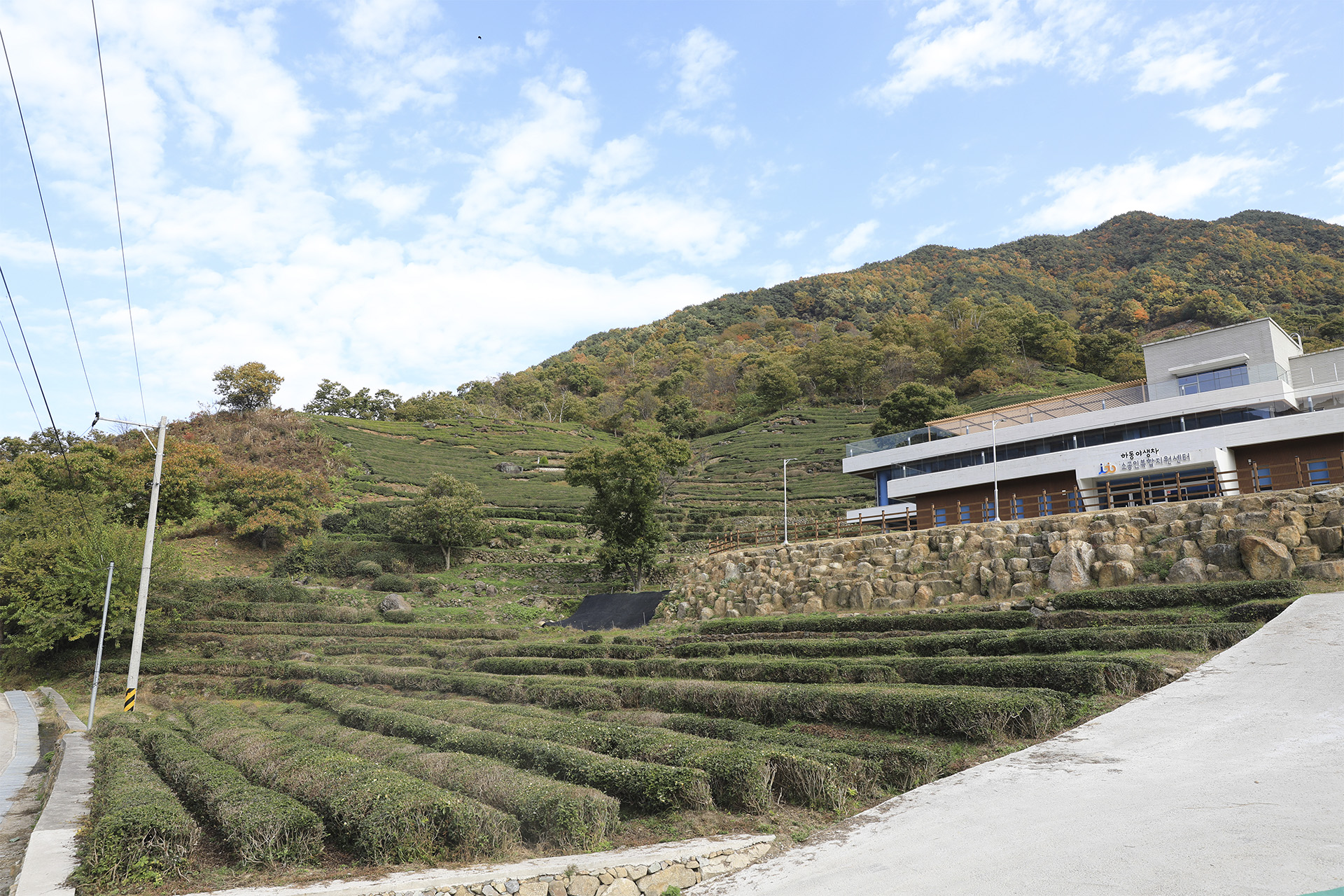
Terraced Fields and the Hwagae-myeon Valley Seen from Jeonggeumjeong
Jeonggeumjeong, at the top of the tea field, overlooks the terraced tea fields and the Hwagae-myeon area. This is not a flat park but a site built on a steep mountain slope, so rather than ending a photo session at the edge of the tea field, it is better to climb to the pavilion and capture the layers of the terrain together.
Morning or late afternoon, when the light is lower, is preferable to the harsh midday sun, although the mountain path may be poorly lit after sunset. To minimize damage to the cultivated area, visitors should remain on existing paths and around the pavilion rather than entering the tea field or shooting outside the railings.
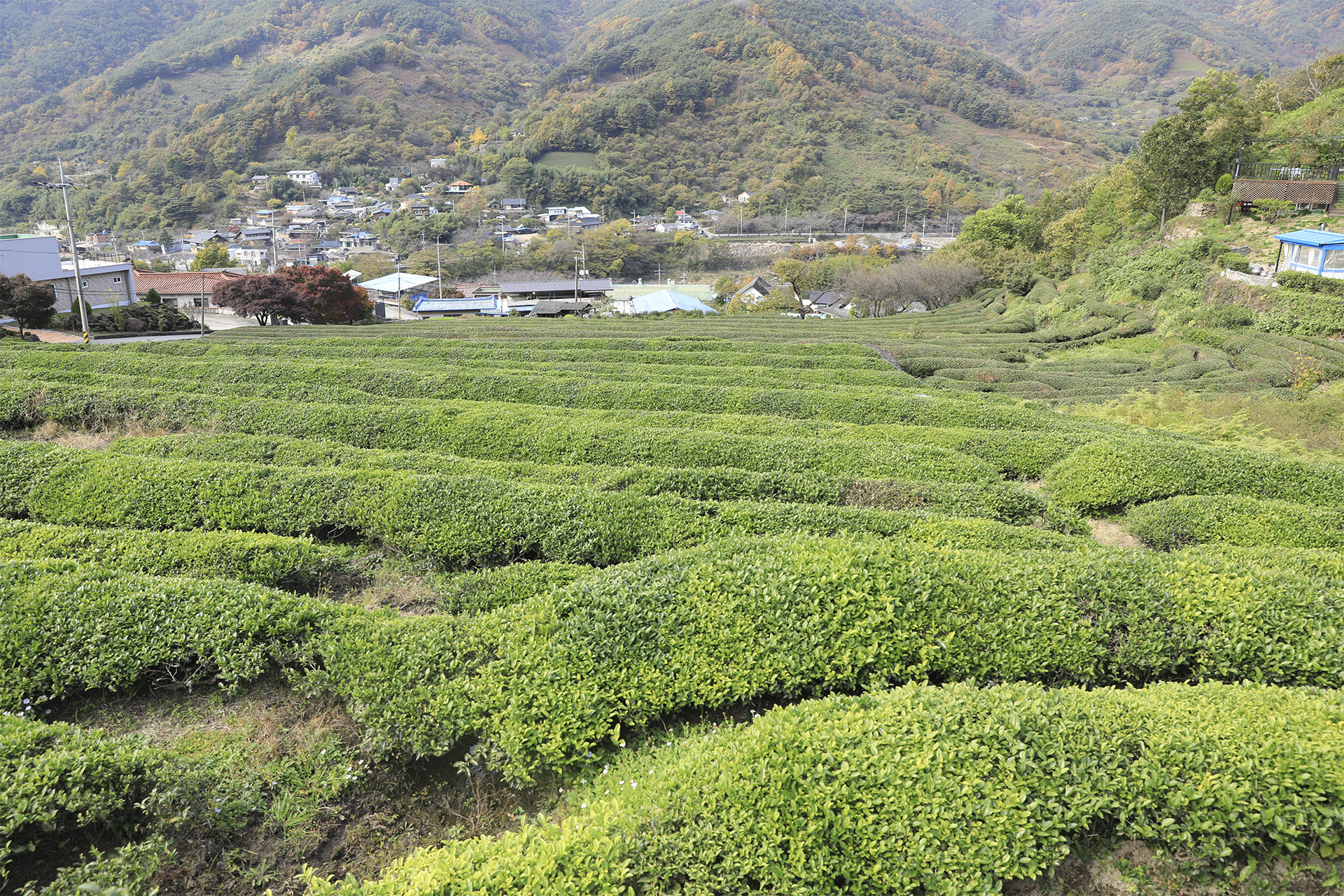
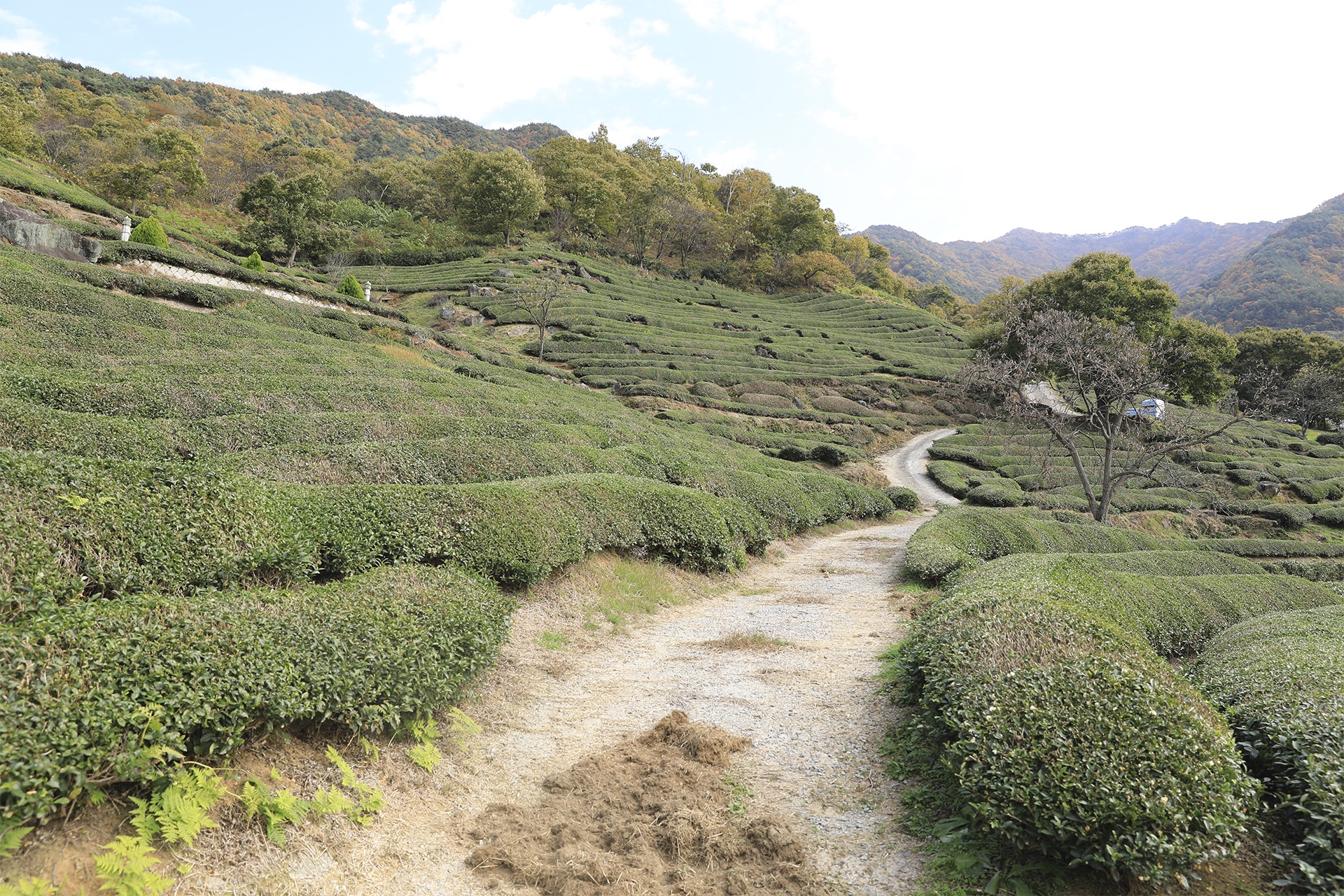
The Seasonal Guide to Viewing Tea Leaves, from Around Gogu to June
Tea-leaf harvesting in Hadong usually continues from around Gogu, approximately April 20 on the solar calendar, through June. Green tea made from tea leaves picked before Gogu is called Ujeon, while Cheongmyeong falls around April 5 on the solar calendar. During this period, visitors are likely to see new tea shoots and cultivation work, but because this is a working agricultural area, they should step aside so as not to interfere with workers’ routes.
During cherry-blossom season, access roads may become congested as demand to visit Hwagae Market and the Simni Cherry Blossom Road overlaps. If you plan to make only a short visit to the tea field, choose a weekday morning rather than a weekend midday during flower season. After spring rain, waterproof footwear is recommended to cope with slippery paved slopes and dirt paths.
Connecting the 2.7 km from the Tea Cultivation Origin Site to Jeonggeum Tea Field via the Millennium Tea Field Trail
A round trip to Jeonggeum Tea Field alone takes approximately 30 minutes, but the Millennium Tea Field Trail connecting the tea cultivation origin site and Jeonggeum Tea Field is about 2.7 km long. If the route is extended to include Sinchon Tea Field and the successor trees of the thousand-year-old tea tree, the Hadong Millennium Tea Field Trail is approximately 4.0 km and is described as taking about 2 hours on foot.
For a short scenic walk, it is best to make a round trip from Jeonggeum Samgeori to Jeonggeumjeong and return to Hwagae Market. Conversely, if you want to see both the history of Hadong’s tea culture and the form of the fields, it is better to start at the tea cultivation origin site and climb to Jeonggeum Tea Field. Prepare water, snacks, and a fully charged phone battery for the 2-hour walk.
Free and Open Year-Round, but Ask 055-882-1564 About the Weather and Site Conditions
Jeonggeum Tea Field is listed as open at all times throughout the year, with free admission and free parking. It is not a facility requiring a separate ticket office or visitor reservation, but because it is both a cultivated area and a sloped outdoor space, it is advisable to postpone access during heavy rain, strong winds, or heavy snow. The tourist information telephone number is 055-882-1564, and official tourism information can be checked on the Hadong County website.
It is difficult to recommend the site to wheelchair and stroller users. The approximately 800 m section leading to Jeonggeumjeong is steep, the path is narrow, and terraced terrain continues inside the tea field. No separate information about foreign-language interpretation or permanent guide staff has been confirmed, so it is practical to prepare a translation app and offline map, and to take care of meals and restroom needs first at nearby hubs such as Hwagae Market and Ssanggyesa Temple.
- Operation: Open at all times, year-round
- Fees: Free admission, free parking
- Inquiries: 055-882-1564
- Official information: https://www.hadong.go.kr
- Recommended length of stay: Approximately 30 minutes for a round trip to Jeonggeumjeong; approximately 2 hours when combined with the Millennium Tea Field Trail
Before You Go
- Address
- 43-22 Sinchon Dosim-gil, Hwagae-myeon, Hadong-gun, Gyeongsangnam-do
- Hours
- Open at all times
- Closed
- Open year-round
- Admission
- Free
- Phone
- 055-882-1564
- Official site
- https://www.hadong.go.kr
- Transport
- Approximately 4 km toward Ssanggyesa Temple from Hwagae Market, followed by an approximately 800 m uphill walk taking about 15 minutes from Jeonggeum Samgeori
- Parking
- Available and free. The access road and parking area are narrow
- Time needed
- Approximately 30 minutes for a round trip to Jeonggeumjeong; approximately 2 hours when combined with the Millennium Tea Field Trail
- Accessibility
- Not suitable for wheelchair or stroller access due to slopes, narrow paths, and terraced terrain. No information about permanent foreign-language guidance is available
The information above is accurate as of the time of writing. Check the official information again before visiting.

Places
Nearby Attractions 5
-
 1
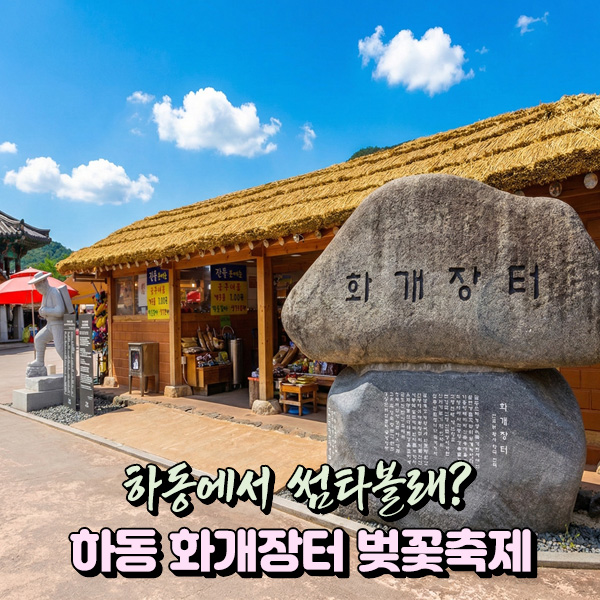
Hwagae MarketA place to explore the scenery of a traditional market and discover local specialties.
1
Hwagae MarketA place to explore the scenery of a traditional market and discover local specialties. -
 2
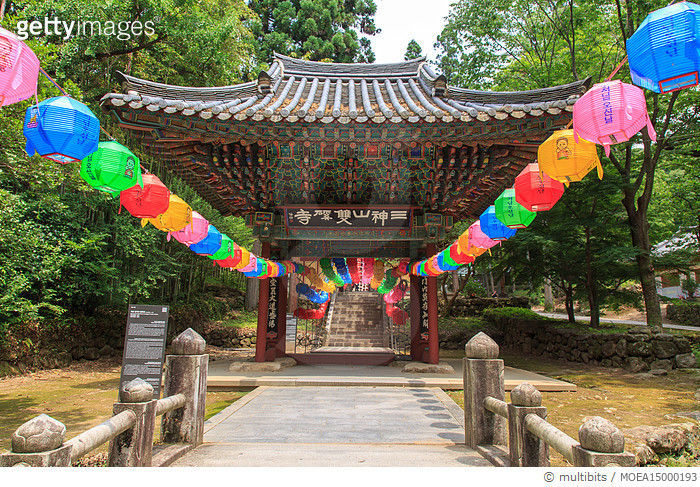
Ssanggyesa TempleA historic Buddhist temple where you can stroll through the grounds of a thousand-year-old temple and explore Buddhist cultural heritage.
2
Ssanggyesa TempleA historic Buddhist temple where you can stroll through the grounds of a thousand-year-old temple and explore Buddhist cultural heritage. -
 3
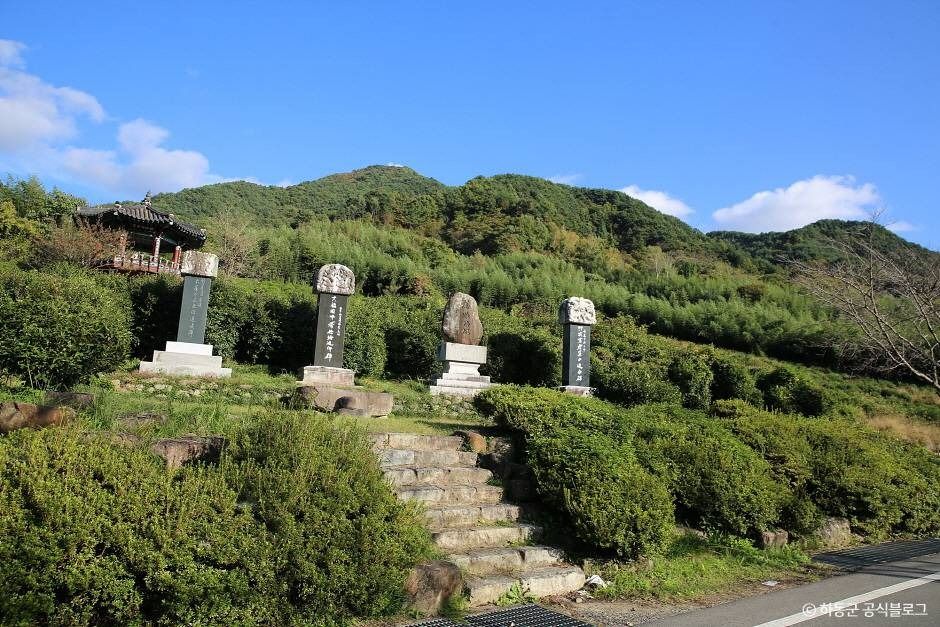
Hadong Ssanggyesa Tea Tree First Cultivation SiteA place where you can learn about tea trees and the history of their first cultivation while strolling through the tea fields.
3
Hadong Ssanggyesa Tea Tree First Cultivation SiteA place where you can learn about tea trees and the history of their first cultivation while strolling through the tea fields. -
 4
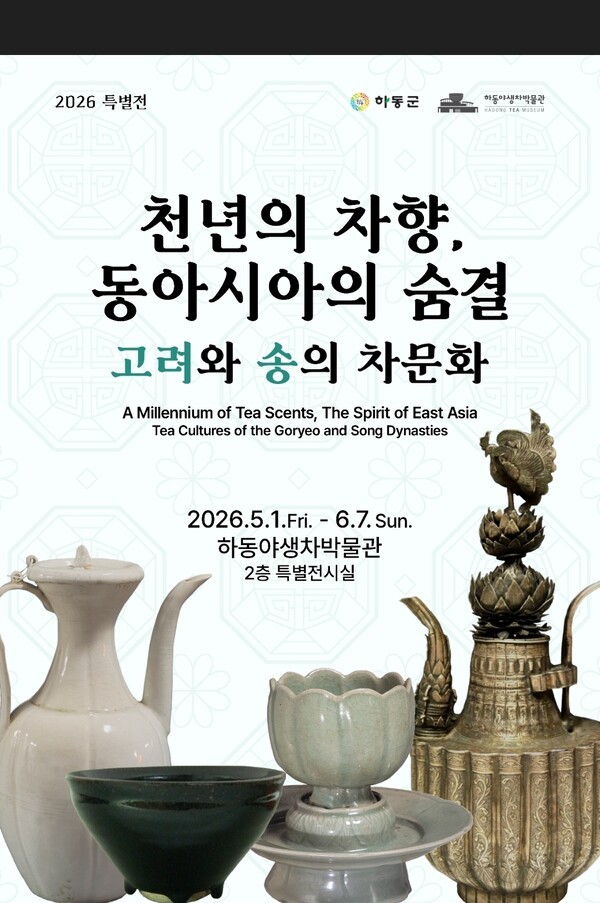
Hadong Wild Tea MuseumA museum showcasing and offering hands-on experiences of the history of Hadong tea and tea-making culture.
4
Hadong Wild Tea MuseumA museum showcasing and offering hands-on experiences of the history of Hadong tea and tea-making culture. -
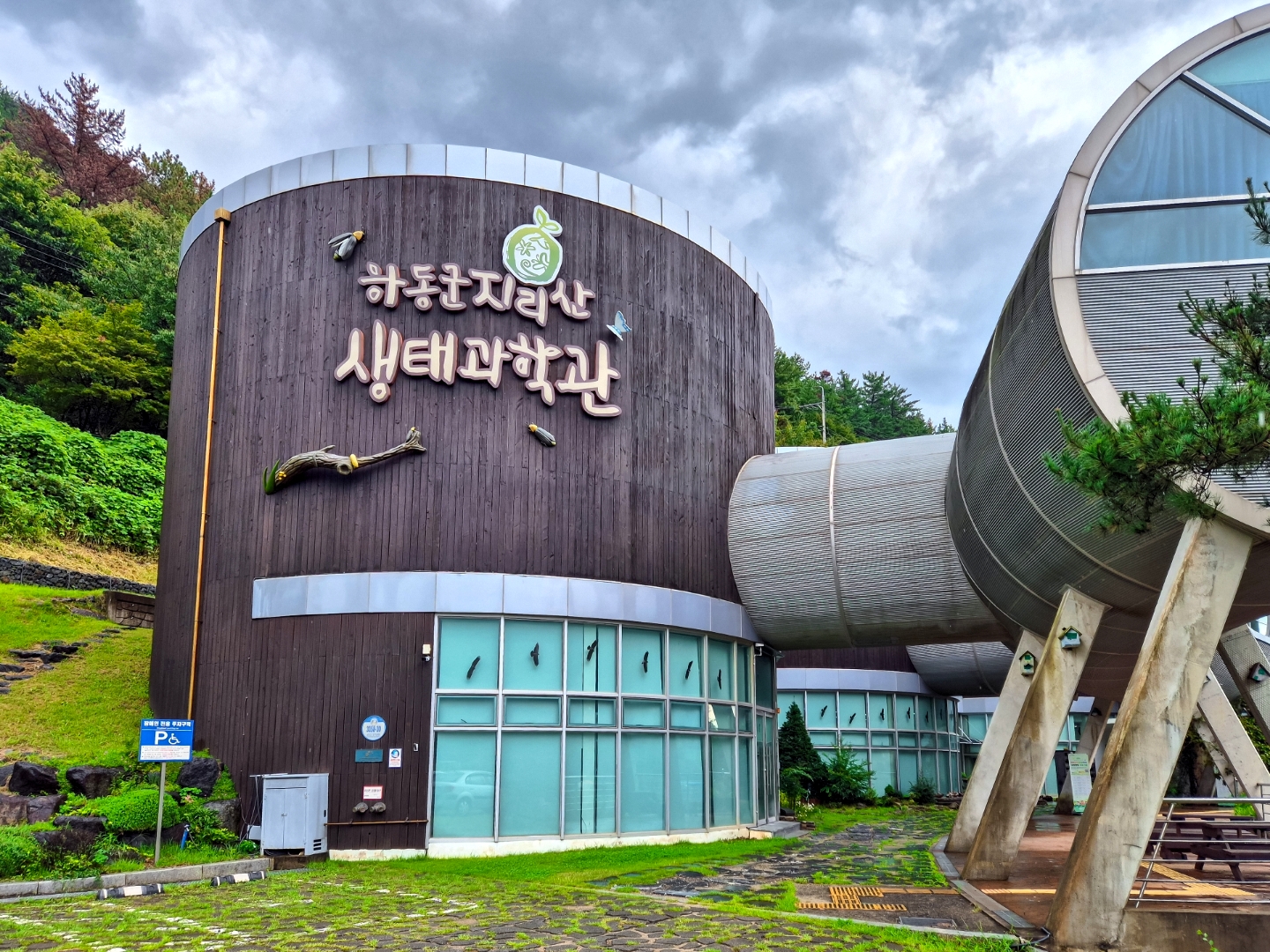 5
Jirisan Ecology Science MuseumA science museum where visitors can explore Jirisan’s ecological exhibits and experience its wild flora and fauna.
5
Jirisan Ecology Science MuseumA science museum where visitors can explore Jirisan’s ecological exhibits and experience its wild flora and fauna.
Food & Dining 5
-
 6
Okhwa JumakA Korean restaurant serving local Seomjin River dishes such as marsh clam soup and mitten crab stew.
6
Okhwa JumakA Korean restaurant serving local Seomjin River dishes such as marsh clam soup and mitten crab stew. -
 7
Hyangmi GardenA local restaurant serving corbicula clam sashimi and soup, along with sweetfish dishes.
7
Hyangmi GardenA local restaurant serving corbicula clam sashimi and soup, along with sweetfish dishes. -
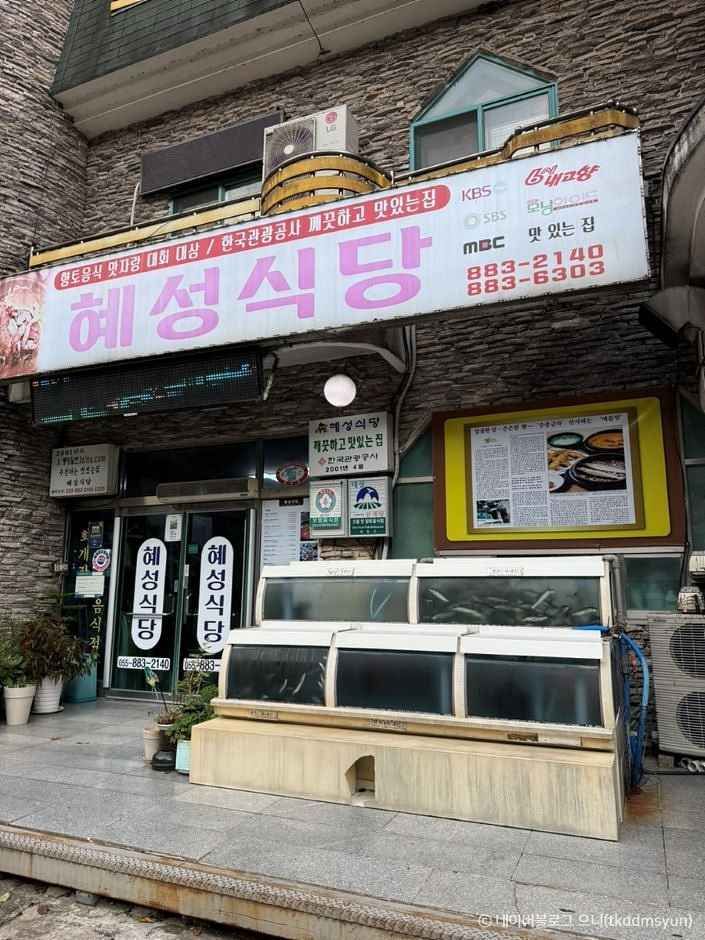 8
Hyeseong SikdangA local Hadong restaurant serving jaecheop clam set meals, freshwater crab soup, and sweetfish dishes.
8
Hyeseong SikdangA local Hadong restaurant serving jaecheop clam set meals, freshwater crab soup, and sweetfish dishes. -
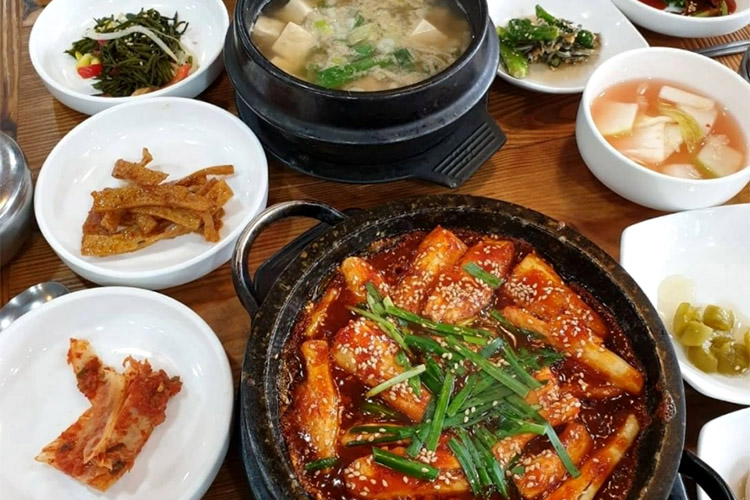 9
Cheongun SikdangA restaurant serving local specialties such as grilled deodeok with wild greens and marsh clam soup.
9
Cheongun SikdangA restaurant serving local specialties such as grilled deodeok with wild greens and marsh clam soup. -
 10
Beotkkot GyeongyangsikA Western-style restaurant serving Jirisan black pork tonkatsu and marsh clam pasta.
10
Beotkkot GyeongyangsikA Western-style restaurant serving Jirisan black pork tonkatsu and marsh clam pasta.
Events in This Area


Festivals in This Area


More Travel Guides in This Area
 Travel Guide
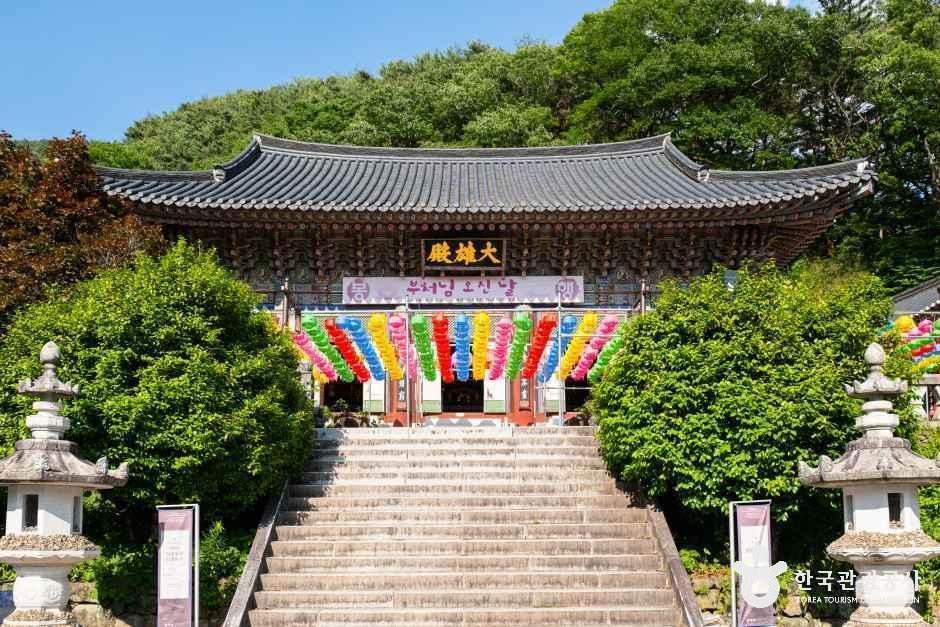
A Historic Temple South of Jirisan Named ‘Ssangye’ in 887
 Travel Guide
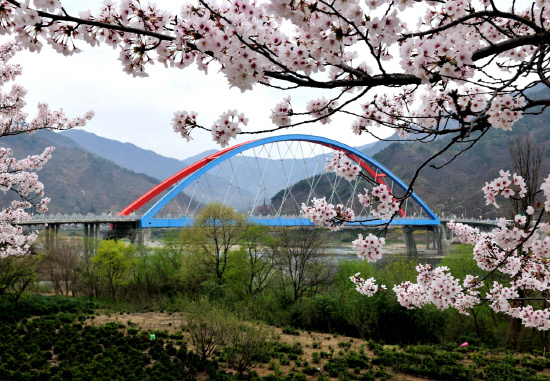
Hwagae Market, the Yeongnam–Honam Market Born of the Seomjin River Waterway and Revived by a Song
 Travel Guide
Stone Pagodas and Baedal Sanctuary in the Cheonghakdong Valley of Jirisan: Hadong Samseonggung
 Travel Guide
Starway Hadong: Reading the Seomjin River and Pyeongsari Fields from a 390-Meter Star-Shaped Path
Korea News
 News
News
TWS heightens comeback excitement with kitschy charm… Anticipation for “plot twist” rises
 News
News
BTS, Six Months After Its Release… ‘Arirang’ Climbs the U.S. Billboard 200
 News
News
'The Nation's Girl Group' RESCENE, Five Girls Transformed into Guardians… Additional Concept Photos for Their 4th Mini Album Revealed
 News
News