Cheonan Independence Hall: A Korean Independence Movement History Route from the Tower of the Korean People to Hall 6
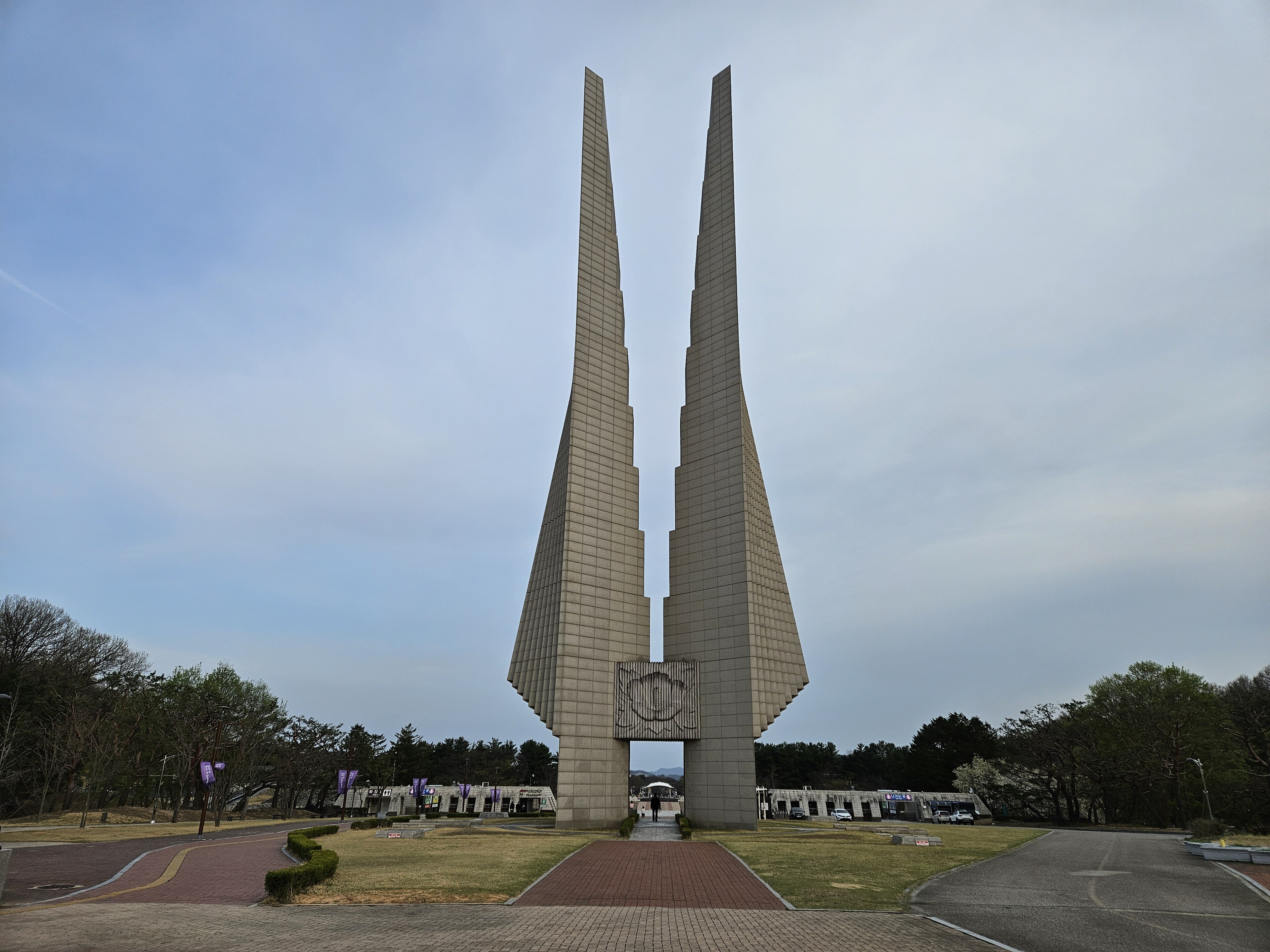
Located in Mokcheon-eup, Cheonan, Chungcheongnam-do, the Independence Hall is a national memorial facility that opened on August 15, 1987. Its six permanent exhibition halls and outdoor memorial spaces offer a chronological look at the history of Korea’s independence movement. Admission is free. It is open from 09:30 to 18:00 from March to October, and from 09:30 to 17:00 from November to February.
I’ve been here?
Your check-in helps the next traveler.
17 people viewed this week Be the first
One tap — no writing needed
From the 1982 Public Fundraising Campaign to the Opening on August 15, 1987
Independence Hall of Korea was established to collect, preserve, exhibit, and research the history of the independence movement during the Japanese colonial period and the overcoming of national crises. The founding initiative meeting was held on August 28, 1982, and public fundraising began on August 31 of the same year. Following the groundbreaking ceremony on August 15, 1983, the hall was completed and opened on August 15, 1987, in Mokcheon, Cheonan.
What distinguishes this site from a simple war memorial is that its exhibitions begin not only with the independence movement but also with Exhibition Hall 1, which covers the period from prehistoric times to before 1860. Exhibition Hall 2 covers colonial rule, Hall 3 the March 1st Movement of 1919, Hall 5 the War of Independence, and Hall 6 the Provisional Government of the Republic of Korea and the succession of the nation after liberation. Free admission has been offered since January 1, 2008, allowing visitors to enter the exhibition route without purchasing a ticket.
The Chronological Sequence of Six Exhibition Halls Beginning at the Tower of the Nation
For first-time visitors, it is easiest to begin at the General Information Center near the parking lot, see the Tower of the Nation and the House of the Nation, and then walk through the semicircular exhibition halls in order from Hall 1 to Hall 6. Hall 1, “The Roots of the Nation,” covers the period from Paleolithic culture approximately 500,000 years ago to before 1860, while Hall 2, “The Nation’s Trials,” presents the realities of Japanese imperialist aggression and colonial rule.
The key sections are Hall 3, “The Nation’s Shouts,” Hall 5, “Reclaiming the Nation,” and Hall 6, “A New Nation.” Hall 3 explains how the March 1st Movement spread beyond Korea to Korean communities overseas; Hall 5 covers the activities of independence armies, patriotic resistance fighters, and the Korean Liberation Army in Manchuria and mainland China; and Hall 6 explains the significance of the Provisional Government of the Republic of Korea, established on April 11, 1919, and the concept of a democratic republic.
- Hall 1: History and culture from prehistoric times to before 1860
- Hall 2: Efforts toward modern national independence and Japanese colonial rule
- Hall 3: The development of the March 1st Movement of 1919
- Hall 5: The War of Independence and armed resistance at home and abroad
- Hall 6: The Provisional Government of the Republic of Korea and plans for a new nation
Planning Around the 09:30 Opening and the 17:00 Admission Deadline
Visiting hours are 09:30–18:00 from March through October, with admission available until 17:00. From November through February, the site operates from 09:30–17:00, with admission closing at 16:00. The regular closing day is Monday, but the exhibition halls open when Monday is a public holiday. In 2026, the site will operate normally on Monday, February 16; Monday, March 2; Monday, May 25; Monday, August 17; and Monday, October 5.
A schedule for quickly touring the exhibition halls takes about two hours, while a visit that includes reading Halls 1–6 and exploring the outdoor areas takes about three to four hours. The outdoor exhibitions and rest areas remain open on Mondays, so on a closing day visitors can focus on the Tower of the Nation, memorial spaces, and walking routes instead of the indoor exhibitions. The main telephone number is 041-560-0114, and weekday ARS information is available from 09:00–18:00.
- March–October: Admission 09:30–17:00, visiting hours 09:30–18:00
- November–February: Admission 09:30–16:00, visiting hours 09:30–17:00
- Admission fee: Free
- Closed: Mondays, except when Monday is a public holiday
12 km from Cheonan Station and 25 Minutes from Cheonan-Asan Station: Choosing Among Eight Bus Routes
Visitors arriving by rail on Seoul Metropolitan Subway Line 1, the Mugunghwa-ho, Saemaeul-ho, or ITX-Maum travel by city bus from Cheonan Station. The distance from Cheonan Station to Independence Hall of Korea is approximately 12 km, and the journey takes about 40 minutes according to the official information. Those using the KTX or SRT can take a taxi from Cheonan-Asan Station, which takes about 25 minutes; traveling by bus requires a transfer.
From in front of Cheonan Intercity Bus Terminal, the journey is approximately 14 km and takes about 40 minutes by city bus. Routes passing through the grounds are 381, 382, 383, 390, 391, 392, 400, and 815, with Route 400 listed in the official information as having a 20-minute interval. Buses enter the boarding and alighting area inside the memorial grounds only from 08:00–19:00, so outside those hours it is advisable to plan your route with the possibility of stopping at the parking-lot boarding area in mind.
- From Cheonan Station: Approximately 12 km, about 40 minutes by bus
- From Cheonan-Asan Station: About 25 minutes by taxi; a bus transfer is required
- From Cheonan Intercity Bus Terminal: Approximately 14 km, about 40 minutes by bus
- Routes passing through the grounds: 381, 382, 383, 390, 391, 392, 400, and 815
- By car: Approximately 2 km from the Independence Hall (Mokcheon) interchange
Reducing Walking Distance with a 1,354-Space Parking Lot and the 2.3 km Independence Bureungi Shuttle
Visitors arriving by car can use the parking park, which covers approximately 140,000 square meters. Current facility information lists capacity for 1,354 vehicles at the same time. The daily parking fee is 2,000 won for small vehicles under 25 seats and 3,000 won for large vehicles with 25 seats or more. Holders of disability permits, compact vehicles, hybrid vehicles, low-emission vehicles, and exemplary military-service family certificates receive a 1,000-won discount, while holders of national merit certificates and bereaved-family certificates for national meritorious persons are exempt.
Because the distance from the parking lot to the House of the Nation and the exhibition halls is considerable, visitors with limited mobility or those wishing to shorten the outdoor route can use transportation within the grounds. The Taegeuk Train ticket office is at the Tower of the Nation stop. The Independence Bureungi is an outdoor 2.3 km circular experience shuttle linking the Tower of the Nation, the Hill of Hopes for Unification, the Memorial Place, the House of the Nation, and the Tower of the Nation. The General Information Center offers free rentals of strollers for infants and toddlers weighing 15 kg or less, as well as wheelchairs for older adults and people with disabilities.
- Small-vehicle parking: 2,000 won per day
- Large-vehicle parking: 3,000 won per day
- Monday parking: Open free of charge except on public holidays and special opening days
- Storage lockers: 100 won, refundable after use
- Wheelchair and stroller rentals: Tuesday–Sunday 09:30–16:00, until 15:00 in winter
How to Use the 88-Seat MR Independence Theater and Online Exhibition Guide Reservations
If you would like to add an interactive experience to your visit beyond reading the exhibitions, you can use the MR Independence Theater. It offers video experiences using 4D, AR, and VR technology, with on-site registration. Each presentation lasts approximately 20 minutes, of which the actual video runs for about 15 minutes. During the summer season, six sessions operate from 10:00–17:00; during the winter season, five sessions operate from 10:00–16:00. Each session accommodates 88 people, including four separate seats for visitors with disabilities.
Visitors may enter from 15 minutes before the video begins, but admission is not permitted after the start. Use is restricted for children under 1 meter tall, pregnant people, intoxicated persons, and those with spinal disc conditions or high or low blood pressure. Children aged 4–7 must be accompanied by a guardian. Exhibition guides are free and operate by online reservation through the website. Information leaflets are also available for download in Korean, English, Japanese, and Chinese, helping foreign visitors with limited background knowledge of Korean history understand the chronological order of the exhibitions.
Why Continue to the Park Exhibiting Dismantled Materials from the Japanese Government-General Building and Baengnyeon Pond
After the indoor exhibitions, visitors can add a route examining the material remains of colonial memory outdoors. On August 11, 1998, Independence Hall of Korea created the Park of Dismantled Materials from the Former Japanese Government-General Building. Because it allows visitors to view the symbol of colonial rule—encountered otherwise only through building photographs or timelines—alongside actual dismantled materials, the context becomes clearer when it is visited after the colonial-rule exhibition in Hall 2.
The waterside deck at Baengnyeon Pond between the parking lot and the House of the Nation has two large membrane-structure pergolas and descends toward the lower part of the pond. The March 1st Culture Plaza in the center of the exhibition halls contains restaurants, a multipurpose performance hall, a general convenience store, and a children’s playground, making it a convenient place to rest or eat between halls. The children’s playroom is next to the central restaurant in the March 1st Plaza, and the recommended age is 3–7.
Before You Go
- Address
- 1 Independence Hall-ro, Mokcheon-eup, Dongnam-gu, Cheonan-si, Chungcheongnam-do
- Hours
- March–October 09:30–18:00 (admission closes at 17:00) / November–February 09:30–17:00 (admission closes at 16:00)
- Closed
- Closed every Monday, except when Monday is a public holiday. Outdoor exhibitions and rest areas remain open on Mondays
- Admission
- Free
- Phone
- 041-560-0114
- Official site
- https://i815.or.kr
- Transport
- Approximately 12 km and 40 minutes by bus from Cheonan Station / approximately 25 minutes by taxi from Cheonan-Asan Station / bus routes 381, 382, 383, 390, 391, 392, 400, and 815
- Parking
- Available. Capacity for 1,354 vehicles at once; small vehicles 2,000 won per day and large vehicles 3,000 won per day; free on Mondays except public holidays and special opening days
- Time needed
- Core exhibitions: 2 hours / Halls 1–6 and outdoor areas: 3–4 hours
- Accessibility
- Free wheelchair and stroller rentals at the General Information Center. The MR Independence Theater has four accessible seats and a hearing loop system. Information leaflets are available in Korean, English, Japanese, and Chinese
The information above is current as of the time of writing. Please check the official information again before visiting.

Places
Nearby Attractions 4
-
 1
1
-
 2
2
-
 3
3
-
 4
4
Food & Dining 4
-
 5
5
-
 6
6
-
 7
7
-
 8
8
Events in This Area

Festivals in This Area

More Travel Guides in This Area
 Travel Guide
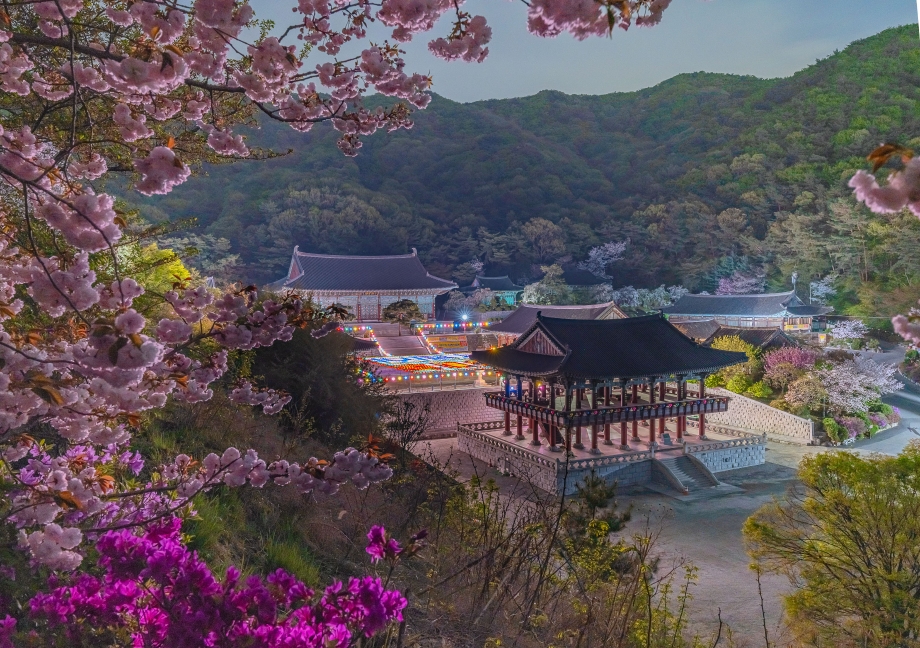
The 15 m Bronze Buddha Beyond 203 Steps: Gakwonsa Temple, Cheonan
 Travel Guide
Asian Contemporary Art at 43 Mannam-ro: Arario Gallery Cheonan
 Travel Guide
From the 1706 Shrine to the 2011 Memorial: The Recommended Order for Visiting Hyeonchungsa Shrine in Asan
 Travel Guide
Gongsanseong, Baekje’s royal fortress overlooking the Geumgang River: a 2.6 km walk
Korea News
 News
News
‘NewJeans Expulsion’ Danielle Releases Her First YouTube Video… “We Don’t Know What Will Happen Next”
![aespa’s North American Tour Has Remaining Seats Despite ‘$49’ Bargain Prices… A Stark Popularity Gap with KATSEYE [TEN Starfield]](https://kotourlive-images.s3.ap-northeast-1.amazonaws.com/news/1788485037424_a59b1932_naver_rank_thumb_0000774618_1788485037424.jpg) News
News
aespa’s North American Tour Has Remaining Seats Despite ‘$49’ Bargain Prices… A Stark Popularity Gap with KATSEYE [TEN Starfield]
![[Photo] TWICE’s Dahyun attends a film festival red carpet as an actress](https://kotourlive-images.s3.ap-northeast-1.amazonaws.com/news/1788485316508_edd43ecd_news_870a60a6-6f11-4d73-aa7c-48d91318a0f7.jpg) News
News
[Photo] TWICE’s Dahyun attends a film festival red carpet as an actress
![[On-Site Video] “We’re Departing Separately Together”… BIGBANG Begins ‘COSMOS’ World Tour](https://kotourlive-images.s3.ap-northeast-1.amazonaws.com/news/1788485226518_c5719641_news_fdd4764a-0f4e-4968-8e4e-e98a02872f88.jpg) News
News