A Road Lined with 160 Ginkgo Trees, Garosu-gil in Sinsa-dong
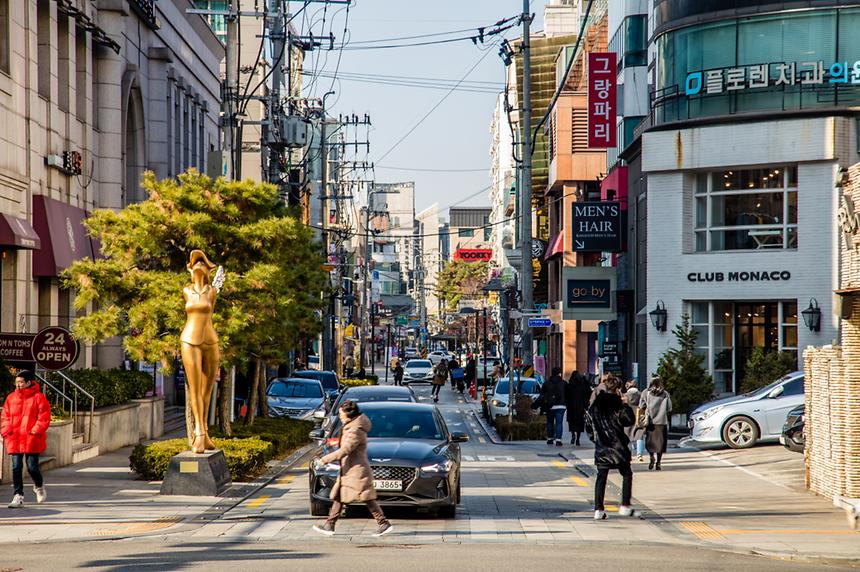
Garosu-gil in Sinsa-dong is a commercial street in Sinsa-dong, Gangnam-gu, named after the ginkgo-tree street planting done by local residents in the mid-1980s. It reached its heyday after South Korea’s first Apple Store opened there in 2018, but as of 2025 the vacancy rate has exceeded 40%, and the center of business activity is shifting to the inner alleys known as “Sero-su-gil” (Seoul vertical street). It is about a 10-minute walk from Exit 8 of Sinsa Station on Line 3. Autumn, when ginkgo leaves turn yellow, and spring, when fresh green shoots emerge, are widely regarded as the best seasons for strolling.
I’ve been here?
Your check-in helps the next traveler.
No one has checked in yet Be the first
One tap — no writing needed
1980: Planting Ginkgo Trees Begins as Sinsa-dong Separates from Apgujeong-dong
The name Garosu-gil comes from the ginkgo street trees actually planted along the road. When Sinsa-dong was separated from Apgujeong-dong in July 1980, Apgujeong-dong, where apartment complexes had risen along a four-lane boulevard, contrasted with Sinsa-dong, an upscale detached-house neighborhood centered on narrow two-lane roads. In the mid-1980s, Sinsa-dong residents, including Saemaeul members, planted about 140 ginkgo trees on both sides of a two-lane road to beautify the neighborhood. Today, the number has grown to about 160 trees, lined up along the two-way, two-lane street.
Even as the ginkgo trees grew, this street remained far from being a bustling commercial district for a long time. Until the 1990s, the area was a quiet street mainly filled with galleries selling paintings and small workshops, while the de facto nightlife and shopping hub of Apgujeong and Sinsa-dong was Apgujeong Rodeo Street. In 2009, it began to gain public recognition after appearing as a setting in the film 'Cheongdam Bodhisattva.'
An Offshoot of Gangnam Development That Began with Construction of the Third Han River Bridge in 1965
The urban framework of Sinsa-dong, where Garosu-gil is located, is a product of the Gangnam development that rapidly took shape following the start of construction on the Third Han River Bridge (now Hannam Bridge) in 1965 and the announcement of plans for the Gyeongbu Expressway. Early Gangnam development focused on plans for detached homes, including those in Apgujeong, but as apartment districts were later established, 11 districts were designated, including Banpo, Apgujeong, Cheongdam, and Dogok. The formation of roadside shops along Apgujeong-ro became a foundation for the future Garosu-gil commercial district.
Garosu-gil itself, however, was not planned from the outset as a commercial street. Unlike Apgujeong Rodeo Street or Cheongdam-dong Gallery Street, it developed organically rather than through the artificial creation of a physical space, as galleries and fashion- and design-related establishments gradually moved in.
From a 1990s Gallery Street to Korea's First Apple Store in 2018
In the early to mid-1990s, studios and small boutiques run by fashion designers working on Apgujeong Rodeo Street began moving toward Garosu-gil. The area took on the character of a full-fledged commercial district in the late 1990s, when furniture stores and select shops began appearing one by one, shifting its identity from a street of galleries and workshops to a fashion street.
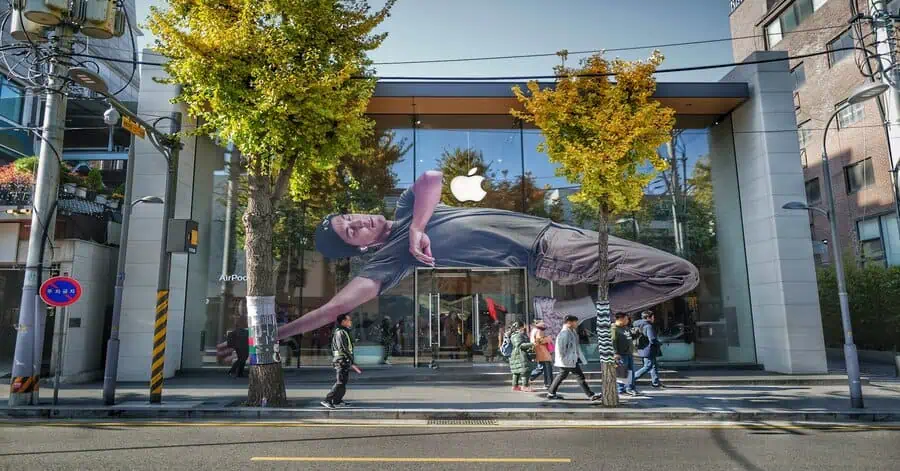
The street reached a symbolic high point at 10 a.m. on January 27, 2018. 'Apple Garosu-gil,' South Korea's first Apple Store, officially opened that day. It was Apple's 500th store worldwide since the company opened its first store in the United States in 2001. Foster + Partners, the architectural firm led by Norman Foster that designed Apple Park, participated in the design.
June 19, 2020: 'Apgujeong-ro 12-gil' and 'Dosan-daero 13-gil' Become 'Garosu-gil'
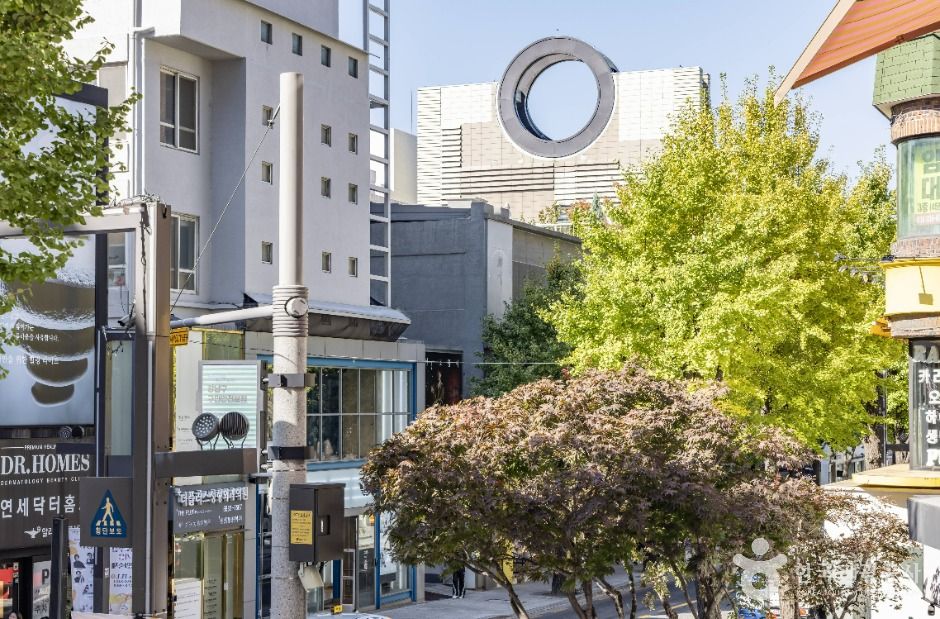
Although everyone now calls it 'Garosu-gil,' its official road name was separate for a long time. Since 2011, the street had been designated under the administrative road names 'Dosan-daero 13-gil' and 'Apgujeong-ro 12-gil,' and its actual road-name address changed to 'Garosu-gil' only on June 19, 2020. Through this consolidated reorganization, the entire stretch from Apgujeong-ro 12-gil to Dosan-daero 13-gil came to have one name. Considering that Gangnam-gu was the first place to introduce road names in the 'XX-ro XX-gil' format, this is also a rare case in which the name of a commercial district replaced official lot-based addresses.
The street physically extends from the intersection in front of Hyundai High School to the three-way intersection with Dosan-daero east of Sinsa Station. In terms of legal dong boundaries, it is located around 530-4 Sinsa-dong, Gangnam-gu, Seoul.
Garosu-gil vs. Serosu-gil: Why Did the Commercial District Move into the Alleys?
'Serosu-gil,' the back street immediately beside Garosu-gil, began transforming into a food-and-beverage district in the early 2010s, benefiting from the halo effect of Garosu-gil. By the time of reporting in 2011, residential areas near Serosu-gil were already being converted into commercial properties. A real estate agency representative explained that if Garosu-gil was a shopping street, Serosu-gil was a food street, and that the two streets were growing in a complementary way. Yet big-data analysis comparing average monthly sales over the five years from 2019 through 2023 found that Serosu-gil's sales volume consistently exceeded that of Garosu-gil.
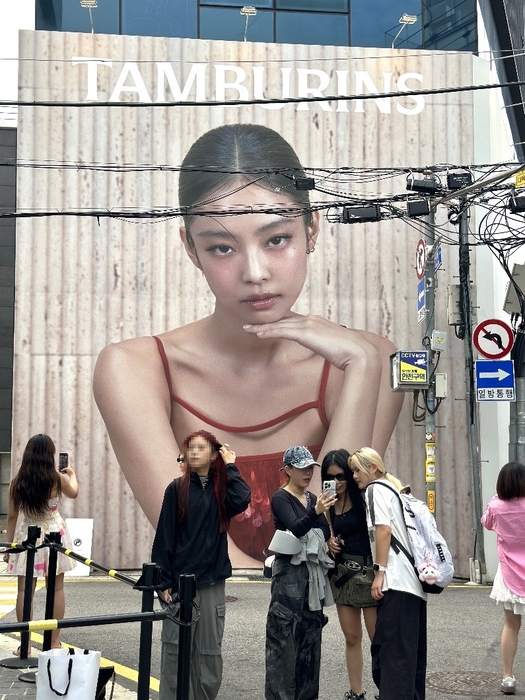
In 2024, Tamburins opened its Sinsa flagship store on Serosu-gil, making the shift of the central commercial district into the inner alleys more evident. The General Idea store, reportedly serving a customer base that is 80% foreign visitors, is also regarded as an emerging force on Serosu-gil. Meanwhile, Garosu-gil's main roadside has repeatedly been reported as lined with lease-inquiry banners. After recording a vacancy rate of 41.6% in the first quarter of 2025, the figure rose another 2.3 percentage points to 43.9% in the second quarter, the highest vacancy rate among Seoul's seven major commercial districts. This contrasts with Myeong-dong, where the vacancy rate fell to the 5% range during the same period. Some analyses note that the arrival of the Apple Store in 2018 instead pushed up nearby rents and accelerated gentrification, while recent observations show the commercial district expanding beyond Serosu-gil to 'Narosu-gil' and 'Darosu-gil.'
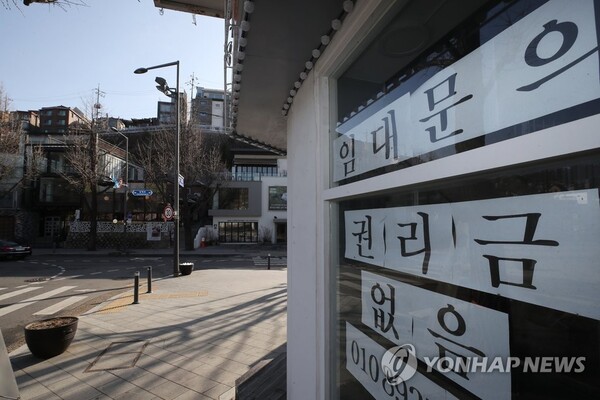
Why Gangnam-gu Designated Garosu-gil a 'Special Street District' in December 2024
As the commercial slump continued, Gangnam-gu designated 82,887 square meters around 667-13 Sinsa-dong as a special street district, the first in the country to ease sunlight-right regulations. Although the area has a strong commercial character, the Garosu-gil section was classified as a Type 2 General Residential Area and the area along Apgujeong-ro as a Type 3 General Residential Area. As a result, buildings had previously been subject to sunlight-right regulations and were forced to be built in stepped forms.
Gangnam-gu expects the designation to enable more linear building designs and improve the utility of existing commercial buildings. It also believes that new buildings with creative designs could provide an opportunity to reorganize the Garosu-gil streetscape and revitalize the local economy.
From Exit 8 of Sinsa Station to the Entrance of Garosu-gil: The Actual Route
The nearest subway station is Sinsa Station on Line 3. Exit through Sinsa Station Exit 8 and walk straight; Garosu-gil begins when you enter the street between Paris Baguette and Korea Exchange Bank. Walk about 300 m east from Exit 8 to reach the entrance of the street. The entire street is just over 800 m long, beginning where it comes into view on the left and continuing to the three-way intersection with Dosan-daero. According to public transit apps, buses serving the Sinsa Intersection and Garosu-gil stop include routes 140, 148, 145, 440, 441, 470, 142, 240, 4212, 4412, 6009, and 9404.
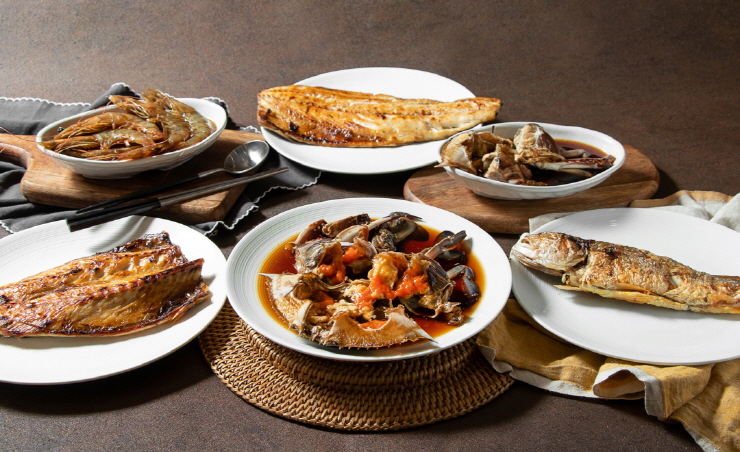
The area around Sinsa Station is also considered one of Gangnam's leading nightlife districts. Sinsa-dong Ganjang Gejang Alley has formed near Exit 4, so many visitors stop there before or after visiting Garosu-gil.
Going by Car: Shingu Elementary School Public Parking Lot Is the First Choice
Because Garosu-gil's interior has many narrow alleys and traffic congestion can arise quickly when cars crowd the main road, visitors are often advised to decide in advance which public parking lot will be their destination. The most frequently mentioned option is the Shingu Elementary School Public Parking Lot. Its rates are affordable and access is convenient, but spaces fill quickly later in the day, so a morning visit is recommended. Visitor reviews repeatedly note that arriving before 2 p.m. makes it easier to find a space.
If the Shingu Elementary School lot is full, alternatives mentioned include public parking lots around Jamwon-dong and the Dormy Inn Seoul Garosu-gil parking facility (mechanical parking). If time permits, another option is to park at a Hangang Citizens' Park parking lot and walk. However, demand for hotel valet parking is also high within Garosu-gil and Serosu-gil, so even these options may be difficult on weekends.
Walk to Dosan Park — An Urban Retreat with the Tomb of Ahn Chang-ho
Dosan Neighborhood Park (Dosan Park), adjacent to Garosu-gil, has been a representative park of Sinsa-dong since opening in 1997. It was created to commemorate the patriotic spirit and educational ideals of Dosan Ahn Chang-ho, and contains the graves of Ahn Chang-ho and his wife, Lee Hye-ryeon. Gangnam-gu also introduces Garosu-gil, adjacent to nearby Dosan Park, as one of Gangnam's leading tourist attractions, making it natural to explore the two together on foot.
The address of Dosan Park is 20 Dosan-daero 45-gil, Gangnam-gu, Seoul, and it is about 700 m from Exit 5 of Apgujeong Rodeo Station. Hours are daily from 10 a.m. to 5 p.m., with last entry at 4:30 p.m., and admission is free. It is closed every January 1 and during the Lunar New Year and Chuseok holiday periods.
Spring Greenery and Autumn Ginkgo Leaves: When Is the Best Time to Visit?
Autumn is undoubtedly the season when the meaning of the name Garosu-gil is most vividly felt. The time when ginkgo leaves turn yellow and fallen leaves settle onto the street has long been cited as one of the factors that made this street famous, as the number of visitors coming to see the scenery noticeably increases.
Spring is also a season not to miss. Spring 2026 visitor reviews describe the period when light-green new leaves sprout on the ginkgo trees lining both sides as the most beautiful moment of the year, and recommend continuing into Serosu-gil's inner alleys after walking the main street. In midwinter, by contrast, only bare ginkgo trees remain after the leaves have fallen, so visitors coming primarily for photographs are better off timing their visit for late autumn or spring.
Before You Go
- Address
- 52 Garosu-gil, Gangnam-gu, Seoul (around Sinsa-dong; road section: intersection in front of Hyundai High School ~ three-way intersection with Dosan-daero east of Sinsa Station)
- Hours
- The street itself is a public road open at all times and has no separate operating hours. Individual stores generally operate between 11:00 and 21:00, varying by brand and business type.
- Closed
- The street itself has no closing days. Individual store closing days vary by shop.
- Admission
- Free (street access). Individual charges apply for products and services at stores.
- Phone
- 02-3423-7320 (Gangnam-gu Sinsa-dong Administrative Welfare Center, main number for local inquiries)
- Official site
- https://www.gangnam.go.kr
- Transport
- About 300–800 m east from Exit 8 of Sinsa Station on Subway Line 3, approximately 8–10 minutes on foot. Take buses 140, 148, 145, 440, 441, 470, 142, 240, 4212, 4412, 6009, or 9404 and get off at the Sinsa Intersection and Garosu-gil stop.
- Parking
- No dedicated parking is available on the street. The Shingu Elementary School Public Parking Lot is the most commonly used for access and cost, but it is often full in the afternoon, so morning visits are recommended. Jamwon-dong public parking lots, Hangang Citizens' Park parking lots, and building valet services are alternatives.
- Time needed
- About 1 hour on foot for Garosu-gil alone; 2–3 hours when also exploring Serosu-gil and Narosu-gil.
- Accessibility
- Sidewalks are wide and level, making travel by wheelchair or stroller relatively easy, but inner alleys such as Serosu-gil have narrow sections and level changes. Dedicated multilingual information signs are limited, and foreign-language assistance varies by store.
The above information is current as of the time of writing. Please check official guidance again before visiting.

Places
Nearby Attractions 1
-
 1
1
Food & Dining 1
-
 2
Sinsa-dong Soy Sauce Marinated Crab AlleyAn alley where you can enjoy soy sauce marinated crab and Korean set meals.
2
Sinsa-dong Soy Sauce Marinated Crab AlleyAn alley where you can enjoy soy sauce marinated crab and Korean set meals.
Events in This Area
Festivals in This Area
More Travel Guides in This Area
 Travel Guide
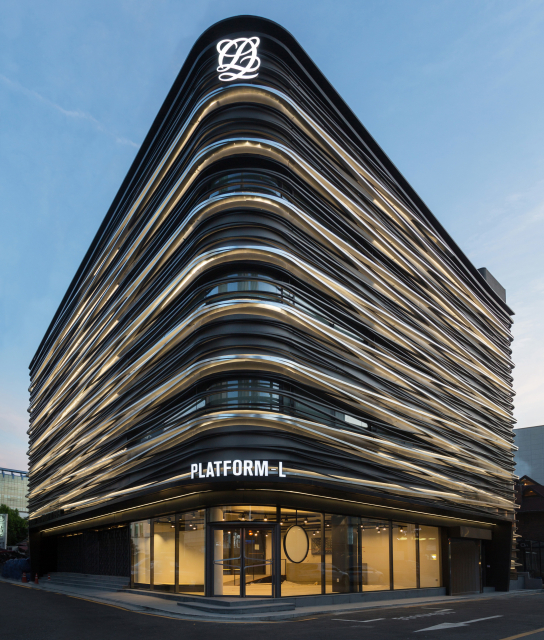
The Diamond-Shaped Exterior and 20-Meter-Deep Underground Live Hall in a Nonhyeon-dong Alley: Platform-L
 Travel Guide
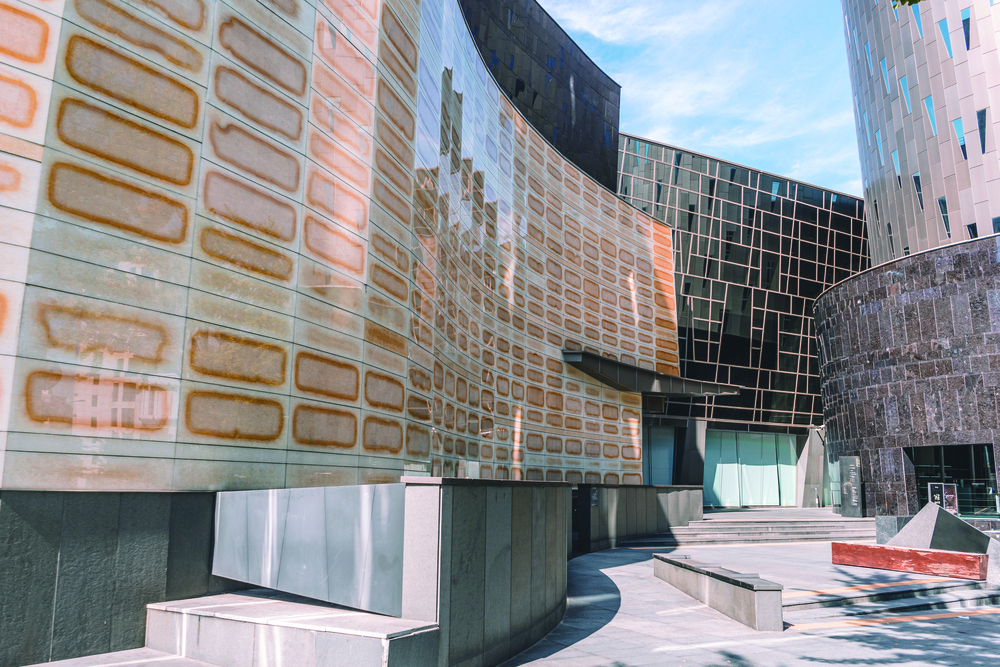
A Spring of Joseon Embroidery in the Ceramic Building on Dosan-daero
 Travel Guide
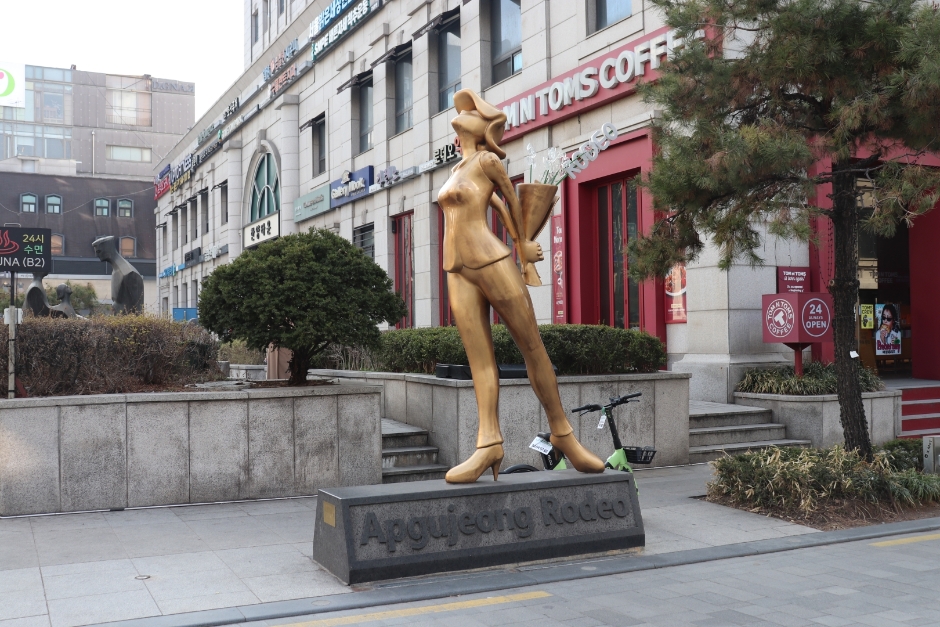
Apgujeong Rodeo Street, which began as a 440m stretch in the mid-1980s and extends into a 1km K-Star Road
 Travel Guide
Omania, open late into the night on UN Village-gil
Korea News
 News
News
BTS’s “Arirang” Surpasses 5 Billion Streams…Highest Among Albums Released This Year
!['Salon Drip' San: "ATEEZ's 'reverse export' feeling... We didn't expect the 'Bad' craze" [RE:TV]](https://kotourlive-images.s3.ap-northeast-1.amazonaws.com/news/1791944381066_82499d27_news_5532e781-915c-426a-aab0-e4580e1952e8.jpg) News
News
'Salon Drip' San: "ATEEZ's 'reverse export' feeling... We didn't expect the 'Bad' craze" [RE:TV]
 News
News
“He gathered nine BoAs to create Girls’ Generation” — Lee Soo-man’s uncanny girl-group visuals send fans into a frenzy
 News
News