Learning Traditional Culture at Jeonju Dongheon and Five Hanok Houses
Jeonju Traditional Culture Training Center is an experiential and lodging-oriented traditional culture space southeast of Jeonju Hanok Village. It is better suited to advance-reservation training sessions and programs featuring baram-tteok, mother-of-pearl, seal engraving, and traditional etiquette than to general sightseeing. Check the weekend closure and the areas open to visitors inside the buildings in advance.

I’ve been here?
Your check-in helps the next traveler.
27 people viewed this week Be the first
One tap — no writing needed
Five Spaces Encountered at 123 Hyanggyo-gil in Jeonju Hanok Village
Jeonju Traditional Culture Training Center is located within Jeonju Hanok Village, and its official address is 123 Hyanggyo-gil, Wansan-gu, Jeonju-si, Jeonbuk State, postal code 55045. The facility consists of Jeonju Dongheon, used for training and education, and traditional houses used for accommodation.
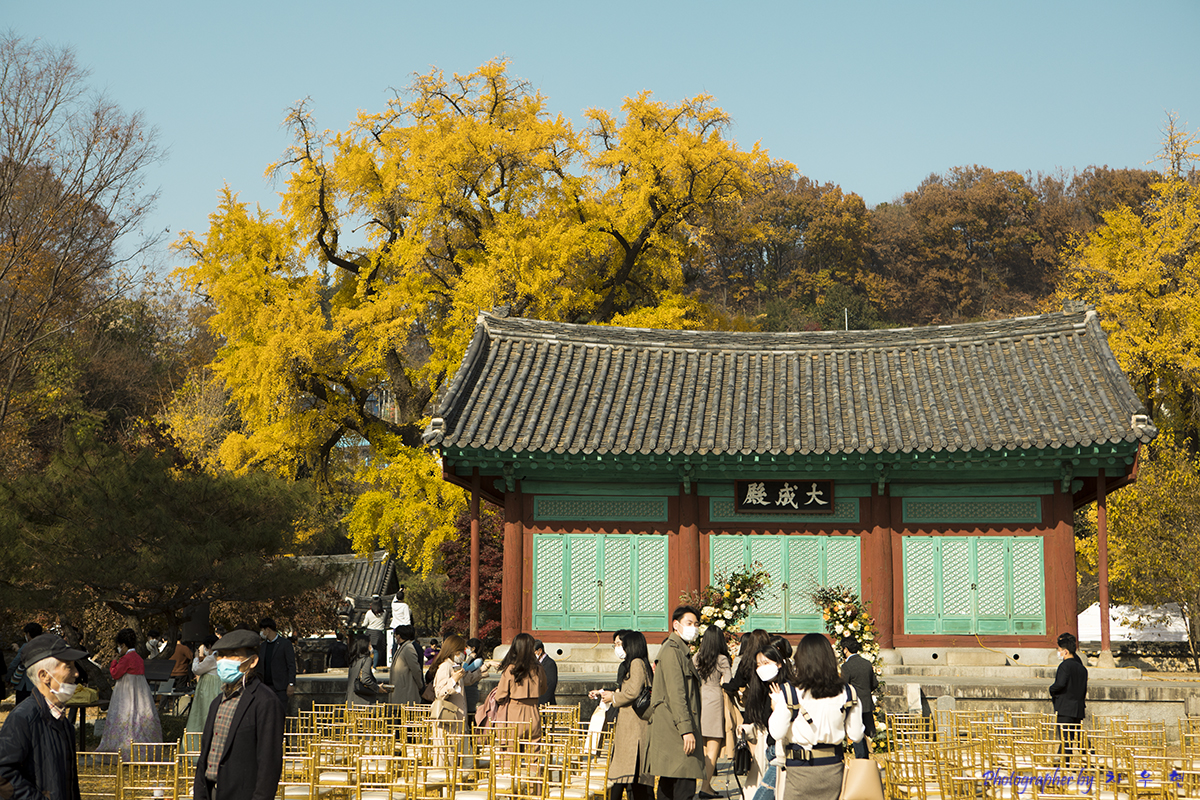
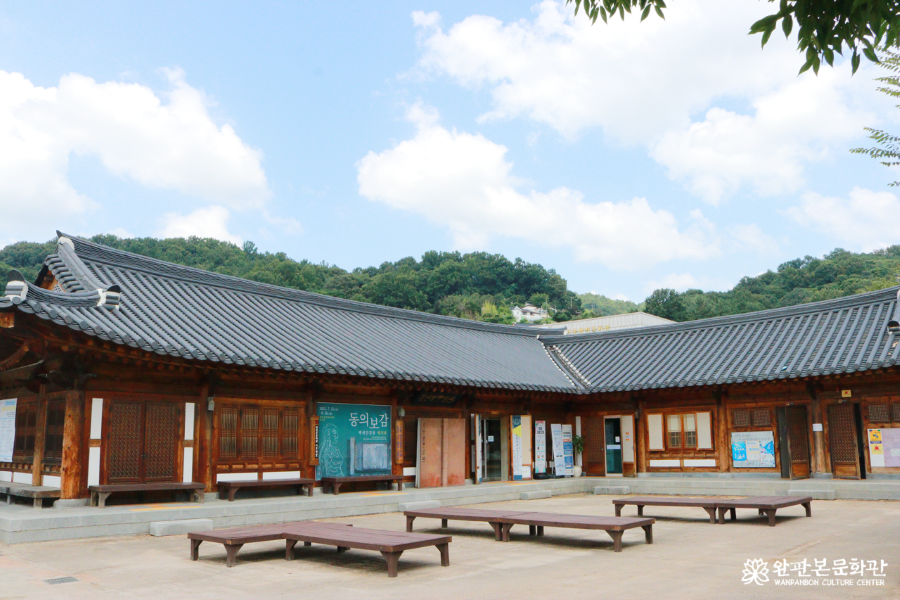
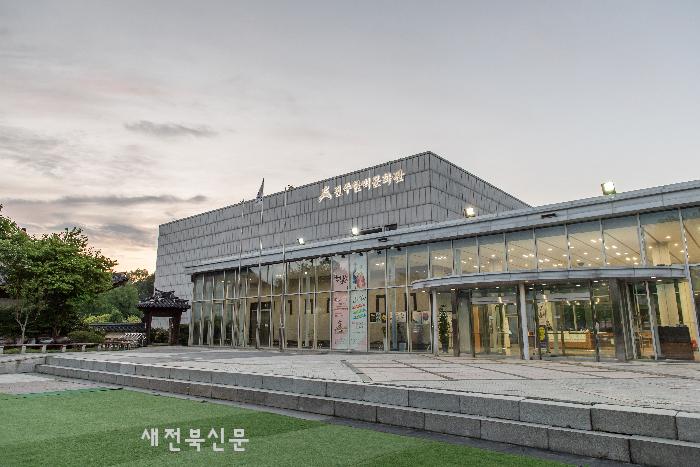
The facility guide divides the spaces into Dongheon, Anchae, Jungganchae, Sarangchae, and Byeolchae. Jeonju’s tourism map marks the training center near Jeonju Dongheon and guides visitors along a southeastern Hanok Village route from Jeonju Traditional Culture Training Center (Dongheon) to Jeonju Hyanggyo, Wansanbon Culture Center, and Hanbyeok Culture Center.
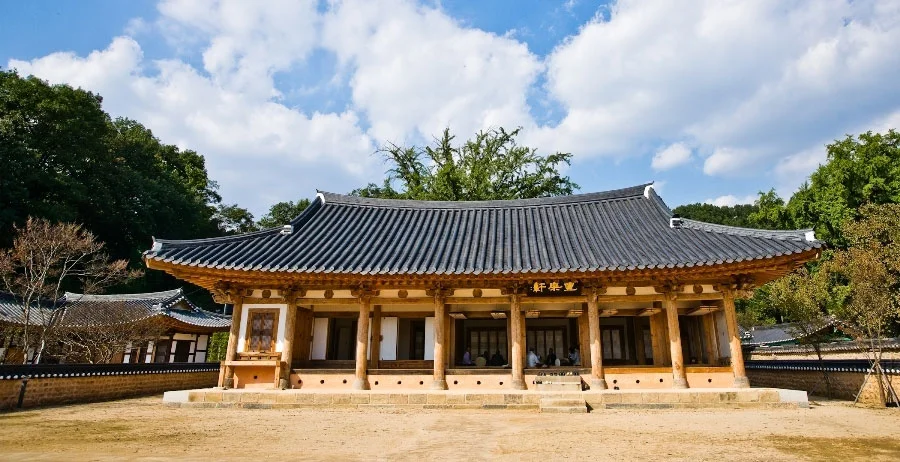
A Training Center That Became Directly Managed by Jeonju City After Opening in 2011
Jeonju Traditional Culture Training Center opened on April 14, 2011, initially operating under commission from the Jeonju Lifelong Learning Center. From January 2, 2017, its operating system changed to direct management by Jeonju City, and its organizational name was also changed following the launch of Jeonbuk State on January 8, 2024.
The reason several traditional houses stand together in one space is that each was moved from a different location and restored. Jeonju Dongheon was built in the early Joseon period and reconstructed in 1891 (the 28th year of King Gojong’s reign). It was sold to a private individual in 1934 and moved to Deokcheon-ri, Gui-myeon, Wanju-gun. After the owner, Mr. Yu In-su, donated the building to Jeonju City in 2007, it returned to Jeonju and was relocated and restored in its original form at its current site in 2009, with a scale of 28 bays.
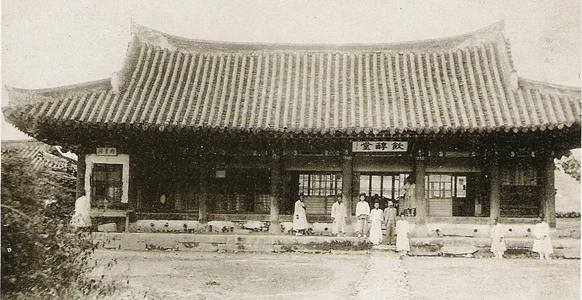
The Name Pungnakheon and the Joseon-Era Workplace of the Jeonju Magistrate
Jeonju Dongheon was called Pungnakheon (豊樂軒), and was also known as Eumsundang (飮醇堂). Since it served as the workplace of the Jeonju magistrate, a local official of the second senior rank, the building corresponds in character to today’s Jeonju City Hall.
Originally, Jeonju Dongheon was a 28-bay hip-and-gable-roofed hanok with seven bays across the front and four bays along the side. One front bay was lost during the 1934 relocation, but the building was restored to its original 28-bay form at its current site in 2009, and a ridge-beam raising ceremony was held on July 17, 2009. For this reason, the training center is not merely a hands-on experience venue; it is also a place where visitors can understand how Jeonju’s administrative space was moved to another region and later returned.
A 1930s Hanok and Traces of Mr. Jang Hyeon-sik’s Independence Movement
The traditional house of Mr. Jang Hyeon-sik is a hanok built in the traditional style of the 1930s and is an architectural example showing the transformation of modern hanok. The Anchae and Jungganchae were donated in 2007 by Jang Hong, a descendant, as an entire traditional house complex from Geumgu-myeon, Gimje-si. Jeonju City relocated the buildings and refurbished them in Jeonju Hanok Village in December 2009.
Mr. Jang Hyeon-sik (張鉉植, 1896–1950) provided military funds to Daedongdan, a secret independence movement organization, in April 1919. After managing the finances of Daedong Sinmun, he was arrested and sentenced to three years in prison in 1921. He also donated 3,000 won at the time to the Korean-language dictionary compilation project. After liberation, he served as the second governor of Jeollabuk-do, was abducted to North Korea on June 28, 1950, and was posthumously awarded the Patriot Medal of the Order of Merit for National Foundation in 1990.
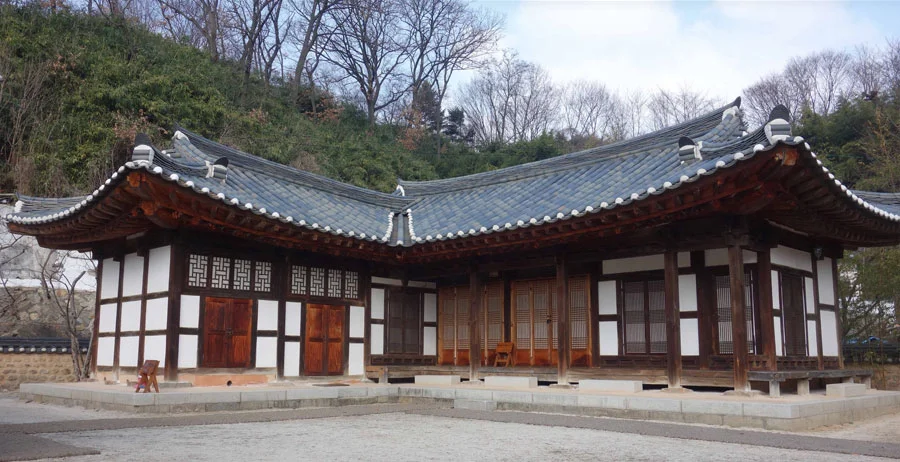
Why a Jeongeup Traditional House Became Training Center Accommodation in 2011
The Jeongeup Traditional House inside the training center is said to have been one of the auxiliary buildings of the approximately 50 main halls of Bocheongyo established by Wolgok Cha Gyeong-seok (1880–1936), the founder of Bocheongyo, in Daeheung-ri, Jeongeup. The building’s present appearance is not composed solely of hanok from Jeonju; it is the result of combining modern and contemporary hanok moved from across Jeonbuk State.
Mr. Park Jung-jo donated the Jeongeup Traditional House to Jeonju City in 2010. It was moved to and restored at Jeonju Traditional Culture Training Center in June 2011 and is now used there. An example of the adult two-day, one-night training program includes a traditional-house accommodation experience from 21:00, so lodging is generally arranged as part of a training schedule through reservations rather than by spontaneous entry by ordinary tourists.
Open from 09:00 to 17:00 on Weekdays and Closed on Weekends
According to the facility guide, operating hours are 09:00–17:00 on weekdays, and closure days are Saturdays, Sundays, and public holidays. Some materials on Jeonju’s tourism map list the hours as 09:00–17:00, Sunday closure, and the address as 119-6 Hyanggyo-gil, so the address information differs. Depending on whether you plan to sightsee or attend a reserved training program, it is safest to prioritize the official website’s information.
The main telephone number is 063-281-5271–4, and the official website is https://www.dongheon.or.kr/. No separate admission fee for individual visitors is listed in the official training information. However, participation in a Hanok Village tour may involve actual costs such as admission fees for Jeondong Cathedral, Gyeonggijeon, and Omokdae.
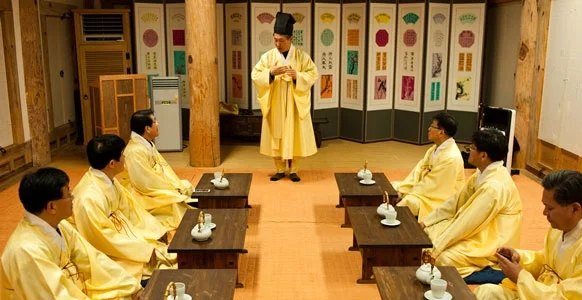
Traditional Etiquette Training Requiring Reservations for Groups of 15–30
Adult training is intended for approximately 15–30 adults and is conducted by advance reservation. The staff telephone number is 063-281-5272. Youth training is intended for approximately 15–30 elementary, middle, or high school students. The staff telephone number is 063-281-5274, and advance reservations are also required.
An example of the adult one-day training program runs from 09:00 to 17:00 and includes dressing and grooming according to etiquette from 09:00–09:30 and a Hanok Village tour from 15:30–17:00. An example of the youth one-day program starts at 10:00, while the two-day, one-night schedule includes a Hanok Village story tour with a cultural interpreter from 11:00–12:30.
Time and Cost by Experience, from Wind-Cake Making to Seal Engraving
Wind-cake making can accommodate 15–30 participants, takes 1–2 hours, and costs 15,000–21,000 won per person. The mother-of-pearl experience costs 15,000–50,000 won per person and takes 1–2 hours. The seal-engraving experience costs 30,000 won per person and takes 1 hour 30 minutes.
Jeonju Magistrate’s Tea Table is for 15–30 people, costs 500,000 won per session, and lasts two hours. Traditional games cost 500,000 won per session and last two hours; they can be conducted indoors or outdoors. Traditional Korean music performances cost 500,000–1,000,000 won per session and last one hour. Fan making costs 20,000 won per person.
How to Choose Among Sasanggyeollye, Hyangsarye, and Hyangeumjure
The core of the Seonbi culture training program is the three rites—Sasanggyeollye, Hyangeumjure, and Hyangsarye—along with Myeongsim Bogam and Korean philosophy. Sasanggyeollye is a program for learning the greeting etiquette of Confucian scholars and includes refreshments; it costs 300,000 won per session. Hyangsarye is a ritual for learning archery while observing proper etiquette and costs 300,000 won per session.
Hyangeumjure is a program for learning the drinking etiquette of Confucian scholars and costs 500,000 won per session. “Meet a Master” is for 15–30 people, lasts 2–3 hours, and costs 700,000 won per session. It can be added only after at least one of Sasanggyeollye, Hyangsarye, or Hyangeumjure has been conducted first. Pansori, mask dance, pottery, seal engraving, and bibimbap experiences are also offered. The five pansori epics are Chunhyangga, Simcheongga, Heungboga, Sugungga, and Jeokbyeokga.
Access and Parking Information When Departing from Jeonju Station
For foreign visitors departing from Jeonju Station or Jeonju Express Bus Terminal, the practical approach is to enter Jeonju Hanok Village or 123 Hyanggyo-gil as the destination first. The official tourism route connects Jeonju Traditional Culture Training Center (Dongheon) with Jeonju Hyanggyo, Wansanbon Culture Center, and Hanbyeok Culture Center, but bus route numbers, stops, station exits, and walking times are not provided in the public information.
Information on whether the facility itself offers parking and on parking fees is not included in the official guide. As alternatives, Nambu Market Riverside Paid Parking offers the first 30 minutes free, then charges 200 won per 10 minutes, with a daily maximum of 5,000 won. Nambu Parking charges 200 won per 10 minutes, with a daily maximum of 6,000 won. The ground parking lot at the National Intangible Heritage Center is free, and both the east and west lots can be used.
A Destination Better Suited to Reserved Training Than Individual Sightseeing
Jeonju Traditional Culture Training Center is not so much a tourism facility with clearly stated admission fees and sightseeing routes for individual visitors as a training venue where groups reserve and participate in etiquette, food, crafts, and performances. Therefore, visitors without reservations should not expect to freely see every interior of Dongheon and the traditional houses. The permitted photography areas and controlled-access zones for individual visitors are also not specified in the public information.
The center is included in Jeonju City’s Open Travel Route and Barrier-Free Travel Route, but detailed information about wheelchair and stroller entrances, slopes and stairs, and accessible restrooms inside the facility has not been publicly provided. There is also no information about English assistance, audio guides, or whether payment is cash-only. Individual foreign travelers should first call 063-281-5271–4 to ask about permitted access and language support. Groups should make reservations with the adult program at 063-281-5272 or the youth program at 063-281-5274.
Before You Go
- Address
- 123 Hyanggyo-gil, Wansan-gu, Jeonju-si, Jeonbuk State, postal code 55045
- Hours
- Weekdays 09:00–17:00
- Closed
- Saturdays, Sundays, and public holidays
- Admission
- No separate admission fee listed for individual visitors; Hanok Village tours involve actual costs such as admission fees
- Phone
- 063-281-5271–4
- Official site
- https://www.dongheon.or.kr/
- Transport
- The Jeonju Hanok Village route is described as continuing from Jeonju Traditional Culture Training Center (Dongheon) to Jeonju Hyanggyo, Wansanbon Culture Center, and Hanbyeok Culture Center.
- Parking
- Whether the facility itself offers parking and the fees are not listed in the official guide. Public parking is available near Jeonju Hanok Village: Nambu Market Riverside Paid Parking (first 30 minutes free, then 200 won per 10 minutes, daily maximum 5,000 won), Nambu Parking (200 won per 10 minutes, daily maximum 6,000 won), and the National Intangible Heritage Center ground parking lot (free; east and west lots available).
- Time needed
- Official durations by experience: seal engraving 1 hour 30 minutes; mother-of-pearl and wind-cake making 1–2 hours; Jeonju Magistrate’s Tea Table and traditional games 2 hours; Meet a Master 2–3 hours
- Accessibility
- Jeonju City’s official “Open Travel Route and Barrier-Free Travel Route” includes Jeonju Traditional Culture Training Center, but detailed information about wheelchair and stroller entrances, slopes and stairs, and accessible restrooms inside the facility is not available in the public guide.
The information above is current as of the time of writing. Check the official information again before visiting.

Places
Nearby Attractions 3
-
 1
Jeonju HyanggyoA place to explore the architecture and ancient trees of a Joseon-era educational institution.
1
Jeonju HyanggyoA place to explore the architecture and ancient trees of a Joseon-era educational institution. -
 2
Wanpanbon Culture CenterA place that exhibits Jeonju’s traditional publishing culture and materials related to Wanpanbon books.
2
Wanpanbon Culture CenterA place that exhibits Jeonju’s traditional publishing culture and materials related to Wanpanbon books. -
 3
Jeonju Hanbyeok Culture CenterA cultural complex where visitors can enjoy pansori performances and experience traditional Korean culture
3
Jeonju Hanbyeok Culture CenterA cultural complex where visitors can enjoy pansori performances and experience traditional Korean culture
Food & Dining 2
-
 4
4
-
 5
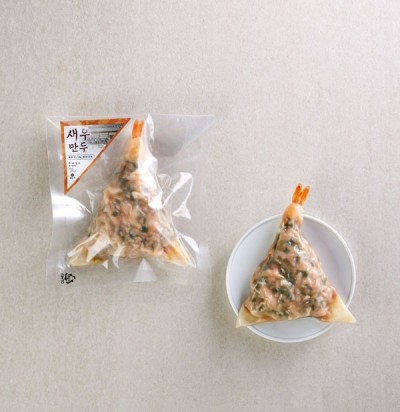
DaurangA dumpling specialty restaurant where you can enjoy a variety of handmade dumplings, including shrimp dumplings.
5
DaurangA dumpling specialty restaurant where you can enjoy a variety of handmade dumplings, including shrimp dumplings.
More Travel Guides in This Area
 Travel Guide
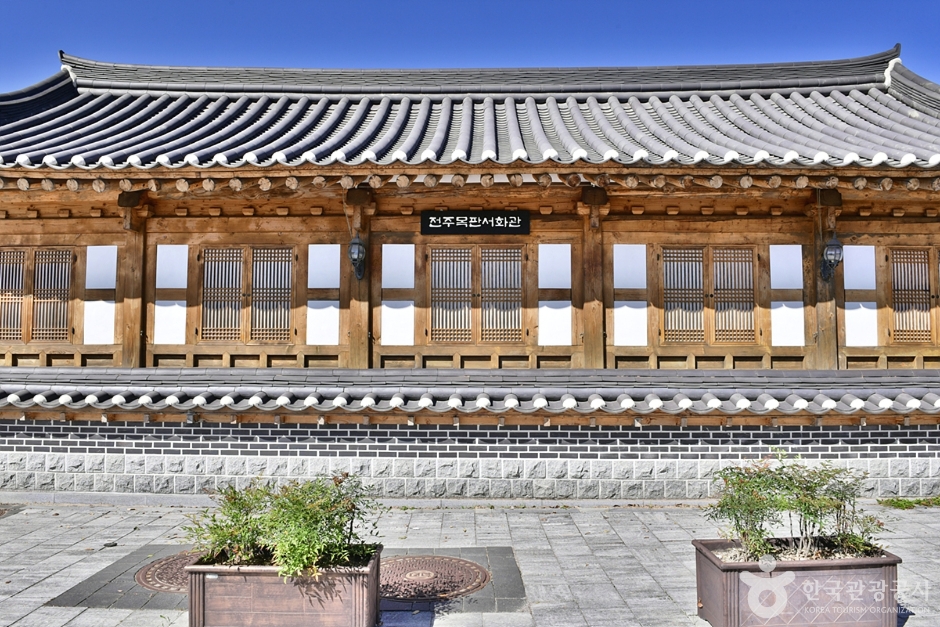
How to Make Your Own Wanpan Edition Print at the Jeonju Woodblock Printing and Calligraphy Experience Center
 Travel Guide
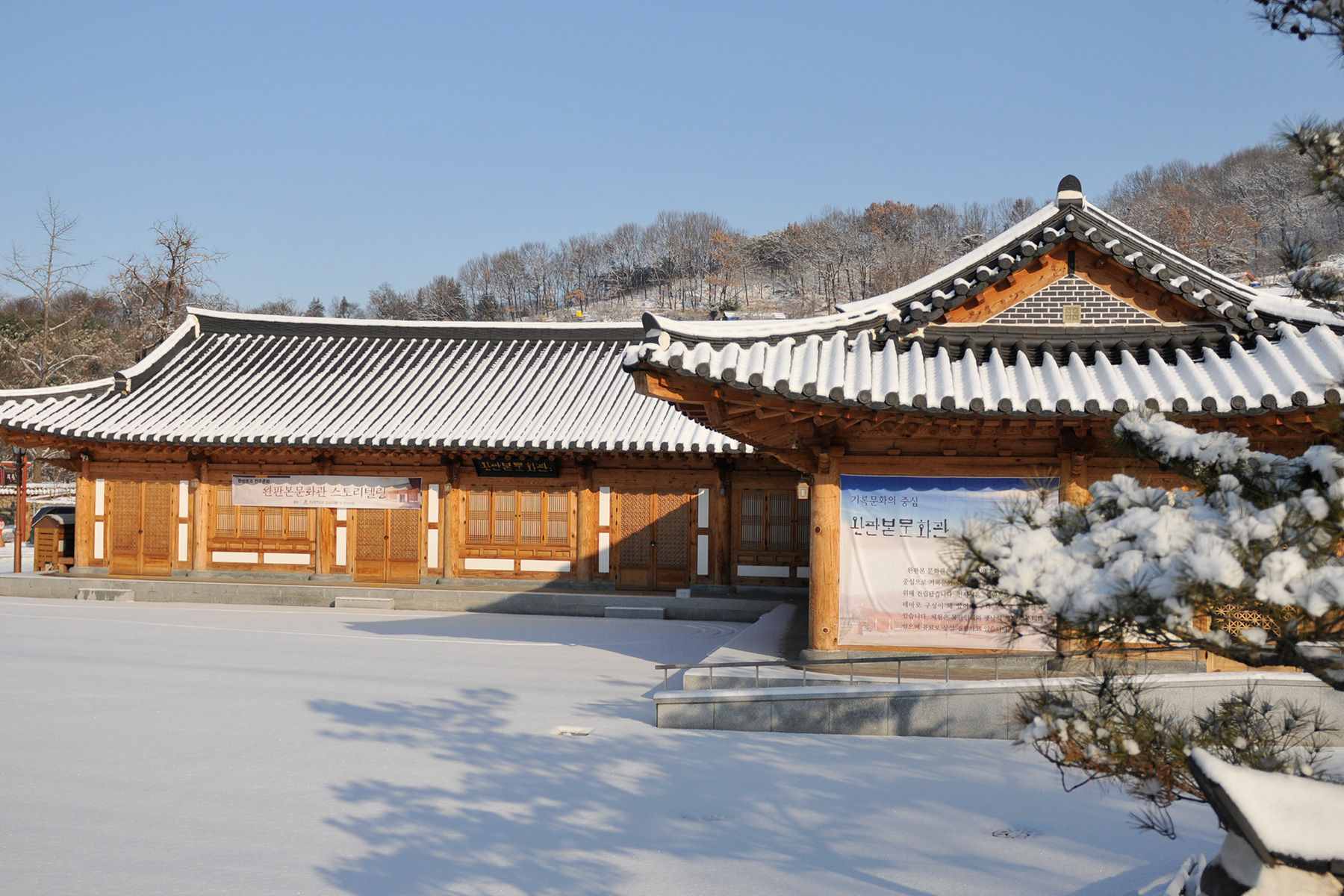
Joseon Publishing and Woodblock Printing at the Jeonju Wanpanbon Culture Center
 Travel Guide
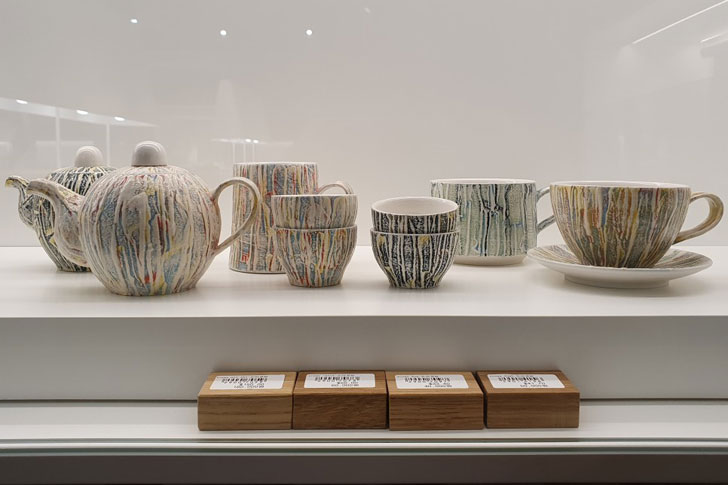
Discover Jeonju’s Crafts and Hanok Village Route at 15 Taejo-ro
 Travel Guide
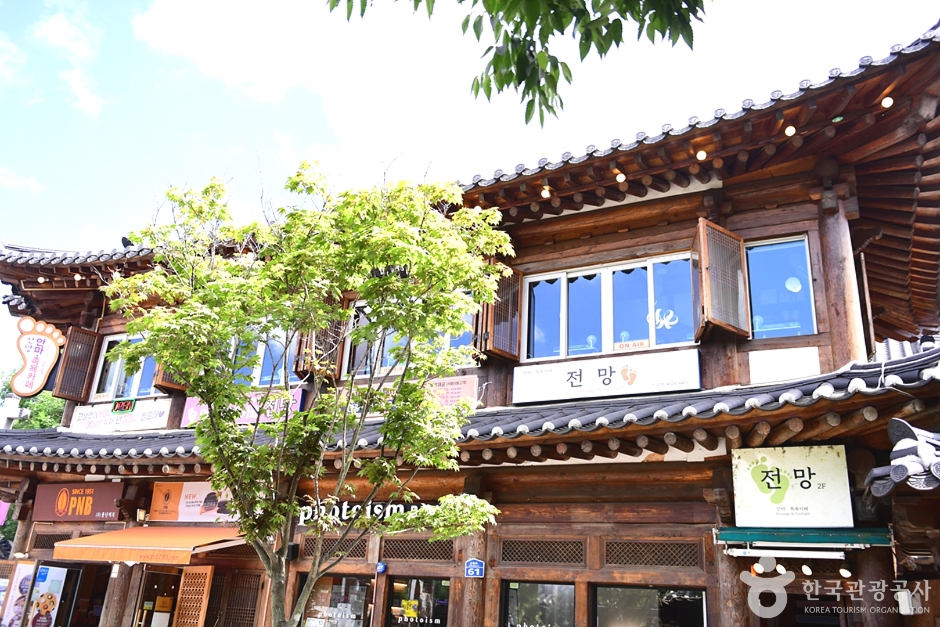
How to Use Gyodong Foot Bath on the 2nd Floor at 61 Eunhaeng-ro
Korea News
 News
News
‘NewJeans Expulsion’ Danielle Releases Her First YouTube Video… “We Don’t Know What Will Happen Next”
![aespa’s North American Tour Has Remaining Seats Despite ‘$49’ Bargain Prices… A Stark Popularity Gap with KATSEYE [TEN Starfield]](https://kotourlive-images.s3.ap-northeast-1.amazonaws.com/news/1788485037424_a59b1932_naver_rank_thumb_0000774618_1788485037424.jpg) News
News
aespa’s North American Tour Has Remaining Seats Despite ‘$49’ Bargain Prices… A Stark Popularity Gap with KATSEYE [TEN Starfield]
![[Photo] TWICE’s Dahyun attends a film festival red carpet as an actress](https://kotourlive-images.s3.ap-northeast-1.amazonaws.com/news/1788485316508_edd43ecd_news_870a60a6-6f11-4d73-aa7c-48d91318a0f7.jpg) News
News
[Photo] TWICE’s Dahyun attends a film festival red carpet as an actress
![[On-Site Video] “We’re Departing Separately Together”… BIGBANG Begins ‘COSMOS’ World Tour](https://kotourlive-images.s3.ap-northeast-1.amazonaws.com/news/1788485226518_c5719641_news_fdd4764a-0f4e-4968-8e4e-e98a02872f88.jpg) News
News