Water Forests and the Story of Highland Life in Gyorae Samdasoo Village
Gyorae Samdasoo Village is a mid-mountain community where you can explore the Jeju Samdasoo water source, Gyorae Gotjawal, and Samdasoo Forest Trail in one area. This guide covers the routes and restrictions you need to know for an actual visit, including the free forest trail course, reservations for the Water Promotion Hall, and restaurants serving native chicken dishes.
I’ve been here?
Your check-in helps the next traveler.
11 people viewed this week Be the first
One tap — no writing needed
What will you see at 646-16 Bijarim-ro, Gyorae-ri?
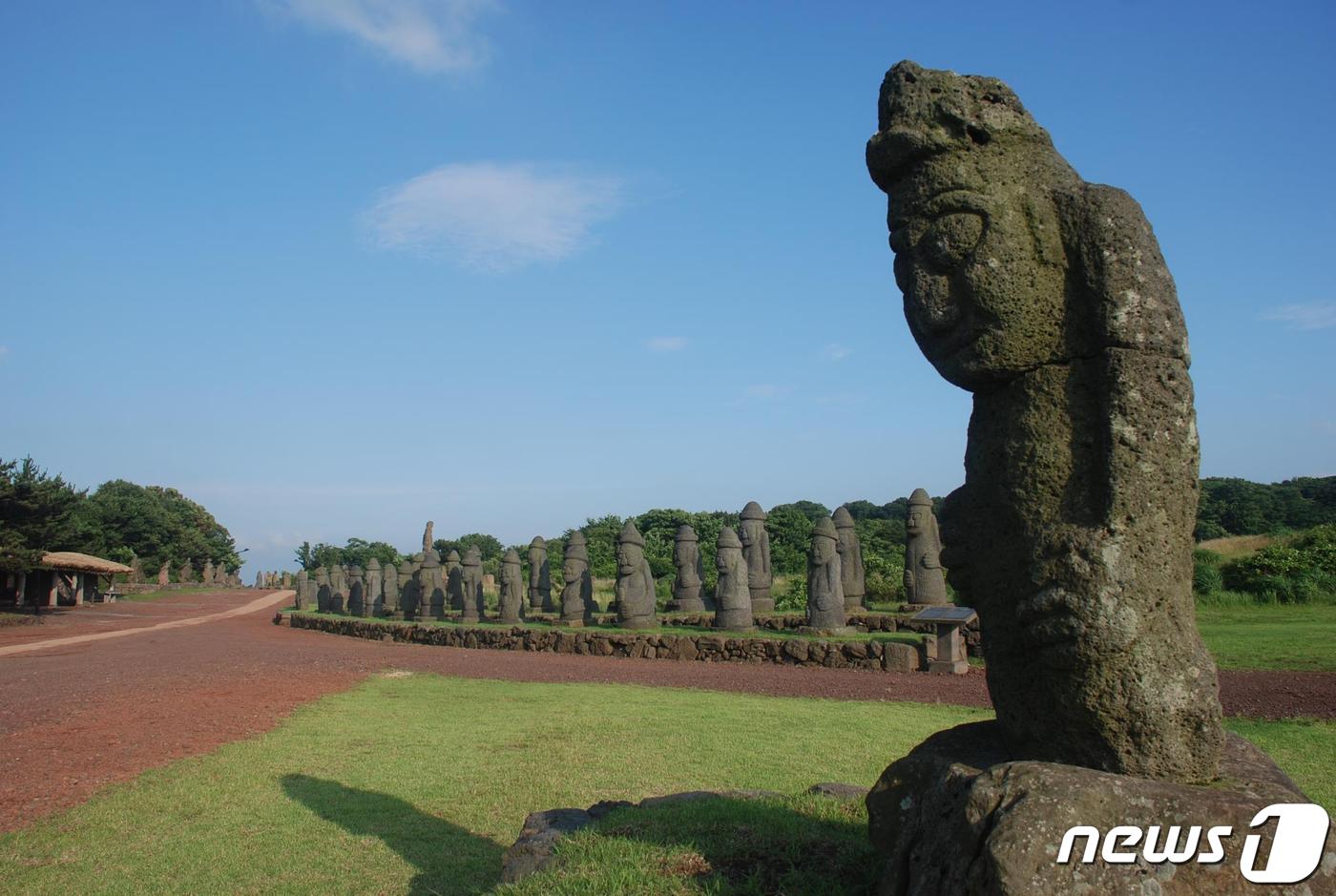
Gyorae Samdasu Village is not a tourist destination focused on viewing a single building; it is a place to explore Gyorae-ri Village together with the surrounding forest paths, geology, and everyday culture. The address is 646-16 Bijarim-ro, Jocheon-eup, Jeju-si, Jeju Special Self-Governing Province. It is described as a 5-minute walk from the stop near the Gyorae-ri Community Welfare Center, a 9-minute walk from Gyorae-ri Small Park, and a 10-minute walk from the south and north stops at Gyorae Intersection.
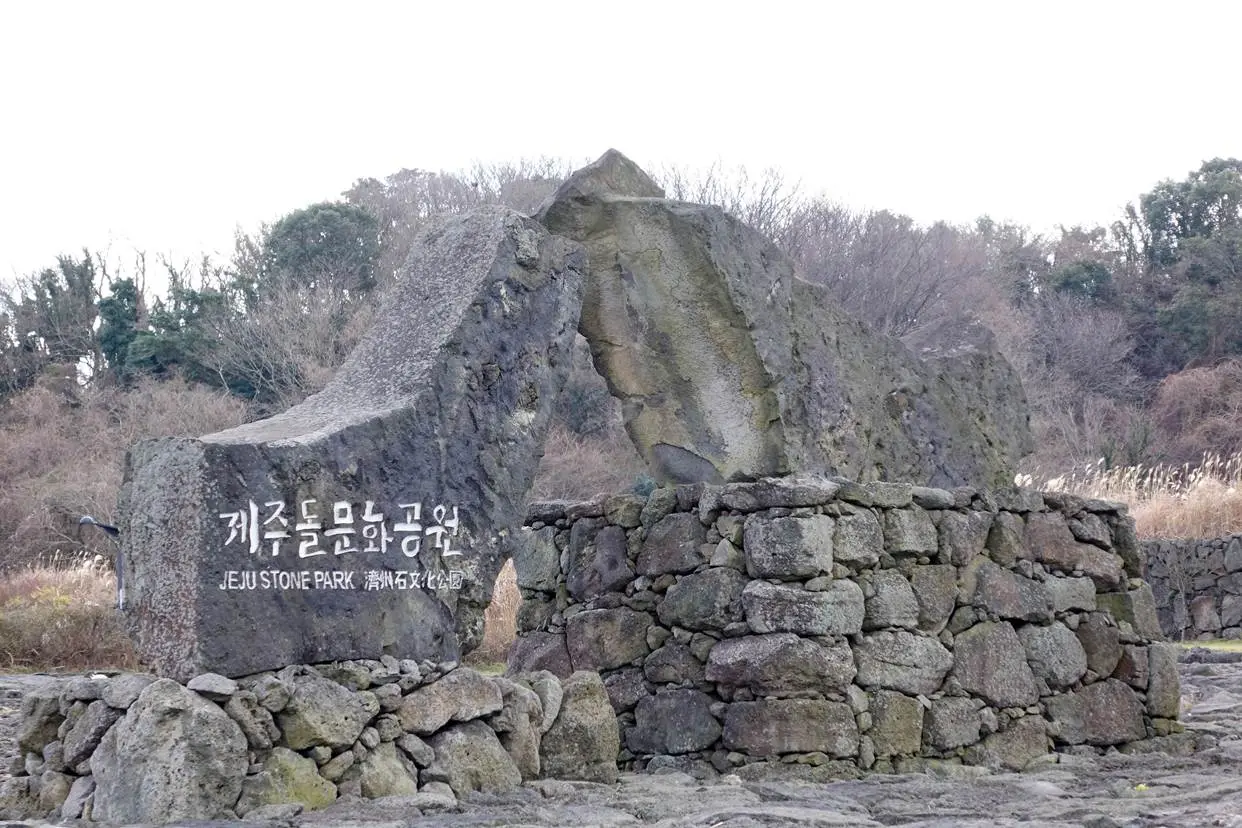
The area includes Gyorae Gotjawal, the Gyorae-ri sedimentary layer, mantle xenoliths, Jeju Stone Park, and Sangumburi. Around the Samdasoo Forest Trail are also groves of Japanese star anise trees and Hwalchil trees. Rather than trying to see the entire village briefly, it is more practical to make the Samdasoo Forest Trail the main destination and plan to visit the Water Promotion Center and nearby restaurants along the route from the trailhead.
How the 1998 Samdasu production site became connected with Gyorae-ri’s name
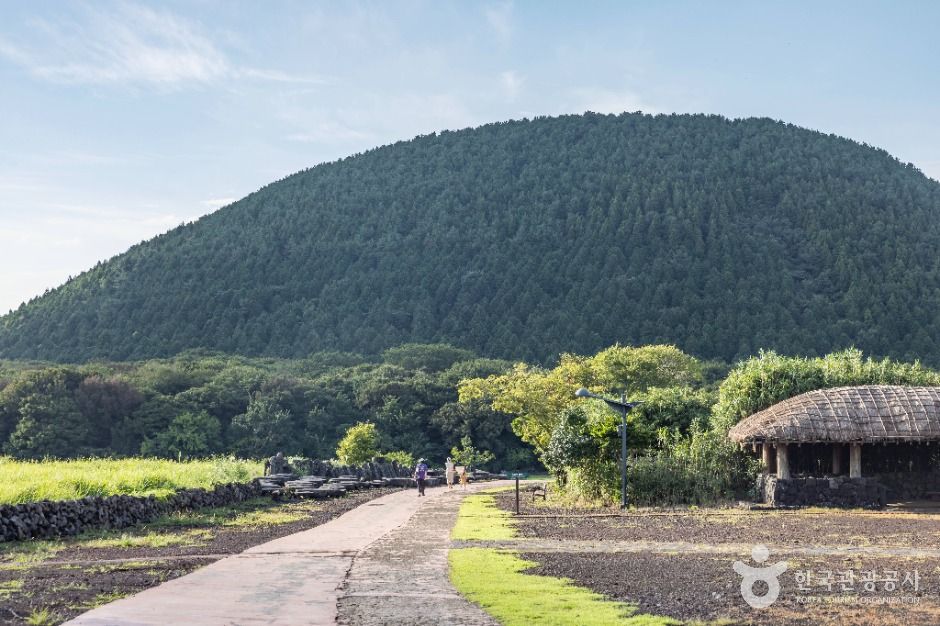
Gyorae-ri lies in the broad, relatively flat mid-mountain region of Jeju, at an elevation of approximately 300–700 meters. It is said that slash-and-burn farmers settled here about 700 years ago and began forming a village. The old name, ‘Dari’ or ‘Dori,’ is explained by two theories: one says that residents crossed a bridge over a stream to travel to and from the village, while the other says that a long, approximately 1-kilometer bedrock formation was used like a bridge.
The name ‘Samdasu Village’ combines Gyorae-ri with Jeju Samdasoo. The name began to be used after Jeju Development Corporation, which produces Jeju Samdasoo, established operations in Gyorae-ri in 1998. It reflects the area’s characteristic as the source site of Samdasoo bottled water. In January 2018, the area was additionally designated and officially announced as a representative attraction of the Jeju Geopark.
The village’s current appearance was created through cooperation between the community and the company. Gyorae-ri Village and Jeju Development Corporation worked together with the goal of developing the entire village as a new tourist destination, and it is described as the first case to be expanded into a representative attraction of the geopark. On March 7, 2025, the two sides signed a business agreement for mutually beneficial regional community cooperation and officially launched the ‘Jeju Samdasoo Resident Village Mutual Cooperation Council.’
How far should you walk among Samdasoo Forest Trail Courses 1, 2, and 3?
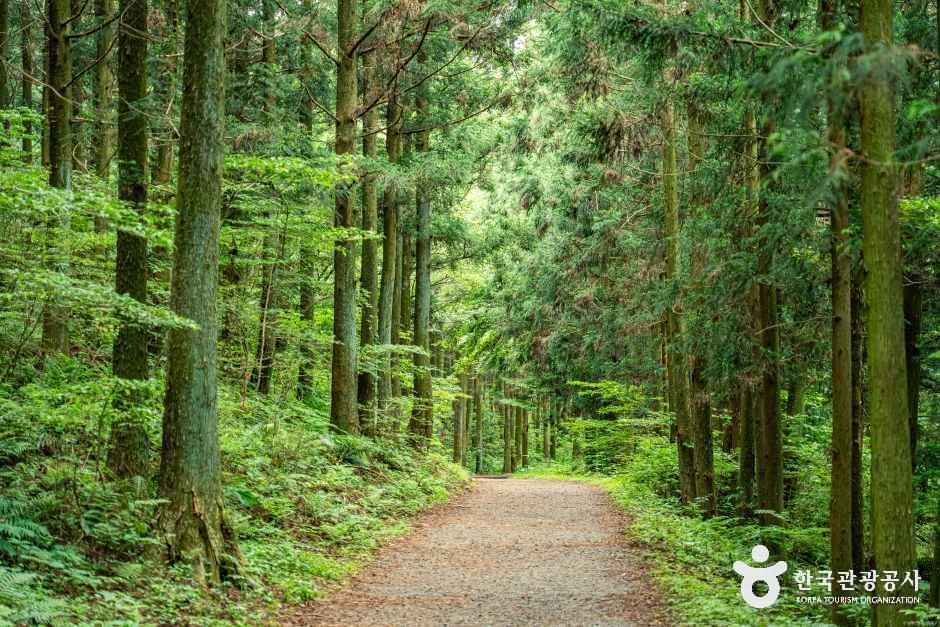
The shortest Course 1 is 1.2 kilometers and takes about 30 minutes. It starts at the Gyorae Community Welfare Center and returns after passing the forest trail entrance, a grove of Japanese star anise trees, and a natural habitat of mountain magnolias. Course 1 is a realistic choice for visitors with limited time or little experience with long forest trails. It also includes the Japanese star anise grove and mountain magnolia habitat.
Course 2 is 5.2 kilometers and takes about 1 hour and 30 minutes. In addition to the mountain magnolia habitat and Japanese star anise grove, it passes an aa lava cross-section, a Jeju dwarf bamboo path, and a Japanese cedar plantation, making it suitable for those who want to see both forest and volcanic terrain. Course 3 is 7.8 kilometers and takes about 2 hours and 30 minutes, and includes Jangseong, Noritmul, a false hellebore grove, and a Japanese cedar plantation.
Most of the forest trail is described as consisting of volcanic scoria and soil, but walking times vary considerably by course. The Samdasoo Forest Trail was created using former paths traveled by teuri, or horse herders, and sanongbachi, or hunters. Near the beginning of the trail is a grove of Japanese cedars planted in the 1970s.
The difference between a forest trail open from 10 a.m. and a village open year-round
Gyorae Samdasu Village itself is described as open at all times, year-round. The Samdasoo Forest Trail, however, is open from 10:00 to 17:00 during the summer season from March through October, and from 10:00 to 16:00 during the winter season from November through February. If you plan to walk the trail, you should arrive according to the seasonal closing time.
Use of the Samdasoo Forest Trail is free, and parking is also described as free. Parking facilities at Gyorae Samdasu Village are indicated as available, but the total number of parking spaces and parking arrangements by area have not been confirmed. The listed contact numbers are 064-784-1746 for Gyorae Samdasu Village and 064-740-6000 for the Jeju Tourism Information Center regarding the forest trail.
The village’s own admission fee has not been confirmed, while the forest trail is free. The official tourism information URL is https://www.visitjeju.net. It has not been confirmed whether the site is cash-only, whether photography is prohibited, or whether English information and audio guides are available. Therefore, if you plan to use a separately operated paid facility or require explanations in a foreign language, it is safest to ask on-site about the available services first.
You cannot enter the Water Promotion Center at the forest trailhead without a reservation
At the beginning of the Samdasoo Village forest trail is the Water Promotion Center, which introduces the value of Jeju Samdasoo. However, tourism information states that visitors must make a reservation in advance to tour it. You should not assume that the center can be visited immediately simply because the forest trail is open year-round.
The Water Promotion Center’s current operating hours and reservation method have not been confirmed. If visiting the center is your main purpose, first ask about reservation availability by calling 064-784-1746 or the Jeju Tourism Information Center at 064-740-6000. If a reservation cannot be made, it is best to plan a separate visit using only the free forest trail.
Activities listed for Gyorae Samdasu Village include oreum experiences, Gotjawal experiences, and tours of the Samdasoo factory. However, the operating hours and reservation requirements for each have not been confirmed. You should distinguish between ‘going to Samdasu Village’ and ‘touring the inside of the factory’ as separate plans.
Adonis amurensis, mountain hydrangeas, and autumn foliage along Cheonmicheon change with the seasons
The attractions along the Samdasoo Forest Trail change with the seasons. Spring features colonies of Adonis amurensis, summer features mountain hydrangea groves, and autumn features foliage changing color along Cheonmicheon. Even on the same forest trail, you should choose your visiting season depending on whether you want to see flowers or autumn foliage.
There are groves of Japanese star anise trees and Hwalchil trees around the forest. Courses 1 and 2 include a Japanese star anise grove and a natural habitat of mountain magnolias. Course 2 includes an aa lava cross-section and a Jeju dwarf bamboo path, while Course 3 includes Jangseong, Noritmul, and a false hellebore grove, offering distinct choices between a short walk and a geological and ecological exploration.
Historical and cultural sites such as Bonhyangdang, Sanmajang, Jatseong, and former hunting grounds are also scattered around Gyorae Samdasu Village. However, not every point along the forest trail is explained like an exhibition hall, so visitors who want an in-depth understanding of the geology and ecology should separately check whether reservations are available for the Water Promotion Center.
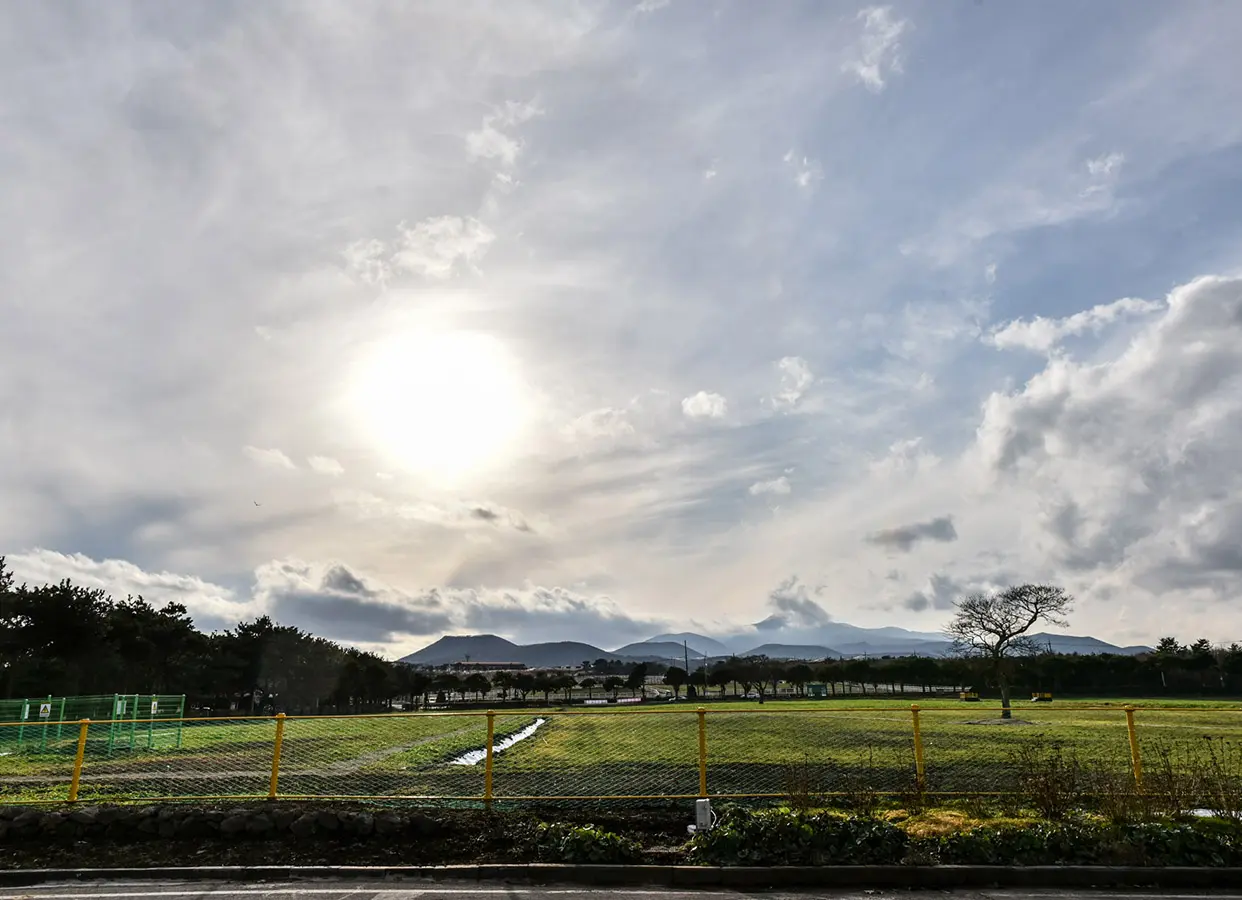
How to include native chicken baeksuk after the forest trail
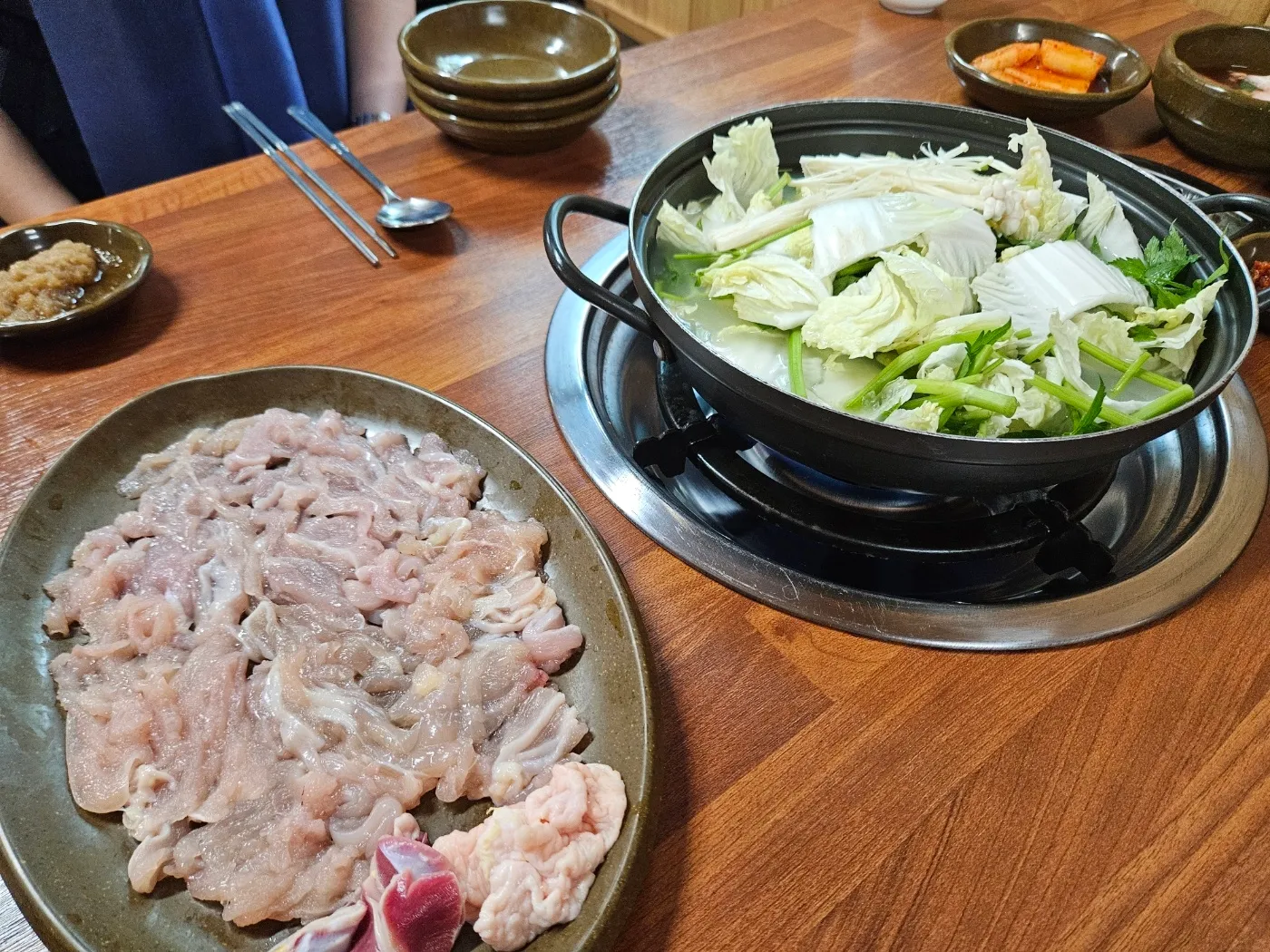
Gyorae Samdasu Village is introduced as a native chicken distribution district, and Gyorae-ri has restaurants known for native chicken baeksuk. Therefore, it suits the local culture and lifestyle to choose one of the forest trail options—Course 1 at about 30 minutes, Course 2 at about 1 hour and 30 minutes, or Course 3 at about 2 hours and 30 minutes—and schedule a separate meal time.
The presence of native chicken restaurants in the village has been confirmed, but the operating hours, prices, and reservation policies of specific restaurants are not included in this information. When choosing a restaurant as a destination, check it separately from the forest trail operating hours. In particular, Course 3 takes about 2 hours and 30 minutes, so it is safer not to schedule a meal reservation too tightly.
Food in Gyorae-ri is not merely information about nearby dining; it is part of the local industry that remains even after the mid-mountain village expanded as a tourist destination. You can combine the Samdasoo Forest Trail, Water Promotion Center, and native chicken restaurants in one trip, but factory tours and visits to the promotion center should be treated as activities requiring separate reservations.
Visitors who should consider steps and wheelchair rental availability first
Tourism information indicates that there are no accessible restrooms, that the main entrance has a step, and that wheelchairs are not available for rental. Even though most of the Samdasoo Forest Trail is described as volcanic scoria and dirt paths, this alone does not mean that the entire route is suitable for wheelchairs or strollers.
Foreign visitors using public transportation should first set the stop at the Gyorae-ri Community Welfare Center as their destination and expect a 5-minute walk. Alternative stops are Gyorae-ri Small Park, a 9-minute walk away, and the south and north stops at Gyorae Intersection, a 10-minute walk away. Specific bus route numbers and service intervals have not been confirmed, so when departing from the airport or accommodation elsewhere on Jeju, enter the stop name into a map and check the connections for that day.
The easiest points to overlook on a first visit are that ‘open at all times’ and ‘forest trail operating hours’ are not the same, and that the Water Promotion Center requires a reservation. From March through October, forest trail operations end at 17:00, and from November through February they end at 16:00. The village’s year-round opening information does not extend these hours.
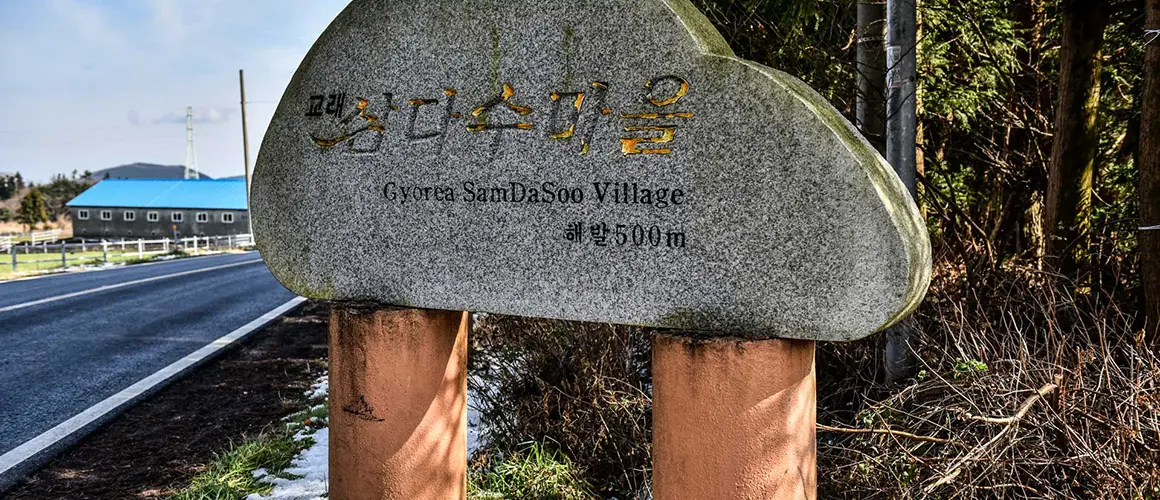
Before You Go
- Address
- 646-16 Bijarim-ro, Jocheon-eup, Jeju-si, Jeju Special Self-Governing Province
- Hours
- Gyorae Samdasu Village is described as open at all times. The Samdasoo Forest Trail is open from 10:00 to 17:00 in summer (March–October) and from 10:00 to 16:00 in winter (November–February).
- Closed
- Both Gyorae Samdasu Village and the Samdasoo Forest Trail are described as open year-round.
- Admission
- Use of the Samdasoo Forest Trail is free. The admission fee for Gyorae Samdasu Village itself has not been confirmed.
- Phone
- Gyorae Samdasu Village: 064-784-1746 / Samdasoo Forest Trail inquiries: Jeju Tourism Information Center 064-740-6000
- Official site
- https://www.visitjeju.net
- Transport
- Nearby stops include the Gyorae-ri Community Welfare Center, a 5-minute walk away; Gyorae-ri Small Park, a 9-minute walk away; and the south and north stops at Gyorae Intersection, a 10-minute walk away.
- Parking
- Parking facilities at Gyorae Samdasu Village are indicated as available. Parking for the Samdasoo Forest Trail is described as free.
- Time needed
- For the Samdasoo Forest Trail: about 30 minutes for Course 1, 1 hour and 30 minutes for Course 2, and 2 hours and 30 minutes for Course 3.
- Accessibility
- No accessible restroom or wheelchair rental; the main entrance has a step.
The information above is current as of the time of writing. Check the official information again before visiting.

Places
Nearby Attractions 3
-
 1
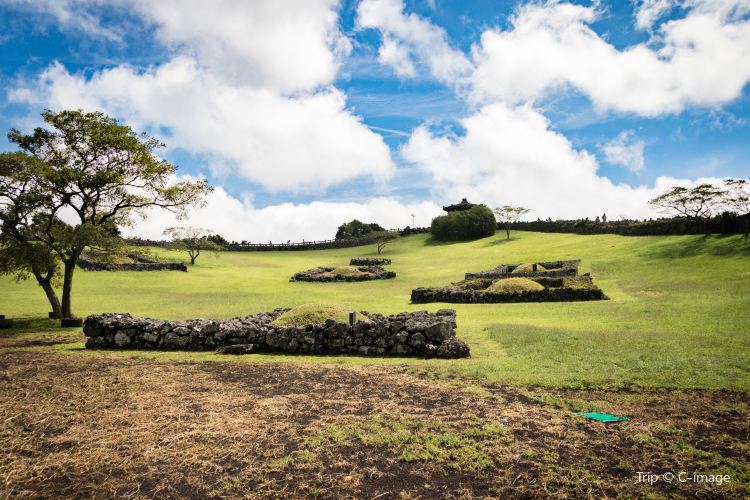
Sangumburi CraterTake a walk around the flat volcanic crater and enjoy the silver grass scenery.
1
Sangumburi CraterTake a walk around the flat volcanic crater and enjoy the silver grass scenery. -
 2
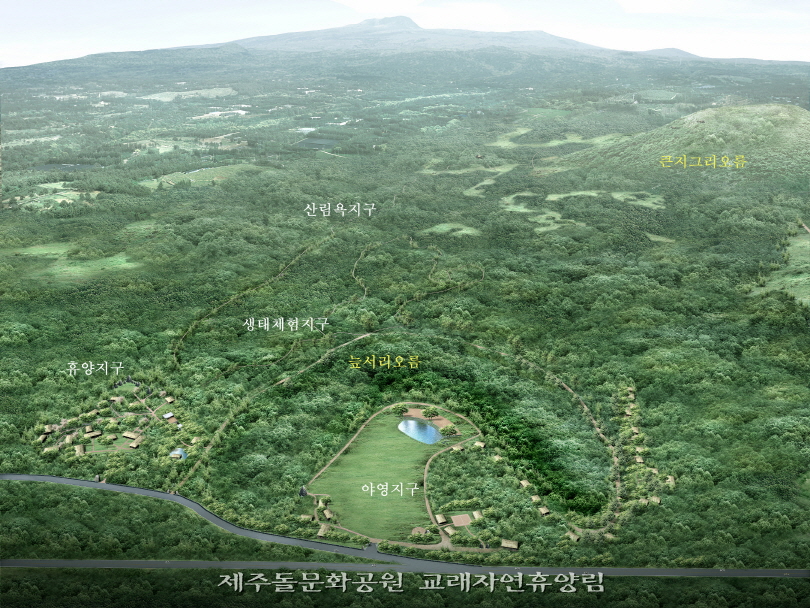
Gyorae Natural Recreation ForestEnjoy nature while walking along the Gotjawal forest trails and footpaths.
2
Gyorae Natural Recreation ForestEnjoy nature while walking along the Gotjawal forest trails and footpaths. -
 3
3
Food & Dining 2
-
 4
4
-
 5
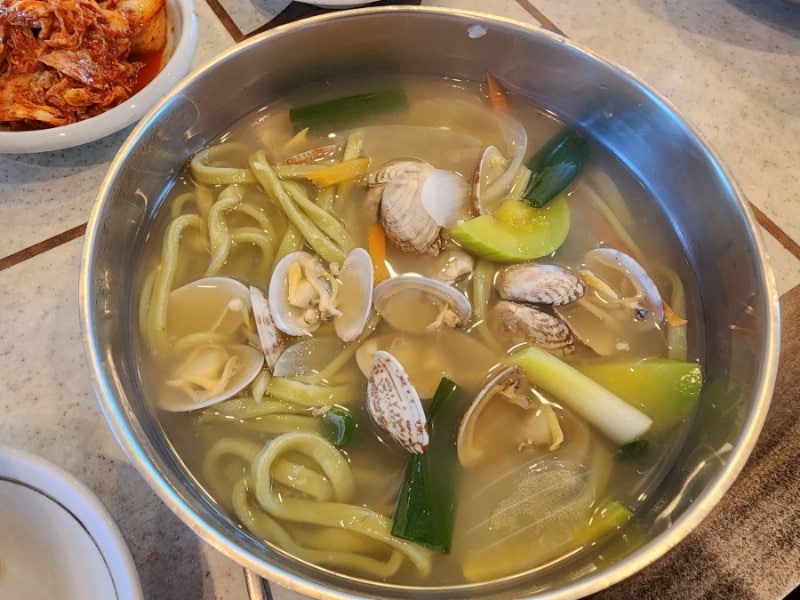
Gyorae Son KalguksuEnjoy traditional Korean chicken kalguksu, bomal kalguksu, and mung bean pancakes.
5
Gyorae Son KalguksuEnjoy traditional Korean chicken kalguksu, bomal kalguksu, and mung bean pancakes.
Events in This Area


Festivals in This Area


More Travel Guides in This Area
 Travel Guide
How to Walk Across Seolmundae Halmang's 1 Million Pyeong: Jeju Stone Park
 Travel Guide
Jeju Eco Land: Walking after getting off at four stations along the Gotjawal railway
 Travel Guide
Saryeoni Forest Trail: Split Your Walk Between 10 km of Cedars and the Barrier-Free Red Oreum Trail
 Travel Guide
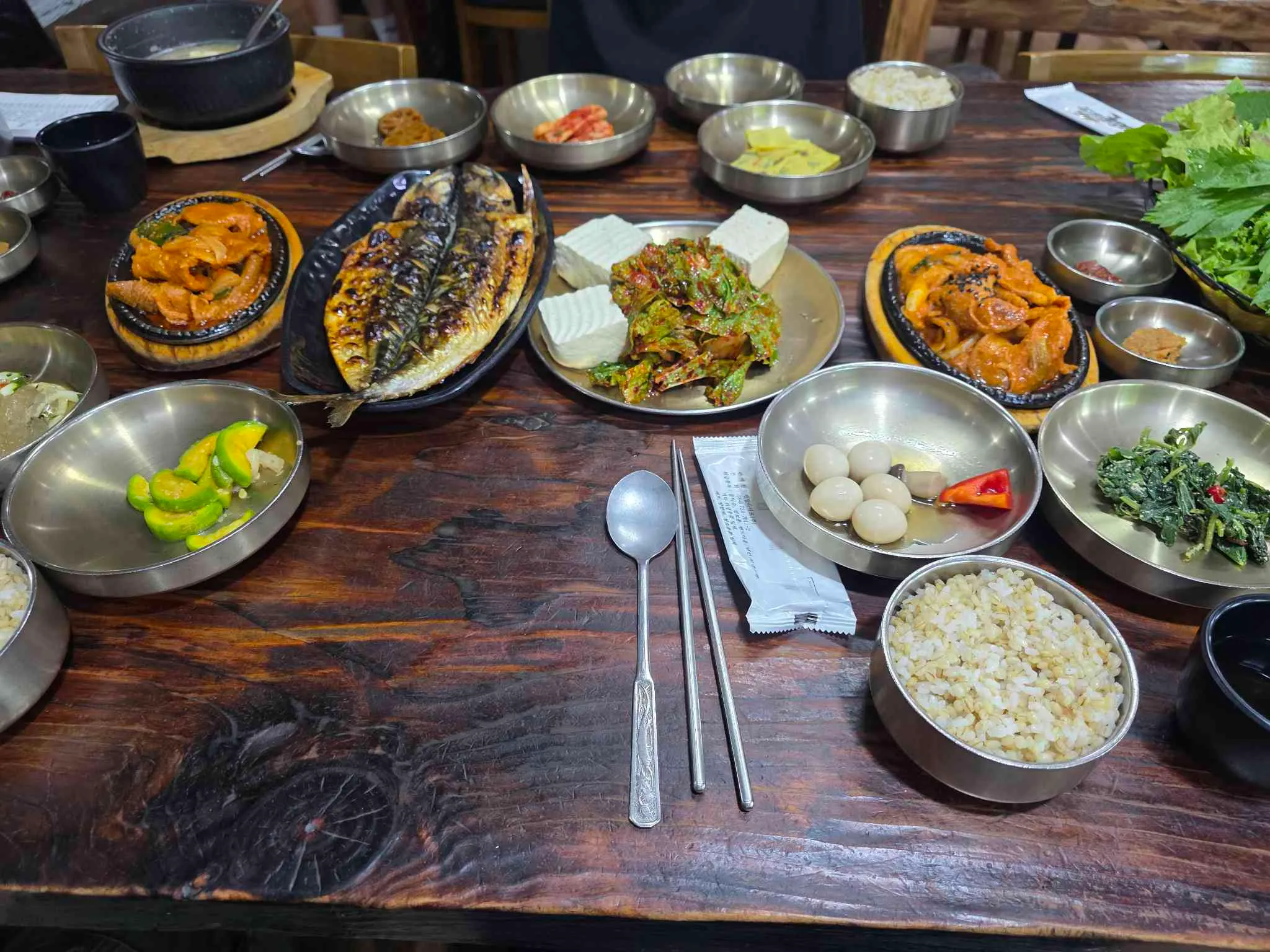
Nangtteul Jeongsik on Namjo-ro in Jocheon, before or after Jeolmul Forest Trail
Korea News
 News
News
Tom Cruise Spotted Taking a Late-Night Walk at Hangang Park… Strolled for an Hour in a Black Suit
 News
News
'Jimin, We'll always be with you' Peru Embraced 'Jimtober' Birthday Celebrations... "I'm Happy"
 News
News
BTS’s Jungkook stands alongside Messi and Ronaldo… No. 5 worldwide in TikTok views
 News
News