Daeryong Market in Gyodong-do, Where Memories of Yeonbaek Market Remain, from ID Check to Hwagae Mountain
Daeryong Market, located in the heart of Gyodong-do in Ganghwa-gun, Incheon, is an alley market created by displaced people from Yeonbaek, Hwanghae-do, after the Korean War, modeled after the market in their hometown. Starting from 462-1 Daeryong-ri, this guide organizes a practical one-day route that includes passing through the checkpoint, store-by-store opening hours, market food, and continues on to Hwagae Garden and Manghyangdae.
I’ve been here?
Your check-in helps the next traveler.
No one has checked in yet Be the first
One tap — no writing needed
The Memory of 'Yeonbaekjang' Beginning at Daryong-ri 462-1
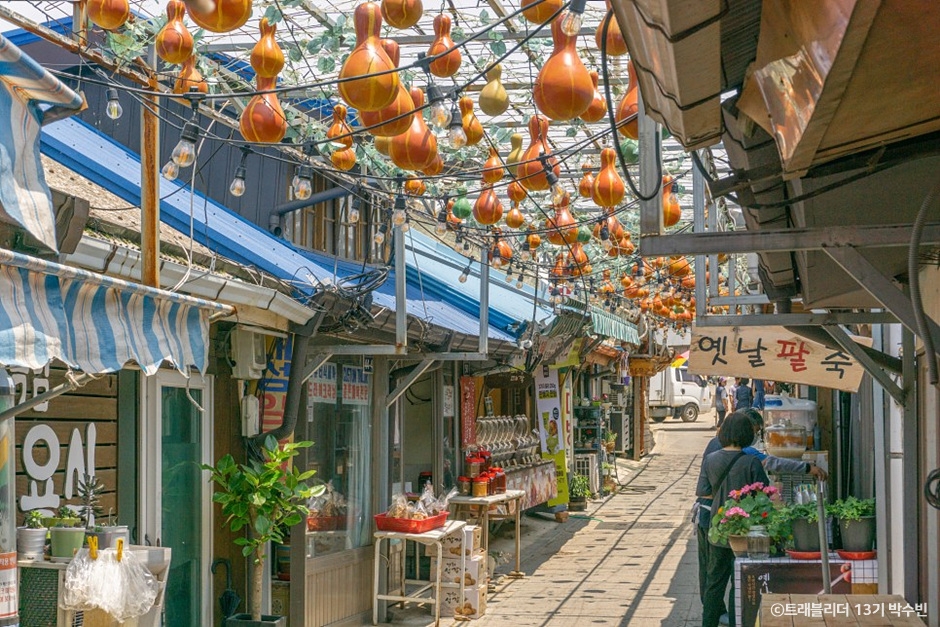
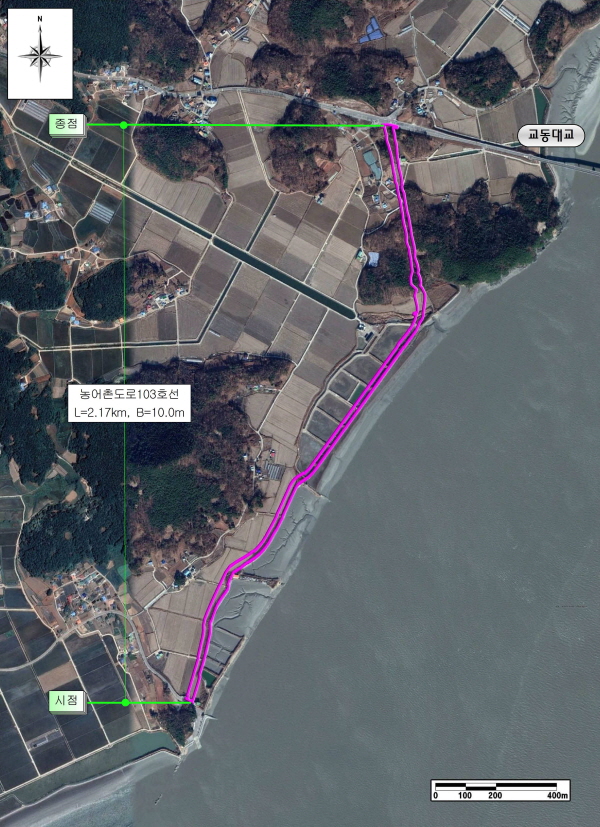
Gyodongdo Daryong Market is located in the area of 462-1, Daryong-ri, Gyodong-myeon, Ganghwa-gun, Incheon Metropolitan City, and the road-name address is given as 35 Gyodongnam-ro. During the Korean War, residents of Yeonbaek-gun, Hwanghae-do fled to Gyodongdo, but after the Hangang estuary became the division line, they could not return home; this alley market was modeled after the Yeonbaek Market from their hometown so they could make a living.
If you see this place only as a nostalgic filming backdrop, it is easy to miss the market's core. The market created by displaced people was the economic center of Gyodongdo for more than 50 years, and even after its scale shrank because of population decline, the signs of the barbershop, pharmacy, coffeehouse, and rice cake shop, along with the alley layout, preserve the everyday history that followed their evacuation. Gyodongdo is a border island about 2.6 km from North Korea, so the market's old scenery also bears the imprint of the geographic isolation created by division.
The Island's Rhythm After Gyodong Bridge Opened in July 2014
Before Gyodong Bridge opened in July 2014, Gyodongdo was an island dependent on ferry service. With the bridge connecting it to the main island of Ganghwa-do, Daryong Market became the center of day trips, and Gyodongdo was selected for the 2025-2026 Korea Tourism 100.
However, being connected by bridge does not make it the same as a typical coastal drive course. The entire island belongs to a military facility protection zone beyond the Civilian Control Line, so you pass a checkpoint before entering Gyodong Bridge. Vehicle visitors must go through an electronic entry pass procedure, and public transportation users are also advised to carry a photo ID.
- Car access: From Ganghwa Bridge, follow National Route 48 toward Inhwar-ri, then use Gyodong Bridge; Ganghwa-gun tourism guidance indicates about 40 minutes.
- Public transportation access: From Ganghwa Bus Terminal, take local bus No. 18 to the Daryong Market area on Gyodongdo.
- What foreign visitors should prepare: Have your passport ready so you can quickly take it out for identity verification at the checkpoint.
The Sequence for Passing Ganghwa Bus Terminal, Bus 18, and the Gyodong Bridge Checkpoint
When moving around without a car, the reference point is Ganghwa Bus Terminal. Ganghwa-gun's official tourism guidance recommends taking local bus No. 18 from Ganghwa Bus Terminal, and older guide materials also introduced route Gyodong 70 as a means of reaching Daryong Market. For the current travel route, it is best to prioritize bus No. 18.
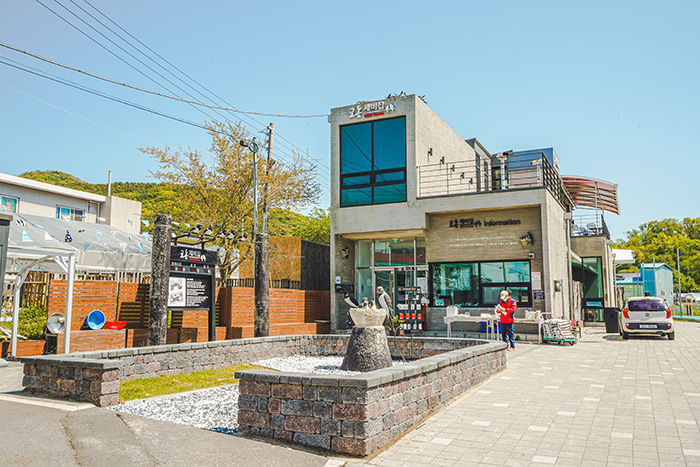
After arriving at the market, it is practical to stop first at Gyodong Jebiwip House to organize your route. Daryong Market and Gyodong Jebiwip House are listed on the official course as about a 3-minute walk, 219 m apart, and the Jebiwip House operates daily from 10:00 to 17:00 and closes on the third Tuesday of every month. It offers tourism information, exhibitions, a digital gallery, and paid experience programs.
For cars, a paid parking lot near the market can be used. There is no admission fee for the market itself, but since opening hours differ by store, it is better to plan your visit for the morning to early afternoon if your goal is a meal or a specific snack, as this reduces the chance of finding closed shops.
Barbershop, Coffeehouse, and Puppy Rice Cake Found in an Alley of About 50 Shops
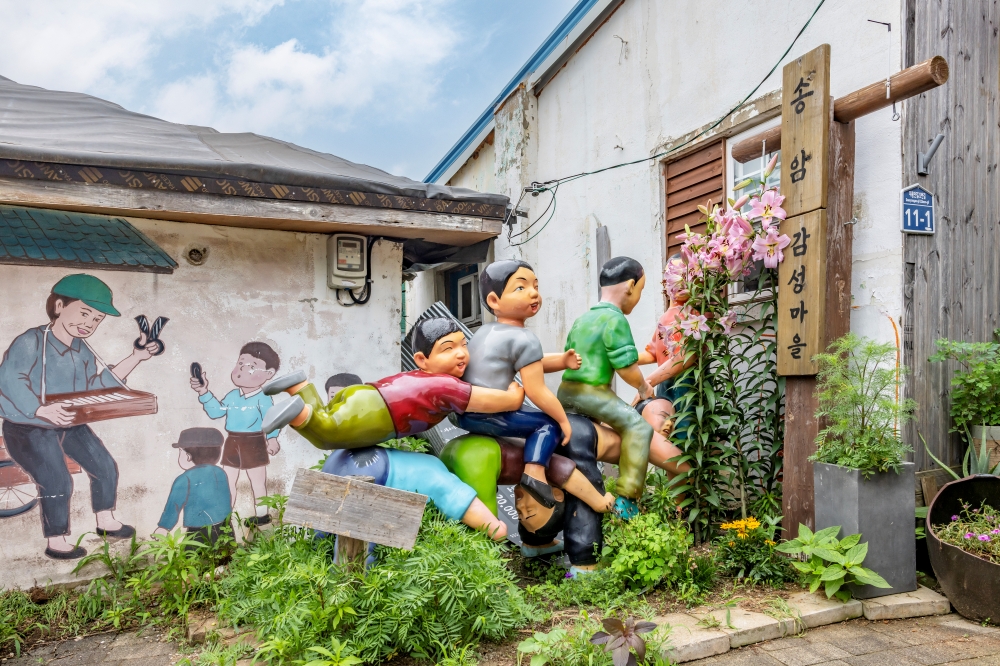
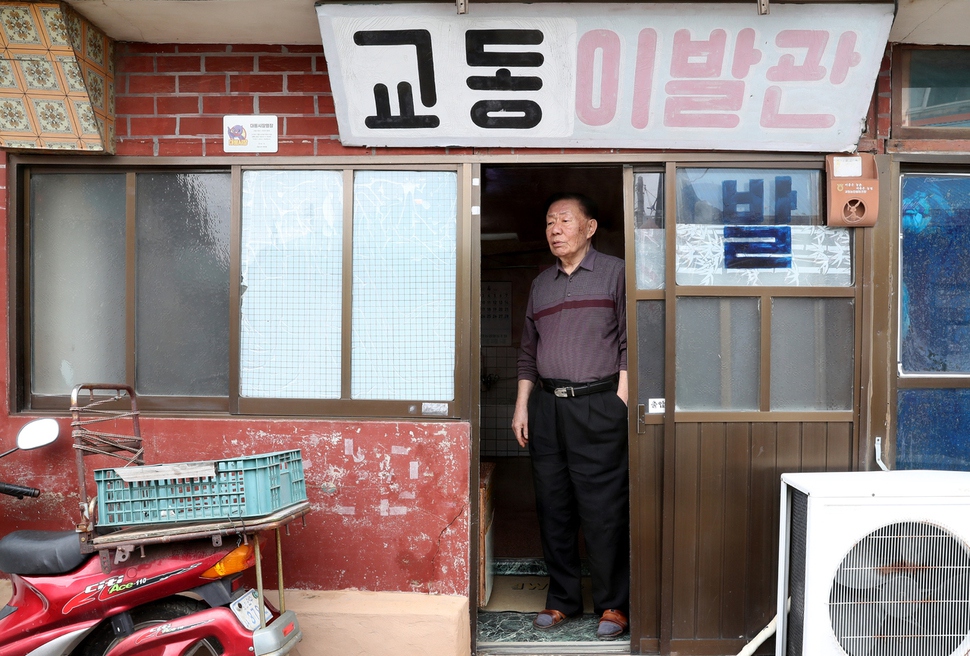
According to Incheon Tour's market information, Daryong Market has about 50 shops. The main items sold in the alleys are general goods, food, and clothing, and rather than quickly walking back and forth in one direction from the entrance, it is better to slowly connect the spots where old exteriors remain, such as Gyodong Barber Shop, Dongsan Pharmacy, and Mural Street, to understand the structure of the market.
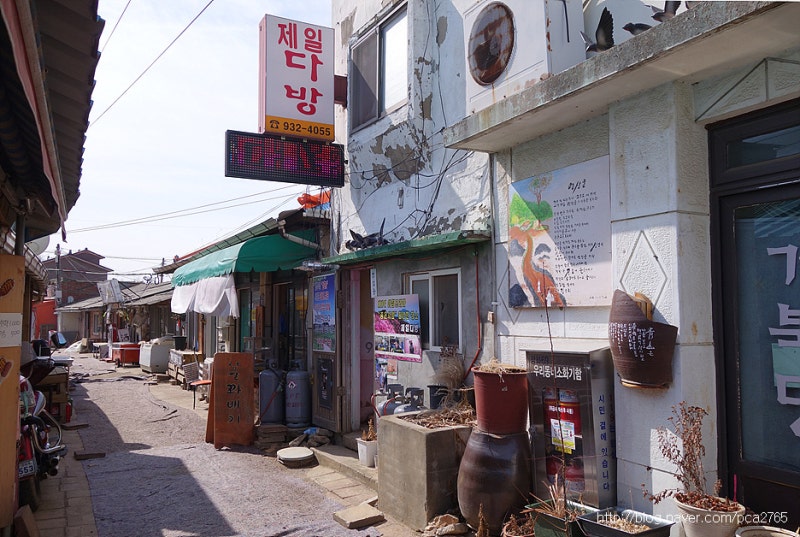
The representative menu items inside and around the market introduced by Incheon Tour in 2025 are banquet noodles and homemade rice wine bread at Gyodong Barber Shop, Yeonbaek-style puppy rice cake at Cheongchun Burabo, and homemade ssanghwa tea, patbingsu, and misugaru at Jeil Coffeehouse. Hotteok and hot dogs are also recommended as snacks to eat right away while strolling through the market, but each shop has different closing days and items for sale.
- Alley snacks: glutinous rice doughnuts, corn hotteok, hot dogs
- Traces of displaced-person cuisine: Yeonbaek-style puppy rice cake, North Korean-style dumplings, and injeolmi
- For sitting and resting: ssanghwa tea at Jeil Coffeehouse, and in summer, patbingsu and misugaru
The Seasonal Calendar of Lotus Flowers in Late July and Sunflowers in Nanjeong in Late August
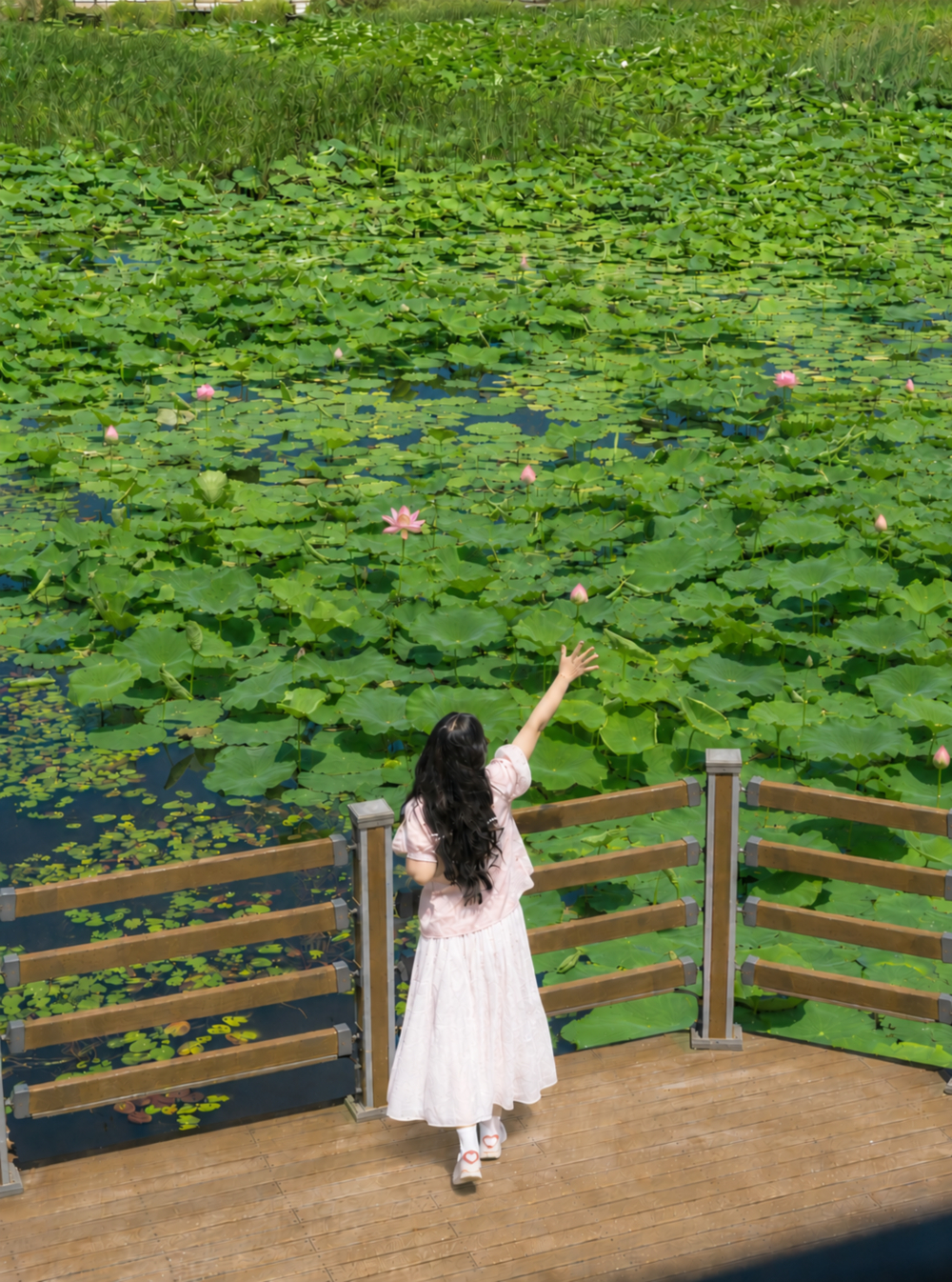
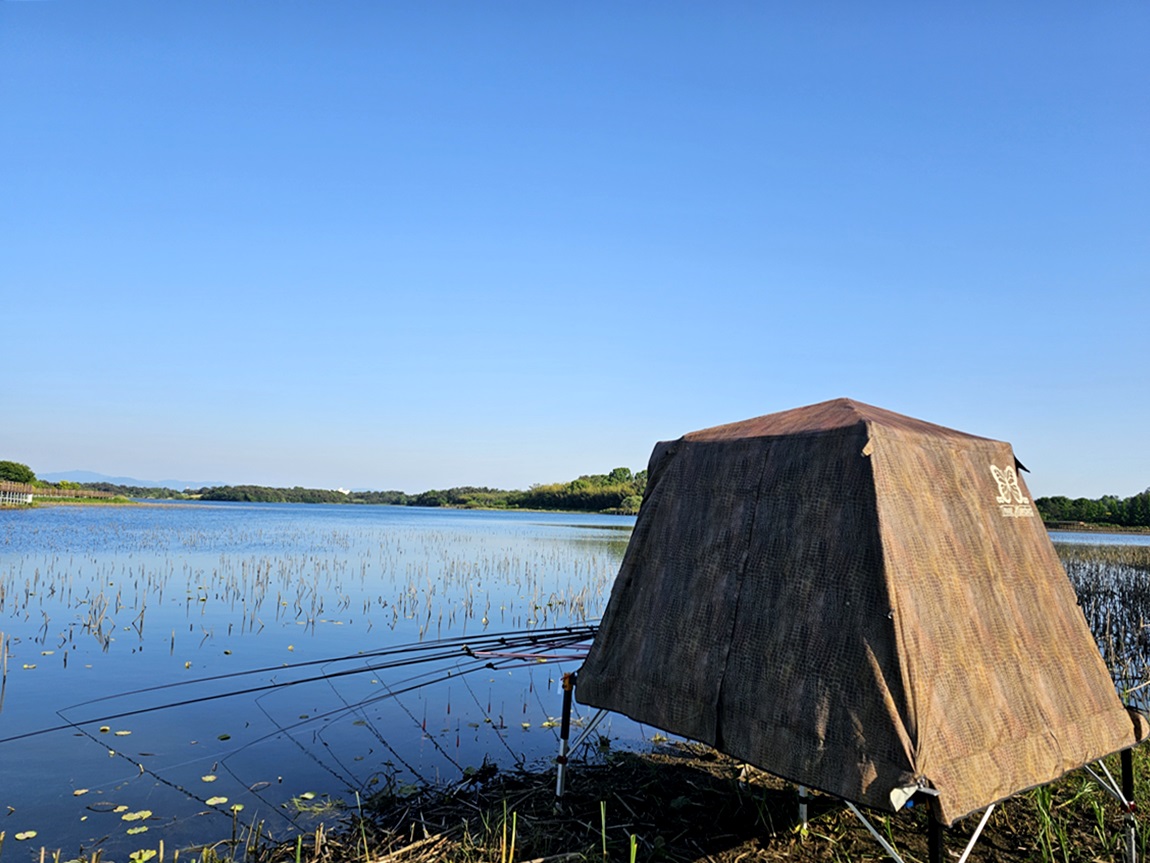
If you visit Gyodongdo in summer, Gogu Reservoir can be added before or after the market. Ganghwa-gun presents a seasonal course linking Gogu Reservoir lotus flowers, Gyodong Jebiwip House, Daryong Market Mural Street, and Hwagae Garden / Hwagaesan Monorail from late July to early August, and Gogu Reservoir is introduced as a place where lotus flowers bloom between July and August.
From late August to early September, the sunflower field at Nanjeong Reservoir is another option. According to Ganghwa-gun tourism guidance, about 100,000 sunflowers planted directly by residents create the scenery of this period. In the midsummer midday heat, there is less shade in the reservoir and garden sections than in the market alleys, so it is easier to move if you divide your time into lotus flowers in the morning, Daryong Market around lunch, and the Hwagaesan viewpoint in the afternoon.
A Half-Day Connecting Hwagae Garden at 5.8 km and Manghyangdae at 3 km
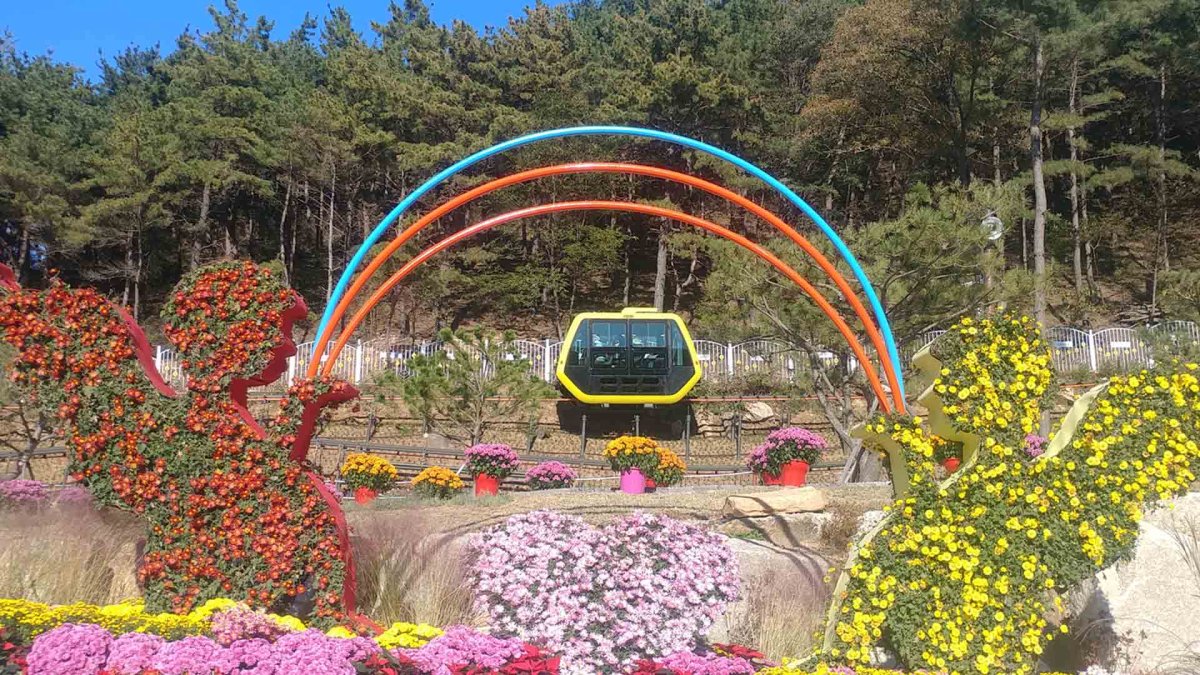
From Daryong Market to Hwagae Garden is about 10 minutes by car, or 5.8 km, based on the official day-trip course. Hwagae Garden is composed of five themed gardens of water, history and culture, memories, peace, and healing, and the Hwagaesan Monorail covers a round-trip section of about 2 km. Based on the 2025 guide, the monorail ride takes about 20 minutes, and walking to the summit takes about 40 minutes.
If you want to look more deeply into the context of division, add Gyodong Manghyangdae to the route. Manghyangdae is located on the slopes of Bammaeri Mountain, about 3 km from North Korean land, and is open year-round. It was created to comfort displaced people, and when viewed together with the Yeonbaekjang story of Daryong Market, it is easy to understand why the island's market, observatory, and swallow symbols are connected by a single history.
The summer course in Incheon Tour that connects Gogu Reservoir, a meal, the market, and Hwagae Garden around Daryong Market is presented as a total of 6 to 7 hours. If you only tour the market, about 1 to 1 hour 30 minutes is enough; if you add Jebiwip House and Hwagae Garden, a half-day is enough; and if you include Manghyangdae, a full-day schedule is appropriate.
How to Use the Barrier-Free Main Entrance and Paid Parking Lot
Daryong Market has a parking lot, restrooms, and an information desk, and the men's and women's restrooms are separate. Incheon Tour lists the parking lot as paid, there are separate parking spaces for people with disabilities, and the main access route and entrance passage are structured so that wheelchairs can pass through. Assistance dogs are also allowed.
Because the market alleys are not wide and regular like an indoor shopping mall, wheelchair and stroller users should first look at the location of the information desk from the main entrance and move from the flat sections for efficiency. The representative contact for the market is Gyodong-myeon Office at 032-930-4500, and tourism information for Gyodong Jebiwip House is connected at 032-934-1000. If you need foreign-language guidance, you can also use the Tourism Interpretation Hotline 1330.
Before You Go
- Address
- 35 Gyodongnam-ro, Gyodong-myeon, Ganghwa-gun, Incheon Metropolitan City / lot number: 462-1, Daryong-ri, Gyodong-myeon, Ganghwa-gun, Incheon Metropolitan City
- Hours
- Varies by shop (the market alleys are open for passage at all times)
- Closed
- Varies by shop
- Admission
- Free
- Phone
- 032-930-4500
- Official site
- https://www.ganghwa.go.kr/open_content/tour/tour/tourInfoDetail.do?pgno=23&tour_seq=275&tourdiv=all
- Transport
- Use local bus No. 18 from Ganghwa Bus Terminal. By car, about 40 minutes is indicated via Ganghwa Bridge - National Route 48 - Inhwar-ri - Gyodong Bridge. Identity verification procedures are carried out at the checkpoint before entering Gyodong Bridge.
- Parking
- Market parking lot available (paid), accessible parking spaces available
- Time needed
- Daryong Market about 1 to 1 hour 30 minutes / half-day including Jebiwip House and Hwagae Garden / about 6 to 7 hours if combined with Gogu Reservoir
- Accessibility
- The main access route and entrance passage have no steps and are wheelchair accessible; separate men's and women's restrooms, an information desk, accessible parking spaces, and assistance dogs are allowed
The above information is based on the time of writing. Please check the official guidance again before visiting.

Places
Nearby Attractions 5
-
 1
1
-
 2
2
-
 3
3
-
 4
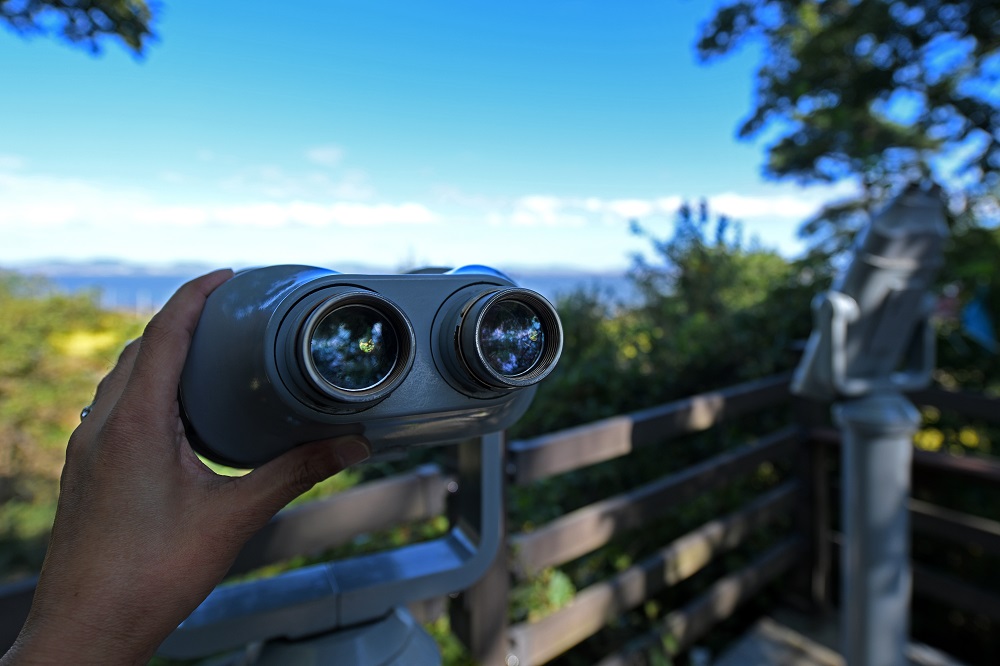
ManghyangdaeA place that looks toward the north and honors the memories and longing of those displaced from their homeland.
4
ManghyangdaeA place that looks toward the north and honors the memories and longing of those displaced from their homeland. -
 5
5
Food & Dining 3
-
 6
6
-
 7
Cheongchun BuraboA snack shop where you can buy and enjoy Yeonbaek-style Gangaji-tteok (puppy-shaped rice cakes).
7
Cheongchun BuraboA snack shop where you can buy and enjoy Yeonbaek-style Gangaji-tteok (puppy-shaped rice cakes). -
 8
8
Events in This Area


Festivals in This Area

More Travel Guides in This Area
 Travel Guide
Bomunsa Temple Facing the West Sea Beyond 419 Steps on Seokmodo Island
 Travel Guide
Ganghwa Peace Observatory: Facing North Korea Across 2.3 km of Sea
 Travel Guide
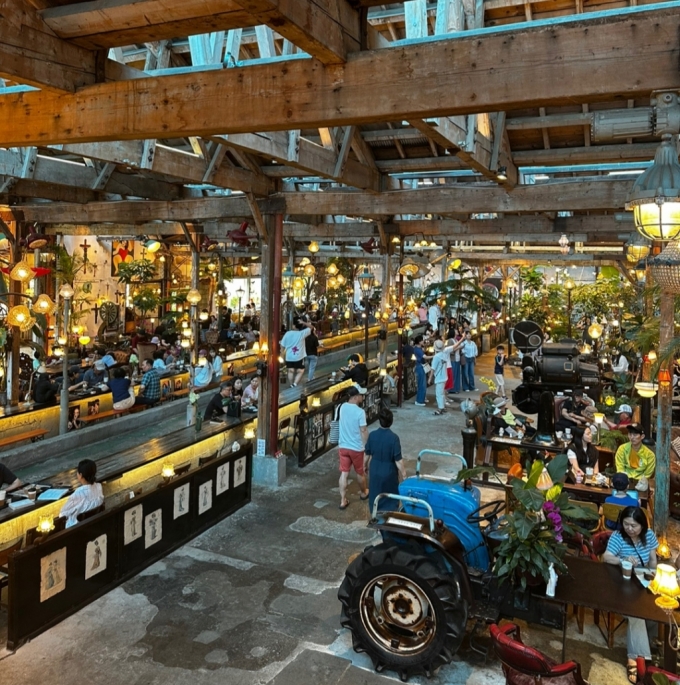
A Day in Ganghwa-do Starting from a 1933 Textile Mill Alley
 Travel Guide
20 Minutes at the Site of Goryeo's 1232 Capital Palace, Ganghwa Goryeo Palace Site
Korea News
![Did Jang Won-young ‘break up’? From the airport to social media, she was decked out in Brand D [MD Issue]](https://kotourlive-images.s3.ap-northeast-1.amazonaws.com/news/1790644492843_025fcab4_news_06d49363-285b-4cd5-93e3-ace2c4344710.jpg) News
News
Did Jang Won-young ‘break up’? From the airport to social media, she was decked out in Brand D [MD Issue]
 News
News
Oh, What a Surprise… BLACKPINK’s Rosé—Did She Get a Bob Cut?
![[On-Site Photos] “Equipped with a Third Eye”… RM’s Intense Eye Contact](https://kotourlive-images.s3.ap-northeast-1.amazonaws.com/news/1790644823332_c0c6ec29_news_001c0a59-4eb7-40e6-af6a-4f26183f5e8c.jpg) News
News
[On-Site Photos] “Equipped with a Third Eye”… RM’s Intense Eye Contact
 News
News