Daejeon of Wooam Song Si-yeol, Read Along the Waterway of Namganjeongsa
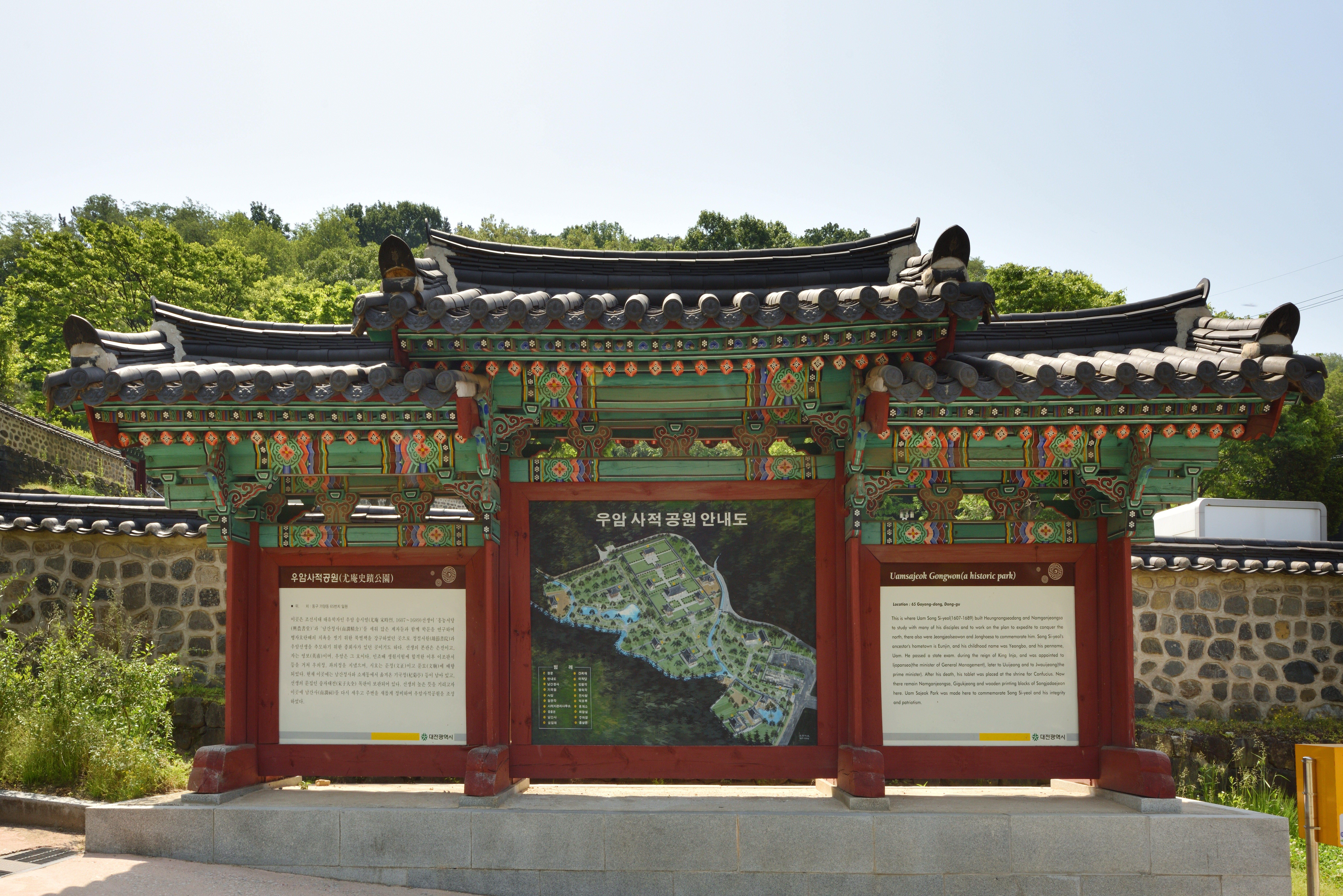
Wooam Historic Park is a historic park in Dong-gu, Daejeon, where you can experience both the lecture space of the late Joseon Confucian scholar Wooam Song Si-yeol (1607–1689) and commemorative architecture from later generations. It is good to take 60 to 90 minutes to view, in order, the waterway flowing below Namganjeongsa, the Jangpangak that stores the woodblocks of Songjodaejeon, Namgansa, and Deokporu.

I’ve been here?
Your check-in helps the next traveler.
20 people viewed this week Be the first
One tap — no writing needed
April 17, 1998: How the site of Song Si-yeol's lectures was reorganized as a park
Uam Historic Park is an urban neighborhood park in Dong-gu, Daejeon, commemorating the place where the late Joseon-era Confucian scholar Uam Song Si-yeol (1607~1689) taught his disciples and devoted himself to learning in his later years. The current park opened on April 17, 1998, after recreating the Jangpanggak archives, the relic hall, and seowon-related buildings from 1991 to 1997. Therefore, this is not merely a historic site with only one old house remaining, but a historical park that places Song Si-yeol's scholarship and the later commemoration of his legacy along a single route centered on Nanganjeongsa.
The park address is 53 Chungjeong-ro, Dong-gu, Daejeon, and the inquiry phone number is 042-673-9286. The user-provided address, 8-7 Dongdaejeon-ro 131beon-gil, may be considered a nearby access address, but the official visitation address listed in the tourism guide is 53 Chungjeong-ro (Gayang-dong, Nanganjeongsa). The information desk is Dong-gu Office in Daejeon, and it is safest to confirm any on-site operating changes by phone before departure.
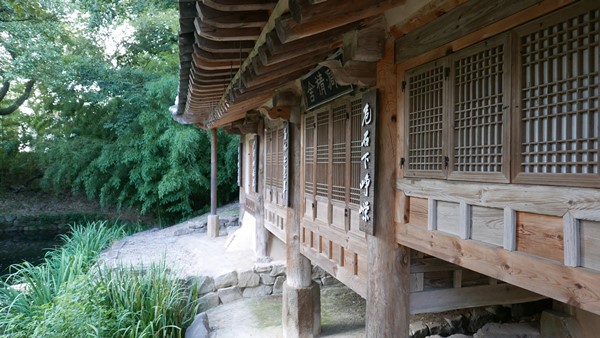
The waterway of "Nangan" that runs from Nanganjeongsa to the pond below
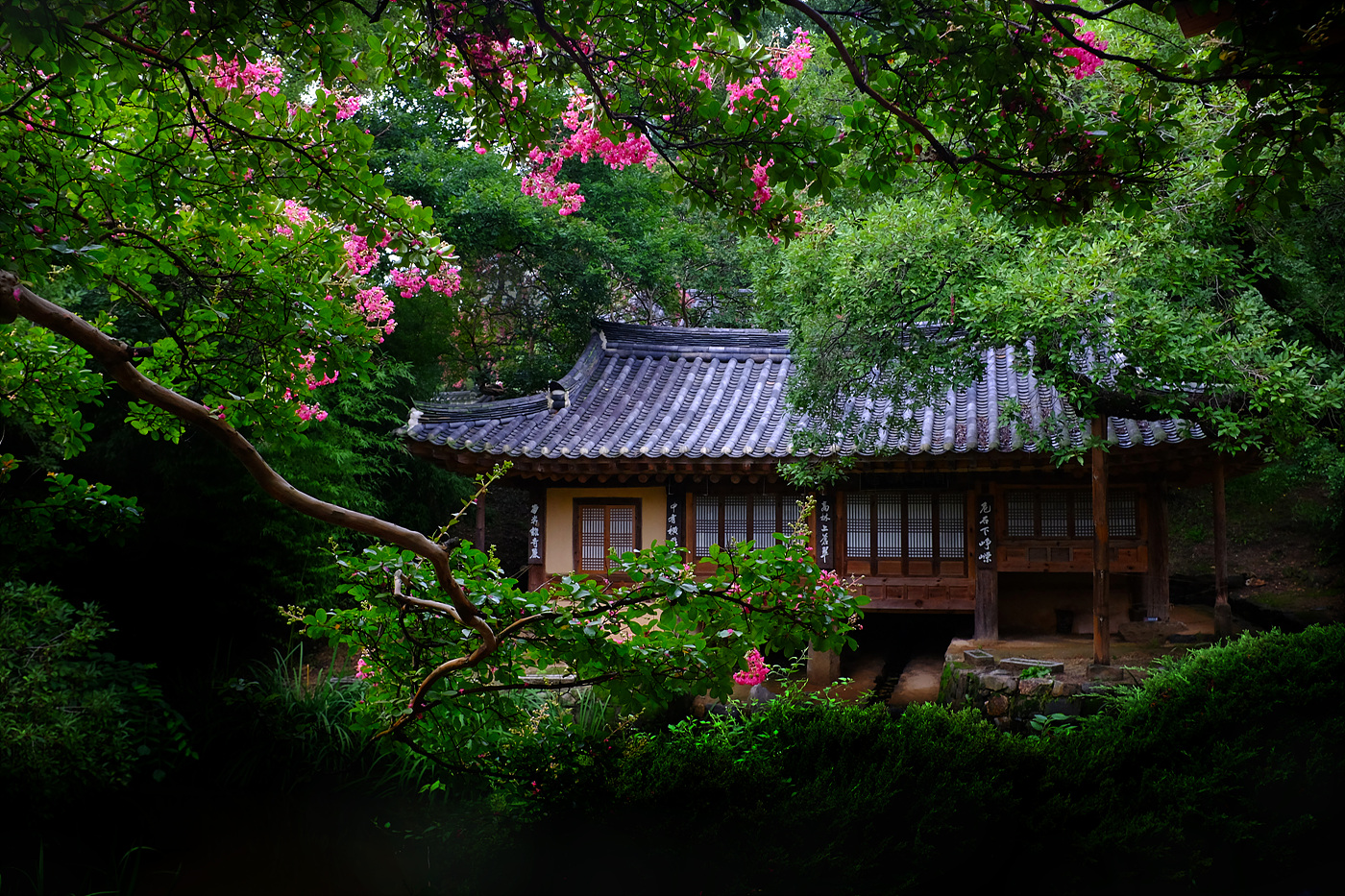
The center of the park is Nanganjeongsa, designated Daejeon Metropolitan City Tangible Cultural Property No. 4. "Nangan" means a stream flowing in a sunny place, and the name is especially evident in the building's unique water-management structure. Water from the valley behind was collected in a rear basin and guided to flow beneath the main wooden floor, then onward to the pond in front of the building.
Nanganjeongsa is arranged around a central main wooden floor, with an ondol room on the west side, a nu-maru pavilion floor on the east side, and another ondol room at the rear. Rather than passing by the exterior alone, checking the water collection area behind Nanganjeongsa together with the pond in front of the building makes the way nature's watercourse was brought into a study space much clearer. This section has stairs and level changes, so visitors using mobility aids should plan their route together with a companion.
From Gigukjeong to Jangpanggak, the meaning of 11,023 woodblocks of Songjadaejeon
Gigukjeong next to Nanganjeongsa is a building that was moved from Song Si-yeol's Sojedong villa to its present location during the Japanese colonial period. The name "Giguk" is said to come from the goji berry bushes and chrysanthemums in the area, symbolizing the reclusion of a scholar and the warmth of family togetherness. Seeing Nanganjeongsa and Gigukjeong side by side allows visitors to compare the character of old architecture, in which study spaces and living/rest areas were separated.
Jangpanggak houses the woodblocks of Songjadaejeon, a collected works and chronological record of Song Si-yeol. Related research materials give the number of woodblocks as 11,023. The original blocks were lost in a fire at Jangpanggak in Hwahyang-dong, Cheongju, and the current woodblocks were later republished and carved at Nanganjeongsa by descendants and Confucian scholars. The relic hall introduces Song Si-yeol's chronology, personal belongings, and book collection, so moving to the relic hall after viewing the background of the woodblocks connects the written text and the wooden printing blocks.
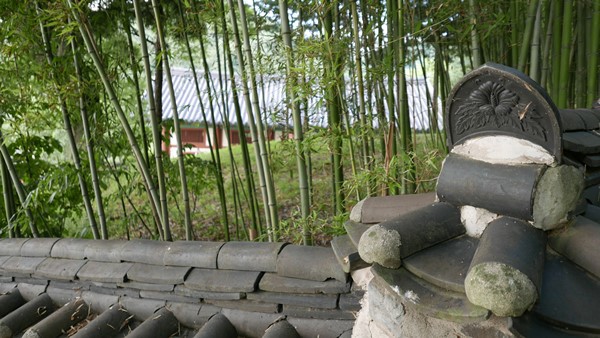
Beyond the hongsalmun gate, Nangansa and Deokporu: a shrine enshrining the spirit tablets of three figures
Passing through the hongsalmun gate in front of the relic hall leads toward Myeongjeongmun, and Nangansa stands above it. Nangansa is a shrine enshrining the spirit tablets of Uam Song Si-yeol, Suam Kwon Sang-ha, and Seokgok Song Sang-min. If Nanganjeongsa was the place where Song Si-yeol taught his disciples, Nangansa is different in that it is where later generations preserved his scholastic lineage and memory in the form of ancestral rites.
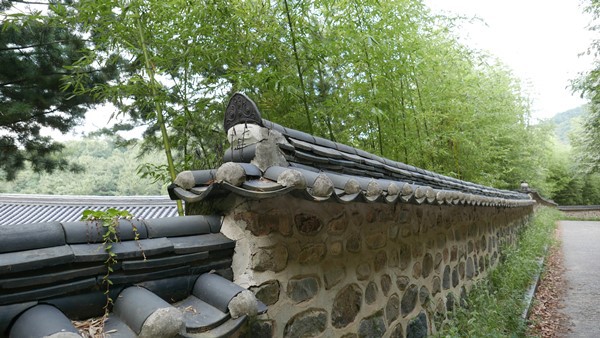
In front of Nangansa are a study room and a lecture hall that recreate seowon-style architecture, and one side of the park features a pond and Deokporu. Deokporu and the pond in front of it are introduced as representative photo spots in spring blossom articles, and in spring, plum blossoms, cornelian cherries, forsythia, magnolias, and cherry blossoms are said to bloom in sequence from the entrance to Deokporu. Since the park lot can become crowded on spring weekends, the tourism guide recommends using the public parking lot about 10 minutes away on foot.
Free admission from 05:00 to 21:00; check seasonal time changes before departing
Current tourism information lists Uam Historic Park's hours of use as 05:00~21:00, with no closing days throughout the year, and admission is free. However, some other public tourism materials also record winter hours as 06:00~20:00 and summer hours as 05:00~21:00, so especially if you plan to visit early in the morning or in the evening from November to February, it is better to confirm the same-day access time at 042-673-9286.
The recommended stay is 60 to 90 minutes to see Nanganjeongsa, Gigukjeong, Jangpanggak, the relic hall, Nangansa, and Deokporu in sequence. Tourism information states that a cultural tourism interpreter is stationed at the relic hall, but the operating hours, language availability, and whether reservations are required are not consistently announced, so if you expect foreign-language interpretation, you should inquire in advance with Dong-gu Office or by phone on site. Although the park guide says visitors may go onto the building's wooden veranda and pavilion floors, it is standard to follow any on-site restrictions for cultural heritage protection.
- Admission fee: Free
- Park hours: 05:00~21:00
- Closed days: Open year-round
- Main inquiry: 042-673-9286
Take Bus 311 from Daejeon Station and get off at the "Uam Historic Park" stop, 1 minute away
When approaching by public transportation from Daejeon Station, there is guidance to take Bus 311 and get off at the "Uam Historic Park" stop, then walk about 1 minute. Because this is not a place reached by walking from a subway station exit, but rather a park located right near a bus stop, it is efficient to first check the real-time arrival information and direction of Bus 311 after arriving at Daejeon Station.
Visitors by car can use the park lot, but it is highly likely to be full on weekends during cherry blossom season. During this period, an alternative is suggested: park at a nearby public parking lot about 10 minutes away on foot and walk over. There is a designated parking space for people with disabilities and a accessible restroom, and the restroom is Informationed as a unisex facility at the main gate. However, the park has stairs and level changes, and there is no ramp or wheelchair rental, so visits by wheelchair or stroller are best planned around the main gate area and flat sections.
- Bus: 311, get off at "Uam Historic Park" and walk about 1 minute
- Accessible parking space: Available
- Accessible restroom: At the main gate, unisex
- Wheelchair rental: Not available
3.7 km from Daejeon Station, 12 minutes by car, and a spring route linking to Dongchundang Park at 3.2 km
Uam Historic Park is introduced as being about 3.7 km from Daejeon Station, or about 12 minutes by car. If your purpose is the spring blossoms, you can plan your visit by checking with the park guide for the period when plum blossoms and cornelian cherries appear in early to mid-March, followed by forsythia, magnolias, and cherry blossoms. Since the bloom timing changes each year depending on the temperature, it is better to check flower updates right before departure rather than planning around a fixed date like "the peak is on a certain day of the month."
If you include Dongchundang Park on the same day, it is about 3.2 km away, or about 10 minutes by car. A Daejeon spring route article connects Uam Historic Park → Dongchundang Park → Expo Science Park → National Daejeon Cemetery at intervals of 3.2 km, 6.3 km, and 14 km. Conversely, if your purpose is quiet traditional architecture and relic viewing, even in seasons without flowers you can create a meaningful route of about one hour centered on the waterway of Nanganjeongsa and the Jangpanggak archives and relic hall.
- Daejeon Station → Uam Historic Park: about 3.7 km, about 12 minutes by car
- Uam Historic Park → Dongchundang Park: about 3.2 km, about 10 minutes by car
- Dongchundang Park → Expo Science Park: about 6.3 km, about 15 minutes by car
- Expo Science Park → National Daejeon Cemetery: about 14 km, about 15 minutes by car
Before You Go
- Address
- 53 Chungjeong-ro, Dong-gu, Daejeon
- Hours
- 05:00~21:00
- Closed
- Open year-round
- Admission
- Free
- Phone
- 042-673-9286
- Official site
- https://www.donggu.go.kr
- Transport
- Take Bus 311 from Daejeon Station, get off at the 'Uam Historic Park' stop, then walk about 1 minute
- Parking
- Park lot available. During crowded weekends in cherry blossom season, use the public parking lot about 10 minutes away on foot.
- Time needed
- 60~90 minutes
- Accessibility
- There is an accessible parking space and an accessible restroom at the main gate. There are stairs and level changes, and no ramp or wheelchair rental. Whether foreign-language interpretation is available requires prior inquiry.
The above information is current as of the time of writing. Please check the official notice again before your visit.


More Travel Guides in This Area
 Travel Guide
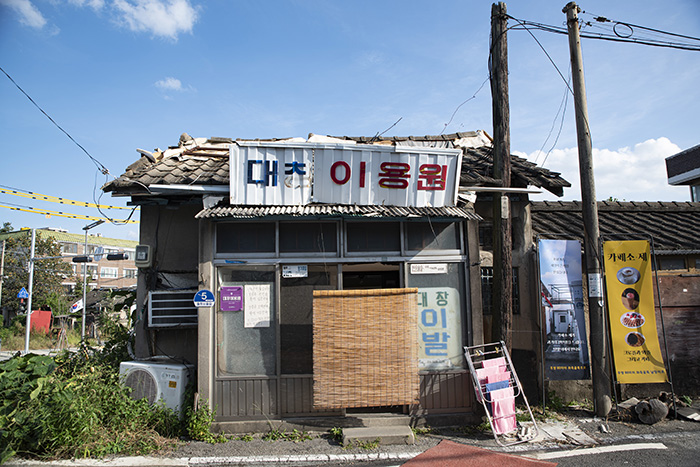
Reading the Alleys of Soje-dong Cafe Street, the 100-Year Railway Village Behind Daejeon Station
 Travel Guide
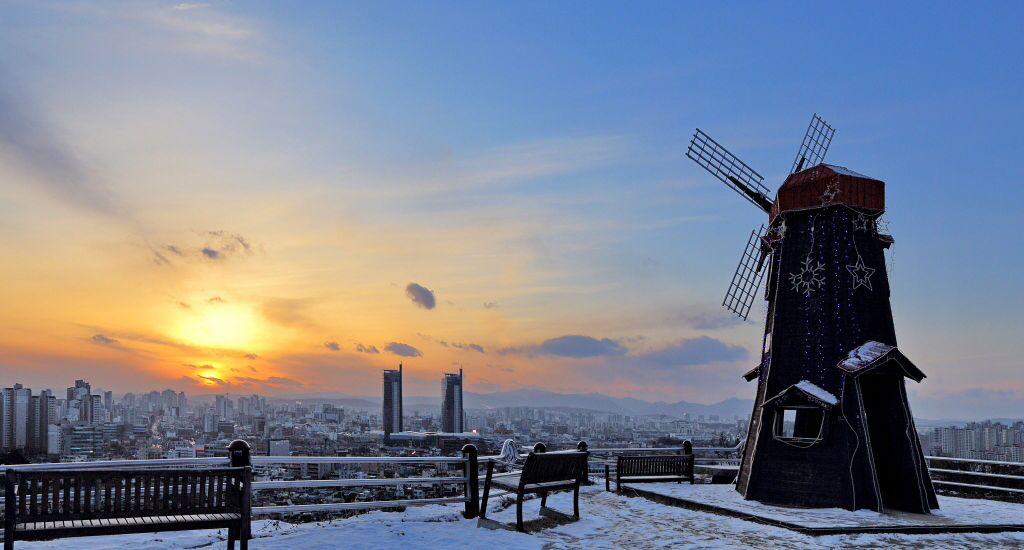
A Hill in Daejeon’s Dong-gu Where Windmills Meet the Alleys of a Hillside Neighborhood
 Travel Guide
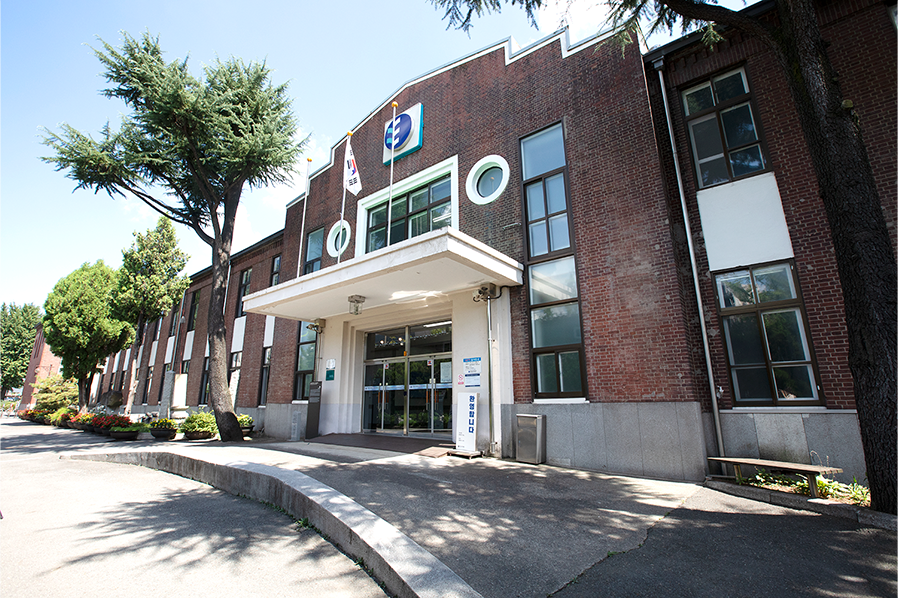
Discover Daejeon’s School History in a 1938 School Building: Hanbat Education Museum
 Travel Guide
Daejeon Skyroad Illuminates the Night with a 214 m LED Arcade
Korea News
![BLACKPINK’s Lisa Dominates the VMA Red Carpet in a Sheer Corset Dress and Red Fur [Star Issue]](https://kotourlive-images.s3.ap-northeast-1.amazonaws.com/news/1790557894714_010e956a_news_94409db1-fab6-40bf-bc7b-4b985b1fbac7.jpg) News
News
BLACKPINK’s Lisa Dominates the VMA Red Carpet in a Sheer Corset Dress and Red Fur [Star Issue]
![BLACKPINK’s Jisoo Spotted by Surprise with BIGBANG in London… Their Special Loyalty as Labelmates [IS High Cut]](https://kotourlive-images.s3.ap-northeast-1.amazonaws.com/news/1790557854683_6ea979f5_news_caab62e5-8462-43c8-8622-da794f3df9de.png) News
News
BLACKPINK’s Jisoo Spotted by Surprise with BIGBANG in London… Their Special Loyalty as Labelmates [IS High Cut]
 News
News
Tattoos All Over Her Body… AOA’s Jimin Draws Shocked Attention After Kwon Mina’s ‘Bullying’ Allegations
![You’ll Have to Look Twice… Choi Min-a-soo Perfectly Pulls Off Everything from a Daring Illusion Dress at the Awards Ceremony to Long Braided Hair [RE:STAR]](https://kotourlive-images.s3.ap-northeast-1.amazonaws.com/news/1790492384850_1f293dad_news_d834c50e-0685-43ef-9aa5-6995cd6d8848.jpg) News
News