A "summit conference" that began in a neighborhood once dismissed as cheap art
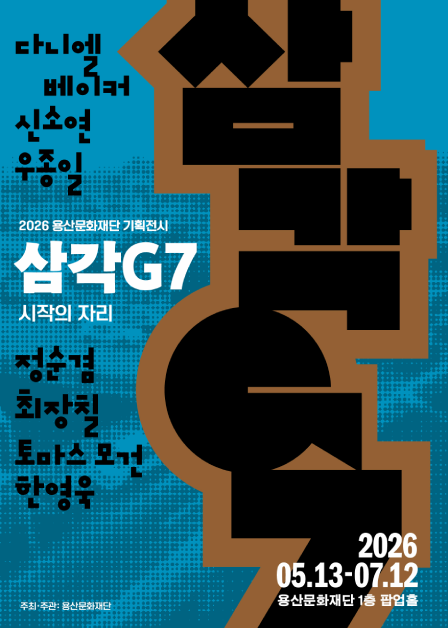
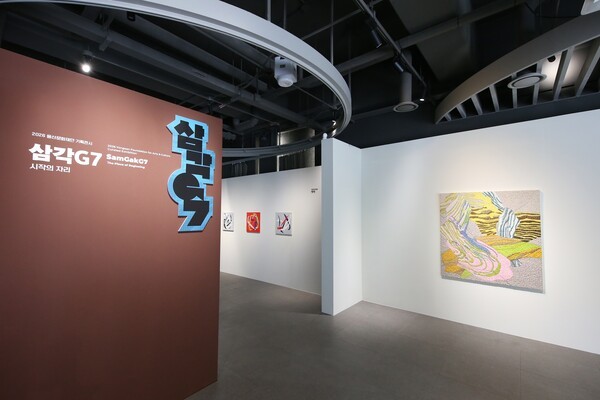
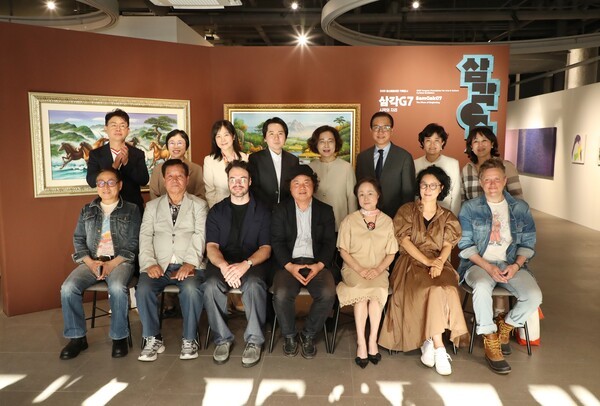
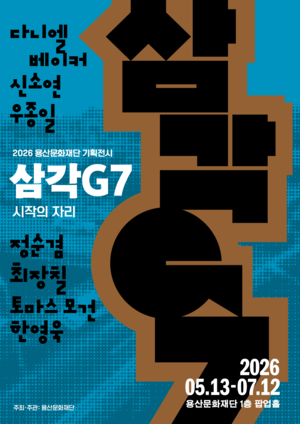
If you want to see just one more museum in Seoul, I would recommend the Yongsan Cultural Foundation at the far end of Itaewon-ro. <TriangleG7: The Place of Beginning>, held in the popup hall on the first floor, is the foundation's first self-planned exhibition since its launch. Seven mid-career artists in the fields of painting, photography, and installation art have gathered here to present a total of 26 works. The exhibition title is a bit unusual: "Samgak G7" combines the neighborhood name Samgakji and the seven participating artists. Borrowing from the G7 summit of seven countries, it carries the idea of a "summit conference" where artists who have built up their own artistic worlds over many years come together to discuss contemporary art.
Why Samgakji, of all places? Because this neighborhood itself holds a curious backstory of Korean painting. After the Korean War ended and U.S. forces were stationed in Yongsan, painters who made portraits and landscapes for them settled in Samgakji. Framing shops and picture-frame stores gathered around them, and in the 1970s, "export paintings" sent to the United States boomed, so anyone with real painting skills could find work here. Yet even with so many artists gathered there, Samgakji was long dismissed in the art world as a "cheap painting neighborhood." Masters such as Lee Jung-seob, Park Su-geun, and Kim Ki-chang passed through, but anonymous painters often worked without ever getting to sign their own works. Revisiting that intense, hard-fought place through today's perspective is the exhibition's weighty starting point.
A free exhibition with no ticket price: start at Samgakji Station on Line 4
First, a pleasant piece of news before you go: admission is free. Visiting hours are from 10:00 a.m. to 7:00 p.m., and the exhibition runs until July 12. Since you can just show up and walk in without separate booking or a timed reservation, you don't have to plan around sold-out tickets. And because admission is free, there is almost nothing to pay for; if you want coffee or a meal nearby, most cafes and restaurants in Korea accept cards and mobile payments, so you don't need to carry cash separately.
Getting there is simple. Start at Samgakji Station on Line 4 or Line 6 of the subway. Because the station is an interchange between the two lines, it is easy to reach from anywhere in the city, though the transfer passage between Lines 4 and 6 is a bit long, so it's best to allow plenty of time if you're changing lines. From the station, walk along Itaewon-ro to the Yongsan Cultural Foundation; it's not far even at a leisurely pace. Once you arrive, you don't need to wander upstairs—just head straight to the popup hall on the first floor.
This is not an exhibition with extensive English guidance, so if you want to read each artist's description in depth in English, you may feel a little disappointed. Still, as a visual arts exhibition combining painting, photography, and installation, it can be fully enjoyed with your eyes even without language, and with only 26 works it never feels overwhelming, making it perfect for a slow, one-by-one viewing. It is nice to match each work with the artist's name as you go; the participating artists are Daniel Baker, Shin So-yeon, Woo Jong-il, Jeong Soon-gyeom, Choi Jang-chil, Thomas Morgan, and Han Young-wook. Because photography (Woo Jong-il) and installation (Thomas Morgan) are included alongside painting, the viewing experience does not become monotonous.
Things worth pairing with a walk around Samgakji
Since the exhibition itself is modest at 26 works, you can finish the visit in under an hour. That's why I recommend making a half-day course that combines the entire Samgakji neighborhood. In the concourse of Samgakji Station, there is a memory space for singer Bae Ho, who sang "Returning Samgakji." Inside the station, you'll find a statue of Bae Ho sitting on a bench with a guitar, a pictorial recreation of the old Samgakji roundabout, and a song monument on the traffic island in front of Exits 13 and 14. It's strangely charming to encounter traces of the now-vanished overpass in this way.
A leisurely walk through the nearby street that still has some remaining galleries, framing shops, and picture-frame stores also pairs well with this exhibition. The area is much quieter than in its heyday, but it lets you see with your own eyes which alleys actually gave rise to the "creative energy of Samgakji" you saw in the exhibition. If you have the energy to walk a bit farther, your route can continue to the War Memorial of Korea, Yongsan Family Park, and the National Museum of Korea. The National Museum of Korea also offers free permanent exhibitions, making for a rewarding "two free exhibitions in one day" kind of itinerary.
Two practical tips. First, because this is a small popup-hall exhibition, you can use the restroom and rest areas inside the foundation building, and it is hard to expect any separate baggage storage service, so it's best to travel light. Second, since it closes at 7:00 p.m., I recommend arriving no later than 6:00 p.m. so you don't make a wasted trip after a late evening visit. If you're worried that the schedule may have changed and your time is tight, checking the official page once before you go will put your mind at ease.
Who I would recommend this to
I would recommend this exhibition to anyone who prefers small shows full of neighborhood texture and history over flashy blockbuster exhibitions, and to anyone who wants to feel in one neighborhood how Korean art grew and where it came from. Enter without any admission fee, and watch how the neighborhood of unknown painters who once supported themselves by painting portraits for U.S. soldiers speaks again through seven artists of today. It was short, but the afterglow lasted. If you find yourself in Samgakji, please stop by this "place of beginnings" with a line from Bae Ho's song.
| Item | Score | Basis |
|---|---|---|
| Language accessibility | 2.5 | English guidance is not very extensive, but as a visual arts exhibition it can be viewed without language |
| Transportation accessibility | 4.5 | A short walk from Samgakji Station on Lines 4 and 6; easy access as an interchange station |
| Facilities for foreign visitors | 3.0 | A small popup hall, so storage and similar services are limited; basic facilities are available inside the building |
| Local cultural experience | 4.5 | The history of Samgakji's gallery street and Bae Ho's memory space make the whole neighborhood part of the content |
| Value for money | 5.0 | Free admission, no reservation required |
| Cleanliness/Safety | 4.0 | An indoor exhibition operated by a public institution, so it is safe; detailed hygiene information is limited |
| Food/Convenience | 3.5 | No food inside the venue, but nearby areas such as Yongridan-gil have plenty of restaurants and cafes |
This article was compiled by our editorial team from official announcements and coverage of previous editions; it is not a first-hand visit report. Please confirm the final schedule and fees on the official website.
Festival Details
-
Festival Period5/13/2026 ~ 7/12/2026
-
Festival VenueYongsan Cultural Foundation 1st-Floor Pop-up Hall
-
Operating Hours10:00–19:00 *No closed days during the exhibition period
-
TagsSamgakji Samgak G7 Visual Arts Exhibition Yongsan Cultural Foundation Pop-up Hall The Place to Begin
More Festivals


Popular Concerts
![[Play&Stay]ILLIT LIVE ‘PRESS START♥’ ENCORE in KOREA + Hotels](https://kotourlive-images.s3.ap-northeast-1.amazonaws.com/concerts/1790560840067_340ff0d2_thumbnail.gif)


More Travel Guides in This Area
 Travel Guide
Understanding Blue Square Through Hangangjin Station’s Underground Passage and Its 1,766 Seats
 Travel Guide
Leeum Museum of Art’s Three Buildings and Ancient Art on Hannam-dong Hill
 Travel Guide
From Hangangjin Station to Leeum: A Day Reading the Hills and Alleys of Hannam-dong
 Travel Guide