I’ve been here?
Your check-in helps the next traveler.
No one has checked in yet Be the first
One tap — no writing needed
306 Earthenware Pieces, National Gwangju Museum on July 29, 2026
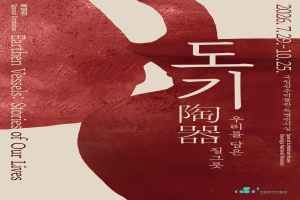
〈Earthenware: Vessels That Held Us〉 was held from July 29 to October 25, 2026, in the Special Exhibition Gallery on the first floor of the main building of the National Gwangju Museum, located at 110 Haseo-ro, Buk-gu, Jeonnam Gwangju Integrated Special City. Visiting hours were 10:00–18:00, with admission closing at 17:30. The exhibition was free, and the museum was closed on September 25, 2026, the day of Chuseok. National Gwangju Museum Special Exhibition Information
This exhibition featured 306 pieces in 295 lots. Following practical vessels such as the pleated-pattern bottle, large jar, and flat bottle with handles shaped like animal faces inscribed with “Yangon” from the Jangdo Cheonghaejin archaeological site in Wando, it became clear that earthenware was not limited to simple household goods. The tourist information organized the exhibition into Part 1, “Capturing the Colors of Ancient States”; Part 2-1, “Decorating with Pattern Stamps”; Part 2-2, “The Emergence of New Earthenware”; two in-depth topics; and Parts 3-1 and 3-2. Viewing them in order made the changes by period much easier to understand. National Museum of Korea Press Release
It was especially memorable to learn that Unified Silla stamped-pattern earthenware became popular around Gyeongju after the unification of the Three Kingdoms in 676 and spread nationwide around the eighth century. The section covering six kiln sites in the Jeonnam region, including Masan-ri and Gurim-ri in Yeongam and Wolseong in Wolha-dong, Yeosu, was also impressive. Moving into the Goryeo and Joseon periods, the exhibition presented a water jar excavated from the waters off Mado in Taean, a royal burial jar and memorial stone from the reign of King Taejong from 1400 to 1418, and Hoeryeong earthenware made from around the twelfth century, creating a strong sense of the breadth of time within a single exhibition. Traditional Culture Portal Exhibition Introduction

A Visit Connecting the Gwangju Museum Bus Stop with “Earthenware? Earthenware!”
Going with a foreign friend felt easy from the start because admission was free. The exhibition included video content, interactive experiences, the digital workshop “Earthenware? Earthenware!”, and a commemorative photo space called “Earthenware Four-Cut.” The museum website offers English, Chinese, and Japanese menus, and the English tourism page also lists the exhibition period, venue, and free-admission information, making it convenient to check the basic details before setting out. VISITKOREA English Exhibition Information
Bus access was more practical than directions based on walking from a subway station exit. According to the official transportation information, routes departing from the Express Bus Terminal were Munheung 53, Yangsan 60, Suwan 03, Cheomdan 95, and Yongjeon 85. From Gwangju Songjeong Station, visitors could take Yongjeon 84, Cheomdan 95, Songjeong 29, or Seat 02. The destination stop could be set as “Gwangju Museum” or “Museum Entrance.” From the National Asian Culture Center area, Cheomdan 95, Yongjeon 84, Unnim 51, and Geumnam 58 provided connections. National Gwangju Museum Transportation Information
If you drive, the parking lot operates from 08:00 to 20:00. The first three hours are free, after which the fee is 500 won per 10 minutes, with a daily maximum of 40,000 won. Parking payment is card-only, and a prepayment machine is available at the information desk on the first floor of the exhibition building. After viewing the exhibition, you can visit the souvenir shop on the second floor of the Ceramic Culture Hall or walk through the museum garden, which is open from 08:00 to 20:00. Strollers and wheelchairs can be rented free of charge, and Café Jamitan is also located inside the museum. Parking Lot Information


September 25 Closure, 17:30 Admission Cutoff, and Things to Check Before “Earthenware Four-Cut”
One drawback was that the exhibition topic stretches from antiquity to the modern era, so it required more concentration than expected if you wanted to read everything. Rather than trying to memorize every period from the beginning, I found it easier to choose individual objects that caught my interest, such as the pleated-pattern bottle, stamped-pattern earthenware, comparisons between earthenware and celadon, and onggi. Until October, the museum stayed open late until 20:00 every Saturday, but on weekdays visiting hours ended at 18:00 and admission closed at 17:30, so it is better to keep your route short in the late afternoon. National Gwangju Museum English Visitor Information
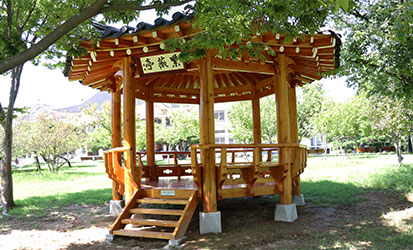
Food and beverages could not be brought into the exhibition galleries, and flash photography and commercial photography were prohibited. If you want to take photos, it is best to visit the “Earthenware Four-Cut” space first, then take quiet photos of the artifacts with your phone’s flash turned off. The entire museum is a non-smoking area, and pets other than guide dogs were not permitted. For a break, you can use clearly located rest areas such as Tammaejeong and Gajajeong in the western part of the garden, Jamijeong in the eastern part, and Jiseokjeong at the main entrance. Visitor Information and Regulations
Because this indoor exhibition continues from the hot season into autumn, it was convenient to bring a light outer layer and a small bag for keeping water outside the exhibition galleries. Since food and beverages are not allowed inside the galleries, it felt more natural to set aside separate time before or after the visit for meals and rest at the café or in the garden.
An Exhibition That Will Stay with You Longer If You Like the Pleated-Pattern Bottle from Wando Cheonghaejin
This exhibition is better suited to people who discover traces of daily life in the surfaces and forms of long-used objects than to those who think only of dazzling celadon. I would recommend it to travelers who want to consider the relationship between materials and function while viewing earthenware and celadon side by side, to travelers who want to explore local history through stories of kiln sites in the Jeonnam region, and to friends who want to enjoy the free exhibition together with the digital workshop “Earthenware? Earthenware!”
I remember the bottles and jars that seemed almost within reach more vividly than any enormous artifact. The 306 pieces of earthenware revealed not only ancient technology but also the texture of everyday life—storing, carrying, eating, and drinking. For a foreign friend who wants to spend quiet time at a museum in Gwangju and get a little closer to Korean ceramic culture, this exhibition would be a calm and vivid choice.
| Evaluation Category | Score | Basis for Evaluation |
|---|---|---|
| Language Accessibility | 3.0 | The museum website offered English, Chinese, and Japanese menus, as well as English tourism information. |
| Transportation Accessibility | 3.5 | Multiple bus routes from Gwangju Songjeong Station and the Express Bus Terminal connected to the Gwangju Museum bus stop. |
| Facilities for Foreign Visitors | 4.5 | Free stroller and wheelchair rentals, a café, a souvenir shop, and garden rest areas were available. |
| Local Cultural Experience | 5.0 | The exhibition covered the Wando Cheonghaejin archaeological site, six kiln sites in the Jeonnam region, and the relationship between earthenware and celadon through 306 pieces. |
| Value for Money | 5.0 | Admission to the special exhibition was free, and the digital workshop and “Earthenware Four-Cut” were also available in the exhibition space. |
| Cleanliness/Safety | 3.5 | The entire site was smoke-free, food and beverages were restricted in the galleries, and flash photography was prohibited. |
| Food/Amenities | 2.5 | Café Jamitan was listed inside the museum, but information about exhibition-specific food and beverage options was limited. |
| Average | 3.9 | The arithmetic average of seven categories. |
This article was compiled by our editorial team from official announcements and coverage of previous editions; it is not a first-hand visit report. Please confirm the final schedule and fees on the official website.
Festival Details
-
Festival Period7/29/2026 ~ 10/25/2026
-
Festival VenueJeonnam–Gwangju Integrated Special City, Buk-gu, Haseo-ro 110 (Maegok-dong)
-
TagsPottery Gwangju National Museum special exhibition traditional crafts onggi ancient artifacts
More Festivals


Popular Concerts

More Travel Guides in This Area
 Travel Guide
From the Sinan Underwater Ship to the Ceramic Culture Hall: Reading the National Gwangju Museum in Two Hours
 Travel Guide
Walking through the time before Gwangju became a “city” at the Jungoe Park Museum
 Travel Guide
How to Read the Gwangju Biennale Exhibition Hall: From “Beyond the Boundaries” in 1995 to the 16th Edition in 2026
 Travel Guide