I’ve been here?
Your check-in helps the next traveler.
No one has checked in yet Be the first
One tap — no writing needed
The name 'Gwangmudae' found at the top of a 9-story market building
When people hear Dongdaemun General Market, they usually think of fabric, buttons, or sewing supplies. But I listened to pansori on the 9th floor of this market's new building. As soon as the elevator door opened, the market noise suddenly cut off, and a space marked 'Gwangmudae' appeared. This name is not just a stylish invention. This place was where Korea's first private performance took place in 1898, and where the old theater Gwangmudae, which hosted the 1907 changgeuk <Chunhyangjeon>, once stood. In a time when there were almost no stages for traditional performers, Gwangmudae was one of the few stages where the great singers and masters of the era could perform, and after entering the colonial system, the theater was closed; now that name has come back to life in the same spot. Onggi Concert is an experiential Korean traditional music performance held right in this space. Rather than a typical show where you watch from afar, it is structured so that the audience becomes a guest invited into a Joseon-era sarangbang, which made it even more special.
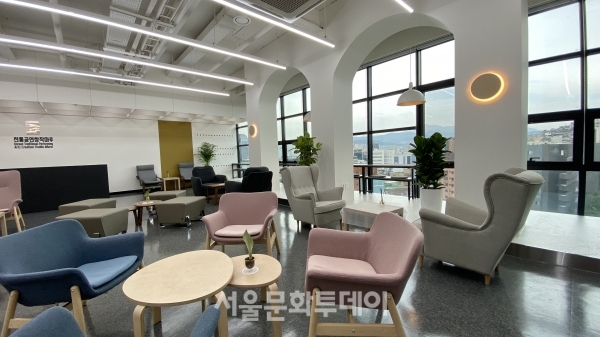
From 'Welcoming' to 'Seeing Off' - about 90 minutes of being treated as a guest
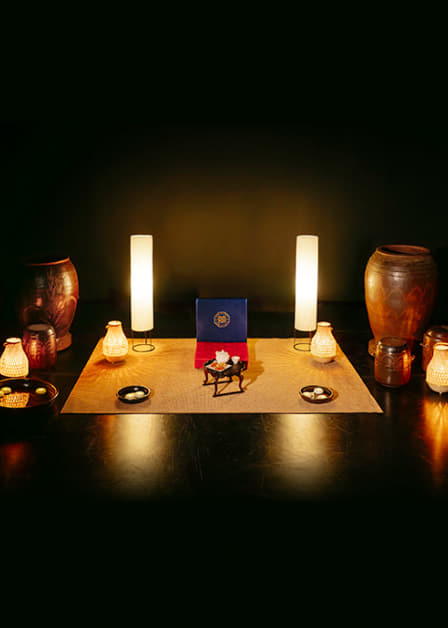
The performance flows in three parts. It begins with 'Welcoming'. In the lobby, a docent greets each audience member individually, and when you take your seat, you receive a single-person table setting - that is, a traditional soban tray with tea and dasik snacks arranged on it. It follows the hospitality style used by Joseon yangban to receive guests. You can choose between alcohol and tea, so I chose tea, while the person next to me received alcohol. This kind of personalized treatment for each person is possible because the audience is limited to small groups of no more than 30.
The main performance lasts about 75 minutes. First, the docent explains the culture of the individual table setting, tadam, and the history of Gwangmudae, and then two scenes from the pansori Simcheongga are performed. These are the scene where Simcheong throws herself into the waters of Ingdangsu and the scene where Sim Bongsa regains his sight; among the five classic pansori works, this part is one of the most dramatically contrasted in sorrow and joy, so even first-time listeners can easily follow the emotional arc. In the middle there is an 'exclamation participation' segment, where the audience adds their own calls of "Eolssigu" and "Jalhanda." At the end, there is nearly 20 minutes of time to exchange questions with the singer and drum accompanist, and you can ask directly about what the raw sound is like when heard naturally without a microphone. When it ends, the 'Seeing Off' segment follows, where you receive a souvenir, take photos, and write in the guestbook to finish.
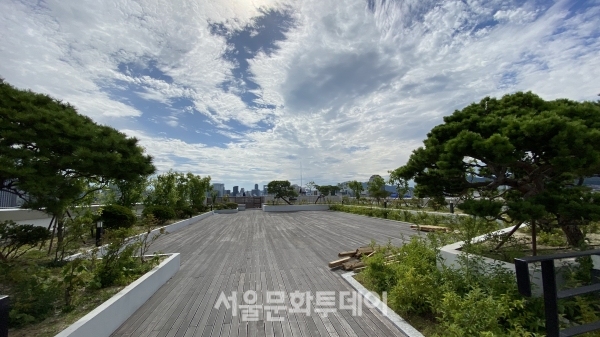
What foreign travelers should know - reservations, route, and mental preparation
The first thing I want to tell you is about reservations. Since the capacity does not exceed 30 people, do not expect tickets to be left on site; once you decide on a date, it is safer to book in advance. Looking at other regular performances held at Gwangmudae, many are free or priced around 10,000 won for all seats, so the cost burden is not that high, but because Onggi Concert's schedule and fees may change by session, check the exact price and timetable on the booking site.
The way there is surprisingly simple. Exit 9 of Dongdaemun Station on Subway Line 1 is the closest to Dongdaemun General Market. If you come out of Exit 9, you can enter the market without getting a single drop of rain on you through an underground connected passage. If you take Line 4, you can get off at Dongdaemun Station, or you can walk from the Jongno 5-ga Station side. The challenge is finding the new building (Building N). The market is divided into several buildings and the inside is connected like a maze, so I took a photo of the floor guide on my phone and asked my way up to the N-building elevator. The key is to take the elevator that goes all the way to the 9th floor in one shot. Performances often start around 7 p.m., and Dongdaemun Station has subway service until around midnight for the last train, so getting home after the show is easy.
To be honest about the language part: because the docent's explanation and the conversation with the singer make up a large part of the performance, Korean is heavily used. There is no guarantee that English interpretation is always provided, so if you have a friend who speaks Korean, you'll be able to enjoy it much more deeply. That said, if you know the story of Simcheongga in advance - a daughter throws herself away for her blind father, and at the end the father regains his sight - you can still immerse yourself in the emotion of the singing even if you don't catch every lyric. You may need to take off your shoes and sit on the floor, so comfortable socks and clothing are recommended, and because of the nature of the market building, most stores in the market accept cards and simple mobile payments for purchases or food.
Recommended for people like this
It is perfect for people who want to experience Korean tradition at arm's length while being treated to it, rather than tourism that merely watches a stage from far away in a large theater. If you sit with a cup of tea in hand and can even hear the singer's breathing, time passes so slowly that it is hard to believe you are on the 9th floor of a market. If pansori feels intimidating because it is your first time, this performance may actually be the friendliest introduction you could ask for.
| Item | Score | Basis |
|---|---|---|
| Language accessibility | 2.5 | Because the docent explanation and conversation take up a large share, reliance on Korean is high and constant English interpretation is not confirmed |
| Transportation access | 4.5 | Underground connection from Exit 9 of Dongdaemun Station on Line 1, with late-night trains available until around midnight |
| Facilities for foreign visitors | 3.0 | Cards and simple mobile payments are available in the market, but finding the 9th floor of Building N is somewhat complicated |
| Local cultural experience | 5.0 | Experience Joseon sarangbang culture firsthand through the single-person table hospitality, two scenes from Simcheongga, and exclamation participation |
| Value for money | 4.0 | High satisfaction when considering the single-person table setting, souvenir, and intimate small-scale performance (check the fee on the booking site) |
| Cleanliness/Safety | 4.0 | A small indoor performance with fewer than 30 people makes management easy |
| Food/Convenience facilities | 4.0 | Tea and dasik are provided during the performance, and there are many restaurants and cafes in the market's new building and Building B |
This article was compiled by our editorial team from official announcements and coverage of previous editions; it is not a first-hand visit report. Please confirm the final schedule and fees on the official website.
Festival Details
-
Festival Period7/2/2026 ~ 12/10/2026
-
Festival VenueDongdaemun Comprehensive Market New Building (N Building) 9th Floor Traditional Performance Creation Maru Gwangmu Stage
-
Operating HoursJuly 2, 2026 ~ August 13 / October 14 ~ October 29 / November 4 ~ December 10, 9:00 ~ 18:00
-
Admission Fee$100, (20% discount)
-
TagsOnggi Concert Joseon Yangban hospitality culture experience-based prestige gugak (traditional Korean music) Pansori Simcheongga Gwangmu Stage Appreciation Conversation (Appreciation Discussion)
More Festivals

Popular Concerts
![EXO PLANET #6 - EXhOrizon [dot] -](https://kotourlive-images.s3.ap-northeast-1.amazonaws.com/concerts/1787215796640_ee65f451_thumbnail.jpg)
More Travel Guides in This Area
 Travel Guide
How to Put Together a Hanbok Outfit in Dongdaemun’s 1970 Fashion Production District
 Travel Guide
A Seoul Dongdaemun Route Where Day and Night Differ, from Heunginjimun to DDP
 Travel Guide
Jinokhwa Halmae Original Dakhanmari, Serving Since 1978 in Dongdaemun’s Dakhanmari Alley
 Travel Guide