The Walls of Heungyang-hyeon and Goheungcheon’s Two Rainbow Bridges
In Okha-ri, Goheung-eup, you can see the remains of the fortress town where Heungyang-hyeon was located from 1441 to 1914, along with two stone arch bridges dating from the late Joseon period. Open year-round and free of charge, the two heritage sites are connected by a walk of about 8 minutes.
I’ve been here?
Your check-in helps the next traveler.
No one has checked in yet Be the first
One tap — no writing needed
From Heungyanghyeon in 1441 to Goheung-gun in 1914
The site of Heungyang-eupseong is where Heungyanghyeon was located after it was established in 1441. This administrative name continued until it was changed to Goheung-gun in 1914, and traces of the fortress from the Heungyanghyeon period remain in central Goheung today.
What can be seen now is not a space where the fortress walls have been completely restored, but traces of the fortress gate, walls, defensive bastions, and a well. Thus, rather than being a heritage site where visitors tour the interiors of buildings, this place is closer to a location where one can identify the former administrative center within the present-day living spaces of central Goheung.
Finding Traces of the Fortress Walls on the Ridge Behind Jonsimdang
Visitors are directed to traces of the Heungyang-eupseong walls on the upper ridge reached by climbing the sloping village road behind the Goheung Jonsimdang History and Culture Park. Since this is not a course limited to the flat park walking paths, stroller and wheelchair users should separately assess whether the sloped sections are accessible.
At the site, the traces of the fortress gate, sections of the walls, the defensive bastion, and the well associated with daily water use can be viewed as components of one heritage site. The national heritage designation number, official designation date, and exact coordinates for the Heungyang-eupseong site itself could not be confirmed.
Two Rainbow Bridges Spanning the 8–9 m-Wide Goheungcheon
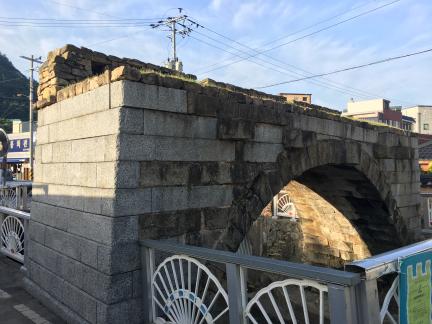
The Okhari Honggyo Bridges in Goheung are two rainbow-shaped bridges spanning the 8–9 m-wide Goheungcheon flowing through the center of Yeosan Village in Okhari. The two bridges are positioned 150 m apart upstream and downstream, and the national heritage information records the quantity as two structures.
The tops of both Honggyo Bridges appear much higher than the current road surface. This is presumed to be due to changes in the terrain over later periods and is also why the Honggyo Bridges do not appear to have served merely as facilities for crossing the present-day road.
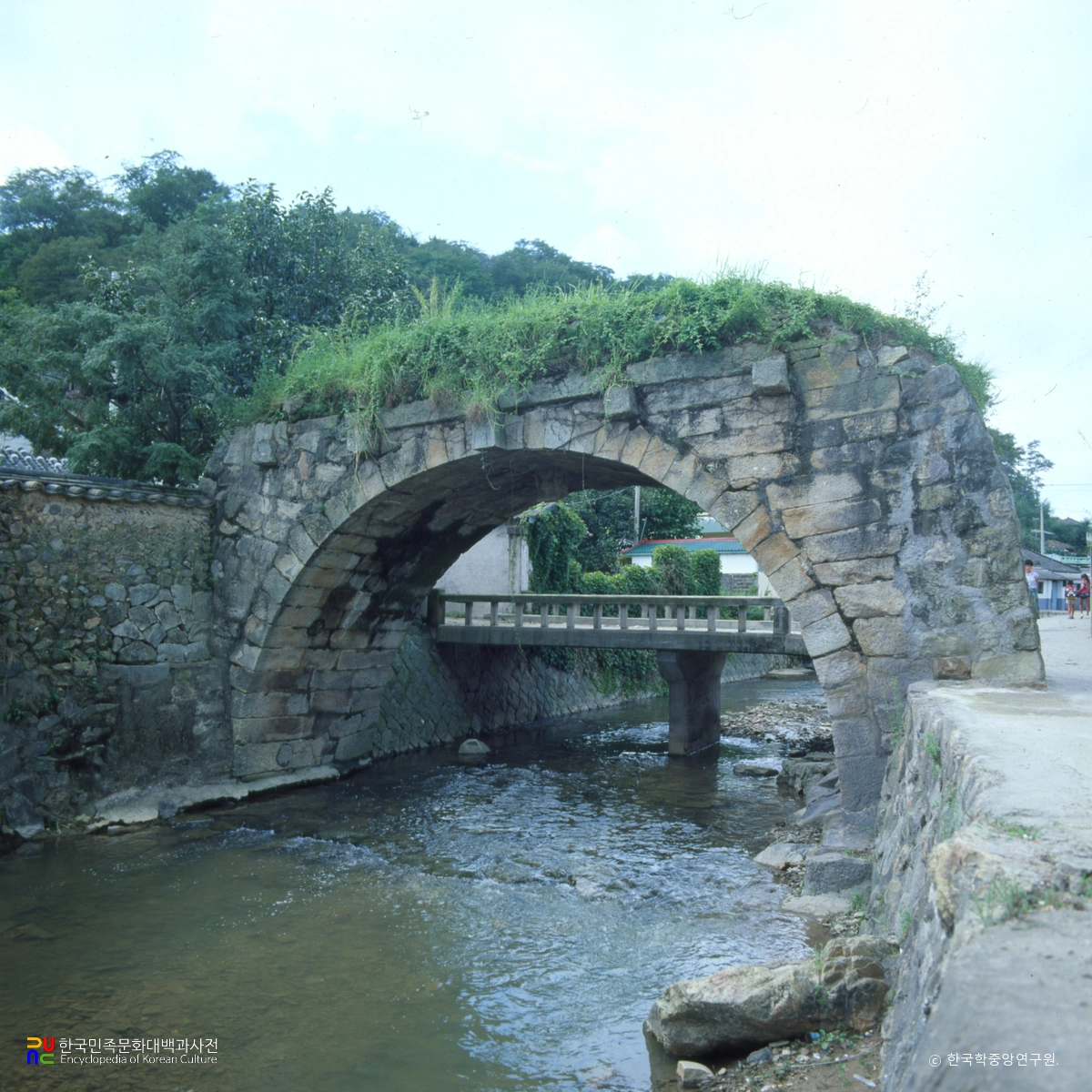
The Dragon Head and 27 Stones of the Upper Honggyo Bridge at a Height of 4.2 m
The upper Honggyo Bridge is 4.2 m high and 8.7 m long, making it the relatively larger of the two bridges. Its structure consists of dressed stones laid at the very bottom, with rectangular stones assembled above them, and it is made up of 27 stones in total.
A dragon head is carved on the western front, while a dragon tail is carved on the eastern opposite side. Rather than simply crossing the bridge quickly, comparing the rainbow-shaped stone structure and dragon decorations from both the west and east sides is a better way to understand the distinctive features of this Honggyo Bridge.
Reading the 10-Line, 48-Character Inscription on the Lower Honggyo Bridge from 1871
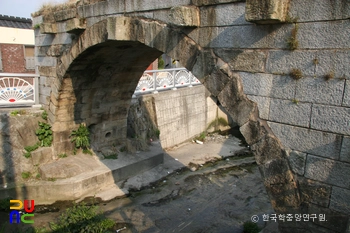
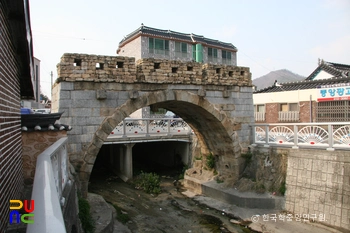
The lower Honggyo Bridge, approximately 150 m east of the upper Honggyo Bridge, is 6 m high and 10 m long. Unlike the upper bridge, its dragon head is attached to the center of the ceiling on the underside of the bridge, allowing visitors to compare the positions of the decorations.
The lower Honggyo Bridge bears a 10-line, 48-character inscription, including “同治十年辛未四月日西水口虹蜺刱建……”. This record shows that the lower Honggyo Bridge was built in 1871, the eighth year of King Gojong’s reign.
The South Gate Site and Facilities for Stream Water
The current location of the Okhari Honggyo Bridge in Goheung is introduced as the site where the south gate of Heungyang-eupseong once stood. It is also explained that the bridges appear to have been facilities allowing stream water to flow beneath the fortress walls rather than bridges used by residents for transportation, so it is important to view the two Honggyo Bridges together within the waterway and defensive structure of the fortress.
The two Honggyo Bridges from the late Joseon period are regarded as stone bridges notable for their joinery techniques and the grandeur of their rainbow-shaped forms. They were designated as Tangible Cultural Heritage of Jeollanam-do on September 22, 1978. Goheung-gun is listed as the administrator, and the Ministry of Land, Infrastructure and Transport as the owner.
How to Visit These Free, Permanently Open Heritage Sites
According to tourism information, the Heungyang-eupseong site and the Okhari Honggyo Bridge in Goheung are open at all times throughout the year. Admission is also free, and no separate ticket office is indicated, so visitors do not enter by purchasing a ticket as they would at a paid exhibition hall.
The address is given as Okhari, Goheung-eup, Goheung-gun, Jeollanam-do, and the National Heritage Portal location for the Honggyo Bridge is 32-2 Seomunyeosan-gil, Goheung-eup, Goheung-gun, Jeollanam-do. The two sites are described as approximately an 8-minute walk apart, so entering both heritage site names as destinations, rather than searching for only one, is a good way to avoid missing the location on site.
- Official tourism website: https://tour.goheung.go.kr/
- Inquiry phone: 061-285-9045
- Parking: Reported to be available, but the number of spaces and fees have not been confirmed.
Information to Leave Unconfirmed Before Your First Visit
Although this site has the advantages of being open at all times and offering free admission, visitors should not assume that there is a set tour route or indoor information facility. Whether photography is prohibited, whether English signs and audio guides are available, the extent of access restrictions around the fortress walls and Honggyo Bridges, and whether payment is cash-only have not been confirmed.
The recommended viewing time has also not been confirmed in official materials or visitor reviews. In particular, the traces of the fortress walls are on a ridge above a sloping village road and may be affected by weather and walking conditions. Since wheelchair and stroller accessibility has likewise not been confirmed, users of mobility aids may find it safer to plan a visit centered on the Honggyo Bridges.
Heungyanghyeon Fortress Night Tour, August 28–29, 2026
If you visit from August 28 to August 29, 2026, the Goheung National Heritage Night Tour is scheduled to take place around Heungyanghyeon Fortress. The event will be held around Jonsimdang History and Culture Park and the former county office, with operating hours from 17:00 to 22:00.
According to the 2026 event information, admission is free and the inquiry phone number is 061-830-6773. Since 88-1 Okhari, Goheung-eup, Goheung-gun, 59535 is provided as the event area address, visitors combining a regular heritage visit with the evening event should enter the event location and the Honggyo Bridge address, 32-2 Seomunyeosan-gil, separately.
Before You Go
- Address
- Okhari, Goheung-eup, Goheung-gun, Jeollanam-do; National Heritage Portal location for the Okhari Honggyo Bridge in Goheung: 32-2 Seomunyeosan-gil, Goheung-eup, Goheung-gun, Jeollanam-do
- Hours
- Open at all times
- Closed
- Open year-round
- Admission
- Free
- Phone
- 061-285-9045
- Official site
- https://tour.goheung.go.kr/
- Transport
- The Heungyang-eupseong site and the Okhari Honggyo Bridge in Goheung are described as approximately an 8-minute walk apart.
- Parking
- Available. The number of spaces and fees could not be confirmed.
- Time needed
- The recommended on-site viewing time could not be confirmed in visitor reviews or official materials.
- Accessibility
- The traces of the Heungyang-eupseong fortress walls are described as requiring visitors to climb the sloping village road behind Jonsimdang History and Culture Park, so there may be inclined sections. Wheelchair and stroller accessibility could not be confirmed.
This information is current as of the time of writing. Check the official information again before visiting.

Places
Nearby Attractions 3
-
 1
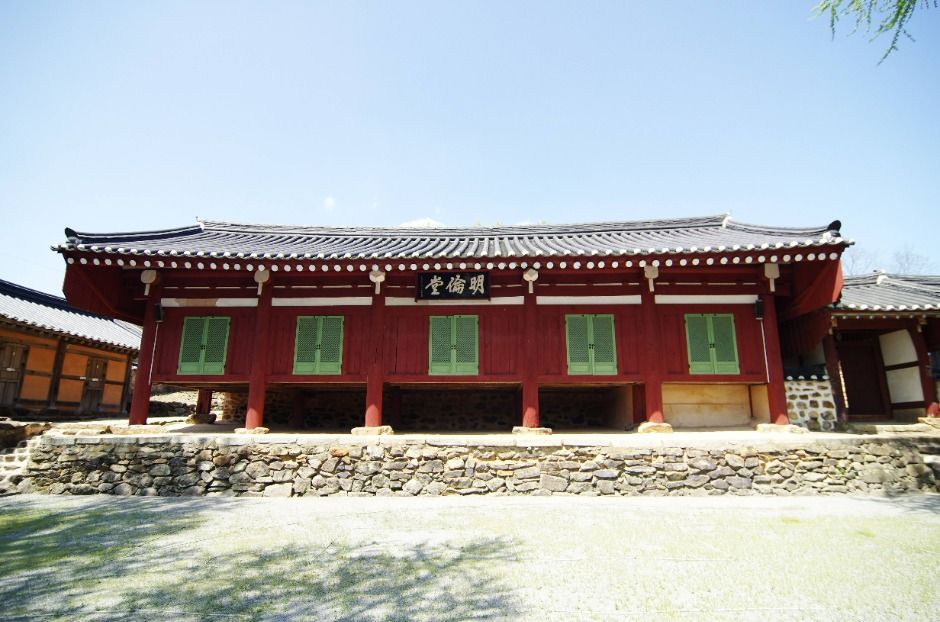
Jonsimdang History and Culture ParkExplore history while strolling through former government buildings and gardens
1
Jonsimdang History and Culture ParkExplore history while strolling through former government buildings and gardens -
 2
2
-
 3
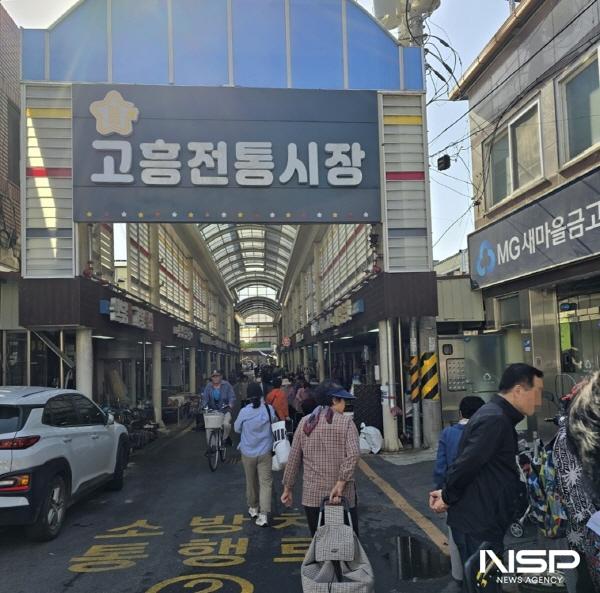
Goheung Traditional MarketExplore the five-day market, local agricultural and marine products, and charcoal-grilled fish.
3
Goheung Traditional MarketExplore the five-day market, local agricultural and marine products, and charcoal-grilled fish.
Food & Dining 2
-
 4
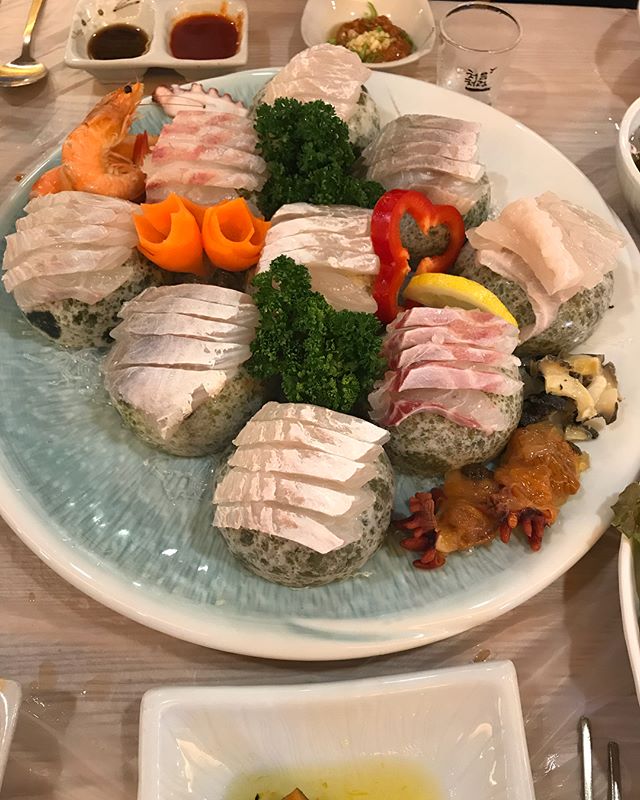
Eobu HoetjipEnjoy raw fish sashimi, mulhoe (chilled raw fish soup), spicy fish stew, and other seafood dishes.
4
Eobu HoetjipEnjoy raw fish sashimi, mulhoe (chilled raw fish soup), spicy fish stew, and other seafood dishes. -
 5
5
Events in This Area
Festivals in This Area
More Travel Guides in This Area
 Travel Guide
The Three-Layered Scenery of Baek-ri Seomseom-gil, Reached by Crossing the 640 m Nangdo Bridge
 Travel Guide
Jangheung Waterside, Where You Can See Pohang Reservoir’s Aquatic Plants and 40 cm Crucian Carp
 Travel Guide
Cliffs and Stone Steps at Hyangiram at the End of an 18 km Coastal Trail
 Travel Guide
Records of Nangsan Kim Jun-yeon and His Birthplace at 1498 Yeongam-ro, Yeongam
Korea News
 News
News
‘NewJeans Expulsion’ Danielle Releases Her First YouTube Video… “We Don’t Know What Will Happen Next”
![aespa’s North American Tour Has Remaining Seats Despite ‘$49’ Bargain Prices… A Stark Popularity Gap with KATSEYE [TEN Starfield]](https://kotourlive-images.s3.ap-northeast-1.amazonaws.com/news/1788485037424_a59b1932_naver_rank_thumb_0000774618_1788485037424.jpg) News
News
aespa’s North American Tour Has Remaining Seats Despite ‘$49’ Bargain Prices… A Stark Popularity Gap with KATSEYE [TEN Starfield]
![[Photo] TWICE’s Dahyun attends a film festival red carpet as an actress](https://kotourlive-images.s3.ap-northeast-1.amazonaws.com/news/1788485316508_edd43ecd_news_870a60a6-6f11-4d73-aa7c-48d91318a0f7.jpg) News
News
[Photo] TWICE’s Dahyun attends a film festival red carpet as an actress
![[On-Site Video] “We’re Departing Separately Together”… BIGBANG Begins ‘COSMOS’ World Tour](https://kotourlive-images.s3.ap-northeast-1.amazonaws.com/news/1788485226518_c5719641_news_fdd4764a-0f4e-4968-8e4e-e98a02872f88.jpg) News
News