Reading the Two Battles of Jinju Fortress from the Namgang Cliffs and 1,760-Meter Walls
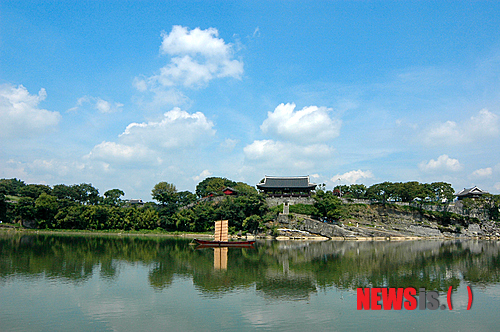
Jinju Fortress is Historic Site No. 118, a fortress that used the Namgang River as a natural line of defense. After being rebuilt in stone in 1379 in preparation for Japanese pirate raids, it became the site of two battles of Jinju Fortress in 1592 and 1593. Connecting Chokseoknu Pavilion, Uiam Rock, Uigisa Shrine, Bukjangdae Command Post, and the National Jinju Museum along one route offers an understanding of both the scenery and the history of the wars.
I’ve been here?
Your check-in helps the next traveler.
No one has checked in yet Be the first
One tap — no writing needed
Why the 1379 Reconstruction of the Stone Fortress Turned the Namgang Cliffs into a Defensive Line
Jinju Castle was originally an earthen fortress, but in 1379, the fifth year of King U of Goryeo, it was rebuilt in stone to prepare for frequent invasions by Japanese pirates. The circumference of the fortress walls currently provided by Jinju City is 1,760 m, and the area is 171,805㎡. On the Namgang River side, the cliffs and river formed a natural barrier, so there was less need to construct a long stretch of walls.
The castle also had different names in different periods. During the Three Kingdoms period, it was called Geoyeolseong; during the Goryeo period, Chokseokjeong; and during the Joseon period, the name “Jinju Castle” became established. The inner castle was approximately 1.7 km long, and including the outer castle, the total length was about 4 km. Today, however, the site remains as a historical park landscape centered on the inner castle.
The Site of Kim Si-min’s 3,800 Defenders in 1592 and the Ten-Day Stand in 1593
The core of Jinju Castle’s history lies in two battles during the Imjin War. From October 5 to 11, 1592, more than 3,700 soldiers and residents led by Kim Si-min repelled an attack by approximately 20,000 Japanese troops. This victory is regarded as one of the three great victories of the Imjin War. The Japanese forces targeted Jinju because it was a gateway to Jeolla Province and a major town in western Gyeongsang Province.
The second battle, which lasted from June 20 to 29, 1593, had a different outcome. Kim Cheon-il, Hwang Jin, and Choe Gyeong-hoe, among others, defended the castle, and the Jinju Castle guide describes the event as one in which approximately 70,000 civilians, officials, and soldiers died. Thus, this is both a memorial site for a victorious battle and a place commemorating a large-scale sacrifice. At the battle remains, reading the information panels before taking photographs can help visitors understand the meaning of the route.
The Memory of Nongae Connected Through Chokseoknu Pavilion, Uiam Rock, and Uigisa Shrine
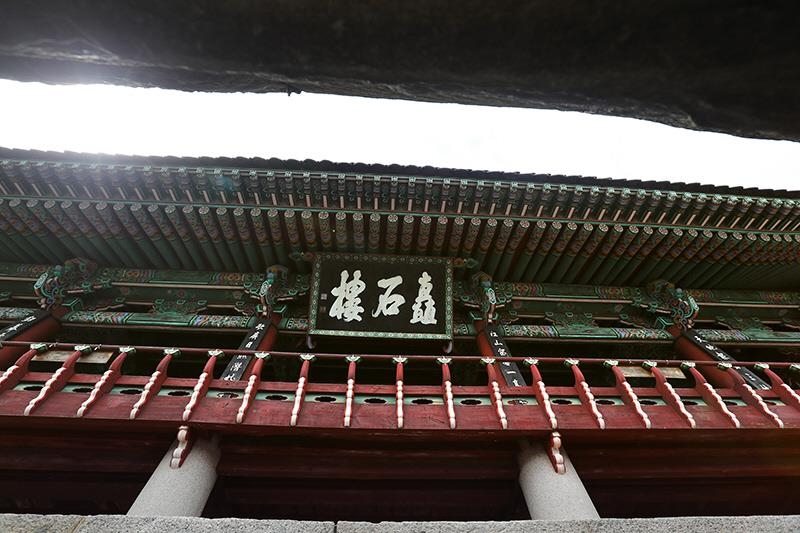
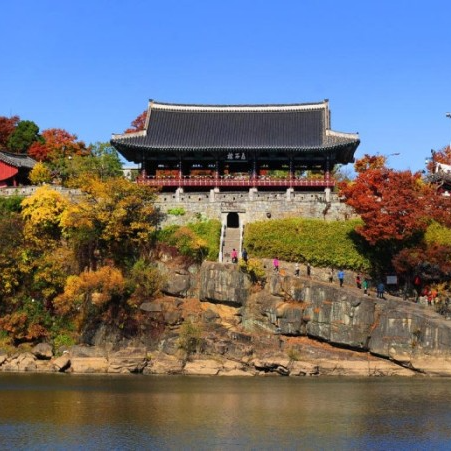
Chokseoknu is a pavilion on the cliffs above the Namgang River south of Jinju Castle. During wartime, it served as Namjangdae, a command post, and in ordinary times it was used as a pleasure pavilion. The name “Chokseok” means a rock standing upright in the middle of a river. Chokseoknu was first built in 1241, the 24th year of King Gojong of Goryeo, and has been destroyed and rebuilt several times.
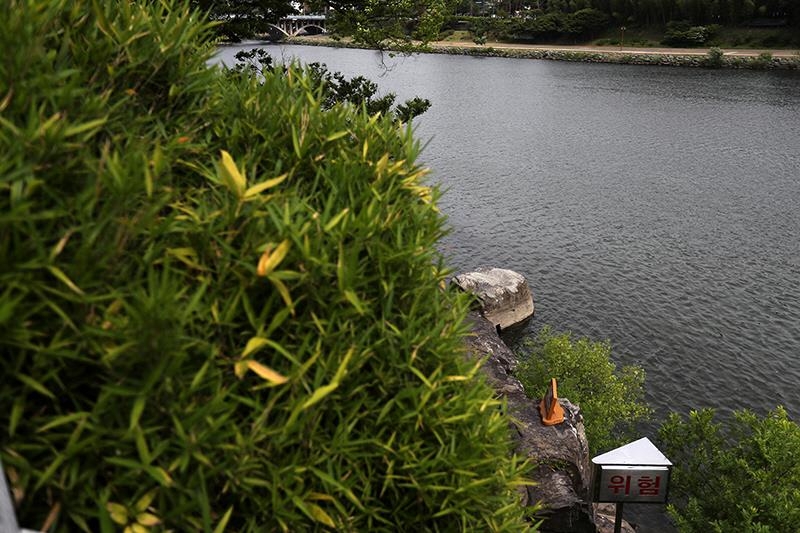
Uiam Rock along the Namgang River below Chokseoknu is said to be the place where Nongae embraced a Japanese commander and leaped into the river after the second Battle of Jinju Castle in 1593. Uigisa, located immediately beside it, is a shrine housing Nongae’s portrait and spirit tablet. It was built in 1740, the 16th year of King Yeongjo, by Nam Deok-ha, military commander of western Gyeongsang Province, with royal approval. Following the route from Chokseoknu to Uigisa and then Uiam connects the pavilion’s military role with the memories of the battle’s aftermath within a short distance.
Walking the 1,760-Meter Fortress Wall from Gongbukmun to Bukjangdae
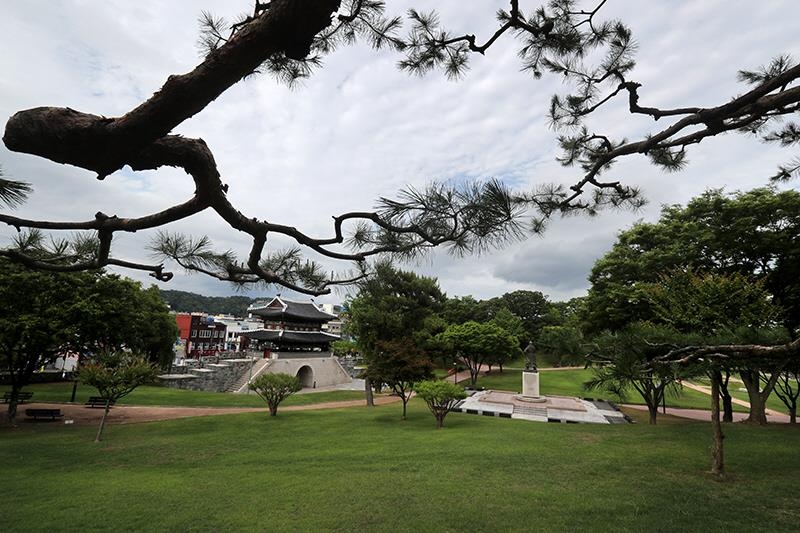
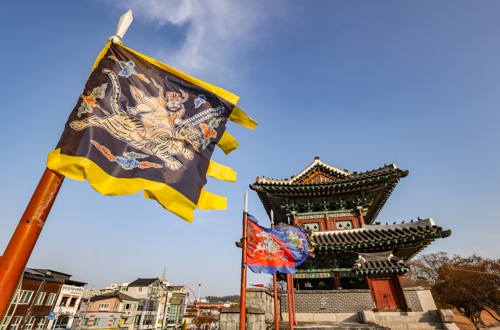
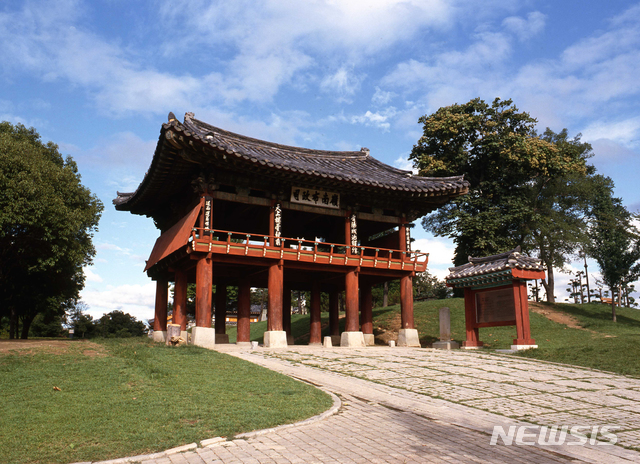
For first-time visitors, it is easy to understand the site by entering through Gongbukmun in the north, viewing the statue of General Kim Si-min, Bukjangdae, and the Yeongnam Pojeongsa Gate Pavilion, and then descending south toward Chokseoknu, Uigisa, and Uiam. Gongbukmun is the north gate, while Chokseokmun is the east gate; Chokseokmun was restored in 1972. Inside the castle are Bukjangdae, Seojangdae, Changnyeolsa Shrine, Hoguksa Temple, the Imjin Great Victory Memorial Altar, and the Jinju National Museum.
Allowing 2 hours 30 minutes to 3 hours is advisable if you walk slowly around the entire fortress and major historical sites and include the museum. Viewing only Chokseoknu and Uiam takes about 40–60 minutes, but the route up to Bukjangdae includes slopes and stairways. Travelers with limited mobility may therefore find it more practical to shorten the route near Gongbukmun or Chokseokmun.
Open from 05:00, with Evening Views Until Closing at 23:00 from March to October
Jinju Castle is open year-round without regular closing days. During the summer season, from March to October, it can be visited from 05:00 to 23:00; during the winter season, from November to February, it is open from 05:00 to 22:00. However, on-site operating hours related to paid admission may vary according to separate notices. Visitors who need an admission ticket should therefore check the official Jinju City information for ticketing hours on the day of their visit.
Night views of Chokseoknu and the fortress walls from outside the castle can be planned within the opening hours. The museum is not open at the same time late at night. The Jinju National Museum operates from 09:00 to 18:00, with admission permitted until 30 minutes before closing. It is closed every Monday, January 1, the day of Lunar New Year, and the day of Chuseok. If Monday is a public holiday, it opens and closes on the first weekday afterward.
Calculating the Adult Fee of 2,000 Won and Parking at Gongbukmun and Chokseokmun
Admission to Jinju Castle is free for Jinju residents, children under 7, people aged 65 or older, holders of disability welfare cards, and holders of national merit certificates. For visitors from other regions, individual admission is 2,000 won for adults, 1,000 won for teenagers and military personnel, and 600 won for elementary school students. Group rates are 1,400 won, 600 won, and 400 won, respectively. The main contact number for Jinju Castle is 055-749-5171, and the official information page is https://www.jinju.go.kr/02232/02818/02237.web.
Visitors arriving by car can use the paid parking lots at Chokseokmun and Gongbukmun. For small vehicles, the fee is 500 won for the first 30 minutes, plus 200 won for every additional 10 minutes. For large vehicles, it is 1,000 won for the first 30 minutes, plus 400 won for every additional 10 minutes. The Jinju Castle tourist bus parking lot across the road from the west ticket office is free, but it is intended for tourist buses, so passenger-car visitors should first consider the Gongbukmun and Chokseokmun parking lots.
- Street address: 626 Namgang-ro, Jinju-si, Gyeongsangnam-do
- Main telephone: 055-749-5171
- Bus: Take routes 120, 121, 122, 123, or 124, get off at Insagwangjang or Jinju Castle stop, and walk approximately 7 minutes
- Alternative bus: Get off at Jinju Elementary School stop on routes 210 or 253, then walk approximately 7 minutes
Adding the Jinju National Museum’s 09:00–18:00 Hours Completes the War History
The Jinju National Museum inside the castle opened in 1984 and was specialized as a museum dedicated to the Imjin War in 1998. Viewing the Battle of Jinju first from the walls and pavilions, then entering the museum exhibitions, allows visitors to connect the terrain, weapons, and course of the war. The museum itself has no admission fee, but visitors who are not Jinju residents must pay the Jinju Castle admission fee to enter the museum.
The museum accepts inquiries about foreign-language exhibition explanations at the information desk at 055-740-0698, and exhibition guide services for groups of up to 30 people can be reserved. Advance reservations are recommended for groups of 20 or more elementary, middle, or high school students. Admission is possible without a reservation, but reserved groups receive priority during busy periods. Bicycles, kick scooters, and inline skates are prohibited on the outdoor fortress paths, so visitors cannot plan to cross the castle grounds using these forms of transport.
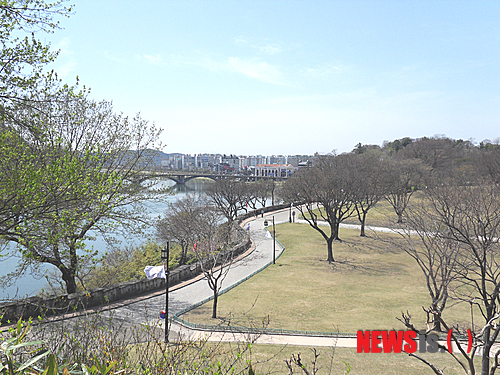
For Wheelchairs and Strollers, Start on the Flat Ground around Chokseoknu and Avoid the Entire Fortress Route
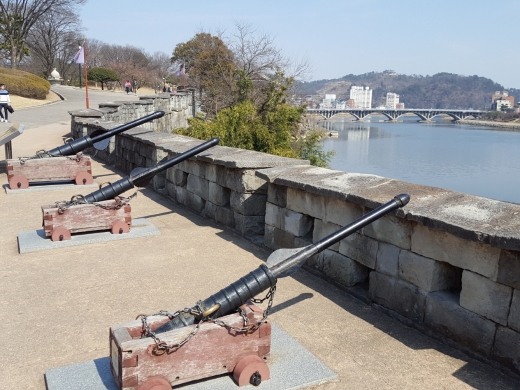
Jinju Castle is a large outdoor fortress site, so the level of mobility difficulty varies by section. The relatively flat paths around Gongbukmun and Chokseokmun and near Chokseoknu can be explored first, but slopes and stairs are mixed into the areas around Bukjangdae and the upper walls. Visitors using wheelchairs or strollers are better off making a return trip starting from Chokseokmun or Gongbukmun and focusing on Chokseoknu and Uigisa rather than attempting a full circuit of the walls.
For those also viewing the indoor exhibitions, the Jinju National Museum is open from 09:00 to 18:00, and the information desk telephone number is 055-740-0698. Details about accessibility equipment rentals and step-free routes within the castle are not provided together in the official information. Before departing, it is therefore advisable to contact the Jinju Castle main number at 055-749-5171 or the museum information desk to confirm the entrances and restroom locations available that day.
Before You Go
- Address
- 626 Namgang-ro, Jinju-si, Gyeongsangnam-do
- Hours
- Summer season (March–October) 05:00–23:00 / Winter season (November–February) 05:00–22:00
- Closed
- Open year-round
- Admission
- Free for Jinju residents, children under 7, people aged 65 or older, holders of disability welfare cards, and holders of national merit certificates / Adults 2,000 won / Teenagers and military personnel 1,000 won / Elementary school students 600 won
- Phone
- 055-749-5171
- Official site
- https://www.jinju.go.kr/02232/02818/02237.web
- Transport
- Routes 120, 121, 122, 123, or 124; get off at Insagwangjang or Jinju Castle stop and walk approximately 7 minutes / Routes 210 or 253; get off at Jinju Elementary School stop and walk approximately 7 minutes
- Parking
- Paid parking lots at Chokseokmun and Gongbukmun: small vehicles 500 won for the first 30 minutes, then 200 won per 10 minutes / large vehicles 1,000 won for the first 30 minutes, then 400 won per 10 minutes. Free tourist bus parking lot opposite the west ticket office.
- Time needed
- 40–60 minutes focusing on Chokseoknu and Uiam / 2 hours 30 minutes–3 hours including major fortress sites and the Jinju National Museum
- Accessibility
- There are relatively flat sections around Chokseoknu, Gongbukmun, and Chokseokmun, but slopes and stairs are present around Bukjangdae and the upper walls. Visitors are advised to call 055-749-5171 before visiting for detailed step-free route information. Inquiries about foreign-language exhibition explanations at the Jinju National Museum: 055-740-0698.
The information above is current as of the time of writing. Check the official information again before visiting.

Places
Nearby Attractions 5
-
 1
1
-
 2
2
-
 3
3
-
 4
4
-
 5
5
Food & Dining 5
-
 6
Jeil Dining
6
Jeil Dining -
 7
Goguryeo Chil-am Branch
7
Goguryeo Chil-am Branch -
 8
8
-
9
-
10
Events in This Area

Festivals in This Area

More Travel Guides in This Area
 Travel Guide
Jinju Jungang Market, Where the Legacy of the 1884 Commercial Association Lives On—from Dawn Trading to Saturday Night Markets
 Travel Guide
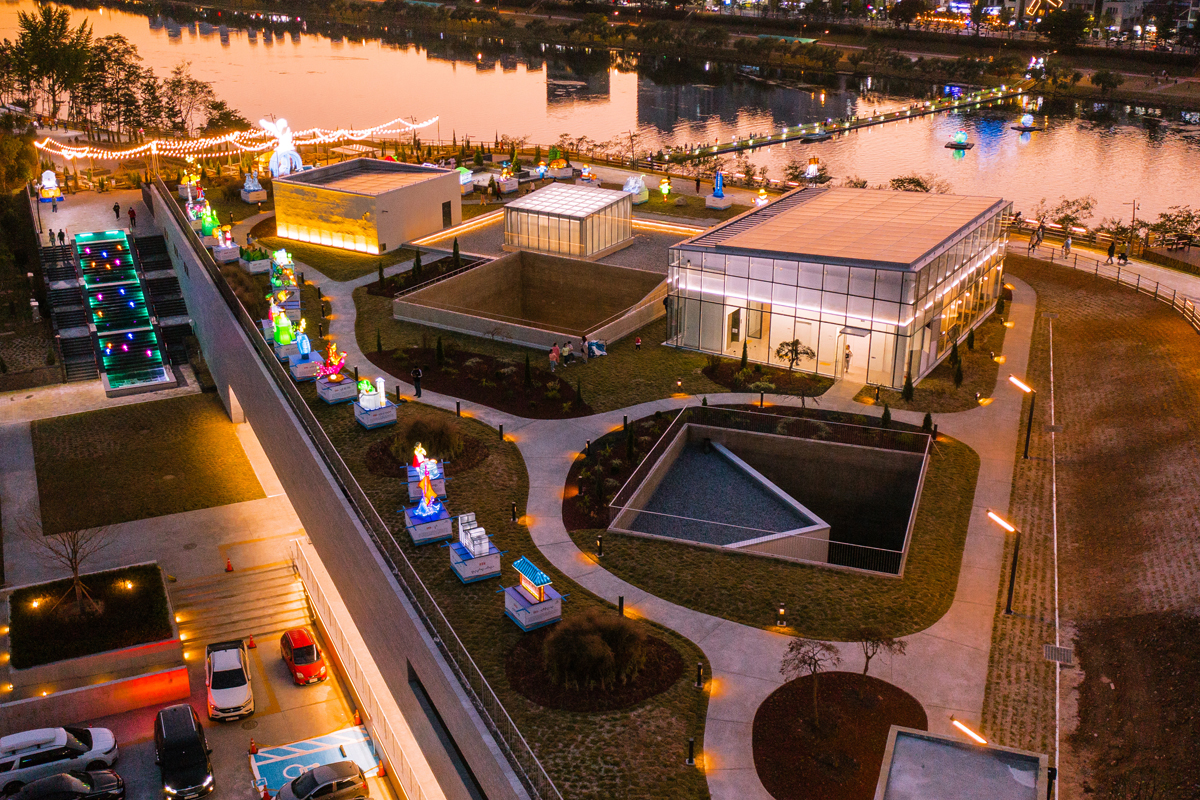
Jinju’s Light, Encountered 365 Days a Year at Somangjinsan in Manggyeong-dong
 Travel Guide
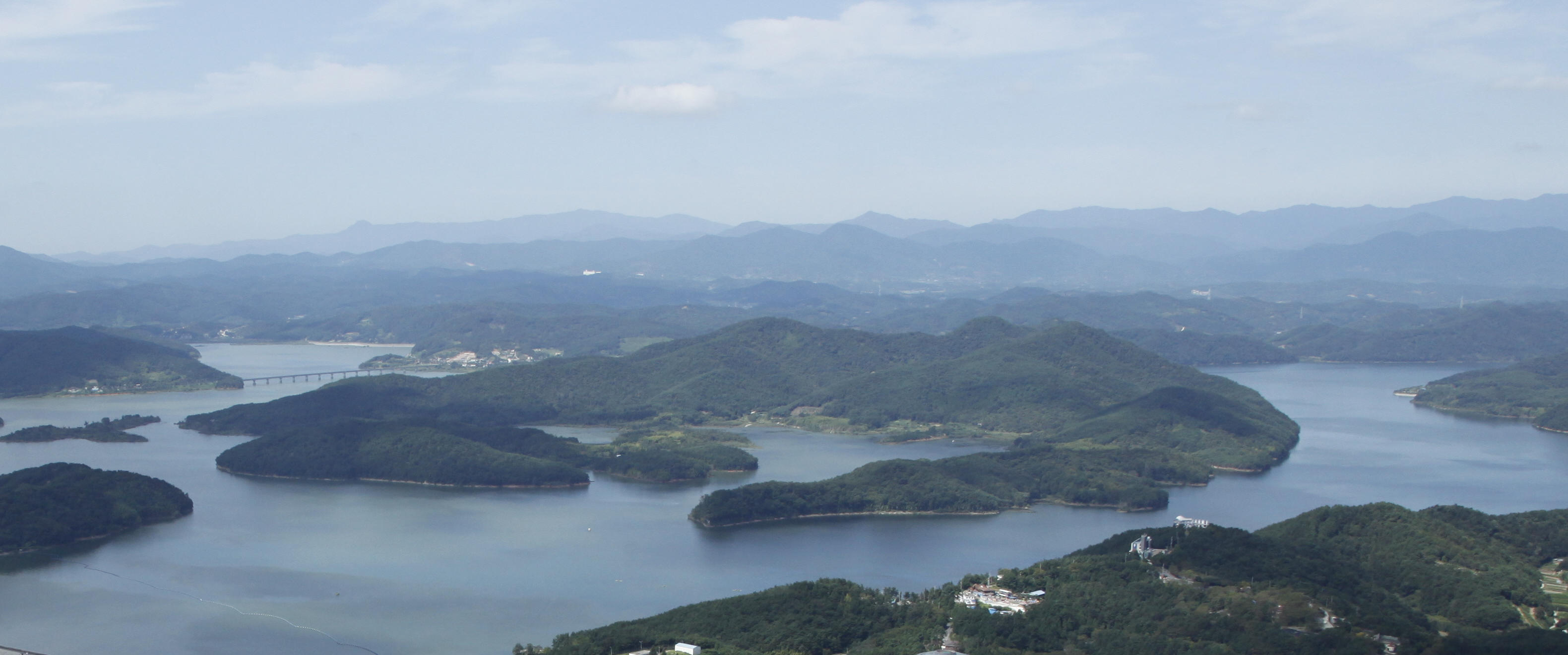
The 365 Steps and One Hour of Sunset at Jinyangho Observatory, Above the Lake Created by Namgang Dam
 Travel Guide
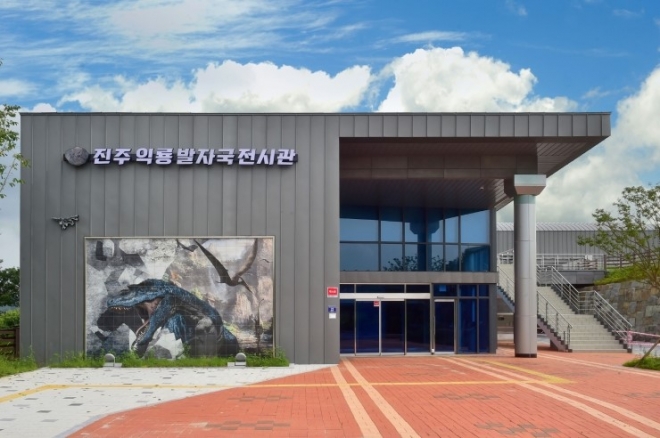
An Exhibition Reading the Traces of Flight from 110 Million Years Ago in Jinju’s Chungmugong-dong
Korea News
 News
News
TWS heightens comeback excitement with kitschy charm… Anticipation for “plot twist” rises
 News
News
BTS, Six Months After Its Release… ‘Arirang’ Climbs the U.S. Billboard 200
 News
News
'The Nation's Girl Group' RESCENE, Five Girls Transformed into Guardians… Additional Concept Photos for Their 4th Mini Album Revealed
 News
News