Daewonsa Temple at the Eastern Foot of Jirisan: A 2 km Valley Trail and the Rhythm of a Buddhist Nuns’ Retreat
Daewonsa Temple in Sancheong, Gyeongsangnam-do, began as Pyeongwonsa Temple in 548 and has undergone repeated destruction and reconstruction. The temple grounds are about a 2 km walk from the parking lot, where you can explore the Treasure multi-story stone pagoda, the Daewonsa Valley Trail, and a temple stay program.

I’ve been here?
Your check-in helps the next traveler.
No one has checked in yet Be the first
One tap — no writing needed
From Pyeongwonsa in 548 to a Templestay Temple in 2008
Daewonsa is a temple on the eastern foothills of Jirisan Mountain. It was founded by Master Yeongi in 548, the ninth year of King Jinheung’s reign, and was then called Pyeongwonsa. In 1592, when the Japanese invasions began, it was destroyed by fire, and in 1685, Master Ungwon rebuilt the temple, renamed it Daewonam, and opened a meditation and sutra-study center.
The name and buildings were not completed all at once. In 1724, Master Myeolam Taeheum repaired the reliquary stupa, and in 1784, Master Hyewol Ogin discovered 72 sarira while restoring the stupa. In 1890, Master Gubong Hyeheun extensively rebuilt the halls and pavilions and renamed the temple Daewonsa, but it was again completely destroyed by fire in 1914 and in 1948 by troops suppressing the Yeosu Rebellion.
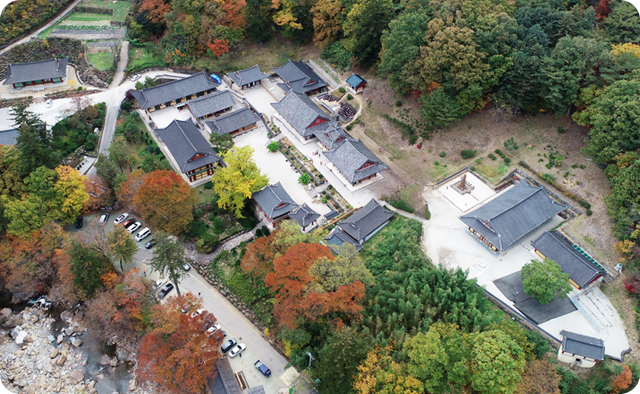
From 12 buildings and 184 rooms in 1917 to today’s space for practice
In 1917, Monks Minha and Bodam and others restored Daewonsa to a scale of 12 buildings and 184 rooms. However, after it was completely destroyed again in 1948, Buddhist nun Manheodang Beopil was appointed head monk in 1955 and rebuilt the ruined temple. The current appearance is better understood not as the result of ancient founding buildings remaining intact, but as a space shaped by repeated destruction and restoration.
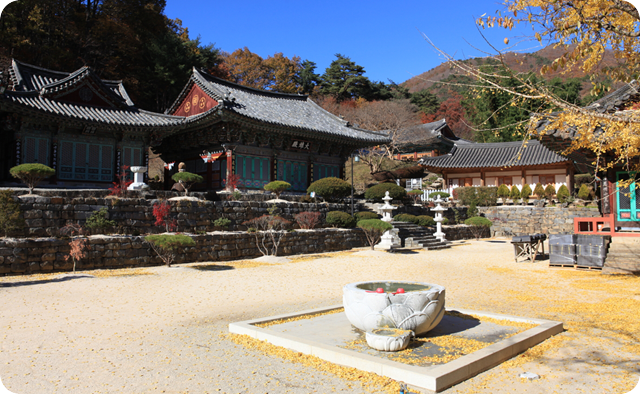
Restoration continued into the latter half of the 20th century. In 1959, a sarira hall was built where the multi-story pagoda had stood, and Dongguk Jeil Seonwon was opened. In 1962, Daeungjeon and Cheongwangjeon were rebuilt and an administrative office was newly constructed. In 1967, Wontongbojeon was rebuilt and Sanwanggak was newly constructed, and in 1972, Beomjonggak and Bongsangnu were built. In 2008, the temple was designated as a temple operating templestay programs, and dedicated accommodation was built in 2012.
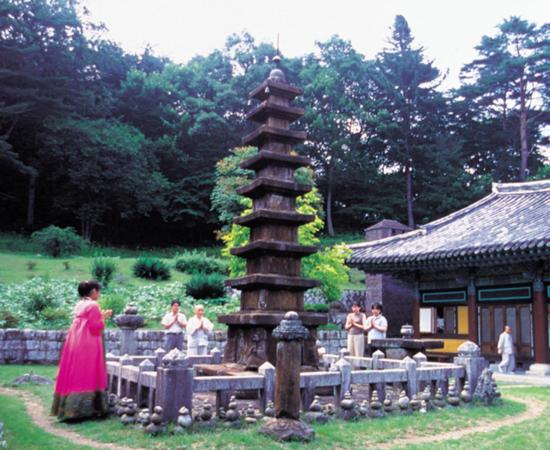
What to see first at the Treasure No. 1112 multi-story stone pagoda
The Daewonsa Multi-story Stone Pagoda is Treasure No. 1112 and is introduced as a stone pagoda enshrining 58 pieces of the Buddha’s bodily relics. Daewonsa’s information states that the pagoda was built in 646, the 15th year of Queen Seondeok’s reign, by the monk Jajang. However, the record of the temple’s founding in 548 and the tradition of the pagoda’s construction in 646 concern different periods, so the founding date of the temple and the date of the pagoda should be distinguished.
The cultural properties on the grounds are not limited to the pagoda. The Daewonsa Guardian Deities Painting was created in 1794 by three monk painters, Seolhun, Deokmin, and Eonbo, and was designated Tangible Cultural Heritage No. 361 of Gyeongsangnam-do in 2001. The Sancheong Daewonsa Bronze Gong is a metal percussion instrument made in 1701 at HwaJangam Hermitage of Yonggye-sa Temple, and is Tangible Cultural Heritage No. 362 of Gyeongsangnam-do. Wontongbojeon enshrines a wooden statue of Avalokitesvara Bodhisattva and accompanying burial artifacts, and is listed as Provincial-designated Cultural Heritage No. 664.
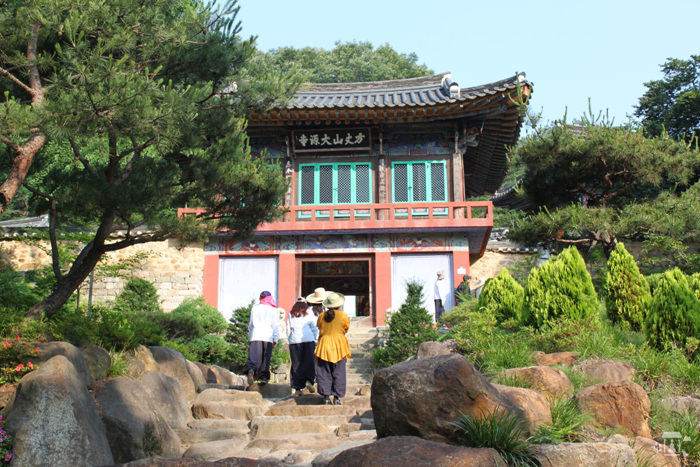
Why you need to walk 2 km from the Daewonsa parking lot
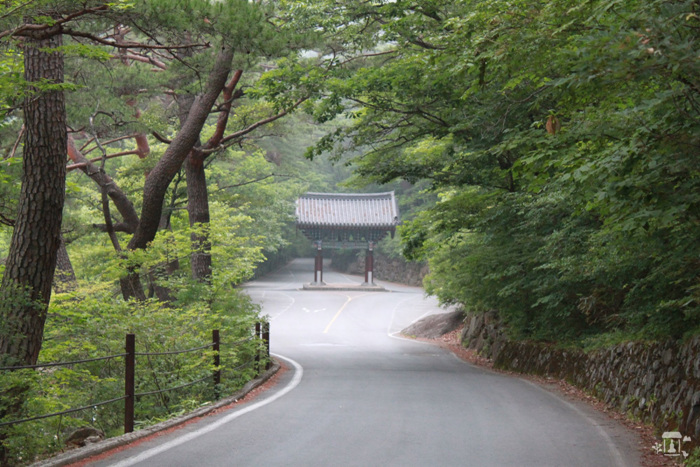
The Daewonsa parking lot and the temple grounds are not directly adjacent. Daewonsa’s official information explains that visitors can walk approximately 2 km from the parking lot to the temple. Since arriving at the entrance of a Korean temple does not mean that Daeungjeon immediately comes into view, visitors arriving by car should also prepare comfortable shoes and allow time for walking.
This trail follows the Daewonsa Valley. The Korea Tourism Organization introduces the valley extending from the parking-lot entrance to Daewonsa as 2 km long, while Sancheong County provides information on the Daewonsa Valley Trail extending from the Daewonsa parking lot to Yupyeong Village. The round-trip valley course runs from the Daewonsa parking lot to Daewonsa and Yupyeong Village for a total of 3.5 km and takes approximately 3 hours round trip according to visitor reviews.
Yongso and Sabangjangsan Bridge 400 m: easy-to-miss points along the valley trail
Yongso and Somakgol are featured in descriptions of Daewonsa Valley. A legend says that a dragon lived at Yongso for hundreds of years before flying away, while Somakgol is described as the place where the last king of Garakguk came to feed cattle and horses. Such place names and stories allow visitors to see the valley not merely as an access road to the temple, but as a space of daily life and transmitted traditions on the eastern slopes of Jirisan Mountain.
Travelers considering the valley a place for water activities should distinguish between sections. One visitor review introduces the 400 m section around Sabangjangsan Bridge as an area for using the valley. Another review notes that the trail may be closed after heavy rain, so immediately after substantial rainfall it is safer not to combine the 2 km walk and access to the valley as one plan.
How to read the bus timetable from Jinju and Wonji
For travelers using public transportation, it is practical to use Wonji or Jinju as the starting point. From Seoul Nambu Bus Terminal to Wonji, the first bus departs at 06:00 and the last at 21:00, with a journey of approximately 3 hours 30 minutes. City buses from Wonji to Daewonsa are listed as departing first at 06:55 and last at 20:55, with a journey of approximately 30 minutes.
City buses traveling directly from Jinju are also listed. The Jinju–Daewonsa route operates from 07:30 for the first bus to 17:30 for the last bus and takes approximately 1 hour 10 minutes. Even after getting off the bus, visitors must walk approximately 2 km from the parking lot to the temple, so do not look only at the last-bus time; calculate the approximately 3-hour round trip on the valley trail together with time for viewing the temple grounds.
- By car from Seoul and Daejeon: Access Daewonsa via Sancheong IC on the Tongyeong–Daejeon Expressway.
- By car from Busan and Changwon: The indicated route enters via Danseong IC after taking the Namhae Expressway and the Hamyang-bound section of the Tongyeong–Daejeon Expressway.
- Parking: General parking is listed as free, but fees may apply to the large-bus parking lot.
Open year-round with free admission, but no separate general visiting hours
According to Korea Tourism Organization information, Daewonsa is open year-round and has no closing days. Admission is listed as free. However, the precise operating hours and admission closing time for general visitors are not separately provided, so free admission does not mean that visitors can enter every hall all day.
The temple is also a place for spiritual practice. The Sarira Hall is a meditation hall for Buddhist nuns and is introduced as a place where approximately 50 nuns spend the retreat period. Therefore, the areas where photography is permitted, access inside the halls, and the availability of English information and audio guides may vary according to on-site operations, and unverified details cannot be stated in advance. Refrain from drinking alcohol and smoking inside the temple.
A templestay requiring arrival by 2:50 p.m.
A templestay is a reservation-based program different from general visits to the temple grounds. According to Daewonsa’s official information, consultation hours are 08:00–19:00, and participants must arrive at Daewonsa by 2:50 p.m. on the day of participation. After selecting the participation date and entering personal information, applicants submit the application form and pay by bank transfer; the reservation is complete only after payment has been made.
Preparing for the overnight stay is relatively simple. Training clothes are provided, and rooms have air conditioning and private bathrooms. Companies, travel agencies, and schools may inquire in advance about customized programs. The refund policy is 100% four days before the scheduled participation date, 70% three days before, and 50% two to one days before; there is no refund for same-day cancellations or leaving partway through the program.
- Templestay Office: 010-4919-2446 / 055-974-1113
- Temple Administrative Office: 055-972-8068
- Drinking and smoking inside the temple: Please refrain.
For travelers who find a longer walk than the temple grounds burdensome
Daewonsa is suited to travelers who want to understand the valley trail and the space for spiritual practice together, rather than follow a short photography route. The key point is that it is approximately 2 km from the parking lot to the temple, and including Yupyeong Village makes the total round trip 3.5 km and approximately 3 hours. The actual range of access to the temple grounds for wheelchairs and strollers, as well as the gradients and surface conditions by section, is not provided.
Nearby are Geoyeonjeong and Gunjajeong, believed to have been study places for scholars. Travel time from Daewonsa to these sites has not been confirmed, so a separate transportation plan is needed if including them in the same itinerary. For a leisurely schedule taking in the Jirisan forest trail, valley, and temple halls, allow plenty of time and consider the possibility of trail closures immediately after heavy rain.
Before You Go
- Address
- 455 Daewonsagil, Samjang-myeon, Sancheong-gun, Gyeongsangnam-do
- Hours
- Listed as open year-round; general visiting hours have not been confirmed. Templestay consultation hours: 08:00–19:00.
- Closed
- Listed as open every day year-round.
- Admission
- Listed as free
- Phone
- 055-972-8068
- Official site
- https://www.daewonsa.net/
- Transport
- Jinju–Daewonsa city bus: first bus 07:30, last bus 17:30, approximately 1 hour 10 minutes; Wonji–Daewonsa city bus: first bus 06:55, last bus 20:55, approximately 30 minutes. Approximately 2 km on foot from the Daewonsa parking lot.
- Parking
- Parking available. General parking is listed as free, but fees may apply to the large-bus parking lot.
- Time needed
- Approximately 3 hours round trip from the Daewonsa parking lot to Daewonsa and Yupyeong Village, according to reviews.
- Accessibility
- There is an approximately 2 km walking section from the Daewonsa parking lot to the temple, and official detailed information on the gradients and surface conditions of the valley and forest trails has not been confirmed.
The information above is current as of the time of writing. Check the official information again before visiting.

Places
Nearby Attractions 1
-
 1
1
Food & Dining 2
-
 2
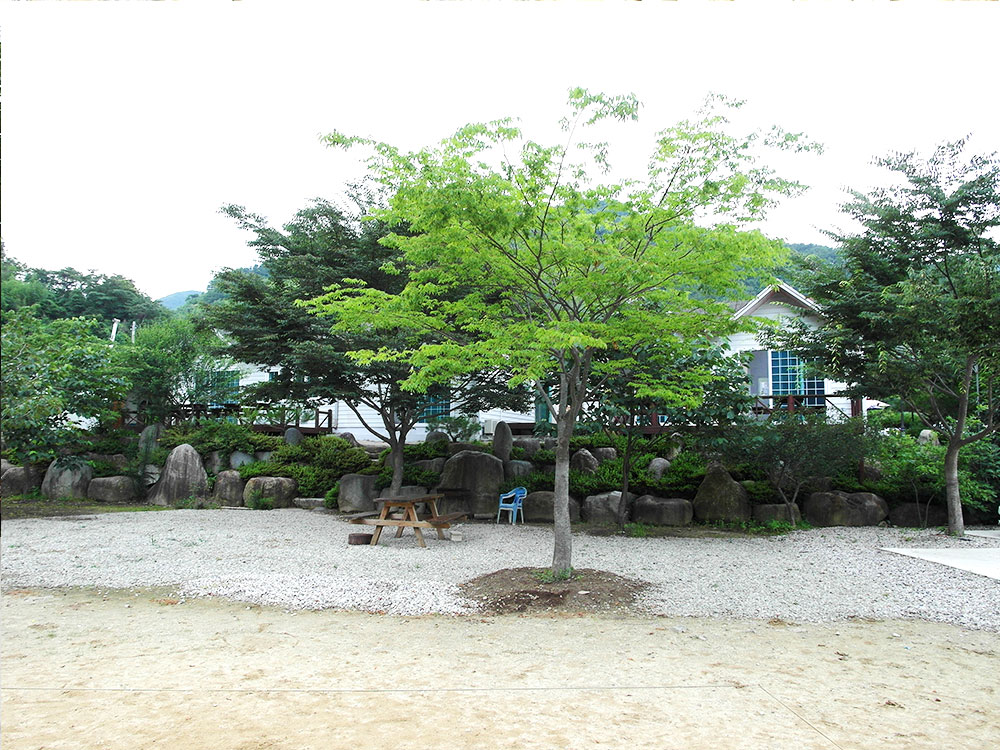
Jogaegol Mountain LodgeA mountain lodge restaurant in Daewonsa Valley serving whole chicken soup and spicy braised chicken.
2
Jogaegol Mountain LodgeA mountain lodge restaurant in Daewonsa Valley serving whole chicken soup and spicy braised chicken. -
 3
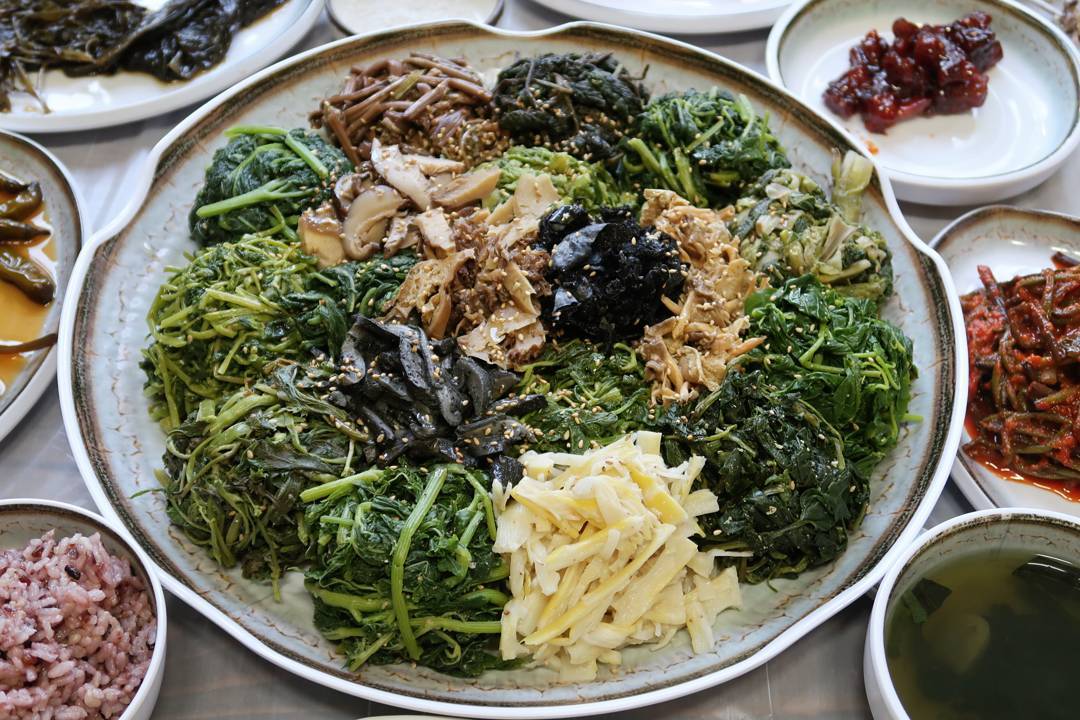
Sankkun's HouseA restaurant serving wild vegetable bibimbap, baeksuk (whole chicken soup), and grilled black goat.
3
Sankkun's HouseA restaurant serving wild vegetable bibimbap, baeksuk (whole chicken soup), and grilled black goat.
Events in This Area

Festivals in This Area

More Travel Guides in This Area
 Travel Guide
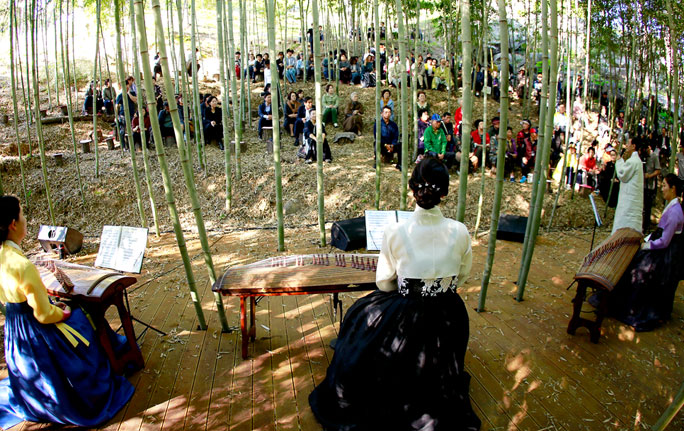
Sancheong Namsa Yedam Village, Embraced by Nigu Mountain and the Sasucheon River in a Crescent Shape
 Travel Guide
Stone Pagodas and Baedal Sanctuary in the Cheonghakdong Valley of Jirisan: Hadong Samseonggung
 Travel Guide
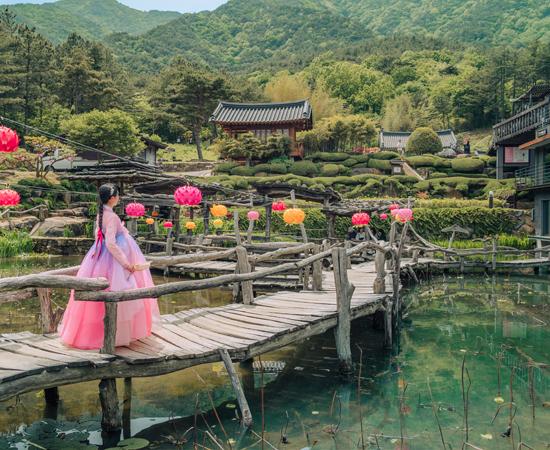
Sancheong Suseonsa Temple, where terraced rice paddies beneath Ungseok Peak became a pond garden
 Travel Guide
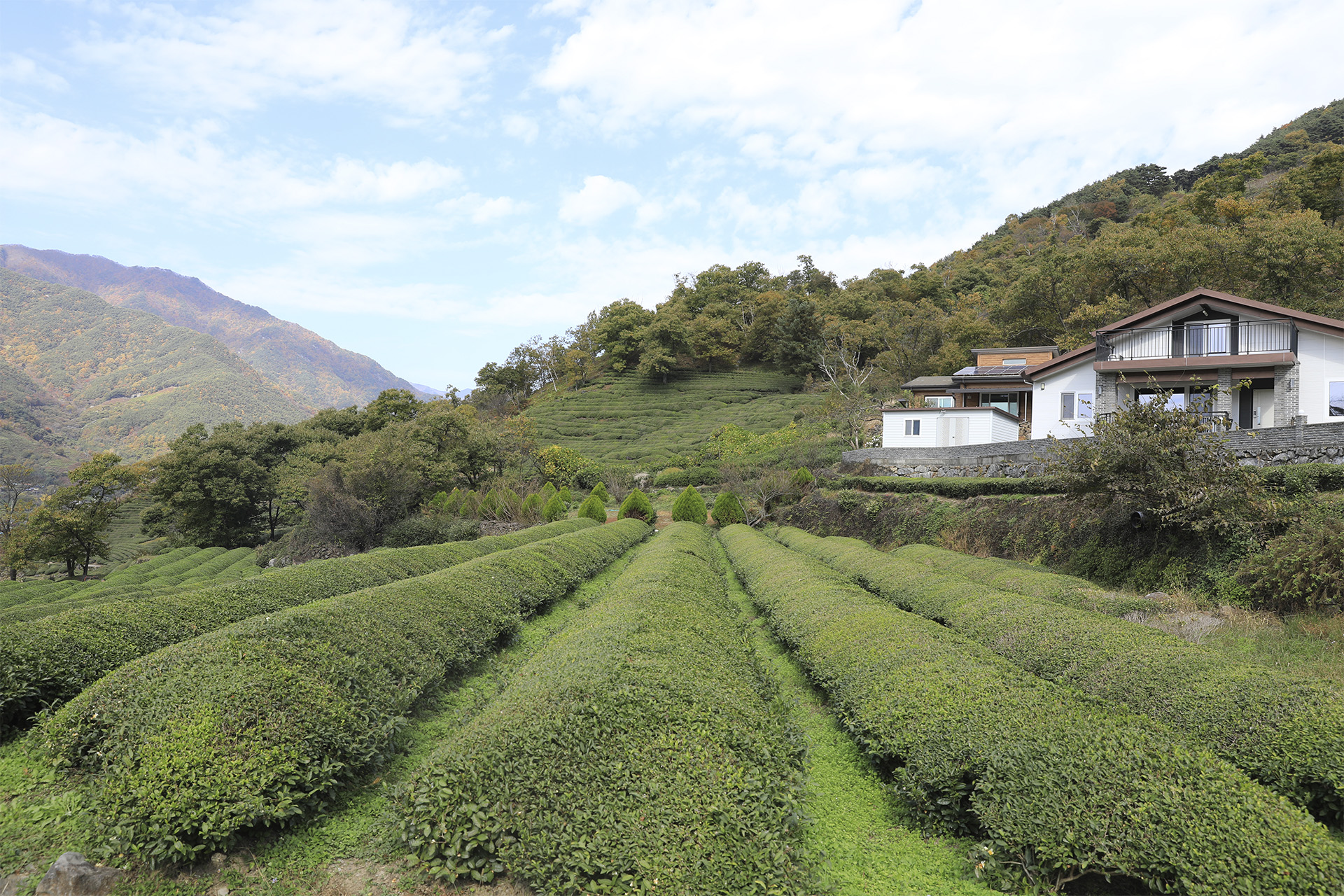
A 15-Minute Walk Up Hwagaecheon to Jeonggeumjeong, Hadong’s Terraced Tea Fields
Korea News
 News
News
TWS heightens comeback excitement with kitschy charm… Anticipation for “plot twist” rises
 News
News
BTS, Six Months After Its Release… ‘Arirang’ Climbs the U.S. Billboard 200
 News
News
'The Nation's Girl Group' RESCENE, Five Girls Transformed into Guardians… Additional Concept Photos for Their 4th Mini Album Revealed
 News
News