From the Camellia Forest to the Rock-Carved Buddha of Dosolam: A One-Day Route at Gochang Seonunsa Temple
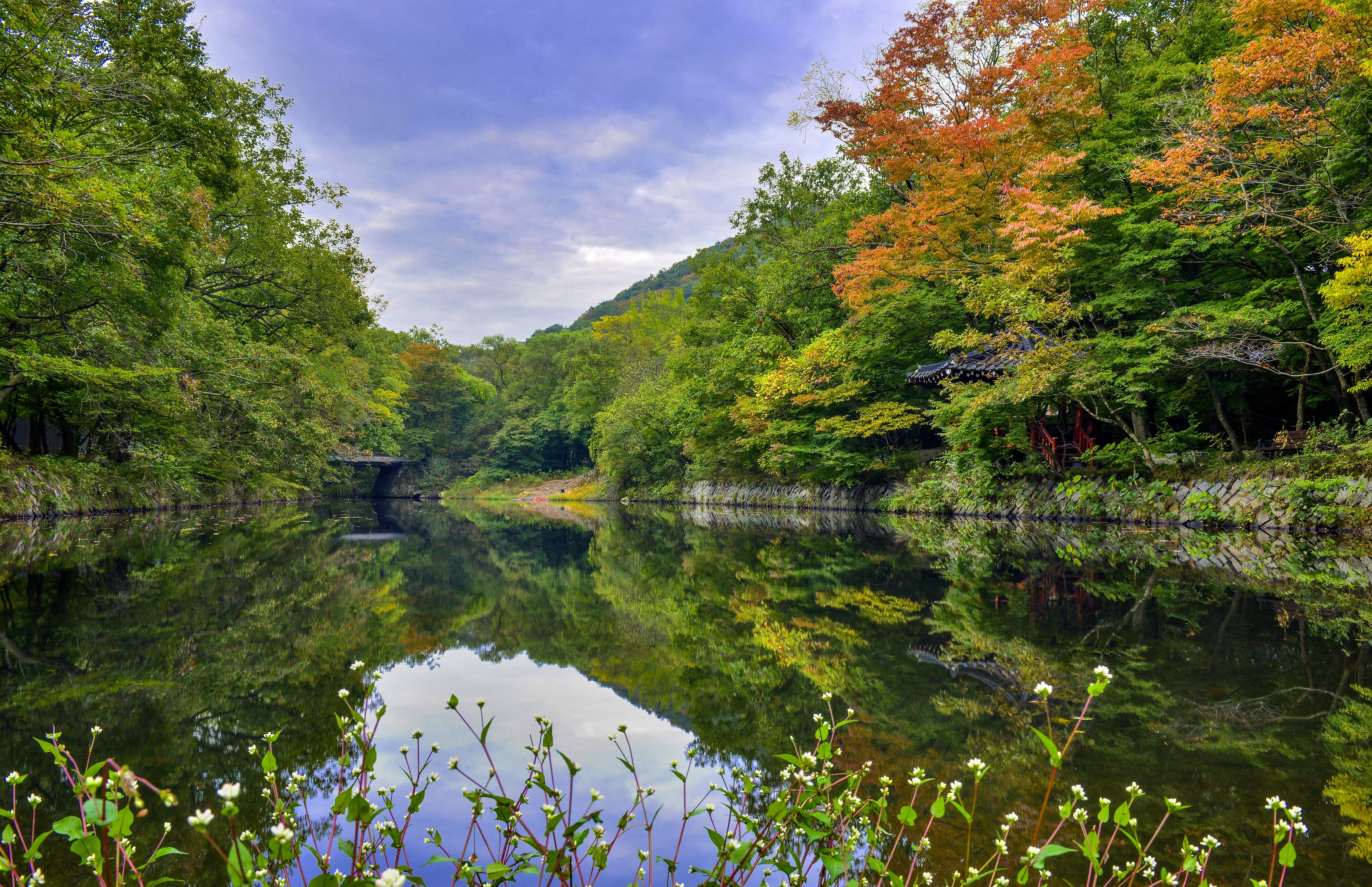
Gochang Seonunsa Temple is the headquarters of the 24th district of the Jogye Order, situated in a valley within Seonunsan Provincial Park. Admission to the temple grounds is free, and the route can range from 1.5 hours to half a day, depending on whether you continue to the Rock-Carved Buddha of Dosolam after visiting the camellia forest, Daeungjeon Hall, and Jangsasong Pine Tree.
I’ve been here?
Your check-in helps the next traveler.
No one has checked in yet Be the first
One tap — no writing needed
The Time Seonunsa Has Preserved Between Its Traditional Founding in 577 and Records from 1483
Seonunsa Temple is the headquarters of the 24th district of the Jogye Order of Korean Buddhism, located at 250 Seonunsa-ro, Asan-myeon, Gochang-gun, Jeonbuk State. The Jogye Order’s information lists the same road-name address and the main telephone number, 063-561-1422, while the Gochang-gun Tourist Information Center can be reached at 063-561-1423.
It is widely said that the temple was founded in 577, the 24th year of King Wideok of Baekje, by Master Geomdan. However, the Encyclopedia of Korean Culture points out that the theory attributing its foundation to King Jinheung of Silla has low credibility because this area was Baekje territory at the time. It also explains that a 1483 document, Record of the Reconstruction and History of Seonunsa Temple on Seonunsan Mountain, Deokwon-gun Byeolwon Shrine, records the buildings, donors, and prayers of that period. For first-time visitors, it is more accurate to understand Seonunsa as a mountain temple in Baekje-era Gochang with records of reconstruction dating to the early Joseon period, rather than treating the legend as a definitive date.
Free Admission and 063-561-1423: Basic Conditions to Know Before Departure
According to Gochang-gun’s latest tourist attraction admission-fee table, admission to Seonunsa is free for children, teenagers, soldiers, and adults, both individually and in groups of 30 or more. On-site inquiries are directed to the Seonunsa information center at 063-561-1423. The introduction to Seonunsan Provincial Park also explicitly states that cultural heritage admission is free, so no separate ticket is required for walks around the temple grounds or the valley.
The Gochang-gun tourism page states that Seonunsan Provincial Park has parking facilities, and gives the park management office address as 158-6 Seonunsa-ro, Asan-myeon, Gochang-gun, Jeonbuk State. However, parking fees and the temple’s daily opening hours are not separately confirmed on the official tourism page. Visitors arriving before sunrise, at night, or by large coach should therefore confirm conditions on the day by calling 063-561-1423 or the Jogye Order’s main number, 063-561-1422.
- Address: 250 Seonunsa-ro, Asan-myeon, Gochang-gun, Jeonbuk State, Seonunsa Temple
- Admission: Free
- Information center: 063-561-1423
- Jogye Order main information number: 063-561-1422
- Parking: Parking facilities available at Seonunsan Provincial Park
From Gochang Terminal to Seonunsa: Connecting Buses Running About 15 Times a Day
If you are traveling without a car, you can take a connecting bus from Gochang-eup toward Seonunsa. The timetable published by Gochang-gun lists departures from Gochang at 07:10, 08:05, 08:50, 09:45, 10:40, 11:30, 12:25, 13:25, 14:20, 15:10, 16:10, 17:15, 18:10, 19:05, and 19:50. Some vehicles pass through Simwon, Mandol, Guam, and Jeongdong, so check the destination before boarding.
The listed departure times from Seonunsa back to Gochang are 07:10, 08:20, 09:05, 10:00, 10:50, 11:40, 12:30, 13:40, 14:30, 15:30, 16:35, 17:20, 18:15, 19:15, 19:55, and 20:15. If you go as far as Dosolam or Cheonmabong, the descent may take longer than expected. Rather than planning around the last bus, it is better to set your hiking turnaround target at least one hour earlier.
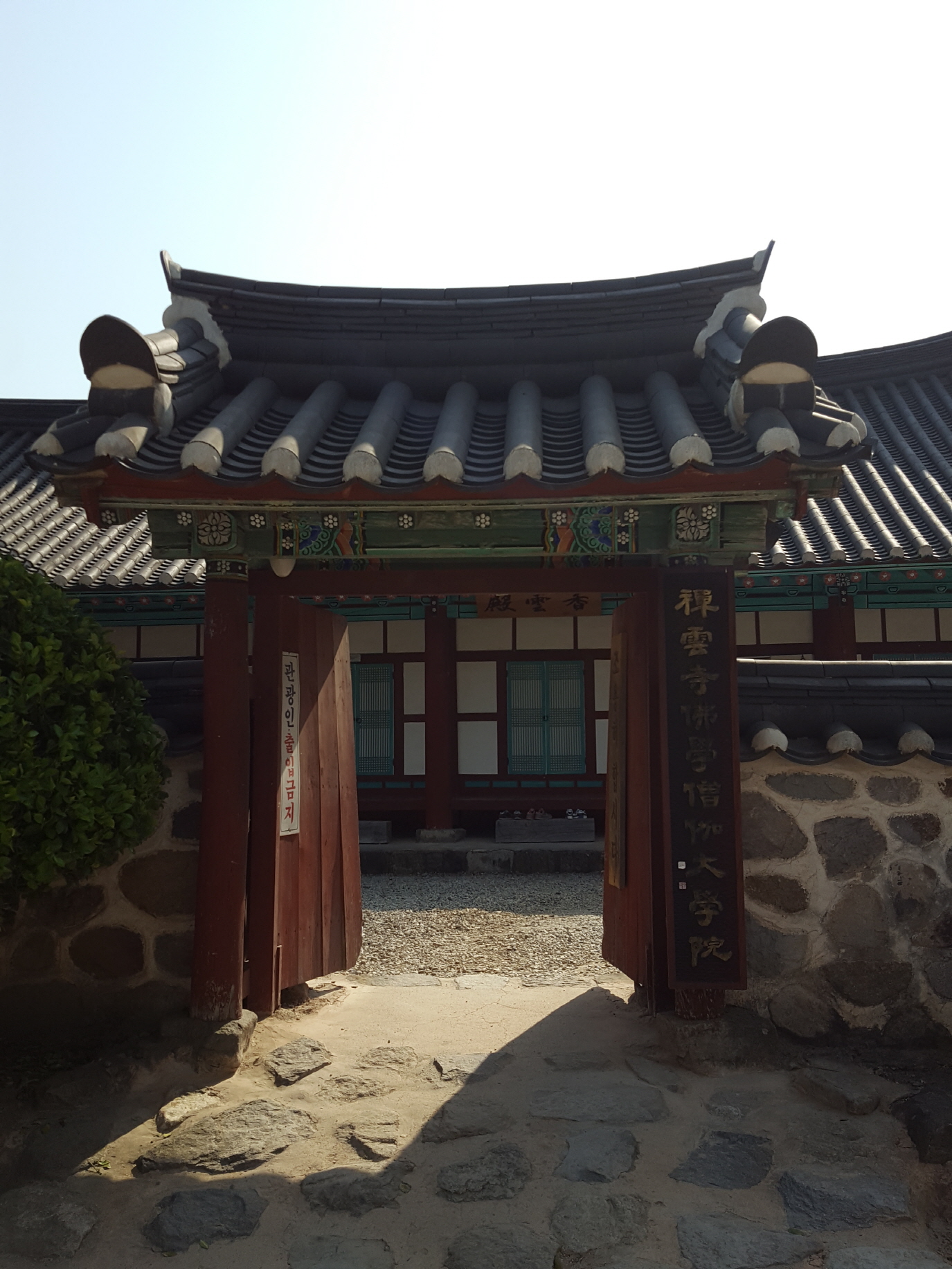
Vairocana Buddha, Bhaisajyaguru Buddha, and Amitabha Buddha in Daeungjeon Hall: A Triad Different from the Name
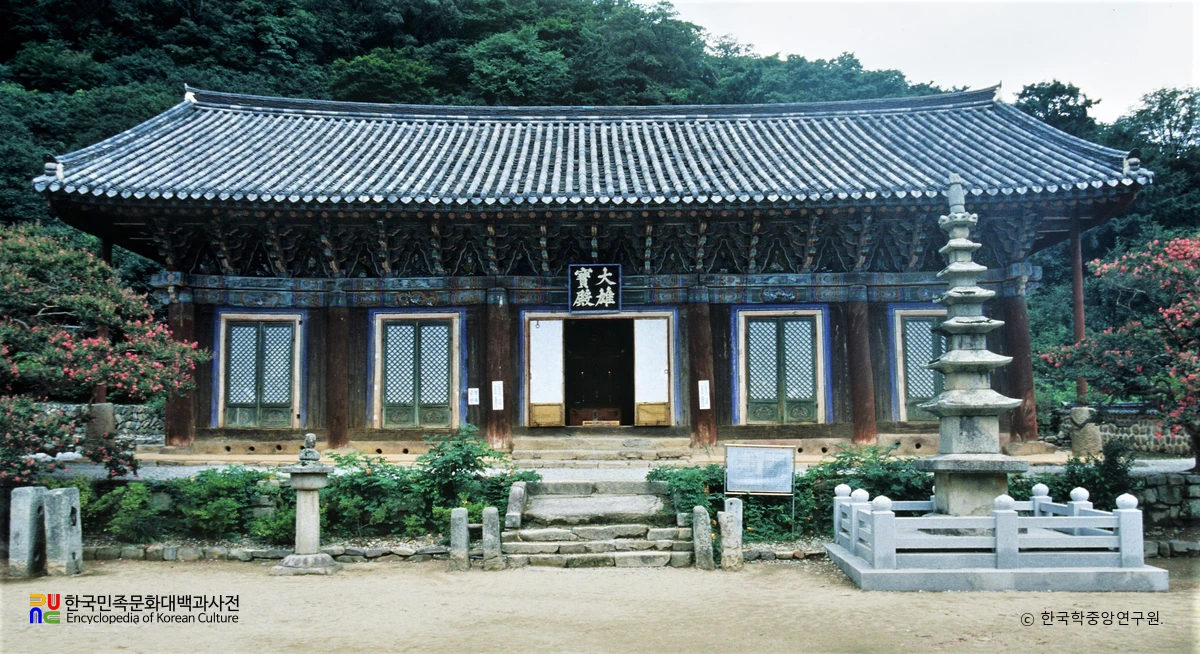
Daeungjeon Hall is the central building of Seonunsa Temple, but its enshrined arrangement differs from the Daeungjeon halls commonly thought to center on Shakyamuni Buddha. According to the Encyclopedia of Korean Culture, Vairocana Buddha is enshrined in the center, with Bhaisajyaguru Buddha and Amitabha Buddha on the left and right. Although the building is called Daeungjeon Hall, this combination of statues is an example of a Buddha triad centered on Vairocana Buddha.
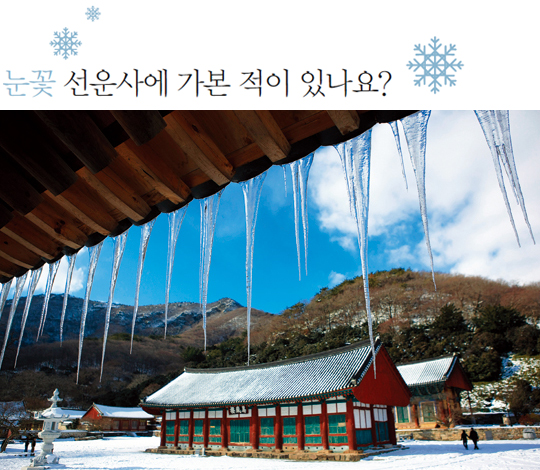
Admission to the temple grounds is free, so after viewing the exterior from in front of Daeungjeon Hall, follow any access controls and photography restrictions first if a Dharma assembly or service is in progress. Rather than quickly passing directly in front of the hall, take in the eaves, bracket sets, and scale of the facade before continuing toward the camellia forest. This creates a short, mostly level temple-walking route. If you do not climb to Dosolam, about 1.5 hours is a suitable estimate.
Camellia Forest, Natural Monument No. 184: See Its Structure Before the Flowers
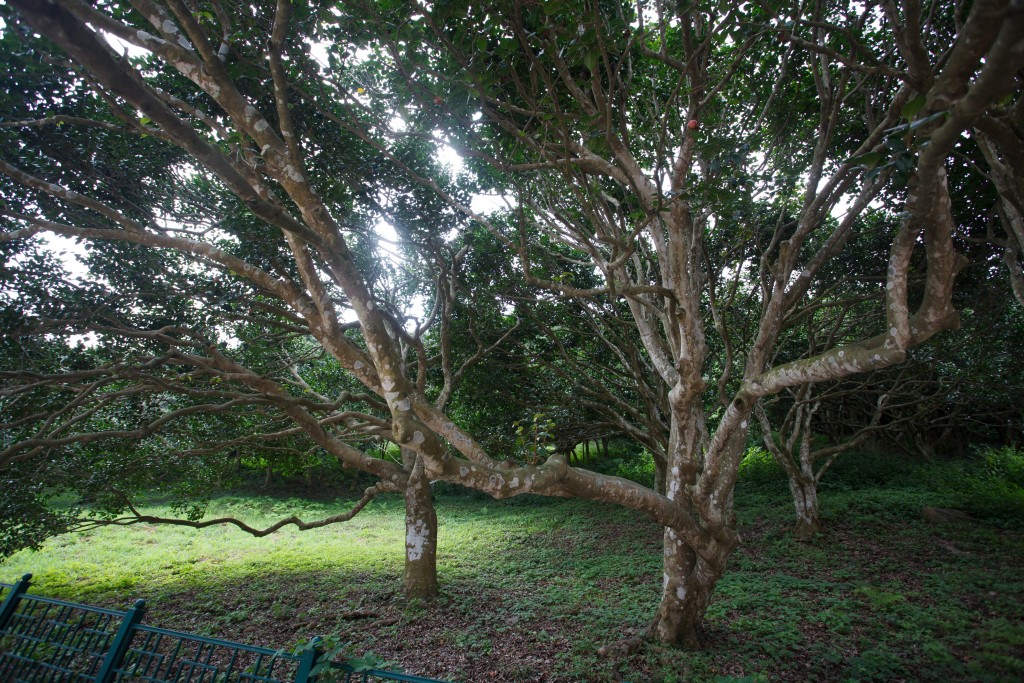
The camellia forest at Seonunsa Temple was designated Natural Monument No. 184 in 1967. The Regional Culture Portal describes the forest as covering approximately 5,000 pyeong, while other public research materials explain that about 2,000 trees form the grove. The key point is that this is not merely a place to visit during flowering season; the evergreen forest surrounding the temple itself is protected.
The camellias are said to have been planted as a protective forest to shield the temple from wildfires, and oil obtained from their fruit was reportedly used as lamp fuel. Rather than photographing only the spring flowers and leaving immediately, look at the density of the forest and its arrangement between the halls to better understand the site’s function. The evergreen leaves and forest paths remain after the flowers fade, although flowering conditions vary each year depending on temperatures.
From Jangsasong to the Rock-Carved Buddha at Dosolam: Choosing the 1.5-Hour Hike
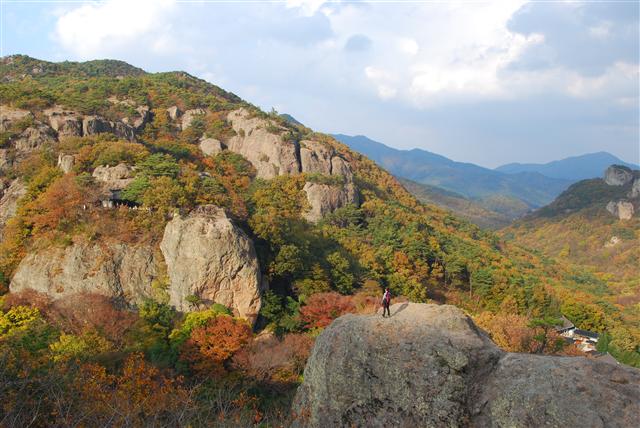
Course 1 on Seonunsan, presented by Gochang-gun, follows the route from the management office parking lot to Seonunsa, Dosol Rest Area, Jangsasong, Dosolam, the Rock-Carved Buddha, Yongmungul Cave, Nakjodae, and Cheonmabong, in that order. It is listed as a 1.5-hour one-way route. This is not a round-trip estimate, so if you go to Cheonmabong and return to the starting point, you should allow at least three hours even before adding time for breaks and photographs.
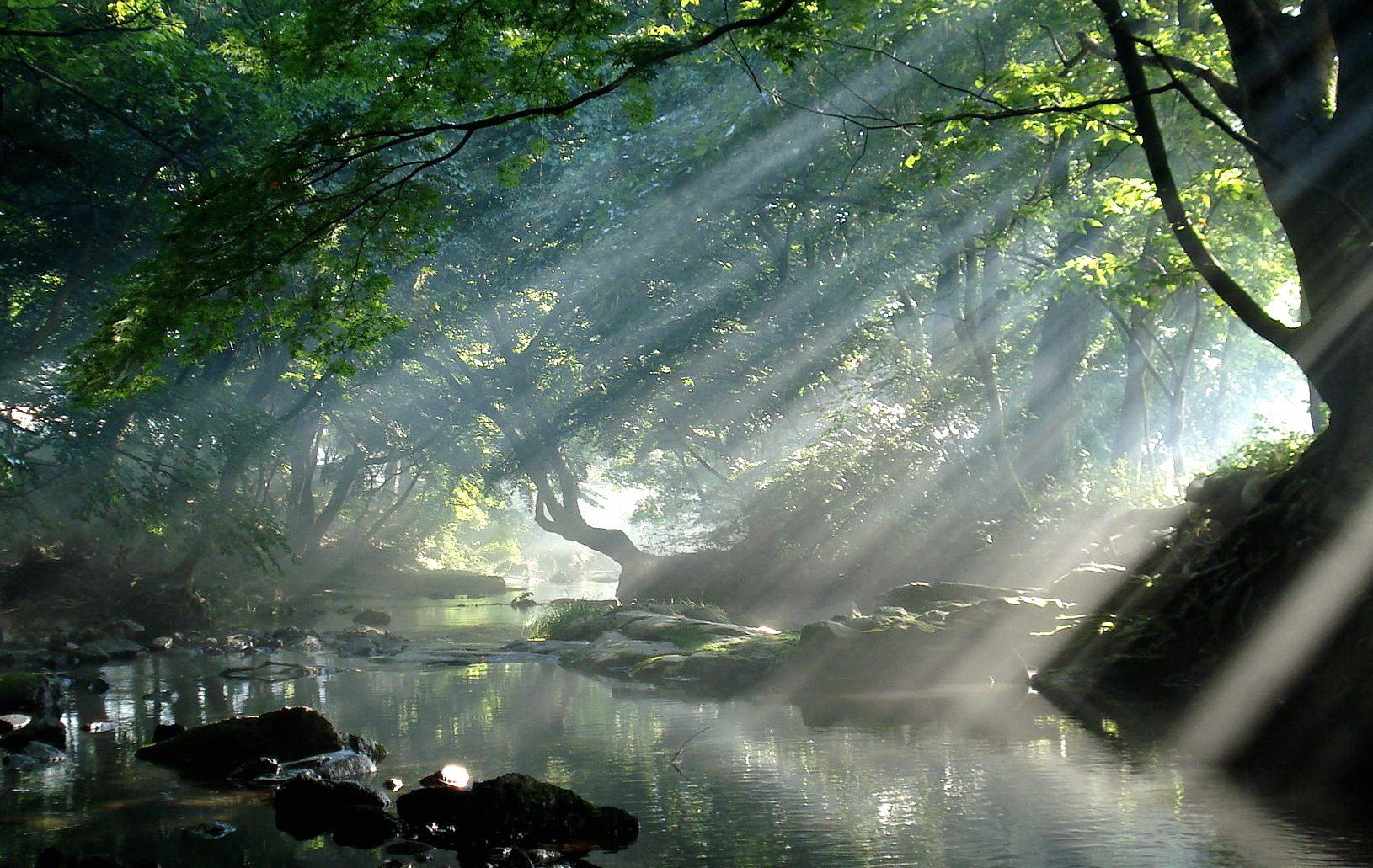
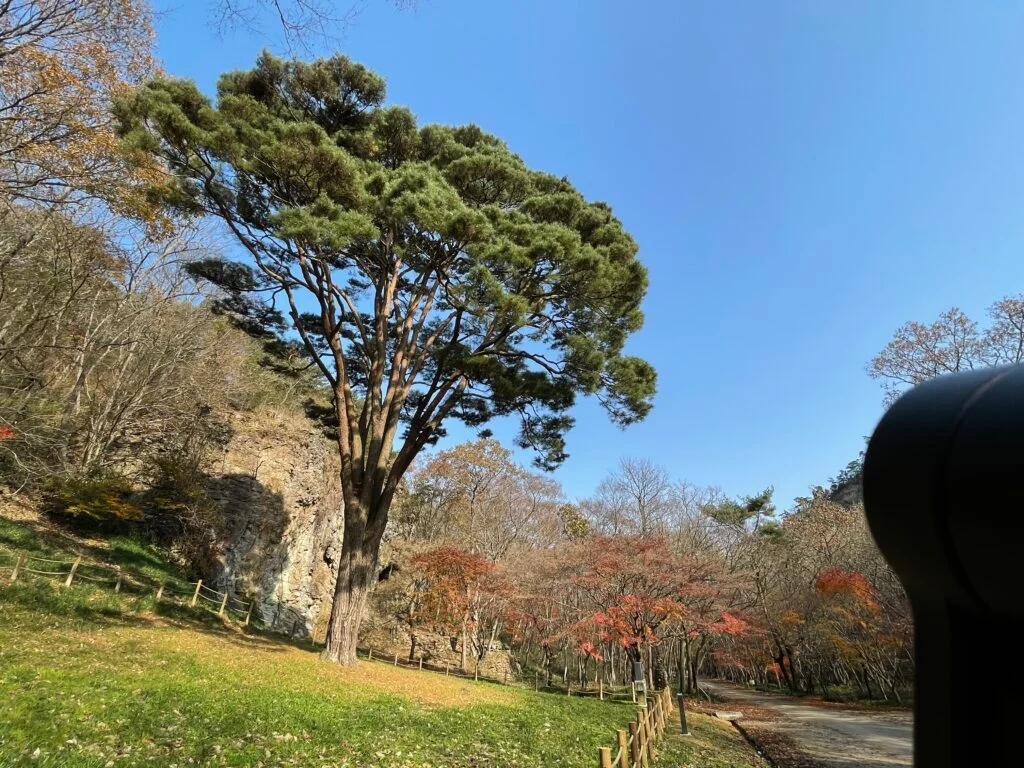
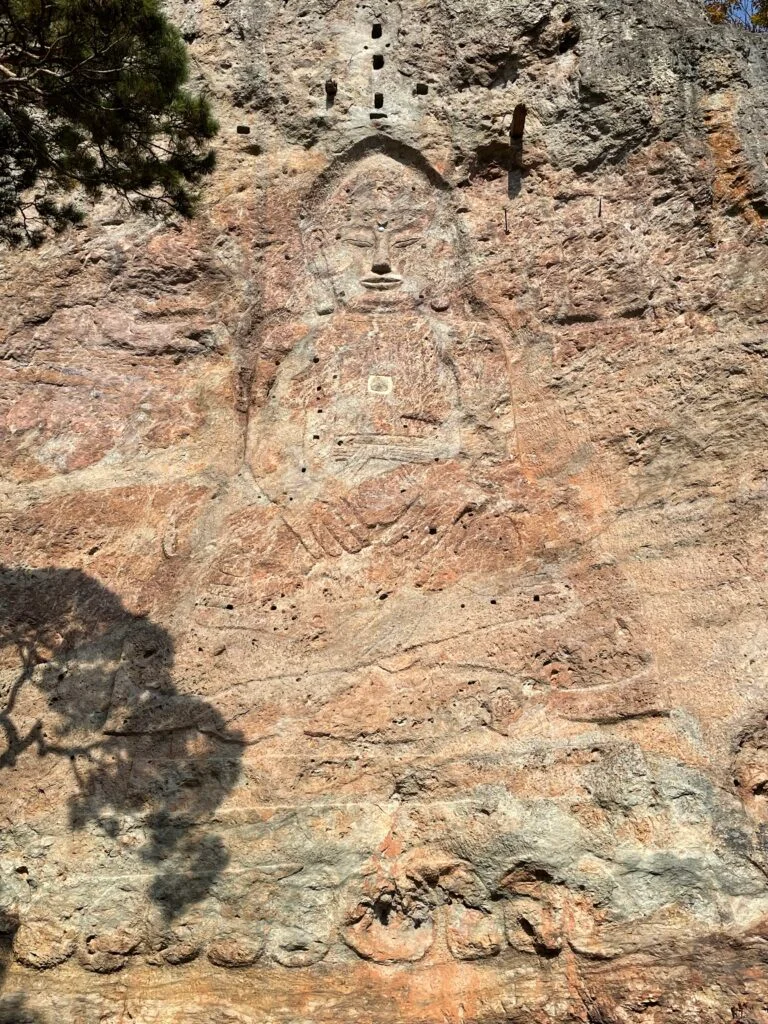
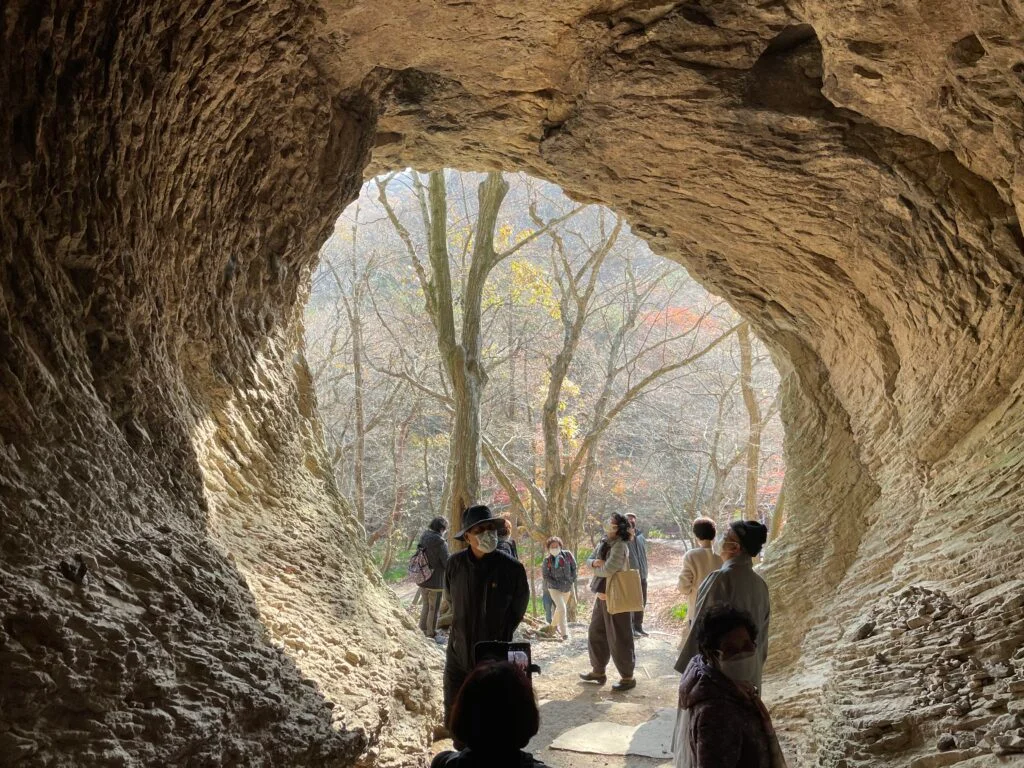
Jangsasong is a natural monument designated as the Jangsasong Pine Tree at Dosolam of Seonunsa Temple in Gochang, and a rock-carved seated Buddha remains on the cliff west of Dosolam. News and field-study materials describe the statue as 15.7 meters high, with knees 8.5 meters wide. Sneakers suitable for walking around the temple grounds are sufficient for Daeungjeon Hall and the camellia forest, but if you plan to continue to the Rock-Carved Buddha, Yongmungul Cave, Nakjodae, and Cheonmabong, prepare slip-resistant footwear, water, and enough time to descend before sunset.
Red Spider Lilies, Camellias, and Autumn Foliage: Choosing a Season on Seonunsan
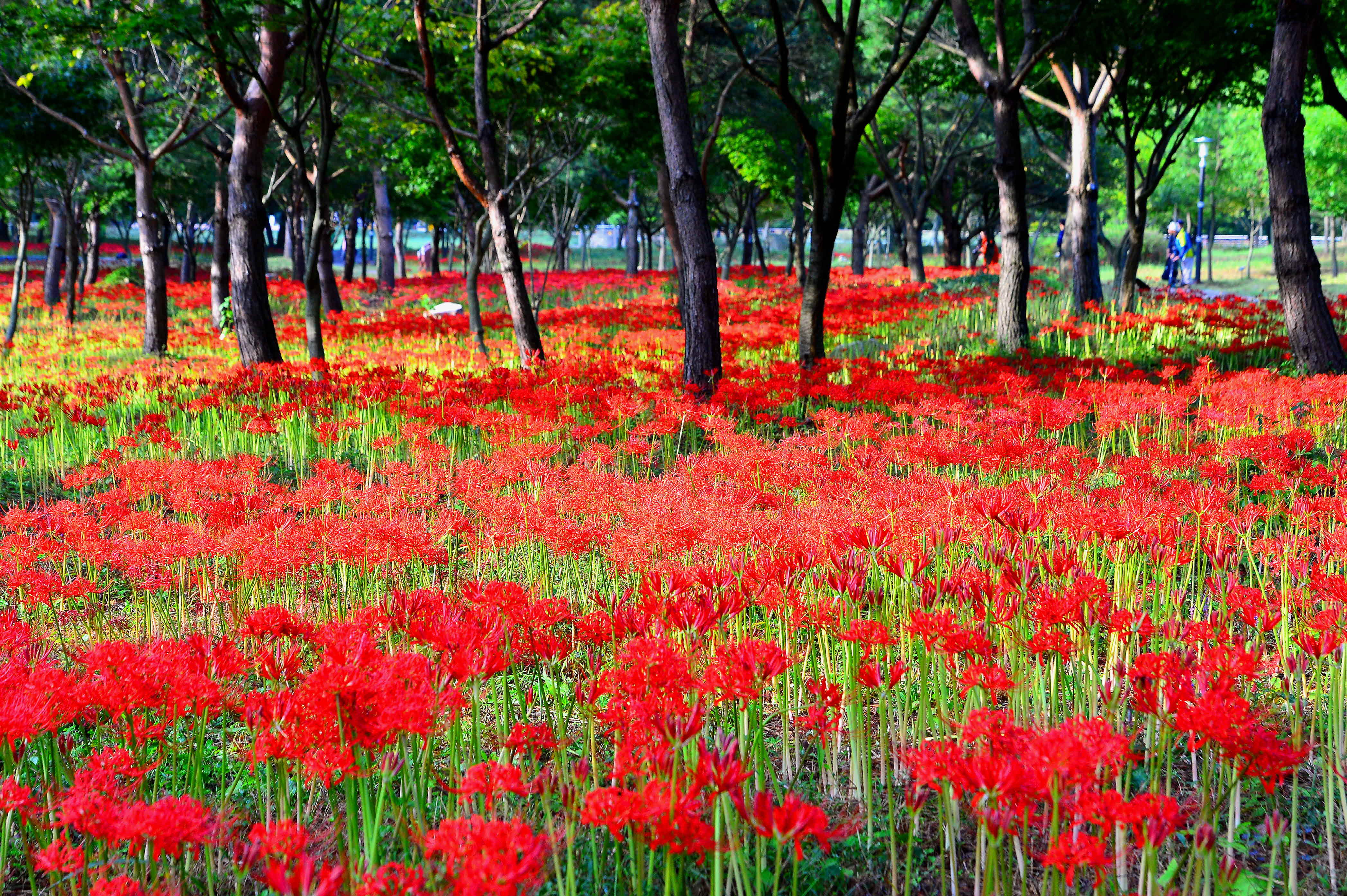
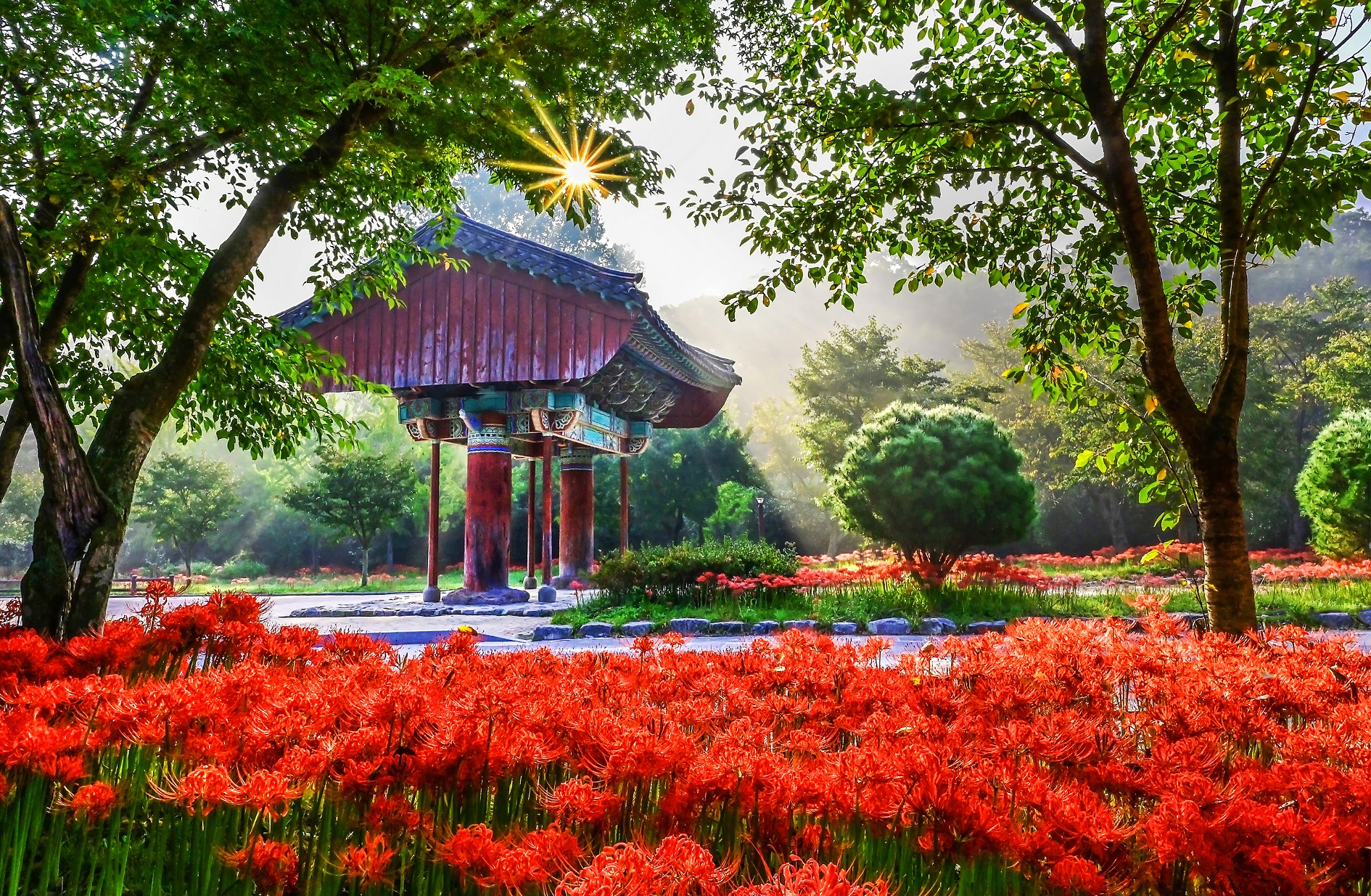
Seonunsan Provincial Park has distinct seasonal attractions: camellias in spring, red spider lilies in early autumn, and fall foliage. The Gochang-gun tourism page explains that Seonunsan was designated a provincial park in 1979 and also introduces the red spider lilies near Seonunsa as a signature attraction. If flowers are the focus of your itinerary, do not fix your plans to a specific flowering date; the most practical approach is to ask Gochang-gun tourism officials and the temple information center about current conditions shortly before departure.
During the foliage or red spider lily seasons, it is better to choose between sightseeing and hiking rather than attempting both at full intensity. Seonunsa’s temple grounds, camellia forest, and Jangsasong can be visited in a relatively short time, but adding Dosolam and Cheonmabong turns it into a round-trip hike. Visitors using strollers or wheelchairs may be able to access the level sections of the temple grounds depending on on-site conditions, but the hike beyond Dosolam, which includes rocky paths and stairs, is unsuitable. The official information does not confirm whether permanent foreign-language guidance is available.
Pairing Gochang Fortress with Pungcheon Eel, but Planning the Descent Before the Last Bus
If you return from Seonunsa toward Gochang-eup, Gochang Fortress or the Gochang Dolmen Museum can be considered as destinations for the same day. However, a round trip from Seonunsa to Cheonmabong makes the hiking time longer, and the last listed bus to Gochang departs at 20:15. Travelers using public transportation are therefore better off avoiding an itinerary that combines temple sightseeing and hiking at full intensity.
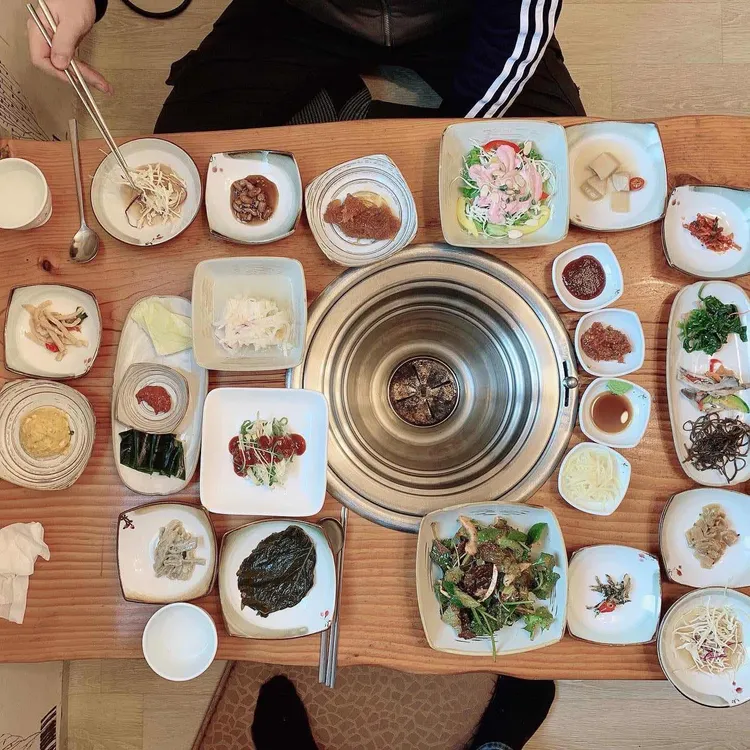
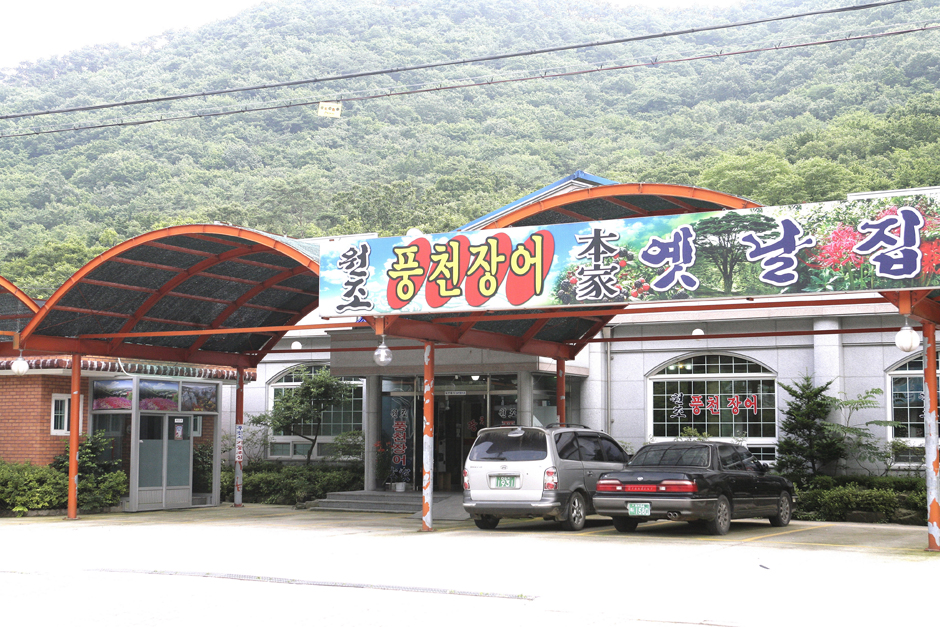
Gochang-gun introduces freshwater eel from Pungcheon, jakseol tea, and bokbunja wine as local specialties of the Seonunsan area. If you are driving, separate any tasting or drinking of bokbunja wine from driving, and first confirm your descent and vehicle-retrieval times before planning a meal. Visitors who want to explore Seonunsa in depth should prioritize the temple grounds and Dosol Valley, while those who want a broader look at Gochang’s heritage should set aside a separate half-day for Gochang Fortress or the dolmen sites.
Before You Go
- Address
- 250 Seonunsa-ro, Asan-myeon, Gochang-gun, Jeonbuk State
- Admission
- Free
- Phone
- 063-561-1423
- Official site
- https://www.buddhism.or.kr/m/jongdan/sub1/sub1-9-2-7.php
- Transport
- Use the connecting bus between Gochang and Seonunsa. Departures from Gochang: 07:10–19:50; departures from Seonunsa: 07:10–20:15. Times vary by stop; confirmation before departure is recommended.
- Parking
- Parking facilities available at Seonunsan Provincial Park. Fees have not been confirmed.
- Time needed
- About 1.5 hours for the temple grounds and camellia forest; Course 1 to Cheonmabong takes about 1.5 hours one way.
- Accessibility
- On-site conditions should be checked for level sections within the temple grounds. The hiking sections to Dosolam, the Rock-Carved Buddha, Nakjodae, and Cheonmabong include rocky paths and stairs and are unsuitable for wheelchair and stroller users. The availability of permanent foreign-language guidance has not been confirmed.
The information above is current as of the time of writing. Check the official information again before visiting.

Places
Nearby Attractions 5
-
1
-
 2
2
-
 3
3
-
 4
4
-
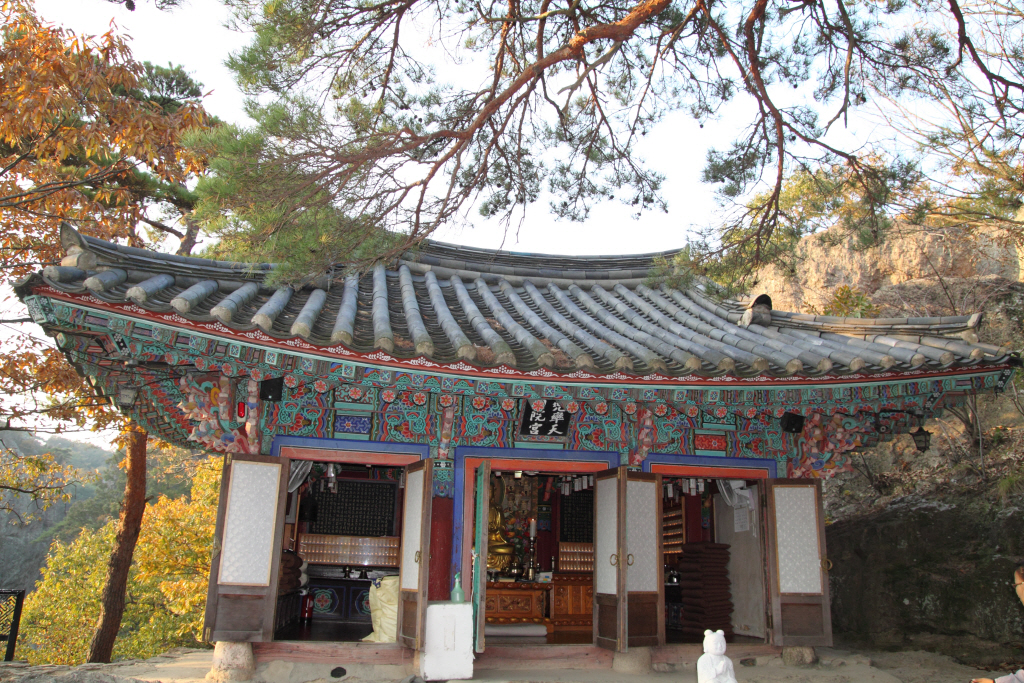 5
5
Food & Dining 5
-
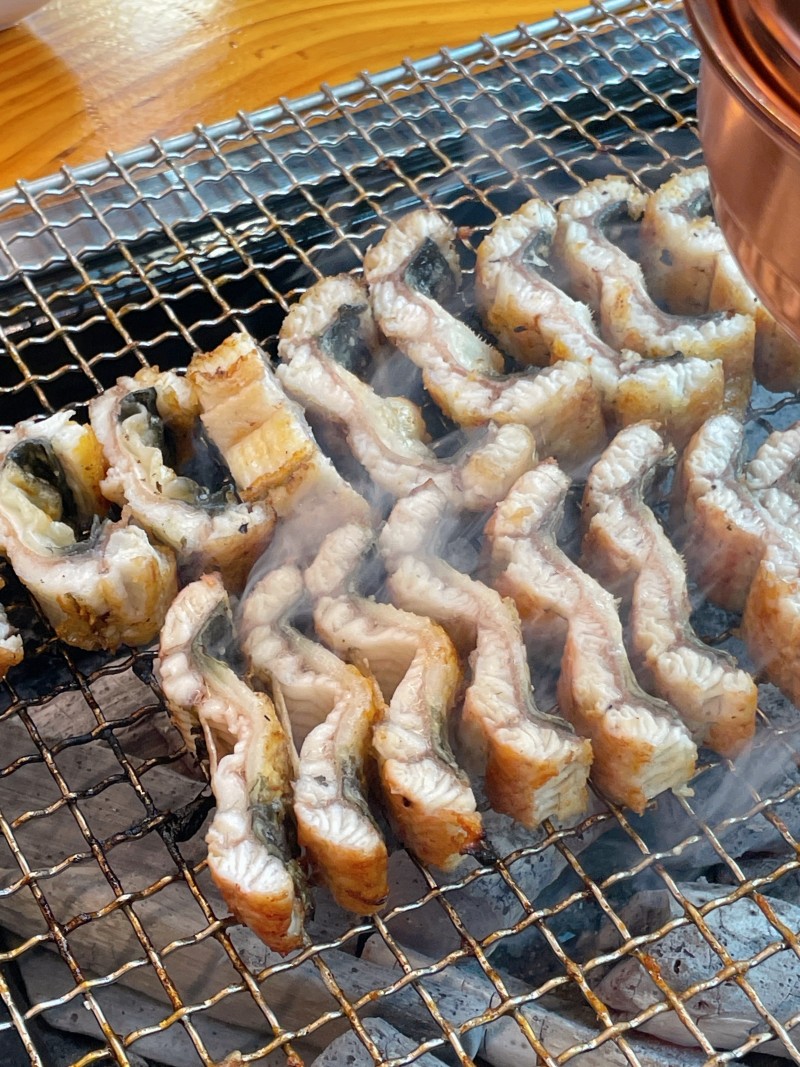 6
6
-
 7
7
-
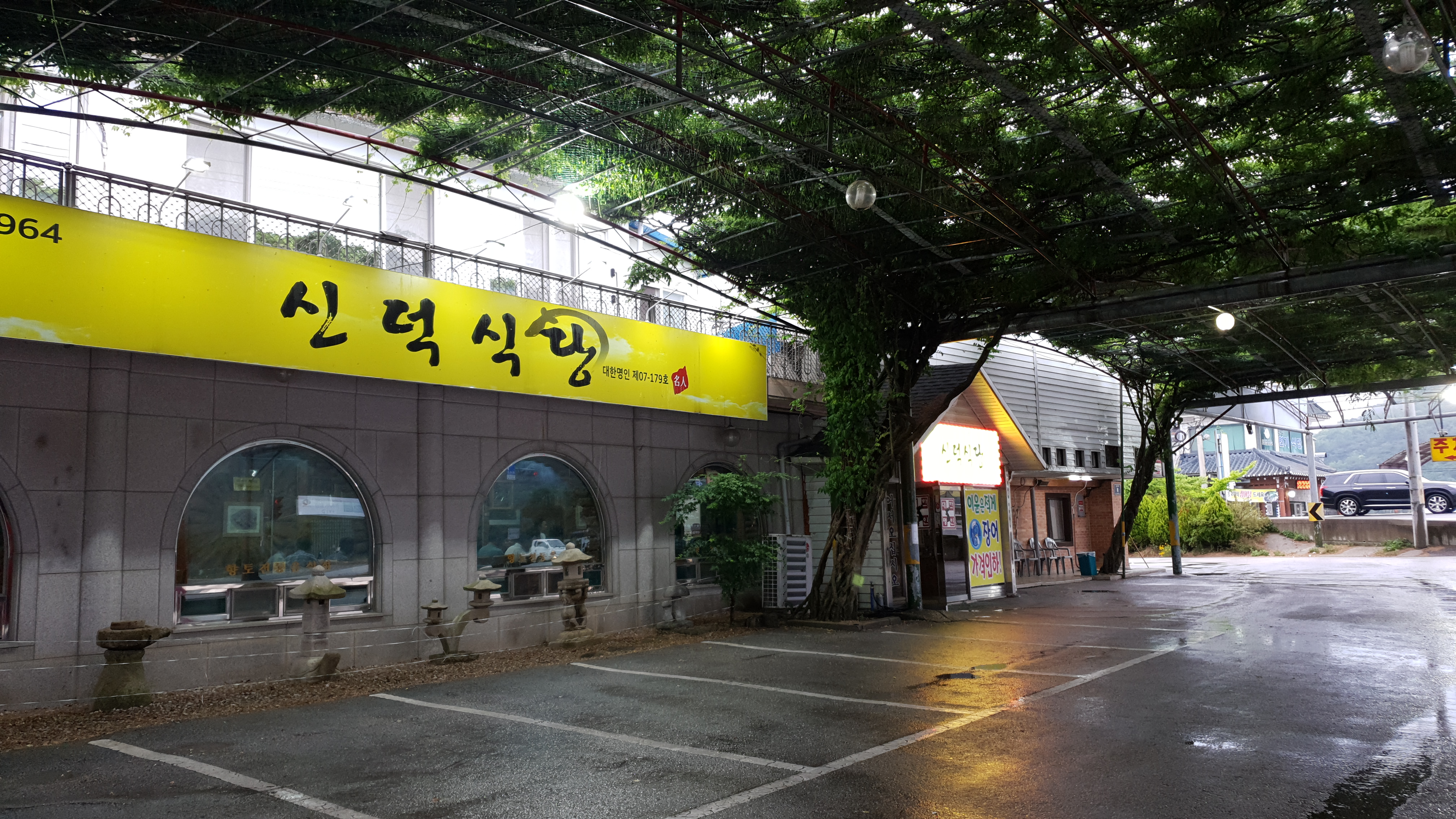 8
8
-
 9
9
-
 10
10
More Travel Guides in This Area
 Travel Guide
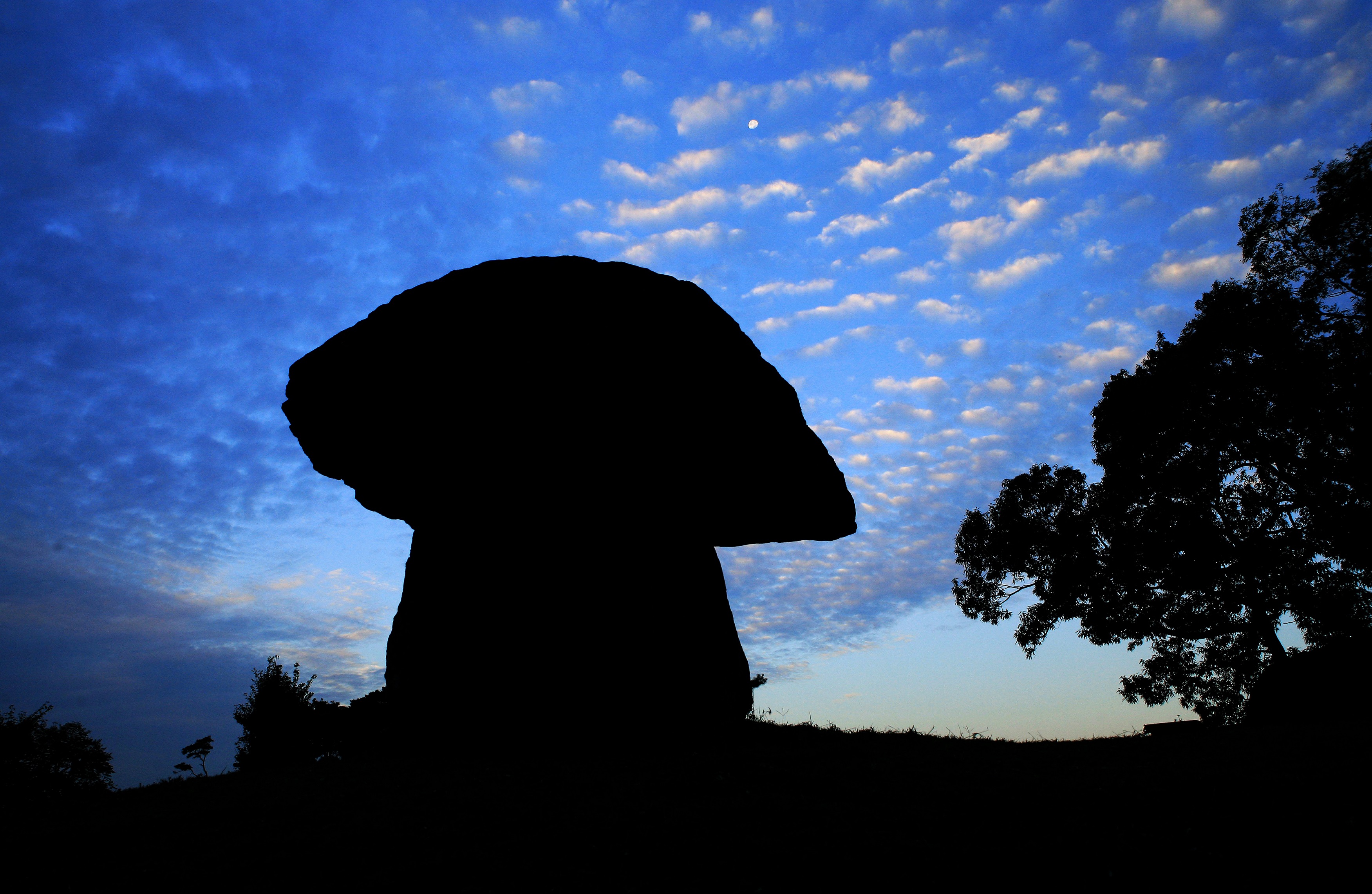
Reading the 2,000-plus Bronze Age Dolmens at Gochang Dolmen Museum
 Travel Guide
How to Get Around Sangha Farm’s 22 Facilities and Gochang’s Country Roads
 Travel Guide
How to Safely Visit the Chaeseokgang Cliffs and Sea Caves at Low Tide
 Travel Guide
From Spring Greenery to Autumn Buckwheat, Gochang Hakwon Farm’s Green Barley Fields
Korea News
 News
News
TWS heightens comeback excitement with kitschy charm… Anticipation for “plot twist” rises
 News
News
BTS, Six Months After Its Release… ‘Arirang’ Climbs the U.S. Billboard 200
 News
News
'The Nation's Girl Group' RESCENE, Five Girls Transformed into Guardians… Additional Concept Photos for Their 4th Mini Album Revealed
 News
News