Namwon Gwanghalluwon Garden, Where the Milky Way, Samsinsan and Ojakgyo Bridge Meet in One Garden
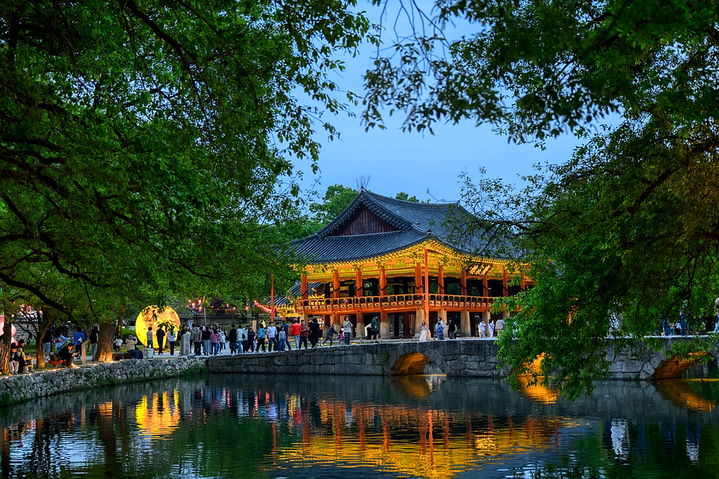
Namwon Gwanghalluwon Garden began as Hwang Hui’s Gwangtongnu and developed into a Joseon-era garden that brought the palace of the moon and the Milky Way down to earth. During the day, visitors can explore the symbolic layout of Gwanghalluwon Pavilion and its pond, and after 6 p.m., when admission is free, they can also enjoy the pavilion and Ojakgyo Bridge illuminated at night.
I’ve been here?
Your check-in helps the next traveler.
23 people viewed this week Be the first
One tap — no writing needed
From Gwangtongnu in 1419 to ‘Gwanghallu’ in 1444
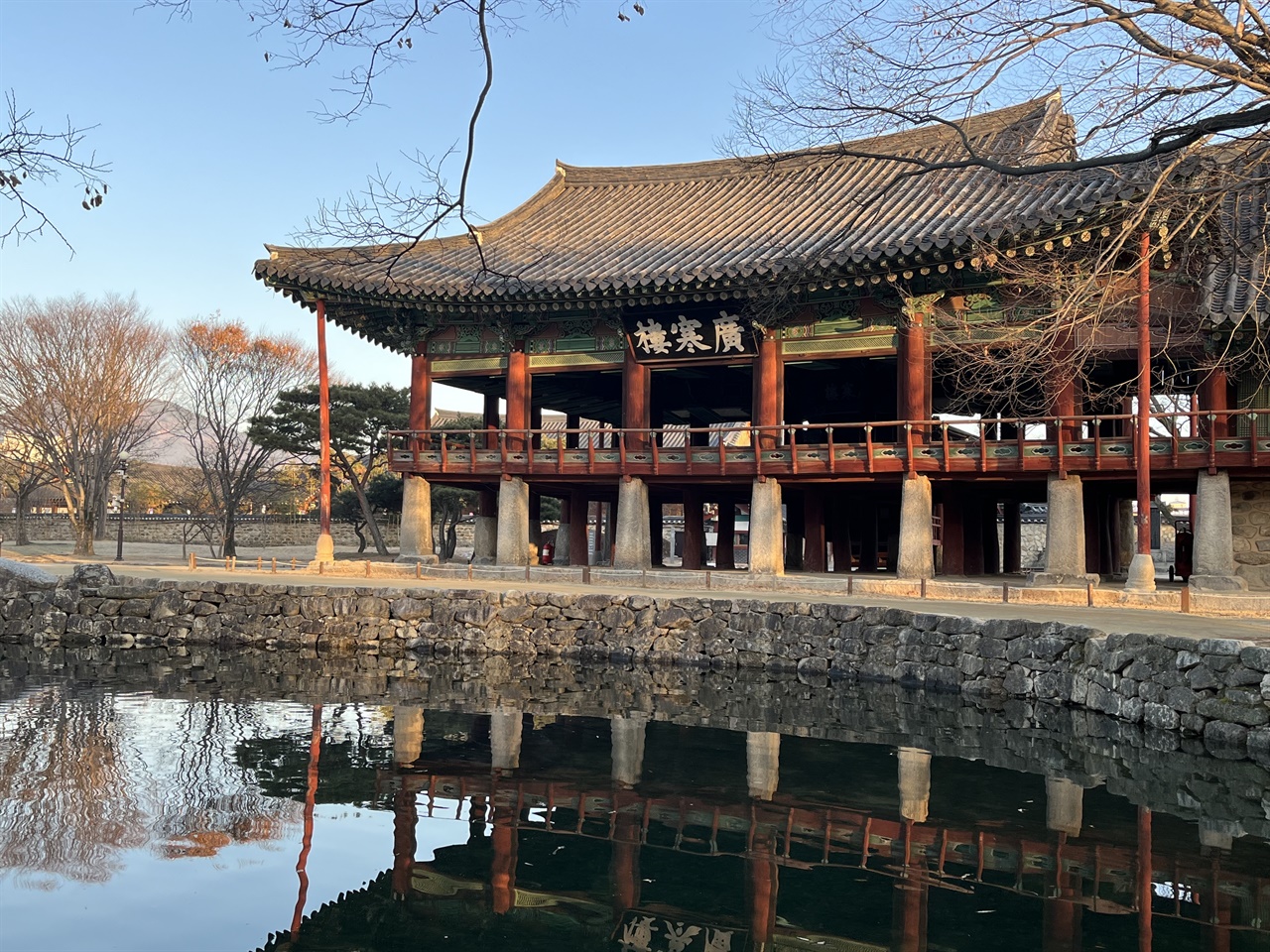
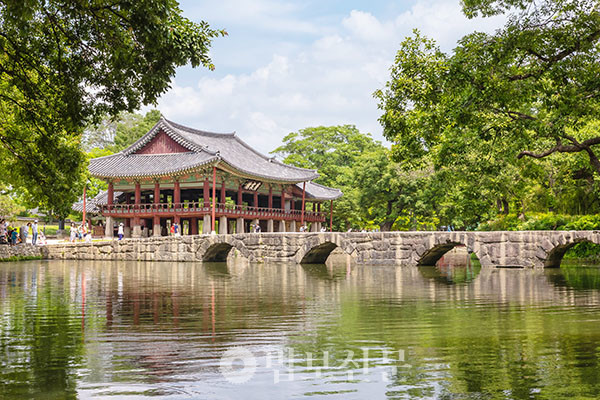
Gwanghallu, the central building of Gwanghalluwon, originated from ‘Gwangtongnu,’ built in 1419 when Hwang Hui was exiled to Namwon. Namwon City’s tourism guide presents a history of renovations: the restoration by Namwon magistrate Min Gong in 1434, the dancheong decorative painting by Yu Ji-rye in 1437, and the renaming of the building as ‘Gwanghallu’ by Jeong In-ji in 1444. ‘Gwanghan’ refers to the palace on the moon, and the name of the pavilion itself reflects the concept of recreating a lunar palace in the earthly city of Namwon.
The present building is not an intact structure from the early Joseon period. Gwanghallu burned down during the Second Japanese Invasion of Korea in 1597, was rebuilt by magistrate Won Sin in 1599, and renovated by magistrate Sin Gam in 1626. Further renovations followed in 1855, the installation of the wolrang corridor in 1879, and repairs in 1931. The main pavilion is a paljak-roofed pavilion-floor building with five bays across the front and four bays along the side, while the wing pavilions each have three bays across the front and side. Its total area is listed as 241.81㎡.
Why is the pond of Scenic Site No. 33 the Milky Way, and why are there three islands?
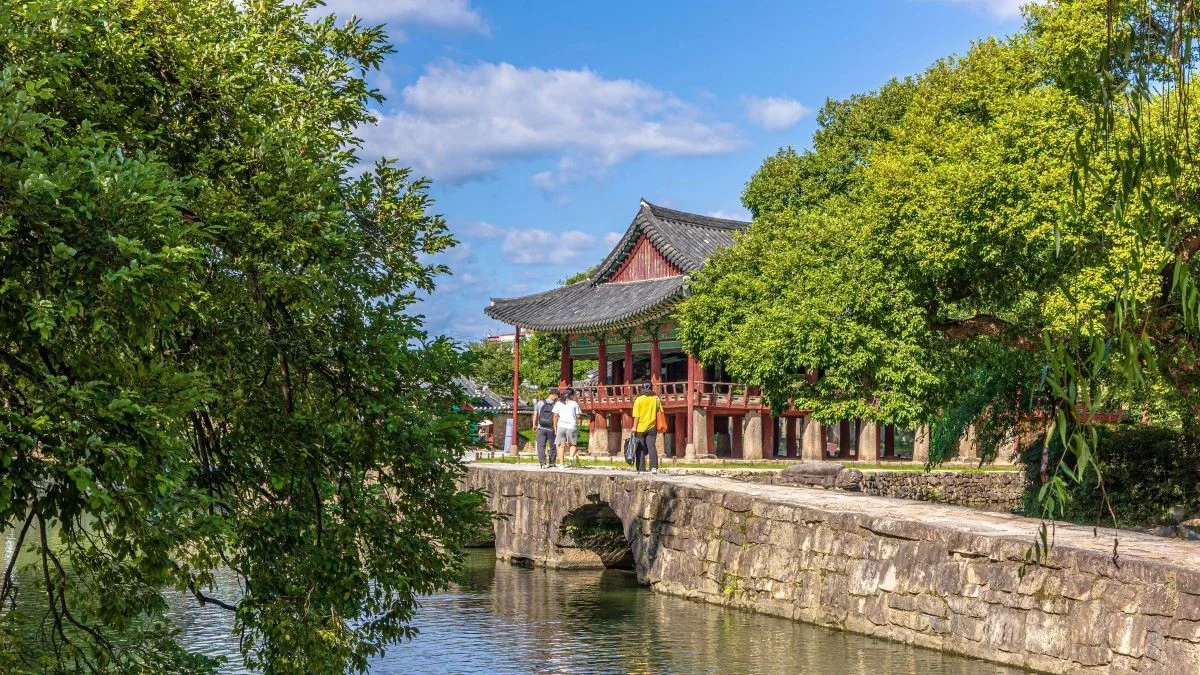
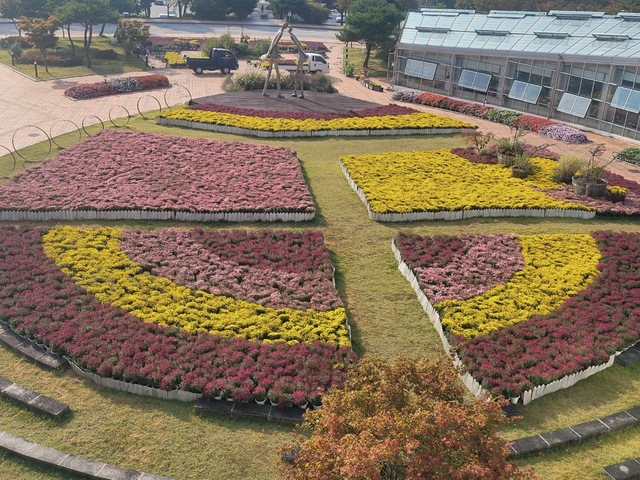
Gwanghalluwon is not simply a place to view a single pavilion; it is a traditional garden designed to symbolize the celestial universe. The pond in front of Gwanghallu represents the Milky Way, while the three islands in the pond represent Bongnaesan, Bangjangsan, and Yeongjusan, the mountains where immortals are said to live. The Ojakgyo Bridge over the pond is interpreted as the bridge where Gyeon-u and Jik-nyeo meet on Chilseok. When Gwanghallu, the pond, islands, and bridge are viewed together, the garden’s design principles become clearest.
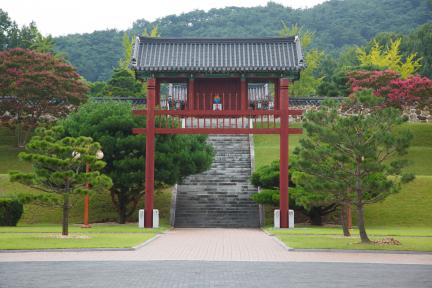
Gwanghalluwon is National Scenic Site No. 33, and Gwanghallu itself is known as Treasure No. 281. This symbolic space also became the setting where Seong Chun-hyang and Yi Mong-ryong formed their relationship in The Tale of Chunhyang. Within the garden, first look toward Gwanghallu before crossing Ojakgyo, then compare the locations of Bongnae Island, Bangjang Island, and Yeongju Island. This reveals Joseon beliefs about immortals, which can easily be overlooked if the site is viewed only as the ‘setting for a love story.’
Calculating seasonal hours, from 08:00 entry to free admission after 18:00
Gwanghalluwon is open year-round. From April through October, it is open from 08:00 to 21:00, and from November through March, it is open from 08:00 to 20:00. During both seasons, admission is free after 18:00. During paid admission hours, tickets cost 4,000 won for adults, 2,000 won for teenagers and soldiers, and 1,500 won for children. Individual adult visitors aged 19 to 64 who pay the 4,000-won admission fee are eligible to receive a 2,000-won Namwon Love Gift Certificate in return.
People aged 65 or older, preschool children, people of national merit, registered people with disabilities, and Namwon residents are eligible for free admission. To see the architectural details and pond scenery in daylight, visit between 08:00 and 17:30; to enjoy the illuminated scenery without an admission fee, visit after 18:00. However, free admission ends at 21:00 from April through October and at 20:00 from November through March, so in winter it is safer to arrive around 18:00 rather than late in the evening.
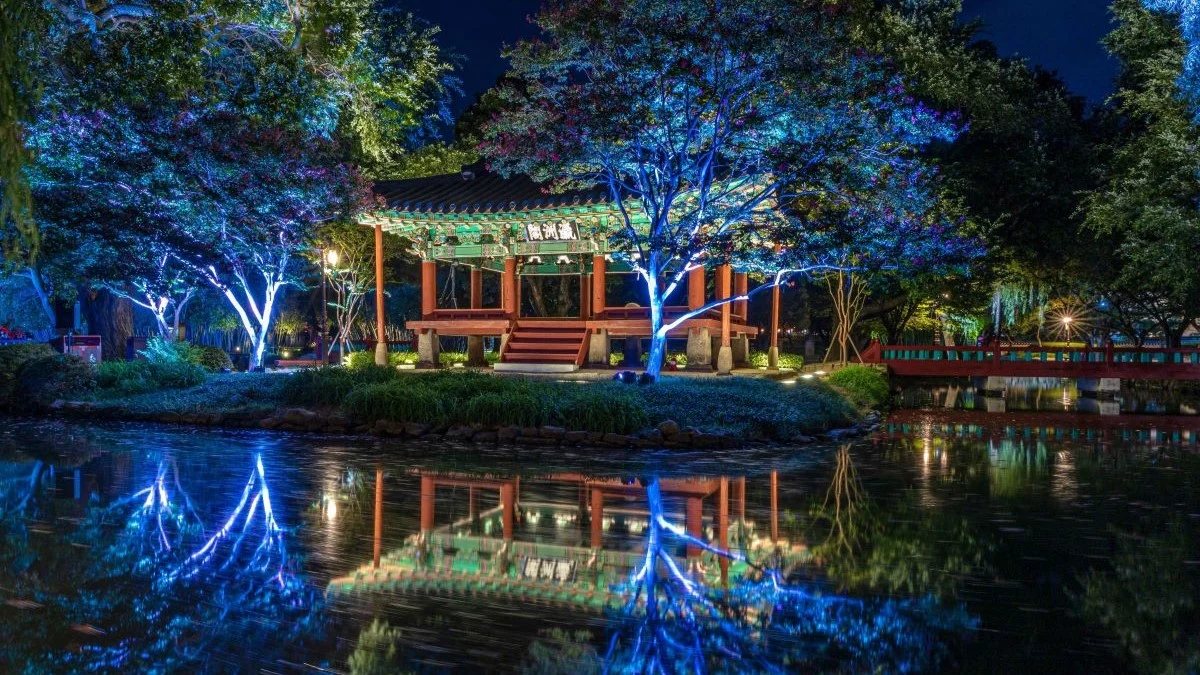
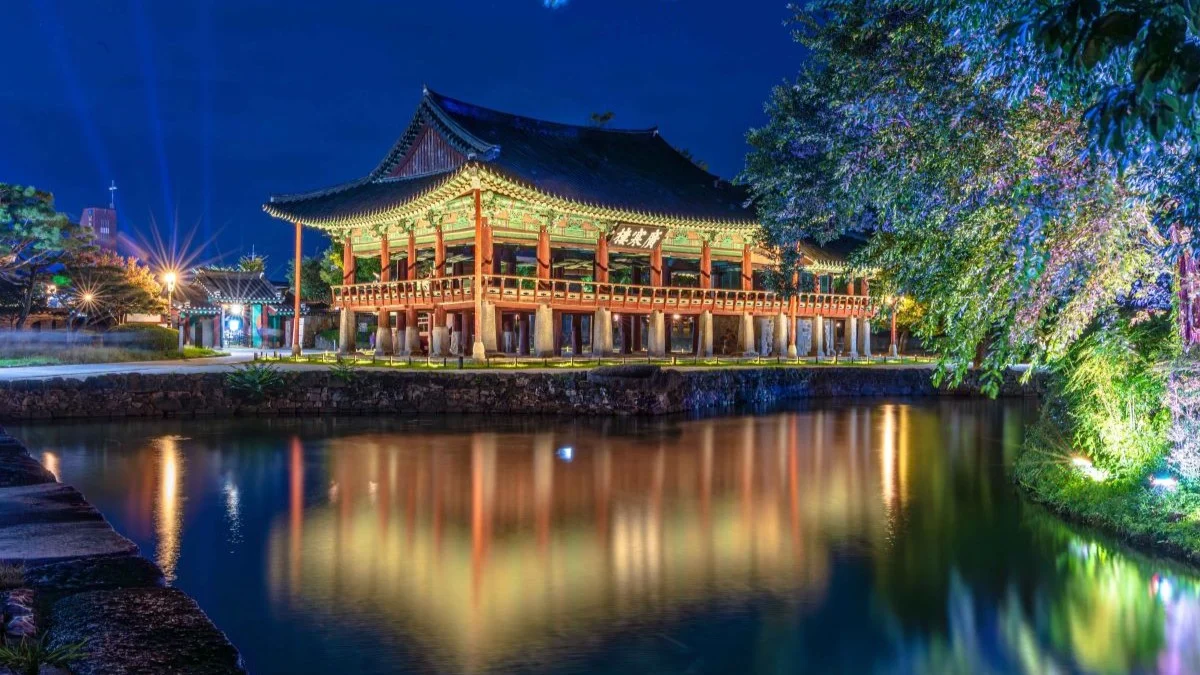
A 60–90-minute route extending to Chunhyang Shrine, Chunhyang Hall, and Wolmae’s House
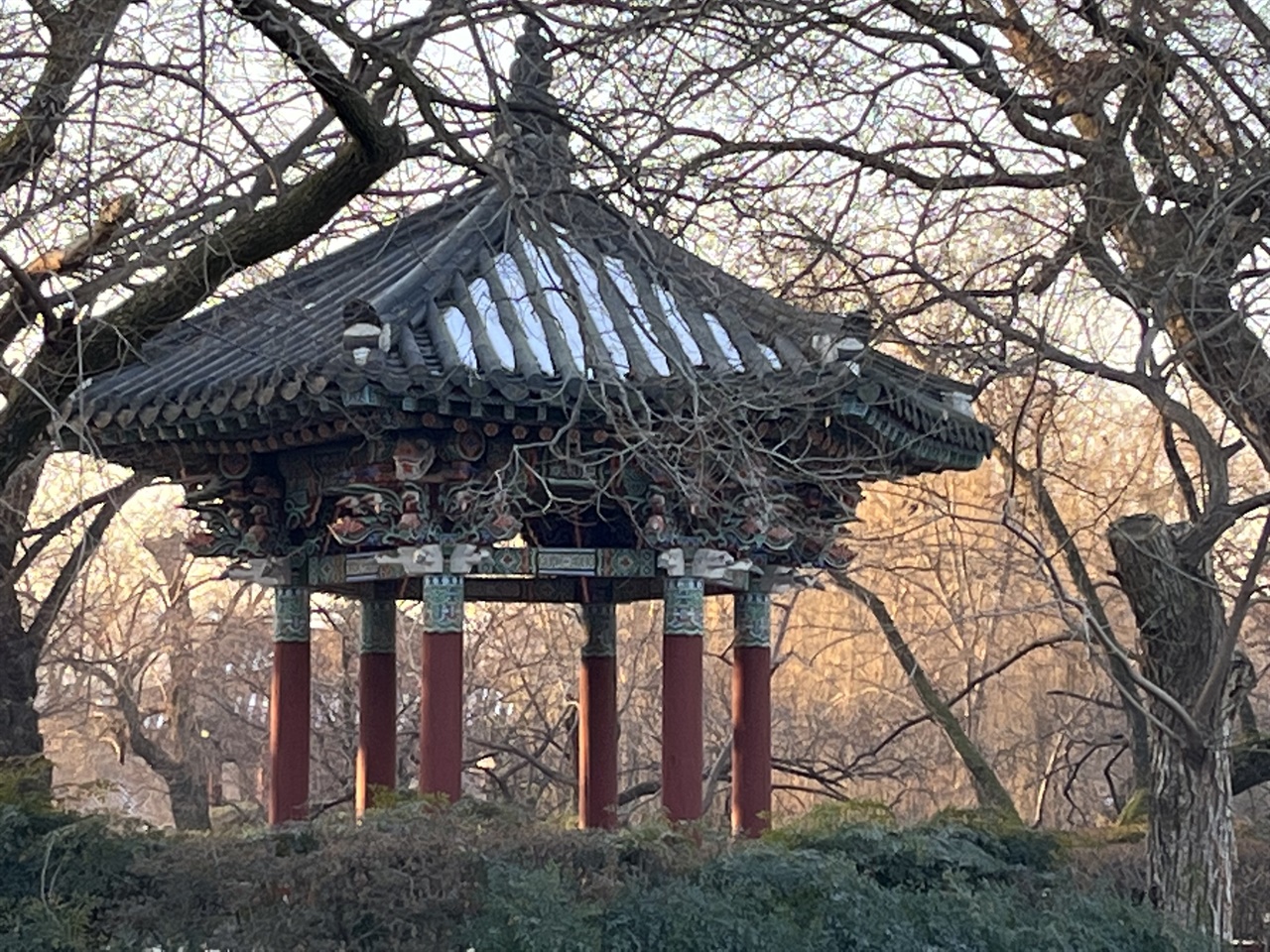
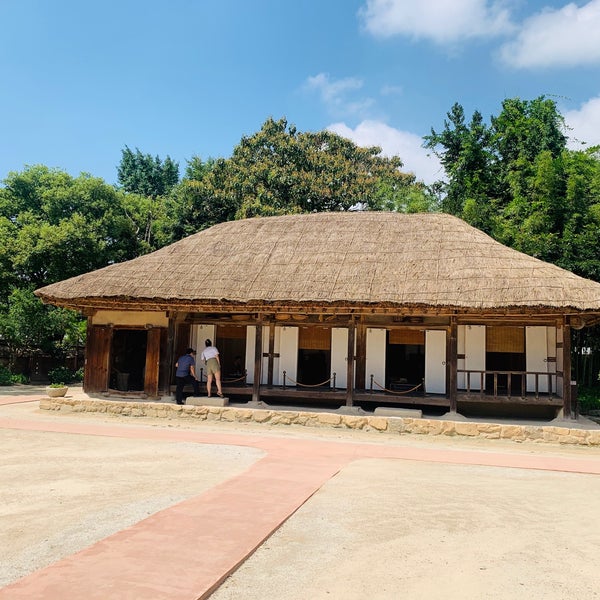
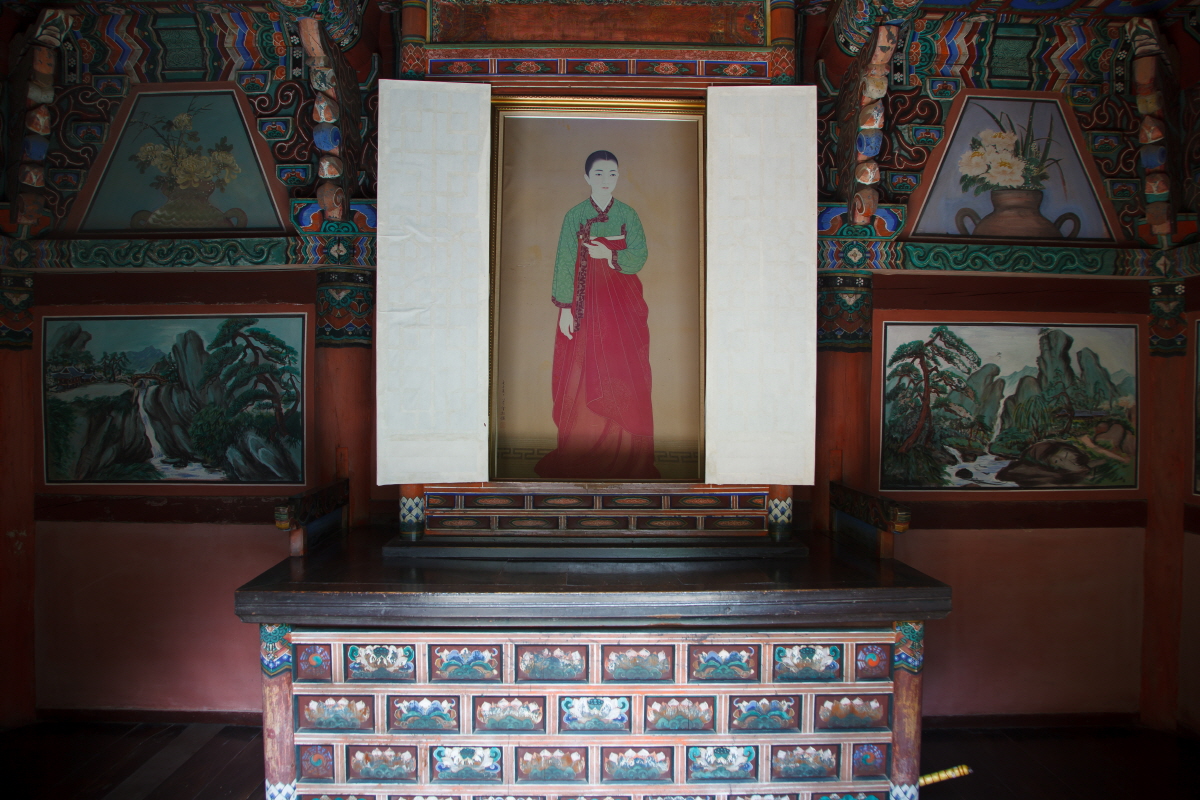
A garden visit is more complete when it extends beyond Gwanghallu and the pond to the spaces associated with Chunhyang. Gwanghalluwon includes Chunhyang Shrine, which houses a portrait of Chunhyang painted by artist Kim Eun-ho; Chunhyang Hall, which presents information related to Chunhyang; and the thatched Wolmae’s House, a recreation of the home where Chunhyang lived. After viewing the pond and Ojakgyo from Gwanghallu, follow the route in the order of Chunhyang Shrine, Chunhyang Hall, and Wolmae’s House to experience the connections among architecture, gardens, and classical fiction in one visit.
It is best to allow approximately 60 to 90 minutes. A schedule focused only on taking a few quick photos can be completed in about 40 minutes, but more than an hour is needed to see Gwanghallu’s signboard and pavilion-floor structure, the locations of the three islands and pavilions, and the Chunhyang-related exhibitions and reconstructed spaces. The paths along the pond and across the bridge can become crowded, so visitors using strollers or wheelchairs should ask the on-site information center about accessible routes before entering.
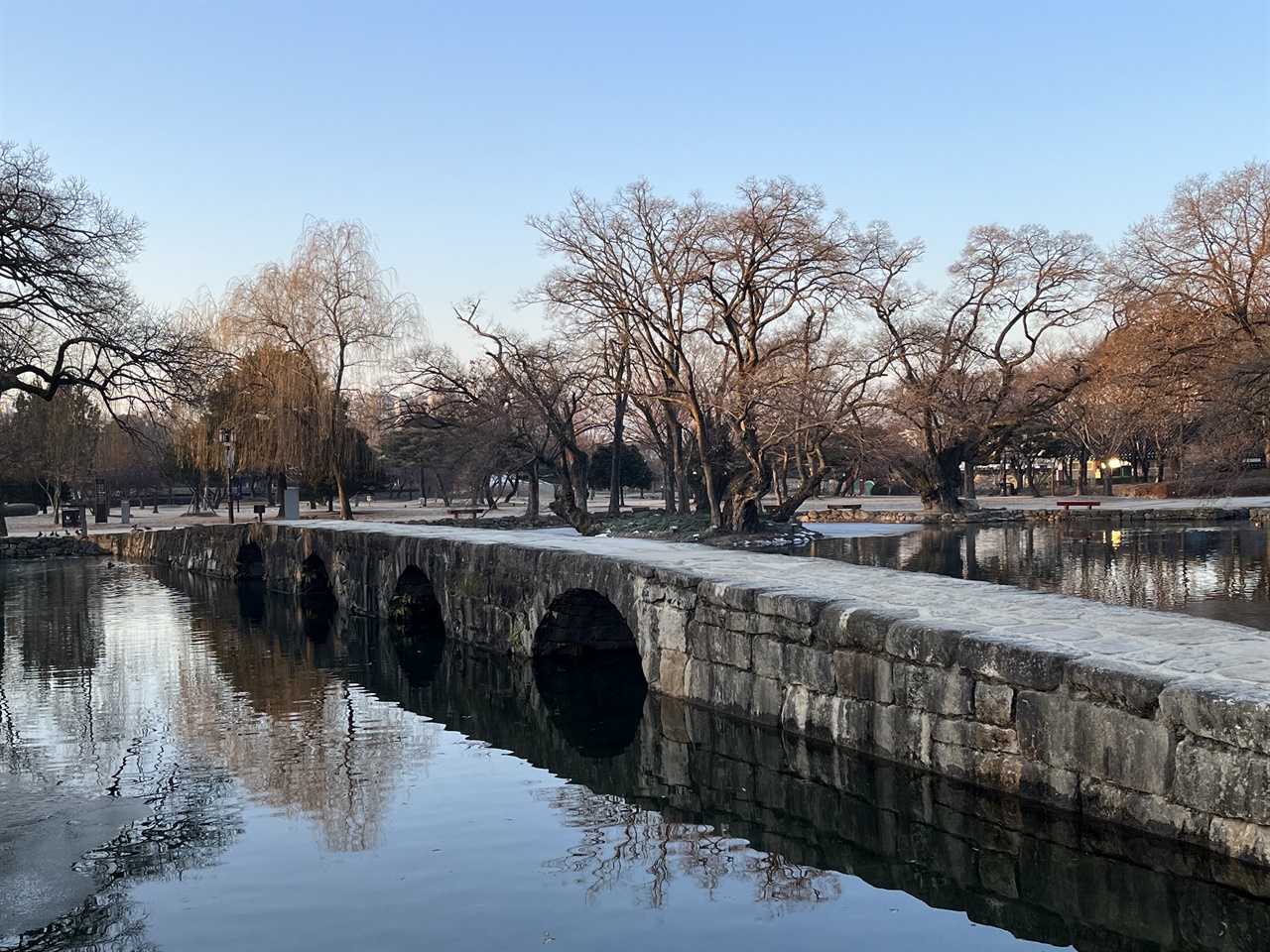
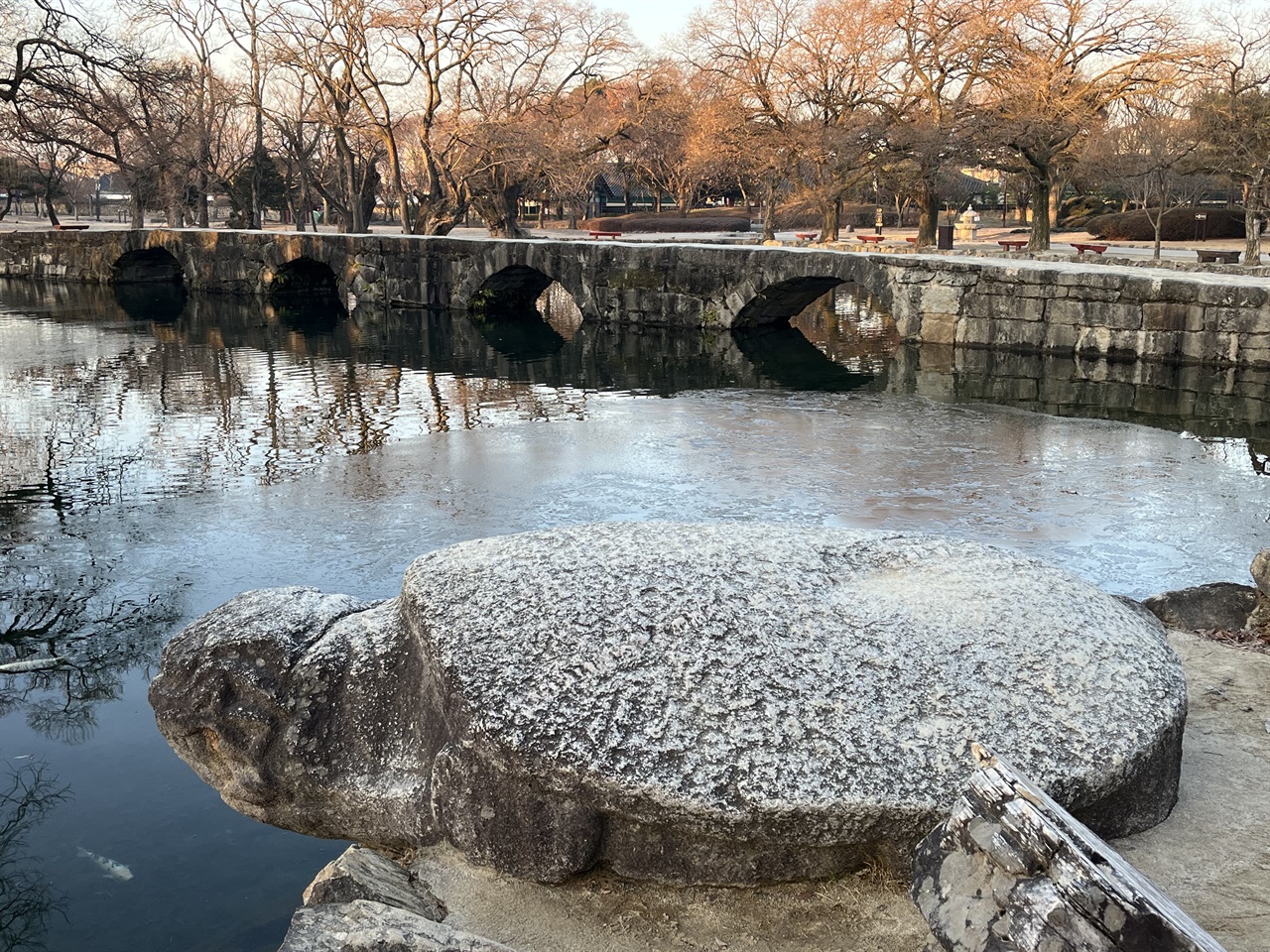
How to take buses 3-164 and 4-101 from KTX Namwon Station
When traveling by public transportation from KTX Namwon Station, take bus 3-164 or 4-101, among others, toward Nammun-ro Saga and Samjin Pharmacy from the ‘Namwon Station’ stop. Get off at the ‘Nammun-ro Saga. Samjin Pharmacy’ stop and walk for approximately six minutes. Bus routes and schedules may change, so it is advisable to check the stop name and direction again on the day of departure using Namwon City transportation information or a map app.
The address is 1447 Yocheon-ro, Namwon-si, Jeonbuk State Special Self-Governing Province. For inquiries, call 063-625-4861 or Namwon City Tourism Information at 063-620-8901. The official tourism page is https://www.namwon.go.kr/tour/index.do?menuUid=ff8080818e5f3f48018e5fd4f0670057. Nearby public and tourist attraction parking lots are available, but during large-scale events such as the Chunhyang Festival held around Gwanghalluwon and the Yocheon area, traffic controls and congestion are possible. Priority should therefore be given to public transportation or parking lots outside the central area.
- Address: 1447 Yocheon-ro, Namwon-si, Jeonbuk State Special Self-Governing Province
- Inquiries: 063-625-4861, 063-620-8901
- From Namwon Station: Bus 3-164, 4-101, etc. → Nammun-ro Saga. Samjin Pharmacy stop → approximately 6 minutes on foot
Factors to consider from late April to early May, when the Chunhyang Festival takes place
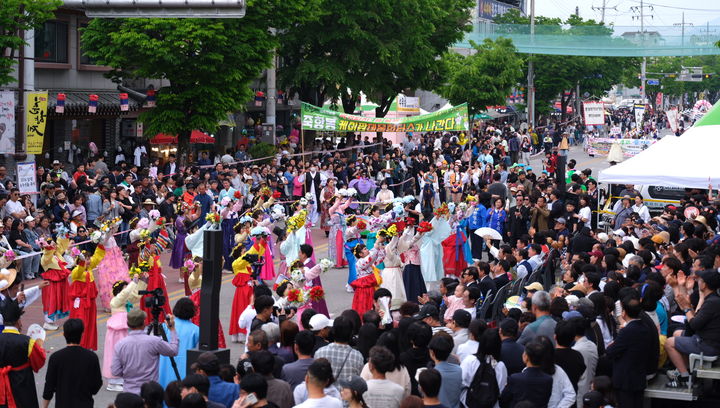
Gwanghalluwon is the main venue for the annual Chunhyang Festival. The festival began in 1931 with the Chunhyang memorial rite held on the fifth day of the fifth lunar month. In 2026, the 96th festival was held from April 30 to May 6 in the areas around Gwanghalluwon, Yechon, the Yocheon riverside, and Sarang-ui Square. During this period, performances, street parades, and nighttime programs are concentrated in the area, while entry routes and surrounding roads may differ from normal.
If quiet garden sightseeing is your priority during the festival, consider visiting around 08:00, immediately after opening, or before the events begin. Conversely, if you want to experience a festival atmosphere combining Namwon’s pansori, the Chunhyang narrative, and citizens’ street parades, first check the official festival schedule for performance venues and traffic-control sections. Approximately 1,518,565 data-based visitors were recorded over the seven days of the 2026 event, so festival-day plans should allow plenty of time for parking and meals.
Before You Go
- Address
- 1447 Yocheon-ro, Namwon-si, Jeonbuk State Special Self-Governing Province
- Hours
- April–October 08:00–21:00, November–March 08:00–20:00; free admission after 18:00
- Closed
- Open year-round
- Admission
- Adults 4,000 won, teenagers and soldiers 2,000 won, children 1,500 won; free after 18:00
- Phone
- 063-625-4861, 063-620-8901
- Official site
- https://www.namwon.go.kr/tour/index.do?menuUid=ff8080818e5f3f48018e5fd4f0670057
- Transport
- Take bus 3-164, 4-101, or another route from the KTX Namwon Station stop; get off at the Nammun-ro Saga. Samjin Pharmacy stop, then walk approximately six minutes
- Parking
- Check on-site or event notices for availability of nearby public and tourist attraction parking lots; congestion and traffic controls are possible during events such as the Chunhyang Festival
- Time needed
- 60–90 minutes
- Accessibility
- It is recommended to ask on-site before visiting whether accessible routes for wheelchairs and strollers and foreign-language guidance are available
The information above is based on the time of writing. Check the official information again before visiting.

Places
Nearby Attractions 5
-
 1
Gwanghallu Pavilion
1
Gwanghallu Pavilion -
2
-
 3
3
-
 4
4
-
 5
5
Food & Dining 5
-
6
-
 7
7
-
 8
8
-
 9
9
-
 10
Ttobagi
10
Ttobagi
Events in This Area

Festivals in This Area

More Travel Guides in This Area
 Travel Guide
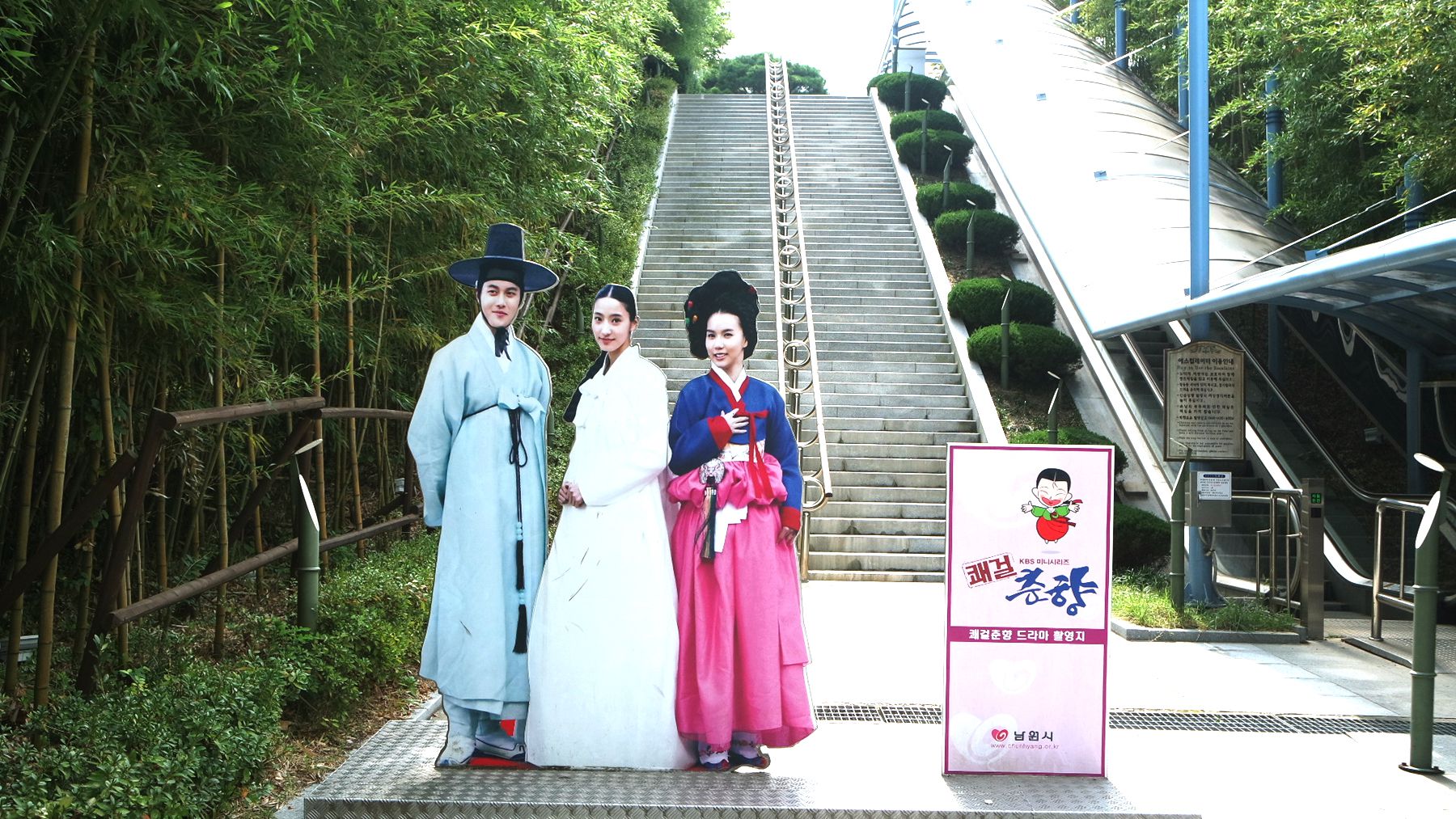
Namwon Chunhyang Theme Park, where five scenes from The Tale of Chunhyang unfold across a 35,000-pyeong hillside
 Travel Guide
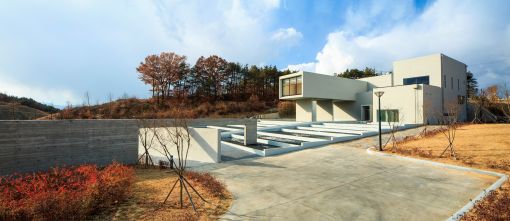
How to See Artworks, Books, and the Jirisan Ridge Together at Namwon Municipal Kim Byung-jong Art Museum
 Travel Guide
Pansori in Namwon, the City of Chunhyang: National Center for Korean Folk Performing Arts
 Travel Guide
![Han So-hee, Radiant Beauty After Going Blonde… Unmatched Aura [N Shot]](https://kotourlive-images.s3.ap-northeast-1.amazonaws.com/news/1788056981544_83c8b0b3_news_66e33b45-cf84-4724-87d9-d1340820437d.jpg)
![BOYNEXTDOOR’s Sungho selected as the new MC of ‘Show! Music Core’ [Official Statement]](https://kotourlive-images.s3.ap-northeast-1.amazonaws.com/news/1787908108799_a3cc378e_news_9a3cd086-931c-4b58-b977-4a5ac371238a.jpg)
![[Photo] KISS OF LIFE’s Natty Shows Off Her Glamorous Figure](https://kotourlive-images.s3.ap-northeast-1.amazonaws.com/news/1787908133694_557864f4_news_016e92e2-55c1-4838-9702-eb03b2ad56ec.jpg)
![Hyeri “Cute Wink” [★Photo]](https://kotourlive-images.s3.ap-northeast-1.amazonaws.com/news/1787908093800_c9b7529f_news_9274613b-0b8f-4076-a430-25a1545a679d.jpg)