Jomun Kingdom Historic Site Where Geumseong-myeon’s Tumuli Meet a Peony Field
The Jomun Kingdom Historic Site is an outdoor archaeological site in the Daeri-ri, Tap-ri, and Hakmi-ri areas of Geumseong-myeon, Uiseong-gun, Gyeongsangbuk-do, where visitors can explore ancient burial mounds, King Gyeongdeok’s Tomb, and the Tumuli Exhibition Hall. Admission is free, and a 4,200-square-meter peony garden can be enjoyed from mid- to late May.

I’ve been here?
Your check-in helps the next traveler.
17 people viewed this week Be the first
One tap — no writing needed
Jomunguk Historic Site Starting at 324 Daeri-ri, Geumseong-myeon
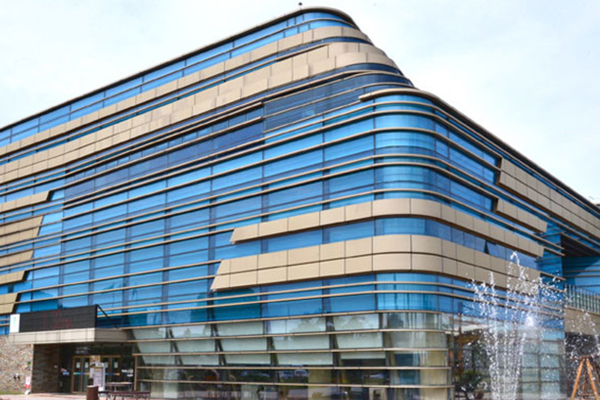
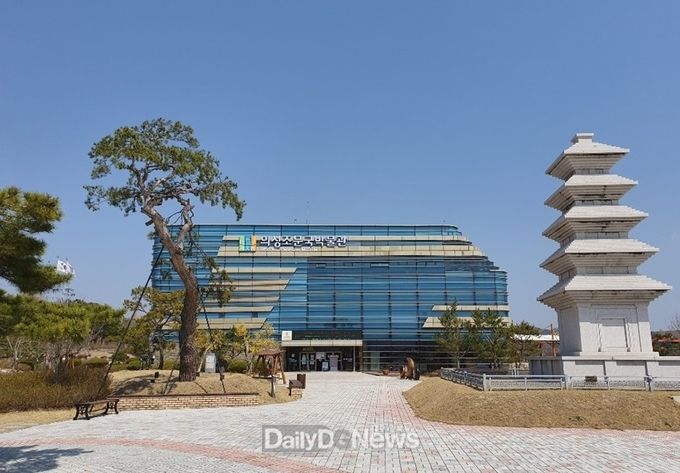
Jomunguk Historic Site is a historic site addressed as 324 Daeri-ri, Geumseong-myeon, Uiseong-gun, Gyeongsangbuk-do. It is located in the Geumseong-myeon area, about 10 km south of Uiseong-eup, and is directly connected to the Jomunguk Museum, allowing visitors to travel on foot or by passenger car.
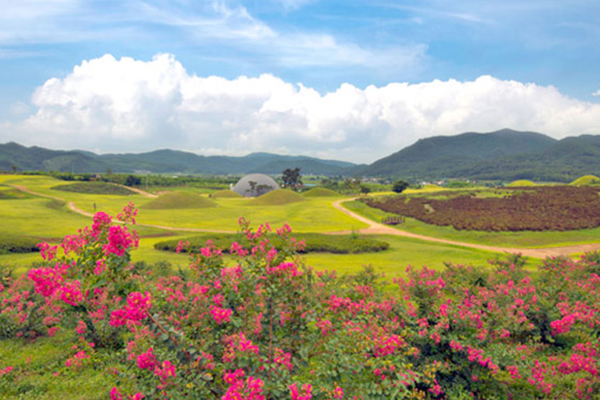
Paths run between the ancient burial mounds, with lawns and central flower beds. Guidance indicates that approximately 40 medium- and large-sized burial mounds are distributed here, while Uiseong Geopark introduces the area as the Uiseong Geumseong-myeon Ancient Tomb Group, containing more than 370 burial mounds.
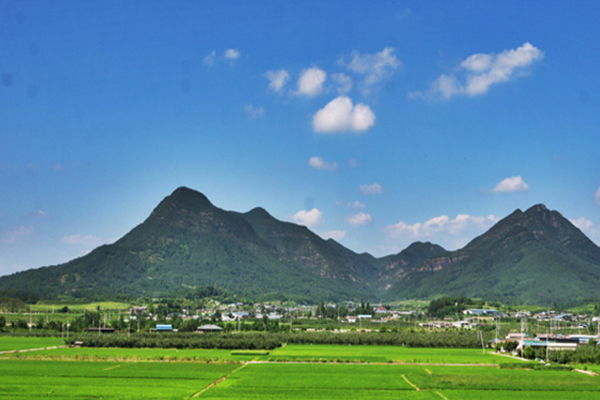
10 km South of Uiseong-eup: Why Driving Is More Practical Than Public Transportation
Visitors from outside the area should first set Uiseong-eup as their destination and then travel approximately 10 km toward Geumseong-myeon. Since the Jomunguk Museum and historic site are connected, setting the museum as the destination makes it easier to find the ancient tomb group on site.
The available guidance does not provide bus routes, stop names, exit numbers, or walking times from stops. Parking is reportedly available, and some materials mention free parking, but official parking fees and the number of available spaces could not be confirmed.
Although there are paths and lawns between the burial mounds, official materials do not confirm the slopes, stairs, or wheelchair-accessible sections of the ancient tomb group terrain. Visitors using strollers or wheelchairs should not assume that the museum and all outdoor routes can be accessed in one visit.
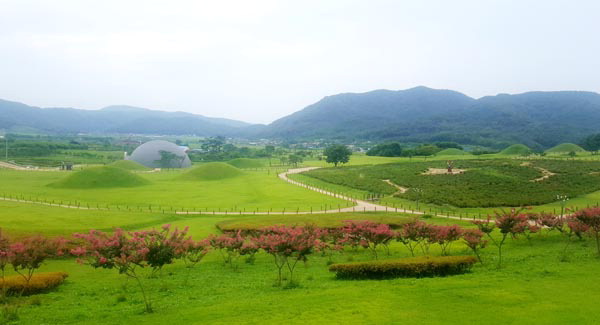
Visiting Hours for the Museum and Outdoor Ancient Tomb Group: 09:00–18:00
The operating hours of the outdoor area of Jomunguk Historic Site are not separately confirmed on the official page. The connected Jomunguk Museum and Ancient Tomb Exhibition Hall are open from 09:00 to 18:00, with admission closing at 17:00.
The outdoor historic site is listed as free, but visitors who want to see the museum and Ancient Tomb Exhibition Hall during the same visit must arrive before the 17:00 admission deadline. Mondays are listed as closed for the museum, but the official closing day for the outdoor area has not been confirmed.
The department responsible for tourism festivals can be reached at 054-830-6606. The official information page is the Uiseong-gun tourism page: https://www.usc.go.kr/tour/page.do?mnu_uid=2147.
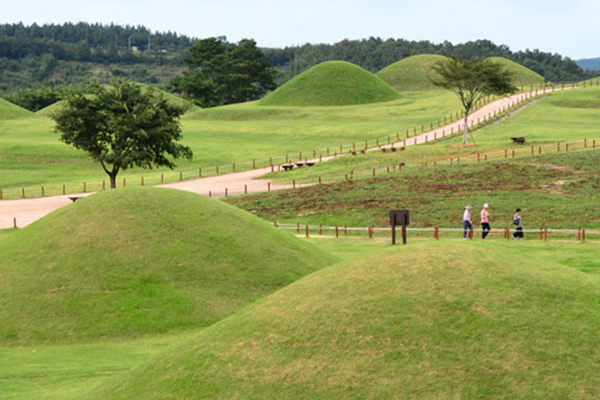
Geumseong-myeon's Landscape Shaped by the Record of Silla Subjugation in 185 CE
Jomunguk is said to have been a state of the Samhan period located in the present-day Geumseong-myeon area of Uiseong-gun, Gyeongsangbuk-do. Daedongjiji and town records state that Jomunguk was located in the Geumseong-myeon area, 25 ri south of Uiseong-eup, while other local guides describe Geumseong-myeon, approximately 10 km south of Uiseong-eup, as its center.
The Samguk Sagi records that “King Beolhyu Isageum conquered Jomunguk.” Jomunguk is presumed to have been incorporated into Silla in 185 CE, during the reign of King Beolhyu Isageum, and Geumseong-myeon was an important route for Silla's northward expansion through the Yeongnam region.
Therefore, the concentration of burial mounds seen today is not merely a cemetery but a landscape trace showing that a political group from the period of early state formation existed in this area.
Gilt-Bronze Crowns and Horse Equipment Unearthed Since 1960
The ancient tomb groups in Daeri-ri, Tap-ri, and Hakmi-ri, Geumseong-myeon, are representative historic sites that reveal the existence of Jomunguk. Excavations began in 1960, and most of the tombs consist of circular earthen burial mounds.
The tombs, believed to have been built in the fifth and sixth centuries, are described as modified forms of the tombs found in the Gyeongju area. Excavated artifacts include gilt-bronze crowns, gilt-bronze crown ornaments, gilt-bronze earrings, iron weapons, and horse gear, together illustrating the status of the ruling class and the military and equestrian culture of the time.
Tap-ri has 16 burial mounds with diameters exceeding 20 m. This number provides a reference for gauging the scale of the mounds visible while walking across the spacious lawn.
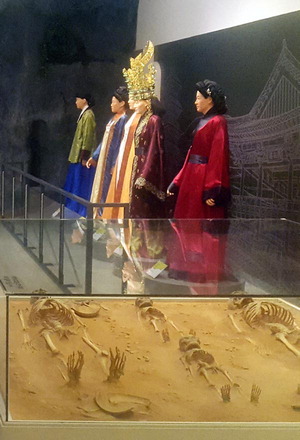
Daeri-ri Tomb No. 2 at the Ancient Tomb Exhibition Hall in Front of King Gyeongdeok's Tomb
King Gyeongdeok's Tomb is within Jomunguk Historic Site. According to the available information, in 1725, the first year of King Yeongjo's reign, magistrate Yi U-sin expanded King Gyeongdeok's Tomb and erected structures including a hamabi marker. The explanation also states that memorial rites for the king's tomb began at that time.
In front of King Gyeongdeok's Tomb is the Ancient Tomb Exhibition Hall, shaped like a burial mound. Inside, the interior of Daeri-ri Tomb No. 2, excavated in 2009, has been recreated, allowing visitors to see the archaeological remains and excavated artifacts.
The exhibition hall provides an opportunity to learn about burial customs of the time through the practice of entombing attendants. Simply viewing the outdoor mounds and passing by would mean missing the internal structure of the tombs and funerary customs, so it is best to schedule the museum and exhibition hall first or together, taking into account the 09:00–18:00 operating hours and 17:00 admission deadline.
4,200㎡ Peony Flower Garden Blooming from Mid- to Late May
Jomunguk Historic Site has a 4,200㎡ peony flower garden, where 15,000 peony plants are planted each year. Peonies are perennial plants with large blossoms and are also called “hamPark flowers,” meaning large, full flowers.
Peonies are said to bloom from mid- to late May each year. This is a period when visitors can see the green lawns of the burial mounds and the flower garden along one route, although the blooming period may vary from year to year.
The peony garden is introduced as having night landscape lighting, with visitors coming during both the day and night. However, the separate operating hours of the outdoor area and whether nighttime access is restricted have not been confirmed, so museum visits must be completed before the 17:00 admission deadline.
One-Hour Route and Limitations for First-Time Visitors
Review materials suggest that the visit takes approximately one hour, but the stay may be longer when the museum and Ancient Tomb Exhibition Hall are visited together. The recommended order is the Jomunguk Museum galleries, Ancient Tomb Exhibition Hall, King Gyeongdeok's Tomb, the paths between the burial mounds, and the peony garden.
The museum galleries bring together Jomunguk-related artifacts that had been scattered across the country, along with artifacts excavated in the Uiseong area. The museum rooftop is introduced as a viewing area offering a panorama of Geumseongsan and the ancient tomb group, making it worthwhile to go up to the roof after viewing the indoor exhibits.
It has not been confirmed whether photography is prohibited, whether payment is cash-only, whether English information or audio guides are available, when on-site queues are most likely, or whether access is restricted depending on the season or weather. To protect the historic site, avoid climbing onto the burial mounds or entering areas outside the paths. Also factor into your itinerary that the official closing day of the outdoor area has not been confirmed.
Before You Go
- Address
- 324 Daeri-ri, Geumseong-myeon, Uiseong-gun, Gyeongsangbuk-do
- Hours
- The operating hours of the outdoor area of Jomunguk Historic Site are not separately confirmed on the official page. The connected Jomunguk Museum and Ancient Tomb Exhibition Hall are open from 09:00 to 18:00, with admission closing at 17:00.
- Closed
- The closing days of the outdoor area of Jomunguk Historic Site have not been confirmed. Information materials list Mondays as the museum's closing day.
- Admission
- Listed as free.
- Phone
- Tourism Festival Department: 054-830-6606
- Official site
- https://www.usc.go.kr/tour/page.do?mnu_uid=2147
- Transport
- The site is in the Geumseong-myeon area, about 10 km south of Uiseong-eup. It is directly connected to the Jomunguk Museum, and guidance states that it can be reached on foot or by passenger car. Bus routes, stop names, and exit numbers could not be confirmed.
- Parking
- Parking is reportedly available. Some materials describe it as free parking, but official parking fee information could not be confirmed.
- Time needed
- Some review materials suggest a visit of approximately one hour, but the specific duration varies depending on the visitor's route.
- Accessibility
- Paths and lawns have been created between the burial mounds. The slopes, stairs, and wheelchair-accessible sections of the ancient tomb group could not be confirmed in official materials.
The information above is current as of the time of writing. Check the official information again before visiting.

Places
Nearby Attractions 2
-
 1
1
-
 2
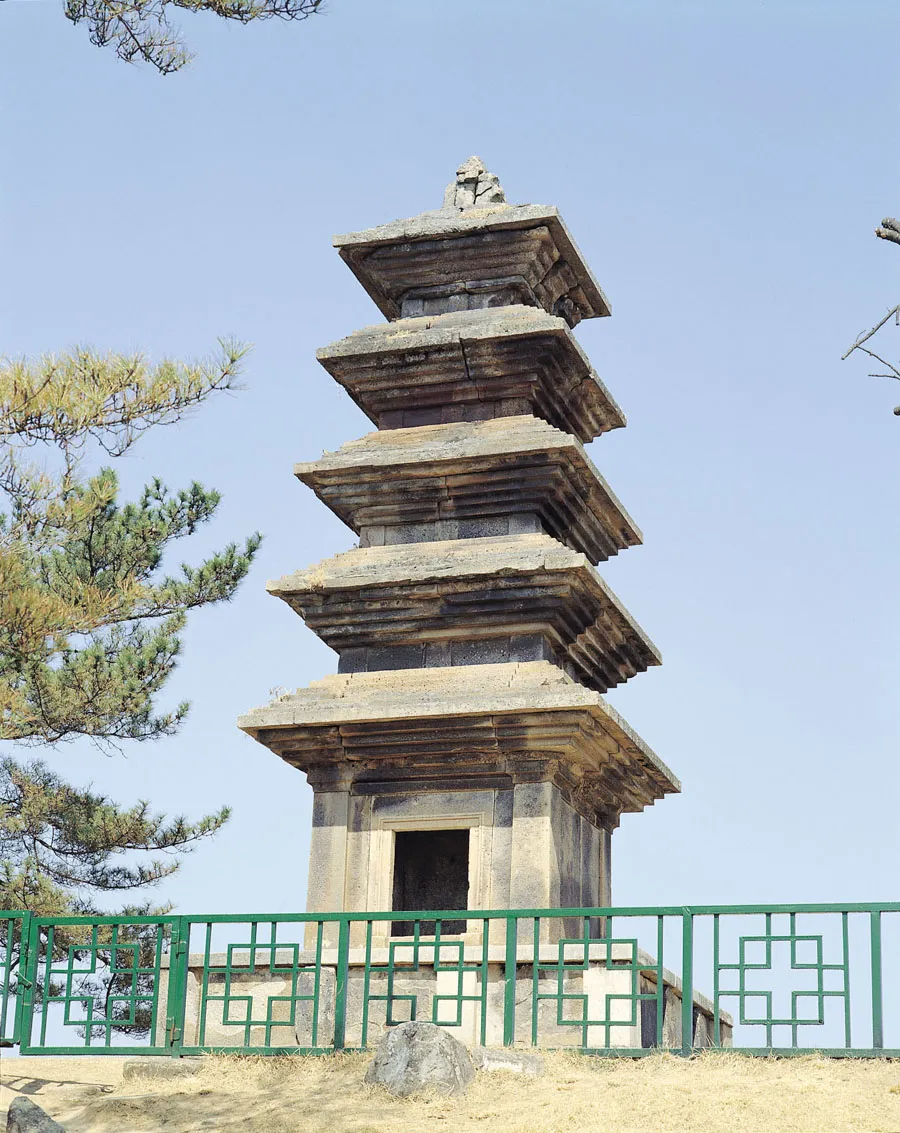
Tap-ri-ri Three-story Stone PagodaA National Treasure cultural heritage site showcasing the stone pagoda style of the Unified Silla period
2
Tap-ri-ri Three-story Stone PagodaA National Treasure cultural heritage site showcasing the stone pagoda style of the Unified Silla period
Food & Dining 1
-
 3
3
Events in This Area
Festivals in This Area
More Travel Guides in This Area
 Travel Guide
Byeongsan Seowon, Where the Nakdong River Sandbank Becomes a Seven-Panel Folding Screen
 Travel Guide
Andong Hahoe Village, the 600-Year-Old Village of the Pungsan Ryu Clan Shaped by the Nakdong River’s S-Curved Meanders
 Travel Guide
How to Visit Eunhaesa Temple, the Seongbo Museum, and Baekheungam Hermitage
 Travel Guide
![Han So-hee, Radiant Beauty After Going Blonde… Unmatched Aura [N Shot]](https://kotourlive-images.s3.ap-northeast-1.amazonaws.com/news/1788056981544_83c8b0b3_news_66e33b45-cf84-4724-87d9-d1340820437d.jpg)
![BOYNEXTDOOR’s Sungho selected as the new MC of ‘Show! Music Core’ [Official Statement]](https://kotourlive-images.s3.ap-northeast-1.amazonaws.com/news/1787908108799_a3cc378e_news_9a3cd086-931c-4b58-b977-4a5ac371238a.jpg)
![[Photo] KISS OF LIFE’s Natty Shows Off Her Glamorous Figure](https://kotourlive-images.s3.ap-northeast-1.amazonaws.com/news/1787908133694_557864f4_news_016e92e2-55c1-4838-9702-eb03b2ad56ec.jpg)
![Hyeri “Cute Wink” [★Photo]](https://kotourlive-images.s3.ap-northeast-1.amazonaws.com/news/1787908093800_c9b7529f_news_9274613b-0b8f-4076-a430-25a1545a679d.jpg)