
Under 700 Roofs, Jeonju Hanok Village Brings Together a Joseon Fortress Site and 1930s Residential Areas
Jeonju Hanok Village is an urban cluster of traditional Korean houses in Pungnam-dong and Gyodong, spanning 298,260 m² and comprising 947 buildings, including 735 hanok. The village itself is free to walk around 24 hours a day, year-round, but facilities such as Gyeonggijeon and Jeonju Hyanggyo have separate opening hours and admission fees that require separate planning.
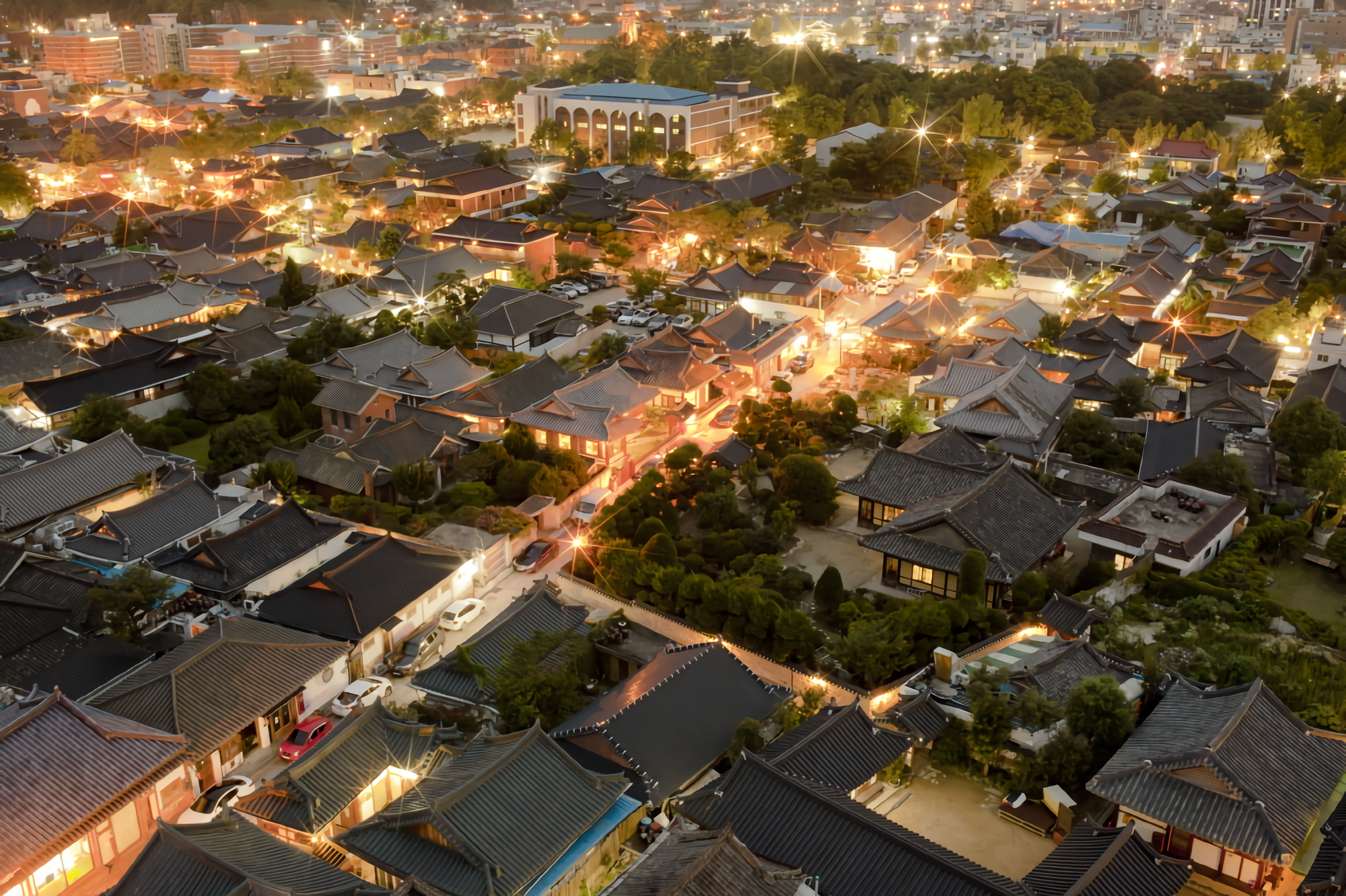

Why Hanok Clustered in Western Pungnam-dong in the 1930s
Jeonju Hanok Village is an urban cluster of traditional Korean houses formed across 298,260㎡ in the Pungnam-dong and Gyodong areas of Wansan-gu, Jeonju-si. According to official statistics, there are 947 buildings, including 735 hanok and 212 non-hanok buildings. The key point is that this is not a folk village consisting solely of relocated hanok, but an urban district where residential spaces, accommodation, food and beverage businesses, and workshops overlap.
The village's formation is connected to spatial changes in downtown Jeonju during the Japanese colonial period. The National Museum of Korean Contemporary History explains that, as Japanese residents expanded their commercial influence outside the western gate and east of the fortress from 1905 onward, Jeonju's scholars and residents began collectively building hanok on the opposite, western side from the 1930s, marking the start of the village. The designation of the Hanok Preservation District in 1977, restrictions on buildings of more than two stories in 1987, and enactment of the Jeonju Hanok Preservation Support Ordinance in 2002 form the institutional history that created the low rooflines and preservation-oriented landscape seen today.
A 2.5-Hour Route Starting at the Tourist Information Center at 99 Girin-daero
For a first visit, it is practical to use the Hanok Village Tourist Information Center at 99 Girin-daero, Wansan-gu, Jeonju-si, as the starting point. The official representative telephone number for Jeonju Hanok Village is 063-282-1330, and the village is open 24 hours a day, year-round. Admission to the village is also free, so even if you arrive or depart late, you can walk through the alleys and view the exterior scenery.
The recommended duration is 2.5 hours if focusing mainly on the alleys, or more than four hours if including the interior of Gyeonggijeon, Omokdae, and Jeonju Hyanggyo. From the tourist information center, pass along the road in front of Gyeonggijeon, then connect the route in the order of the exterior of Jeondong Cathedral, Choi Myeong-hui-gil, Jeonju Hyanggyo, and Omokdae before descending back to Girin-daero; this minimizes the need to retrace your steps. There are 575 businesses in the village, including 203 accommodation establishments and 183 food and beverage businesses, so it is better to set aside separate time in the route for meals and activities.
Why Gyeonggijeon, Jeondong Cathedral, and Pungnammun Overlap in One Block
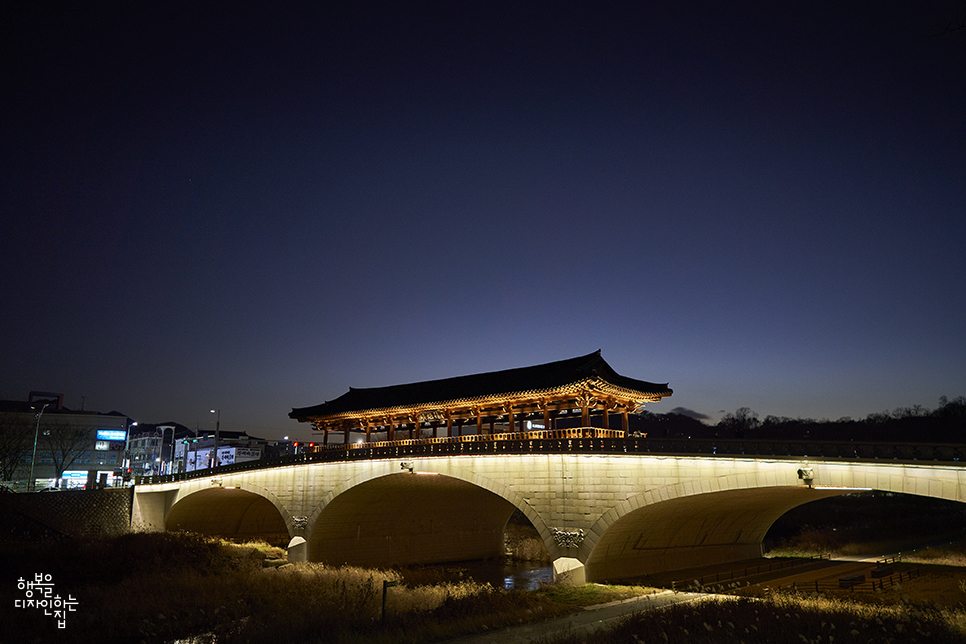
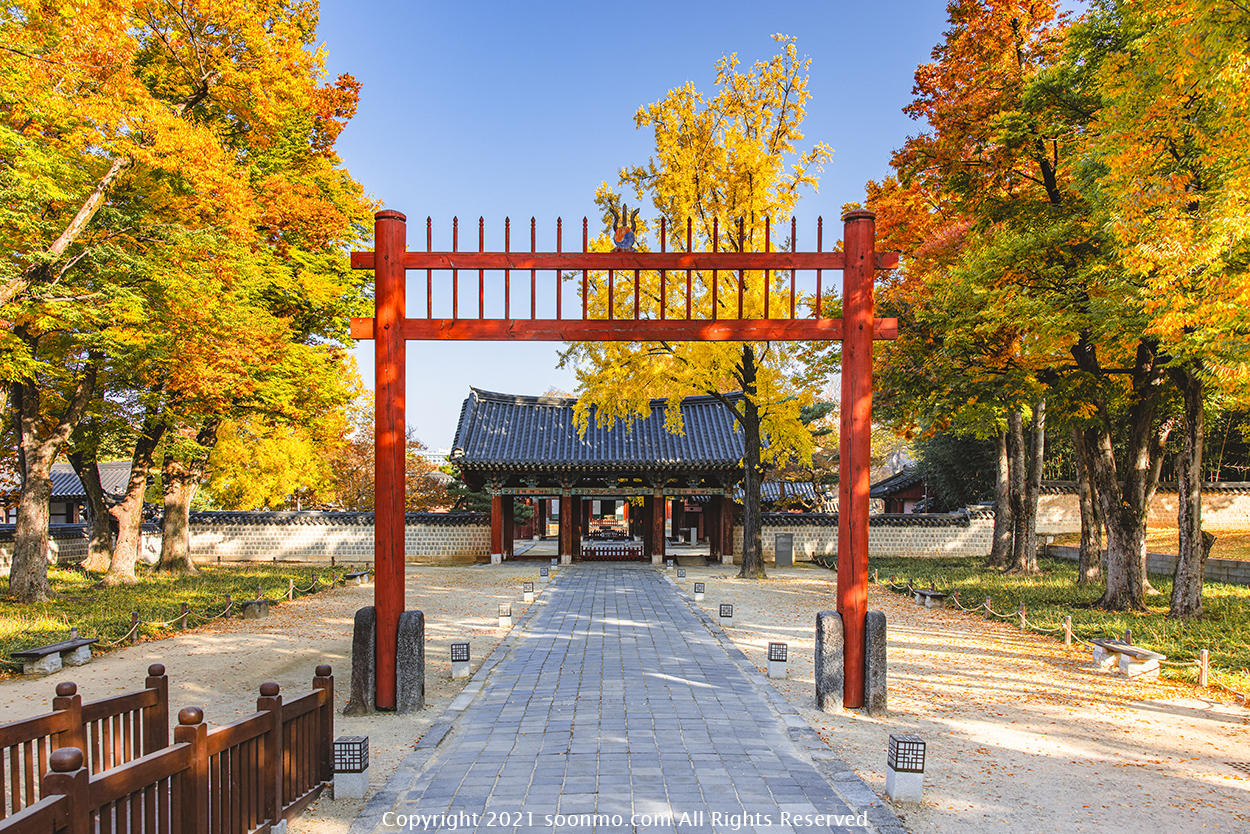
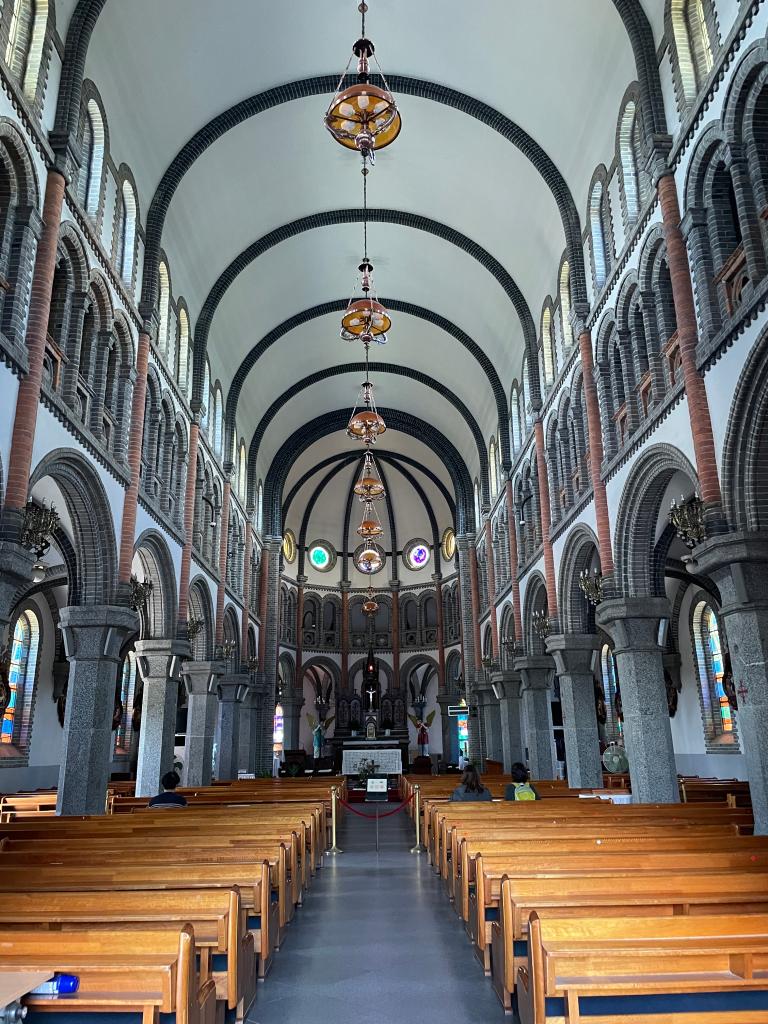
The northwestern part of the village is a section where traces of the Joseon royal family and Jeonju Fortress can be read together. Gyeonggijeon is Historic Site No. 339, Pungnammun is Treasure No. 308, and Jeondong Cathedral is designated Historic Site No. 288. Because heritage sites of different types are gathered close together, visitors can see, within a short distance, a symbol of the Joseon royal family, an old fortress gate, and modern religious architecture in succession.
Unlike the village as a whole, Gyeonggijeon is a separate sightseeing facility, so check whether it is operating that day and its closing time before entering. Jeondong Cathedral, on the other hand, is an active religious facility, so visitors should refrain from viewing the interior during Mass or ceremonies. If your schedule is focused on quickly taking photographs, it is safest to see the stone wall path around Gyeonggijeon and the exterior of Jeondong Cathedral first, and arrange interior visits separately according to opening hours.
A Section Descending from the Omokdae Deck Past the Rooflines toward Hyanggyo-gil
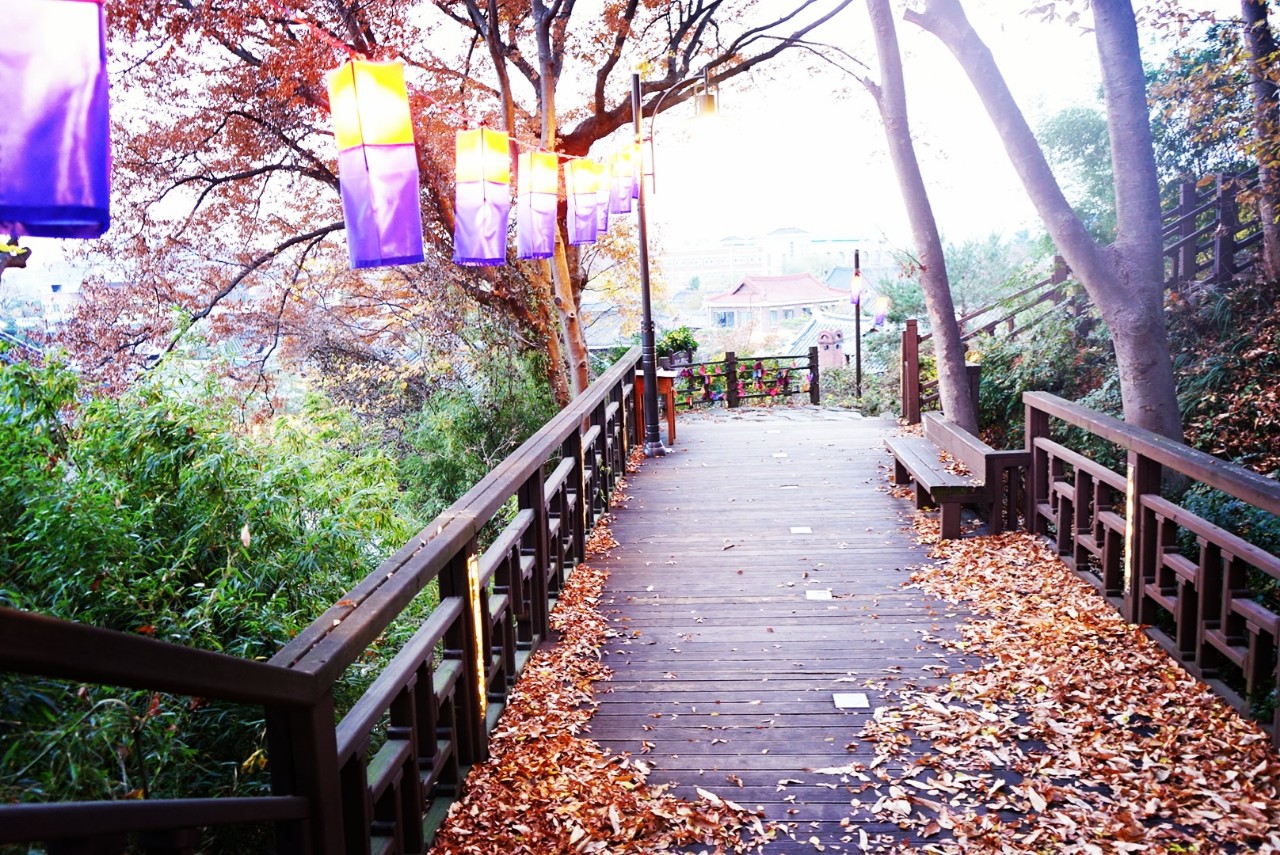
Omokdae is a good spot for viewing from above the direction in which hanok roofs are concentrated. The official scenery page introduces photographs of Jeonju Hanok Village taken from the Omokdae surrounding trail and deck observatory, making it suitable for seeing the village's low hanok rooflines at a glance. Because there are stairs and sloped sections, travelers with large suitcases, wheelchairs, or strollers may find it more realistic to leave the climb to Omokdae out of their itinerary.
Continuing from Omokdae toward Hyanggyo-gil leads to Jeonju Hyanggyo and alleys associated with the story of Ssangsaem. Jeonju's tourism information explains that Yangsajae was an annex of Jeonju Hyanggyo rebuilt in 1875, the 12th year of King Gojong's reign, and that it was once an educational space where people prepared for the saengwon and jinsa examinations. Foot traffic around the hyanggyo is relatively dispersed compared with Taejo-ro, where shops are concentrated, making this area better suited to travelers who want to experience the texture of hanok alleys rather than a bustling commercial street.
The Square Narrow Stream on the Gyodong Yukjeon Alley, Formerly the Site of the Munhwa Pencil Factory
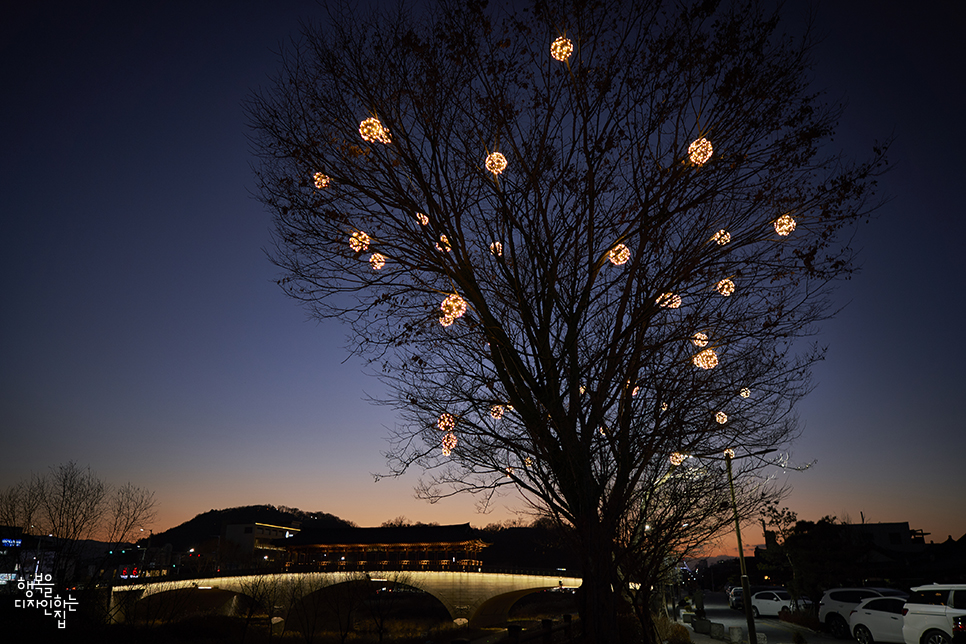
The square narrow stream on the Gyodong Yukjeon alley is not merely a decorative waterway, but a resting place created on the site of industrial heritage. According to Jeonju tourism information, this was the site of the Munhwa Pencil factory, established in 1949 as Korea's second pencil factory after Daejeon's Donga Pencil. The factory moved to Palbok-dong in 1978. About 130 people worked there at the time, and local records also remain documenting how sawdust from the factory was used by residents as firewood.
This alley is a good detour for viewing workshops, cafés, and hanok courtyards together, away from the commercial density of Taejo-ro. The verification location is around 79-77 Gyodong, Wansan-gu, Jeonju-si, and cafés and hanok also continue around 81-8 Omokdae-gil. In summer, the area around the narrow stream may be used as a water-play space, but visitors with children should first check the on-site guidance, water depth, and condition of the ground.
About 1 Kilometer from Omokdae Supermarket and Wongwang Supermarket to the Jaman-dong Boundary Marker
Omokdae Supermarket at 53 Girin-daero and Wongwang Supermarket at 49 Girin-daero are introduced as shops that have remained in place near the entrance to the hanok village for more than 30 years. Jeonju tourism information records that the two shops have served as unofficial information centers, telling travelers about the village's history and routes. Rather than looking only at the flashy shopping streets, use these two points as landmarks to make it easier to find the Omokdae stairs and the direction of Jaman Mural Village.
Crossing the Omokdae overpass leads to Jaman Mural Village, and the Jaman-dong Boundary Marker is at 1-8 Jamandong 1-gil, Wansan-gu, Jeonju-si. According to the explanatory sign, this stone marker was erected around 1900 by order of King Gojong to announce restrictions on entry to Jaman-dong. Jaman Mural Village has a different atmosphere from the official area of Hanok Village and contains many uphill alleys, so it is better to see the main heritage sites of Hanok Village first during the day and add this destination afterward if you still have the energy.
From Jeonju Station, Aim for the Jeondong Cathedral·Hanok Village Bus Stop
Because Jeonju has no subway, access is by city bus from Jeonju Station, the Express Bus Terminal, or the Intercity Bus Terminal. Jeonju city materials list routes 3-1, 3-2, the 50s, 61, 88, 101, 119, 165, the 350s, the 380s, the 940s, and the 970s as stopping at the Jeondong Cathedral, Hanok Village bus stop. Bus routes and service intervals may change, so check Jeonju's bus information again immediately before departure.
After getting off, you can either pass Jeondong Cathedral and Gyeonggijeon first on the way to the tourist information center, or start at the tourist information center and climb toward Omokdae. If you have large luggage, the stone paving, slopes, and crowded pedestrian sections in the alleys may be inconvenient, so it is better to leave your luggage at your accommodation before visiting. If you need information in a foreign language, contact the tourist information center at 063-282-1330 or use the official KakaoTalk channel, “Jeonju Hanok Village.”
Days When You Should Plan for Walking Rather Than the No. 1–3 Public Parking Lots
Jeonju Hanok Village is an urban hanok district centered on pedestrians, so it is difficult to expect parking spaces inside the village. After checking the official parking information, the standard approach is to choose an outer parking area such as Public Parking Lots No. 1–3 and walk in. Especially on weekends and public holidays, waiting to enter and traffic congestion when leaving may be prolonged, so drivers should finish parking in the morning or consider public transportation first.
The village itself is open 24 hours and admission is free, but experience centers, museums, Gyeonggijeon, and individual shops all have separate operating hours, closing days, and fees. Therefore, for an evening itinerary, focus on walking through the alleys and viewing exteriors, and check individually whether paid facilities and activities require daytime reservations or allow same-day registration. Wheelchair and stroller users should center their route on flat sections such as Taejo-ro and avoid the stair sections of Omokdae and Jaman Mural Village.
Before You Go
- Address
- Jeonbuk State, Jeonju-si, Wansan-gu, 99 Girin-daero (Hanok Village Tourist Information Center)
- Hours
- Open 24 hours, year-round
- Closed
- None
- Admission
- Free
- Phone
- 063-282-1330
- Official site
- https://hanok.jeonju.go.kr/
- Transport
- Use the Jeondong Cathedral·Hanok Village bus stop. Check routes stopping there: 3-1, 3-2, the 50s, 61, 88, 101, 119, 165, the 350s, the 380s, the 940s, and the 970s.
- Parking
- Because parking inside the village is limited, check the locations and fees of Public Parking Lots No. 1–3 and other facilities in the official parking information before using them.
- Time needed
- 2.5 hours focusing on the alleys; more than 4 hours including Gyeonggijeon, Omokdae, and Jeonju Hyanggyo
- Accessibility
- Flat sections such as Taejo-ro are accessible, but Omokdae and Jaman Mural Village have stairs and slopes that limit wheelchair and stroller access. For inquiries in foreign languages, contact the tourist information center by telephone or use the KakaoTalk channel.
The information above is current as of the time of writing. Check the official information again before visiting.

Places
Nearby Attractions 5
-
 1
Gyeonggijeon ShrineView the portrait of King Taejo, founder of the Joseon Dynasty, and royal heritage sites.
1
Gyeonggijeon ShrineView the portrait of King Taejo, founder of the Joseon Dynasty, and royal heritage sites. -
 2
Jeondong CathedralExplore modern Western-style cathedral architecture and its history of martyrdom.
2
Jeondong CathedralExplore modern Western-style cathedral architecture and its history of martyrdom. -
 3
3
-
 4
4
-
 5
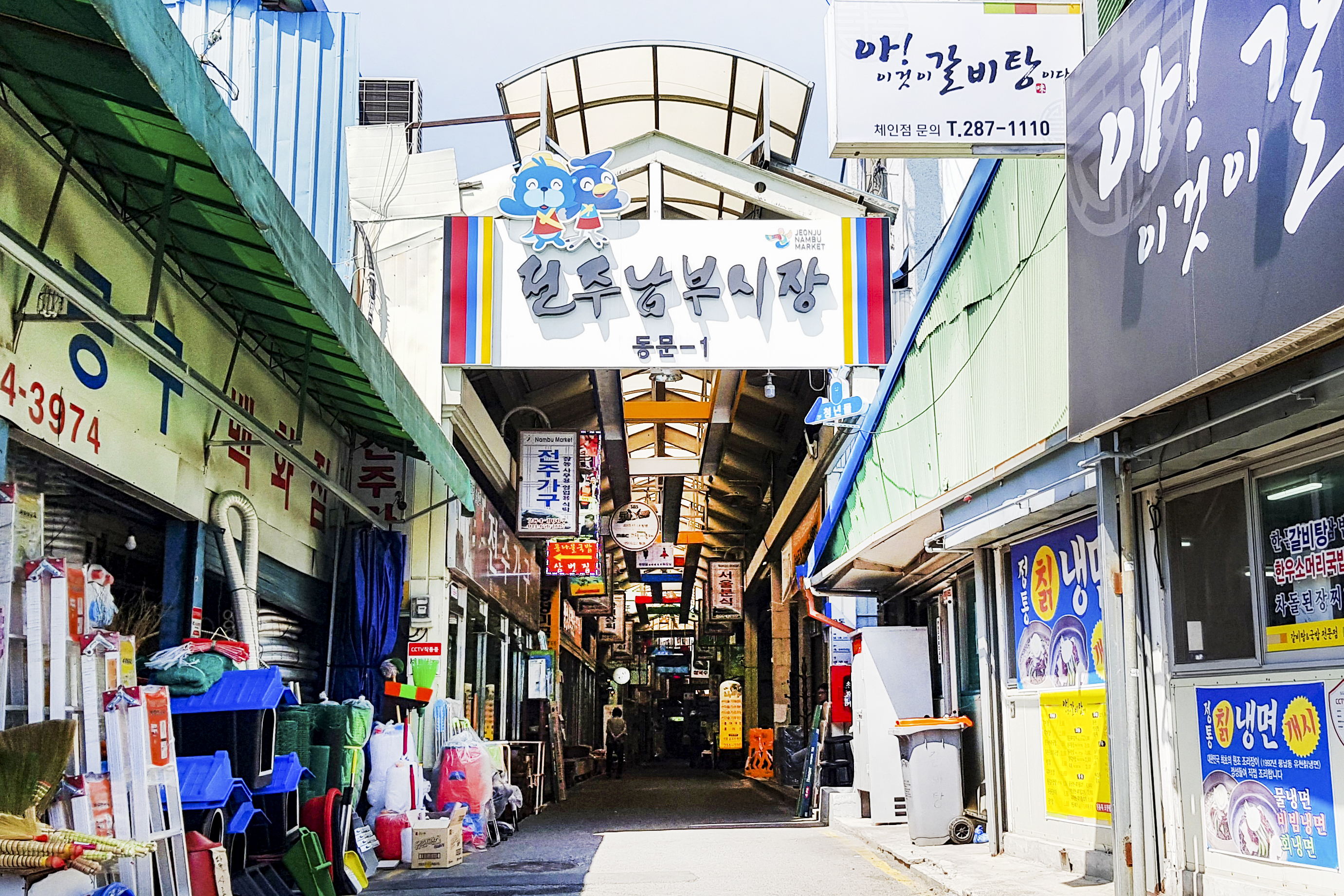
Nambu MarketEnjoy the traditional market, the youth mall, and the delicious food at the night market.
5
Nambu MarketEnjoy the traditional market, the youth mall, and the delicious food at the night market.
Food & Dining 1
-
 6
6
More Travel Guides in This Area
Korea News
![ZEROBASEONE ‘ZEROBASEONE Shining Even at Night!’ [★Video]](https://kotourlive-images.s3.ap-northeast-1.amazonaws.com/news/1786629298196_13d8a4bb_news_075face7-fb4e-402c-b833-25ccaf88cf8f.jpg) News
News
ZEROBASEONE ‘ZEROBASEONE Shining Even at Night!’ [★Video]
 News
News
Kwon Eun-bi, First Comeback Since Moving from Woollim to RBW: “Aiming for a September Release”
 News
News
“Did Jungkook’s connection continue?” Pop star Usher spotted warmly hugging BTS’s RM and J-Hope
 News
News