Waheul Buckwheat Village — 100,000 Pyeong of Buckwheat Fields and a Highland Village of the Jacheongbi Myth
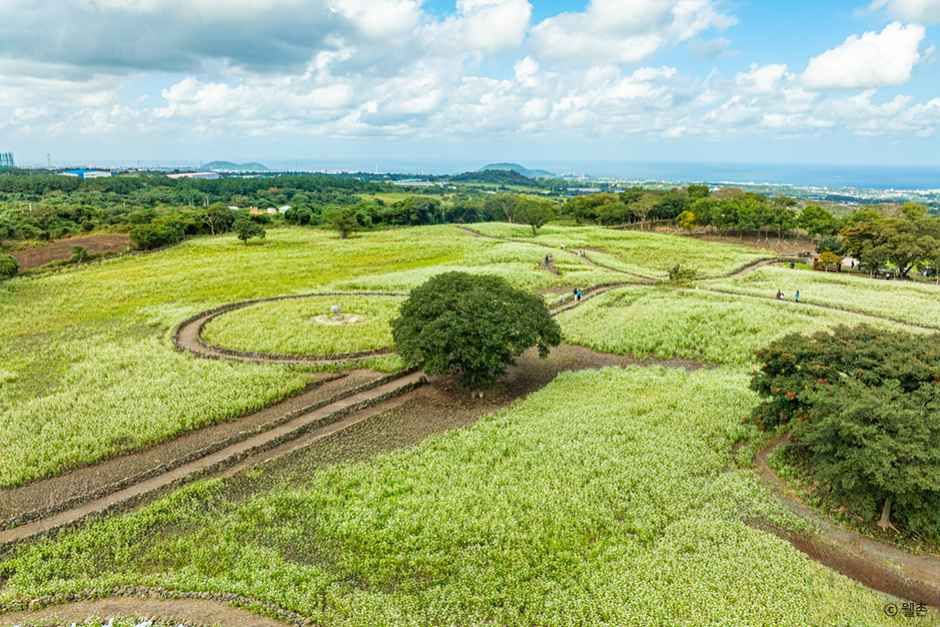
Located at 2455 Namjo-ro, Jocheon-eup, Jeju-si, Waheul Buckwheat Village is a highland farming village where approximately 330,580㎡ (100,000 pyeong) of buckwheat fields bloom white twice a year, in May and October. The nonprofit Jacheongbi Waheul Buckwheat Culture Festival, organized by the village women's association, is held each spring and autumn, with free admission. Situated on the northern slopes of Hallasan between Guggeune Oreum and Semi Oreum, the village offers scenic views where volcanic cones and traditional stone-walled fields come together.

I’ve been here?
Your check-in helps the next traveler.
No one has checked in yet Be the first
One tap — no writing needed
“Wa,” meaning lying down, and “Heul,” meaning high mountain — a mid-mountain village surrounded by oreums
The place name Waheul-ri originated from the shape of the mountain terrain. Because the mountains resemble a person lying down comfortably, the village was named with “Wa,” meaning lying down, and “Heul,” meaning high mountain. The name reflects the village’s people, who have gentle dispositions, continue the tradition of worshipping the heavens, protect the land, and live beautifully together with their neighbors in a typical rural community. This is also why the village retains its fieldstone walls, grasslands, and oreums instead of extravagant tourist facilities.
The village’s location also supports the meaning of its geographic name. Situated beneath the northern slope of Jeju’s Hallasan, Waheul-ri is surrounded by several oreums, including Guggeuneoreum and Semioreum, and is a mid-mountain village with broad grasslands. Since it lies on gently sloping hills rising inland from the coast, the ridges of the oreums appear layered between the fields.
Buckwheat seeds brought down from the Jade Emperor — the story of Jacheongbi, the agricultural goddess
The fame of Waheul-ri’s buckwheat fields is tied not simply to the landscape but also to Jeju mythology. Jacheongbi, the goddess who governs agriculture and animal husbandry in Jeju, appears in the shamanic song “Segyeong Bonpuri.” When turmoil broke out in heaven because of a power struggle, Jacheongbi pacified the heavenly rebellion with the Flower of Destruction, which she had taken from the Seocheon Flower Garden. Among the many gifts bestowed by the Jade Emperor in recognition of her achievement, Jacheongbi chose seeds of the five grains and descended to earth.
Then a problem arose. After hurriedly descending, she realized that she had no buckwheat, so she returned to heaven and brought back buckwheat seeds, but by then the summer sowing season had passed. Even so, once she sowed the buckwheat seeds, they could be harvested in autumn along with the other grains. This myth remains in the name and tradition of Waheul Buckwheat Village, which holds buckwheat flower festivals not only in spring but also in autumn. At the Waheul Buckwheat Rural Experience and Recreation Village in Jocheon-eup, Jeju-si, the Jacheongbi Waheul Buckwheat Culture Festival, celebrating the agricultural goddess who brought buckwheat flowers from heaven, is held every year in spring (May) and autumn (October).
A famine-relief crop born of typhoons and barren volcanic soil
Why buckwheat in particular? Jeju Island is an island of strong winds and barren volcanic soil. Typhoons occur frequently, and the winds are powerful, making farming extremely difficult. On an island where rice farming was virtually impossible, a crop that could grow in a short period was needed.
In this environment, buckwheat—with its short growing period and strong vitality—became a very important grain for the people of Jeju as they made a living. This was especially true in mid-mountain villages such as Waheul-ri, where the soil was rough and dry; after a single bad harvest, it was not easy even to plant another crop. Buckwheat, however, was suitable for “young farming,” meaning cultivation during the short interval after other grains had failed or been harvested, and it also allowed double cropping. The fact that the fields of Waheul-ri turn white twice a year, in spring and autumn, is the result of this double-cropping tradition continuing to the present day.
A 100,000-pyeong buckwheat field that blooms twice, in May and October
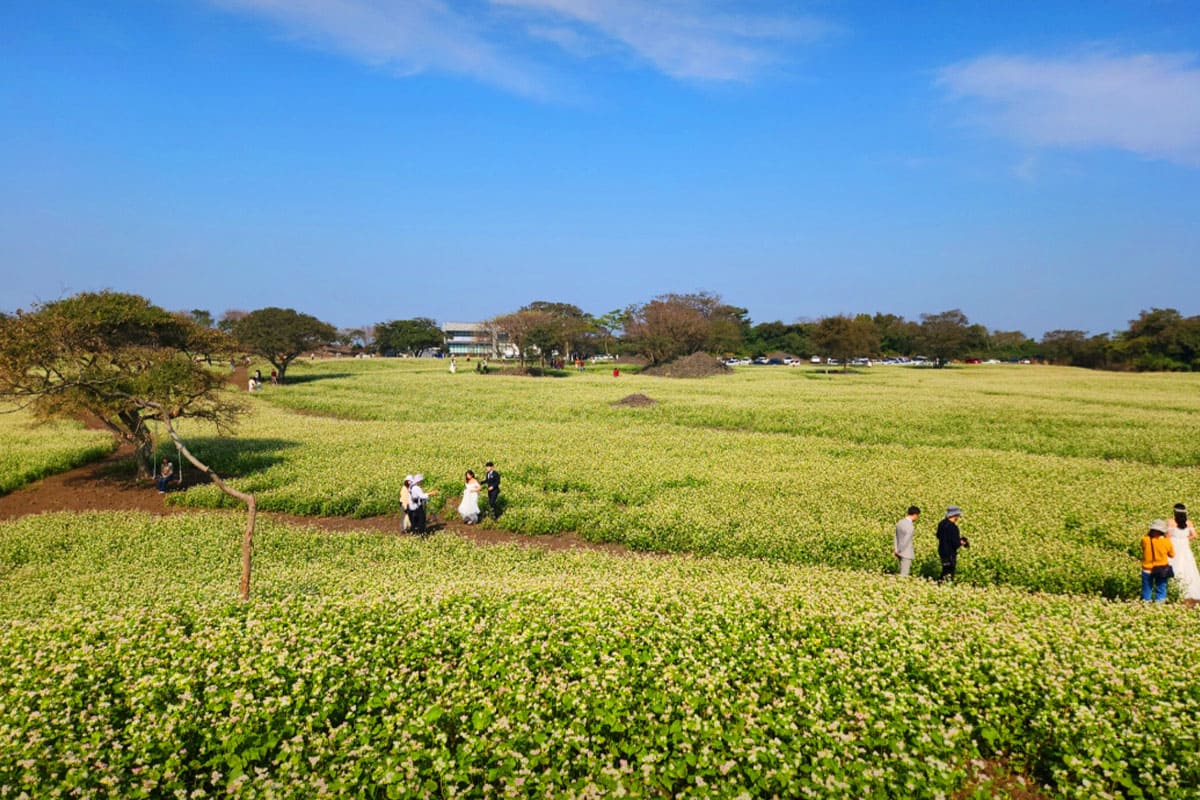
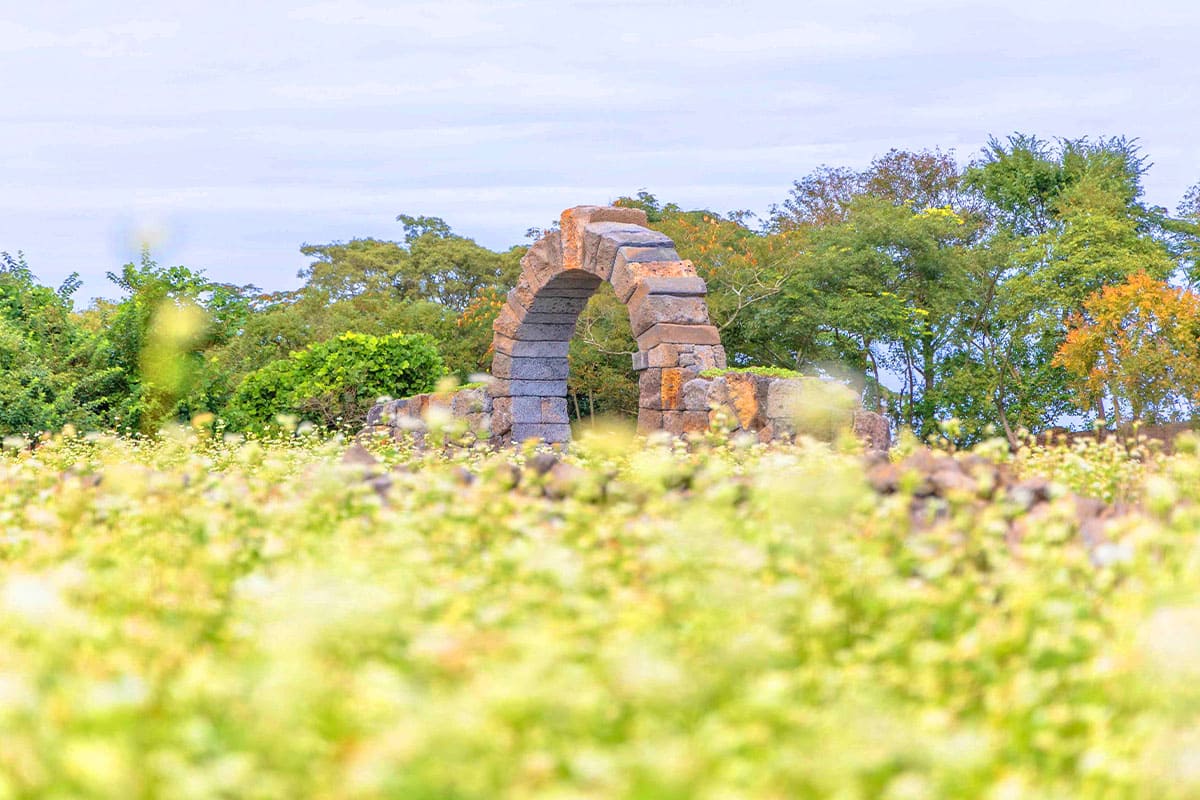
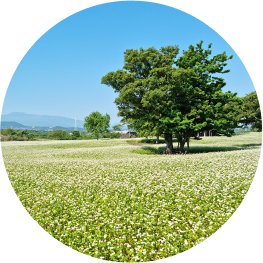
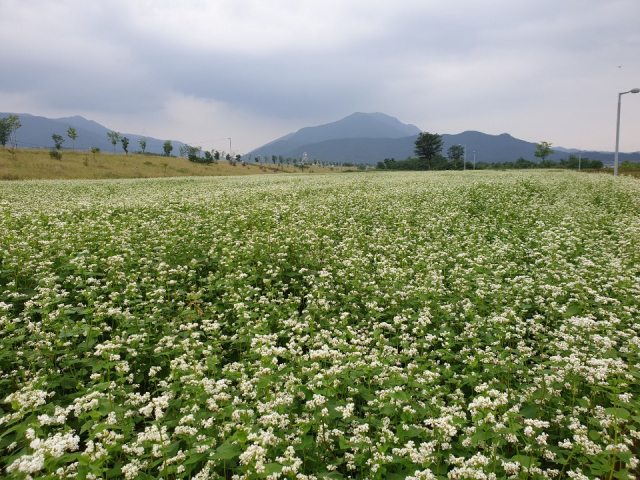
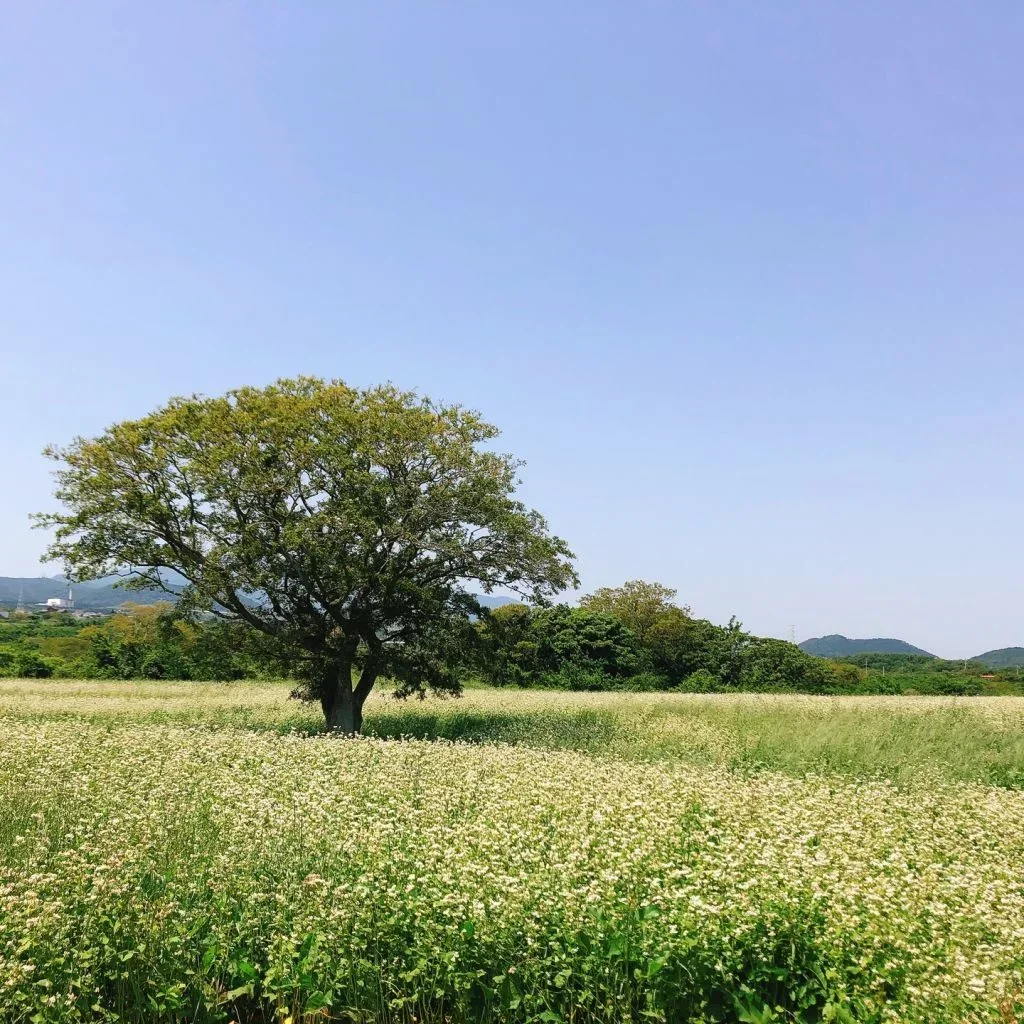
The community site for the industrialization of Waheul Buckwheat Village’s buckwheat-based sixth industry is located in Waheul-ri, Jocheon-eup, Jeju. Covering approximately 330,580 m2 (100,000 pyeong), the buckwheat fields are famous photography spots because Jeju grows buckwheat as a double crop, and white buckwheat flowers bloom in full every May and October. Since there are no fences around the entire field, visitors can freely walk and take photographs along the dirt paths between the fieldstone walls.
The colors of the fields also change before and after flowering. The village’s vast buckwheat fields spread out in green, and between May and June, small white flowers bloom as though snow had settled across them. After the flowers fade, another white wave covers the fields in autumn as the fruits ripen.
Jacheongbi Waheul Buckwheat Culture Festival — a nonprofit festival organized by the village women’s association
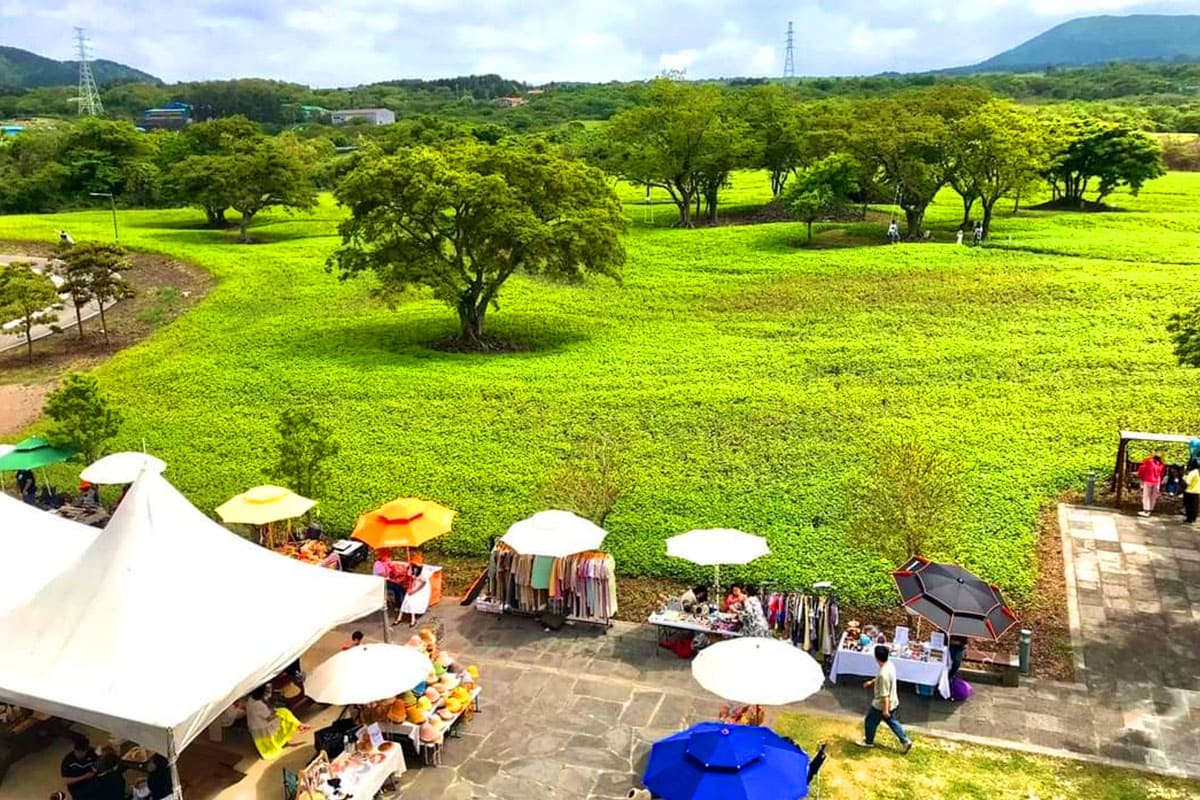
The festival is organized by the village itself rather than by a tourism corporation or local government. Waheul Buckwheat Culture Festival is the only nonprofit festival in Jeju Province organized and operated by a village. The village women’s association runs a food market filled with the aroma of buckwheat, sells buckwheat grown and harvested directly by the village, and also sells agricultural products produced by local residents. The profits are used for public-benefit purposes in the village. The 2025 spring festival operated daily from 9 a.m. to 5 p.m. from May 9 through 31, and a festival with the same name continued in autumn 2025.
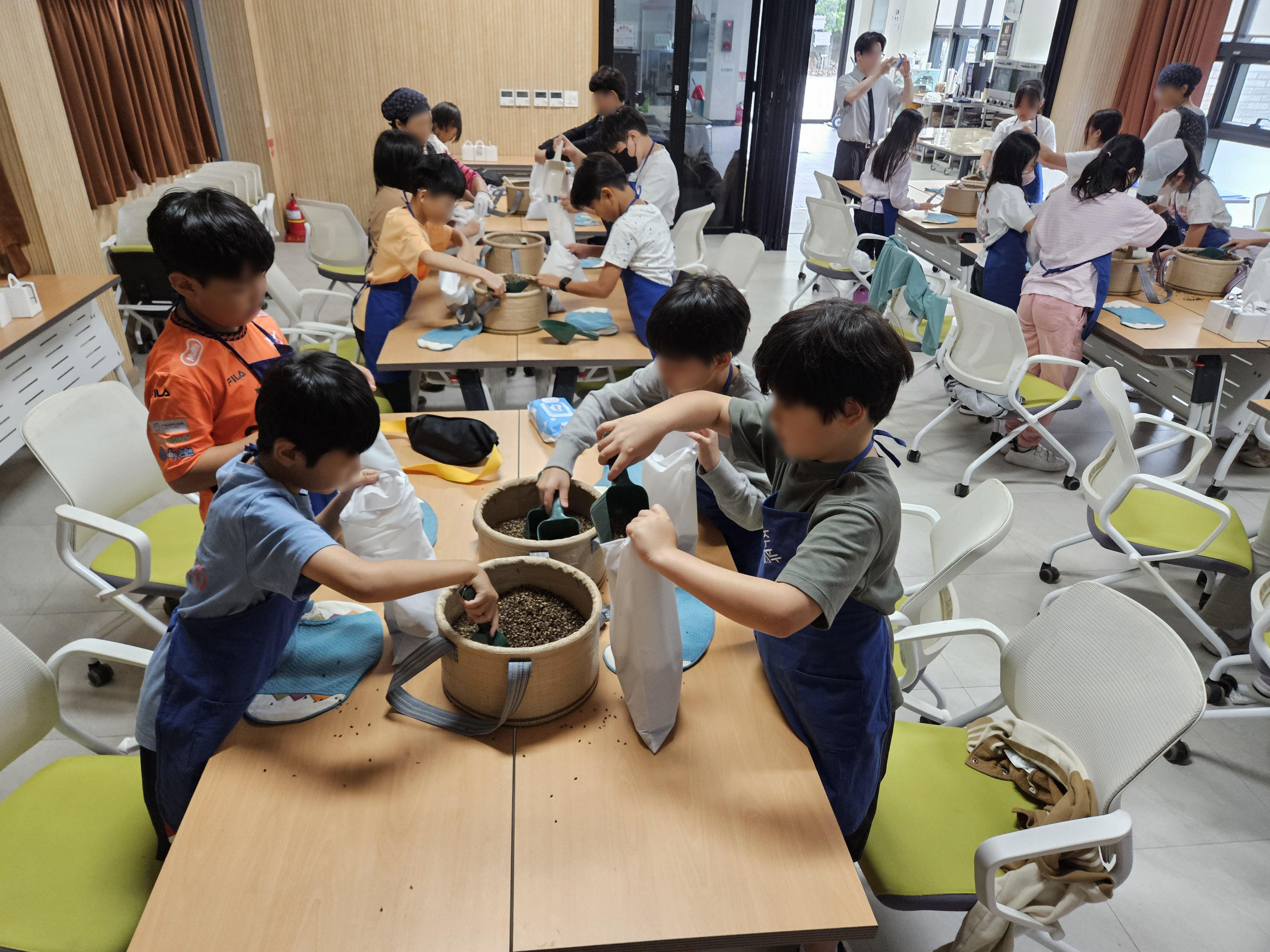
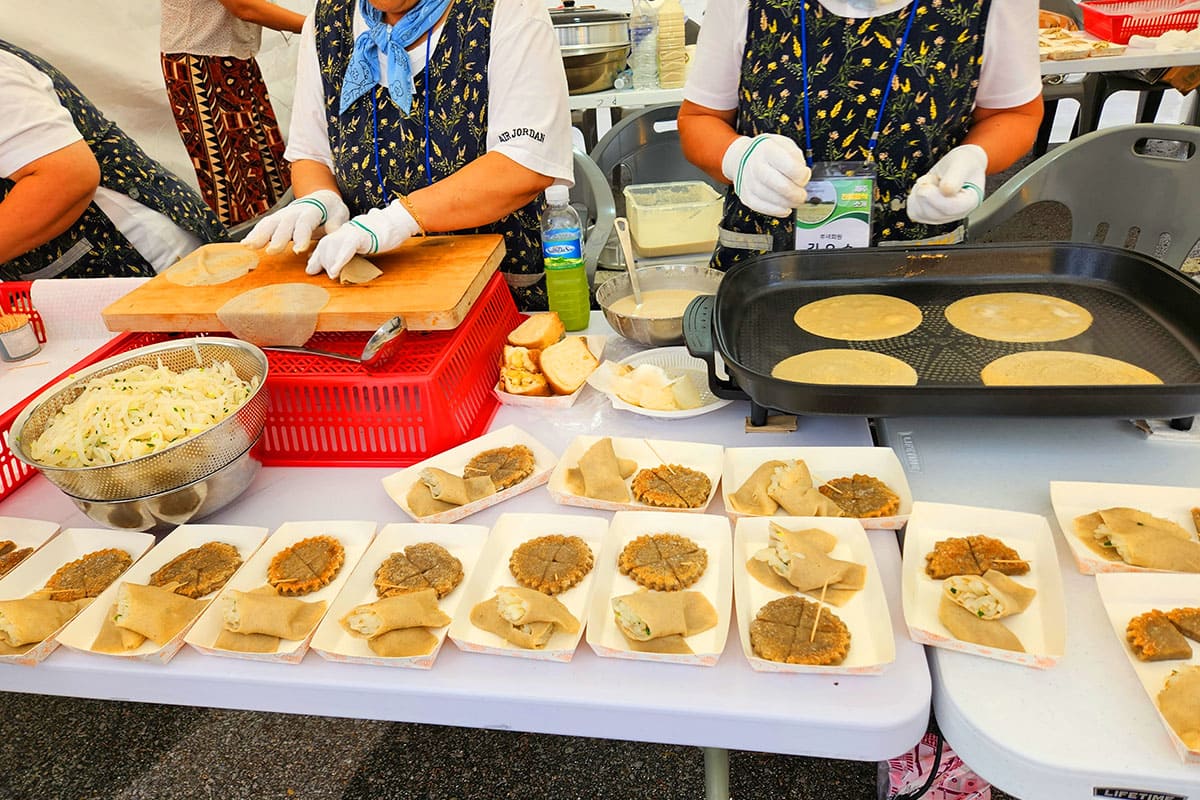
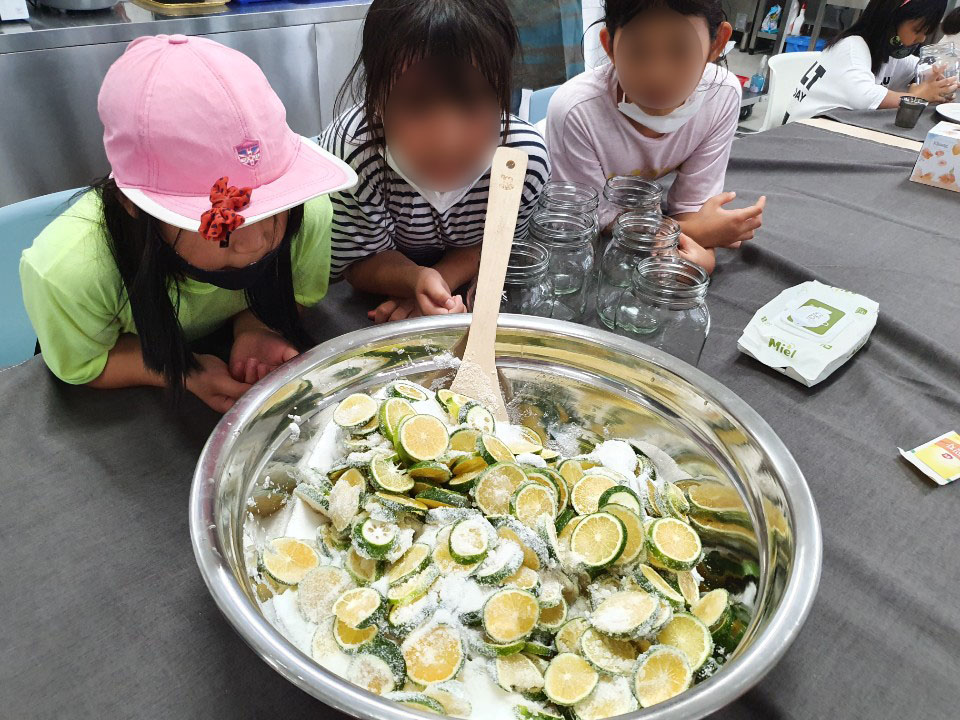
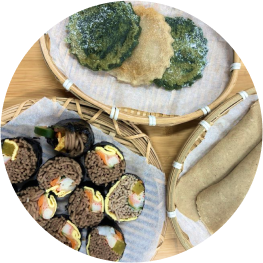
The activity programs cover both eating and making. Visitors can experience various uses of buckwheat through programs including a buckwheat direct-sales market, a buckwheat food market, and pillow-making using buckwheat. The festival is also open to visitors with pets. In particular, being able to walk through the buckwheat fields with a leashed dog is a major attraction for travelers accompanied by pets. However, professional wedding photography is restricted to protect the crops, so please keep this in mind in advance.
There is little need to worry about your budget at the festival site. An article summarizing the May 2024 festival explicitly stated, “✅ Admission fee: Free,” meaning that viewing the buckwheat fields and participating in the festival are both possible without additional charges. Unlike noisy urban festivals with loud performance stages, the music here offers an echo that reaches the heart rather than the ears. This also means that visitors expecting dazzling stages or large sculptures may find it somewhat understated.
“Meonnamoru” Rural Experience and Recreation Center — views of the buckwheat fields from the third-floor rooftop
Inside the village is a base facility that combines lodging, dining, and views. “Meonnamoru” is the Waheul Buckwheat Village Rural Experience and Recreation Center. It has a restaurant and seminar room on the first floor, accommodations on the second floor, and views of the buckwheat fields from the third-floor rooftop. It is less like a café where individuals can casually drop in for a cup of coffee and more like an experience and lodging space intended for groups.
The actual operating method reflects this as well. Experience programs are generally conducted for groups of 10 or more, and the accommodations include group rooms and family rooms. The center is suitable for school field trips, corporate workshops, or journeys involving several family groups, but its structure makes it difficult for one or two people to arrange an impromptu experience reservation. It is best to check the required group size through the village website or by phone before visiting.
2455 Namjoro, 30 minutes from Jeju Airport — directions and contact information
The address is 2455 Namjoro, Jocheon-eup, Jeju-si, Jeju Special Self-Governing Province. The festival is held daily from 9 a.m. to 5 p.m., and the site is about a 30-minute drive from Jeju Airport, making it easy for tourists to visit. Travel toward Jocheon-eup along Namjoro, a mid-mountain road in the 1136 provincial-road series. Since public transportation services are relatively infrequent, using a rental car or private vehicle is the most practical option.
On-site inquiries can be made by phone at (064) 783-1688, and the official website, waheul.com, provides real-time updates on the flowering conditions. Check the buckwheat flower bloom status through the Waheul Buckwheat Village website, real-time flowering updates, and Waheul Buckwheat Village live video. Checking the actual flowering level in the fields on this page before setting out can help you avoid a wasted trip.
Neighboring Waheul Bonhyangdang “Harosandang” — village faith continuing beneath hackberry trees
Not far from the buckwheat fields, a site of traditional Jeju faith also remains. Waheul Bonhyangdang is located at 1274-1 Waheul-ri, Jocheon-eup, Jeju-si, and was designated Jeju-do Folklore Material No. 9-3 in 2005. Waheul Bonhyangdang is also called Waheul Hangeori “Harosandang” or “Noreuldang.” It is a shrine dedicated to the village guardian deity who oversees the livelihoods and family registers of Waheul-ri residents, and, together with the Bonhyangdang in neighboring Songdang-ri, it is frequently discussed in studies of Jeju’s village-shrine faith.
Rituals continue to this day. The principal ritual days are the grand rite on the 14th day of the first lunar month and the Baekjung rite on the 14th day of the seventh lunar month. Many residents take part, and the offerings laid out together with the hackberry tree create a magnificent scene. The shrine grove, where an old hackberry tree stands as a sacred tree, has a shaded atmosphere that contrasts with the open views of the buckwheat fields, making it a good place for a brief stop during a walk through the fields. However, this is an active religious space where local residents perform rites, so visitors should remain quiet and behave respectfully around the altar.
The buckwheat fields are cultivated outdoors and offer almost no shade. Since the sunlight is strong at midday in midsummer and late spring, bring a hat and drinking water. It is also worth remembering that the dirt paths between the fieldstone walls may become muddy immediately after rain. This destination is well suited to travelers who want to experience quiet field paths and village community events rather than elaborate photo zones or commercial facilities.
Before You Go
- Address
- 2455 Namjoro, Jocheon-eup, Jeju-si, Jeju Special Self-Governing Province
- Hours
- The buckwheat fields themselves are open year-round without fences. During the 2025 spring festival period (May 9–31), they operated daily from 09:00 to 17:00.
- Closed
- The buckwheat fields are open year-round with no regular closing days. The festival operates only during the spring (May) and autumn (October) flowering seasons.
- Admission
- Free
- Phone
- 064-783-1688
- Official site
- https://waheul.com/
- Transport
- About 30 minutes by private vehicle from Jeju Airport. Since public transportation services are infrequent, rental cars or private vehicles are recommended.
- Time needed
- 30 minutes–1 hour
The information above is accurate as of the time of writing. Check the official information again before visiting.

Places
Nearby Attractions 5
-
 1
1
-
 2
2
-
 3
3
-
 4
4
-
 5
5
Food & Dining 4
-
 6
6
-
 7
Hallasan Below First Village Jeju Folk Village Branch
7
Hallasan Below First Village Jeju Folk Village Branch -
 8
Waheul Buckwheat Village
8
Waheul Buckwheat Village -
9
Events in This Area


Festivals in This Area

More Travel Guides in This Area
 Travel Guide
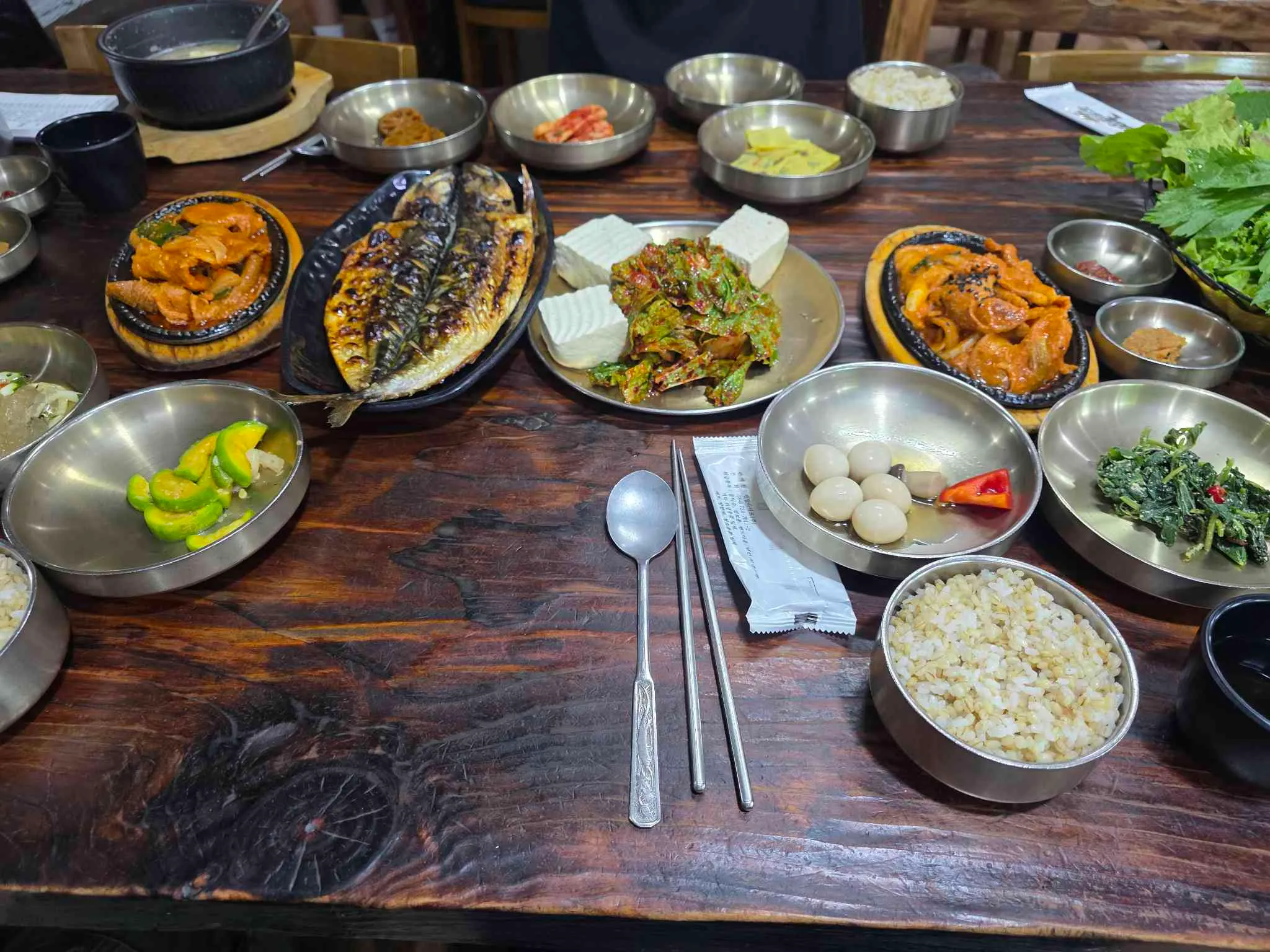
Nangtteul Jeongsik on Namjo-ro in Jocheon, before or after Jeolmul Forest Trail
 Travel Guide
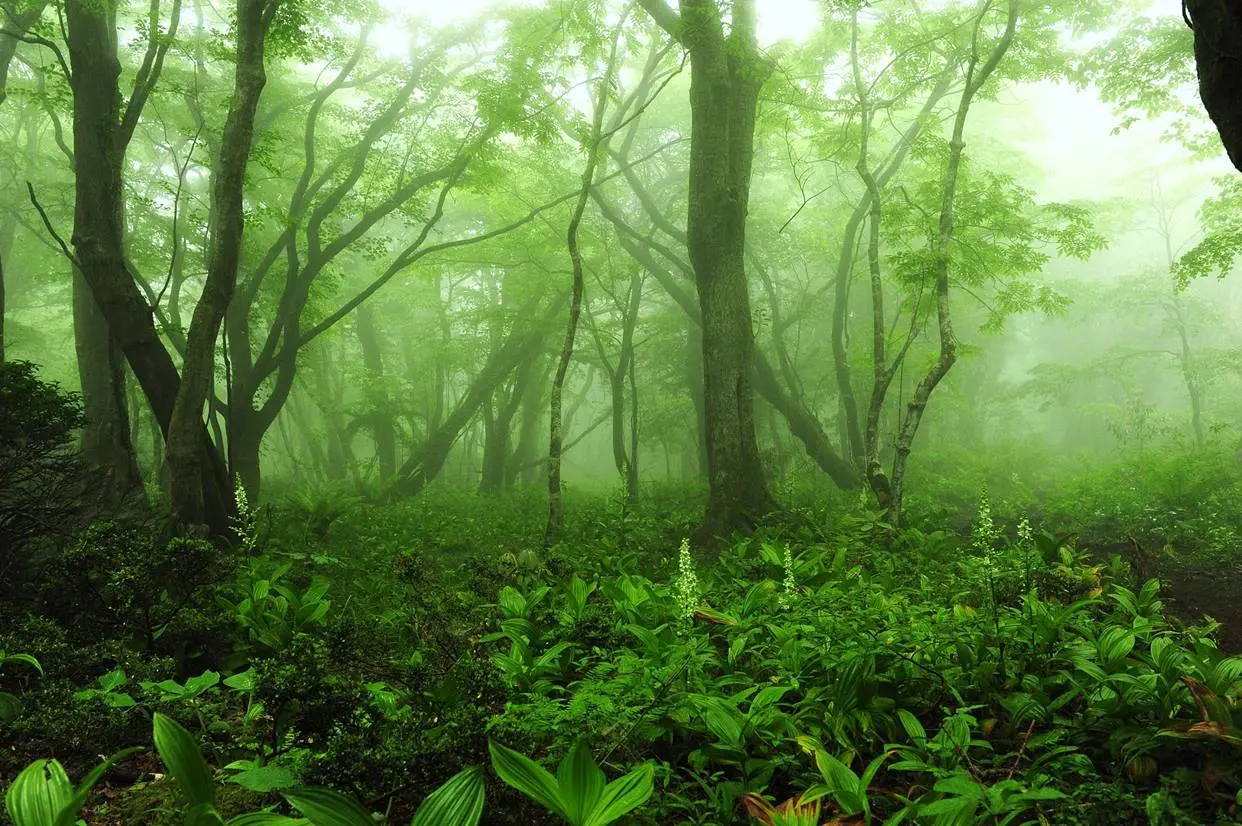
Saryeoni Forest Trail: Split Your Walk Between 10 km of Cedars and the Barrier-Free Red Oreum Trail
 Travel Guide
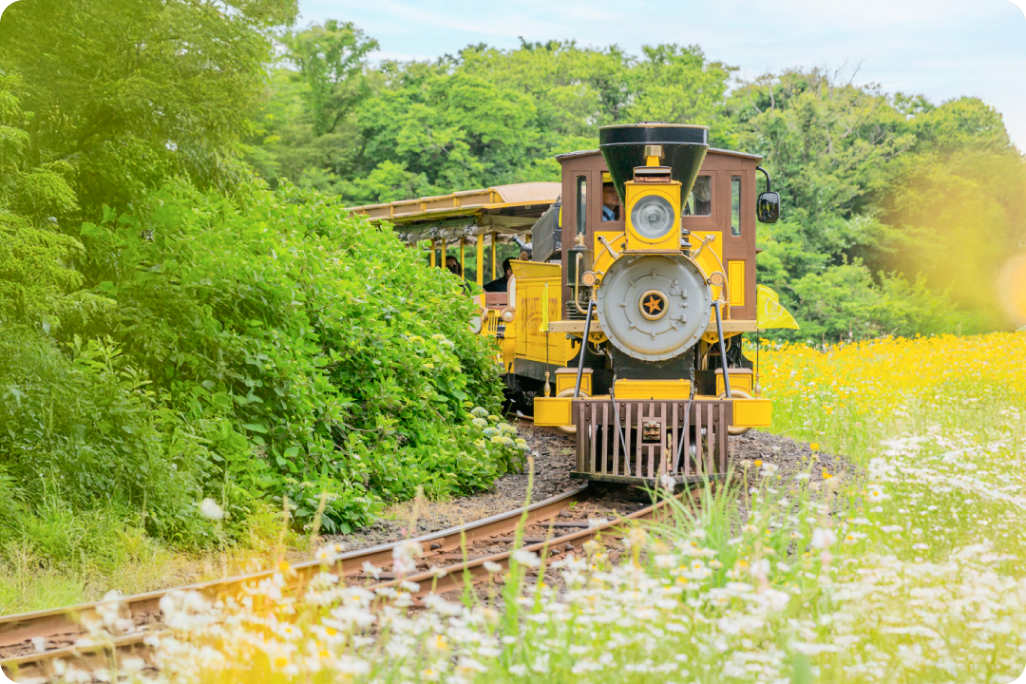
Jeju Eco Land: Walking after getting off at four stations along the Gotjawal railway
 Travel Guide
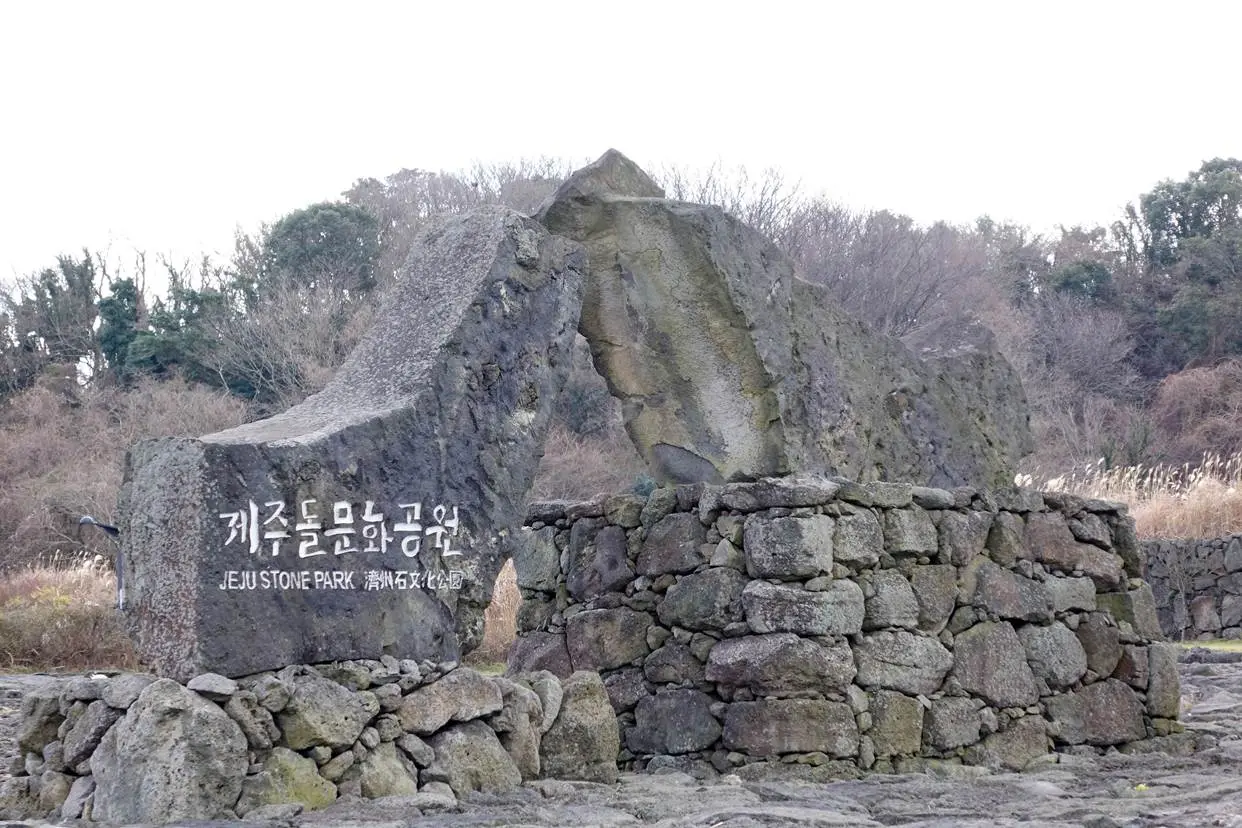
How to Walk Across Seolmundae Halmang's 1 Million Pyeong: Jeju Stone Park
Korea News
 News
News
Tom Cruise Spotted Taking a Late-Night Walk at Hangang Park… Strolled for an Hour in a Black Suit
 News
News
'Jimin, We'll always be with you' Peru Embraced 'Jimtober' Birthday Celebrations... "I'm Happy"
 News
News
BTS’s Jungkook stands alongside Messi and Ronaldo… No. 5 worldwide in TikTok views
 News
News