Ansan Reed Wetland, Where Reeds and Migratory Birds Transform Water Quality
Ansan Reed Wetland is Korea’s first large-scale artificial wetland, created to purify the water from three tributaries flowing into Lake Sihwa using reeds and wetland plants. Visitors can explore the 1.7-kilometer observation trail, the Environmental Ecology Hall, and the Eco Nuri Hall, but should first check seasonal hours and whether there is a temporary closure.
I’ve been here?
Your check-in helps the next traveler.
No one has checked in yet Be the first
One tap — no writing needed
Wetland Established in 1997 to Change the Water of Lake Sihwa
Ansan Reed Wetland was created to improve the water quality of Banwolcheon, Donghwacheon, and Samhwacheon, which flow into Lake Sihwa. Construction lasted from September 1997 to December 2005, with approximately 33 billion won invested.
This is Korea’s first large-scale artificial wetland. Rather than simply providing a place for walks, it is an ecological park designed for observing and learning about the habitats of organisms that form an ecosystem. The total area is 1,037,500㎡ (314,000 pyeong), divided into the Ansan section of 498,286㎡ and the Hwaseong section of 539,214㎡.
What You Can See Along the 1.7 km Tree Observation Trail
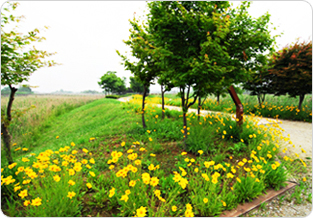
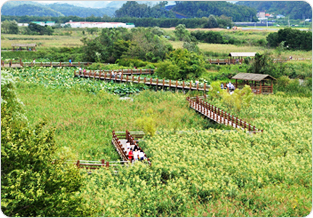
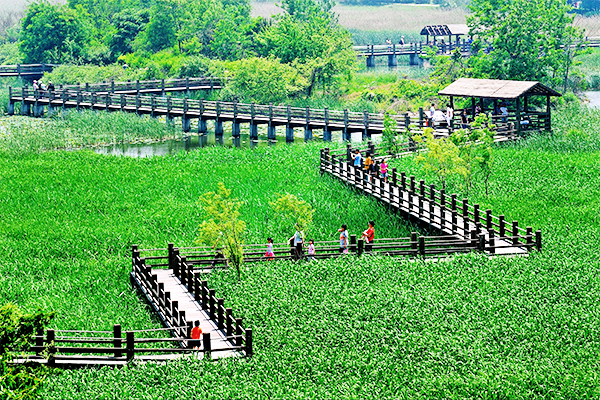
The observation trail introduced in the official information is a 1.7 km path made of wood. Visitors are told that they can observe migratory birds such as ducks, grey herons, black-winged stilts, ruddy shelducks, and great egrets near the reed fields.
About 290 species of plants, including aquatic plants and wildflowers, are distributed throughout the wetland. Along the wildflower path, 68,000 trees from 45 species besides pine trees and 300,000 plants from 60 species of wild herbaceous flowers besides irises have been planted, allowing visitors to enjoy seasonal flowers in spring, summer, and autumn.
Water That Flows from the Sedimentation Basin to the Ecological Pond After 24 Hours
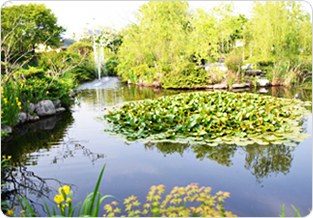
Water entering through the water-control gate is held in the sedimentation basin for 24 hours before passing through the reed fields. After passing through the reeds, the water undergoes purification and is directed to the ecological pond in front of the Environmental Ecology Center.
The ecological pond is the final outlet for water purified in the wetland, and crucian carp and carp inhabit the pond. In 2025, a group habitat of red-clawed soldier crabs and soldier crabs, both classified as Class II endangered wildlife, was also confirmed along a 600 m section from the entrance of Ansan Reed Wetland to Jangjeonbo.
How to Add Indoor Exhibitions at the Environmental Ecology Center and Ecological Nuri Center
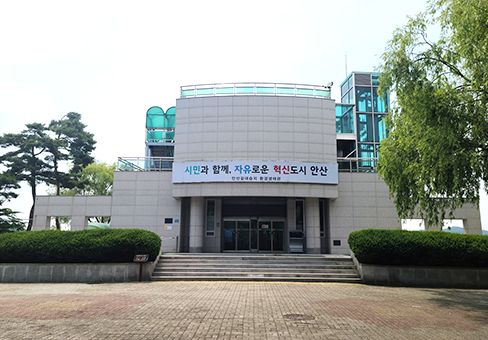
The first floor of the Environmental Ecology Center displays ecological materials related to the history of Lake Sihwa and wetlands, while telescopes for viewing the surrounding wetland scenery and migratory birds are installed on the second floor. Videos introducing Ansan Reed Wetland can be viewed in the theater, and admission to and use of the Environmental Ecology Center are free.
The Ecological Nuri Center has one basement level and three above-ground floors, with a total floor area of 1,734.66㎡. The first floor contains the Wetland Environment Experience Center, permanent exhibition hall, Live Sketch, and augmented-reality experience room; the second floor contains the special exhibition room, wetland program room, and small library; and the third floor contains the immersive video hall and multipurpose education room. Use is free of charge.
Why Operating Hours Differ in March and November
Regular opening hours are 10:00–18:00 from March through October and 10:00–16:30 from November through February. Admission is free, and according to the official information, the site may close during the Lunar New Year holiday, on the day of Chuseok, or due to other circumstances.
The site may close during the Lunar New Year holiday, on the day of Chuseok, or due to other circumstances. In 2025, part of the Baramsori Trail was temporarily operated from 06:00–22:00 for one year without distinguishing between summer and winter hours. If you plan an early-morning walk, check whether the regular observation area and the Baramsori Trail have the same operating hours.
- Main telephone: 031-599-9400
- Administrative inquiries: 031-407-9510
- Official website: https://www.ansanwetland.co.kr/
Bus 88 from Jungang Station Is a Simpler Option Than Sangnoksu Station
The official address is 76 Galdaeseupji-ro, Sangnok-gu, Ansan-si, Gyeonggi-do, and the main telephone number is 031-599-9400. From Exit 1 of Sangnoksu Station, take bus 52 to Sadong Gas Station, which takes about 20 minutes, then travel by taxi for approximately 5 minutes. Bus 52 is listed as running at 5-minute intervals.
Bus 52 is also available from Exit 1 of Handaeap Station. It takes approximately 25 minutes to reach Sadong Gas Station, with a 5-minute interval between buses, followed by about 5 minutes by taxi after getting off. From Exit 2 of Jungang Station, take bus 88 to Wetland Park, which takes about 22 minutes, followed by a 15-minute walk. The interval between buses is 25 minutes.
There are other options. Bus 50 from Exit 1 of Jungang Station takes about 25 minutes to reach Ansan Haesol Elementary School, followed by a 15-minute walk. Bus 99-1 from Exit 1 of Gojan Station takes about 35 minutes to the same stop, followed by a 15-minute walk. If you are concerned about the long interval for bus 88 or about transferring, it is safer to check bus arrival times before departure.
Wetland Rules to Follow Even Though Admission Is Free
Cooking is not permitted inside the park. Pulling out plants and catching insects are also prohibited, so activities involving collecting specimens outside the observation trail are not allowed.
Loud noises can frighten birds and should be avoided, and all trash must be taken with you. The official information does not separately specify wheelchair or stroller accessibility, English information or audio guides, photography restrictions, recommended visiting time, or the detailed scope of access restrictions for individual visitors. Therefore, this destination is better suited to travelers planning around the 1.7 km observation trail and outdoor movement rather than expecting extensive support at each facility.
Visiting Conditions to Check Before the Autumn Reeds
Ansan Reed Wetland was included among the nine scenic attractions of Ansan selected in 2012 and is introduced in autumn for its reed fields swaying in the wind. If migratory birds are your goal, it is a good idea to use both the observation trail and the telescopes on the second floor of the Environmental Ecology Center, but this is not a place to touch birds up close or call them together with loud noises.
Parking is indicated as available, but parking fees could not be confirmed in publicly available sources. The facility address is listed on the official website as 76 Galdaeseupji-ro, Sangnok-gu, Ansan-si, Gyeonggi-do, which differs from the user-provided address, Room 101, 81 Seongan-gil, Sangnok-gu, Ansan-si, Gyeonggi-do. Enter the facility’s official address into your navigation system, and take temporary closures and seasonal closing times into account when planning your visit.
Before You Go
- Address
- 76 Galdaeseupji-ro, Sangnok-gu, Ansan-si, Gyeonggi-do
- Hours
- March–October 10:00–18:00 / November–February 10:00–16:30
- Closed
- May close during the Lunar New Year holiday, on the day of Chuseok, or due to other circumstances
- Admission
- Free
- Phone
- 031-599-9400 / Administrative number: 031-407-9510
- Official site
- https://www.ansanwetland.co.kr/
- Transport
- Exit 1 of Sangnoksu Station: bus 52 → Sadong Gas Station, about 20 minutes, 5-minute interval, then about 5 minutes by taxi. Exit 1 of Handaeap Station: bus 52 → Sadong Gas Station, about 25 minutes, 5-minute interval, then about 5 minutes by taxi. Exit 2 of Jungang Station: bus 88 → Wetland Park, about 22 minutes, 25-minute interval, then a 15-minute walk.
- Parking
- Parking available. Parking fees could not be confirmed in publicly available sources.
The information above is current as of the time of writing. Check the official information again before visiting.

Places
Nearby Attractions 2
-
 1
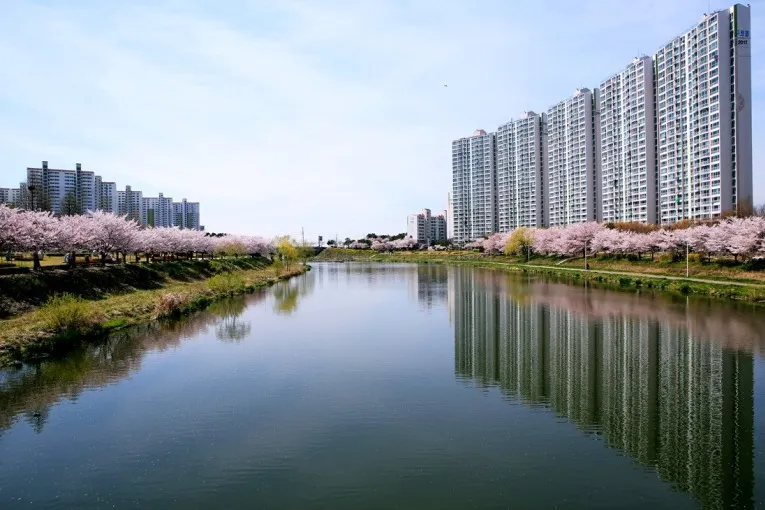
Ansan Lake ParkAn urban park where you can walk and relax along the lakeside promenade and bicycle paths.
-
 2
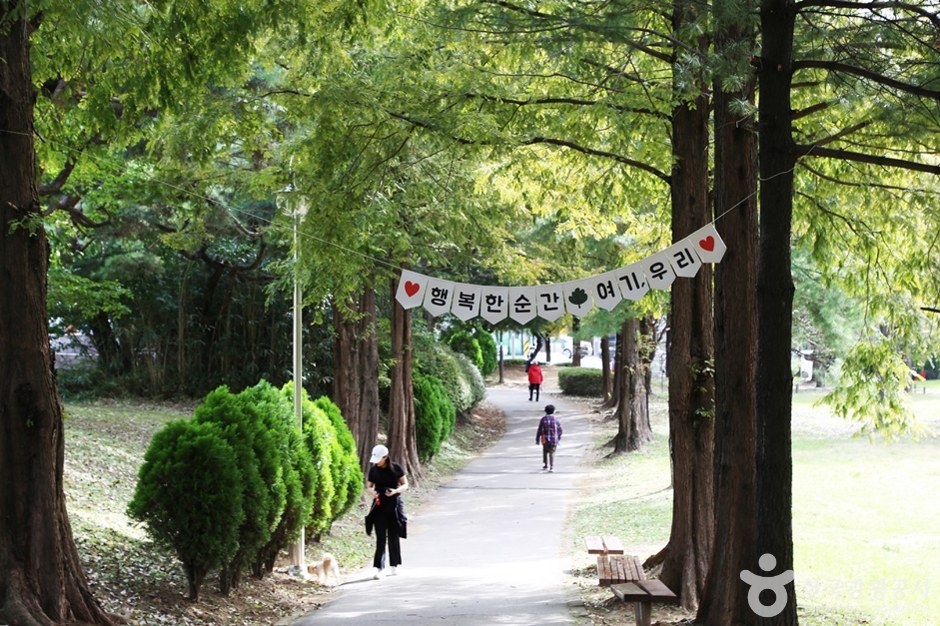
Seongho ParkA park where you can take a stroll while exploring the Seongho Memorial Hall and Sculpture Park.
Food & Dining 2
-
 3
Ssam & SsamA restaurant serving Korean royal cuisine and Korean dishes accompanied by vegetable wraps.
-
 4
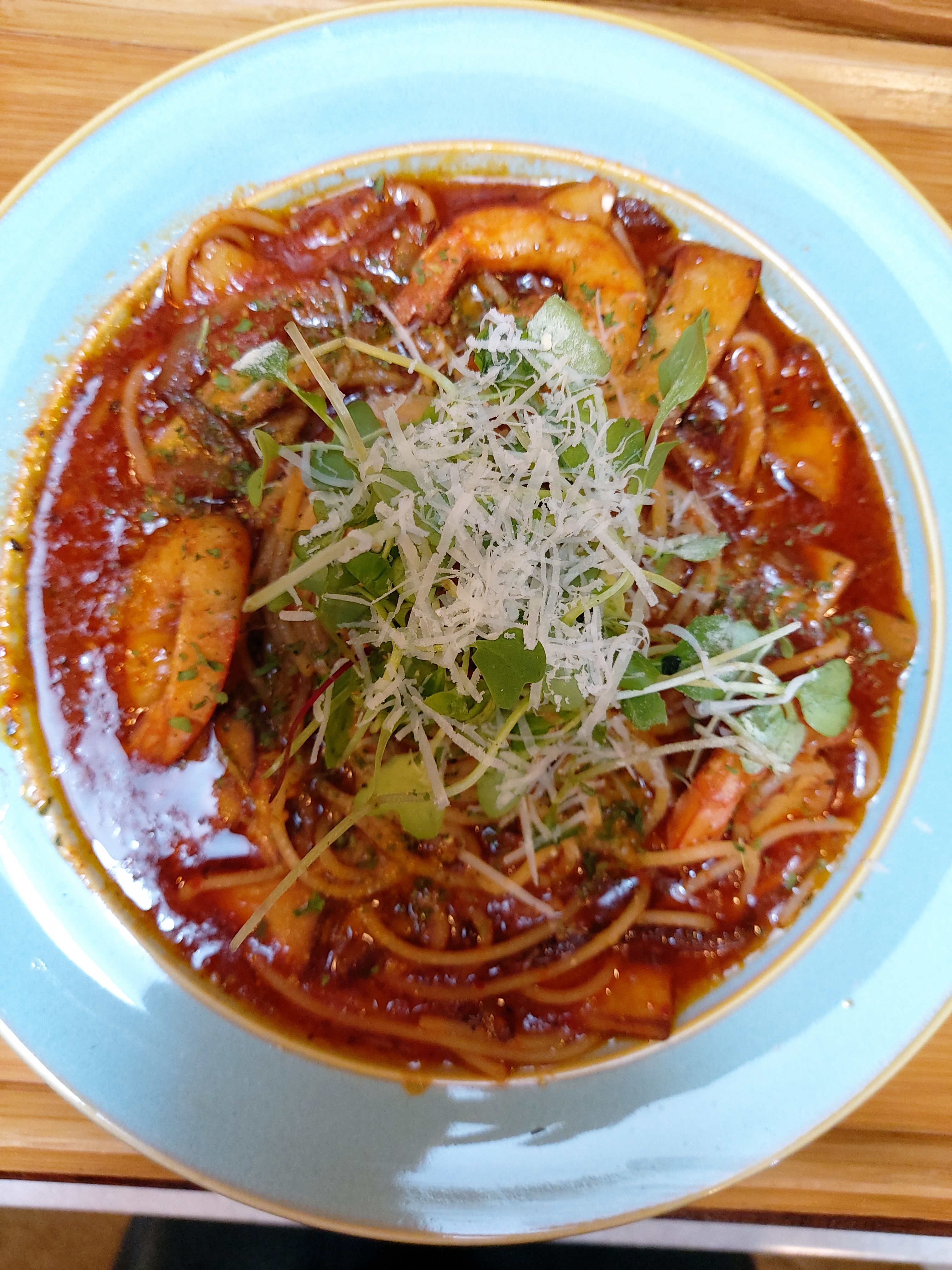
Anne's TableA restaurant serving European home-style dishes, including Indonesian and Spanish cuisine.
Events in This Area




Festivals in This Area


More Travel Guides in This Area
 Travel Guide
The World Table of Wongok-dong Starting from Exit 2 of Ansan Station
 Travel Guide
From Gunpo Surisan Provincial Park to Taeeulbong Peak: A Practical Hiking Route for First-Timers
 Travel Guide
Uiwang Rail Bike, Pedaling 4.3 km Around Wangsong Lake, from Reservation to Last Departure
 Travel Guide
Gunpo Azalea Garden, Where 200,000 Azaleas Cover Sanbon’s Urban Center in Late April
Korea News
 News
'There Is No Danielle': NewJeans Unleashes a Massive B-Cut Collection to Celebrate the 4th Anniversary of Their Fandom, Bunnies
 News
G-Dragon Kneels to Propose in Public…The Recipient Turns Out to Be Daesung: “We’re Still Newlyweds”
 News
ATEEZ’s San, the Grand Duke of the North with Rock-Solid Abs
 News