King Sejong’s Tomb (Yeongneung) — Joseon’s First Shared Tomb, Moved to Yeoju in 1469
King Sejong’s Tomb (Yeongneung) is the shared tomb of Sejong, the fourth king of Joseon, and Queen Soheon of the Sim clan. After being moved from Heolleung in Seoul to Yeoju in 1469, it took its present form through a 1977 restoration and sanctification project. Together with King Hyojong’s Yeongneung, located 700 meters away, it was included in the UNESCO World Heritage site “Royal Tombs of the Joseon Dynasty” in 2009. The King Sejong History and Culture Center offers an opportunity to explore the history of both tombs.

I’ve been here?
Your check-in helps the next traveler.
15 people viewed this week Be the first
One tap — no writing needed
Why King Sejong's Tomb Was Moved from Heolleung to Yeoju in 1469, the First Year of King Yejong's Reign
King Sejong (1397–1450, reigned 1418–1450) built a royal tomb with screen stones for Queen Soheon of the Shim clan, his consort who died in 1446. It was located in present-day Naegok-dong, Seocho-gu, Seoul, west of Heolleung, the tomb of his father, King Taejong. The tomb layout followed the funeral rites section of the State Rites of the Nation and became the model for royal tomb layouts in the early Joseon period.
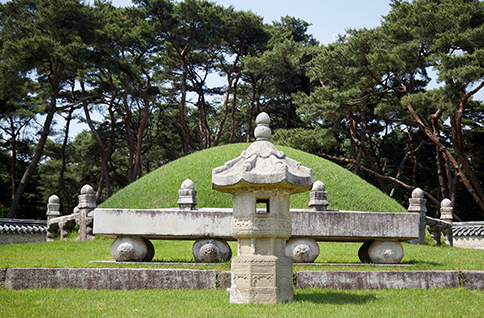
After King Sejong died in 1450, his tomb, which was built beside and combined with that of Queen Soheon, was moved to its present location in Yeoju in 1469, the first year of King Yejong's reign. When it was moved, the tomb followed the system used at Gwangneung: instead of screen stones, a lime-lined burial chamber made by mixing yellow earth, fine sand, and lime was constructed, surrounded only by 12 sections of stone railings.
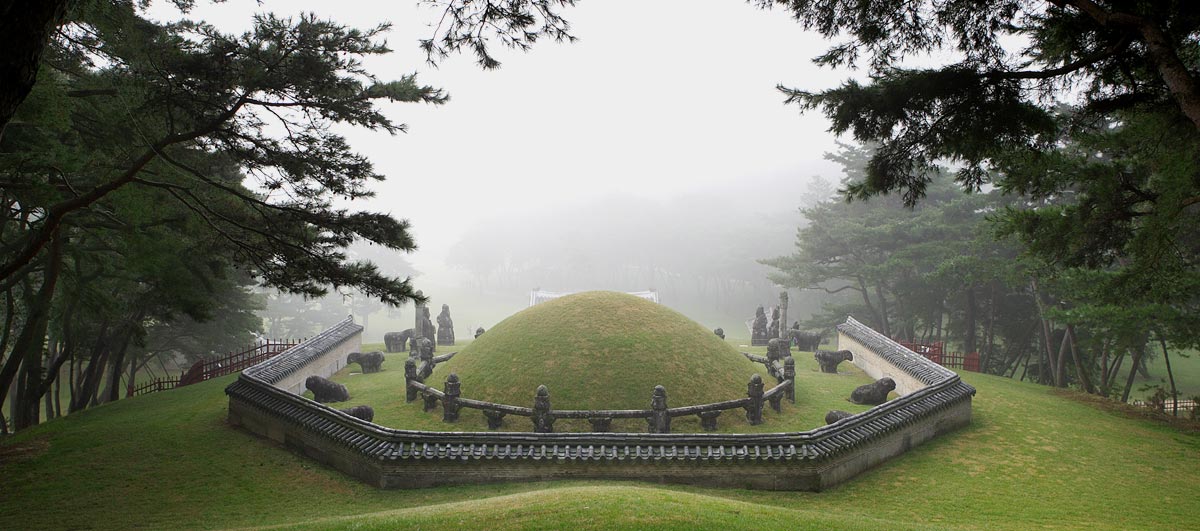
It is said that geomancers and feng shui experts at the time of the relocation considered this site such an auspicious place that the phrase “Yeongneung extending the nation’s destiny by 100 years” arose to express the belief that moving Yeongneung to Yeoju extended Joseon’s national prosperity by another century. Buksseongsan Mountain lies in front of the tomb, and Chingseongsan Mountain behind it; before the tomb was built, the site contained civilian graves.
A Combined Tomb with Two Spirit Seats and Hyojong's Twin Tombs 700 m Away
King Sejong's Yeongneung (英陵) is surrounded by 12 sections of stone railings, and each of the 12 stone pillars is engraved with one of the 12 zodiac signs in Chinese characters. Two spirit seats lie side by side, showing that the king and queen were buried together beneath one mound. Stone structures such as the offering table, stone lantern, stone posts, and spirit way stele that stood at the former site were not moved during the relocation but were buried there.
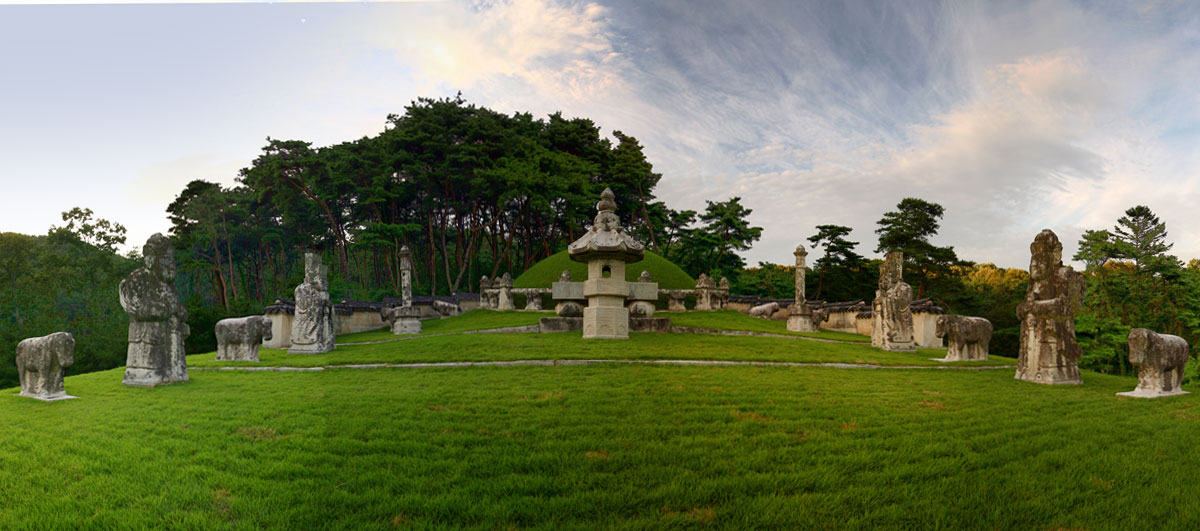
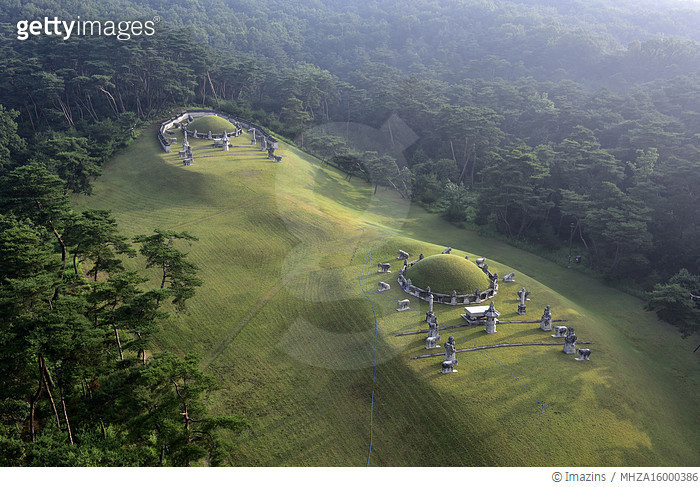
King Hyojong's Yeongneung (寧陵), about 700 m from Sejong's Yeongneung, was originally located west of Donggureung in Guri, but was moved to its present site in 1673, the 14th year of King Hyeonjong's reign, after cracks appeared in its stone structures. The king's and queen's burial mounds are arranged one above the other rather than side by side. This was the first example of the upper-and-lower layout format among Joseon royal tombs, and King Gyeongjong's Uireung later followed the same format.
The path connecting the two tombs is called the “King's Forest Trail.” It takes about 20 minutes on foot, but the trail is open only from mid-May to early October each year. During the rest of the year it is closed, so visitors in winter and early spring must take a detour by bus or road to see both tombs.
1977 Restoration Project and 2009 UNESCO World Heritage Inscription
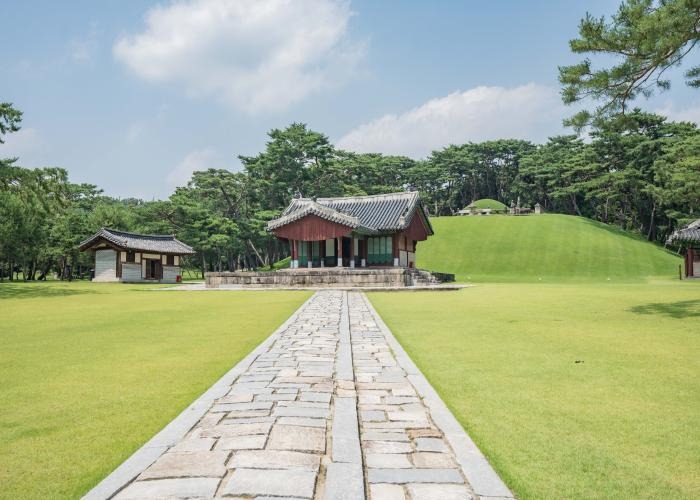
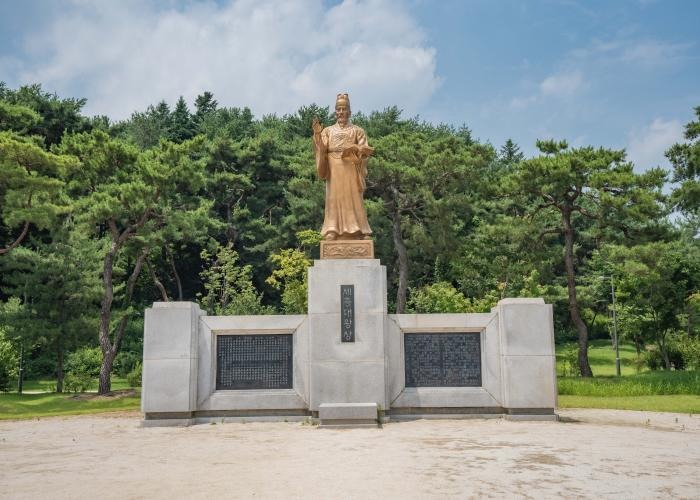
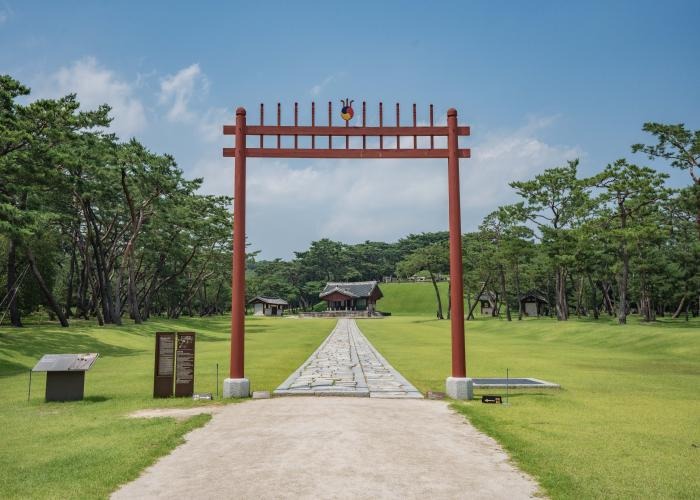
Hunminmun Gate, the statue of King Sejong, Sejongjeon Hall, and other features visible today are not original structures; they were newly built during the Yeongneung purification and sanctification project carried out in 1977. The project improved the landscape at the entrance to the tomb precinct and created today's visitor route.
The precinct combining Yeongneung and Yeongneung was designated Historic Site No. 195, “Yeongneung and Nyeongneung,” on May 27, 1970, and was renamed “Yeoju Yeongneung (英陵) and Yeongneung (寧陵)” on July 28, 2011. When 40 Joseon royal tombs were inscribed as a UNESCO World Heritage Site on June 30, 2009, King Sejong's tomb also received international recognition for its value.
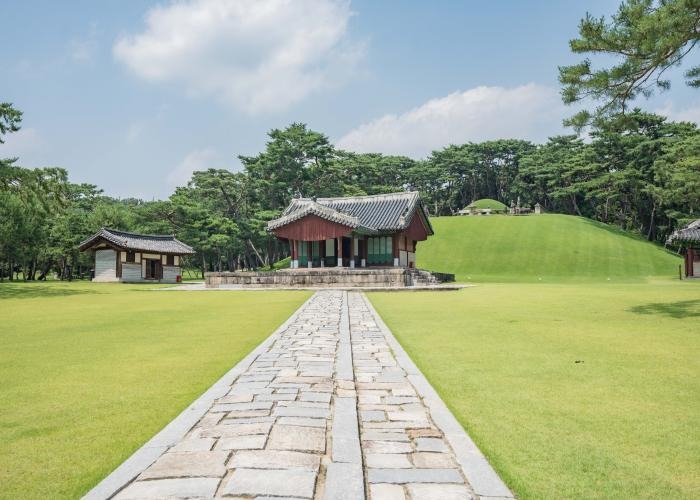
A 2018 visit report noted that viewing Jeongjagak Hall, Suragan, Subokbang, and the spirit way stele was temporarily restricted because of restoration work. Visitors should therefore note that access to some facilities around the burial mound may be controlled depending on the period.
King Sejong History and Culture Center, Opened in 2017
Located at the entrance to the parking lot, the King Sejong History and Culture Center officially opened in May 2017. It has three permanent exhibition halls, one special exhibition hall, a video room, a café, and storage facilities, making it a good place to build background knowledge before or after exploring the outdoor tomb precinct.
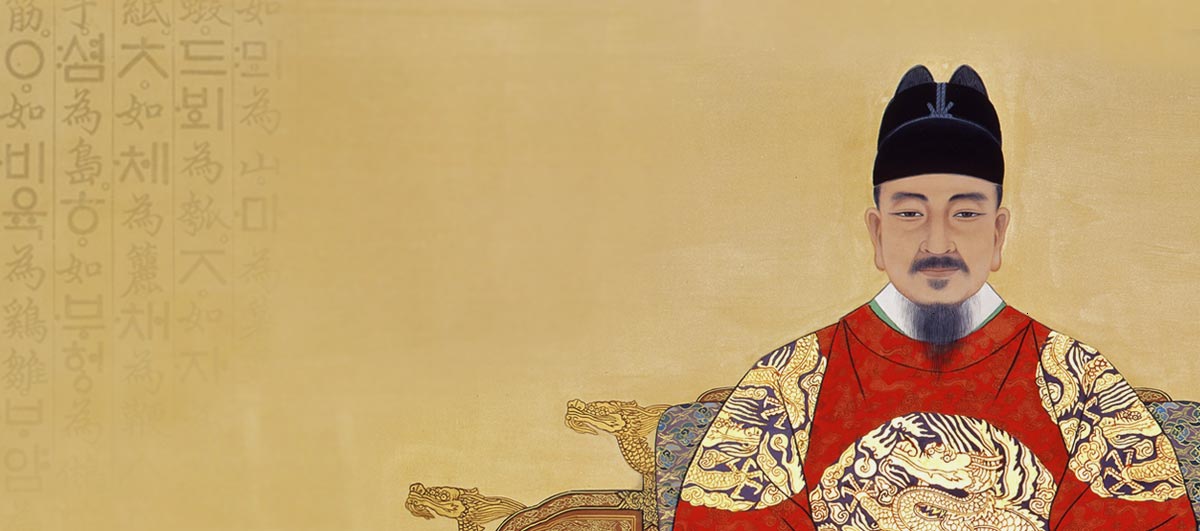
The exhibitions introduce King Sejong's achievements through images and videos, including the creation of Hunminjeongeum, the invention of scientific instruments such as the rain gauge and sundial, the organization of court music, and the expansion of the territory through campaigns against northern peoples and the conquest of Tsushima. They also explain King Hyojong and the system of Joseon royal tombs.
Outdoors, there are displays modeled on inventions from King Sejong's era. Visitors have reported that combining a visit to the history and culture center with an outdoor walk makes for a convenient itinerary when traveling with elementary school-age children.
Hours and Admission Fees Vary by Season
According to notices from the King Sejong Historic Site Management Office of the Cultural Heritage Administration (telephone 031-885-3123~4, website sejong.cha.go.kr), ticketing and visiting hours are divided into three seasonal periods. From February to May and September to October, ticket sales run from 09:00 to 17:00 and visiting hours are 09:00 to 18:00. During the longer daylight hours from June to August, ticket sales run from 09:00 to 17:30 and visiting hours extend to 18:30. From November to January, when daylight is shortest, ticket sales run from 09:00 to 16:30 and visiting hours are 09:00 to 17:30, making this the earliest closing period.
The regular closing day is every Monday. If Monday falls on a public holiday, the first non-holiday afterward becomes the closing day. On the last Wednesday of each month, designated as “Culture Day,” admission is free. Admission is 500 won for individuals aged 25–64 and 400 won for groups of 10 or more; visitors aged 24 or younger and 65 or older enter free of charge. A visit takes at least 40 minutes to one hour, and visitors who also walk the forest trail to Hyojong's Yeongneung should allow at least 1 hour 30 minutes.
Why You Still Need to Transfer to a Bus from King Sejong's Tomb Station
Despite its name, King Sejong's Tomb Station on the Pangyo–Yeoju section of the Gyeonggang Line is about 3 km from the tomb in a straight line, so it cannot be reached on foot. Visitors must transfer at the stop in front of the station to a city bus in the 950–960 series. Most routes take about 15 minutes and stop seven times before reaching Hyoreung–King Sejong's Tomb Stop.
From Yeoju Station, visitors can take buses B950, B950-3, B952, B952-1, B952-2, B952-3, B953, B953-2, and B955-1. Intercity buses to Yeoju run every 30–40 minutes from Seoul Express Bus Terminal. By car, the tomb is 10 minutes from Yeoju IC on the Yeongdong Expressway and 5 minutes from Seoyeoju IC on the Jungbu Naeryuk Expressway.
King Sejong's Tomb Station is a highly symbolic local name; residents of Neungseo-myeon objected during the naming process because they wanted the station to be called “King Sejong Station.” The outside of the station is decorated with tiles depicting Korean consonants and vowels, while Hunminjeongeum is displayed on the interior walls. However, when planning an actual tomb tour, taking a bus from Yeoju Station is more convenient than using King Sejong's Tomb Station because more routes are available.
Parking, Items Allowed, and Things to Know When Visiting with Children
The parking lot exclusively for the tomb precinct is free to use. However, during busy autumn weekends or the Royal Memorial Ceremony period in May, arriving with plenty of time before the ticket office opens is advisable to avoid crowds.
Coffee, water, and other beverages may be brought inside, but bringing other food is prohibited. The site also prohibits smoking, using picnic mats, entering with bicycles or pets, using wheeled transportation such as Heelys and kickboards, and playing with recreational equipment such as balls or badminton gear.
There is no separate kids' zone, nursing room, diaper-changing table, or stroller rental service. Because the grounds are extensive, bringing your own stroller is useful for getting around, but visitors have reported that the route ascending to the burial mound is steep, making it better for children to walk this section themselves.
When to Visit — Autumn Rice-Field Scenery and the May Royal Memorial Ceremony
The Royal Memorial Ceremony for King Sejong's Birthday is held around Jeongjagak Hall every year on May 15 according to the solar calendar, so visitors at this time may also watch the ancestral rites. Many visitors report that autumn is a pleasant time to walk among the surrounding rice fields as they turn golden, although there are also warnings to be careful because snakes may appear on the trails.
In some years, programs have been offered in autumn as part of the “World Heritage Joseon Royal Tombs Festival,” including royal tomb concerts, the mission tour game “Royal Tomb Adventure,” and “Tree Stories on the King's Forest Trail” with a forest interpreter. It is worth checking before visiting whether seasonal programs are being held.
Combining It with a Yeoju Sightseeing Route
The regional sightseeing route introduced by the Yeoju Cultural Center starts at Yeoju IC and continues to the birthplace of Empress Myeongseong, King Sejong's tomb (King Hyojong's tomb), the Riverside Tourist Area, Silleuksa Temple, the Mok-A Buddhist Museum, Godalsa Temple Site, and Pasaseong Fortress Site. King Sejong's tomb alone can be seen in 40 minutes to one hour, but adding Silleuksa Temple or the Riverside Tourist Area makes it possible to plan a half-day itinerary.
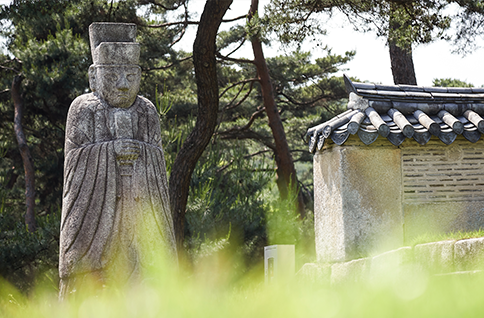
If you visit between mid-May and early October, when the forest trail between the tomb precincts is open, you can connect King Sejong's Yeongneung and King Hyojong's Yeongneung on foot. This makes it possible to compare the different construction styles of the two royal tombs—a combined tomb and the upper-and-lower layout format—in a single visit.
Before You Go
- Address
- 269-10 Yeongneung-ro, Sejongdaewang-myeon, Yeoju-si, Gyeonggi-do
- Hours
- February–May and September–October 09:00–18:00 (ticket sales end at 17:00) / June–August 09:00–18:30 (ticket sales end at 17:30) / November–January 09:00–17:30 (ticket sales end at 16:30)
- Closed
- Every Monday (if Monday is a public holiday, the first non-holiday afterward is the closing day); free admission on the last Wednesday of each month, “Culture Day”
- Admission
- Individual visitors (ages 25–64) 500 won / groups of 10 or more 400 won / free for ages 24 and under and 65 and over
- Phone
- 031-885-3123~4
- Official site
- https://sejong.cha.go.kr
- Transport
- Get off at King Sejong's Tomb Station on the Gyeonggang Line and transfer in front of the station to a city bus in the 950–960 series (about seven stops and 15 minutes to Hyoreung–King Sejong's Tomb Stop; walking is difficult because the straight-line distance is about 3 km). From Yeoju Station, buses B950, B950-3, B952, B952-1–3, B953, B953-2, and B955-1 are available. Intercity buses to Yeoju run every 30–40 minutes from Seoul Express Bus Terminal. By car, it is 10 minutes from Yeoju IC on the Yeongdong Expressway and 5 minutes from Seoyeoju IC on the Jungbu Naeryuk Expressway.
- Parking
- Free use of the dedicated parking lot
- Time needed
- At least 40 minutes to 1 hour; at least 1 hour 30 minutes if also walking the forest trail to Hyojong's Yeongneung
- Accessibility
- There is no stroller rental, nursing room, or diaper-changing table, and a 2024 visitor report noted that the sloped section leading to the burial mound is difficult to navigate with a stroller.
The information above is current as of the time of writing. Check the official information again before visiting.

Places
Nearby Attractions 4
-
 1
1
-
 2
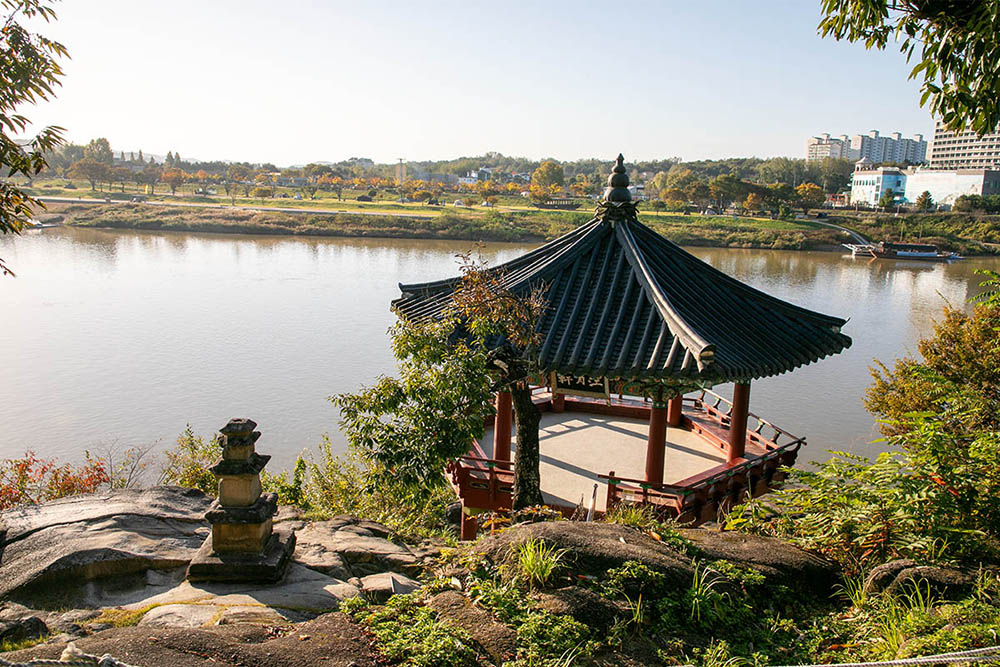
Silleuksa TempleVisit the thousand-year-old temple and the multi-story brick pagoda along the Namhan River.
2
Silleuksa TempleVisit the thousand-year-old temple and the multi-story brick pagoda along the Namhan River. -
 3
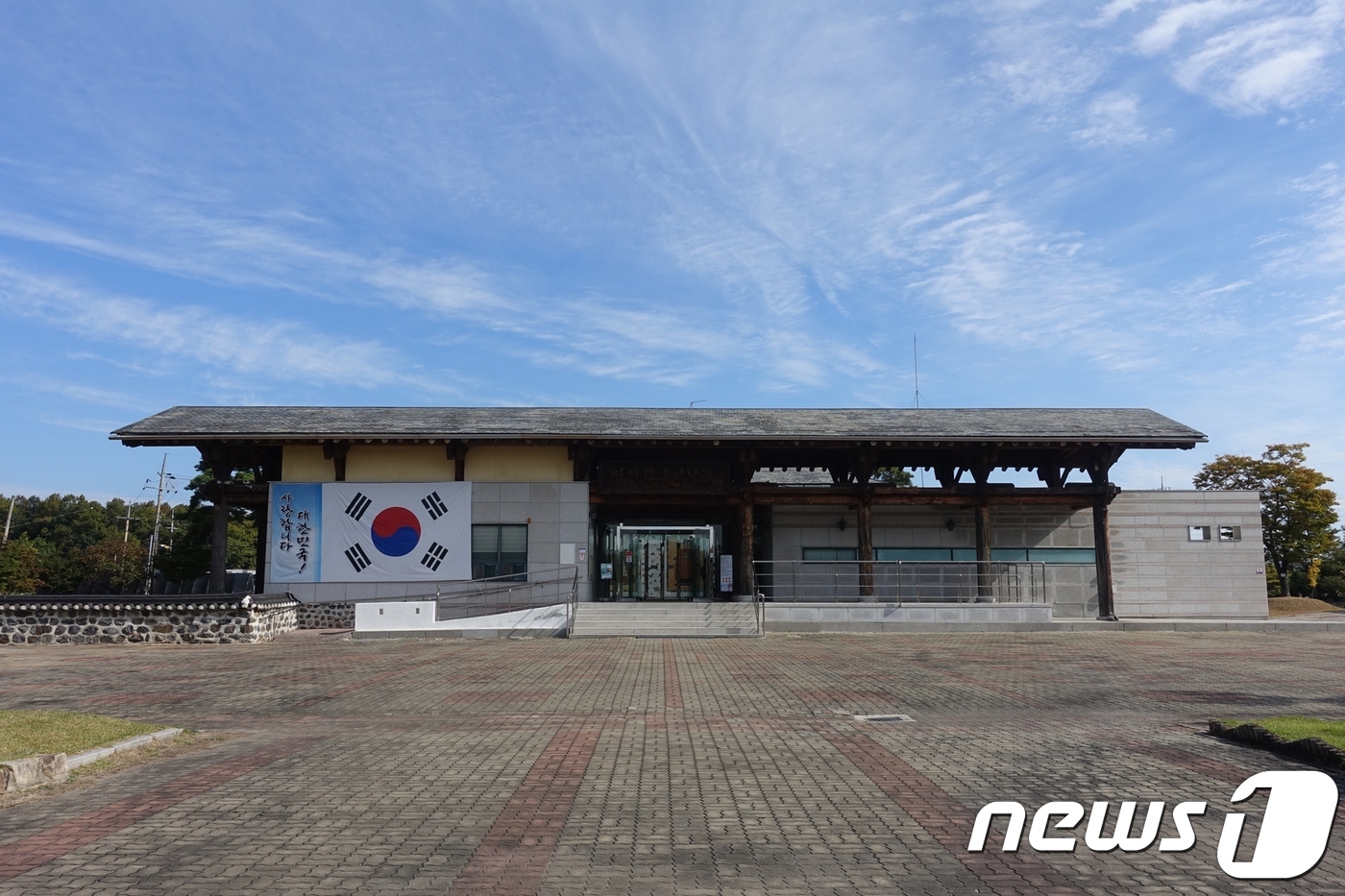
Birthplace of Empress MyeongseongExplore the birthplace of Empress Myeongseong and related exhibitions.
3
Birthplace of Empress MyeongseongExplore the birthplace of Empress Myeongseong and related exhibitions. -
 4
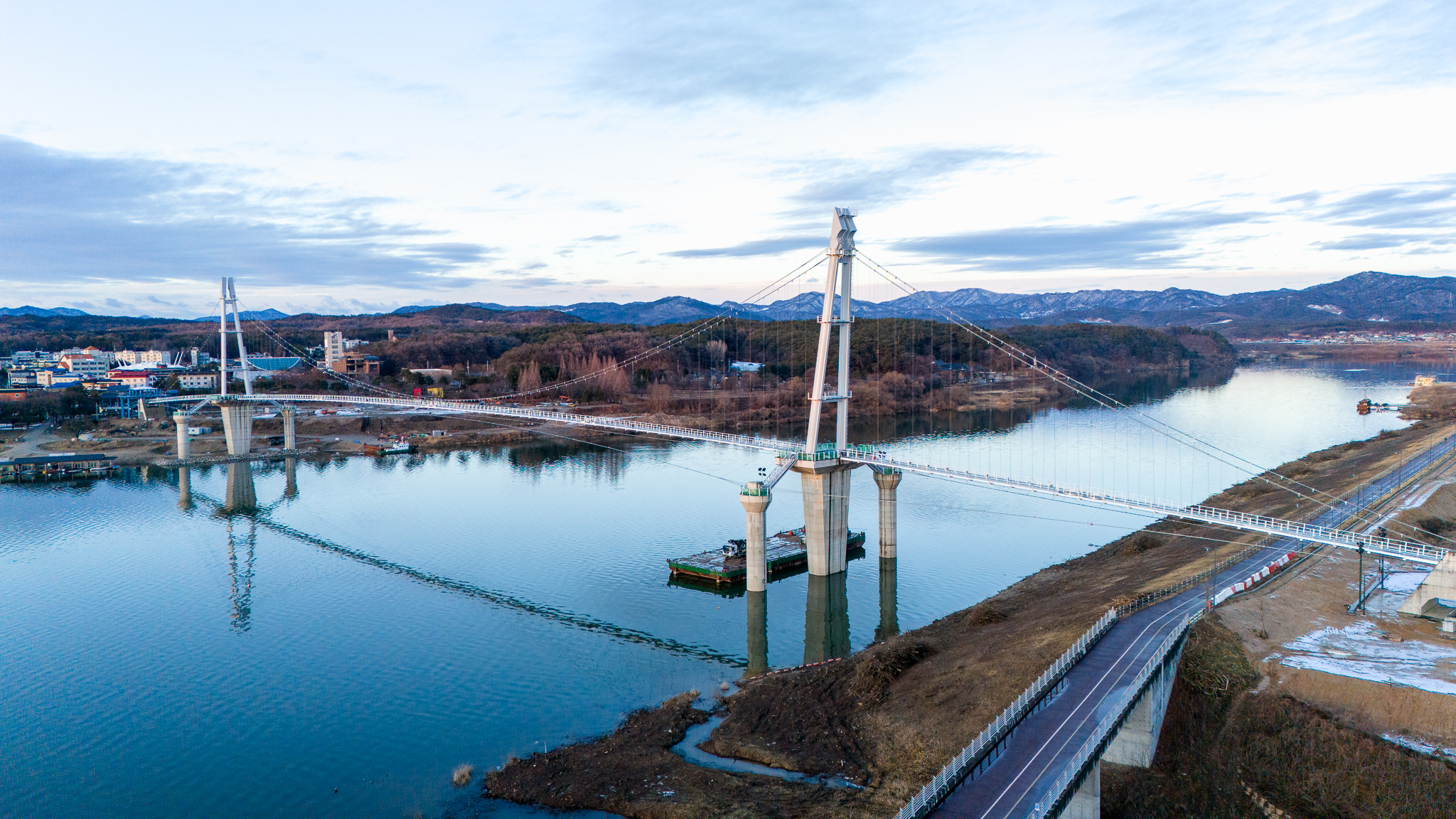
Yeoju Namhangang Suspension BridgeCross the 515-meter pedestrian suspension bridge over the Namhan River.
4
Yeoju Namhangang Suspension BridgeCross the 515-meter pedestrian suspension bridge over the Namhan River.
Food & Dining 1
-
 5
5
Events in This Area



Festivals in This Area


More Travel Guides in This Area
Korea News
 News
News
‘NewJeans Expulsion’ Danielle Releases Her First YouTube Video… “We Don’t Know What Will Happen Next”
![aespa’s North American Tour Has Remaining Seats Despite ‘$49’ Bargain Prices… A Stark Popularity Gap with KATSEYE [TEN Starfield]](https://kotourlive-images.s3.ap-northeast-1.amazonaws.com/news/1788485037424_a59b1932_naver_rank_thumb_0000774618_1788485037424.jpg) News
News
aespa’s North American Tour Has Remaining Seats Despite ‘$49’ Bargain Prices… A Stark Popularity Gap with KATSEYE [TEN Starfield]
![[Photo] TWICE’s Dahyun attends a film festival red carpet as an actress](https://kotourlive-images.s3.ap-northeast-1.amazonaws.com/news/1788485316508_edd43ecd_news_870a60a6-6f11-4d73-aa7c-48d91318a0f7.jpg) News
News
[Photo] TWICE’s Dahyun attends a film festival red carpet as an actress
![[On-Site Video] “We’re Departing Separately Together”… BIGBANG Begins ‘COSMOS’ World Tour](https://kotourlive-images.s3.ap-northeast-1.amazonaws.com/news/1788485226518_c5719641_news_fdd4764a-0f4e-4968-8e4e-e98a02872f88.jpg) News
News