From the 1795 Bongsudang Royal Banquet to the 2026 Sinpungnu Guard Ceremony: How to Read Hwaseong Haenggung
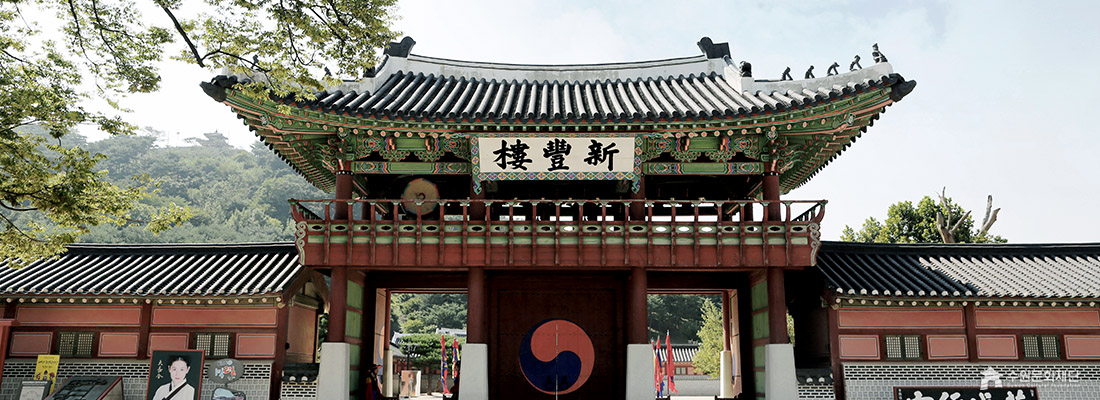
Hwaseong Haenggung was the royal temporary palace used by King Jeongjo while staying in Suwon to conduct state affairs and visit Hyeonryungwon. By viewing Sinpungnu, Bongsudang, and Naknamheon in sequence and connecting them with the context of Lady Hyegyeong Hong’s 60th-birthday banquet in 1795 and the site’s restoration and opening to the public in 2003, even a brief visit can make the palace’s role clear.
I’ve been here?
Your check-in helps the next traveler.
No one has checked in yet Be the first
One tap — no writing needed
From the Relocation of Suwon-bu in 1789 to the Completion of More Than 600 Rooms in 1796
Hwaseong Haenggung began when King Jeongjo moved the seat of Suwon-bu town government to the foot of Paldalsan Mountain while relocating his father Crown Prince Sado’s tomb in 1789, and arranged a new government office and temporary royal residence. Its key distinction from ordinary royal palaces is that it was both the place where Jeongjo stayed when visiting Hyeonnyungwon (today’s Yungneung) and the government office where the governor of Hwaseong Yusubu handled official duties.
Construction of Hwaseong Fortress began in January 1794 and was completed in September 1796, while the haenggung was also completed in 1796 with a total scale of more than 600 rooms. Viewing the 5.743-kilometer Suwon Hwaseong Fortress together with the haenggung makes it possible to understand that this was not simply accommodation, but part of Jeongjo’s urban plan for designing the administrative and military center of a new city.
Why Queen Dowager Hyegyeonggung Hong’s 60th-Birthday Celebration in 1795 Changed the Name of Bongsudang
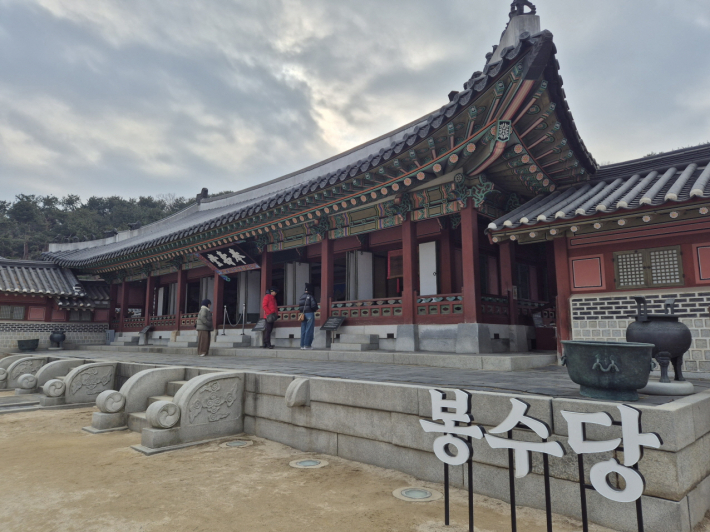
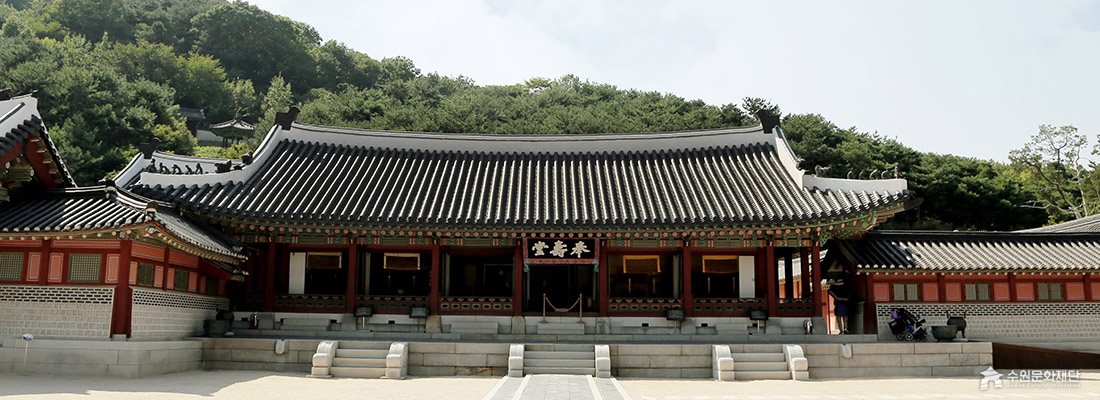
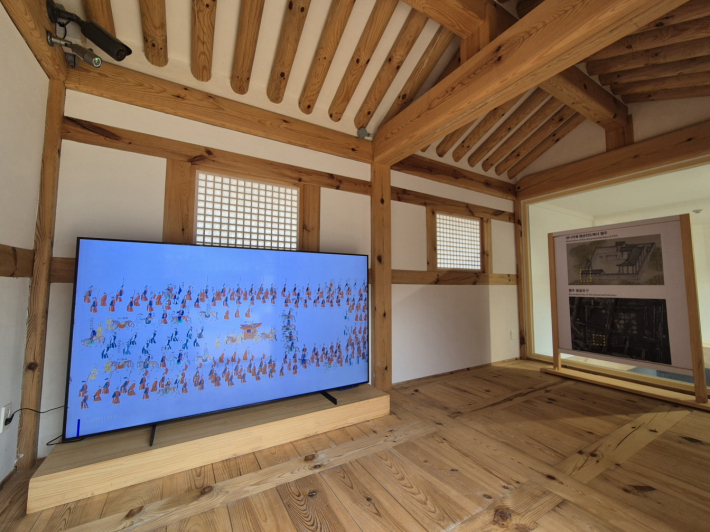
Bongsudang was the highest-ranking building at Hwaseong Haenggung and was originally the dongheon, where the governor of Hwaseong Yusubu conducted official business. In 1795, a royal banquet was held here to mark the 20th anniversary of Jeongjo’s accession and the 60th birthday of his mother, Hyegyeonggung Hong, and on that occasion the building’s name was changed from Jangnamheon to Bongsudang.
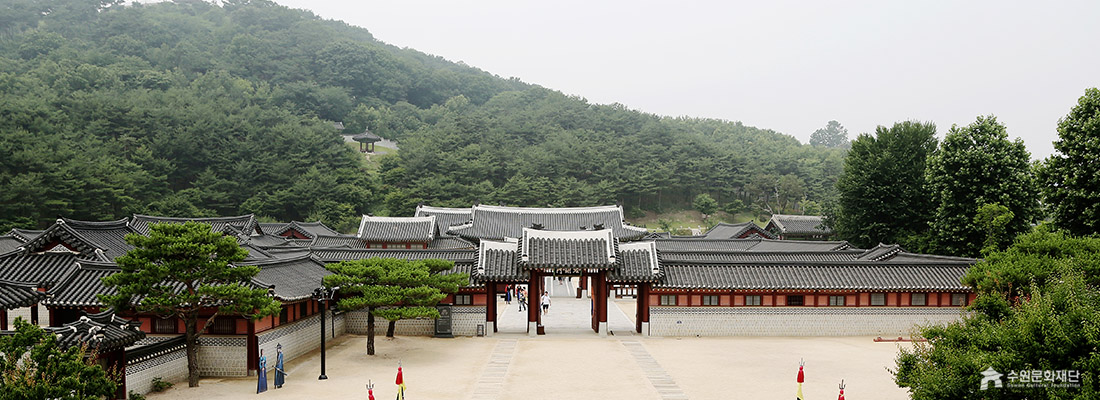
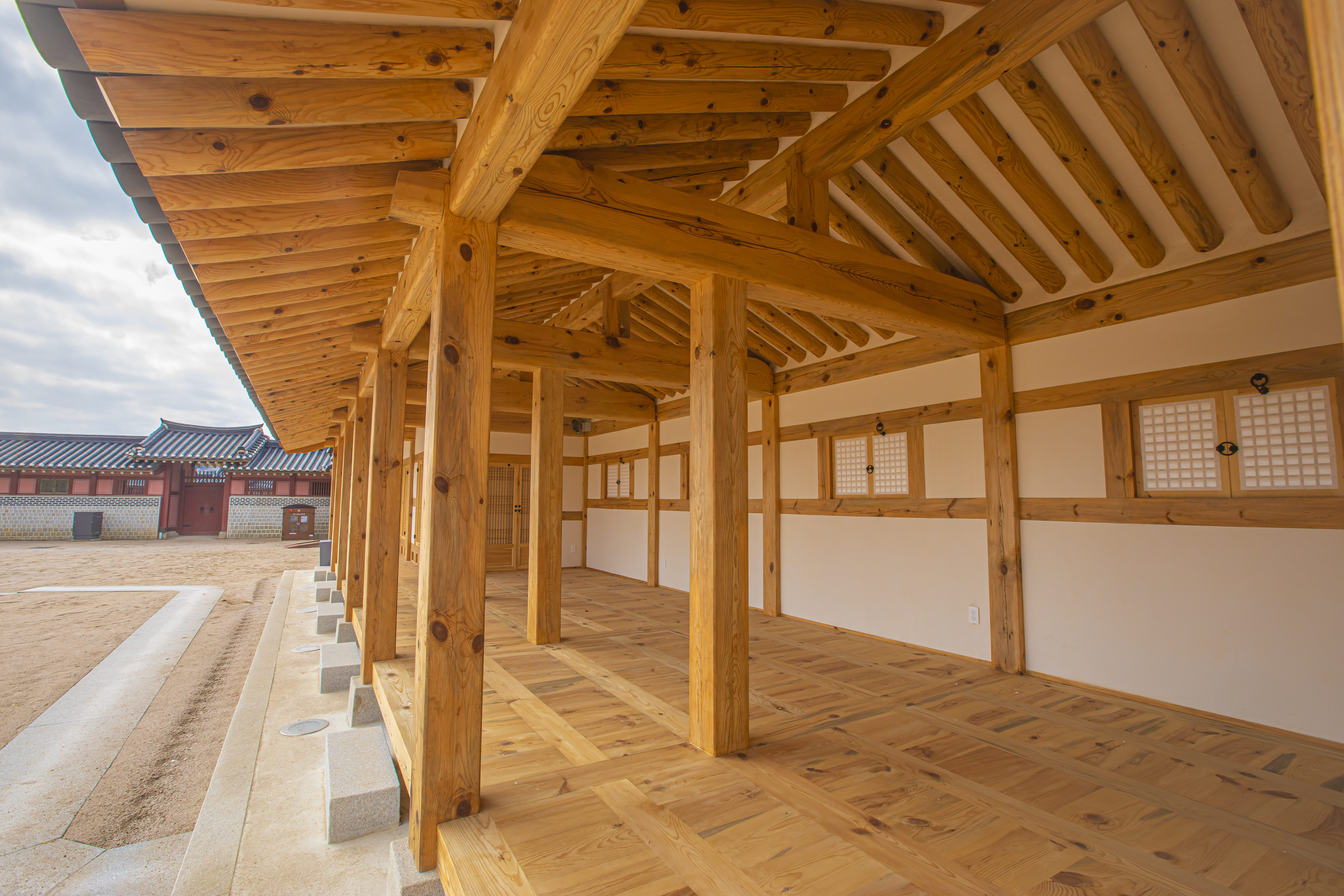
If this is your first visit, it is best to pass through Sinpungnu, read the information panel at Bongsudang first, and then view the interior reconstruction. The royal banquet was not merely a family event; it was an occasion when Jeongjo expressed filial piety as a language of public politics. The route continuing toward Nangnamheon and Byeolju also helps visitors examine the spatial arrangement of official ceremonies and court life.
Two Layers of Time Left by the Damage After 1909 and the Restoration from 1996 to 2003
Hwaseong Haenggung was used as a hospital for local residents from 1909, leading to the demolition of its major buildings, and during the Japanese colonial period it was used as a hospital and police station. Knowing that many facilities disappeared in this process, apart from Nangnamheon and a few others, makes it clear that the spacious haenggung seen today was not a structure that had remained intact from the beginning.
Suwon City began restoration work in 1996, the 200th anniversary of the construction of Hwaseong Fortress, and opened the site to the public in 2003. One basis that made restoration possible was the Uigwe of the Construction of Hwaseong Fortress, which contains detailed records of construction materials, structures, and drawings. For this reason, an accurate visit should read together the records of two eras: the original form of the late Joseon period and the modern restoration process.
Nine Points Along a One-Hour Route from Sinpungnu to Nangnamheon
The Korea Tourism Organization’s guided route suggests approximately one hour in the following order: Sinpungnu → Bongsudang → Nangnamheon → Hwaryeongjeon → Deukjungjeong → Mirohanjeong → Boknaedang → Jangnakdang → Yuyeotaek. Hwaryeongjeon is a separate building from the haenggung, but it lies directly along the adjacent route, so this order is efficient for visitors who also want to see the space housing Jeongjo’s portrait.
If you have only 40 minutes, it is better to focus on Sinpungnu, Bongsudang, and Nangnamheon. Sinpungnu is the main gate, Bongsudang is the central building serving as the main hall of the haenggung, and Nangnamheon was used for official events and banquets, so the functions of the three buildings do not overlap. Visiting hours are 09:00–18:00 from March to October and 09:00–17:00 from November to February; admission closes one hour before closing.
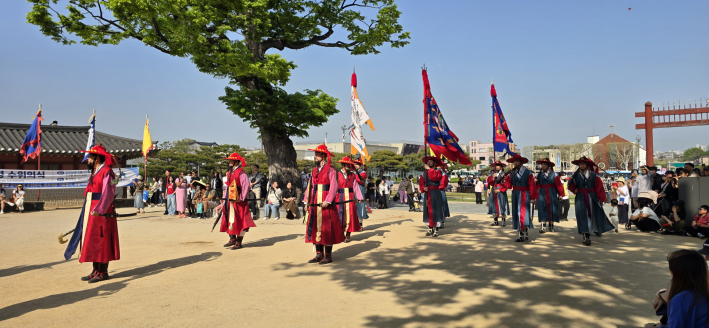
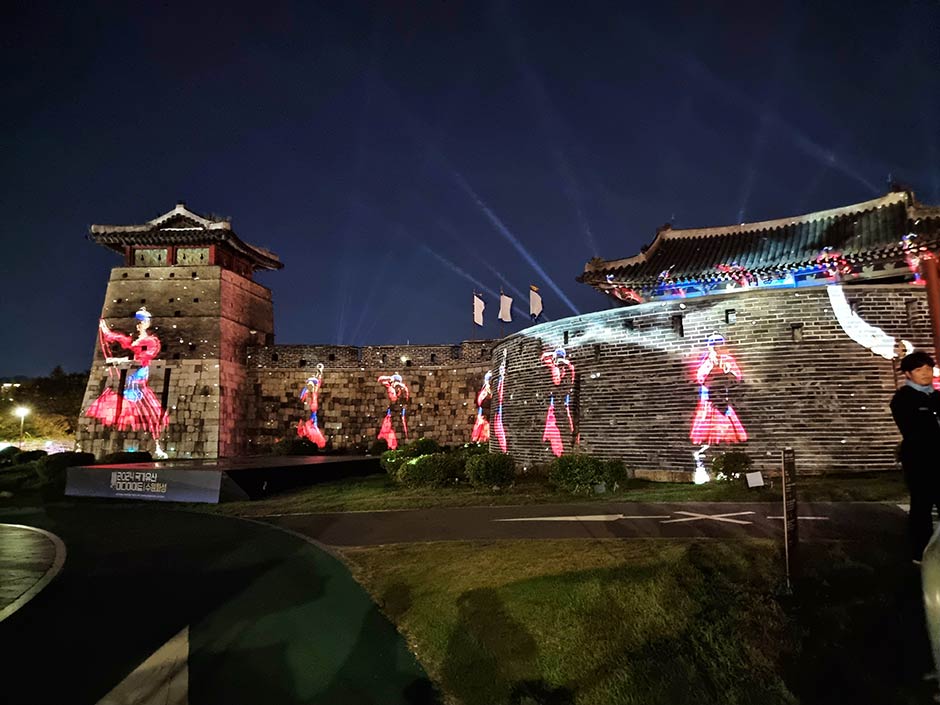
Jangyongyeong Guard Ceremony at Sinpungnu at 16:00 on Sundays in 2026 and the Summer Break
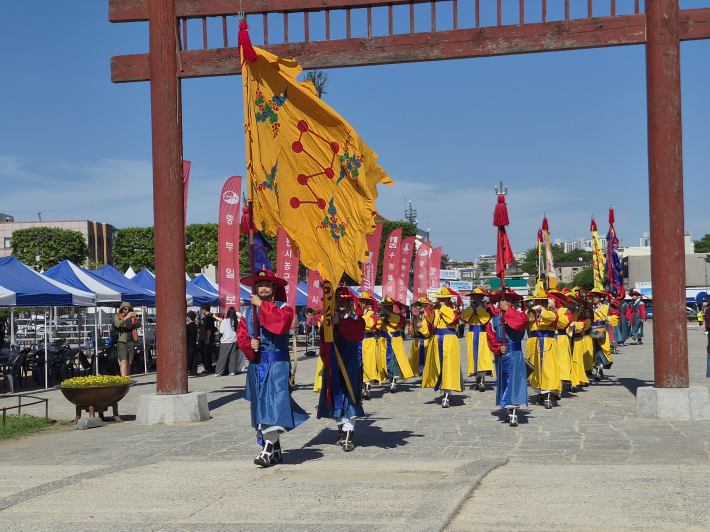
In 2026, the Jangyongyeong Guard Ceremony is held free of charge every Sunday from 16:00 to 17:00 from April 19 through October at Sinpungnu, the main gate of Hwaseong Haenggung. However, there are no performances in July and August because of the extreme heat. Therefore, visitors should not come expecting this event in August 2026, and it is safest to check Suwon Cultural Foundation announcements again for the resumption schedule after September.
Jangyongyeong was a royal guard unit that King Jeongjo expanded from Jangyongwi in 1785 and established in 1793, while the outer unit based around Suwon Hwaseong was overseen by the governor of Hwaseong Yusubu. Thus, the reenactment in front of Sinpungnu is not simply a performance but a program explaining the role of the military unit that protected the haenggung. On event days, it is advisable to stand in front of Sinpungnu before the start, decide first on your entry route and viewing position amid the crowds, and then proceed to view the ticketed areas.
How to Reach the Site by Bus from Suwon Station Exits 7 and 9
From Suwon Station on Subway Line 1 and the Suin–Bundang Line, transferring to a bus is the most practical option. From Suwon Station Exit 7, walk approximately 56 meters to the Suwon Station–AK Plaza bus stop, take bus 66, 66-4, 82-1, 60, 7-2, or 660, and get off at the Hwaseong Haenggung stop; the walk from there is approximately 3 minutes.
From Suwon Station Exit 9, walk approximately 156 meters to use the Maesan Market bus stop. Buses 13, 11, 35, 46, 16, 16-1, 16-2, 26, 32-1, 32-2, 32-5, 50-2, and 50-5 stop at the Paldal-gu Office–Hwaseong Haenggung stop, from which it is approximately a 3-minute walk. Buses 999, 400, 400-4, 400-2, 2-2, and 400-5 stop at the Paldal-gu Office–Suwon Hwaseong Museum stop, from which it is approximately a 6-minute walk.
- Road-name address: 825 Jeongjo-ro, Paldal-gu, Suwon-si, Gyeonggi-do
- Hwaseong Haenggung Information Center: 031-5191-4480, 10:00–17:00
- Ticket office: 031-5191-4677
- General inquiries: 031-290-3600
2026 Admission: 2,000 Won · Parking: 900 Won for 30 Minutes · Three Wheelchairs
Hwaseong Haenggung is open year-round. Individual admission is 2,000 won for adults, 1,500 won for youths and military personnel, and 1,000 won for children. Groups of 20 or more pay 1,500 won, 1,200 won, and 800 won, respectively. For combined admission to Hwaseong Haenggung, Suwon Hwaseong Museum, and Suwon Museum, the individual rates are 4,000 won for adults, 2,500 won for youths and military personnel, and 1,000 won for children.
For visitors arriving by car, the Hwaseong Haenggung parking lot costs 900 won for the first 30 minutes, 400 won for each additional 10 minutes, and a maximum of 14,000 won per day. The site has three wheelchairs and two strollers, and a nursing room is located in the building next to the restroom at the entrance to the Hwaseong Haenggung parking lot. Unlike the entire fortress route, which includes slopes, gravel, and stairs, planning a visit focused on the interior of the haenggung can reduce the difficulty of getting around.
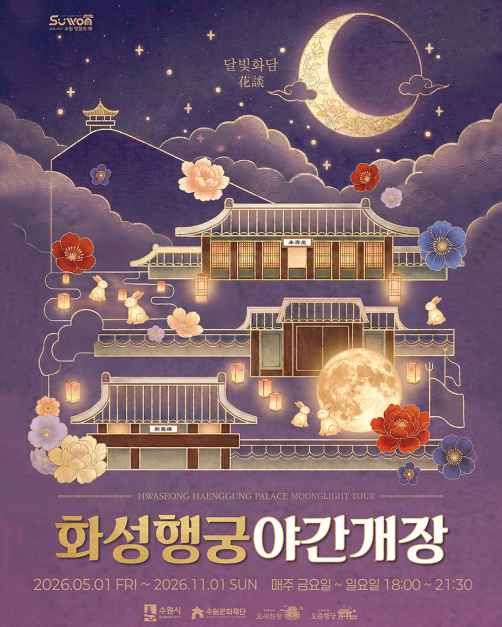
In 2026, evening hours run from May 1 to November 1, from 18:00 to 21:30 on Fridays, Saturdays, Sundays, and public holidays, with admission closing at 21:00. Since this is operated for a separate period from regular daytime visiting hours, check announcements on changes due to events and weather on the day of an evening visit.
Before You Go
- Address
- 825 Jeongjo-ro, Paldal-gu, Suwon-si, Gyeonggi-do
- Hours
- March–October 09:00–18:00, November–February 09:00–17:00; admission closes one hour before closing. Evening hours (May 1–November 1, 2026, Fridays–Sundays and public holidays) 18:00–21:30, admission closes at 21:00
- Closed
- Open year-round
- Admission
- Individuals: adults 2,000 won, youths and military personnel 1,500 won, children 1,000 won. Groups of 20 or more: adults 1,500 won, youths and military personnel 1,200 won, children 800 won.
- Phone
- Hwaseong Haenggung Information Center 031-5191-4480 / Ticket office 031-5191-4677 / General 031-290-3600
- Official site
- https://www.swcf.or.kr/?p=65
- Transport
- Suwon Station Exit 7 → Suwon Station–AK Plaza stop (approximately 56 m), take buses 66, 66-4, 82-1, 60, 7-2, or 660 → Hwaseong Haenggung stop, approximately a 3-minute walk. Suwon Station Exit 9 → Maesan Market stop (approximately 156 m), take buses 13, 11, 35, 46, 16, 16-1, 16-2, 26, 32-1, 32-2, 32-5, 50-2, or 50-5 → Paldal-gu Office–Hwaseong Haenggung stop, approximately a 3-minute walk.
- Parking
- Hwaseong Haenggung parking lot: 900 won for the first 30 minutes, 400 won per additional 10 minutes, 14,000 won per day
- Time needed
- Core route: 40 minutes; approximately 1 hour for nine points including Sinpungnu → Bongsudang → Nangnamheon → Hwaryeongjeon
- Accessibility
- Three wheelchairs and two strollers available; nursing room provided. Cultural tourism guide services at the Hwaseong Haenggung Information Center are available from 10:00 to 17:00.
The information above is current as of the time of writing. Please check the official information again before visiting.

Places
Nearby Attractions 3
-
 1
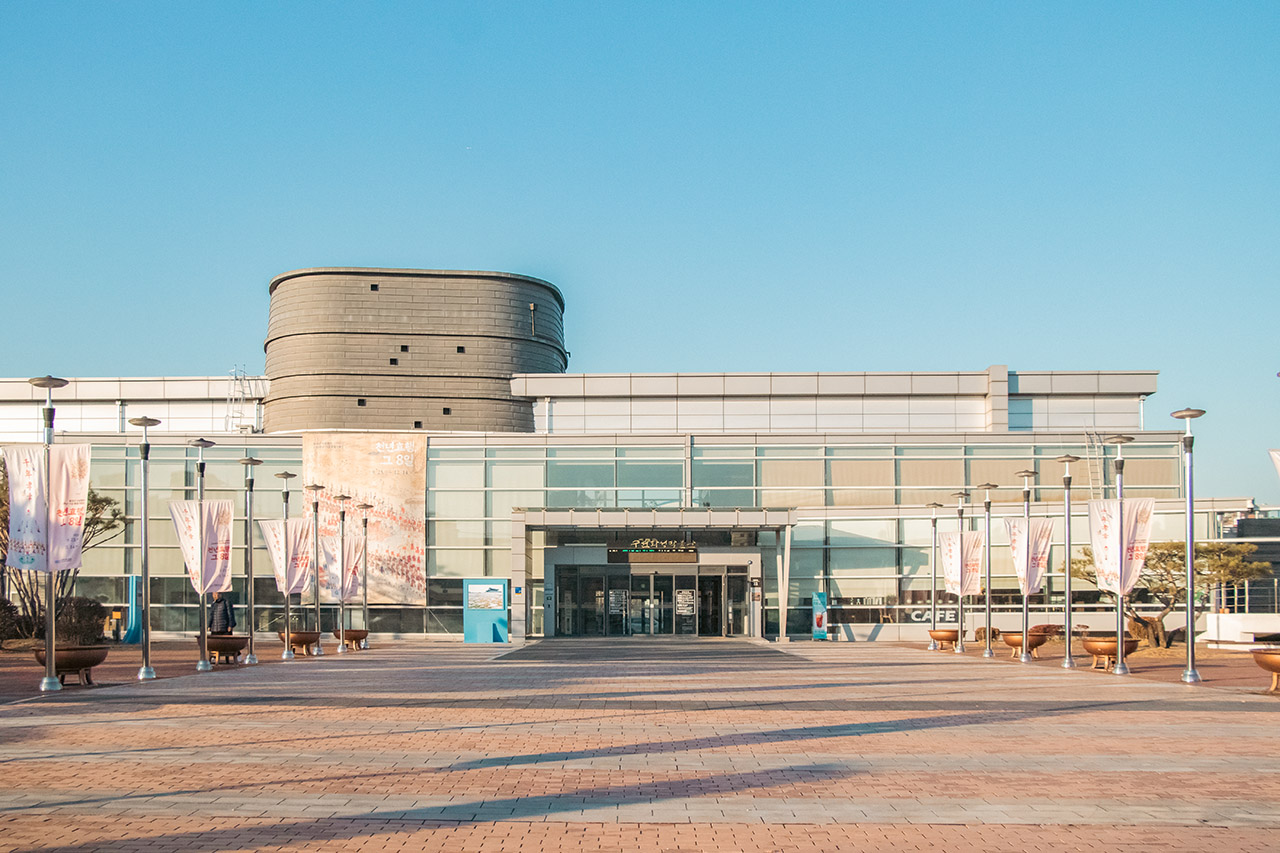
Suwon Hwaseong MuseumExhibits on the construction of Suwon Hwaseong Fortress and the history of the era of King Jeongjo.
1
Suwon Hwaseong MuseumExhibits on the construction of Suwon Hwaseong Fortress and the history of the era of King Jeongjo. -
 2
Hwaryeongjeon ShrineA Joseon-era royal portrait shrine site that enshrined a portrait of King Jeongjo.
2
Hwaryeongjeon ShrineA Joseon-era royal portrait shrine site that enshrined a portrait of King Jeongjo. -
 3
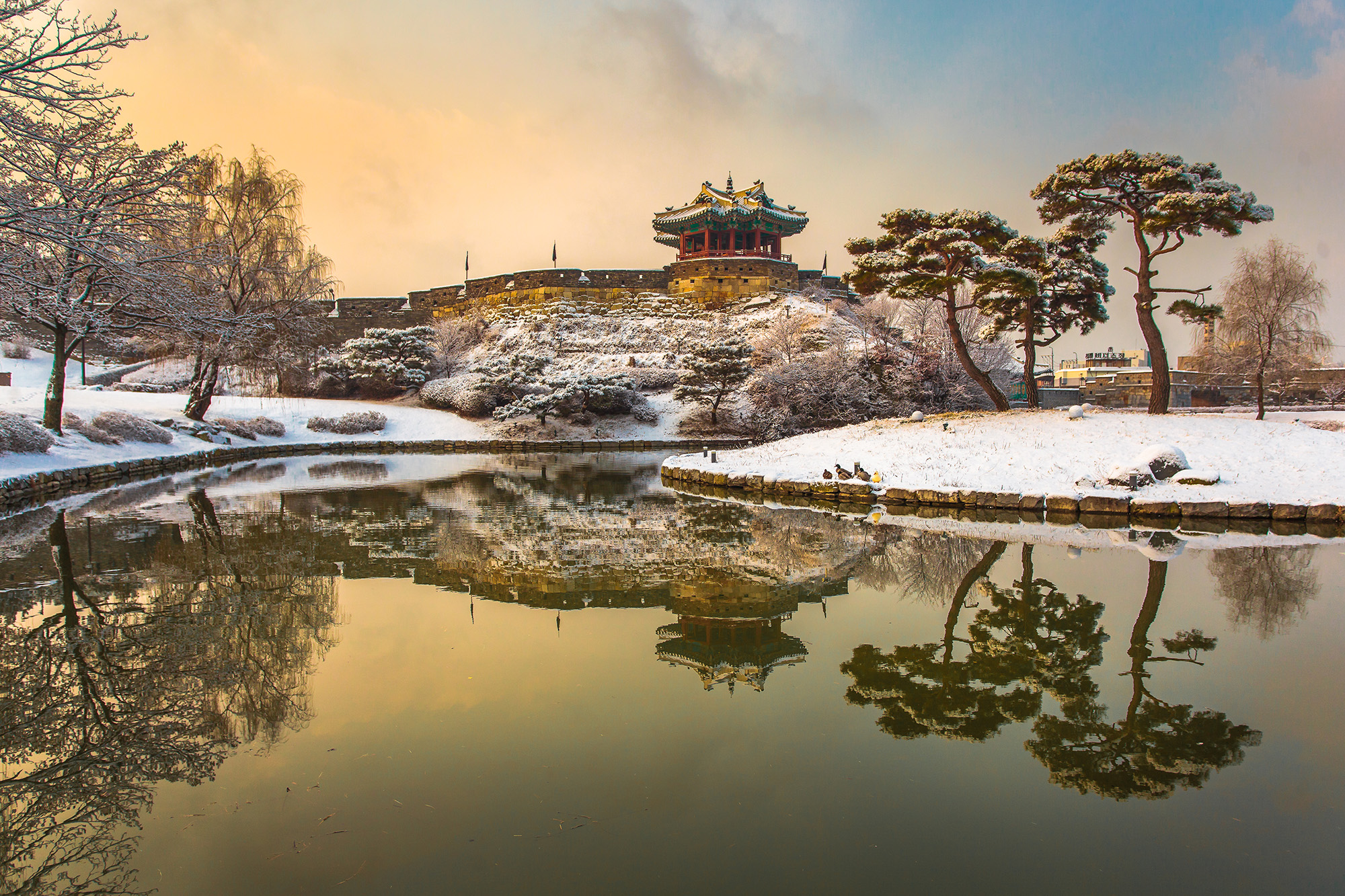
Banghwasuryujeong PavilionA pavilion built in the northeastern part of Suwon Hwaseong Fortress for enjoying the scenery.
3
Banghwasuryujeong PavilionA pavilion built in the northeastern part of Suwon Hwaseong Fortress for enjoying the scenery.
Food & Dining 1
-
 4
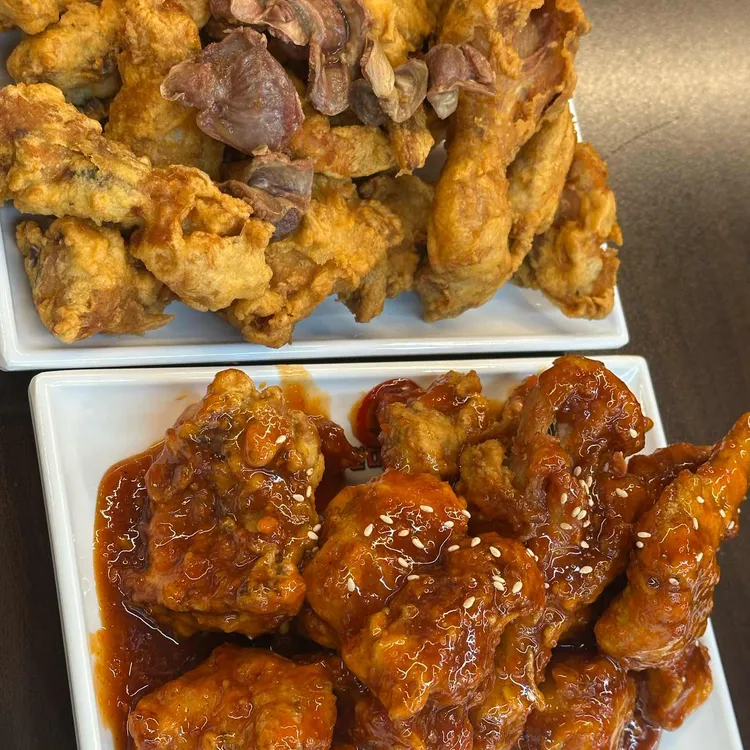
Jinmi TongdakEnjoy old-fashioned whole chicken fried in a cauldron, along with king galbi chicken.
4
Jinmi TongdakEnjoy old-fashioned whole chicken fried in a cauldron, along with king galbi chicken.
Events in This Area
Festivals in This Area

More Travel Guides in This Area
 Travel Guide
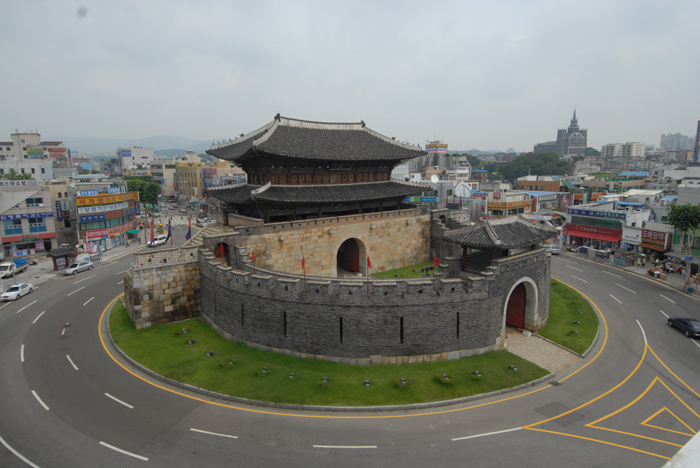
A 3-Hour Walk Through King Jeongjo’s New City: The Gates, Water Gates, and Palace of Suwon Hwaseong
 Travel Guide
Suwon-style whole chicken from a 100m alley in front of Hwaseong Haenggung
 Travel Guide
Flying Suwon Next to Changnyongmun Gate at Suwon Hwaseong Fortress
 Travel Guide
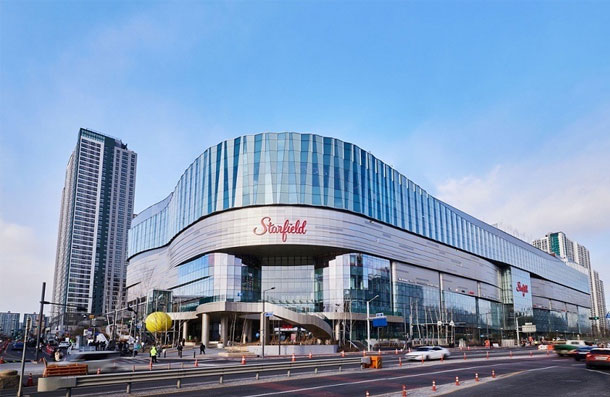
8 minutes from Hwaseo Station Exit 2 or 3: How to make the most of the 330,000㎡ Starfield Suwon route
Korea News
![BLACKPINK’s Lisa Dominates the VMA Red Carpet in a Sheer Corset Dress and Red Fur [Star Issue]](https://kotourlive-images.s3.ap-northeast-1.amazonaws.com/news/1790557894714_010e956a_news_94409db1-fab6-40bf-bc7b-4b985b1fbac7.jpg) News
News
BLACKPINK’s Lisa Dominates the VMA Red Carpet in a Sheer Corset Dress and Red Fur [Star Issue]
![BLACKPINK’s Jisoo Spotted by Surprise with BIGBANG in London… Their Special Loyalty as Labelmates [IS High Cut]](https://kotourlive-images.s3.ap-northeast-1.amazonaws.com/news/1790557854683_6ea979f5_news_caab62e5-8462-43c8-8622-da794f3df9de.png) News
News
BLACKPINK’s Jisoo Spotted by Surprise with BIGBANG in London… Their Special Loyalty as Labelmates [IS High Cut]
 News
News
Tattoos All Over Her Body… AOA’s Jimin Draws Shocked Attention After Kwon Mina’s ‘Bullying’ Allegations
![You’ll Have to Look Twice… Choi Min-a-soo Perfectly Pulls Off Everything from a Daring Illusion Dress at the Awards Ceremony to Long Braided Hair [RE:STAR]](https://kotourlive-images.s3.ap-northeast-1.amazonaws.com/news/1790492384850_1f293dad_news_d834c50e-0685-43ef-9aa5-6995cd6d8848.jpg) News
News