Pyeonggwang-dong 7.4 km, Where Apple Orchards and the Legend of King Wang Geon’s Escape Meet
The Daegu Olle Palgongsan Course 4, the Pyeonggwang-dong Wang Geon Trail, is a 7.4 km village path linking the entrance to Pyeonggwang-dong Apple Village with Pyeonggwangji, Mo-yeongjae, and Cheonbaekdang. It opened in September 2009, and because the entire route is paved, wheelchairs and strollers can travel it, though caution is needed due to vehicle traffic.

I’ve been here?
Your check-in helps the next traveler.
17 people viewed this week Be the first
One tap — no writing needed
September 2009, 7.4km starting from Danyang U Clan Village
Daegu Olle Palgongsan Course 4 Pyeonggwang-dong Wanggeon-gil is a trekking course that opened in September 2009. Official tourism data guides the starting point as the 'Entrance to Pyeonggwang-dong Apple Village, Dong-gu, Daegu,' and suggests a total distance of 7.4km to be completed in about 2 hours and 30 minutes.
The course passes through the living area of Pyeonggwang-dong, which carries on the tradition of Daegu apple cultivation, particularly the Danyang U clan village. Although the name 'Wanggeon' is attached to the trail, it is not a hiking trail ascending to a mountain peak, but a walking route focused on flat ground connecting apple orchards, village roads, reservoirs, and ritual houses.
- Starting Point: Entrance to Pyeonggwang-dong Apple Village
- Total Distance: 7.4km
- Official Recommended Time: Approx. 2 hours 30 minutes
- Opened: September 2009
- Category: Trekking
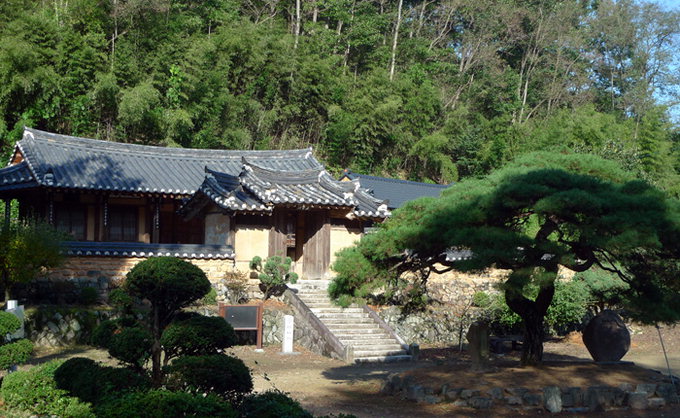
7 points from the Filial Son Kang Sun-hang Tree to Pyeonggwang Terminal
The order of the official guidance is Pyeonggwang-dong Entrance, Filial Son Kang Sun-hang Tree, Pyeonggwang Elementary School, Pyeonggwangji Pond, Moyeongjae and General Sin Sung-gyeom Memorial Pillar (round trip), Cheombaekdang, and Pyeonggwang Jongjeom (Terminal) bus stop. Since the Moyeongjae section must be included as a round trip, the 7.4km route may vary if you miss the direction sign at Pyeonggwangji Pond.
The Filial Son Kang Sun-hang Tree is named after the filial son Kang Sun-hang, and Moyeongjae, located behind Pyeonggwangji Pond, is a space dedicated to Sin Sung-gyeom. If you climb toward the apple orchard to the left of Moyeongjae, you will find the Memorial Pillar for General Sin Sung-gyeom. Descending back toward Pyeonggwangji leads to Cheombaekdang and Pyeonggwang Jongjeom.
- 1: Pyeonggwang-dong Entrance
- 2: Filial Son Kang Sun-hang Tree
- 3: Pyeonggwang Elementary School
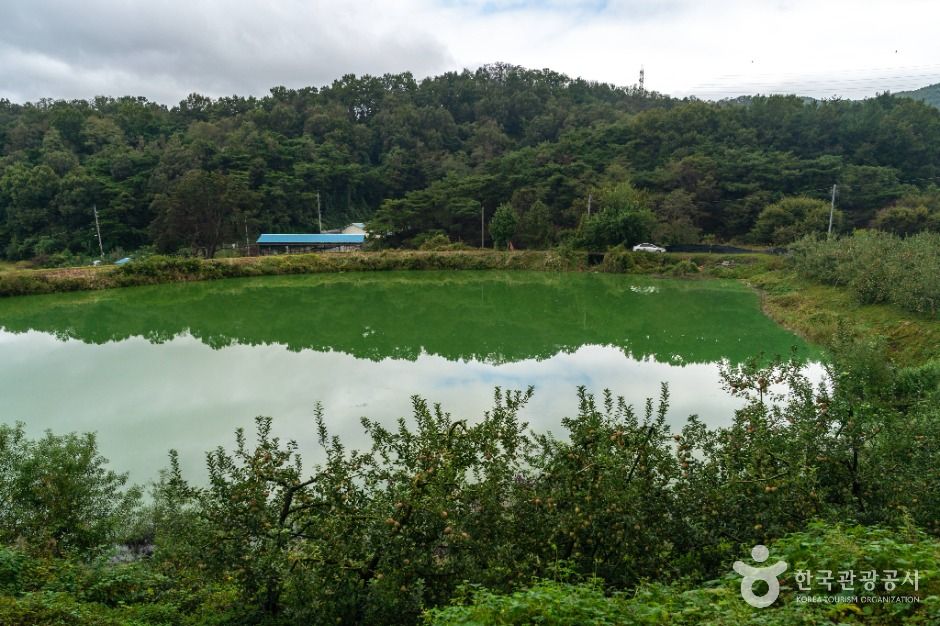
- 4: Pyeonggwangji Pond
- 5: Moyeongjae · General Sin Sung-gyeom Memorial Pillar (Round Trip)
- 6: Cheombaekdang
- 7: Pyeonggwang Terminal Stop
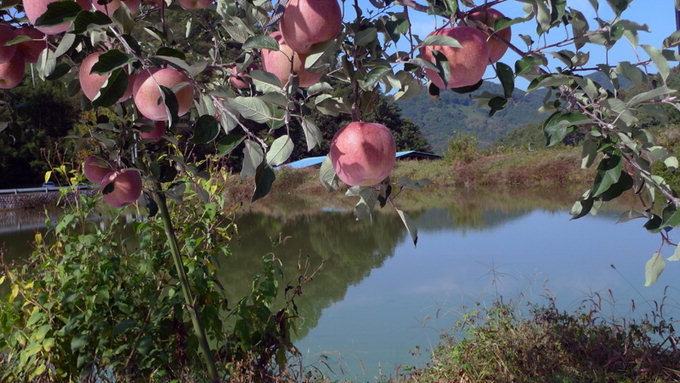
Memories of the 927 Battle of Gongsan, the 1832 Memorial Pillar, and the 1931 Moyeongjae
The historical background of Wanggeon-gil is the Battle of Gongsan in 927, where King Taejo Wanggeon of Goryeo and Gyeon Hwon of Later Baekje clashed. Tourism materials and local reports explain the incident where Sin Sung-gyeom died in place of Wanggeon while luring the enemy as the core background for the place names and relics in this area.
Behind Moyeongjae stands the Sin Sung-gyeom Memorial Pillar, erected in 1832, the 32nd year of King Sunjo, by Sin Jeong-wi, a descendant of the Pyeongsan Sin clan. Moyeongjae itself is a ritual house built in 1931 by the Pyeongsan Sin clan to honor the virtue of Sin Sung-gyeom, and the clan performs a joint memorial service every year on the 9th day of the 9th lunar month.
'Moyeongjae' is a name that conveys the meaning of cherishing the memory of the portrait hall (Yeonggak). The Sin Sung-gyeom Memorial Pillar and ritual house are not just stopovers, but locations where the memory of Pyeonggwang-dong—passed down as the path Wanggeon escaped after the Battle of Gongsan—remains through clan rituals and architecture.
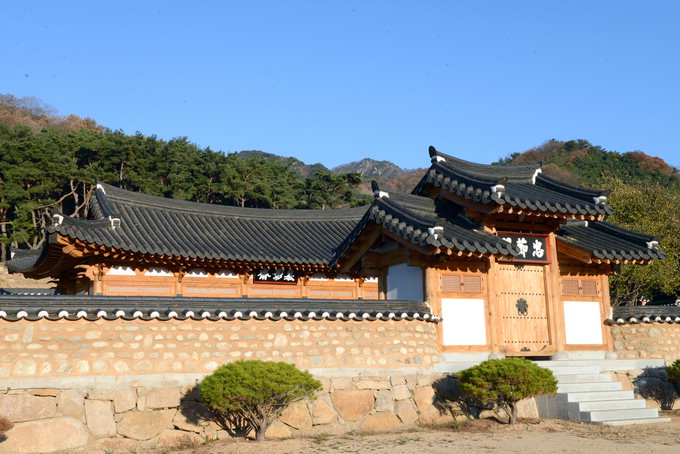
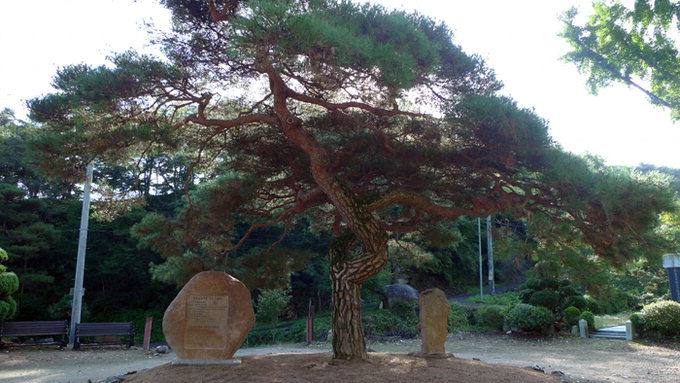
1945 Liberation Pine Tree and Daegu Cultural Heritage Material No. 13 Cheombaekdang
Cheombaekdang is a ritual house of the Danyang U clan and is introduced as Daegu Cultural Heritage Material No. 13 in official tourism records. It was built to honor the loyalty of the filial son U Hyo-jung and the scholar U Myeong-sik, serving as a historical point in the latter half of the course.
In the center of the Cheombaekdang courtyard stands the Liberation Pine Tree, planted in 1945 to commemorate national liberation. Since this point is reached after passing through village paths where old houses and ginkgo trees are visible, it is recommended to look for the Cheombaekdang information board and the Liberation Pine Tree rather than heading straight to the terminal after only seeing the apple orchards.
Official materials note that the oldest Jonathan apple tree in Korea can be found at Jaebau Farm. However, as orchards are production spaces for farmers, the rule is not to enter the orchard or pick apples arbitrarily, even during the ripening season.
Apple blossoms in April-May and fall harvest season: Why to avoid midsummer
Official data recommends spring and autumn for this course and specifies avoiding midsummer walks due to the lack of shade. Spring, during the apple blossom period in April-May, and autumn, when the apples ripen, are introduced as the best times to view the orchard landscape of Pyeonggwang-dong.
There are no restrictions on the usage hours for all sections, it is open year-round, and admission is free. However, 'always available' does not mean that nighttime safety is guaranteed, so it is safer to plan your walk along village roads and orchard paths to arrive at Pyeonggwang Terminal or the starting point before sunset.
- Opening Period: Year-round
- Operating Hours: No restrictions
- Admission: Free
- Recommended Season: Spring/Autumn
- Time to Avoid: Midsummer daytime with little shade
- What to Bring: Water, sun hat, walking shoes
Route from Ayanggyo Station Exit 2 to Palgong 1 Bus
Public transportation involves taking the Palgong 1 bus toward Pyeonggwang-dong from the bus stop in front of Exit 2 of Ayanggyo Station on Daegu Subway Line 1. You can get off at the Pyeonggwang-dong village entrance to start, or get off at the Pyeonggwang Terminal to walk the course in reverse.
The Palgong 1 bus is known to have long intervals between services, so you must check the day's operating schedule and the last bus on the Daegu Bus Information System before departing. If starting from the terminal, the reverse route involves seeing Cheombaekdang and the Liberation Pine Tree first before walking toward Pyeonggwangji and Moyeongjae.
Private cars will share the Pyeonggwang-dong village roads. Official data does not specify a dedicated parking lot or parking fees, so avoid parking that blocks farm roads, orchard entrances, or resident access roads, and check for permitted areas on-site.
- Subway: Line 1 Ayanggyo Station
- Exit: Exit 2
- Connecting Bus: Palgong 1 toward Pyeonggwang-dong
- Drop-off Options: Pyeonggwang-dong Village Entrance or Pyeonggwang Terminal
- Terminal: Pyeonggwang Terminal Stop
7.4km Village Road without Dirt Paths: Stroller-friendly, but vehicle caution is essential
Official guidance explains that there are no dirt paths in any section of Wanggeon-gil Course 4, making it possible for bicycles, wheelchairs, and strollers to pass. While it is more accessible than steep mountain trails, it is subject to the condition of sharing the actual vehicle traffic paths of the rural village.
Therefore, wheelchair and stroller users should move to the side with a companion and step aside to a safe, wide area when vehicles are passing. Restrooms are guided to be available at privately opened facilities in Moyeongjae, so it is better to check availability and use the restroom before starting a long walk.
For inquiries, contact the Palgongsan Experience Culture Program Operation Center at 053-985-8030. While official tourism information provides English support, signs and bus announcements on-site may be primarily in Korean, so saving the course route on your phone is helpful.
- Road Surface: No dirt paths in any section
- Wheelchair/Stroller: Guided as passable
- Caution: Shared with vehicle traffic paths
- Restrooms: Private restroom at Moyeongjae available
- Inquiry: 053-985-8030
- Foreign Language Guidance: English information provided
Before You Go
- Address
- Entrance of Pyeonggwang-dong Apple Village, Dong-gu, Daegu (Starting Point)
- Hours
- No restrictions
- Closed
- Open year-round
- Admission
- Free
- Phone
- 053-985-8030
- Official site
- https://tour.daegu.go.kr
- Transport
- Take Palgong 1 toward Pyeonggwang-dong from the bus stop at Exit 2 of Ayanggyo Station, Daegu Subway Line 1, and get off at Pyeonggwang-dong Village Entrance or Pyeonggwang Terminal.
- Time needed
- Approx. 2 hours 30 minutes
- Accessibility
- Guided as accessible for bicycles, wheelchairs, and strollers as there are no dirt paths, but caution for vehicle traffic is required. English information provided.
The above information is accurate as of the time of writing. Please re-verify official guidance before visiting.

Places
Nearby Attractions 4
-
 1
1
-
 2
2
-
 3
3
-
 4
4
Food & Dining 5
-
 5
5
-
 6
6
-
 7
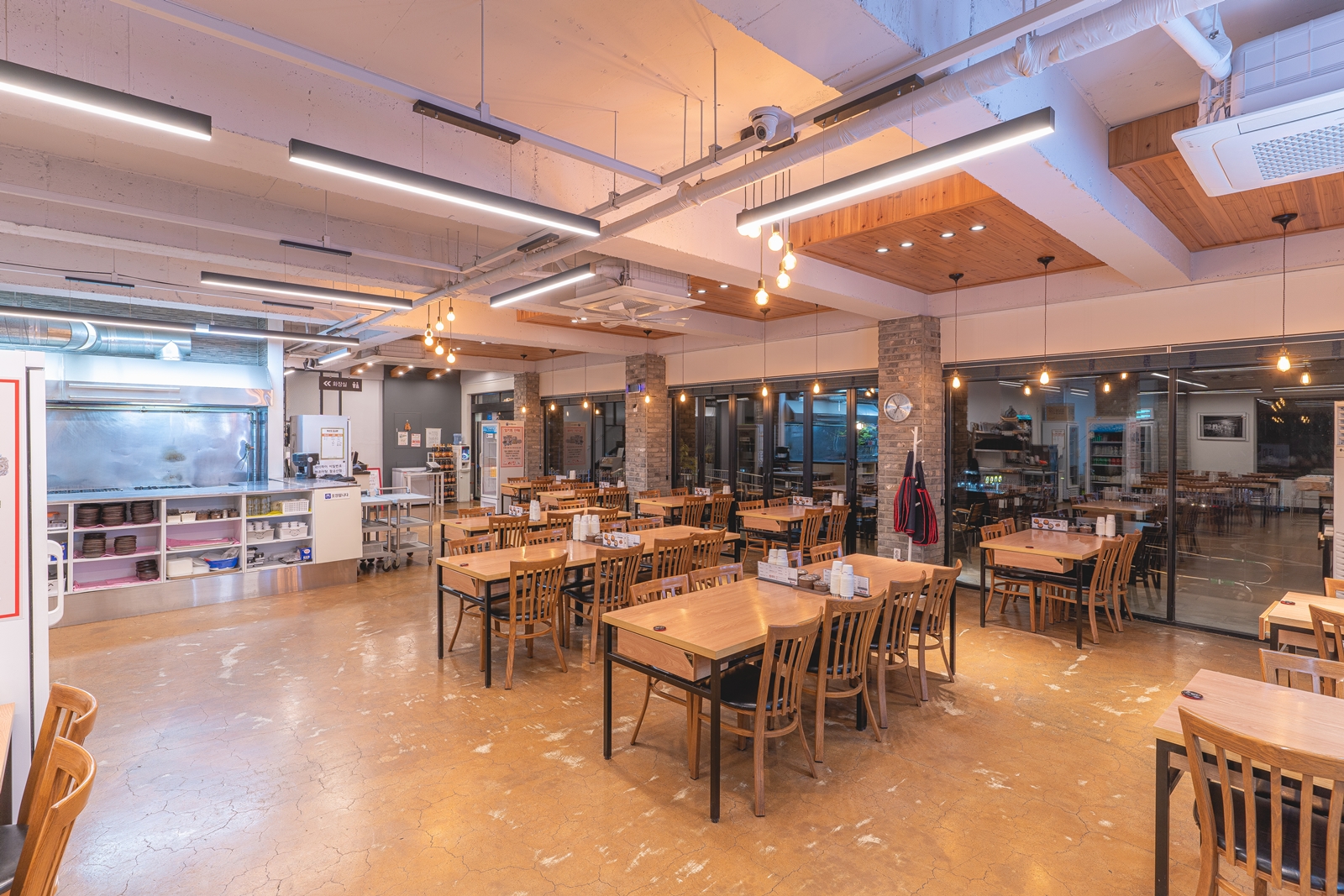
Original Eotang (Palgongsan Branch)
7
Original Eotang (Palgongsan Branch) -
 8
8
-
 9
9
More Travel Guides in This Area
 Travel Guide
Bangeojjagi Brassware: 1,489 Pieces Donated by Lee Bong-ju at the Foot of Palgongsan
 Travel Guide
Bokjijangsa at the End of a 5 km Pine Forest, Palgongsan Olle Course 1
 Travel Guide
The Trail Connecting Bulo-dong Tomb Group No. 213 to Bongmujung, a 7.2 km Route to Dansanji
 Travel Guide
The 9.8 km Path Where Leaves Are Not Swept, Palgongsan Buiinsa Walking Trail
Korea News
 News
News
‘NewJeans Expulsion’ Danielle Releases Her First YouTube Video… “We Don’t Know What Will Happen Next”
![aespa’s North American Tour Has Remaining Seats Despite ‘$49’ Bargain Prices… A Stark Popularity Gap with KATSEYE [TEN Starfield]](https://kotourlive-images.s3.ap-northeast-1.amazonaws.com/news/1788485037424_a59b1932_naver_rank_thumb_0000774618_1788485037424.jpg) News
News
aespa’s North American Tour Has Remaining Seats Despite ‘$49’ Bargain Prices… A Stark Popularity Gap with KATSEYE [TEN Starfield]
![[Photo] TWICE’s Dahyun attends a film festival red carpet as an actress](https://kotourlive-images.s3.ap-northeast-1.amazonaws.com/news/1788485316508_edd43ecd_news_870a60a6-6f11-4d73-aa7c-48d91318a0f7.jpg) News
News
[Photo] TWICE’s Dahyun attends a film festival red carpet as an actress
![[On-Site Video] “We’re Departing Separately Together”… BIGBANG Begins ‘COSMOS’ World Tour](https://kotourlive-images.s3.ap-northeast-1.amazonaws.com/news/1788485226518_c5719641_news_fdd4764a-0f4e-4968-8e4e-e98a02872f88.jpg) News
News