An Ecological Walking Trail Along the Waterway of Jeonju Hanok Village
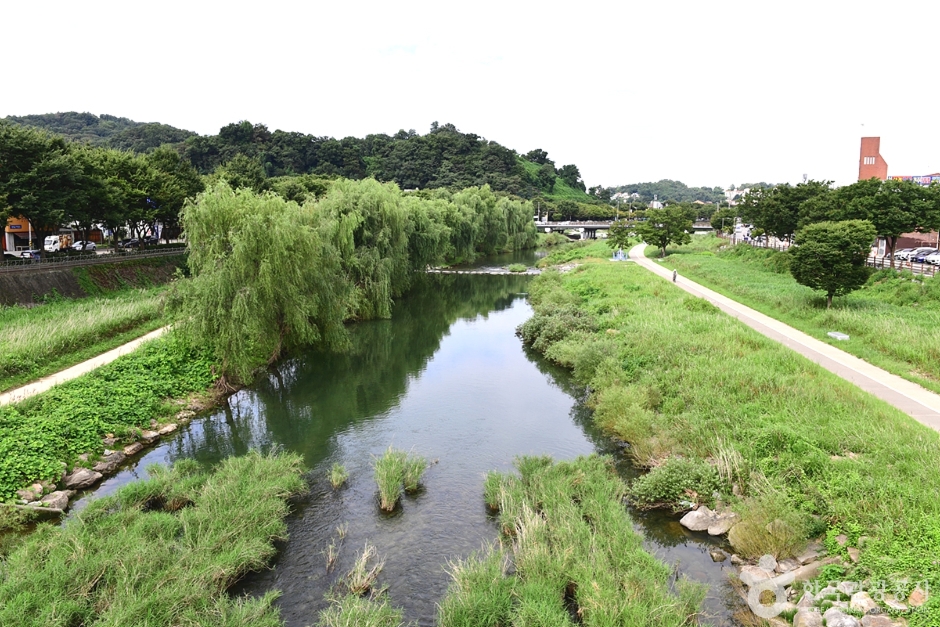
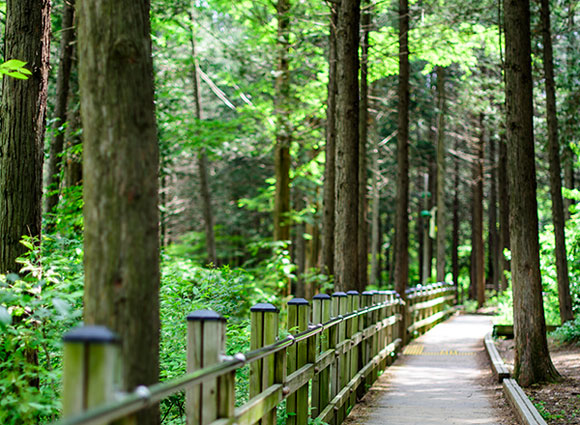
Jeonjucheon is an approximately 30-kilometer stream that originates in Seulchi, Gwanchon-myeon, Imsil, and crosses downtown Jeonju from southeast to northwest. Following an ecological stream restoration project in 1998, it was restored as an ecological waterway. You can walk along it with Jeonju Hanok Village, Namcheongyo Bridge, and Cheongyeonru Pavilion, or explore the area via a 7.1-kilometer cycling route.
I’ve been here?
Your check-in helps the next traveler.
31 people viewed this week Be the first
One tap — no writing needed
A 30-kilometer waterway starting in Seulchi, Imsil, and crossing Jeonju
Jeonjucheon Stream originates in Seulchi, Gwanchon-myeon, Imsil-gun, and runs approximately 30 kilometers through central Jeonju from southeast to northwest. The Jeonbuk State tourism guide describes its basin area as 31.53㎢ and classifies the stream as a local Class 1 stream. It also explains that Jeonjucheon is the first tributary of the Mangyeonggang River, joining Samcheon Stream at the recommended Seosin-dong area.
The representative location listed in tourism information is Dongseohak-dong, Wansan-gu, Jeonju-si. However, Jeonjucheon is not a single building but a long waterway connecting the upper reaches with the downtown section. For first-time visitors, setting the area around Namcheongyo Bridge, Cheongyeonru Pavilion, and Omokgyo Bridge, near Jeonju Hanok Village, as the destination makes travel planning easier.
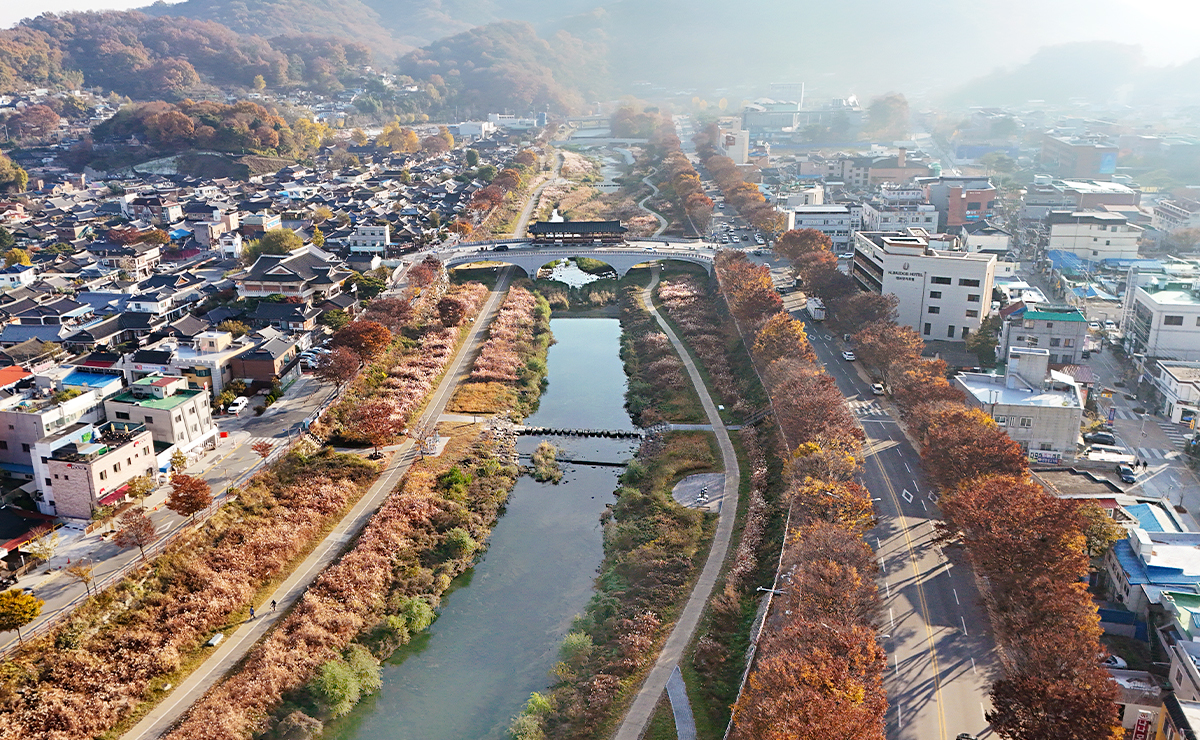
Restoration in 1998 created today’s ecological stream
In the past, Jeonjucheon carried Class 4–5 water in which almost no organisms could survive, as concrete embankments, parking lots, domestic sewage, and wastewater had become mixed together. Jeonju City launched a natural stream creation project in 1998, through which Jeonjucheon was restored as an ecological stream in the city center.
After restoration, Jeonjucheon was reported to provide habitat for 11 species of fish, including shiri, dark chub, striped shiner, Korean gudgeon, sand gudgeon, Korean striped loach, crucian carp, pale chub, and Korean rose bitterling, as well as freshwater snails. Eurasian otters, a Natural Monument, and mandarin ducks can also be observed upstream. The Jeonbuk tourism guide describes the presence of wild otters and shiri upstream as unique among major urban streams nationwide.
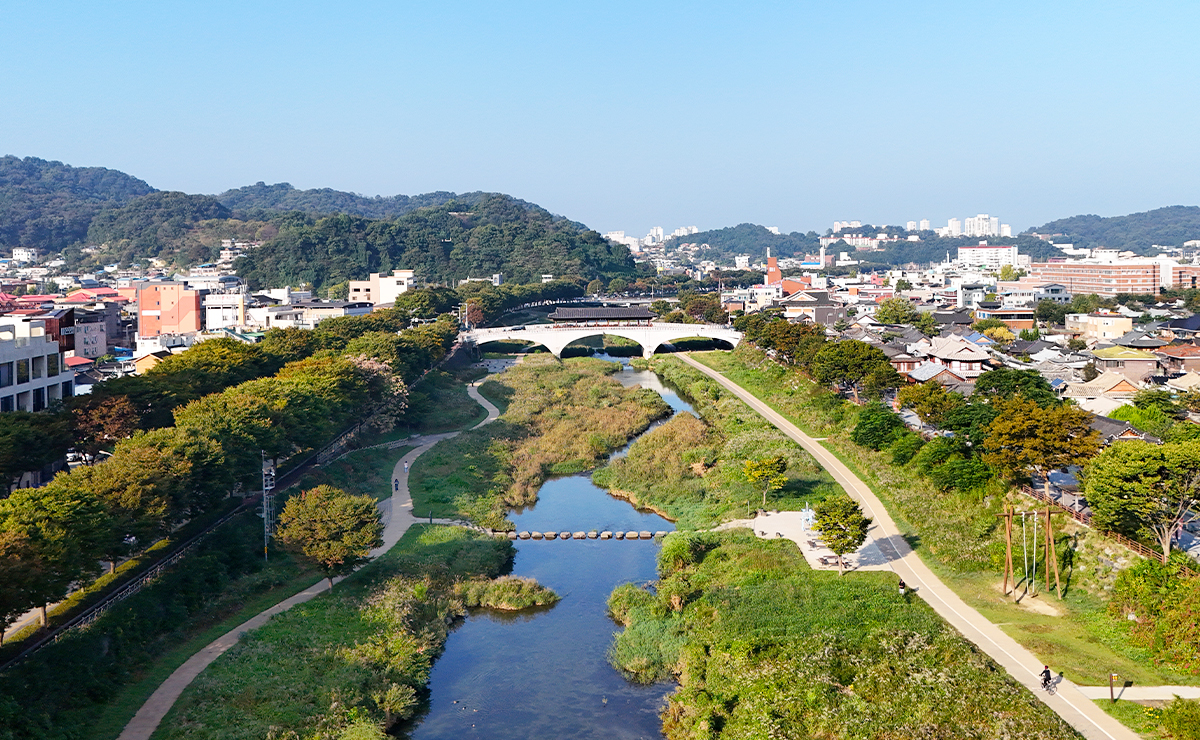
From Jeonju Station to Jeondong Cathedral–Hanok Village Stop
When traveling from Jeonju Station to the Jeonjucheon section near Hanok Village, Jeonju’s tourism map recommends taking buses 79, 119, 708, 536, 545, or 546 and getting off at the Jeondong Cathedral–Hanok Village stop. Alternatively, you can take buses 119, 511, 513, 514, 515, 521, 522, 525, 541, or 543, get off along Girin-daero, and walk for about five minutes.
No single stop or single pedestrian entrance applies to the entire Jeonjucheon area. Rather than searching only for “Jeonjucheon,” foreign visitors may find it easier to enter the Jeondong Cathedral–Hanok Village stop as the destination, then walk toward Namcheongyo Bridge or Omokgyo Bridge after reaching the stream.
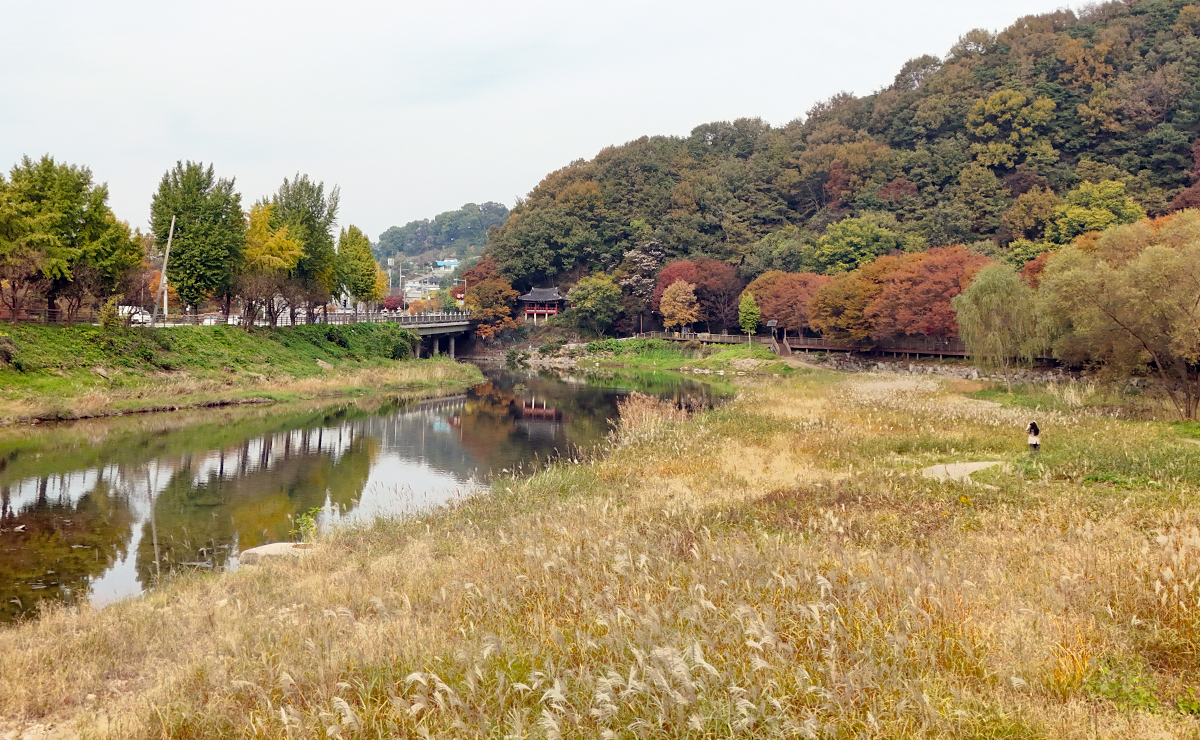
Routes from the express and intercity bus terminals
At Jeonju Express Bus Terminal, buses 165, 970, 1001, 1002, 110, 752, 401, 402, 403, 430, 508, 536, 542, 545, and 546 are listed as routes toward Hanok Village. The terminal can be used as a starting point when visiting the Jeonjucheon section near Jeonju Hanok Village.
At Jeonju Intercity Bus Terminal, buses 165, 970, 999, 1994, 1001, 1002, 430, 508, 536, 542, 545, 546, 79, 664, and 685 are listed from Geumam Plaza and Jeonbuk National University Hospital. Bus intervals and service changes may differ from the 2025 tourism map, so it is safest to check the current route and stop shortly before departure.
Planning a walking route from Omokgyo Bridge to Cheongyeonru
Omokgyo Bridge is a pedestrian-only footbridge connecting Jeonju Hanok Village and the National Intangible Heritage Center. Since vehicle traffic has been prohibited since its opening on September 4, 2017, it is an access point where visitors can cross Jeonjucheon from the Hanok Village side and see the waterway, Cheongyeonru Pavilion on Namcheongyo Bridge, and Donggosa Temple on Seungamsan Mountain behind it all within one view.
Around Jeonjucheon, you can combine Namcheongyo Bridge, Cheongyeonru Pavilion, stepping stones, Hanbyeokdang Pavilion, and Hanbyeokgul Tunnel with a visit to Hanok Village. Jeonju’s tourism map presents a walking course linking Jeondong Cathedral, Gyeonggijeon Shrine, Jeonju Hyanggyo Confucian School, the eastern road along Jeonjucheon, and Nambu Market, taking approximately 1 hour 30 minutes. Plan separately depending on whether you want to see only the stream quickly or walk through the old downtown area as well.
A 7.1-kilometer round-trip cycling route and seasonal scenery
Jeonju Tourism’s “Jeonjucheon Breeze Trail” is presented as an official cycling route measuring 7.1 kilometers round trip and taking approximately 40 minutes. It mainly follows bicycle-priority roads, making it suitable for a ride along the stream. Jeonjucheon is also introduced as a cycling route, running course, and riverside walking destination.
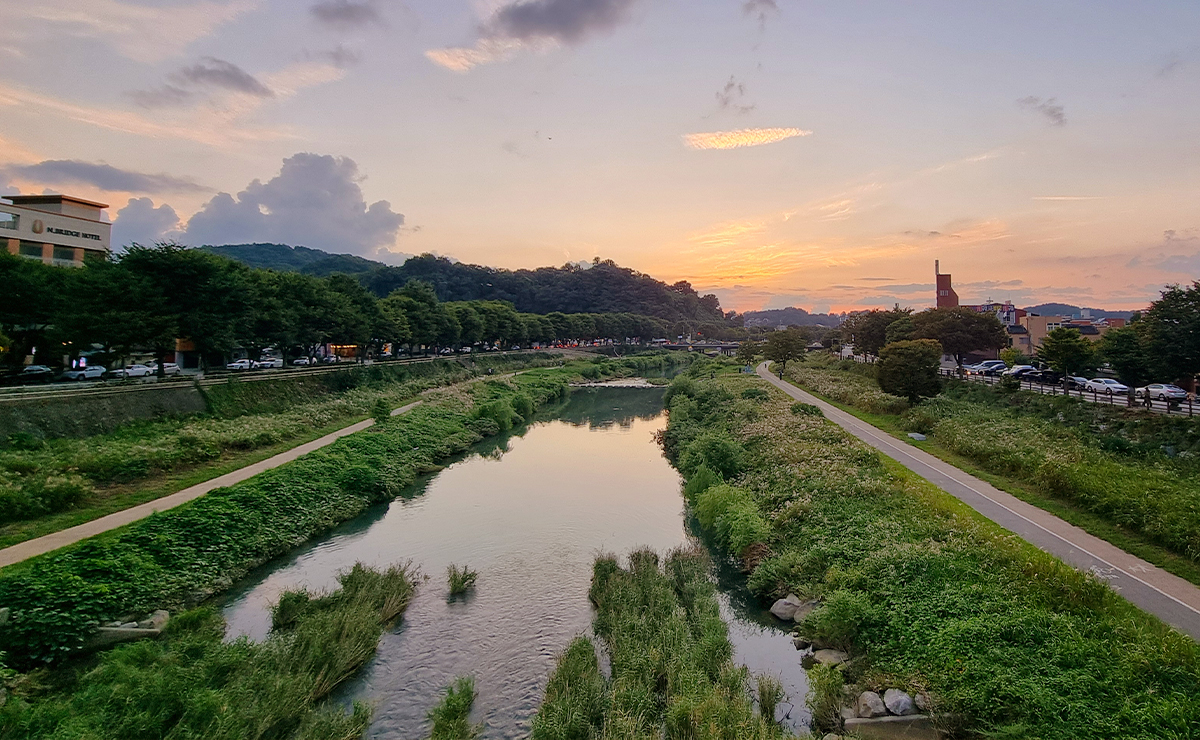
In spring, willows and cherry blossoms bloom along Jeonjucheon, while in late autumn, silver grass on the riverbanks becomes a major attraction. The area is also presented as a sunset spot, but the exact total length of the walking trail, walking distances by section, and usage restrictions during rain or rising water levels could not be confirmed in the published information.
Using the 42-space east-side Jeonjucheon roadside parking lot
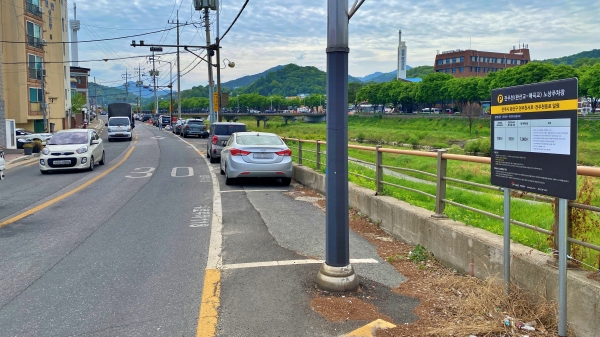
The east side of the Jeonjucheon roadside parking lot is listed as having 42 spaces. According to an article dated May 7, 2026, the basic fee is 700 won for 30 minutes, followed by an additional 350 won every 15 minutes, with a daily maximum of 7,000 won.
The same information states that free re-entry applies when exiting within 20 minutes. It also introduced free pilot operation before formal opening and plans to offer monthly parking passes for the east side of the Jeonjucheon roadside parking lot. In 2024, a plan was announced to allow parking on both sides of the 2-kilometer section from Wansangyo Bridge to the National Intangible Heritage Center along Jeonjucheonsseo-ro during the Wansan Park Flower Garden blooming period. However, this was a plan for a specific period and should not be generalized to current parking availability or fees.
Admission fees, operating hours, and restrictions easy to miss on site
Jeonjucheon is presented as an urban stream area for walking and cycling. Since no separate admission fee is listed, use of the Jeonjucheon section can be considered free. Operating hours are not listed on the official tourism page, and no regular closing day is separately announced. Therefore, it should not be treated like a museum where visitors enter through a ticket office or leave by closing time.
Published information does not confirm any photography ban, cash-only policy, English guidance, or audio guide information for the entire Jeonjucheon area. The riverside may include waterside areas and stepping stones, so even if reviews state that strollers and wheelchairs can be used, it is difficult to assume that slopes, stairs, and pavement conditions are uniform throughout the entire route. For inquiries, call 063-281-2114. Jeonjucheon information is available on the official tourism page.
Before You Go
- Address
- Dongseohak-dong, Wansan-gu, Jeonju-si
- Hours
- Operating hours are not listed on Jeonju’s official Jeonjucheon tourism page
- Admission
- Presented as a free urban stream area for walking and cycling, but no official admission fee for Jeonjucheon itself could be confirmed
- Phone
- 063-281-2114
- Official site
- https://tour.jeonju.go.kr/board/view.jeonju?boardId=BBS_0000003&dataSid=9774&menuCd=DOM_000000101006002000
- Transport
- From Jeonju Station, take buses such as 79, 119, 708, 536, 545, or 546 and get off at the Jeondong Cathedral–Hanok Village stop; a route involving a five-minute walk after getting off along Girin-daero is also listed. See the official tourism map for routes from the express and intercity bus terminals
- Parking
- 42 spaces on the east side of the Jeonjucheon roadside parking lot; 700 won for the first 30 minutes, an additional 350 won every 15 minutes thereafter, a daily maximum of 7,000 won, and free re-entry when exiting within 20 minutes
- Time needed
- Approximately 1 hour 30 minutes for the Jeonju walking course including Jeonjucheon (a linked course covering Jeondong Cathedral, Gyeonggijeon Shrine, Jeonju Hyanggyo Confucian School, the eastern road along Jeonjucheon, and Nambu Market)
- Accessibility
- Reviews introduce the Jeonjucheon walking trail as accessible to wheelchairs and strollers, but no official accessibility information is publicly available that verifies slopes, stairs, and pavement conditions across the entire Jeonjucheon route
The information above is current as of the time of writing. Check the official information again before visiting.

Places
Nearby Attractions 3
-
 1
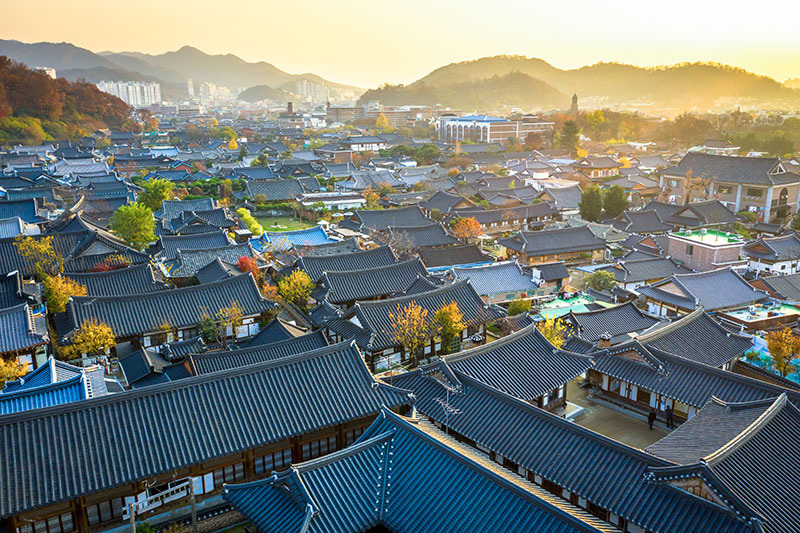
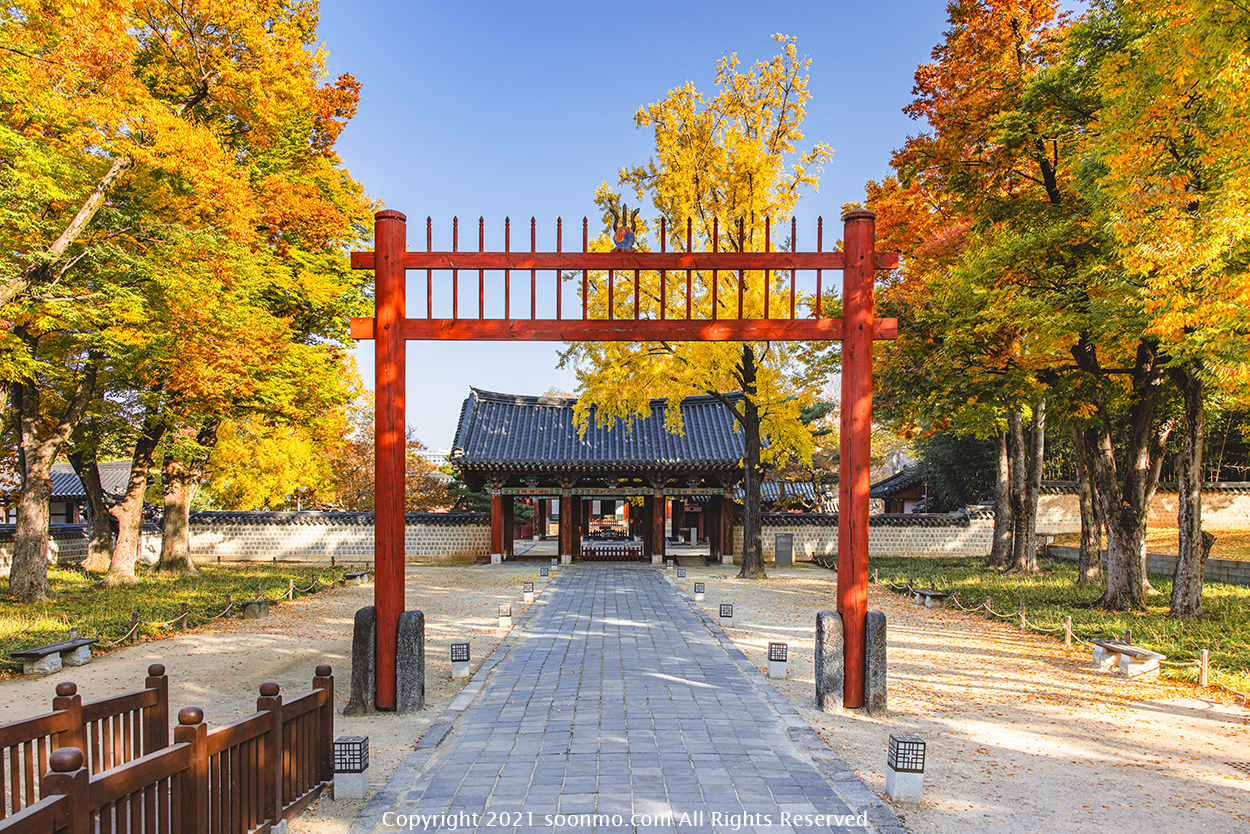
Jeonju Hanok VillageA renowned tourist attraction where visitors can enjoy hanok alleys and traditional cultural experiences
1
Jeonju Hanok VillageA renowned tourist attraction where visitors can enjoy hanok alleys and traditional cultural experiences -
 2
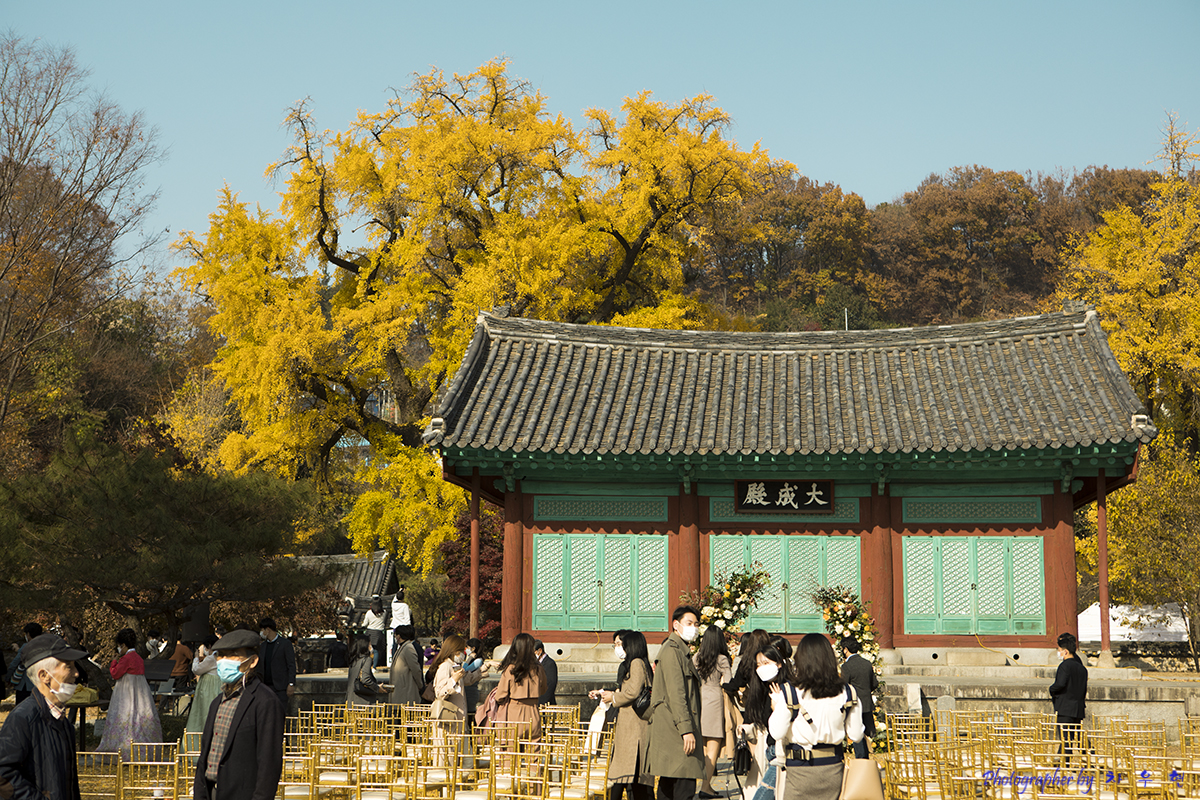
Gyeonggijeon ShrineA historic site featuring a portrait of King Taejo Yi Seong-gye and tranquil stone-walled paths
2
Gyeonggijeon ShrineA historic site featuring a portrait of King Taejo Yi Seong-gye and tranquil stone-walled paths -
 3
Jeonju HyanggyoA place to explore the architecture of a Joseon-era educational institution and enjoy the scenery of ginkgo trees.
3
Jeonju HyanggyoA place to explore the architecture of a Joseon-era educational institution and enjoy the scenery of ginkgo trees.
Food & Dining 3
-
 4
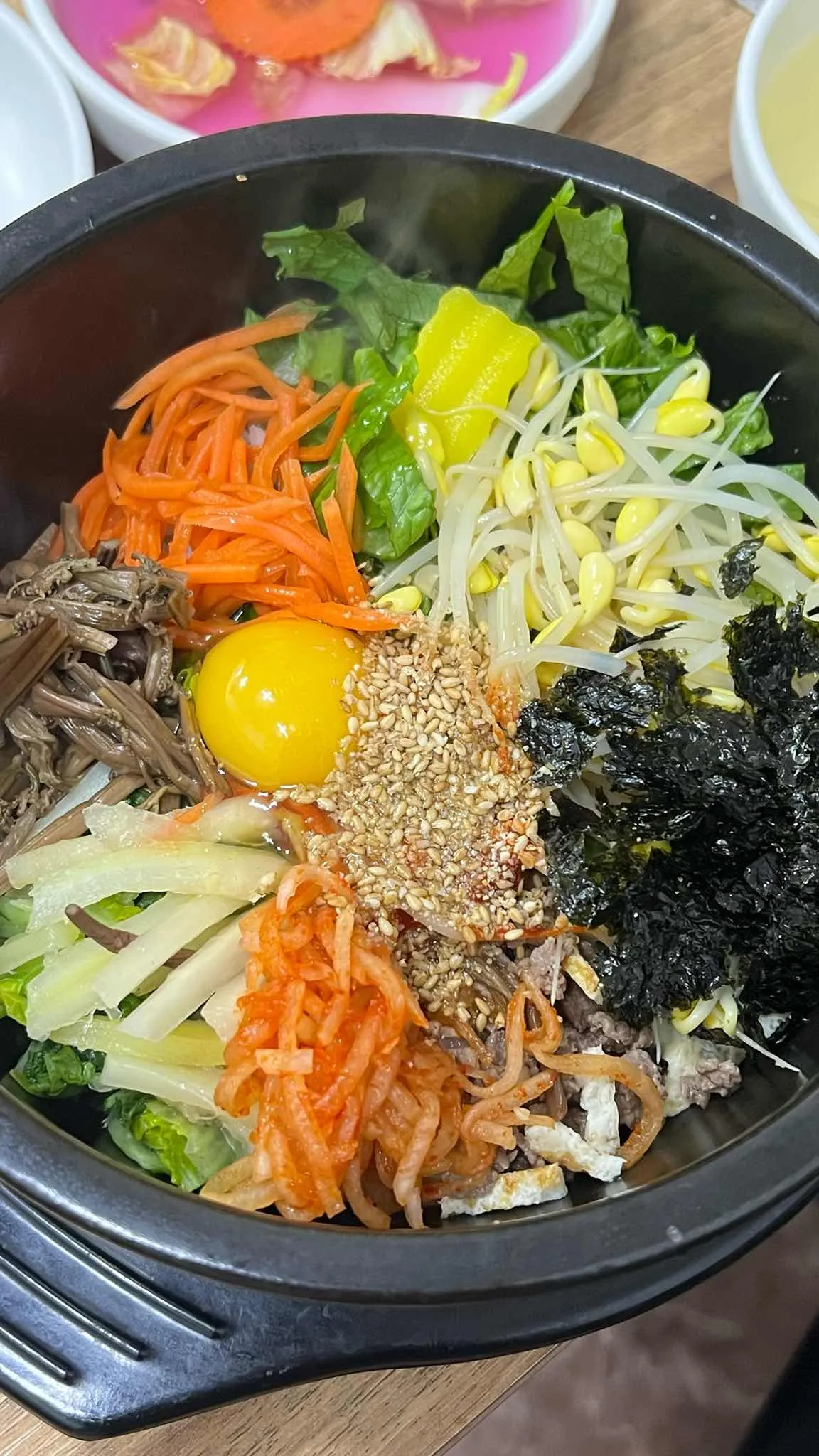
Pungnammun BibimbapA Nambu Market restaurant serving Jeonju-style bibimbap and bean sprout soup with rice
4
Pungnammun BibimbapA Nambu Market restaurant serving Jeonju-style bibimbap and bean sprout soup with rice -
 5
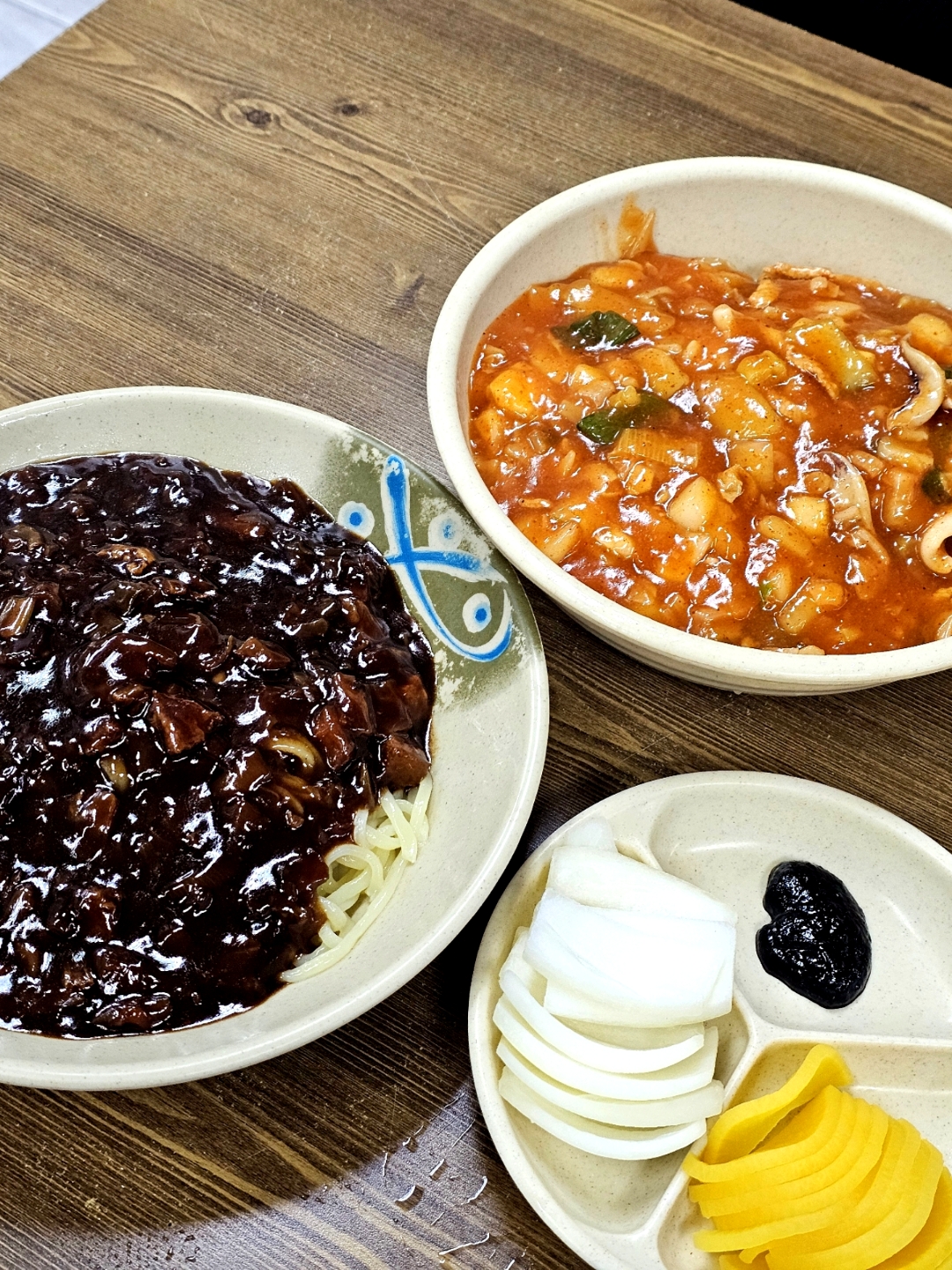
Gukmin-gakA restaurant in Nambu Market serving Jeonju’s specialty muljajang and Chinese cuisine.
5
Gukmin-gakA restaurant in Nambu Market serving Jeonju’s specialty muljajang and Chinese cuisine. -
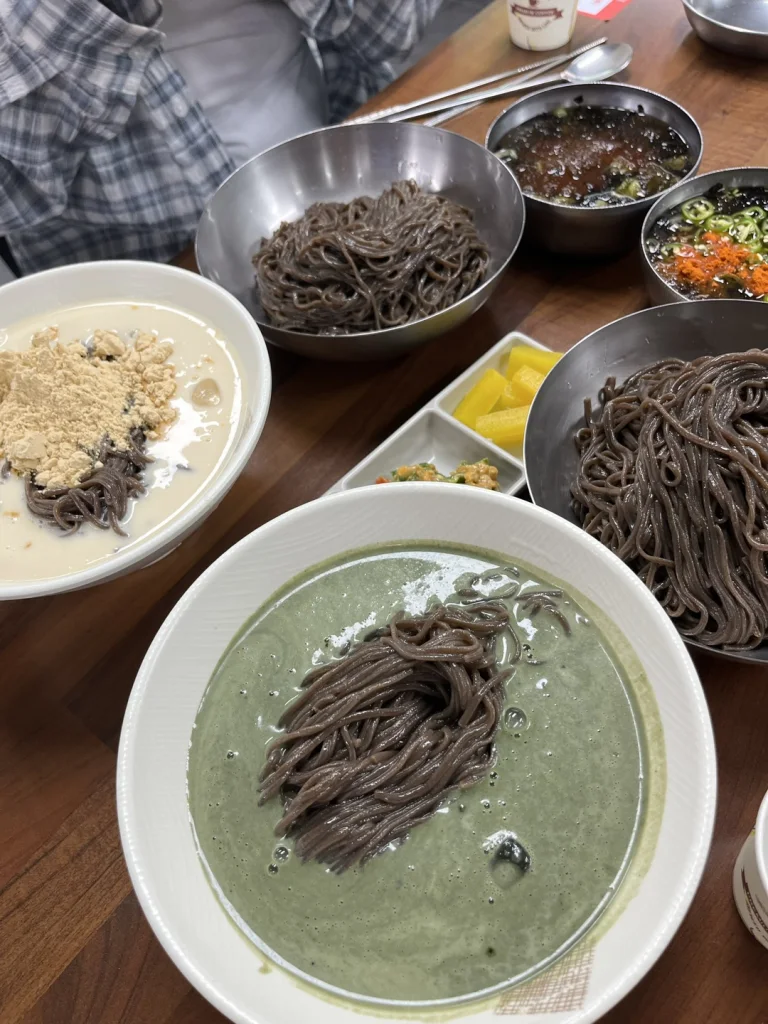 6
Mermil Jinmi House Main BranchA restaurant serving light noodle dishes such as buckwheat soba and kongguksu (noodles in chilled soybean broth).
6
Mermil Jinmi House Main BranchA restaurant serving light noodle dishes such as buckwheat soba and kongguksu (noodles in chilled soybean broth).
More Travel Guides in This Area
Korea News
 News
News
‘NewJeans Expulsion’ Danielle Releases Her First YouTube Video… “We Don’t Know What Will Happen Next”
![aespa’s North American Tour Has Remaining Seats Despite ‘$49’ Bargain Prices… A Stark Popularity Gap with KATSEYE [TEN Starfield]](https://kotourlive-images.s3.ap-northeast-1.amazonaws.com/news/1788485037424_a59b1932_naver_rank_thumb_0000774618_1788485037424.jpg) News
News
aespa’s North American Tour Has Remaining Seats Despite ‘$49’ Bargain Prices… A Stark Popularity Gap with KATSEYE [TEN Starfield]
![[Photo] TWICE’s Dahyun attends a film festival red carpet as an actress](https://kotourlive-images.s3.ap-northeast-1.amazonaws.com/news/1788485316508_edd43ecd_news_870a60a6-6f11-4d73-aa7c-48d91318a0f7.jpg) News
News
[Photo] TWICE’s Dahyun attends a film festival red carpet as an actress
![[On-Site Video] “We’re Departing Separately Together”… BIGBANG Begins ‘COSMOS’ World Tour](https://kotourlive-images.s3.ap-northeast-1.amazonaws.com/news/1788485226518_c5719641_news_fdd4764a-0f4e-4968-8e4e-e98a02872f88.jpg) News
News