Jeju’s Largest 1 km Columnar-Jointed Cliff Seen from Above the Jisakkae Sea Cliff
The Jungmun–Daepo Coastal Columnar Jointing Zone in Seogwipo is a basalt-column cliff formed as lava flows cooled 140,000–250,000 years ago. Visitors view it from an observation deck, and the experience and access restrictions can vary greatly depending on the waves, sunset, and weather.
I’ve been here?
Your check-in helps the next traveler.
34 people viewed this week Be the first
One tap — no writing needed
30–40 m Cliffs Left by Lava from Nokkajiak 140,000–250,000 Years Ago
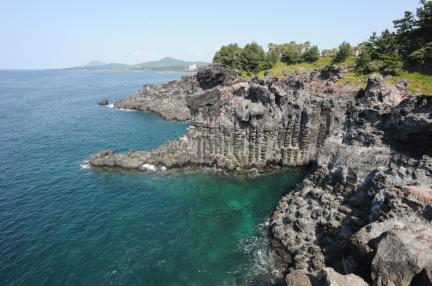
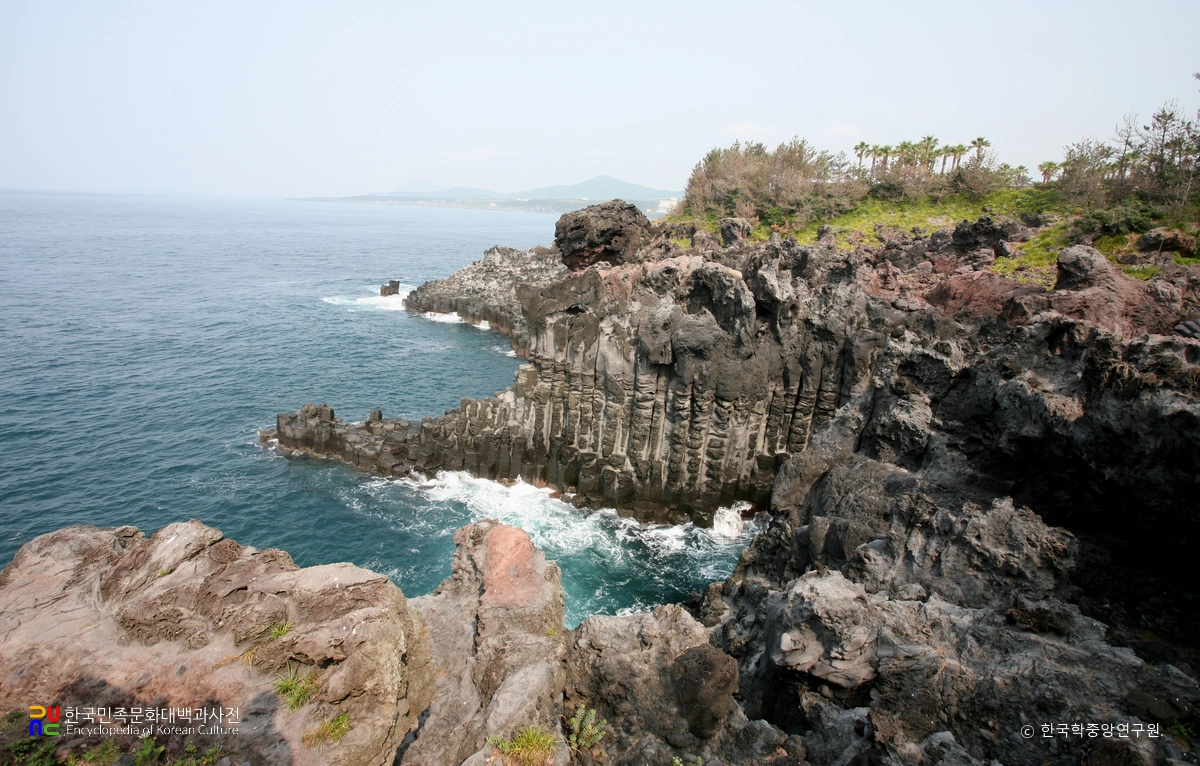
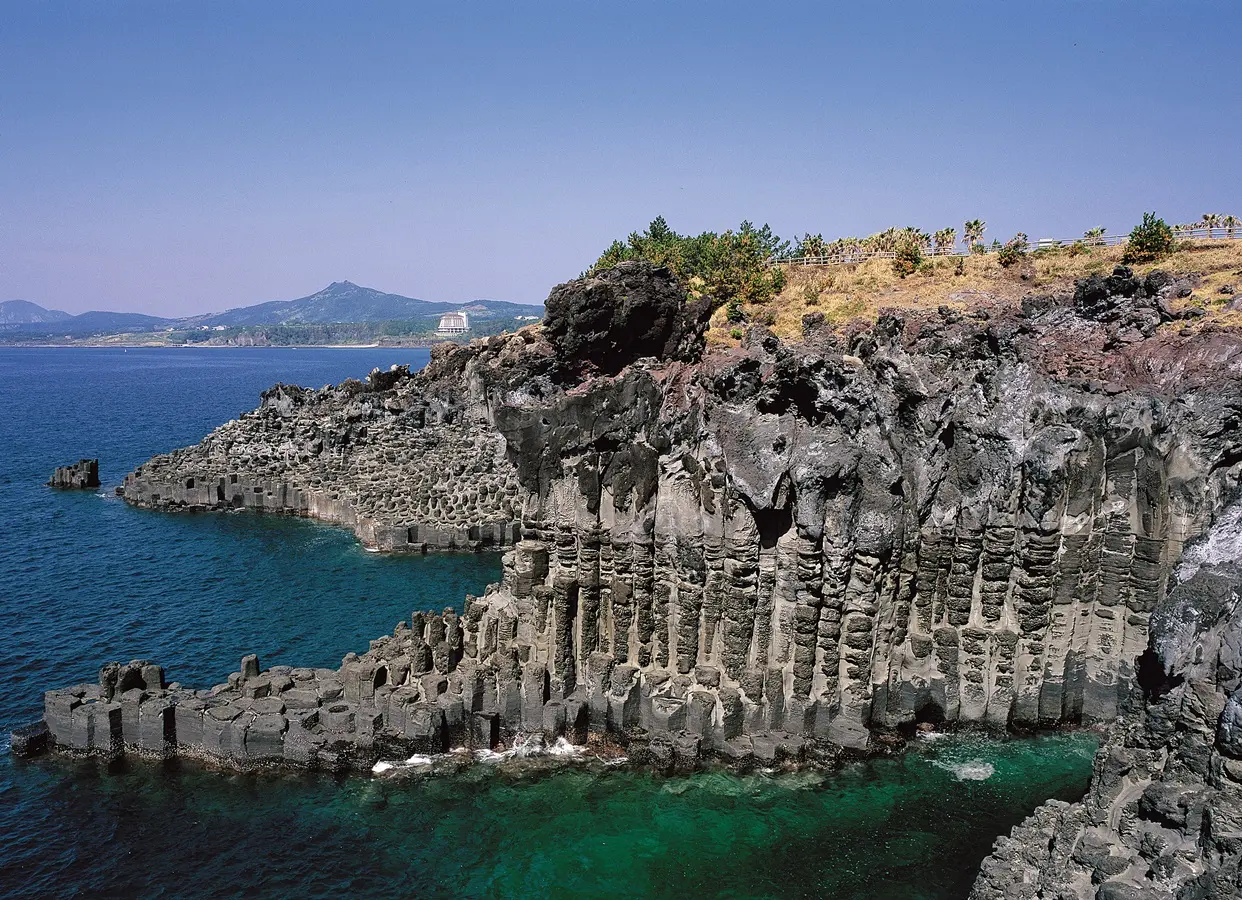
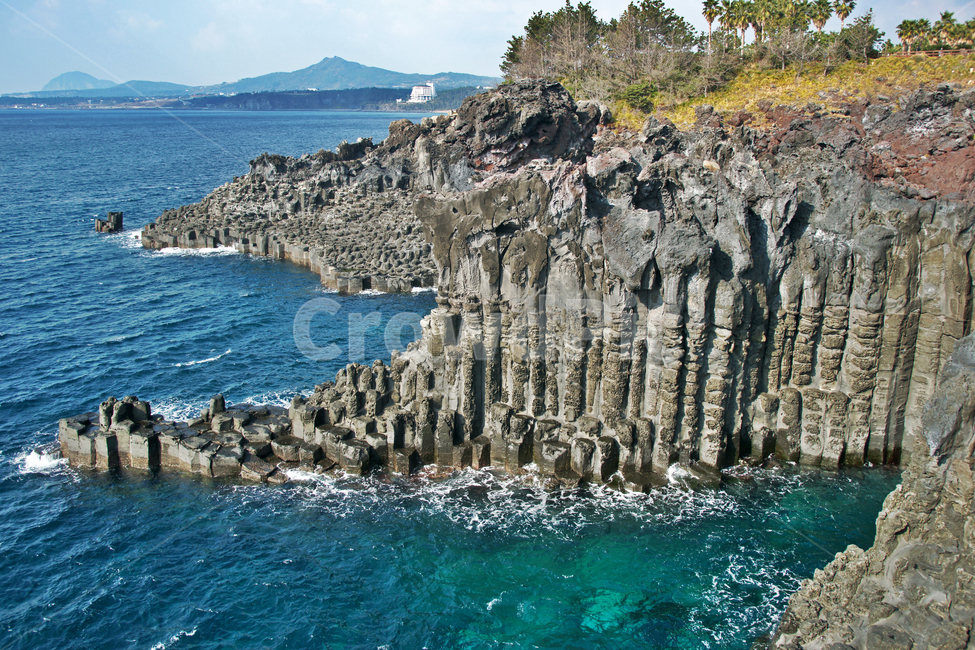
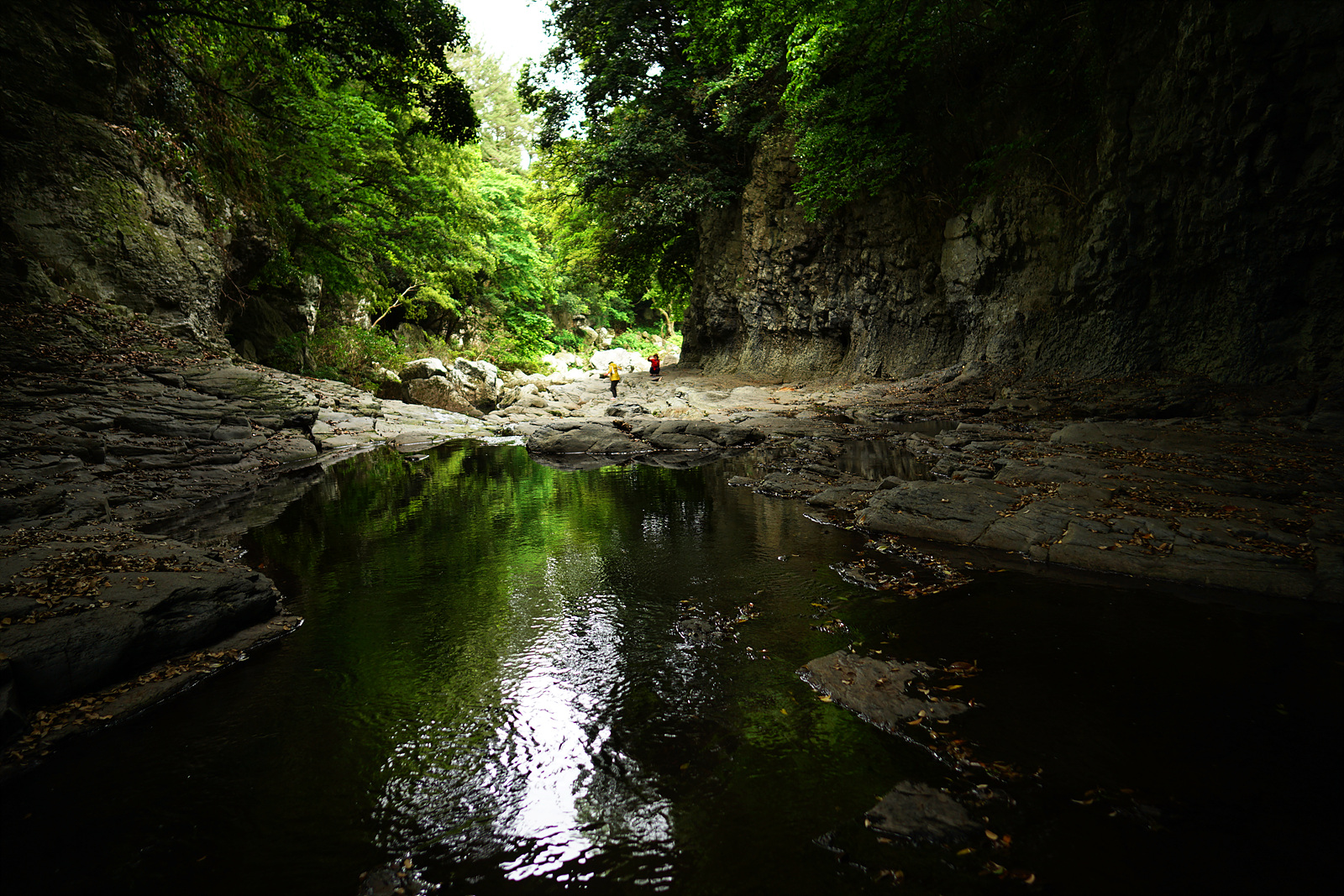
The Jusangjeolli Cliff is a sea cliff stretching along the coast of Jungmun-dong and Daepo-dong in Seogwipo City. The Encyclopedia of Korean Culture explains that these cliffs consist of Daepodong trachybasalt erupted from Nokkajiak approximately 140,000–250,000 years ago. As the high-temperature lava cooled, its volume decreased, and the areas where contraction centers were relatively evenly distributed split into four- to six-sided columns.
The stone columns along the viewing route are approximately 30–40 m high, and the stretch along the coast is about 1 km wide. The protected area registered on the National Heritage Portal covers 380,968 m², and the site was designated Natural Monument No. 443, a national natural heritage, on January 6, 2005. To see the scene where the dark red columns meet the waves, it is better to allocate time for this as a geological landform site rather than simply as a coastal walk.
The Name Changed from “Jisatge Bawi” to the Jungmun–Daepo Coastal Jusangjeolli Cliff
The old place name for this coast was Jisatge, and the Jusangjeolli Cliff had long been called “Jisatge Bawi.” Before the Jungmun Tourist Complex was developed, visitors had to pass through Daepo Village and approach via the Nobaegi farm road, so the name “Daepo-dong Jusangjeolli” was also widely used.
When it was designated a Natural Monument, the place names Jungmun-dong and Daepo-dong were used together, resulting in its current name, “Jeju Jungmun–Daepo Coastal Jusangjeolli Cliff.” Before visitor numbers increased, people could descend close to the coast, but today the cliffs are viewed from the boardwalk and observation decks above the sea cliff to prevent damage. The designation of the protected area in December 2006 is also connected to this need for conservation.
- National heritage name: Jeju Jungmun–Daepo Coastal Jusangjeolli Cliff
- Classification: Natural Heritage · Natural Monument · Earth Science Monument · Geological Landform
- Managing organization: Jeju Special Self-Governing Province
Admission Ends at 17:30; Observation Deck Conditions Vary with Sunset and Waves
According to Seogwipo E-Ticket, visiting hours are 09:00–17:50, with last admission at 17:30. Hours may change depending on the sunset time, and access may be restricted according to weather conditions. It is therefore safer to leave time before and after the visit rather than making it the last fixed stop of the day. No regular closing day is separately announced.
Visitors are advised that spray can rise more than 20 m on days with strong waves. However, strong winds and high waves may make photographs more dramatic while also increasing the possibility of visitor restrictions. There is no route beyond the railings or down below the coast; prepare nonslip shoes and a windbreaker for wet decks and sea breezes.
- Visiting hours: 09:00–17:50
- Last admission: 17:30
- Weather response: Operating hours may change or access may be restricted depending on sunset time and weather
- Recommended length of stay: Less than 1 hour
Adults: KRW 2,000; Free Parking; Address: 36-30 Ieodo-ro
The official booking information lists individual admission fees as KRW 2,000 for adults, KRW 1,000 for teenagers, and KRW 1,000 for children. Groups of 10 or more paying visitors pay KRW 1,600 per adult and KRW 600 per teenager or child. Children are defined as ages 7–12, while teenagers are ages 13–24 and enlisted soldiers up to the rank of sergeant.
Children aged 6 or under, adults aged 65 or over, holders of disability certificates, one accompanying person for a person with a severe disability, and Jeju residents may enter free of charge upon presenting proof of eligibility. The official address is 36-30 Ieodo-ro, Seogwipo-si, Jeju Special Self-Governing Province, and the contact number is 064-738-1521. Since the user-provided address, the Pacific Resort yacht marina ticket office, is a different location, set the official visitor site address as the navigation destination.
- Individual adult: KRW 2,000
- Individual teenager or child: KRW 1,000 each
- Parking: Free parking lot according to the official booking information
- Facilities: Convenience store, beverage station, guidance and information facilities, alarm and evacuation facilities
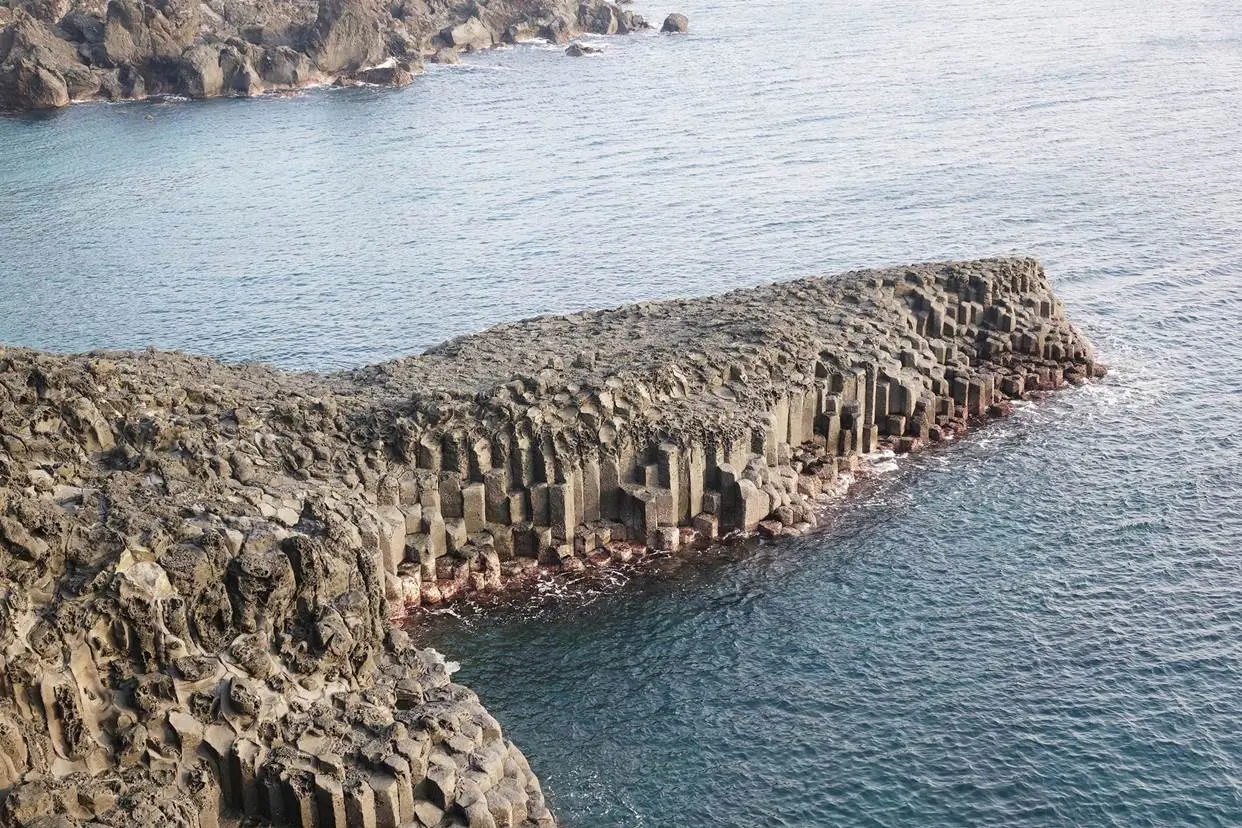
How to See It in Under an Hour on the Eastern Coast of the Jungmun Tourist Complex
The Jusangjeolli Cliff is on the eastern coast of the Jungmun Tourist Complex. With its large parking area and short, observation-deck-centered layout, the officially recommended visit takes less than an hour: buy a ticket at the entrance, follow the deck to view the cliffs and waves, and then return. If you expect to descend to the base of the cliffs or take a long coastal trek, this site’s viewing format may not meet your expectations.
Detailed public transportation routes and walking times from individual stops may vary due to schedule and route adjustments, so check the Jeju Bus Information System immediately before departure. Rental-car users should enter 36-30 Ieodo-ro as the destination and follow the paid admission procedure at the visitor site entrance after parking. Pets are not permitted according to Visit Jeju information.
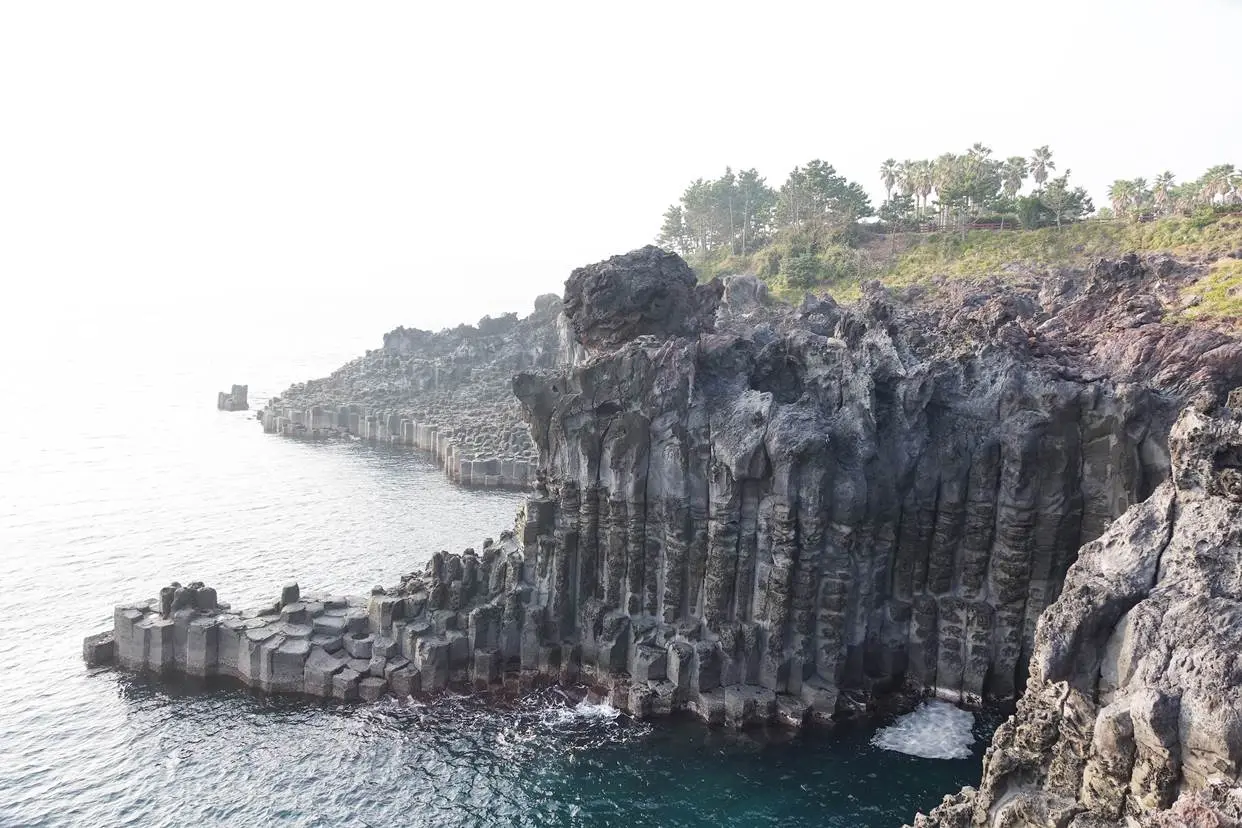
Combine It with the Africa Museum and Teddy Bear Museum, but Check Their Hours Separately
Visit Jeju states that the Jungmun Tourist Complex is approximately five minutes away by car and that visitors can also visit the Africa Museum, Teddy Bear Museum, and Actmon Jeju Branch. Since the Jusangjeolli Cliff focuses on natural scenery and requires little time, combining it with one indoor attraction allows greater flexibility when rain or strong winds limit outdoor viewing.
Because the Jusangjeolli Cliff operates with weather restrictions and sunset-related changes, visiting it first and then moving to a museum or indoor facility is the more reliable order. Each facility has different closing days, admission fees, and closing times, so do not plan the combination based only on the cliff’s 17:30 last admission; check each facility’s official announcements separately.
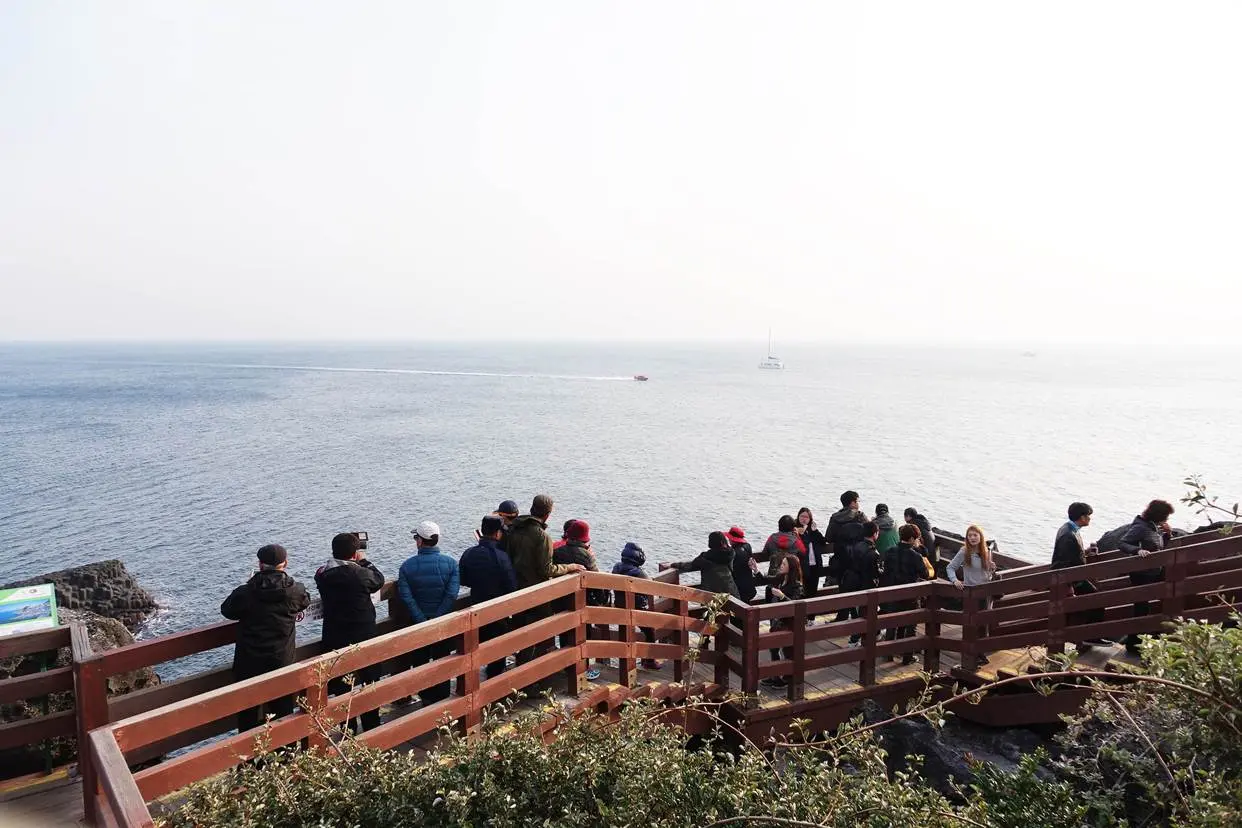
Decks and Guidance Facilities Are Available, but Safety Comes Before Accessibility on Windy Days
The official information lists guidance and information facilities as well as alarm and evacuation facilities, indicating that a basic guidance system is in place along the observation area. Visit Jeju also introduces the site with an accessible-tourism tag, but for accurate information about the areas accessible to wheelchair and stroller users, slopes, and the location of accessible restrooms, contact 064-738-1521 directly before departure.
Foreign travelers can supplement Korean-language signs with photo translation, and Visit Jeju’s English page includes information about how the columnar joints formed, parking, and weather-related access restrictions. The perceived temperature on the observation decks near the sea can drop considerably in strong winds, so if you are traveling with someone who has difficulty walking or with children, it is better to visit in the mild morning or early afternoon.
Before You Go
- Address
- 36-30 Ieodo-ro, Seogwipo-si, Jeju Special Self-Governing Province
- Hours
- 09:00–17:50 (may change depending on sunset time; access may be restricted according to weather conditions)
- Admission
- Individual adult KRW 2,000, teenager KRW 1,000, child KRW 1,000; groups of 10 or more paying visitors: adult KRW 1,600, teenager or child KRW 600 each
- Phone
- 064-738-1521
- Official site
- https://eticket.seogwipo.go.kr/contents?bmcode=joosang
- Transport
- Check public transportation routes, stops, and walking times in the Jeju Bus Information System immediately before departure
- Parking
- Free parking lot
- Time needed
- Less than 1 hour
- Accessibility
- Guidance and information facilities, plus alarm and evacuation facilities. For information about wheelchair and stroller access, call 064-738-1521; Visit Jeju provides English information
The information above is current as of the time of writing. Check the official information again before visiting.

Places
Nearby Attractions 4
-
 1
1
-
2
-
 3
3
-
4
Food & Dining 5
-
 5
Bow Hill Resort
5
Bow Hill Resort -
 6
D1250 Private House
6
D1250 Private House -
 7
Jeju Shilla Hotel
7
Jeju Shilla Hotel -
 8
CS Hotel and Resort
8
CS Hotel and Resort -
 9
Boli Pension
9
Boli Pension
Events in This Area


Festivals in This Area


More Travel Guides in This Area
 Travel Guide
Jeju International Peace Center: The 'Island of World Peace' Exhibition Hall Opened in 2006
 Travel Guide
The Stage for International Conferences in the Jungmun Tourist Complex, ICC JEJU
 Travel Guide
A Century-Old Teddy Bear’s Stage Overlooking Jungmun Saekdal Beach
 Travel Guide
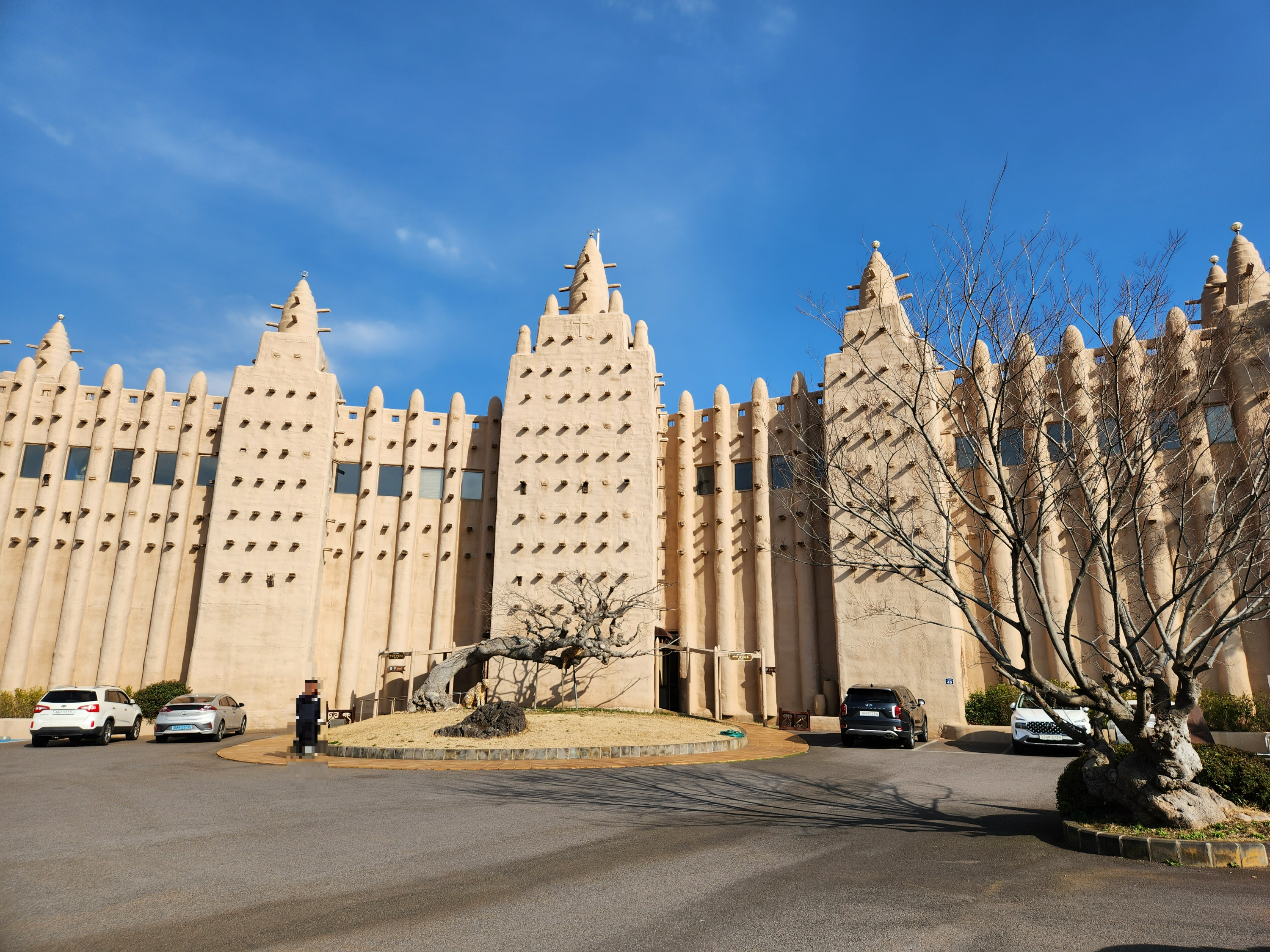
Museum of African Art in Jeju Jungmun: Inspired by the Great Mosque of Djenné, Mali
Korea News
 News
News
‘NewJeans Expulsion’ Danielle Releases Her First YouTube Video… “We Don’t Know What Will Happen Next”
![aespa’s North American Tour Has Remaining Seats Despite ‘$49’ Bargain Prices… A Stark Popularity Gap with KATSEYE [TEN Starfield]](https://kotourlive-images.s3.ap-northeast-1.amazonaws.com/news/1788485037424_a59b1932_naver_rank_thumb_0000774618_1788485037424.jpg) News
News
aespa’s North American Tour Has Remaining Seats Despite ‘$49’ Bargain Prices… A Stark Popularity Gap with KATSEYE [TEN Starfield]
![[Photo] TWICE’s Dahyun attends a film festival red carpet as an actress](https://kotourlive-images.s3.ap-northeast-1.amazonaws.com/news/1788485316508_edd43ecd_news_870a60a6-6f11-4d73-aa7c-48d91318a0f7.jpg) News
News
[Photo] TWICE’s Dahyun attends a film festival red carpet as an actress
![[On-Site Video] “We’re Departing Separately Together”… BIGBANG Begins ‘COSMOS’ World Tour](https://kotourlive-images.s3.ap-northeast-1.amazonaws.com/news/1788485226518_c5719641_news_fdd4764a-0f4e-4968-8e4e-e98a02872f88.jpg) News
News