From Heo Deok-man’s Kiln to the Museum: A Half-Day Exploration of Oegosan Onggi Village
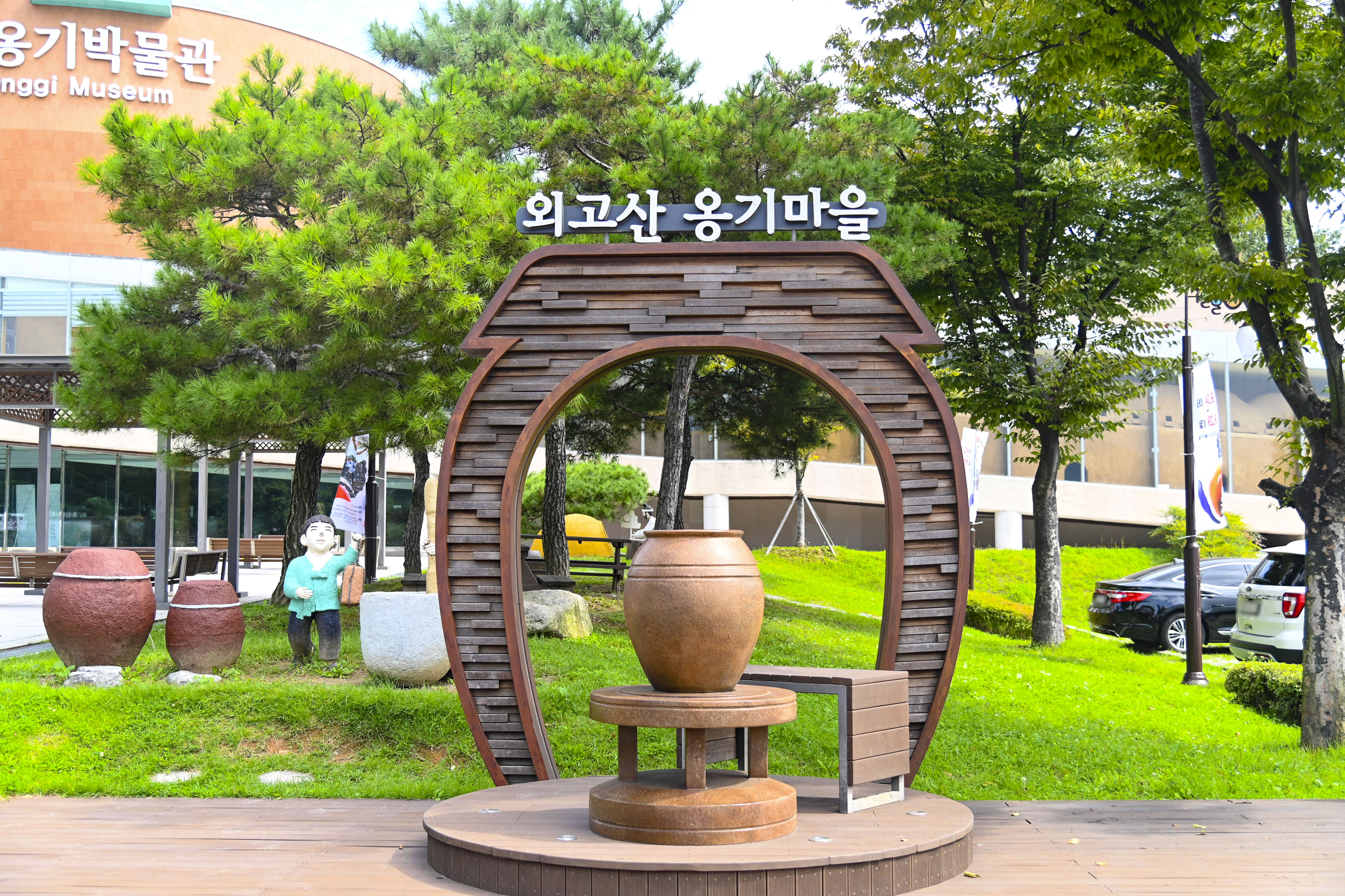
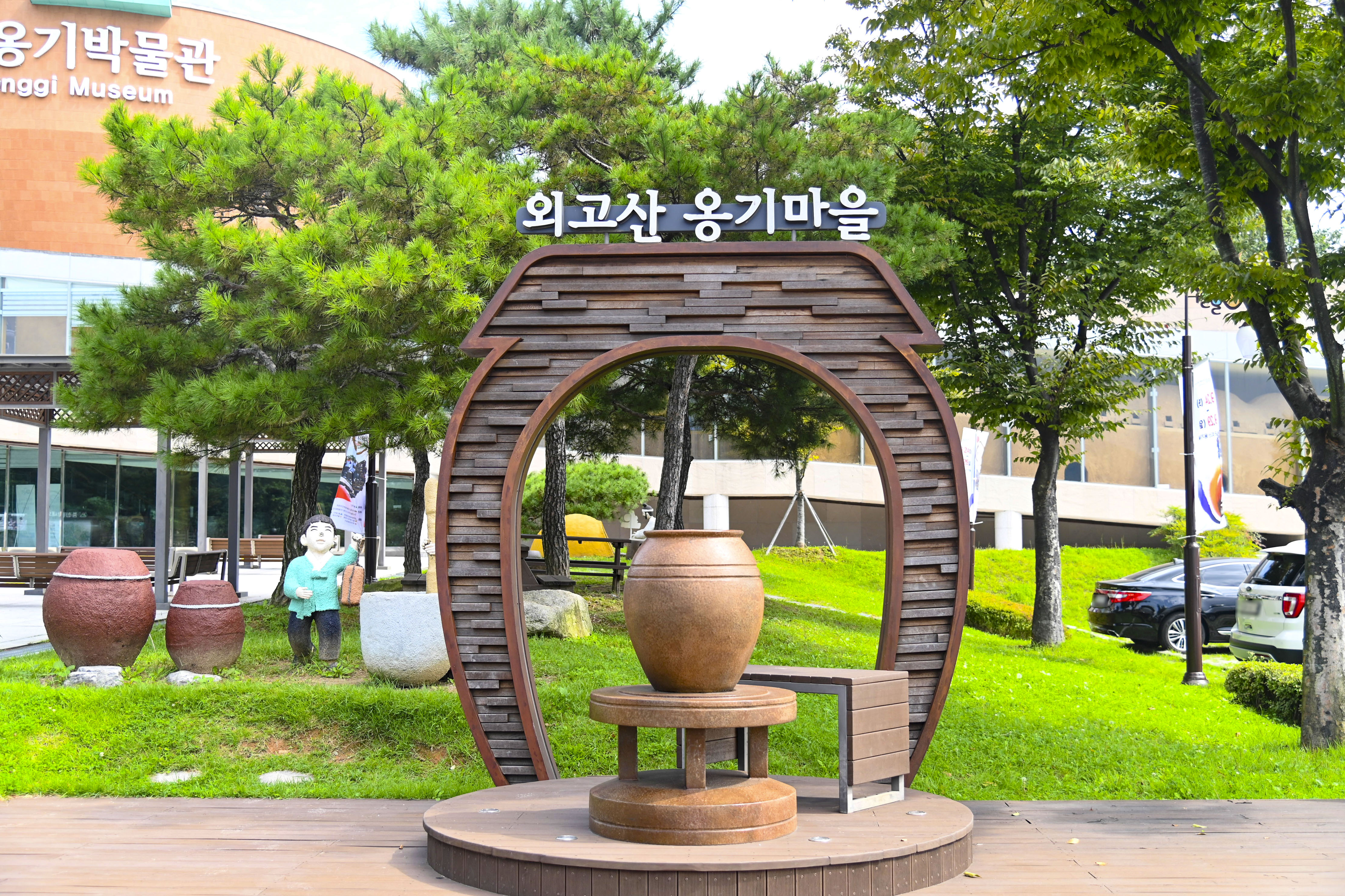
Oegosan Onggi Village is Ulsan’s onggi-producing area, formed after master artisan Heo Deok-man settled there in the late 1950s. In 2–3 hours, you can explore the free Ulsan Onggi Museum, the lanes of working workshops, and the traditional kiln and park areas.

I’ve been here?
Your check-in helps the next traveler.
19 people viewed this week Be the first
One tap — no writing needed
After Heo Deok-man built a kiln in Oegosan in the 1950s
The present-day Oegosan Onggi Village began when Heo Deok-man, who had been making onggi in Yeongdeok, North Gyeongsang Province, after the Korean War, settled here in the 1950s and began producing onggi. According to information from Ulju County, onggi production began here in the 1950s, and in the 1960s and 1970s, about 350 artisans and potters from across the country led production and exports.
The village once grew to account for 70% of Korea’s onggi production, and it is still introduced as a place that produces more than 50% of the nation’s onggi. Although demand declined after industrialization, about 40 of the 128 officially registered households continue to work in the onggi industry, maintaining production and sales.
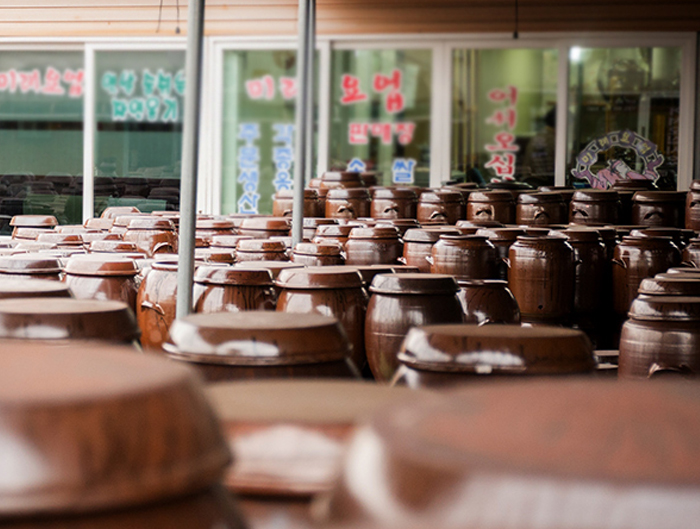
Eight exhibitions to see first at the free Ulsan Onggi Museum, 09:00–18:00
If this is your first visit, it is best to start at the Ulsan Onggi Museum. The museum opened as the Onggi Culture Center on November 3, 2009, changed to its current name in May 2013, and was registered as a Type 1 specialized museum on August 8 of the same year. The building covers 1,114.22㎡ on the first above-ground floor and 641.62㎡ on the second floor.
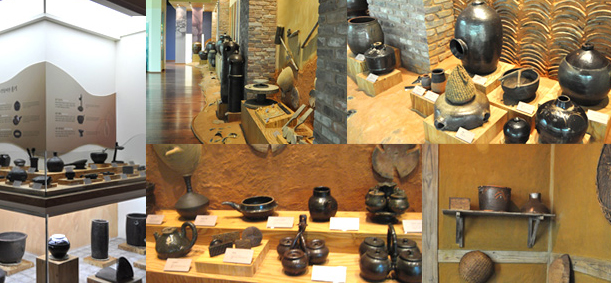
Visiting hours are 09:00–18:00, admission is free, and the museum is closed every Monday, January 1, Lunar New Year’s Day, the day of Chuseok, and designated management days. For inquiries, call 052-237-7894. The exhibitions are organized into eight categories: the World’s Largest Onggi, Sunken Garden, the History of Onggi, Everyday Culture, Materials, Beauty, Production Tools, and Oegosan’s Onggi. This makes it a good place to establish the basic context before exploring the village lanes.
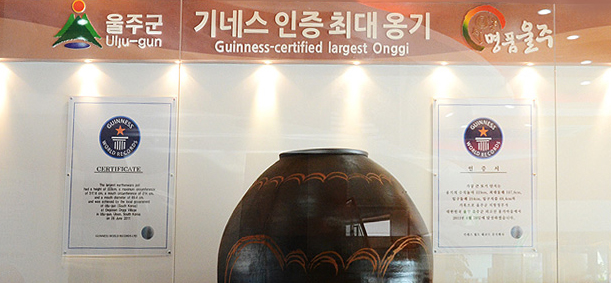
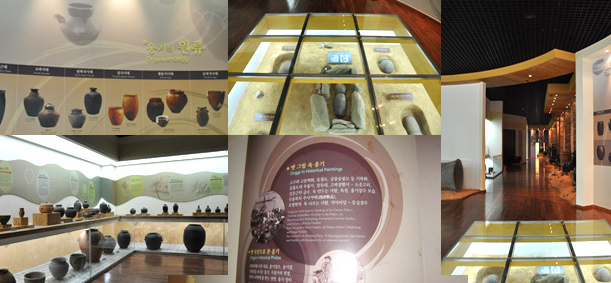
The World’s Largest Onggi, recognized by Guinness in 2011 after five failed attempts
The World’s Largest Onggi, the museum’s centerpiece exhibition, was planned to promote the technical heritage of Oegosan onggi and the local industry. According to the official exhibition description, production succeeded on the sixth attempt after five failures, and it received Guinness World Records certification on June 28, 2011.
This exhibition is not merely a place to see a large jar; it encapsulates the character of a village that has continued to use traditional kilns and pass down its production techniques. After visiting the museum, look at products made by current artisans in the “Oegosan’s Onggi” exhibition, then head to the lanes with workshops. This makes it easier to understand the connection between the exhibits and the active production sites.
Lanes leading from Park Parking Lot 06 to Workshops 10–18
The village map marks the Ulsan Onggi Museum, Onggi Academy Hall, Village Information Center, Educational Kiln, Exhibition Kiln, Park Parking Lot, Traditional Jang Storage, Onggi Culture Park, and Ecological Pond. The workshops are categorized as Yeonghwa Ceramics, Geumcheon Pottery, Ilseong Pottery, Onggigol Ceramics, Gaya Silla Pottery, Seongchang Ceramics, Geumjeong Ceramics, and Gyeongnam Ceramics, so you can plan your route around the workshop names.
Allow about one hour for the museum’s indoor exhibitions alone, or two to three hours if you also explore the park and workshop lanes. Since the village combines workplaces and living spaces, follow each business’s instructions before entering workshops, photographing work, or purchasing products. Bringing food and beverages into the museum, entering with pets other than guide dogs, and taking photos with flashes or tripods are prohibited.
Cancel Onggi Academy Hall reservations by 18:00 the day before
Making programs at Onggi Academy Hall require you to check the available dates and times for online reservations separately from general visits. The official reservation information states that cancellations can be made until 18:00 one day before the program begins. Cancellations are processed through the Online Reservation or Check Reservation menus on the website after identity verification.
Participants and fees vary by program. For example, the special experience program at the 2026 Ulsan Onggi Festival was announced at 7,000 won per person, operating from 10:00 to 11:00. Half of the places were available through online registration and the remainder through same-day on-site registration. Since festival and seasonal experiences may have different fees and operating procedures, check the reservation page again for your visit date, and arrive at least 10 minutes before the experience begins.
How to use buses 415, 715, 735, and 1715 from the Taehwagang Station and Namchang Station areas
The address is 36 Oegosan 3-gil, Onyang-eup, Ulju-gun, Ulsan Metropolitan City. The main telephone number is 052-237-7894, and the official website is https://www.ulju.ulsan.kr/onggi/. For public transportation, bus 1715 is listed in the official information from the Taehwagang Station and Express Bus Terminal area, while buses 415, 715, 735, and 1715 serve the Gong-eoptap, Deokha Market, and Namchang Station areas.
By car, you can approach via Cheongnyang IC from Ulsan IC on the Gyeongbu Expressway, then take National Route 14 toward Busan. From the Busan direction, access is available via Onyang IC on the Busan–Ulsan Expressway. The village’s main facilities guide marks the “Park Parking Lot” as number 06. During popular events such as festivals, external parking lots and shuttle buses may operate, so on event days it is best not to assume that parking routes will be the same as usual.
Avoid Monday closures and divide your visit between the museum and village information center
It is best to avoid visiting on Monday. The Ulsan Onggi Museum is closed every Monday, and the Village Information Center is also closed on Mondays, January 1, the Lunar New Year and Chuseok holidays, the day after public holidays, and designated management days. The information center operates from 09:00 to 18:00, with a lunch break from 12:00 to 13:00, and contains a Village Information Room, Onggi History Hall, Video Room, and Seminar Room.
Specific information about routes for wheelchair and stroller users or foreign-language guidance services could not be confirmed on the official pages. Therefore, if you need mobility assistance or want a guided tour for a group, it is advisable to contact the museum at 052-237-7894 or the experience center at 052-237-7893 before visiting. Seeing the museum and Village Information Center in the morning, then walking through the park and workshop lanes after lunch, makes it easier to leave enough time before closing.
Before You Go
- Address
- 36 Oegosan 3-gil, Onyang-eup, Ulju-gun, Ulsan Metropolitan City
- Hours
- Ulsan Onggi Museum 09:00–18:00; Village Information Center 09:00–18:00 (lunch break 12:00–13:00)
- Closed
- Ulsan Onggi Museum: every Monday, January 1, Lunar New Year’s Day, the day of Chuseok, and designated management days; Village Information Center: every Monday, January 1, the Lunar New Year and Chuseok holidays, the day after public holidays, and designated management days
- Admission
- Ulsan Onggi Museum: free; experience programs charge separate fees, which vary by program
- Phone
- Ulsan Onggi Museum 052-237-7894 / Onggi Academy Hall 052-237-7893
- Official site
- https://www.ulju.ulsan.kr/onggi/
- Transport
- Bus 1715 toward Taehwagang Station and the Express Bus Terminal; buses 415, 715, 735, and 1715 toward Gong-eoptap, Deokha Market, and Namchang Station
- Parking
- The village facilities guide indicates a Park Parking Lot. External parking lots and shuttle buses may operate during festivals
- Time needed
- About 1 hour for the museum, 2–3 hours including the workshop lanes and park
- Accessibility
- Specific information about wheelchair and stroller routes or foreign-language guidance could not be confirmed on the official pages. Calling before your visit is recommended
The information above is current as of the time of writing. Check the official information again before visiting.

Places
Nearby Attractions 1
-
 1
1
Food & Dining 5
-
 2
2
-
 3
3
-
 4
4
-
 5
5
-
 6
6
More Travel Guides in This Area
 Travel Guide
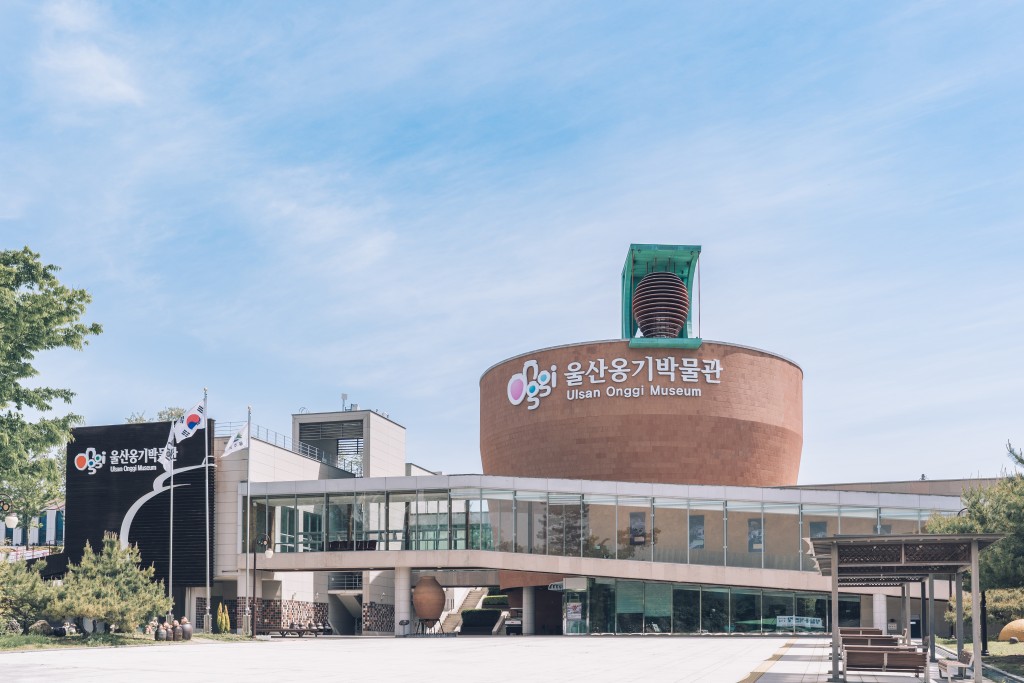
The Black Jars of Oegosan, Where the Livelihood of Korean War Refugees Became a Museum
 Travel Guide
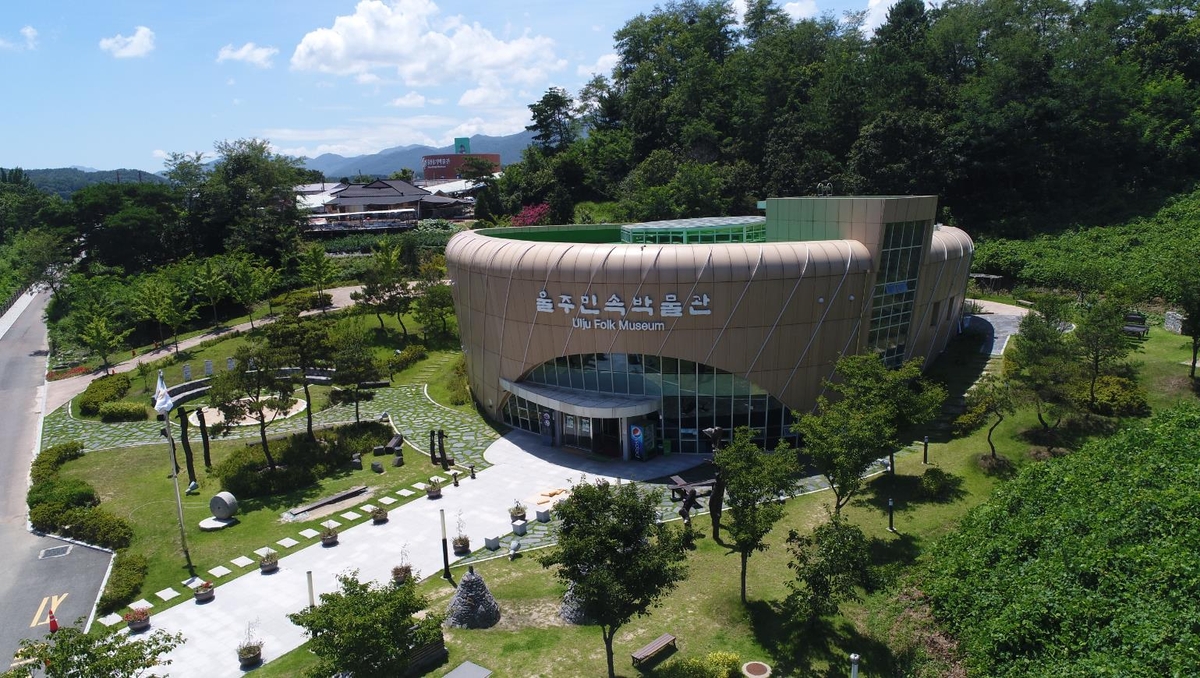
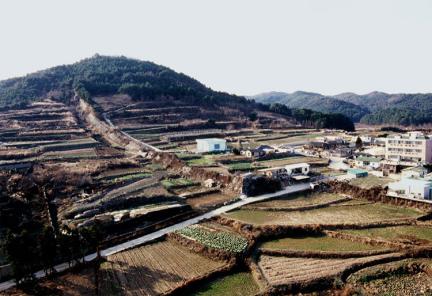
Reading Ulju’s Rural History at the Ulju Folk Museum in Oegosan Onggi Village
 Travel Guide
4.2 km of Fortress Walls Preserving the Wartime Landscape of 1593: Seosaengpo Japanese Fortress, Ulsan
 Travel Guide
Walking Along a 4 km Waterway and Seonam Dam
Korea News
 News
News
‘NewJeans Expulsion’ Danielle Releases Her First YouTube Video… “We Don’t Know What Will Happen Next”
![aespa’s North American Tour Has Remaining Seats Despite ‘$49’ Bargain Prices… A Stark Popularity Gap with KATSEYE [TEN Starfield]](https://kotourlive-images.s3.ap-northeast-1.amazonaws.com/news/1788485037424_a59b1932_naver_rank_thumb_0000774618_1788485037424.jpg) News
News
aespa’s North American Tour Has Remaining Seats Despite ‘$49’ Bargain Prices… A Stark Popularity Gap with KATSEYE [TEN Starfield]
![[Photo] TWICE’s Dahyun attends a film festival red carpet as an actress](https://kotourlive-images.s3.ap-northeast-1.amazonaws.com/news/1788485316508_edd43ecd_news_870a60a6-6f11-4d73-aa7c-48d91318a0f7.jpg) News
News
[Photo] TWICE’s Dahyun attends a film festival red carpet as an actress
![[On-Site Video] “We’re Departing Separately Together”… BIGBANG Begins ‘COSMOS’ World Tour](https://kotourlive-images.s3.ap-northeast-1.amazonaws.com/news/1788485226518_c5719641_news_fdd4764a-0f4e-4968-8e4e-e98a02872f88.jpg) News
News