Ulsan’s Whaling Industry History Read in Whale Culture Village, a Restored Hilltop of 1960s–70s Jangsaengpo
Jangsaengpo Whale Culture Village is an outdoor cultural space recreating daily life in Jangsaengpo during the heyday of whaling in the 1960s and 1970s. Allow 2–3 hours to see the 22 buildings of the old village, Whale Plaza, the Sculpture Park, and the seasonal gardens together. Before setting out, it is best to check separately whether admission areas and free operation during event periods apply.
I’ve been here?
Your check-in helps the next traveler.
11 people viewed this week Be the first
One tap — no writing needed
May 15, 2015: Why the memory of a whaling outpost was moved to a 102,705㎡ park
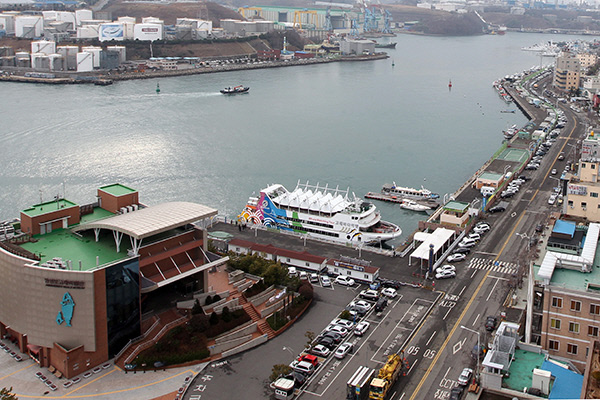
Jangsaengpo is a port on the western side of Ulsan Bay, where the Taehwagang River flows into the East Sea. Ulsan Bay has deep waters that made it suitable for ships to come and go, and the surrounding waters were ideal fishing grounds for whaling, making Jangsaengpo a base for the whaling industry until the mid-1980s. The groundbreaking ceremony for the Ulsan Industrial Center was held in 1962 at Napdo in Jangsaengpo-dong. Later, with the development of the Ulsan Mipo and Onsan national industrial complexes, the living environment around the port changed significantly.
Whale Culture Village is an example of preserving the memory of the region's whaling industry as a tourism and educational space. Ulsan's Nam-gu began the project on a 102,705㎡ site in 2010 and completed it on May 15, 2015; the development cost at the time was 27.2 billion won. The focus was on restoring daily life in Jangsaengpo during the 1960s and 1970s, after commercial whaling was banned in 1986 and the area declined.
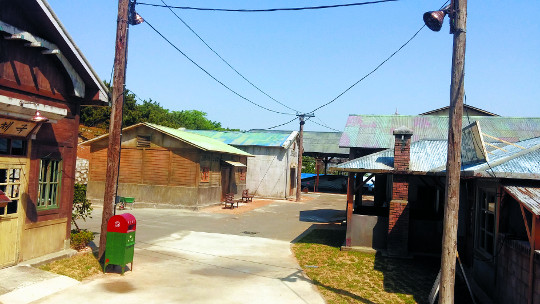
Jangsaengpo's old village, extending across 22 buildings from bookstores and teahouses to an elementary school
The main paid attraction is Jangsaengpo Old Village. According to Ulsan tourism information, it consists of 22 buildings recreating everyday spaces from the 1960s and 1970s, including a bookstore, teahouse, Chinese restaurant, stationery shop, sporting-goods store, photography studio, school-uniform shop, and elementary school. Early reports mentioned 23 buildings, including a captain's house, harpooner's house, whale-processing shed, rendering plant, and Roy Chapman Andrews's boardinghouse, suggesting that the facility lineup was adjusted somewhat during development and operation.
This is not so much a place that treats whales only romantically as it is a space showing how whaling shaped the local economy and occupational structure. Reports say that about 80% of Jangsaengpo's approximately 15,000 residents in the 1970s made their living through whale-related industries, such as whaling or operating whale restaurants. Accordingly, the recreated whale-processing and rendering facilities are best viewed as resources for understanding the scale of the industry and the labor involved at the time.
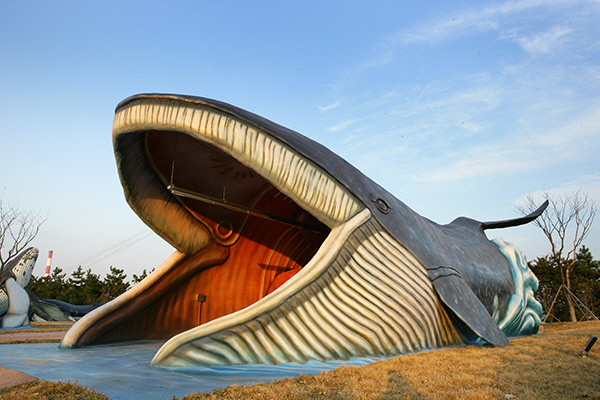
Large whale models and Whale Plaza: Outdoor free areas easy to miss at the entrance
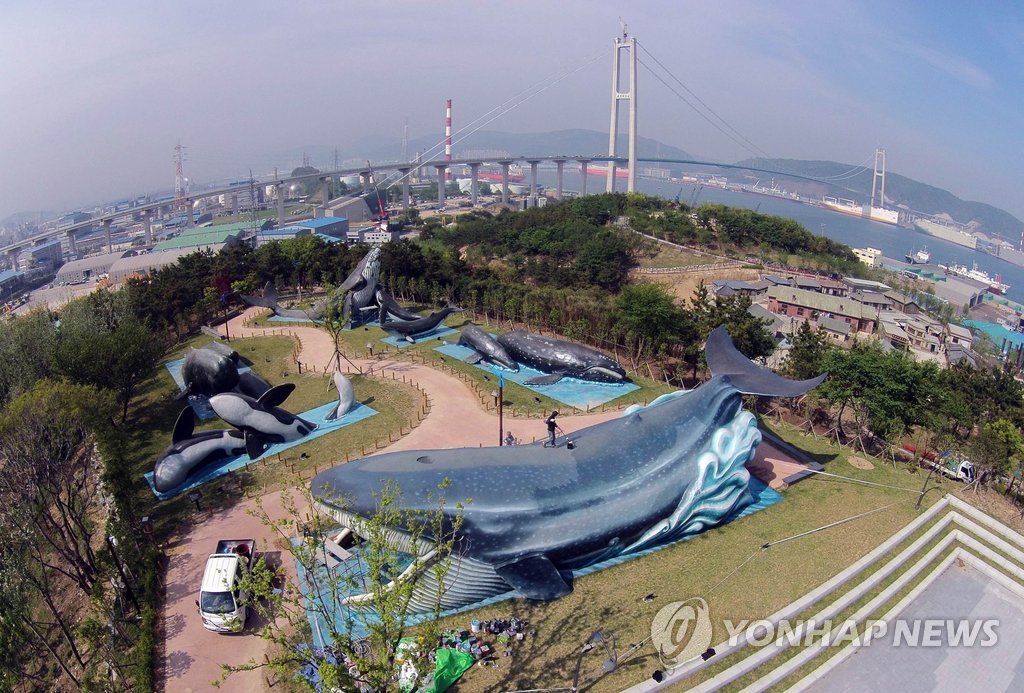
Outdoor spaces such as Whale Plaza, the Whale Sculpture Park, the Whale Playground, and the Aquatic Plant Garden are connected by paths to the old village. A 2015 on-site report stated that six life-size whale models had been installed in the sculpture park, making it a place where visitors can compare the whales' sizes. Even when taking a quick tour of the entire Whale Culture Village, it is a good idea to include this outdoor area early in the route.
The 5th Jangsaengpo Hydrangea Festival, held from June 19 to 28, 2026, operated from 09:00 to 20:00 throughout Whale Culture Village, and announced free admission to the event area as a temporary community benefit related to construction on Goraedeung-gil. Since this free-admission measure applied specially during the festival, visitors on ordinary days should check the fees for paid facilities such as the old village separately.
If you are aiming for 900,000 hydrangea blooms from June 19–28 and lavender in late May
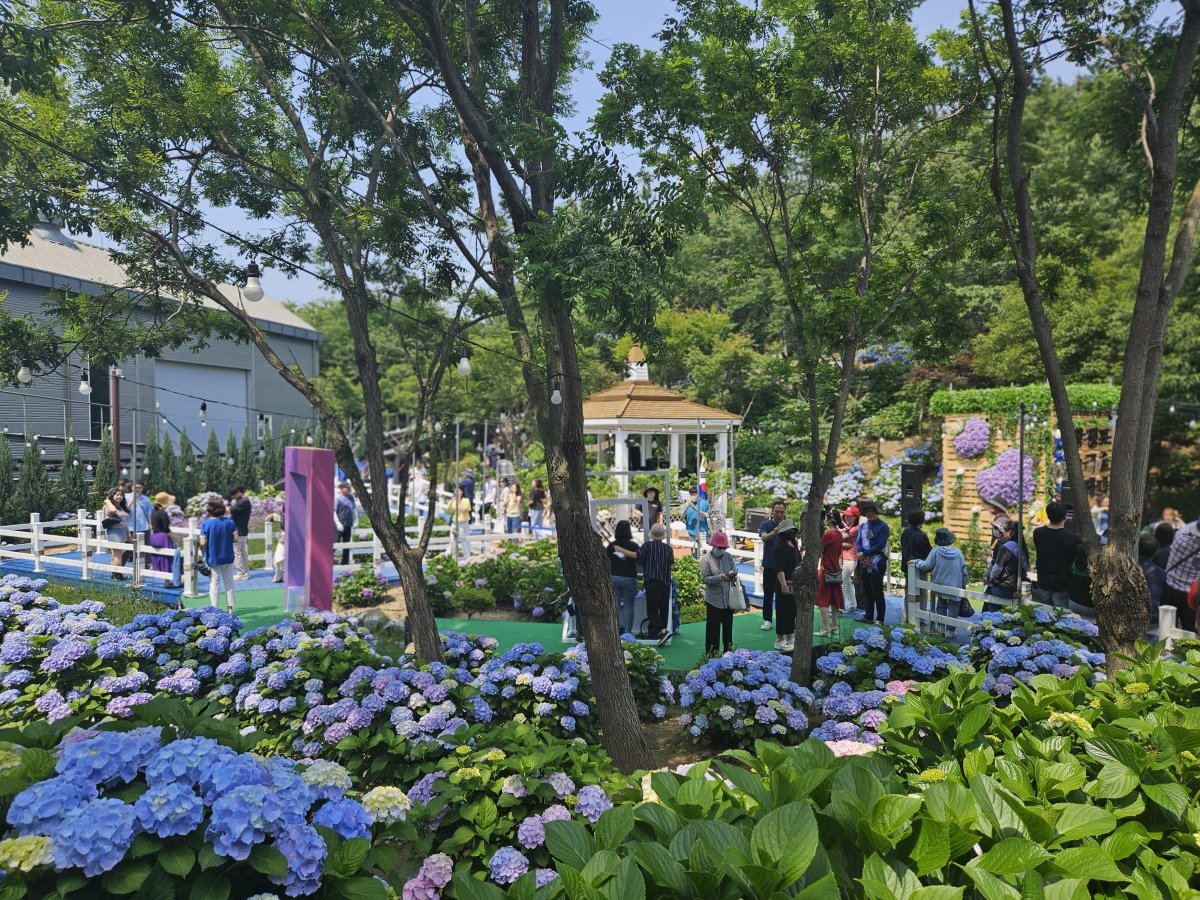
For a flower-focused visit, an early-summer itinerary is the most specific choice. Ahead of the 2026 hydrangea festival, Ulsan's Nam-gu announced that more than 37,000 hydrangea plants representing around 40 varieties had been planted at Whale Culture Village, with more than 900,000 blooms expected during the festival. The festival ran for 10 days from June 19 to 28, 2026, and on Saturdays a hydrangea fireworks show was scheduled at 20:10 in the plaza in front of the Whale Museum.
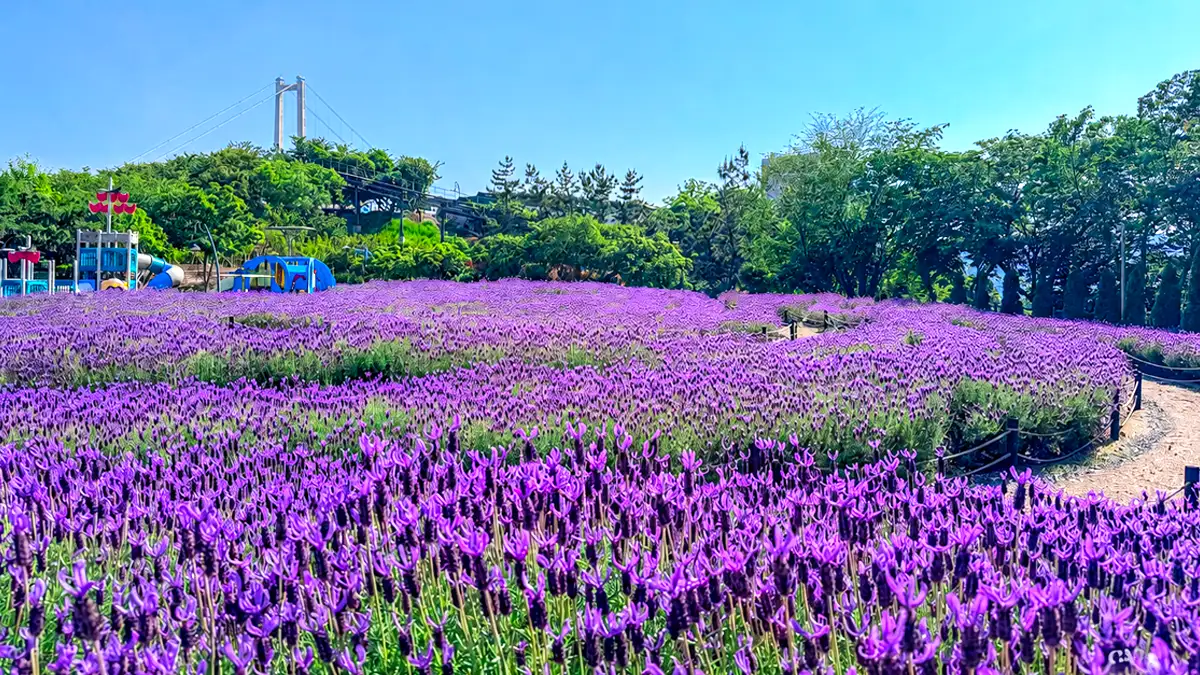
For lavender, a schedule focused on late May to early June is suitable. An introduction published in May 2026 mentioned approximately 20,000 lavender blooms and the Lavender Garden near the west parking lot, and suggested walking for about five minutes toward Whale Plaza from the west parking lot or Parking Lot 2. Since flowering and festival or nighttime operations may vary each year, reconfirm the official announcements after choosing your dates.
Visiting from 09:00 to 18:00, with Mondays closed and ticket sales ending 30 minutes before closing
According to Korea Tourism Organization information, regular operating hours are 09:00–18:00, and ticket sales end 30 minutes before closing. The facility is closed every Monday and on the day of Lunar New Year's Day and Chuseok. It may open when a Monday is a public holiday or falls during a travel week, so confirmation before departure is necessary. Admission is listed as 2,000 won for adults, 1,500 won for teenagers, and 1,000 won for children.
The main contact number is 052-256-6301, and the official operating website is https://www.whalecity.kr. Variable conditions such as seasonal festivals, extended nighttime hours, and construction areas may apply separately from these regular conditions. Since the 2026 hydrangea festival operated separately from 09:00 to 20:00, it is especially safer not to rely solely on the regular hours when visiting in May or June or on weekends.
- Regular hours: 09:00–18:00
- Regular ticket-sales deadline: 30 minutes before closing
- Regular closing days: Mondays, Lunar New Year's Day, and Chuseok Day
- Adult admission: 2,000 won
- Contact: 052-256-6301
Routes via the east parking lot, west parking lot, large parking lot, and 271-1 Jangsaengpogorae-ro
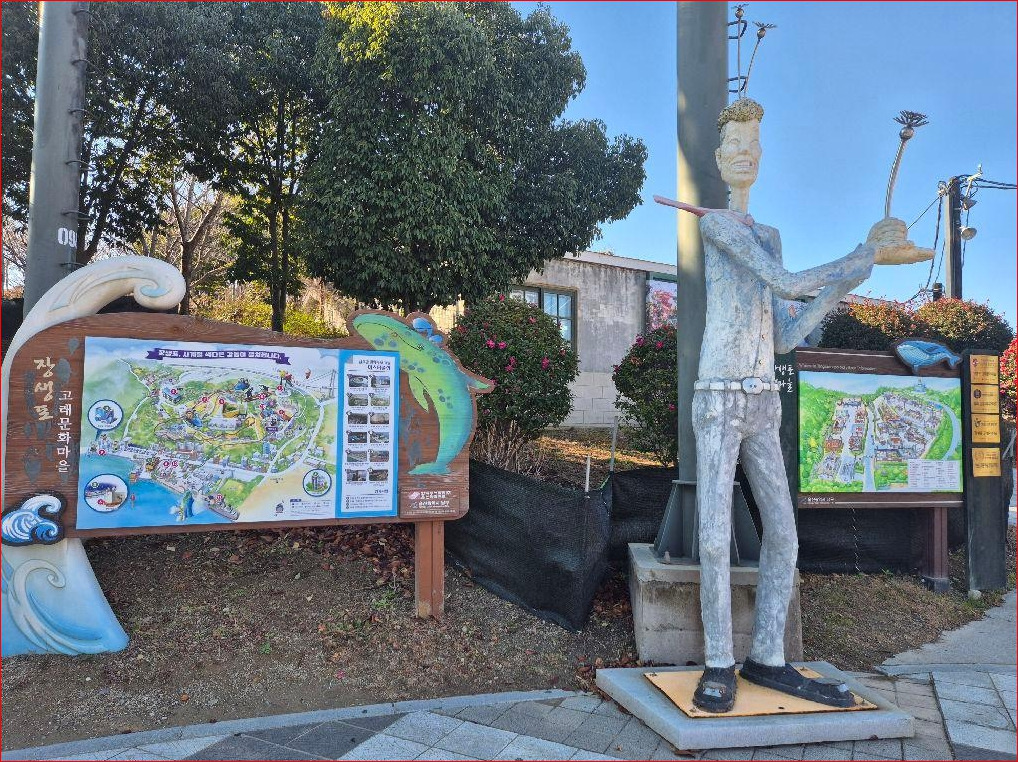
According to Ulsan tourism information, Whale Culture Village is located at 271-1 Jangsaengpogorae-ro, Nam-gu, Ulsan Metropolitan City, and has an east parking lot, west parking lot, and large parking lot that can accommodate large buses. The provided coordinates, 35.501940, 129.373931, and the address can be used as references for confirming the site area, but setting the navigation destination to 271-1 Jangsaengpogorae-ro, as listed in the operating information, or to the name of the parking lot you plan to use will reduce confusion.
The west parking lot is practical when you want to see only the flower beds quickly. The May 2026 information introduced the route as taking about five minutes from the west parking lot or Parking Lot 2 to Whale Plaza. Conversely, if you plan to visit the old village, sculpture park, and seasonal gardens together, allow two to three hours, and prepare comfortable shoes because the route includes slopes and extended outdoor walking.
The free shuttle from Taehwagang Station is festival-only; check bus routes at other times
Public transportation plans should be divided according to whether an event is taking place. During the 2026 hydrangea festival, a free circular bus connecting Taehwagang Station and Jangsaengpo operated on weekends from 10:00 to 16:00 at 30-minute intervals. Since this was transportation provided for the June 19–28 festival, do not assume that the same shuttle operates on other dates.
Ulsan city bus numbers may change following route reorganizations. Ulsan Metropolitan City's route-number change table indicates that former route 246 corresponds to route 226, and former route 256 corresponds to route 236. The most accurate method is to search for “Jangsaengpo Whale Culture Village” or a nearby stop in the Ulsan city bus information immediately before departure and check the actual route, interval, and alighting stop.
How to schedule the Whale Museum, Ecology Experience Center, and monorail on the same day
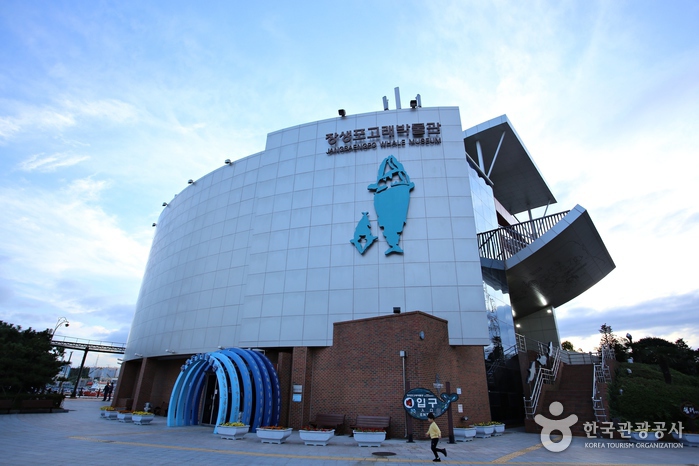
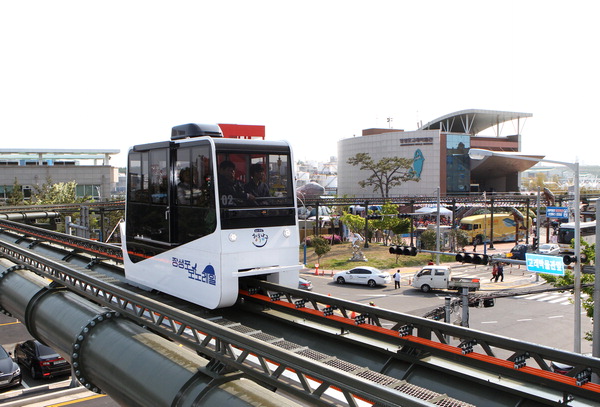
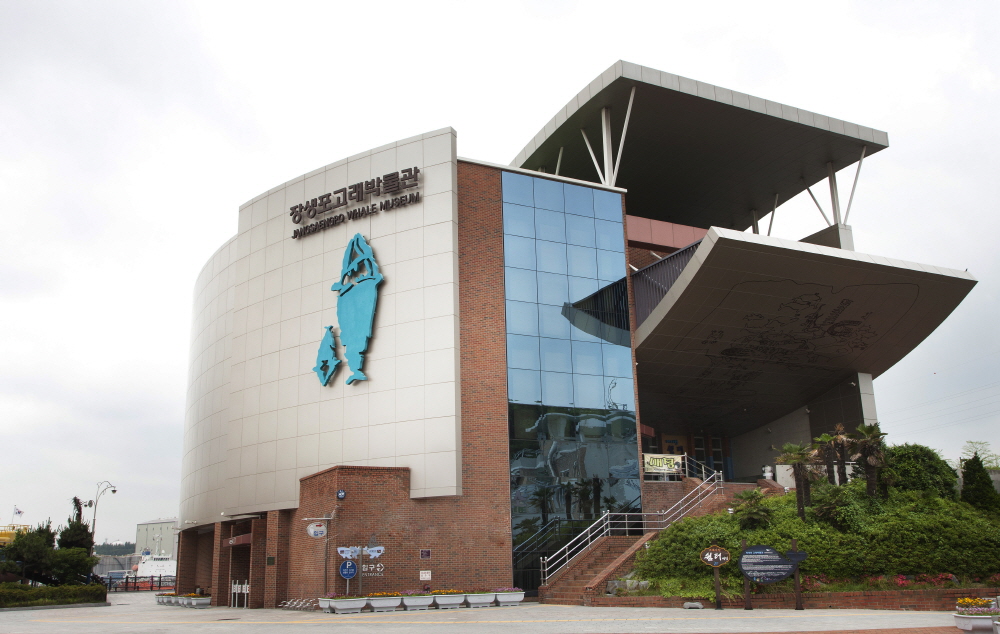
Whale Culture Village is in the Jangsaengpo Whale Culture Special Zone, close to the Jangsaengpo Whale Museum, Whale Ecology Experience Center, and Jangsaengpo Monorail. The Korea Tourism Organization explains that the monorail offers views of Jangsaengpo Beach, Whale Village, Ulsan Bridge, and the industrial complex from a height of 3–5 meters above ground. Travelers who want to see both the outdoor historical recreations and the harbor and industrial scenery can visit the old village in the morning and put the indoor facilities later in the itinerary when the weather is hot or rainy.
However, the museum, ecology experience center, and monorail may each have operating hours, fees, and boarding conditions separate from admission to Whale Culture Village. If you plan to visit only the village, use the adult admission price of 2,000 won as a reference; for a combined visit, check each facility's same-day ticket-sales deadline and remaining seats separately. Travelers who feel uncomfortable with animal exhibits or the history of whaling may instead plan a route centered on the old village, gardens, and sculpture park.
Before You Go
- Address
- 271-1 Jangsaengpogorae-ro, Nam-gu, Ulsan Metropolitan City
- Hours
- 09:00–18:00 (ticket sales end 30 minutes before closing; check separately for event and seasonal operations)
- Closed
- Every Monday, Lunar New Year's Day, and Chuseok Day (advance confirmation is necessary because it may open when Monday is a public holiday or during a travel week)
- Admission
- Adults 2,000 won / Teenagers 1,500 won / Children 1,000 won
- Phone
- 052-256-6301
- Official site
- https://www.whalecity.kr
- Transport
- During the 2026 Jangsaengpo Hydrangea Festival, a free circular bus between Taehwagang Station and Jangsaengpo operated on weekends from 10:00 to 16:00 at 30-minute intervals. At other times, checking the day's city bus routes and stops in Ulsan city bus information is recommended.
- Parking
- The east parking lot, west parking lot, and large parking lot are available; large buses can park. Fees need to be confirmed.
- Time needed
- Two to three hours recommended for Whale Culture Village. About five minutes from the west parking lot to Whale Plaza.
- Accessibility
- Because there are outdoor slopes and walking sections, visitors are advised to confirm wheelchair and stroller routes, rental availability, and accessibility facilities in advance by calling 052-256-6301. Foreign-language assistance in English, Japanese, and Chinese is available through the tourism information hotline at 1330.
The information above is accurate as of the time of writing. Check the official information again before visiting.

Places
Nearby Attractions 5
-
 1
1
-
 2
2
-
 3
3
-
 4
4
-
 5
Jangsaengpo Whale Culture Village Hydrangea Garden
5
Jangsaengpo Whale Culture Village Hydrangea Garden
Food & Dining 5
-
 6
6
-
 7
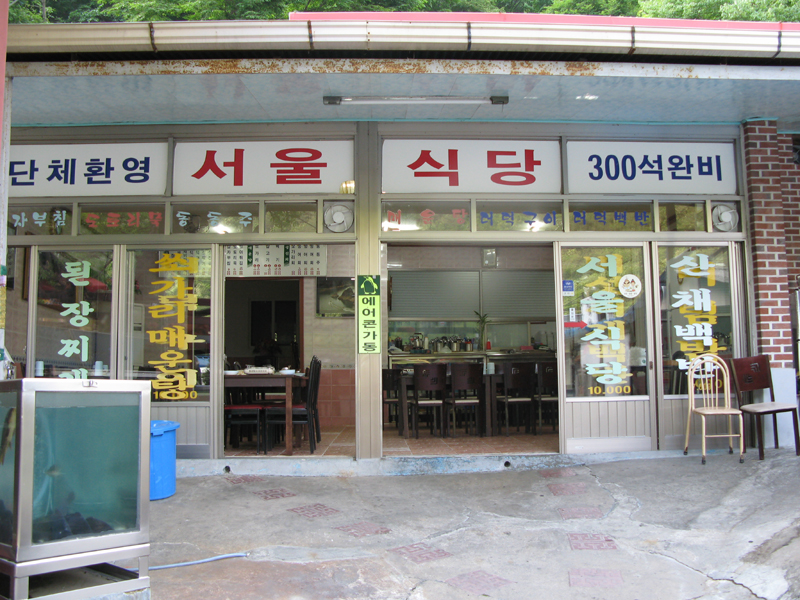
Seoul Sikdang
7
Seoul Sikdang -
 8
8
-
 9
9
-
 10
10
More Travel Guides in This Area
 Travel Guide
Ulsan Museum: Tracing the City’s History Back to the Starting Line of the 1962 Industrial City
 Travel Guide
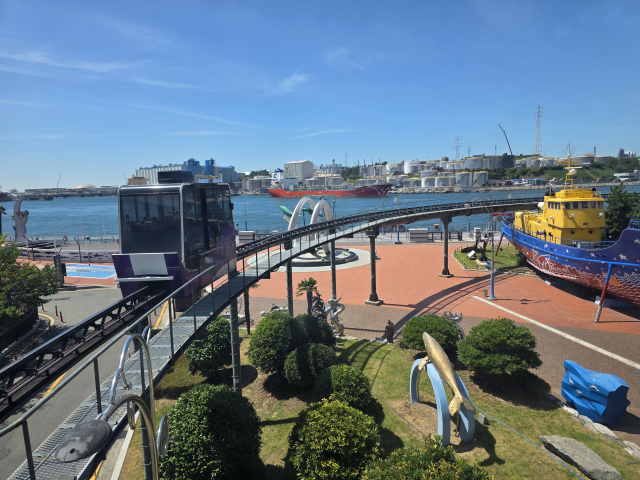
How to Take a Full-Circle Tour of the Whale Culture Special Zone and Industrial Port on the Ulsan Jangsaengpo Monorail
 Travel Guide
Walking Ulsan Arboretum at the Foot of Daeunsan on 1- and 2-Hour Routes
 Travel Guide
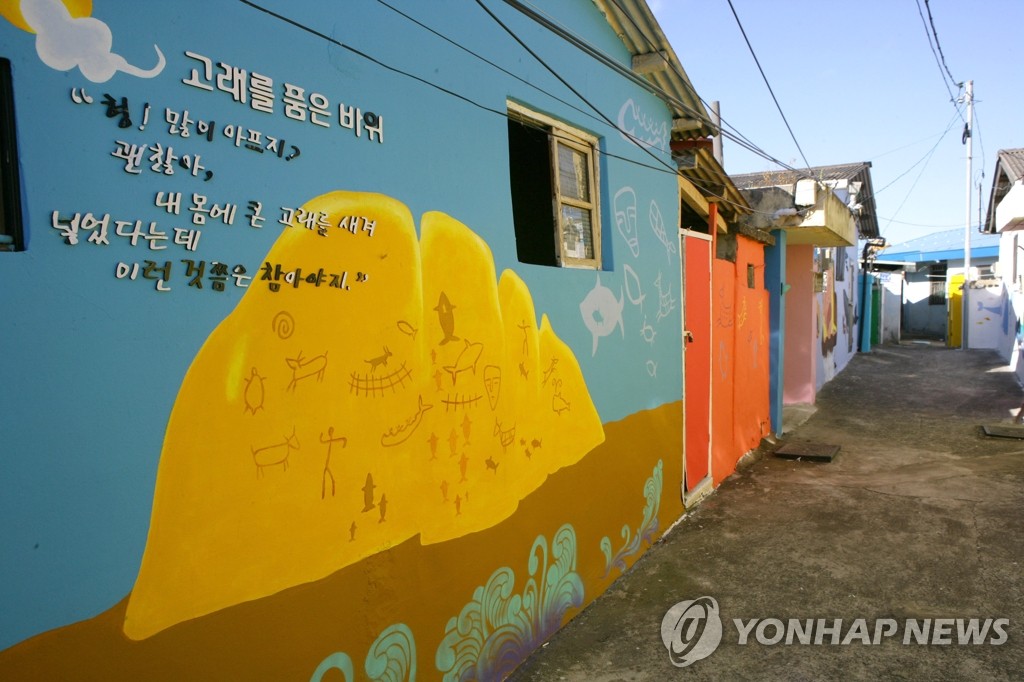
Ulsan Sinhwa Village, Where Whale Murals and Migrants’ Stories Remain
Korea News
 News
News
BTS’s V’s Wine from Chile Sold Out in Two Hours… “Wait Two Months for Restocking”
!['Comeback' ILLIT Picks Up a Whistle… Bold Warning: 'I'll Arrest You' [Today's Preview]](https://kotourlive-images.s3.ap-northeast-1.amazonaws.com/news/1792978782275_1ad139e1_news_dbdae4b1-d435-43fa-968f-97701d6e9389.jpg) News
News
'Comeback' ILLIT Picks Up a Whistle… Bold Warning: 'I'll Arrest You' [Today's Preview]
!['Inkigayo' A2O LITE Takes First Place with 'NEON'… “Happy to Receive So Much Love” [TV Capture]](https://kotourlive-images.s3.ap-northeast-1.amazonaws.com/news/1792978032199_8f5c6664_news_fcd1f66d-9114-4144-bff3-c90686ac459a.jpg) News
News
'Inkigayo' A2O LITE Takes First Place with 'NEON'… “Happy to Receive So Much Love” [TV Capture]
 News
News