The Seomjin River and the Festival Founded in 1995 Shaped Gwangyang Maehwa Village
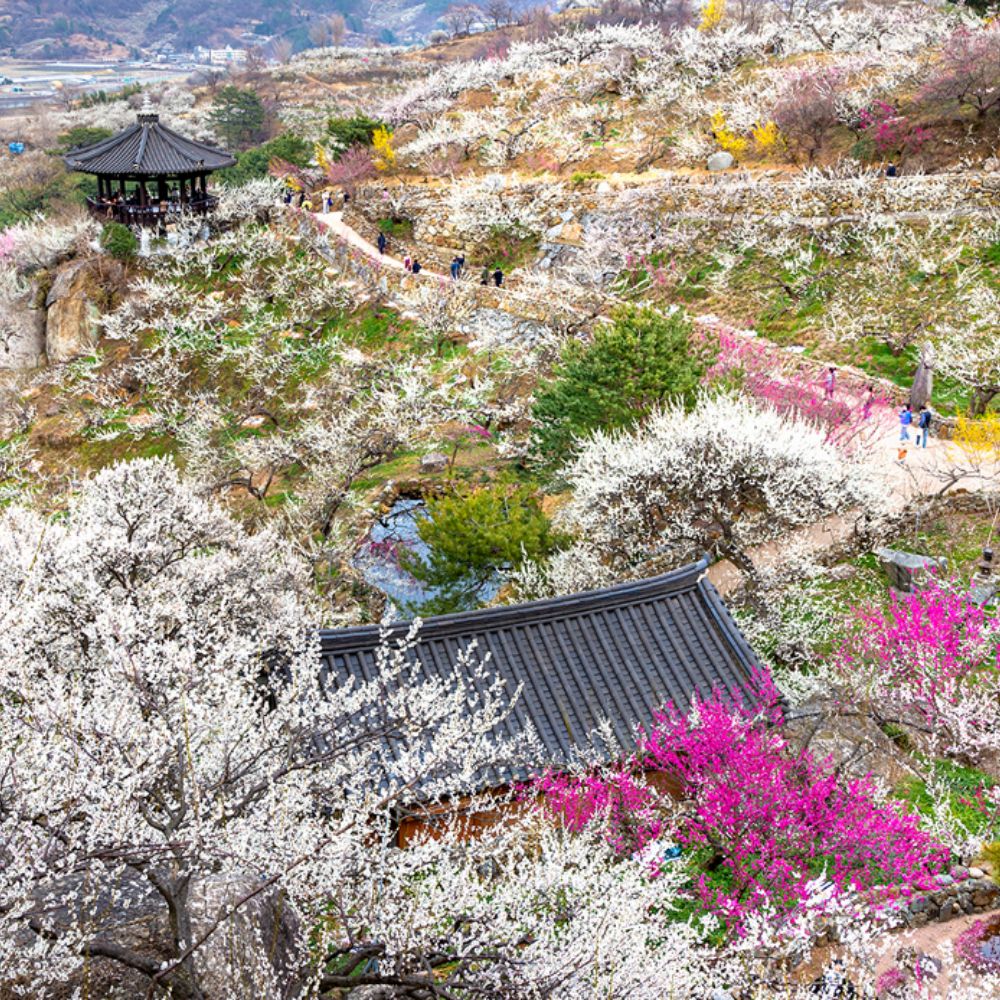
Gwangyang Maehwa Village is a plum-growing area in Dap-myeon, where the foothills of Baekunsan meet the Seomjin River. Centered around Cheongmaesil Farm, it preserves both scenic plum blossoms and the culture of rural production. The 2026 Plum Blossom Festival was held from March 13 to 22. Outside the blossom season, it is safest to plan your visit based on Cheongmaesil Farm’s year-round operating information.

I’ve been here?
Your check-in helps the next traveler.
20 people viewed this week Be the first
One tap — no writing needed
Why Plum Orchards Gathered Along the Seomjin River Below Baegunsan Mountain
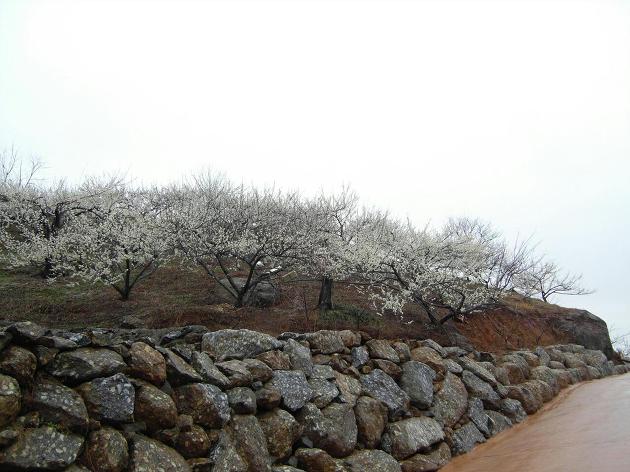
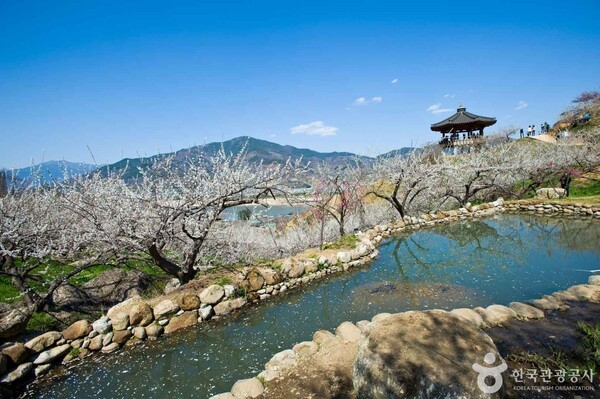
Gwangyang Maehwa Village is the name used for the plum-growing area along the Seomjin River in Daap-myeon, Gwangyang-si, Jeollanam-do, centered around the green-plum orchards and Cheongmaesil Farm. The address of Cheongmaesil Farm listed by the Korea Tourism Organization is 55 Jimak 1-gil, Daap-myeon, Gwangyang-si, Jeollanam-do. Because it lies where the foothills of Baegunsan Mountain meet the course of the Seomjin River, visitors can enjoy views of plum blossoms along both the river and mountain slopes during the flowering season.
The festival was first held at Cheongmaesil Farm in 1995 and expanded into a regional event from 1997, when Gwangyang City began participating. Plum blossoms are not merely ornamental flowers; they support rural production through the sale of plums, pickles, jam, jelly, and traditional foods. Cheongmaesil Farm accepts both on-site purchases and orders by phone or online.
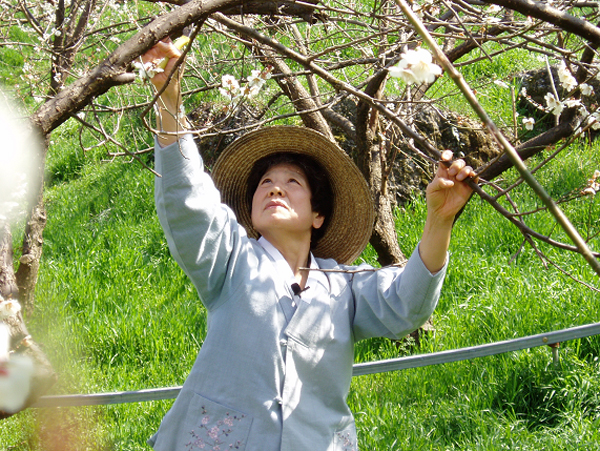
March 13–22, 2026: What Changed with the 6,000-Won Fee at the 25th Festival
The most recent event, the 25th Gwangyang Maehwa Festival, was held for 10 days from Friday, March 13, to Sunday, March 22, 2026, throughout Maehwa Village in Daap-myeon. Sales and program hours at the main festival venue were 09:00–18:00, with 24 programs including folk-painting and media-art exhibitions and activities, the Plum Blossom Life Photo Studio, the Plum Blossom Archery Range, and Seomjin River boat-route experiences.
Admission to the 2026 festival was 6,000 won for adults and 5,000 won for teenagers, with the full amount issued as local gift certificates. The certificates could be used at festival booths excluding street vendors, participating cafés, restaurants, and accommodations in Daap-myeon, as well as at the Gwangyang Seafood Distribution Center and Jungma Market. After the festival ended, in August 2026, these fees and event hours should not be treated as current year-round visitor information.
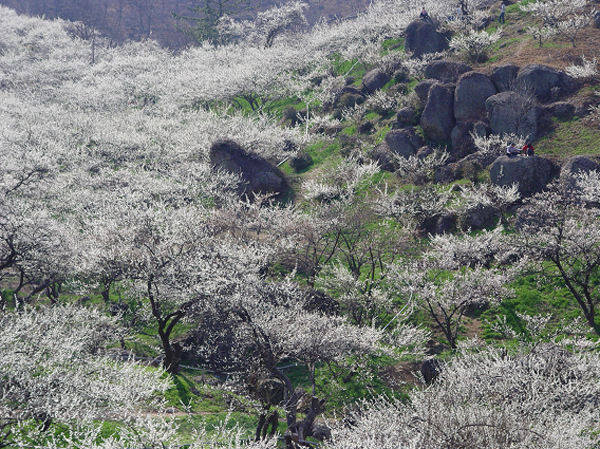
In August, When There Are No Blossoms, Use Cheongmaesil Farm’s 09:00–18:00 Hours as Your Guide
Cheongmaesil Farm is the standard destination outside the plum-blossom season. The Korea Tourism Organization’s English travel information lists Cheongmaesil Farm as open year-round from 09:00 to 18:00, and the telephone number for inquiries is 061-772-4066. The official website is https://www.maesil.co.kr.
As of August 5, 2026, the plum blossoms have already finished blooming, so this is not the right itinerary for those expecting the white-flower scenery of March. Instead, it is realistic to allow 1.5 to 2 hours, focusing on plum-related foods, the earthenware scenery within the farm, and views of the Seomjin River. If you plan to buy plum products, it is best to first check with the seller whether any items require refrigerated storage.
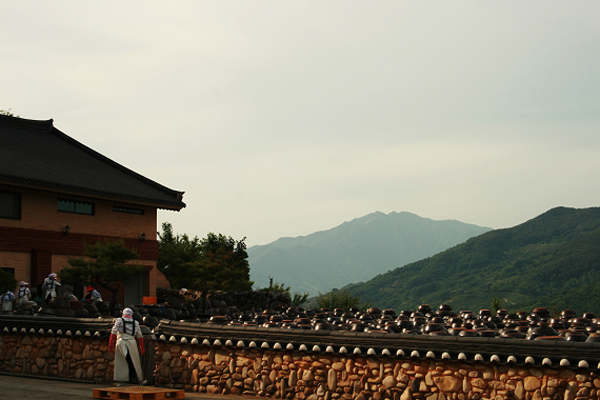
Six Weekend Shuttle Runs in 2026 from Gwangyang Terminal to the Festival Site
For visitors traveling without a car during the festival season, an urban-area reservation shuttle operated only on March 14, 15, 21, and 22, 2026. It ran a round-trip route departing from 688 Sungwang-ro, Gwangyang-eup, passing through the Jungma Tourist Information Center at 91 Gongyeong-ro, and continuing to the festival site. The round-trip fare was 5,000 won per person.
Of the six daily departures from Gwangyang Terminal, the times were 08:30, 09:30, 10:30, 11:00, 12:00, and 13:00, with departures from the Jungma Tourist Information Center 30 minutes after each of these times. Return trips ran from the festival site between 13:00 and 18:00. Because reservations and payment through the MY Gwangyang app had to be completed by the previous day, this shuttle is not currently an ongoing transportation option. On non-festival days, check separately for private-car, taxi, or intercity-bus services operating on the relevant date.
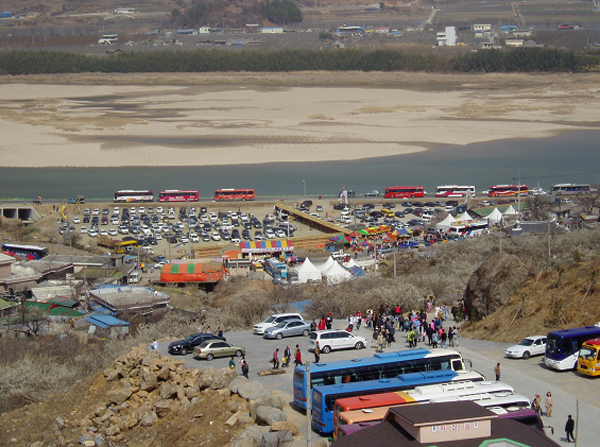
Calculate the Difficulty of Getting Around First: Car-Free Festival and Slopes Along the Seomjin River
The 2026 festival promoted a “three-no” policy to reduce vehicles, price gouging, and disposable products, while managing transportation around shuttles and maintaining pedestrian areas. Although festival parking areas were operated separately at the time, traffic controls and parking assignments may change during peak-bloom weekends. Visitors should reconfirm parking availability and fees with the Gwangyang City Tourism Division before departure.
Cheongmaesil Farm is listed as having parking, but the site consists of a hillside farm and outdoor paths. Since reliable, up-to-date information could not be found on the slope conditions across all areas for wheelchair and stroller access, accessible restrooms, or equipment rentals, advance telephone inquiries are necessary. Foreign-language assistance is available through the tourist information hotline 1330 in Korean, English, Japanese, and Chinese.
More Than 2,000 Earthenware Jars and Processed Plum Products: What to See After the Flower Photos
Cheongmaesil Farm offers processed plum products such as plum pickles, jam, jelly, and traditional foods. Even after the flowers have fallen, plums remain a core agricultural crop in the area. Therefore, a route combining the earthenware jars and processed foods after viewing the spring blossoms better conveys the character of this destination.
Past records describe the area around Cheongmaesil Farm as having more than 2,000 traditional earthenware jars, mentioning them as part of the farm scenery contrasting with the plum-covered mountain slopes. However, the arrangement of the jars and the areas open to visitors may vary depending on the season and farm operations, so follow on-site guidance rather than treating a specific photography spot or activity schedule as confirmed.
After 710,000 Visitors Came to the 2026 Festival: How to Prepare for Next Spring
Gwangyang City counted 711,679 visitors to the 25th festival in 2026, which ran from March 13 to 22. That year, the festival schedule was adjusted to match the flowering period using accumulated temperature data. For a future visit, therefore, do not rely only on the fixed assumption of mid-March; check both Gwangyang City’s flowering status and its festival announcements.
If plum blossoms are your main goal, first check the festival announcement for dates, admission fees, and whether shuttle reservations are required. Arriving on a weekday morning is more favorable for managing your route than visiting on a weekend. If your main interests are the Seomjin River scenery and buying plum products rather than flowers, visit Cheongmaesil Farm during its 09:00–18:00 operating hours after the festival ends.
Before You Go
- Address
- 55 Jimak 1-gil, Daap-myeon, Gwangyang-si, Jeollanam-do
- Hours
- Cheongmaesil Farm: 09:00–18:00 (listed as open year-round). Main venue of the 2026 Gwangyang Maehwa Festival: 09:00–18:00, March 13–22.
- Closed
- Cheongmaesil Farm is listed as open year-round.
- Admission
- The regular admission fee for Cheongmaesil Farm could not be confirmed. 2026 Gwangyang Maehwa Festival: 6,000 won for adults and 5,000 won for teenagers (the full amount issued as local gift certificates).
- Phone
- 061-772-4066
- Official site
- https://www.maesil.co.kr
- Transport
- 2026 festival weekend reservation shuttle: 688 Sungwang-ro, Gwangyang-eup → Jungma Tourist Information Center at 91 Gongyeong-ro → festival site; 5,000 won round trip. Public transportation on non-festival days requires separate confirmation.
- Parking
- Parking is listed as available at Cheongmaesil Farm. Festival-period parking areas, traffic controls, and fees vary each year and require advance confirmation.
- Time needed
- 1.5–2 hours recommended, focusing on Cheongmaesil Farm.
- Accessibility
- Because there are outdoor hillside and sloped sections, advance inquiries are recommended regarding access across the entire site for wheelchairs and strollers. Tourist information hotline 1330 provides assistance in English, Japanese, and Chinese.
The information above is current as of the time of writing. Check official information again before visiting.

Places
Nearby Attractions 5
-
 1
1
-
 2
2
-
 3
3
-
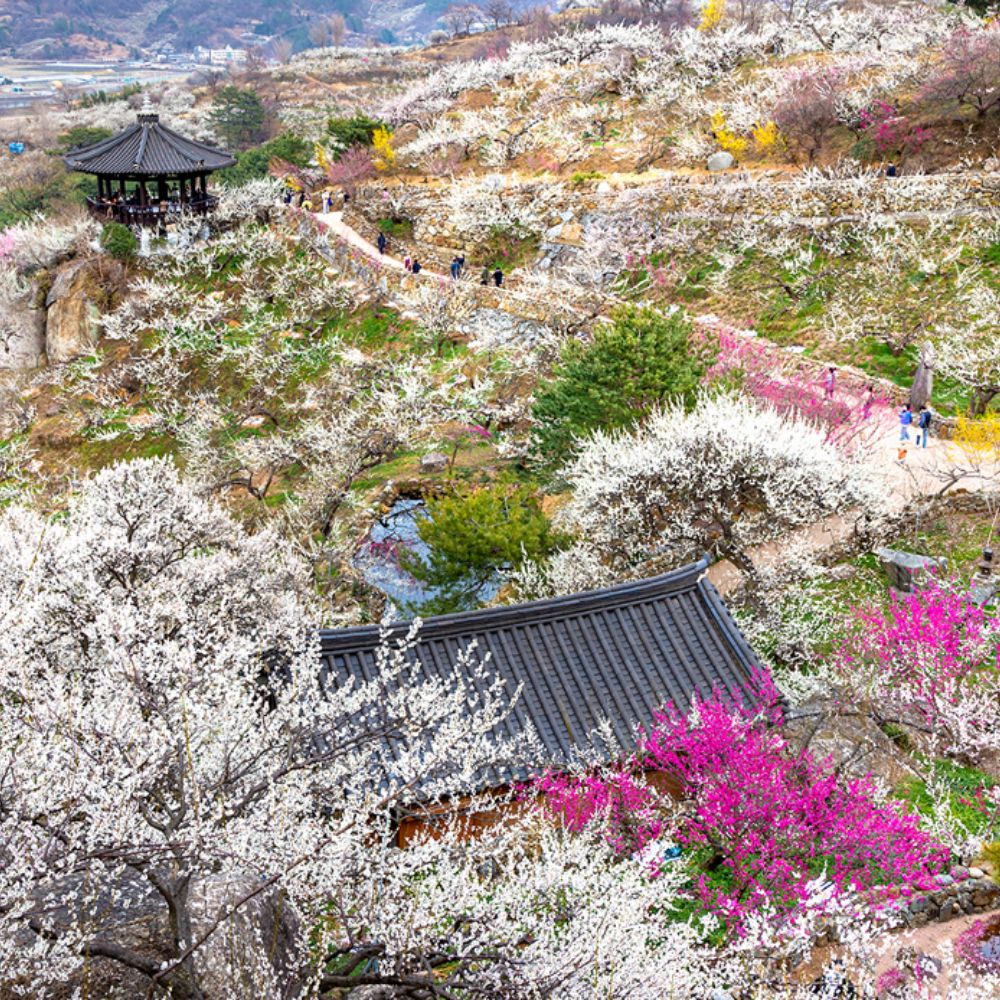 4
Gwangyang Maehwa Festival
4
Gwangyang Maehwa Festival -
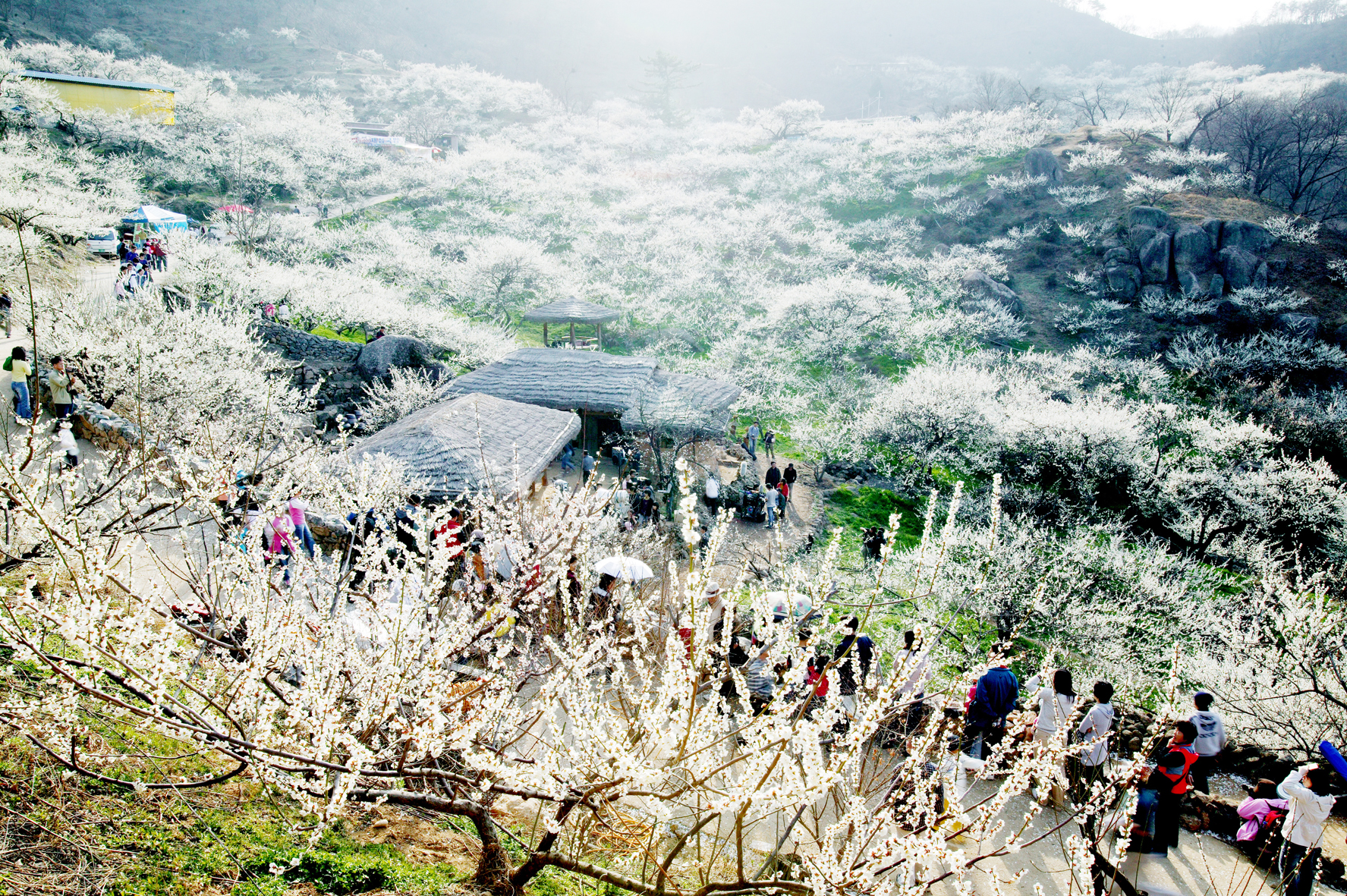 5
5
Food & Dining 5
-
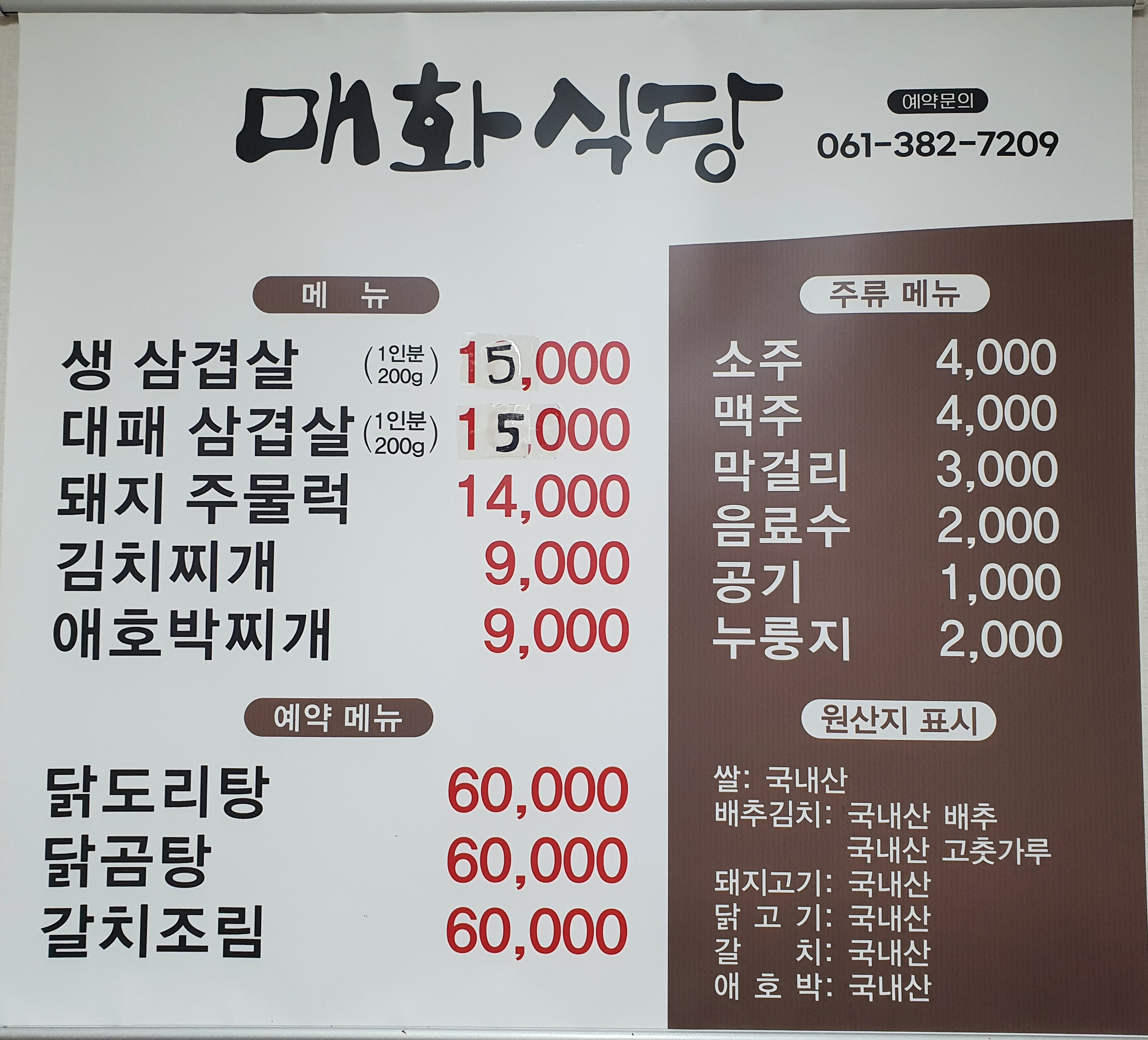 6
6
-
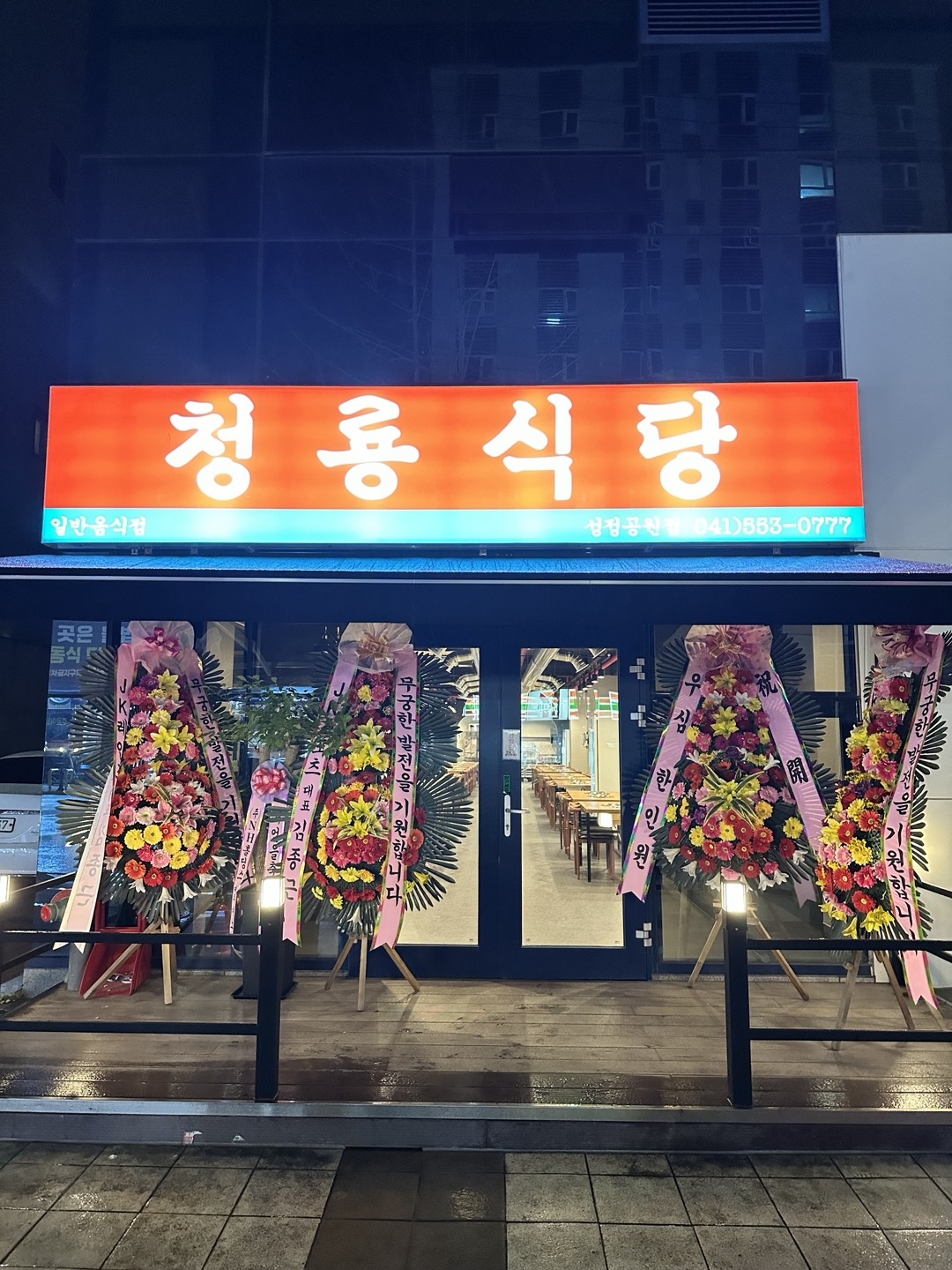 7
Cheongryong Restaurant
7
Cheongryong Restaurant -
 8
Maehyang
8
Maehyang -
 9
9
-
 10
Gwangyang Maehwa Festival
10
Gwangyang Maehwa Festival
Events in This Area
Festivals in This Area
More Travel Guides in This Area
 Travel Guide
From the Bongcheon-dong hillside neighborhood to Sunyang Theater: a 90-minute route at the Suncheon Drama Film Set
 Travel Guide
Gwangyang Okryongsa Camellia Forest on the Southern Slope of Baekgyesan
 Travel Guide
A 1.12-million-square-meter garden created to protect Suncheon Bay, Suncheon Bay National Garden
 Travel Guide
The Legacy of the Sea from the 2012 Yeosu Expo: Yeosu Expo Ocean Park
Korea News
 News
News
‘NewJeans Expulsion’ Danielle Releases Her First YouTube Video… “We Don’t Know What Will Happen Next”
![aespa’s North American Tour Has Remaining Seats Despite ‘$49’ Bargain Prices… A Stark Popularity Gap with KATSEYE [TEN Starfield]](https://kotourlive-images.s3.ap-northeast-1.amazonaws.com/news/1788485037424_a59b1932_naver_rank_thumb_0000774618_1788485037424.jpg) News
News
aespa’s North American Tour Has Remaining Seats Despite ‘$49’ Bargain Prices… A Stark Popularity Gap with KATSEYE [TEN Starfield]
![[Photo] TWICE’s Dahyun attends a film festival red carpet as an actress](https://kotourlive-images.s3.ap-northeast-1.amazonaws.com/news/1788485316508_edd43ecd_news_870a60a6-6f11-4d73-aa7c-48d91318a0f7.jpg) News
News
[Photo] TWICE’s Dahyun attends a film festival red carpet as an actress
![[On-Site Video] “We’re Departing Separately Together”… BIGBANG Begins ‘COSMOS’ World Tour](https://kotourlive-images.s3.ap-northeast-1.amazonaws.com/news/1788485226518_c5719641_news_fdd4764a-0f4e-4968-8e4e-e98a02872f88.jpg) News
News