
Jeonwolsan Rose of Sharon Theme Park — Sejong’s Garden with Over 300 Varieties of the National Flower Across 130,000 m²
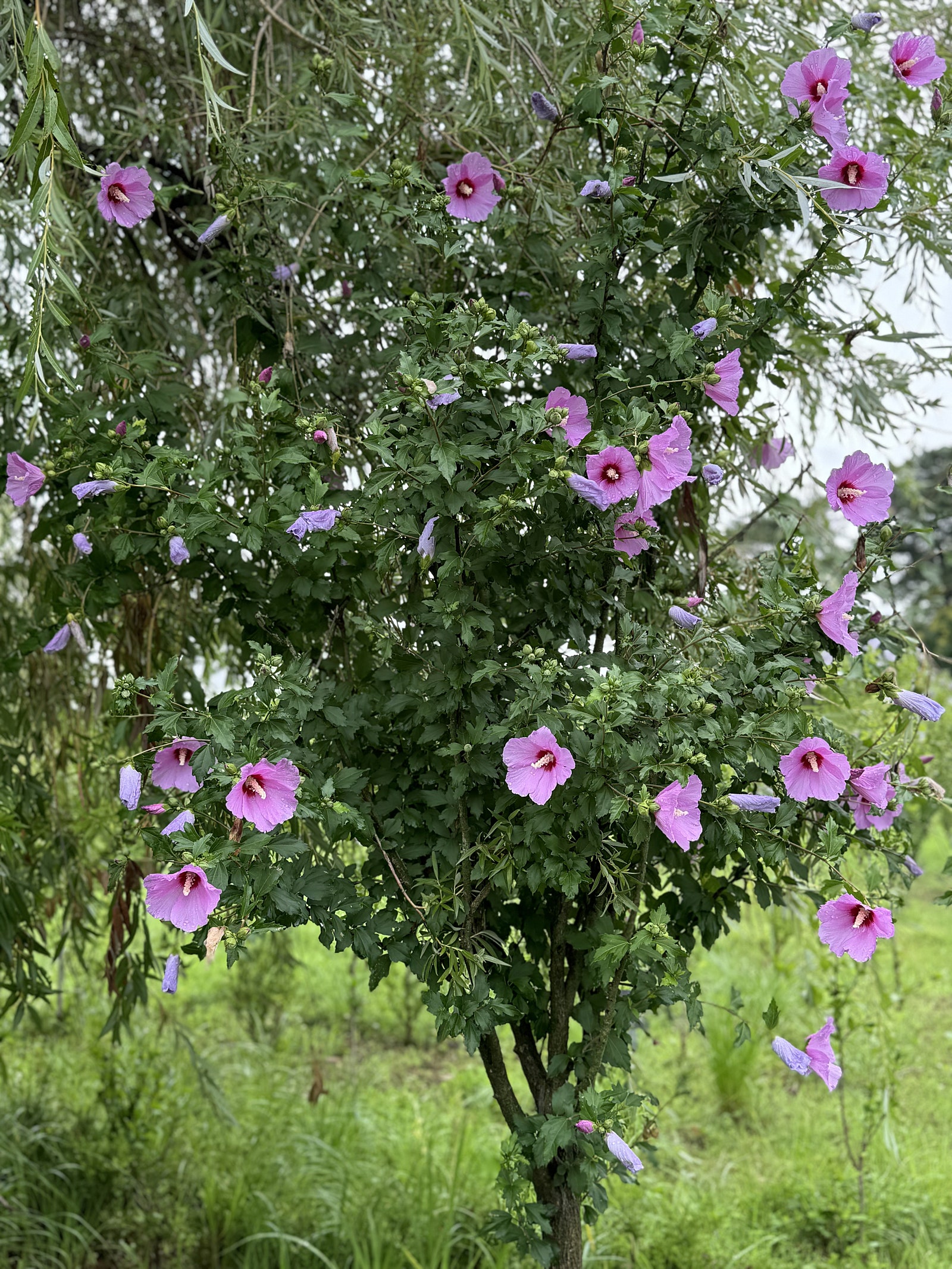
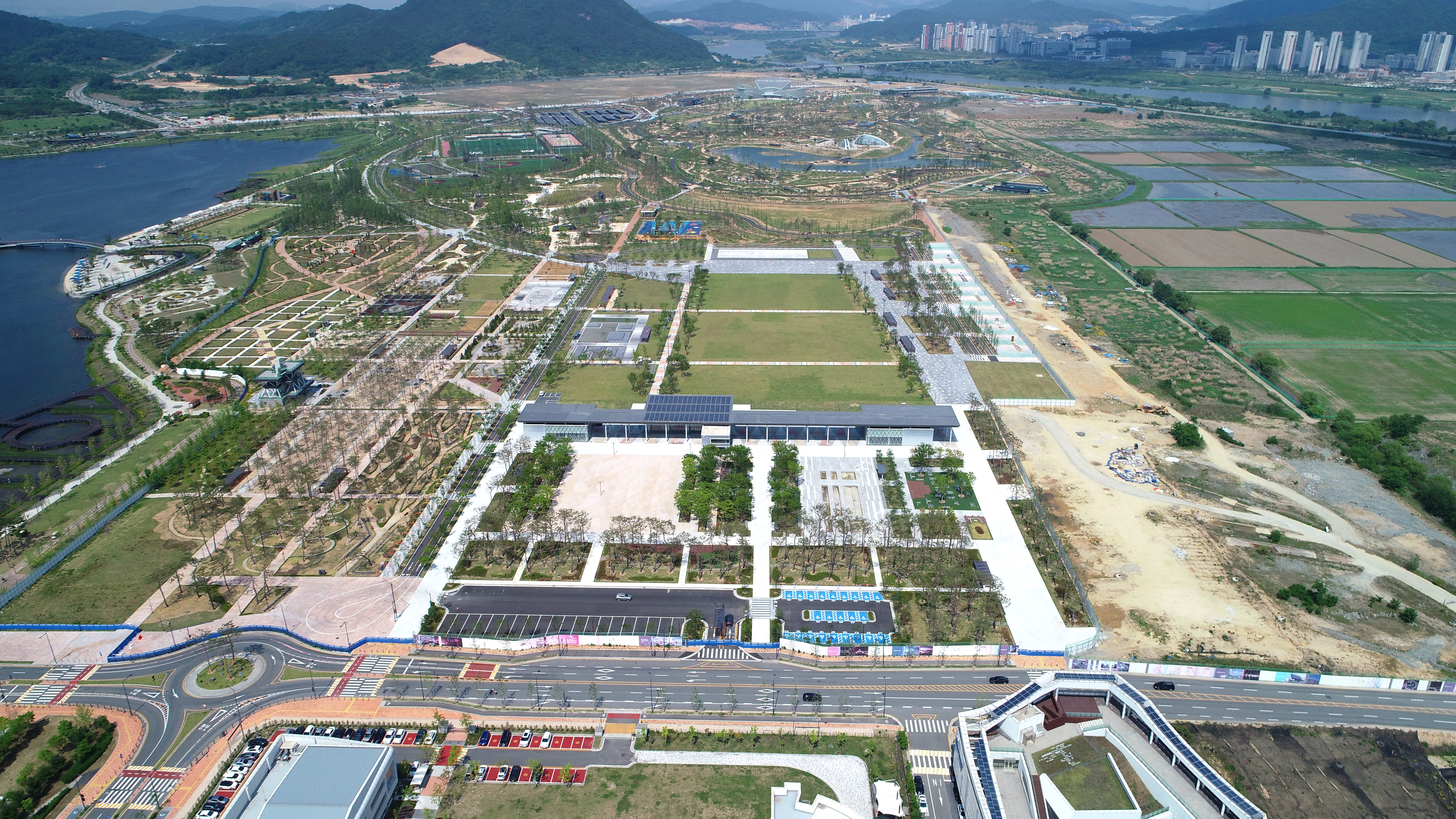
Opened in November 2018 on a 130,000 m² site at the foot of Jeonwolsan Mountain in Sejong City, this is Korea’s largest Rose of Sharon theme park. It features over 300 varieties of Rose of Sharon, national flowers from around the world, and garden works by 10 Korean and international artists left from the 2018 Rose of Sharon Garden Show. Behind the park, a hiking trail on Jeonwolsan Mountain—steeped in the story of General Im Nansu, a loyalist of Goryeo—continues to a natural monument ginkgo tree.
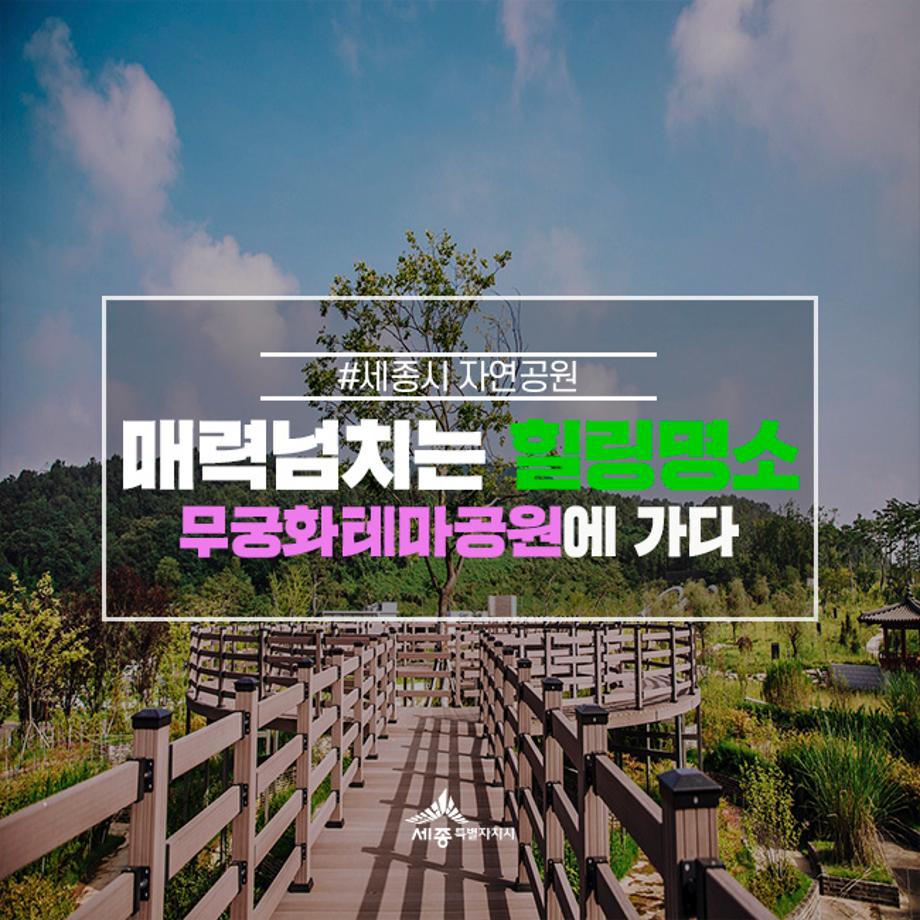
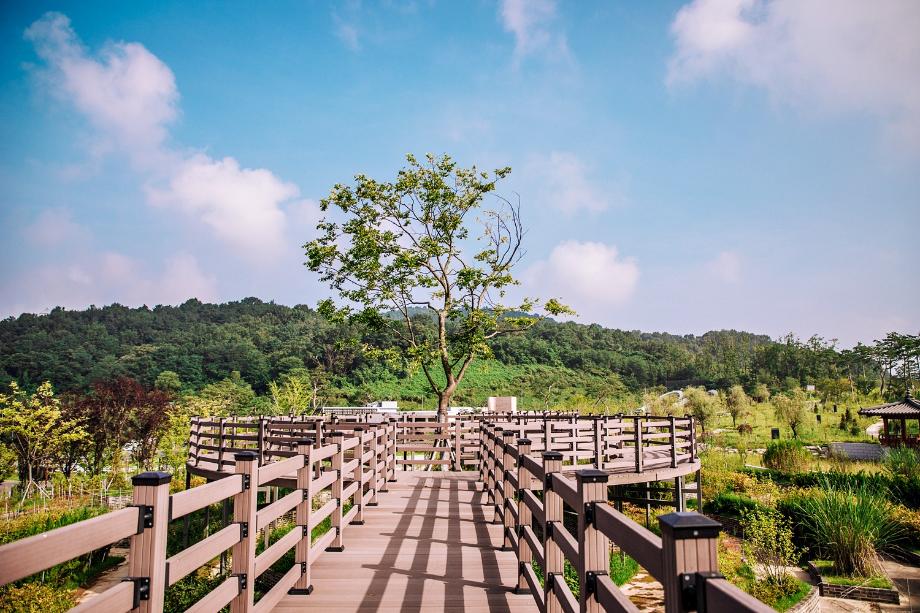
The Vision of Haengjeong Jungshim Bokhap Dosi as a “Mugunghwa Specialized City,” Illustrated on Jeonwolsan Mountain
In August 2016, the National Agency for Administrative City Construction announced plans to create Korea’s largest Mugunghwa-themed park in the Jeonwolsan Mountain area. According to the announcement at the time, the Geumgang Riverside Park, Wonsusan Neighborhood Park, Mugunghwa Theme Park, and Central Park were scheduled to be developed in succession to coincide with residents moving into Residential Zones 3 and 4 south of the Geumgang River.
As of the reporting date in August 2018, the park was being developed on a 130,000㎡ site near Jeonwolsan Mountain with five main themes, including the Mugunghwa Color Garden, Variety Garden, World National Flower Garden, and Rest Garden. A total project budget of 7.7 billion won was invested. It was introduced as Korea’s largest park, where visitors could see around 300 varieties of Mugunghwa and national flowers from countries around the world in one place, and officially opened that November.
Jeonwolsan Mountain, Named in the History of Goryeo Loyalist Im Nansu
The name Jeonwolsan (轉月山) is said to come from the impression that, when looking down at the river east of the mountain on a moonlit night, the moon reflected in the water appears to be turning. In fact, the Geumgang River and Mihocheon Stream meet east of the mountain.
The historical figure associated with this mountain is Im Nansu (1342–1407), a military official of the late Goryeo period. A member of the Buan Im clan, he distinguished himself in the conquest of Tamna (Jejudo) alongside General Choe Yeong. However, after Joseon was founded, he abandoned his government post, declaring that he would not serve two kings, and moved to present-day Sejong-ri, where he spent the rest of his life. Sangyeobawi Rock, which appears in the latter part of the hiking trail, is said to be where General Im Nansu lived in seclusion, bowing toward Gaegyeong and longing for his homeland.
Im Nansu Ginkgo Trees and Sungmogak Shrine — 600-Year-Old Natural Monument Beside Mugunghwa Park
Two ginkgo trees said to have been planted by General Im Nansu stand near the park. On May 12, 2022, the Cultural Heritage Administration and Sejong City designated these two “Sejong Im Nansu Ginkgo Trees” as Nationally Designated Cultural Heritage Natural Monuments. They were the second natural monuments designated in Sejong City, following the juniper tree in Jochiwon-eup. The male tree to the east is 20 m tall with a circumference of 6.9 m at the base, while the female tree to the west is 19 m tall with a base circumference of 5.4 m.
Sungmogak Shrine in front of the ginkgo trees commemorates General Im Nansu. It was abolished in the late Joseon period, later restored by his descendants, and now houses memorial tablets for 14 members of the Buan Im clan. The signpost in the grass can be difficult to spot, but visitor accounts suggest that approaching from the direction of Mugunghwa Theme Park is easier. At the park entrance, a 190-year-old protected zelkova tree, along with village merit monuments and origin stele, also remain.
How to Walk Through Five Themed Gardens on a 130,000㎡ Site
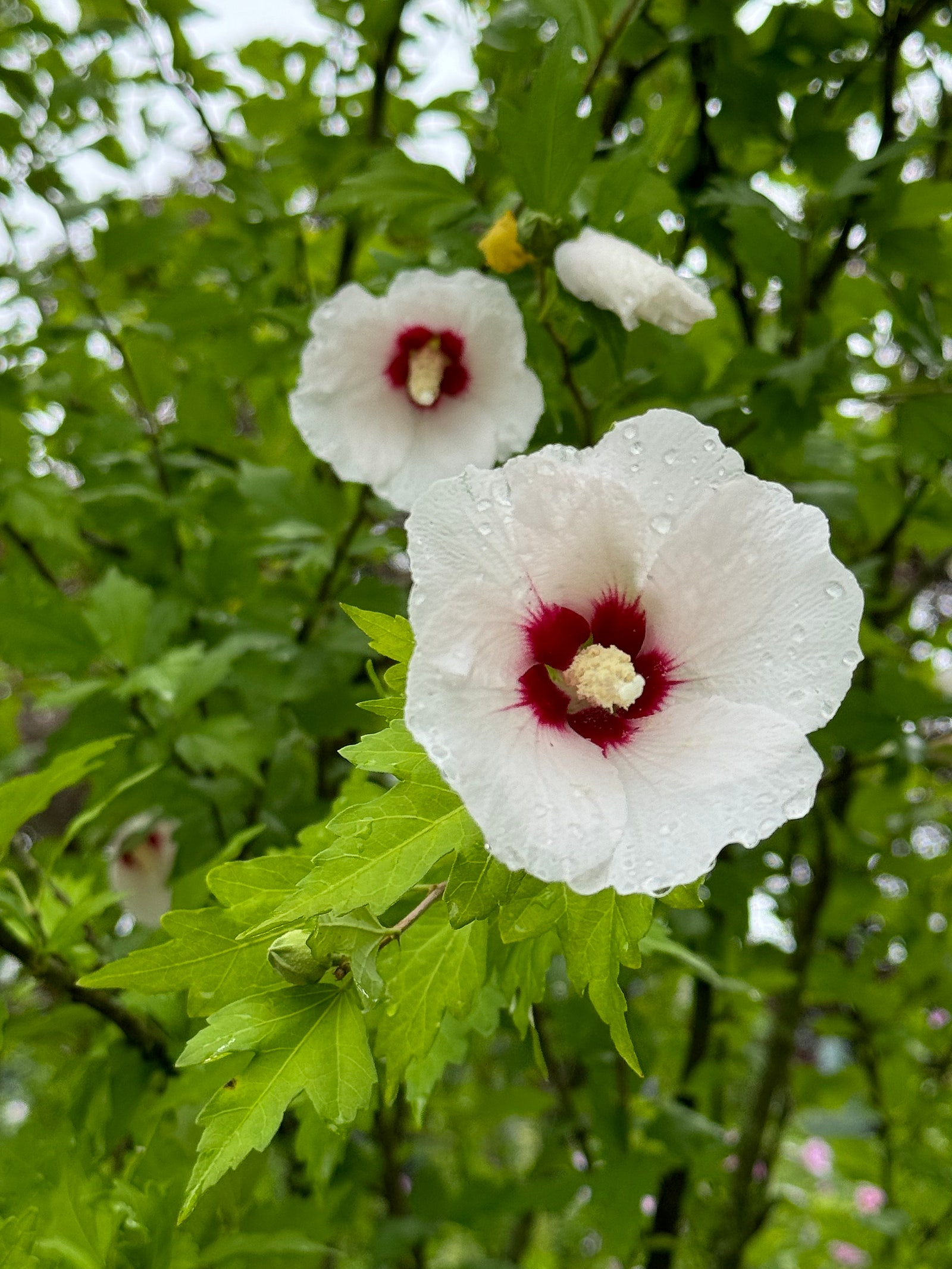
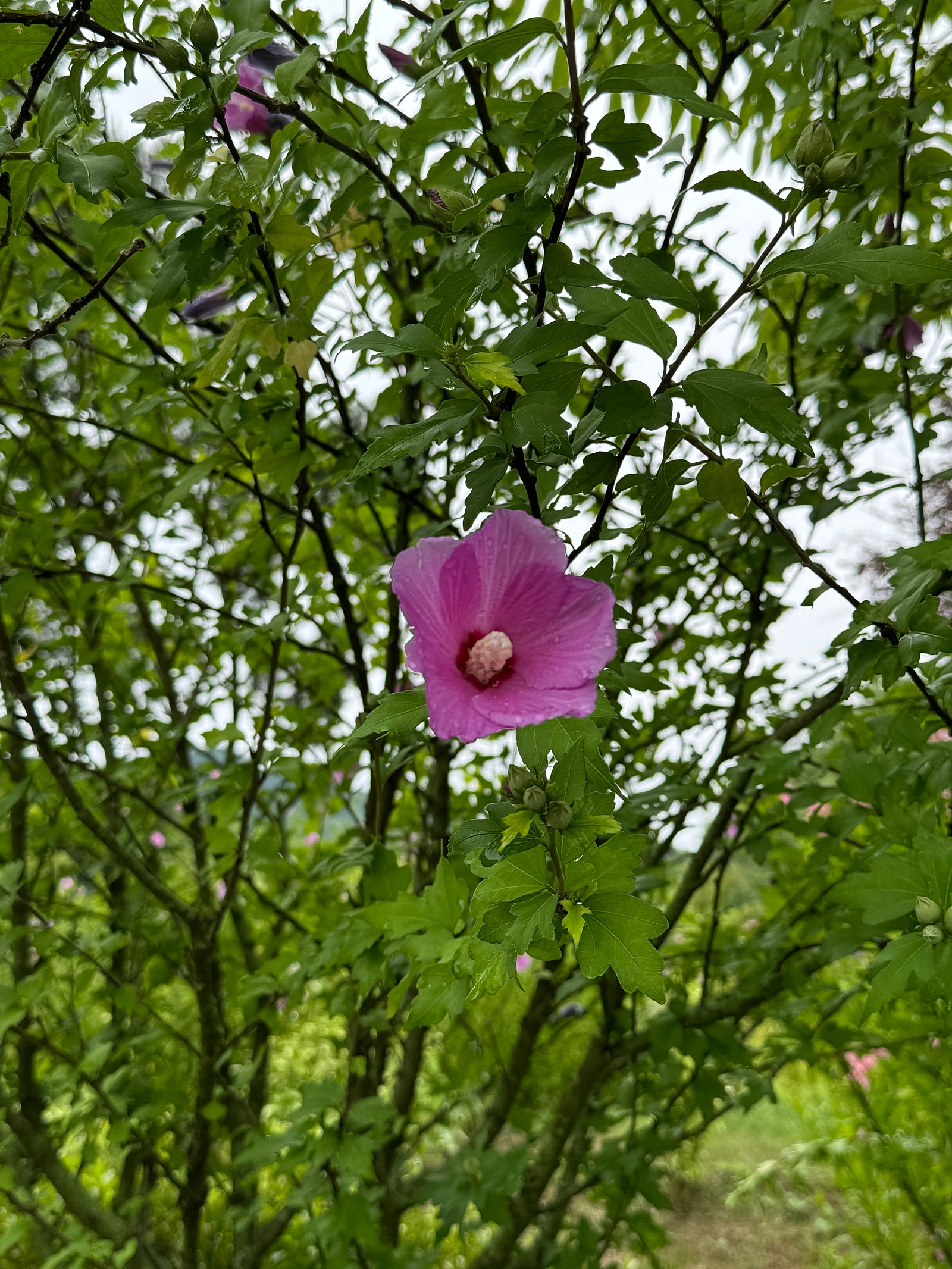
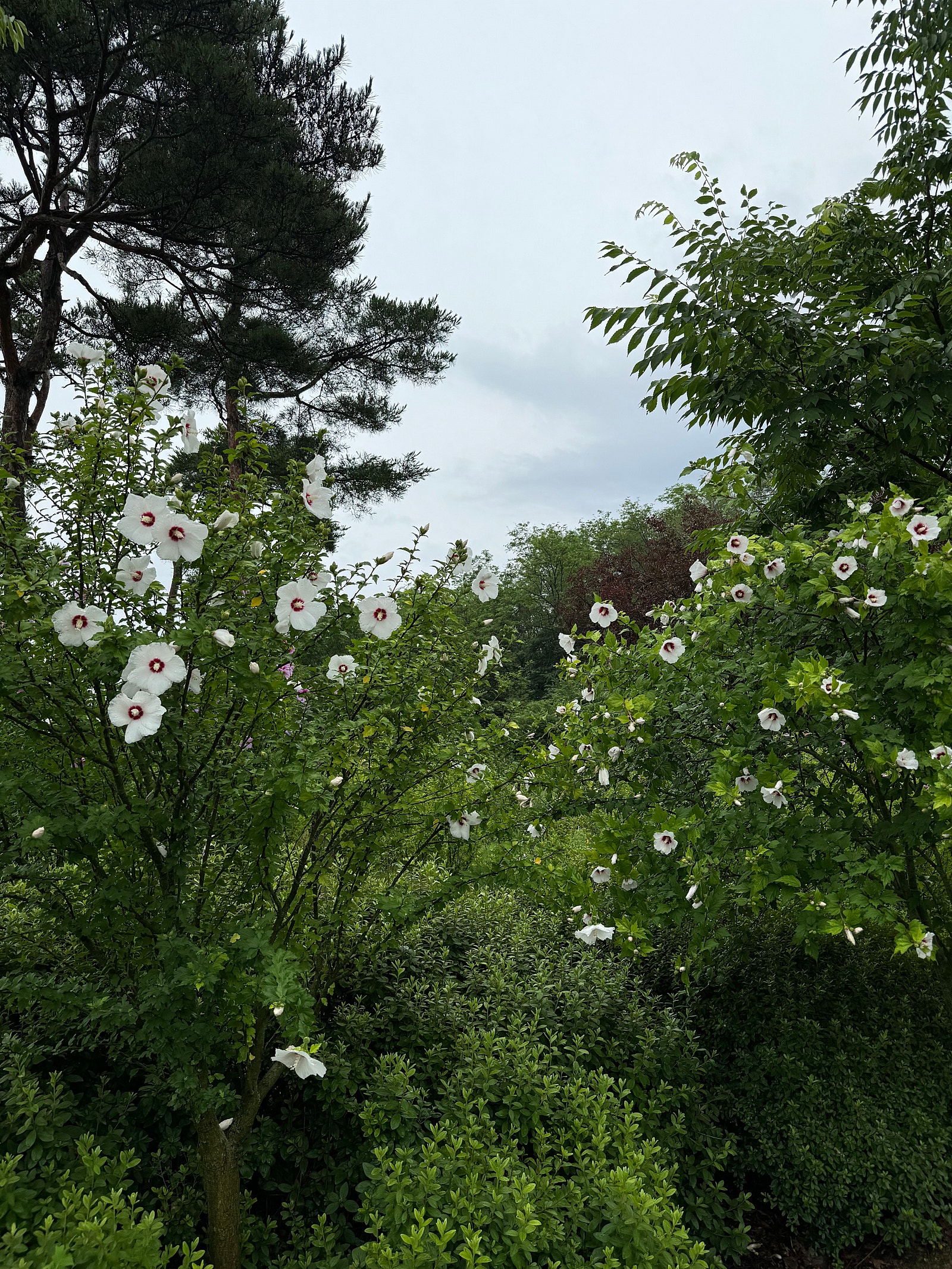
The park consists of the “Mugunghwa Color Garden,” which gathers Mugunghwa varieties by color, including Hongdanwon, Cheongdanwon, and Baedalwon; the “Mugunghwa Variety Garden,” where around 300 varieties are planted together; the “World National Flower Garden,” featuring 28 national flowers from countries around the world; the “Mugunghwa Rest Garden,” a woodland shelter; and the Sculpture Beauty Garden, planted with a variety of trees. In the Variety Garden, separate signs displaying flower photographs and names are provided for each garden.
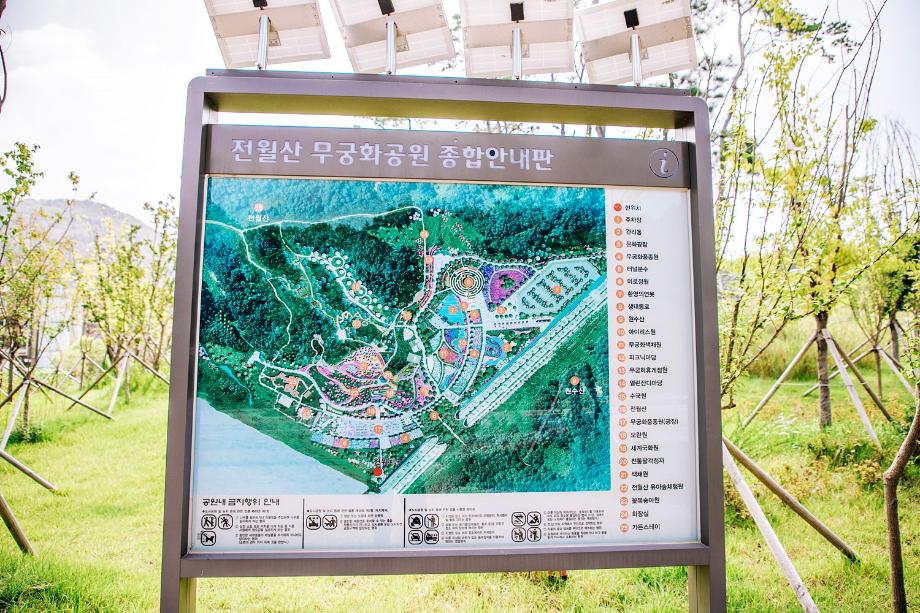
Because the site is large, several visitor accounts recommend planning your route first using the guide map at the entrance. However, visitors have repeatedly noted that the explanations beside some installations are insufficient, so it is better to check the names of the works on the map in advance.
The “Top 10 Artist Gardens” Left by the 2018 Mugunghwa Garden Show
Before the park opened, Korea’s first Mugunghwa Garden Show was held from August 16 to 22, 2018. It was the first garden exhibition in the Chungcheong region and Korea’s first garden exhibition centered on the Mugunghwa. Ten artists from Korea and abroad participated, presenting their own garden installations interpreting Korea’s national flower, the Mugunghwa.
The installations were not dismantled after the exhibition ended; instead, they remained permanently in the park and continue to serve as everyday gardens. The participating artists included the organizing committee of the Chaumont Garden Festival in France, making it enjoyable to use the guide map to find the works of all ten Korean and international artists one by one.
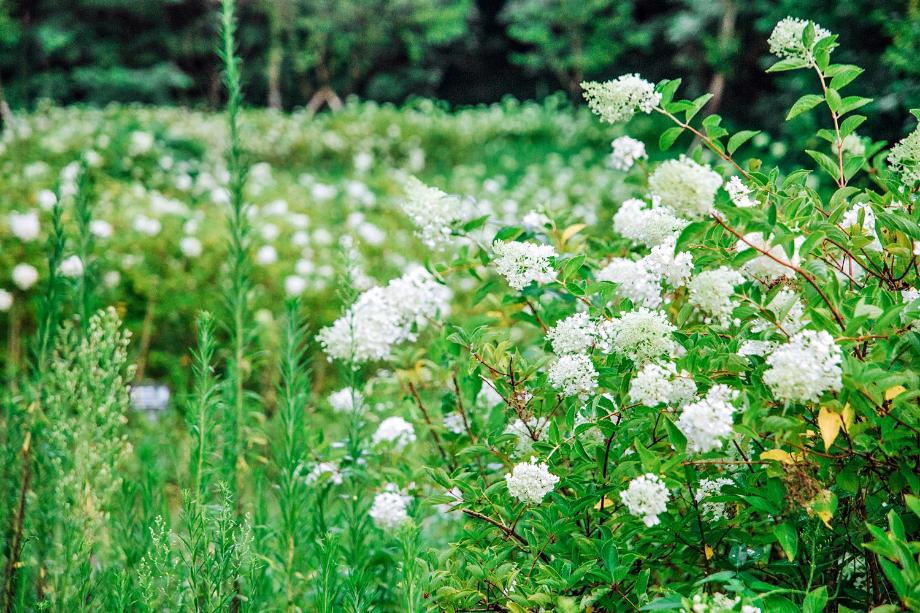
Hydrangea Garden in July and a Mid-Summer Cluster of Tree Hydrangeas
The Hydrangea Garden beside the Children’s Forest Experience Center is relatively quiet because it is away from the busiest paths. It is considered a sizable hydrangea garden in the Sejong area. Many reviews say that even visits in mid-August often take place after the peak, so July is a better time to see the flowers in full bloom.
There is also a cluster of tree hydrangeas at the entrance to the Jeonwolsan hiking trail. Visitor accounts say that the fragrance is strong during the summer peak bloom and can be sensed while walking. A still-young birch grove and picnic tables have also been created nearby, making them worthwhile stops to combine with a visit.
2.3 km Round Trip from Mugunghwa Theme Park to the Summit of Jeonwolsan Mountain
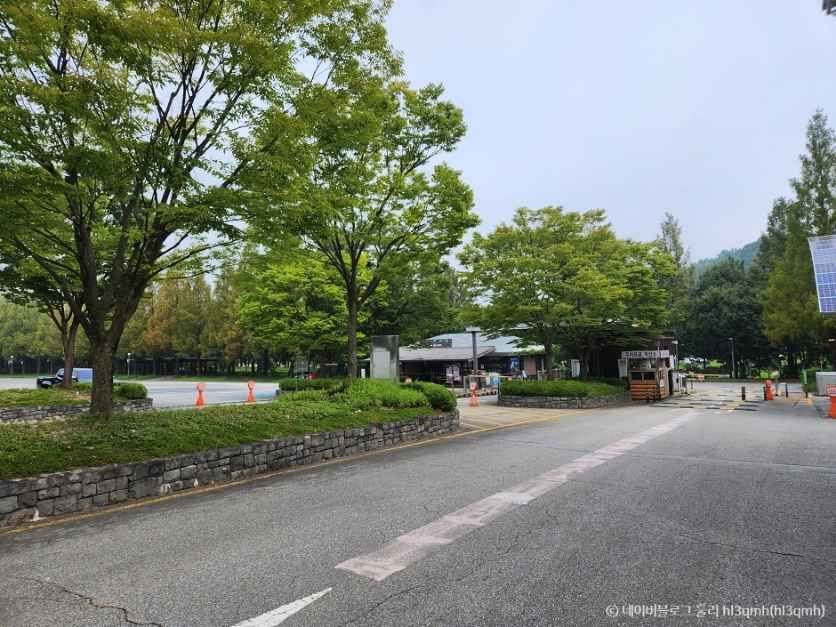
The hiking trail begins directly at the Mugunghwa Theme Park parking lot, with a sign reading “Jeonwolsan Hiking Trail 210 m” near the start of the access road. The most popular route begins here and climbs to the summit of Jeonwolsan Mountain. It is 2.3 km round trip and takes about one hour.
According to visitor reviews, taking the climb at a relaxed pace takes around 30 minutes to the summit. With a mix of slopes and level ground, it is described as a gentle route that beginners can attempt without much difficulty. One visitor account describes it as a low mountain with an elevation of about 260 m, making it closer to a neighborhood hiking trail that can be climbed without extensive preparation.
Getting There — Parking Lot and Bus Routes
Visitors can use the parking lot at the entrance to Mugunghwa Theme Park free of charge. Some visitor accounts highlight that the lot is paved with permeable grass blocks instead of asphalt to reduce vehicle heat in summer.
By public transportation, take Bus 221 toward Duru Elementary and Middle School from Sejong Express and Intercity Bus Terminal Stop (51-053), get off at Sejong Lake Park Stop, and walk approximately 27 minutes. Since this is somewhat far to walk, taking a taxi from Sejong Lake Park is also recommended. Separately, some visitors have reported traveling directly from Sejong Terminal to Mugunghwa Theme Park by Bus 211, so it is safest to check the latest route once more on the Sejong City Transportation Information System before visiting.
Mugunghwa Children’s Forest Experience Center and Jeonwolsan National Leisure Campground — Places to Combine
The Mugunghwa Children’s Forest Experience Center is located at 176 Imnansu-ro inside the park. It holds “Forest Day” events so young children can experience natural elements of the forest through all five senses, and it also has a dirt playground. Reviews suggest that visitors with children sometimes remember this place as their first stop rather than Mugunghwa Theme Park.
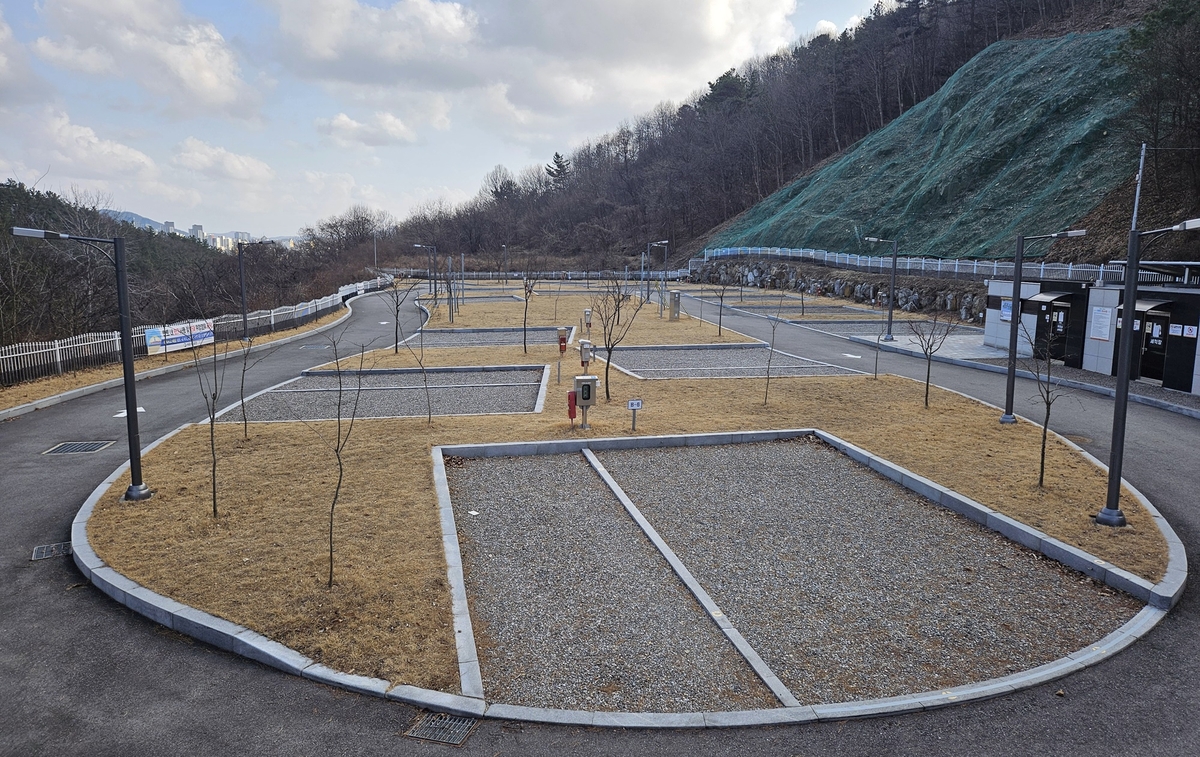
Within walking distance is the Jeonwolsan National Leisure Campground (644-502 Sejong-ri, Yeongi-myeon, Sejong). On a 4,505㎡ site, it has 22 auto-camping spaces, four restrooms, two washing rooms, four shower rooms, and five parking spaces. It operates 24 hours a day, 365 days a year, without holidays.
When and with Whom Should You Visit?
Mugunghwa blooms from summer through early autumn, while the Hydrangea Garden peaks in July and the tree hydrangeas in mid-summer, making July through early August favorable for visitors focused on flowers. However, some older visitor accounts, written when the trees were still young, say that the blooms were not especially abundant. To avoid disappointment, it is better to approach the site as a neighborhood park where you can enjoy walking and hiking together rather than expect a large-scale arboretum.
Because it is a somewhat inconvenient 27-minute walk from the bus stop without a private vehicle, travelers relying solely on public transportation may find it more practical to combine the visit with other attractions, such as Sejong Lake Park and the National Sejong Arboretum, and travel by taxi. Conversely, the park is well suited to families with their own vehicles who would like to add a light hike, as well as travelers seeking a quiet garden walk.
Before You Go
- Address
- Sejong Special Self-Governing City, Yeongi-myeon, Sejong-ri 646-1 (Sejong-dong, San 36 area)
- Hours
- Open 24 hours, 00:00–24:00
- Closed
- Open year-round
- Admission
- Free
- Official site
- https://access.visitkorea.or.kr/ms/detail.do?cotId=7295a52b-6a92-49b5-b39d-77215d4480ef
- Transport
- Bus 221 from Sejong Express and Intercity Bus Terminal Stop (51-053) → get off at Sejong Lake Park Stop, then walk approximately 27 minutes (or take a taxi). Some visitors have reported direct access from Sejong Terminal by Bus 211.
- Parking
- Free parking available at the park entrance parking lot (paved with grass blocks)
- Time needed
- 1–2 hours for a garden walk; add approximately 1 hour for a round trip hike to the summit of Jeonwolsan Mountain
The information above is current as of the time of writing. Please check the official information again before visiting.

Places
Nearby Attractions 4
-
 1
Jeonwolsan National Leisure Camping SiteA campground where you can enjoy auto camping and tent camping.
1
Jeonwolsan National Leisure Camping SiteA campground where you can enjoy auto camping and tent camping. -
 2
2
-
 3
3
-
 4
4
Food & Dining 1
-
 5
Iri ChueotangA Korean restaurant serving chueotang (loach soup) and rice cooked in a stone pot.
5
Iri ChueotangA Korean restaurant serving chueotang (loach soup) and rice cooked in a stone pot.
More Travel Guides in This Area
Korea News
![ZEROBASEONE ‘ZEROBASEONE Shining Even at Night!’ [★Video]](https://kotourlive-images.s3.ap-northeast-1.amazonaws.com/news/1786629298196_13d8a4bb_news_075face7-fb4e-402c-b833-25ccaf88cf8f.jpg) News
News
ZEROBASEONE ‘ZEROBASEONE Shining Even at Night!’ [★Video]
 News
News
Kwon Eun-bi, First Comeback Since Moving from Woollim to RBW: “Aiming for a September Release”
 News
News
“Did Jungkook’s connection continue?” Pop star Usher spotted warmly hugging BTS’s RM and J-Hope
 News
News