Cheongsong Jusanji, Where 1720 Waterways and Old Willow Trees Remain
Cheongsong Jusanji is a mountain reservoir begun in 1720 and completed in 1721. Its main appeal is the scenery of old willow trees along the water, and it is also known as a filming location. The walk from the parking lot to the observatory takes about 15 minutes, and a round-trip visit is generally estimated at about one hour. However, operating-hours information varies, so plan your travel carefully.
I’ve been here?
Your check-in helps the next traveler.
33 people viewed this week Be the first
One tap — no writing needed
An Agricultural Reservoir Begun in August 1720
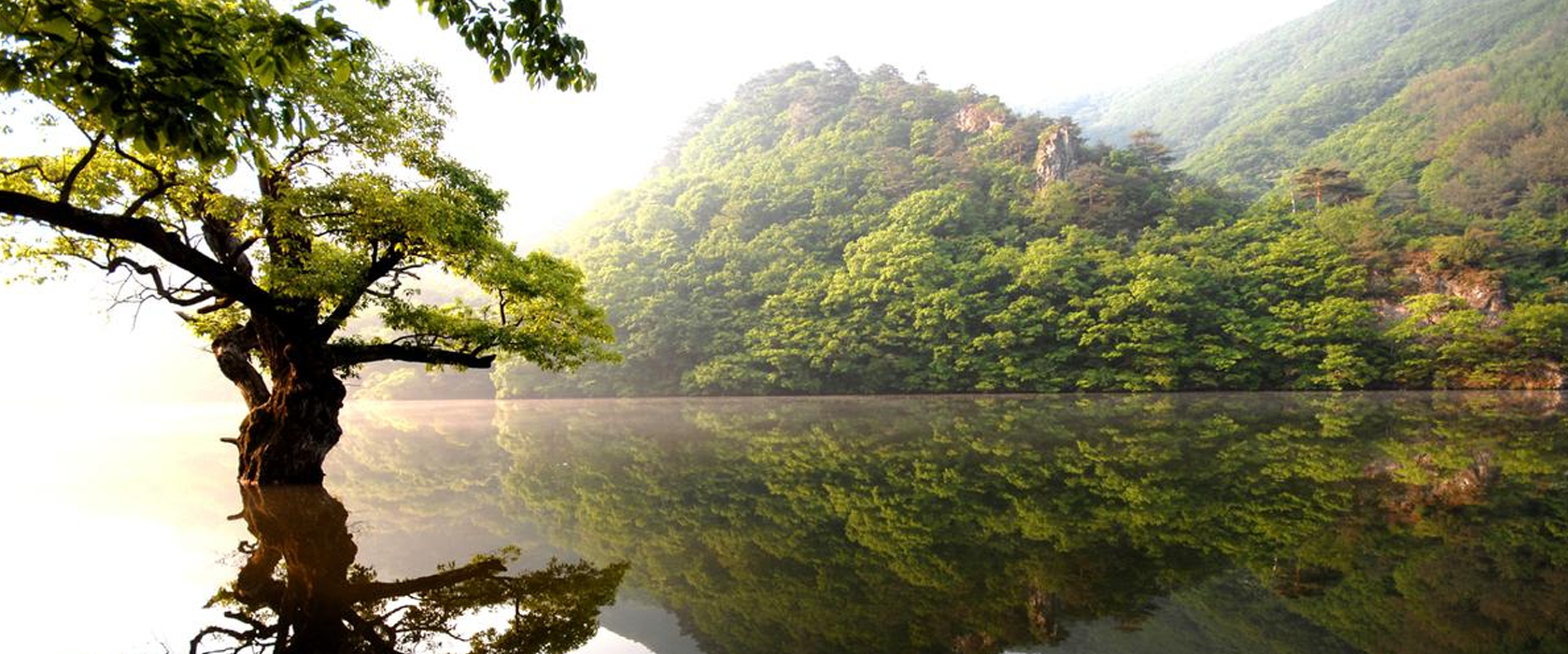
Jusanje is the reservoir and surrounding area located in Ijeon-ri, Juwangsan-myeon, Cheongsong-gun, Gyeongsangbuk-do. Construction began in August 1720, during the reign of King Sukjong of Joseon, and was completed in October 1721. Water flowing down from the surrounding mountains is used as agricultural water for lower-lying Ijeon-ri.
This is not simply a pond for strolling; it is also the source of a tributary of the Jusancheon Stream. The embankment is 63 m long and 15 m high, and the total storage capacity is recorded as 105,000 tons. The present landscape is therefore the result of an agricultural facility combined with mountainous terrain.
A Mountain Reservoir Named After Jusanjae
The name “Jusanje” derives from the fact that it is a reservoir that stores water flowing down from the summit of Jusanjae, or Jusanryeong Pass, in Naeryong-ri, Budong-myeon, to the east. The name “Jusan” is presumed to have originated from Jua-san Mountain.
There is a mountain 745 m above sea level east of Jusanje, and the reservoir lies within this mountainous terrain. Depending on the guide material, the reservoir is recorded as 100 m long, 50 m wide, with a circumference of 1 km and a depth of 7.8 m. Cheongsong County tourism information introduces it as 200 m long and 100 m wide, so the figures vary by source.
About 30 Royal Willow Trees Rooted in the Water
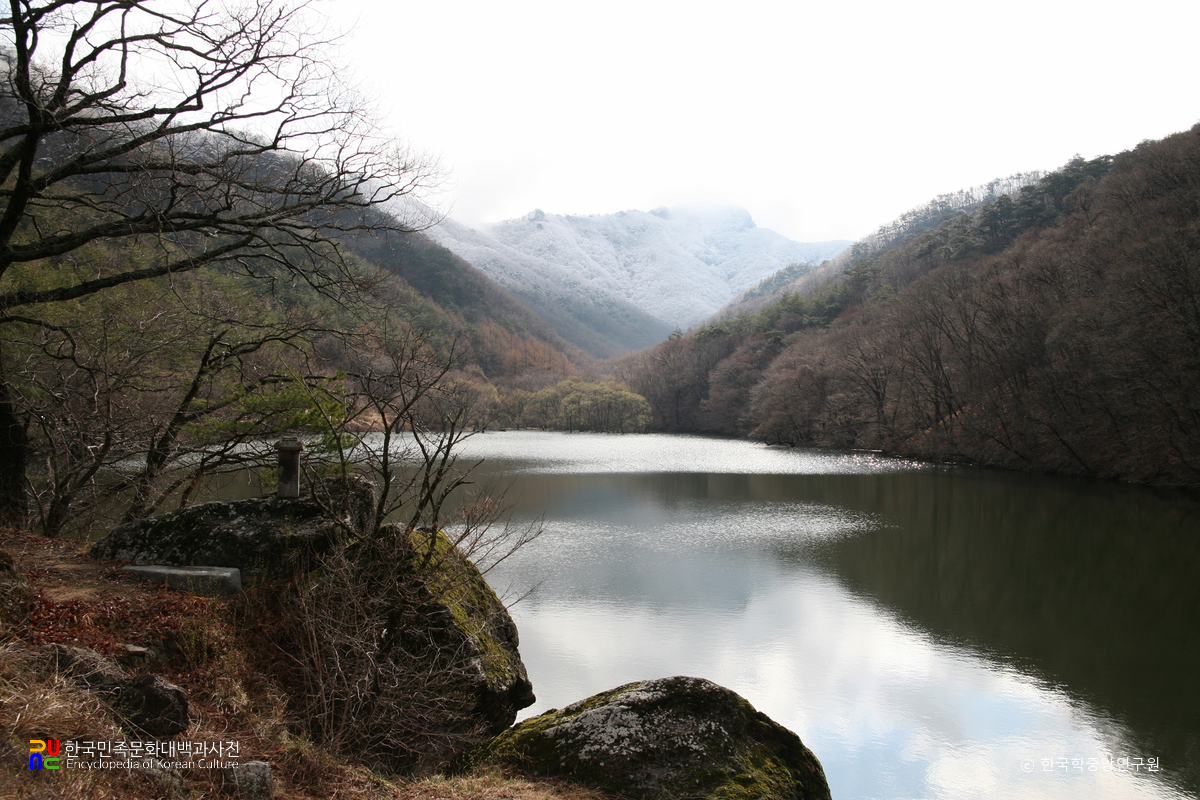
The signature view of Jusanje is the approximately 30 royal willow trees rooted along the edge of the reservoir. Cheongsong County tourism information introduces their ages as ranging from as little as 20 years to as much as 300 years, while the Encyclopedia of Korean Culture also records royal willows over 150 years old.
Other records state that about 20 weeping willows and royal willows grow together with dense woodland. Cork oak, Amur cork tree, and Chinese hackberry grow nearby, and wildlife such as scops owls, mandarin ducks, otters, water deer, and raccoon dogs is also said to inhabit the area.
A Waterside Landscape Formed by Welded Tuff Beneath the Embankment
Under the bottom of Jusanje is solid welded tuff formed when hot volcanic ash fused together; non-welded tuff and other sedimentary rocks form layers above it. The reason the reservoir water, surrounding cliffs, and forest can be seen together can be found in the volcanic geology and the structure of the mountain basin.
Because the reservoir is an agricultural facility, its appearance has not always been the same. The water was drained during embankment expansion work in 1983, and records show that it was completely drained in November 2013 for embankment repairs. The Jusanje area became a designated natural heritage site, scenic site, and natural landscape by the Cultural Heritage Administration on March 21, 2013.
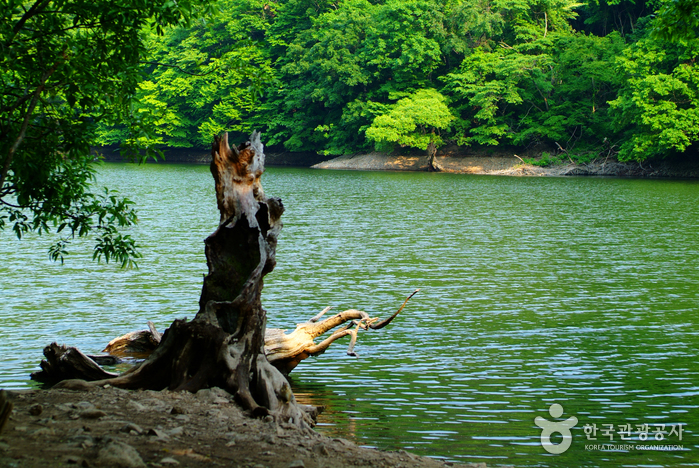
About 1 km Along a Single Trail from the Parking Lot to the Observatory
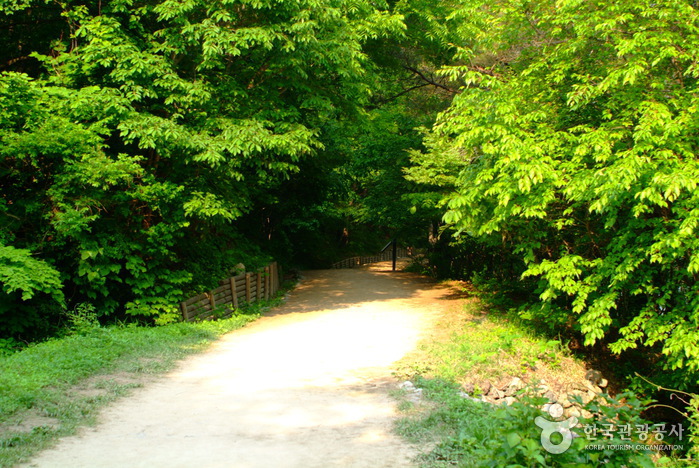
Jusanje has a parking lot and restrooms, and according to a 2023 visitor review, it takes about 15 minutes to walk from the parking lot to the observatory. The same review explains that the distance from the entrance to the observatory is about 1 km and that the path is a gently sloping walking trail.
The trail is maintained along Jusanje but is a single route. Visitors go to the inner observatory and then return along the same path, so they should not expect another exit from the observatory. According to the review, the total viewing time is about one hour.
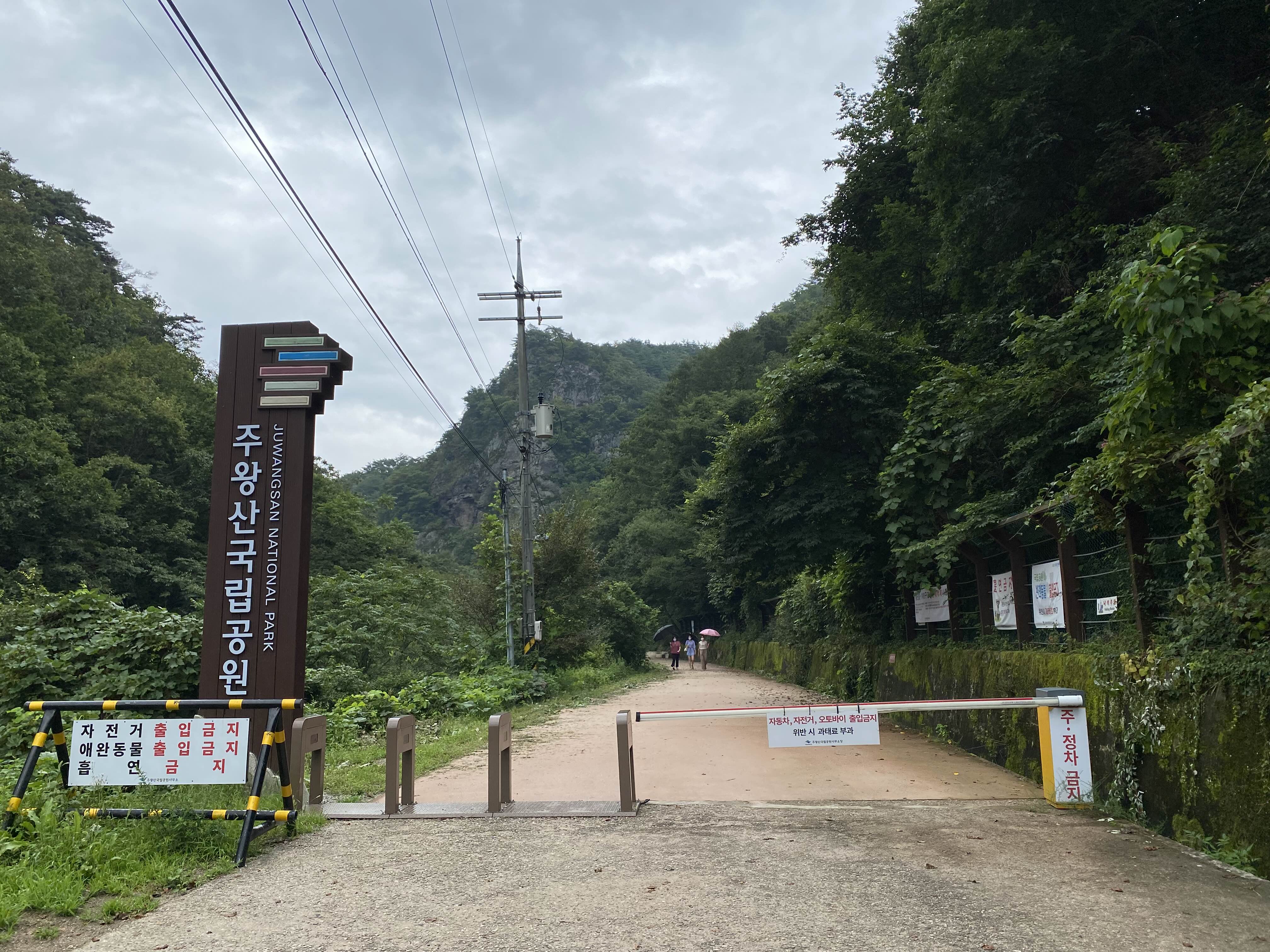
25–30 Minutes by Car from Cheongsong Interchange
The most practical starting point for visitors from outside the area is Cheongsong Interchange on the Sangju–Yeongdeok Expressway. According to Maeil Shinmun, it takes about 25–30 minutes by car from Cheongsong Interchange to Jusanje, and a spacious parking lot is available at the entrance.
The address is 73, Jusanji-ri, Juwangsan-myeon, Cheongsong-gun, Gyeongsangbuk-do; Cheongsong Culture Tourism also lists it as 163, Jusanjigil, Juwangsan-myeon, Cheongsong-gun, Gyeongsangbuk-do (Ijeon-ri). No public transportation routes, stops, or service intervals have been confirmed in official information, so it is safer to prioritize traveling by car rather than planning to go directly by bus from a train station or terminal.
Free Admission, but Published Hours Differ
According to Cheongsong County tourism information, admission is free. Depending on the information source, the contact number is listed as 054-870-5300 or 054-870-6111, so it is advisable to reconfirm the official contact number before visiting. The address given for the official website is http://tour.cs.go.kr. There is a parking lot, but parking fees have not been confirmed.
Some materials list operating hours as 08:00–17:00, while some tourism information describes it as open year-round at all times. The closure schedule is listed as open year-round, so considering the time required to walk to the observatory, arriving by the 17:00 closing time is the realistic approach.
A Film Location Whose Landscape Remains After the Set Was Removed
Jusanje became widely known after being introduced as a primary filming location for director Kim Ki-duk’s film Spring, Summer, Fall, Winter... and Spring. However, visitors should not assume that the filming set recreating the scenes from the movie remains on site.
According to Korea Tourism Organization information, the set was dismantled to protect the environment. Therefore, the focus of a visit today is not viewing the inside of a set, but seeing the royal willows by the water, the observatory, and the terrain of the mountain reservoir. The site guidelines mentioned in a 2023 visitor review prohibit smoking, pets, and the entry of cars, bicycles, and motorcycles.
How to Combine the Juwangsan Waterfalls and Dalgi Mineral Spring
The core course suggested by Cheongsong Culture Tourism runs from Daejeonsa Temple in Juwangsan National Park through Yongchu Falls, Jeolgu Falls, and Yongyeon Falls, continuing to Jusanje and Dalgi Mineral Spring. A round trip to Jusanje alone takes about one hour according to visitor reviews, but including the waterfall section on the same day greatly increases travel and walking time.
For an apple-experience course, an itinerary linking Juwangsan Information Village, Jusanje, Jeolgol Valley, and Eoreumgol Valley is recommended. Wheelchair and stroller rentals and wheelchair-accessible sections were mentioned in a 2023 review, but official detailed accessibility standards and the availability of English information or an audio guide have not been confirmed. Foreign visitors should first consider the 1 km single-route walk and the time required for the round trip, even though admission is free.
Before You Go
- Address
- 73, Jusanji-ri, Juwangsan-myeon, Cheongsong-gun, Gyeongsangbuk-do
- Hours
- Some materials list 08:00–17:00, while Korea Tourism Organization tourism information also describes it as “open year-round at all times.”
- Closed
- Open year-round
- Admission
- Free
- Phone
- Listed as 054-870-5300 or 054-870-6111 depending on the information source. Reconfirm the official contact number before visiting.
- Official site
- http://tour.cs.go.kr
- Transport
- The walk from the parking lot to the observatory takes about 15 minutes according to visitor reviews, and the distance from the entrance to the observatory is about 1 km. Reports indicate that it takes about 25–30 minutes by car from Cheongsong Interchange.
- Parking
- Parking lot available. Parking fees have not been confirmed.
- Time needed
- About 1 hour of sightseeing according to visitor reviews
- Accessibility
- A gently sloping walking trail; wheelchair and stroller rentals and wheelchair-accessible sections were mentioned in visitor reviews.
The information above is current as of the time of writing. Check the official information again before visiting.

Places
Nearby Attractions 3
-
 1
1
-
 2
2
-
 3
3
Food & Dining 3
-
 4
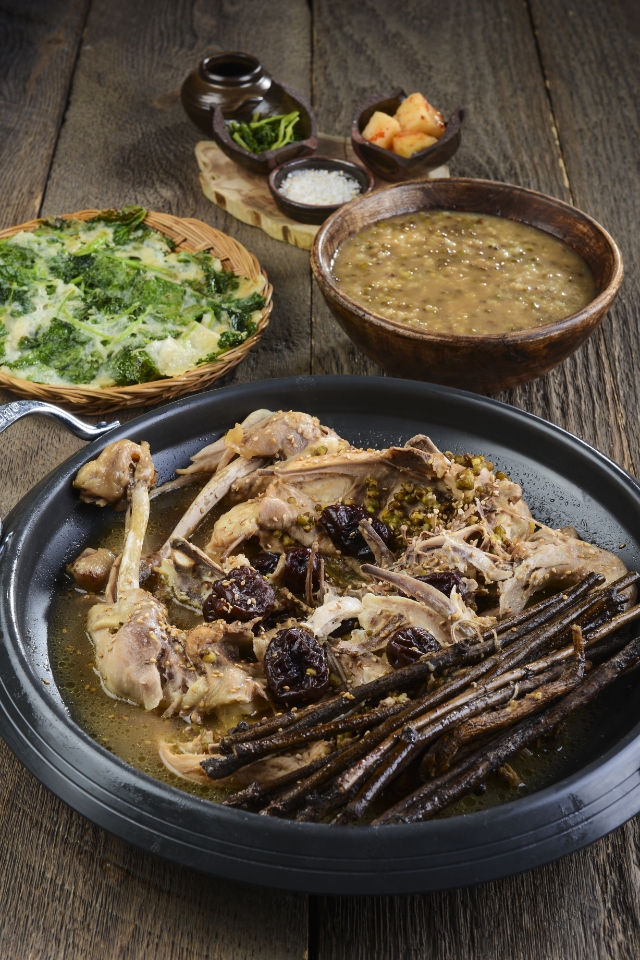
Juwangsan Cheongsol RestaurantA Korean restaurant serving wild vegetable bibimbap and a set meal with grilled deodeok root.
4
Juwangsan Cheongsol RestaurantA Korean restaurant serving wild vegetable bibimbap and a set meal with grilled deodeok root. -
 5
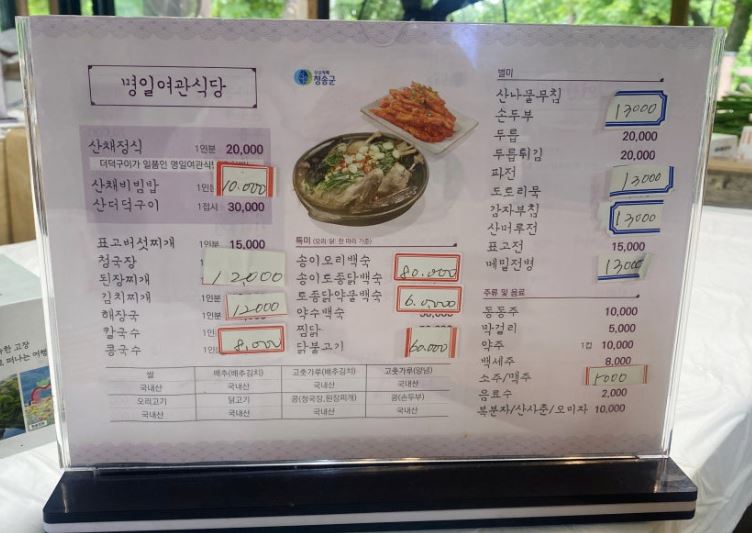
Juwangsan Myeongil RestaurantA local restaurant serving hand-cut noodle soup and wild mountain greens pancakes.
5
Juwangsan Myeongil RestaurantA local restaurant serving hand-cut noodle soup and wild mountain greens pancakes. -
 6
6
Events in This Area
Festivals in This Area
More Travel Guides in This Area
 Travel Guide
How to Walk to Yongchu Falls at Juwangsan and Choose the Jeolgol Valley Route
 Travel Guide
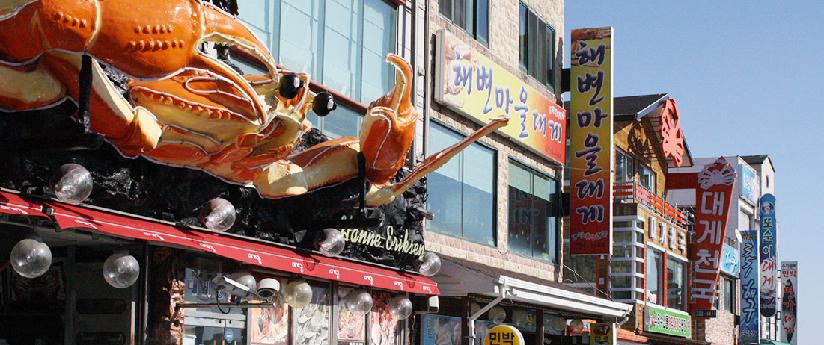
How to See the Auction Market and Restaurant District Together at Ganggu Port’s Snow Crab Street
 Travel Guide
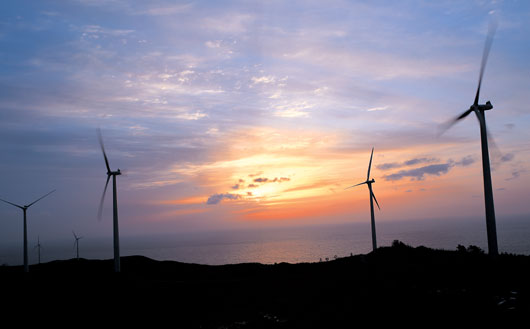
The Changpo-ri Hills of Yeongdeok, Where 24 Giant Blades Meet the East Sea Wind
 Travel Guide
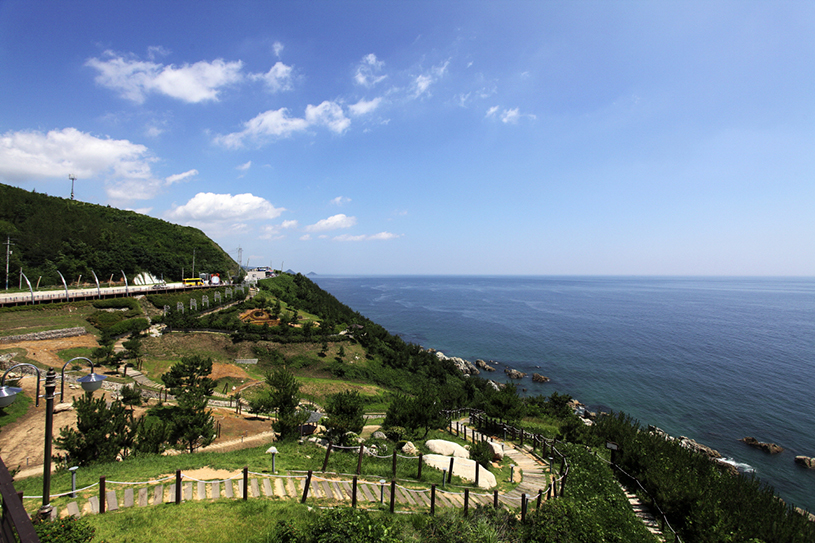
Yeongdeok Sunrise Park, Where a Snow Crab Claw Lighthouse Meets 1,500 Steps
Korea News
 News
News
‘NewJeans Expulsion’ Danielle Releases Her First YouTube Video… “We Don’t Know What Will Happen Next”
![aespa’s North American Tour Has Remaining Seats Despite ‘$49’ Bargain Prices… A Stark Popularity Gap with KATSEYE [TEN Starfield]](https://kotourlive-images.s3.ap-northeast-1.amazonaws.com/news/1788485037424_a59b1932_naver_rank_thumb_0000774618_1788485037424.jpg) News
News
aespa’s North American Tour Has Remaining Seats Despite ‘$49’ Bargain Prices… A Stark Popularity Gap with KATSEYE [TEN Starfield]
![[Photo] TWICE’s Dahyun attends a film festival red carpet as an actress](https://kotourlive-images.s3.ap-northeast-1.amazonaws.com/news/1788485316508_edd43ecd_news_870a60a6-6f11-4d73-aa7c-48d91318a0f7.jpg) News
News
[Photo] TWICE’s Dahyun attends a film festival red carpet as an actress
![[On-Site Video] “We’re Departing Separately Together”… BIGBANG Begins ‘COSMOS’ World Tour](https://kotourlive-images.s3.ap-northeast-1.amazonaws.com/news/1788485226518_c5719641_news_fdd4764a-0f4e-4968-8e4e-e98a02872f88.jpg) News
News